
Spirographs
Read more about spirographs—the geometric curves drawn by a circle rolling inside or outside a fixed circle—and try an interactive Spirograph in PictorX.
What is a spirograph?
A spirograph curve is the path of a point attached to a circle that rolls without slipping around a fixed circle. When the moving circle rolls inside the fixed one, the path is a hypotrochoid; when it rolls outside, an epitrochoid. The familiar Spirograph toy popularised these roulette curves as colourful nested loops and star-like mandalas.
Hypotrochoids and epitrochoids
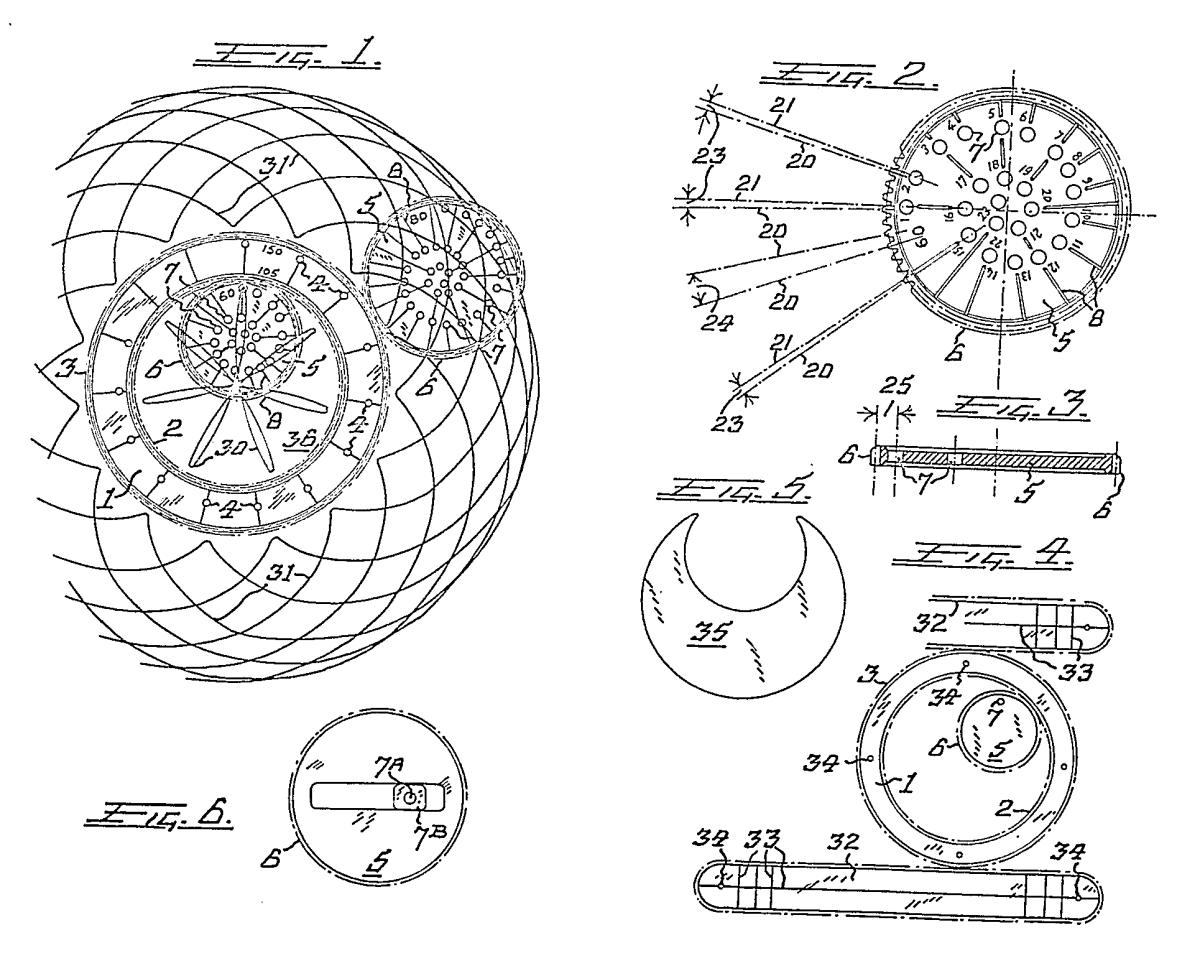
Hypotrochoids arise from internal rolling; epitrochoids from external rolling. Both belong to the family of roulette curves studied long before plastic gears—by mathematicians from the seventeenth century onward. Special cases include the ellipse, deltoid, astroid, cardioid, and nephroid, depending on the radius ratio and pen offset.
Parameters R, r, and d
Three numbers shape the curve. R is the radius of the fixed circle. r is the radius of the rolling circle. d is the distance from the rolling centre to the pen (the pen offset). Changing R:r sets how many lobes appear; changing d pulls the path between a near-circle and a deeply cusped or crossed design. In the classic toy, the hole you choose on the gear sets d.
Closing curves and gear ratios
A drawn curve closes after a finite number of revolutions when the radius ratio R/r is rational—typically expressed with coprime integers that match gear tooth counts. Irrational ratios never quite close and fill a dense band. That is why toy gears with integer teeth produce neat, repeating patterns, while arbitrary digital ratios can look “almost closed” until you wait long enough—or force a rational approximation.
Denys Fisher and the Spirograph toy
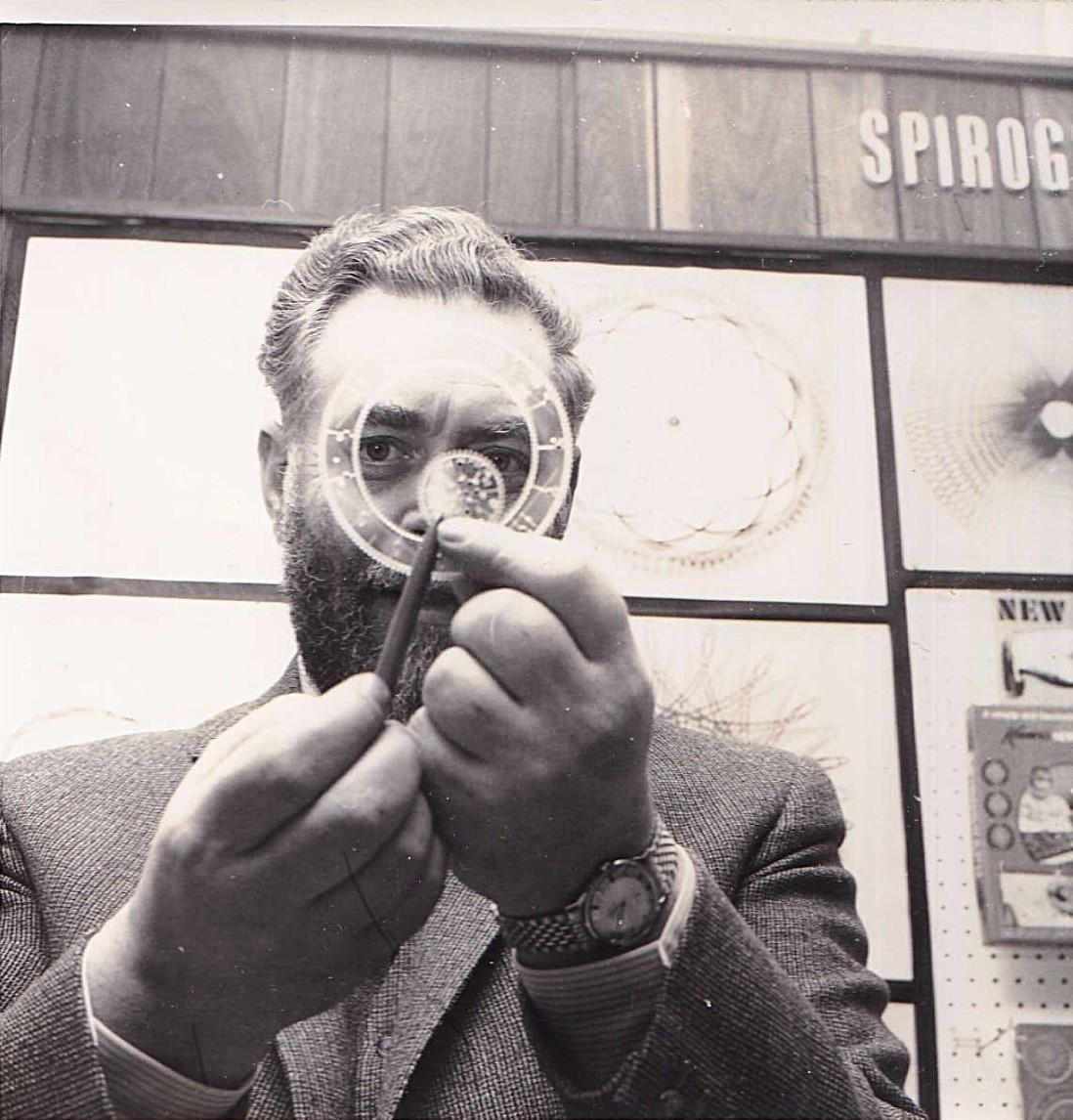
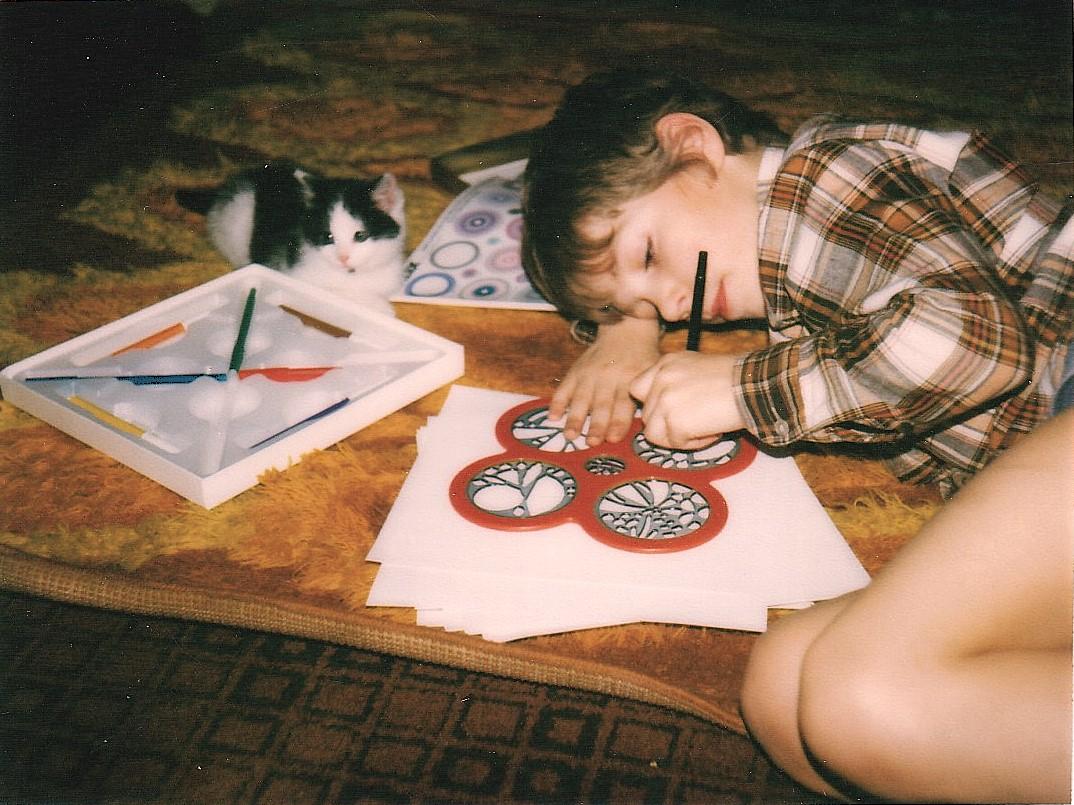
British engineer Denys Fisher launched the Spirograph toy in the mid-1960s (widely dated 1965), later marketed by Kenner and others. Plastic rings, gears, and pens let children and adults draw hypotrochoids without knowing the equations. The brand name stuck so firmly that many people call any such roulette a “spirograph,” even when drawn digitally.
From paper mandalas to digital drawing
Spirograph patterns sit beside compass roses, rangoli, and other radial ornaments: symmetry, repetition, and colour. Digital tools replace gears with parametric equations—x and y as functions of the roll angle—so you can animate stroke, randomise R, r, and d, and export PNG mandalas without plastic rings.
Try Spirograph in PictorX
Open /spirograph in PictorX to draw hypotrochoids and epitrochoids in the browser. Tune R, r, and pen offset, switch modes, animate the curve, and save a PNG. Nothing is uploaded to PictorX servers. Pair it with Fractal Generator or other creative apps in the same workspace.
Frequently asked questions
What is the difference between a hypotrochoid and an epitrochoid?
A hypotrochoid is traced by a point on a circle rolling inside a fixed circle; an epitrochoid by a point on a circle rolling outside. Both are roulette curves; the Spirograph toy can produce either family depending on how gears mesh.
What do the parameters R, r, and d mean?
R is the fixed circle’s radius, r the rolling circle’s radius, and d the pen’s distance from the rolling centre. Together they set lobe count, size, and how tight or ornate the path looks.
Why do some spirograph curves close neatly?
When R/r is a rational number (matching integer gear teeth), the path repeats and closes after finite turns. Irrational ratios never exactly close and densely fill a ring.
Who invented the Spirograph toy?
Denys Fisher designed and commercialised the plastic Spirograph in the 1960s. The underlying roulette mathematics is much older.
Related tools
Spirograph
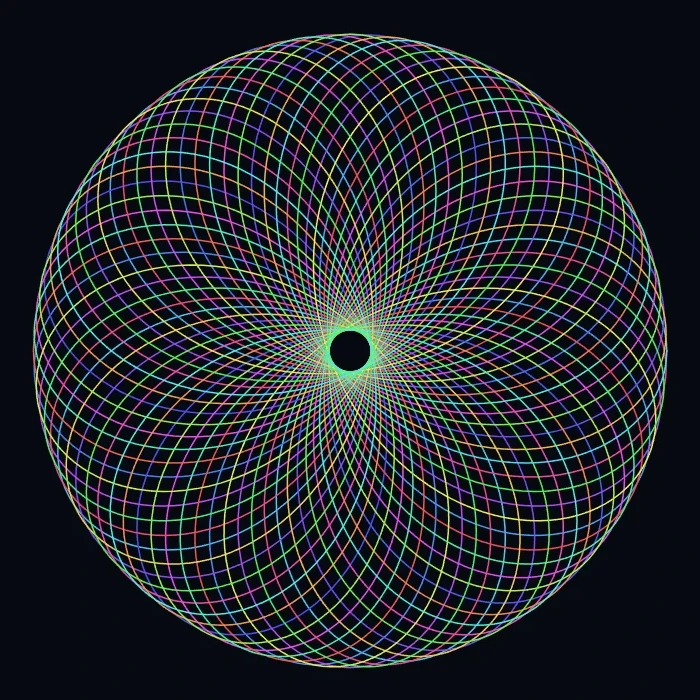
Draw hypotrochoids and epitrochoids in your browser. Tune R, r, and pen offset, animate the curve, randomize styles, and save a PNG. Nothing is uploaded.
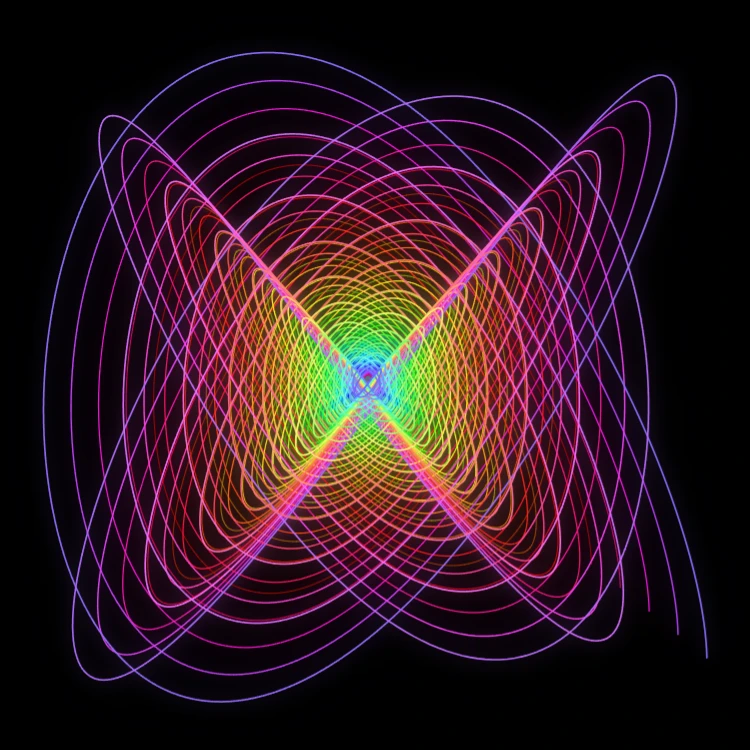
Painting Pendulum
Paint damped Lissajous curves in your browser—the classic Blackburn painting pendulum. Tune frequency ratios, phases, and damping, animate the trail, and save a PNG. Nothing is uploaded.
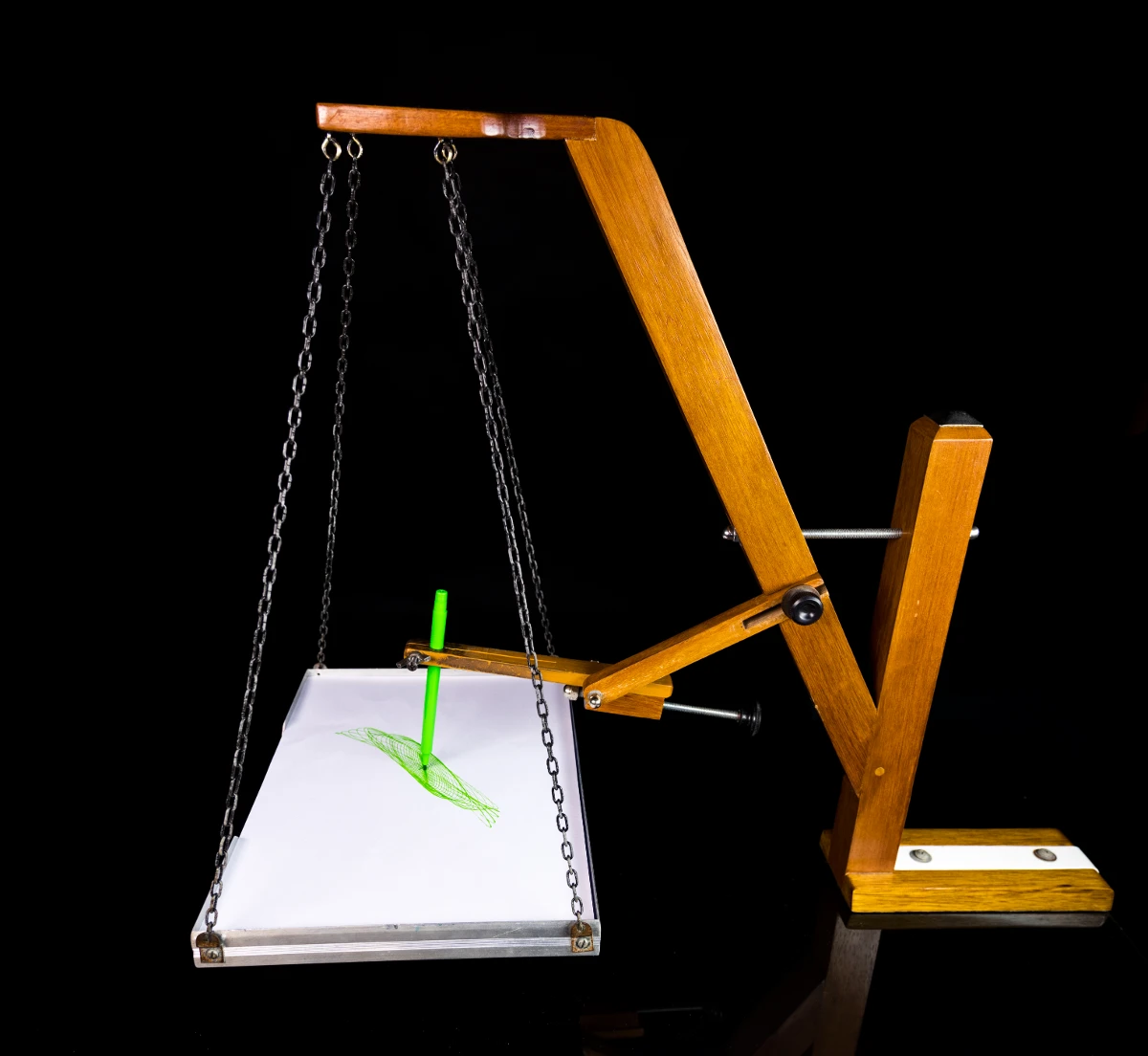
Painting pendulums
Learn how a Blackburn painting pendulum paints Lissajous figures—two perpendicular oscillators, frequency ratios, damping spirals—and try Painting Pendulum in PictorX.
Explore the wonderful world of Fractals
Explore the wonderful world of Fractals. Fractals are complex, detailed geometric patterns found throughout the natural world.
Fractals
Learn how the Mandelbrot set, Julia sets, Newton fractals, and Nova fractals are generated—and why zooming never runs out of detail.
Ready to try it?
Open PictorX in your browser — no install, no credit card required to start.
Explore Spirograph