
Fractals
Read more about the Mandelbrot set, Julia sets, Newton fractals (including Newton⁴), and Nova fractals you can explore in Fractal Generator.
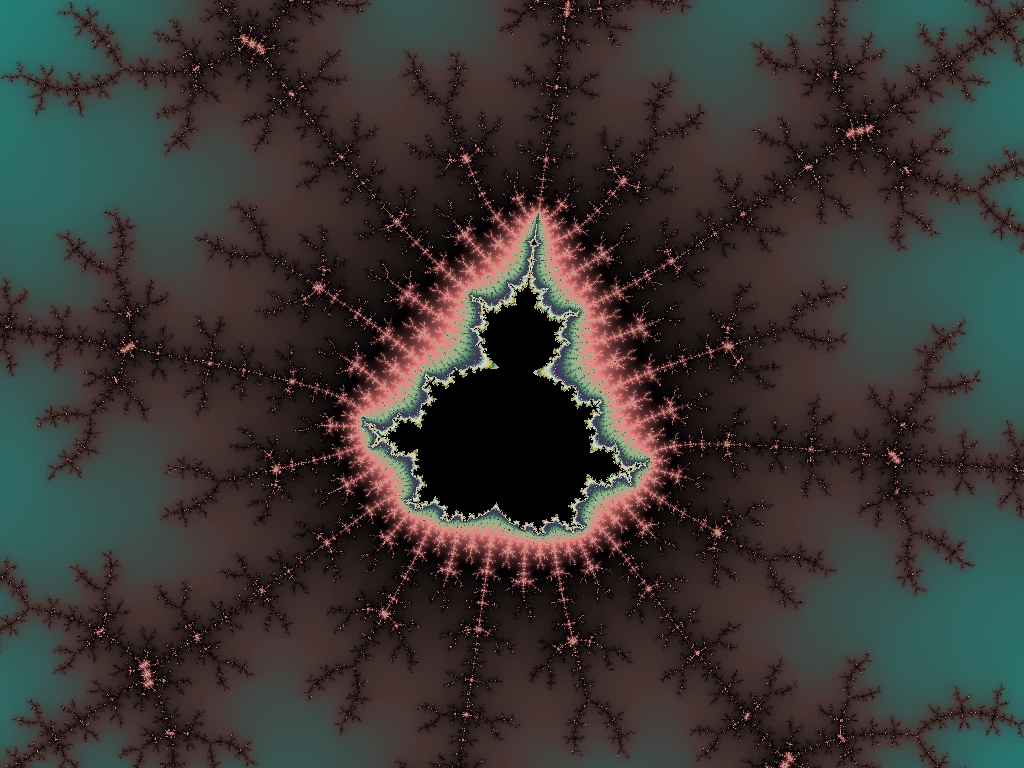
The Mandelbrot set
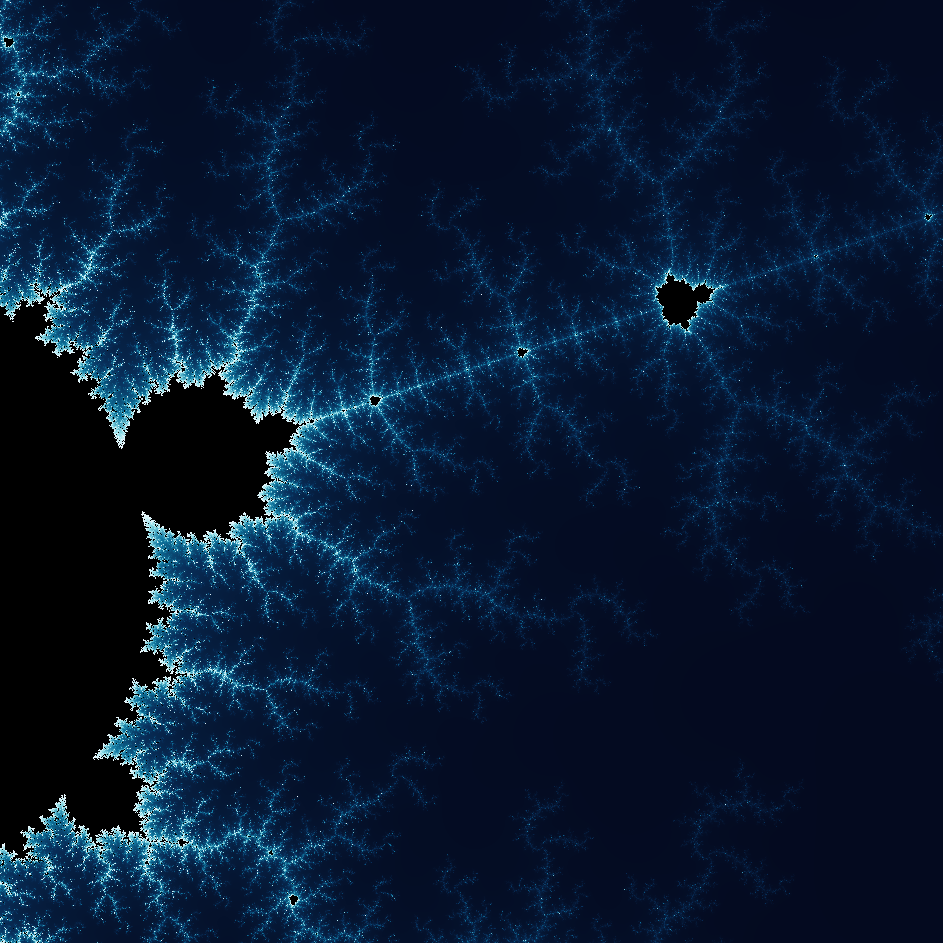
The Mandelbrot set, discovered in 1980 by Benoît Mandelbrot, is probably the most famous fractal. Like Julia sets, it is generated by a very simple formula, but it is incredibly complex. The Mandelbrot set is loosely self-similar: parts of the original fractal appear again when zooming in, but often deformed and with different ornaments. This is what makes it so rewarding to zoom into this fractal: you never know what you will see next. The Mandelbrot set is produced by the formula zₙ₊₁ = zₙ² + c, where z and c are complex numbers: z = x + iy, z₀ = 0, and c is a point on the plane. The formula is iterated until |zₙ| (the magnitude of z) is greater than or equal to the bailout value 2. Then the pixel that c corresponds to is colored according to the number of iterations that occurred before the process bailed out. The uninteresting black area of the image is the actual Mandelbrot set. It consists of all the values for c where |zₙ| never got larger than 2. Of course this area is impossible to calculate accurately, so the program colors black all pixels for which |zₙ| never gets larger than 2 for a given number of iterations, for example 256. The Cubic Mandelbrot set is produced by the formula zₙ₊₁ = zₙ³ + c. The Quartic Mandelbrot set is produced by the formula zₙ₊₁ = zₙ⁴ + c.

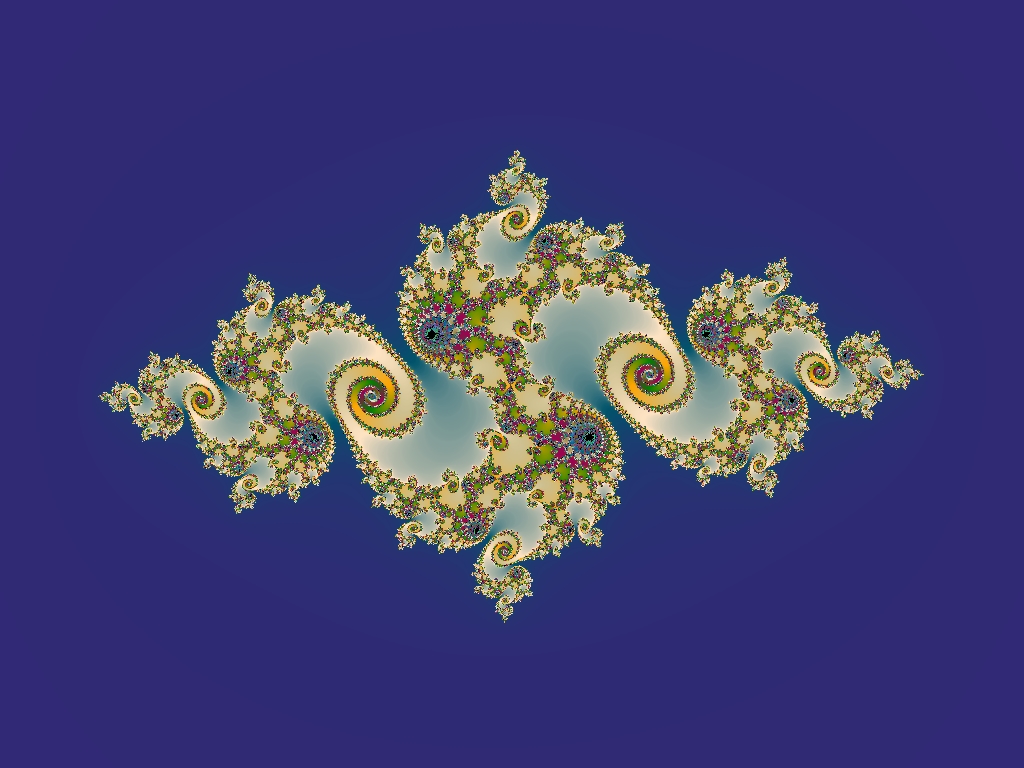
Julia sets
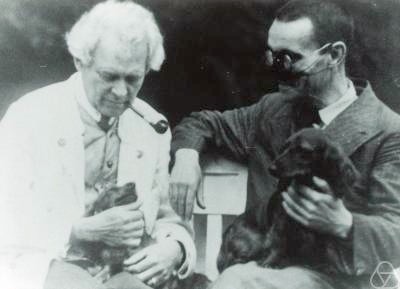
One of the most basic fractal types is the family of Julia sets, discovered by the French mathematician Gaston Julia during the First World War. Julia sets are created by a simple formula with one complex parameter called C or seed. This parameter can be varied to create many variations. Julia sets are also self-similar.
Newton sets
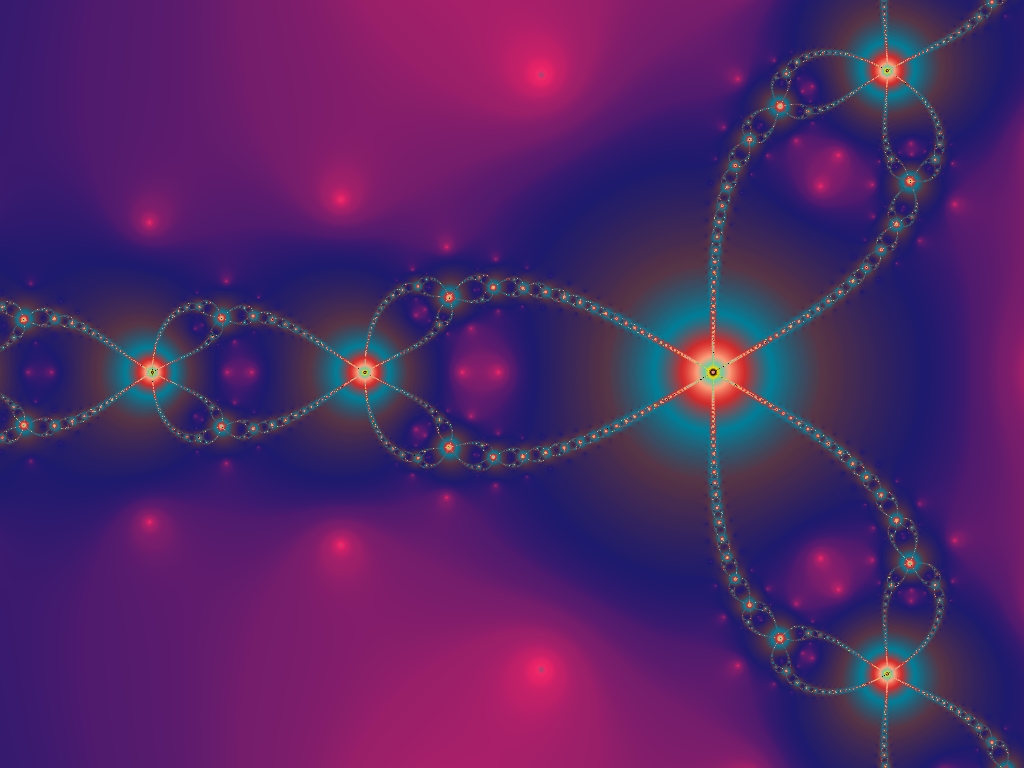
This fractal is created by trying to solve the equation z³ = 1, using the Newton–Raphson method, where z is a complex number: z = x + iy. This involves defining the function p(z) = z³ − 1, and using it in an iterative formula which should converge to zero, thus finding a value of z which is a solution to the first equation. A generalization of Newton's iteration is zₙ₊₁ = zₙ − a · p(zₙ) / p'(zₙ), where a is any complex number and p'(z) is the derivative of p(z). The special choice a = 1 corresponds to the Newton fractal. This fractal applies the formula to each point on the complex plane, and colours it according to how many iterations are required for p(z) to converge (approximately) to zero. The boring regions of the fractal are actually solutions of the original equation.

Newton⁴
The standard Newton fractal uses p(z) = z³ − 1, with three roots. Newton⁴ uses p(z) = z⁴ − 1, with four roots: the fourth roots of unity (±1 and ±i). Both apply Newton's method zₙ₊₁ = zₙ − p(zₙ) / p'(zₙ) across the complex plane and colour each starting point by which root it approaches. For z³ − 1 the update is zₙ₊₁ = zₙ − (zₙ³ − 1) / (3 zₙ²). For z⁴ − 1 it is zₙ₊₁ = zₙ − (zₙ⁴ − 1) / (4 zₙ³). The picture has four-fold rotational symmetry instead of the threefold symmetry of the cubic Newton fractal. The four basins of attraction — around 1, −1, i and −i — meet in a lace of fractal boundaries. Try Newton⁴ next to Newton in Fractal Generator.
Nova fractals
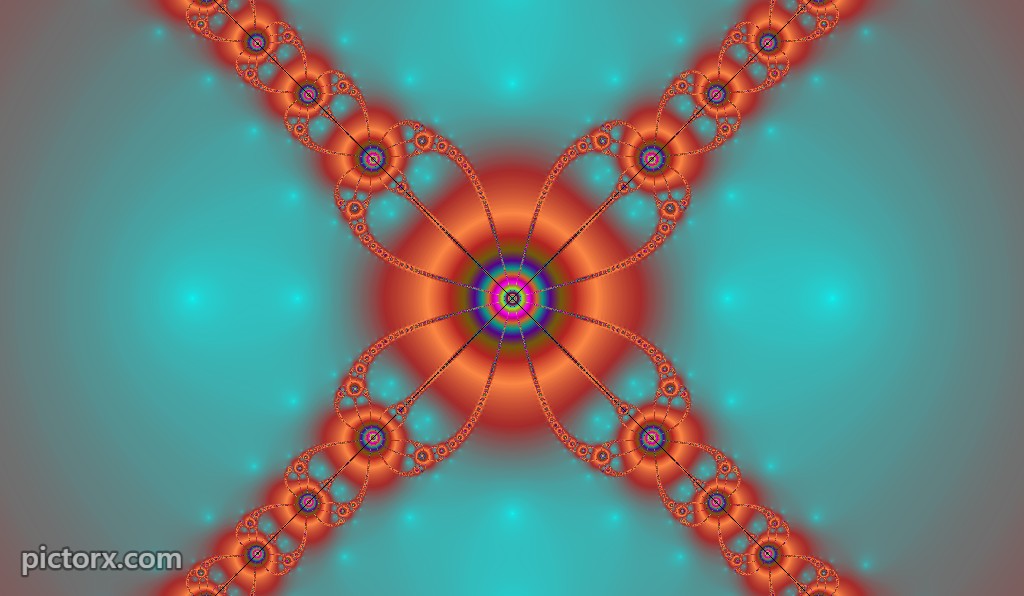
A Nova fractal is Newton–Raphson root finding with an added complex constant c at every step. The general update is zₙ₊₁ = zₙ − R · f(zₙ)/f'(zₙ) + c. PictorX’s default Mandelbrot-type Nova uses f(z) = z² − 2 + 0.2i (so f'(z) = 2z), complex relaxation R = 1 + i, and starting value z₀ = c (the pixel on the plane). Each pixel is coloured by how many iterations it takes for z to converge (|Δz| < 10⁻⁴), not by escape to infinity as in Mandelbrot or Julia. A complex R twists the basins into asymmetric spirals—try adjusting R and the additive constant of f in Fractal Generator.
Related tools
Explore the wonderful world of Fractals
Explore the wonderful world of Fractals. Fractals are complex, detailed geometric patterns found throughout the natural world.
Spirographs
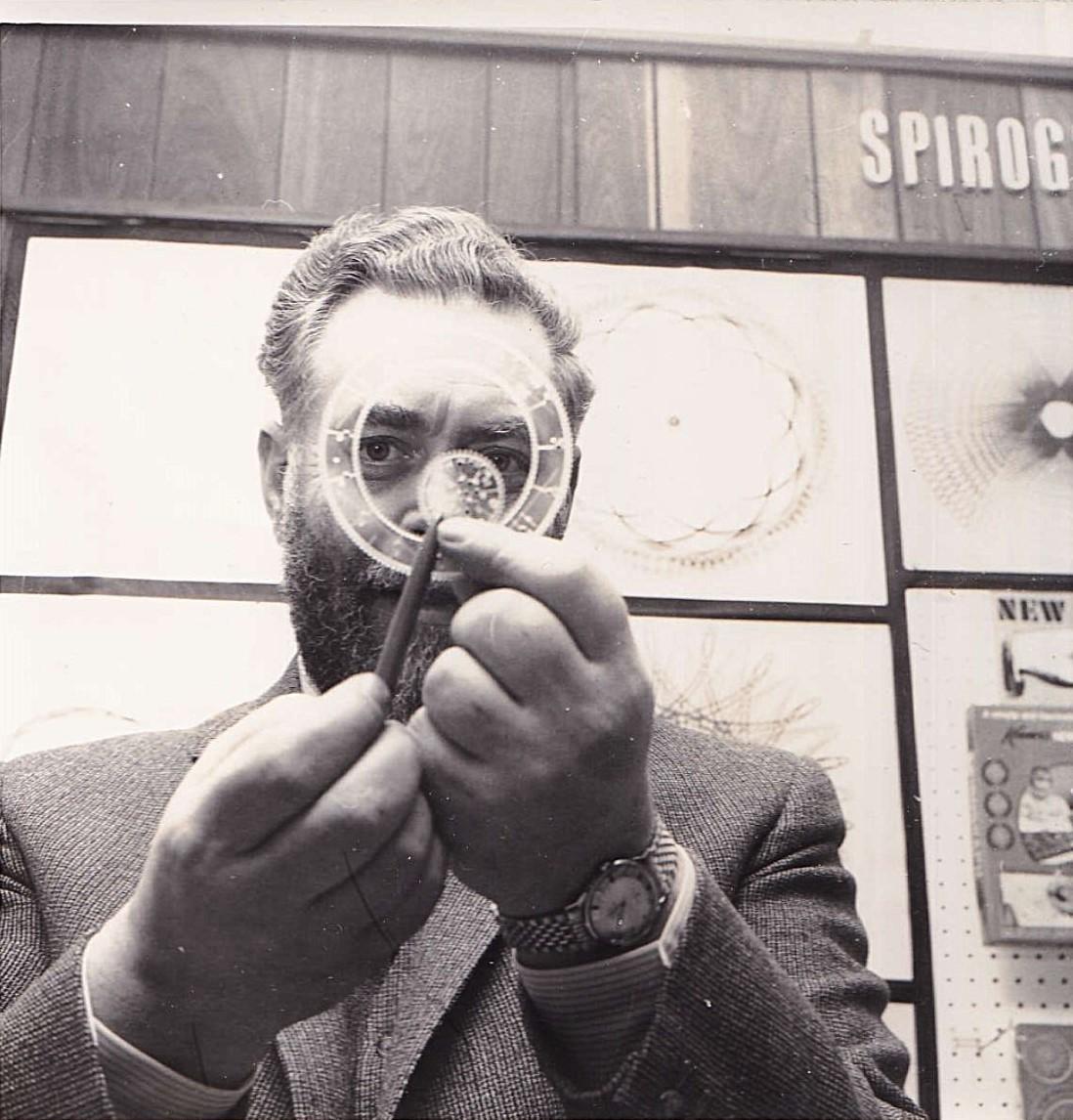
Learn how hypotrochoids and epitrochoids form spirograph curves—R, r, and d, closing conditions, the Denys Fisher toy, and digital mandalas you can draw in PictorX.
Painting pendulums
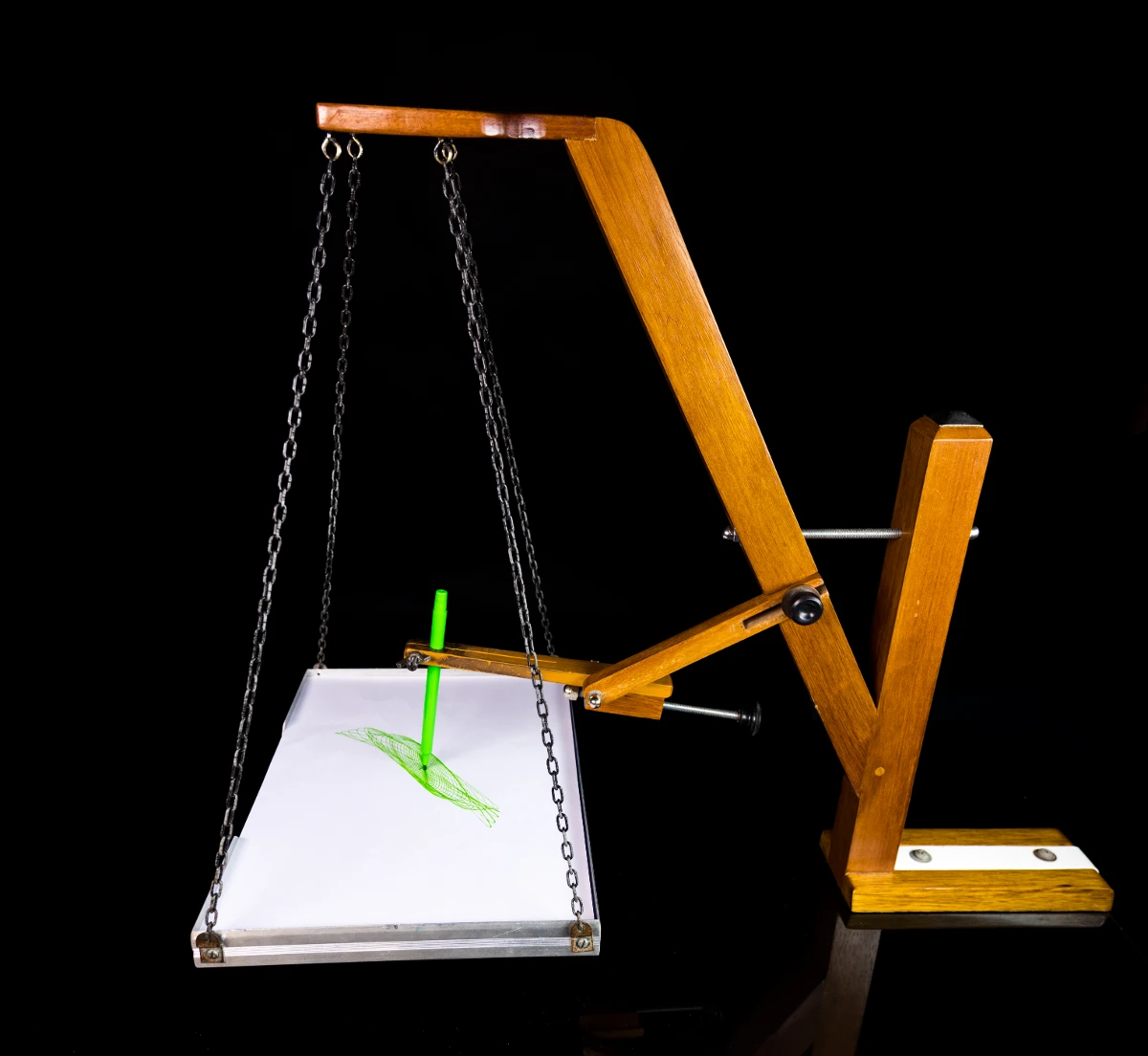
Learn how a Blackburn painting pendulum paints Lissajous figures—two perpendicular oscillators, frequency ratios, damping spirals—and try Painting Pendulum in PictorX.
Ready to try it?
Open PictorX in your browser — no install, no credit card required to start.
Explore fractals