
Painting pendulums
A painting pendulum (Blackburn pendulum) traces Lissajous curves with sand or paint. Explore two harmonic oscillators, rational frequency ratios, and damping—then draw them in PictorX.
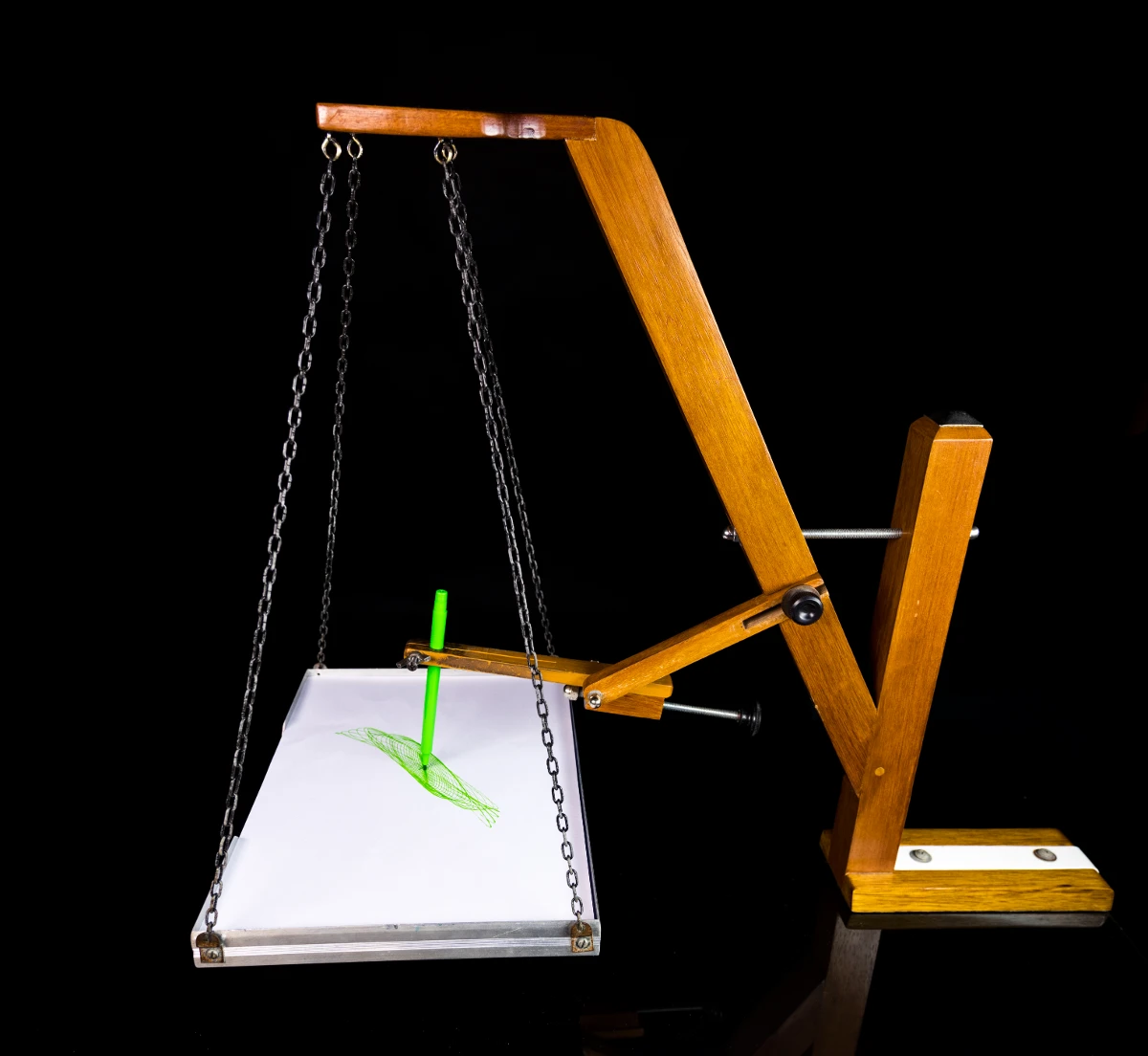
What is a painting pendulum?
A painting pendulum—also called a Blackburn pendulum—is a mass suspended so it can swing freely in two horizontal directions. When the bob carries sand, ink, or paint, its path leaves a curve on paper or canvas. The Dutch name schilderpendel (“painting pendulum”) captures the idea: the swing itself becomes the brush.
Simple harmonic motion
Along one axis a free pendulum behaves like a simple harmonic oscillator: x(t) = A cos(ωt + φ). Amplitude A sets the swing size, angular frequency ω how fast it oscillates, and phase φ where the motion starts. Ideal SHM ignores friction, so the bob would swing forever at constant amplitude.
Y-shaped suspension and two frequencies
Blackburn’s arrangement uses a Y-shaped (or V-shaped) suspension: the string splits so the effective lengths for east–west and north–south motion differ. Different lengths mean different restoring rates, so ωx ≠ ωy. The bob therefore combines two perpendicular oscillators at once.
Lissajous figures
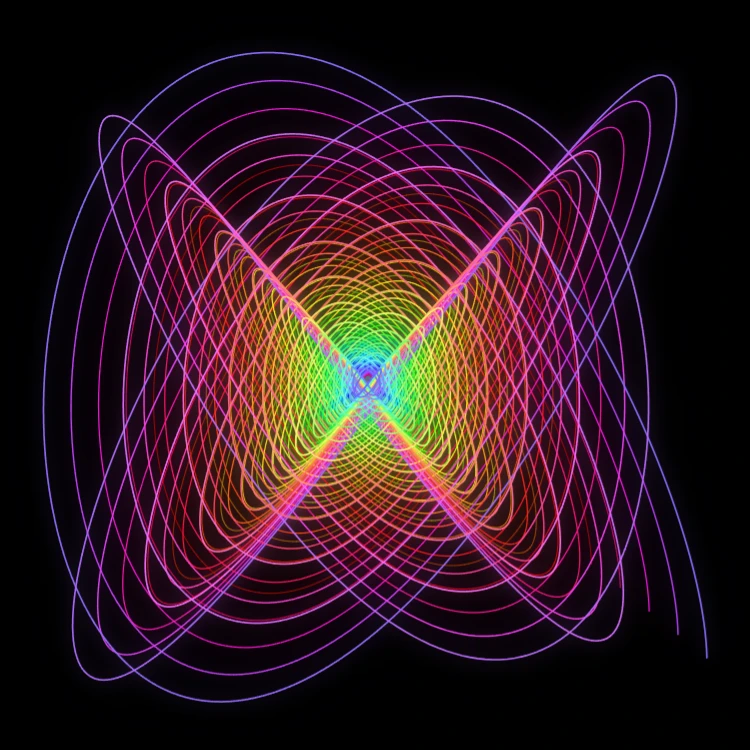
The plane curve (x(t), y(t)) from two sinusoids is a Lissajous figure. When the frequency ratio ωx:ωy is a simple rational number, the path closes into a neat pattern. Irrational ratios never close and densely fill a region. Phase difference turns a 1:1 ratio from a line into an ellipse or circle.
Frequency ratios at a glance
1:1 yields a line, ellipse, or circle depending on phase. 1:2 draws a figure-eight (lemniscate-like) family. 2:3 and 3:4 weave denser nets and mandala-like lattices. Those ratios are the classics of both classroom demos and sand pendulums.
Damping and the spiral paint effect
Real pendulums lose energy. Multiplying each axis by e^(−kt) shrinks the amplitude over time, so loops spiral inward—the familiar “painting pendulum” look on paper. Larger k settles faster; tiny k lets many revolutions paint before the bob rests.
Try Painting Pendulum in PictorX
Open /painting-pendulum to paint damped Lissajous curves in your browser. Pick a ratio, tune amplitudes, phases, and damping, animate the trail, and save a PNG. Nothing is uploaded. Pair it with Spirograph or Fractal Generator for more geometric play.
Frequently asked questions
What is a Blackburn pendulum?
A pendulum suspended so it can swing in two perpendicular directions with different effective lengths (often via a Y-shaped support). The combined motion traces Lissajous curves; with sand or paint it becomes a painting pendulum.
How do Lissajous figures relate to pendulums?
Each horizontal axis acts as a harmonic oscillator. Plotting both positions over time yields a Lissajous figure. Rational frequency ratios close; irrational ones never quite repeat.
Why does the paint spiral inward?
Damping (air drag, friction) reduces amplitude roughly like e^(−kt). Successive loops shrink toward the centre, creating the spiral paint effect.
What does a 1:2 or 3:4 ratio look like?
1:2 often looks like a figure-eight. 3:4 (and 2:3) produce woven, net-like patterns with more crossings—great for dense ornamental trails.
Related tools
Painting Pendulum
Paint damped Lissajous curves in your browser—the classic Blackburn painting pendulum. Tune frequency ratios, phases, and damping, animate the trail, and save a PNG. Nothing is uploaded.
Spirograph
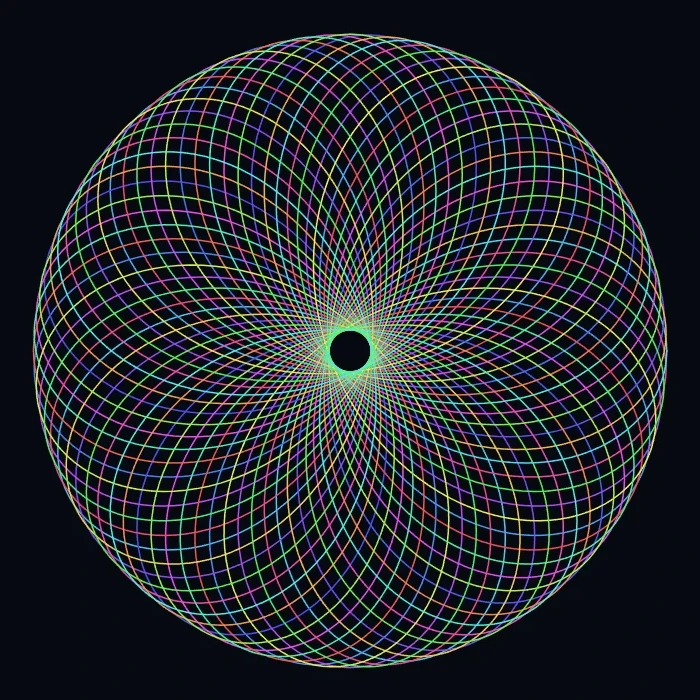
Draw hypotrochoids and epitrochoids in your browser. Tune R, r, and pen offset, animate the curve, randomize styles, and save a PNG. Nothing is uploaded.
Spirographs
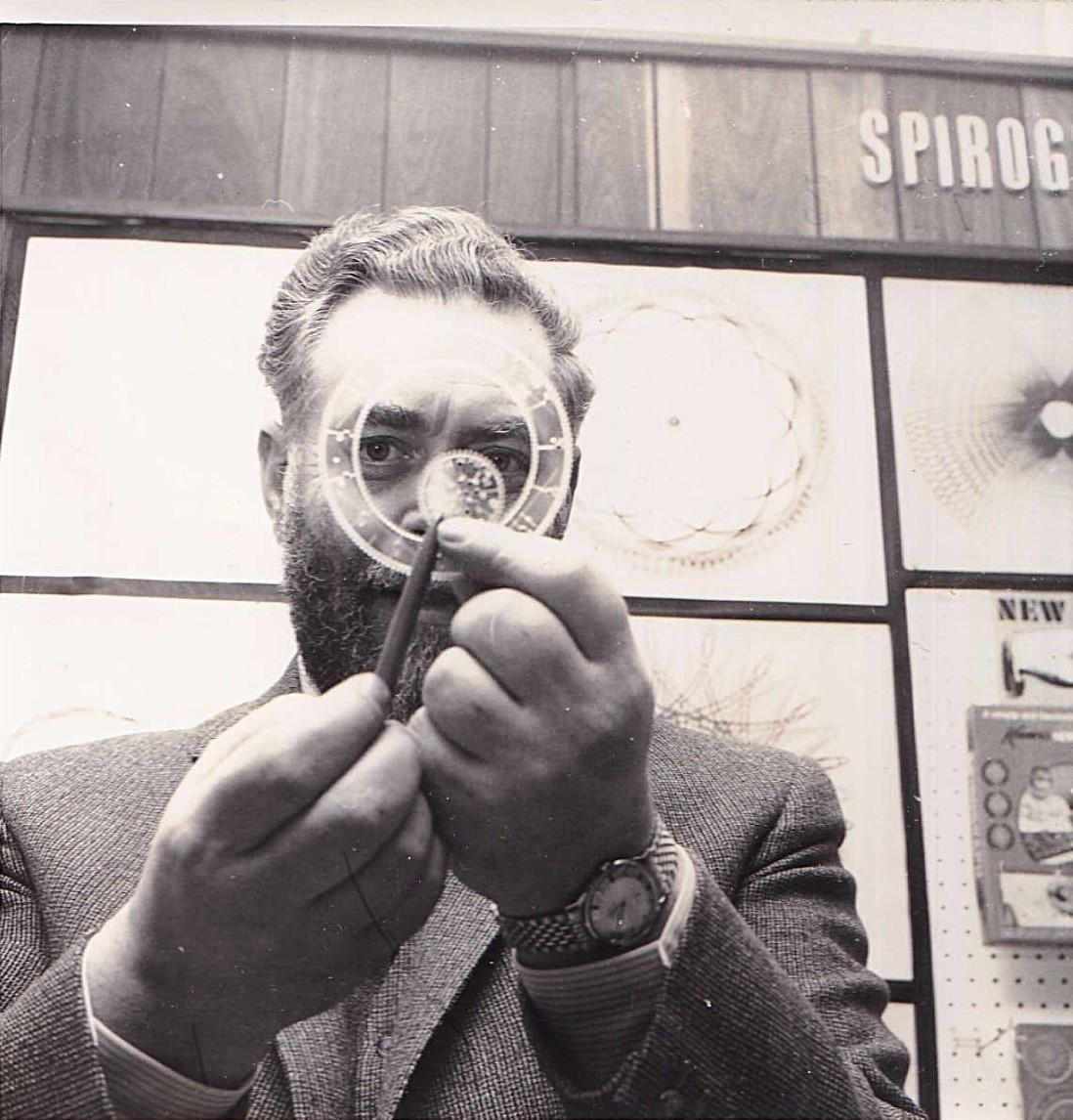
Learn how hypotrochoids and epitrochoids form spirograph curves—R, r, and d, closing conditions, the Denys Fisher toy, and digital mandalas you can draw in PictorX.
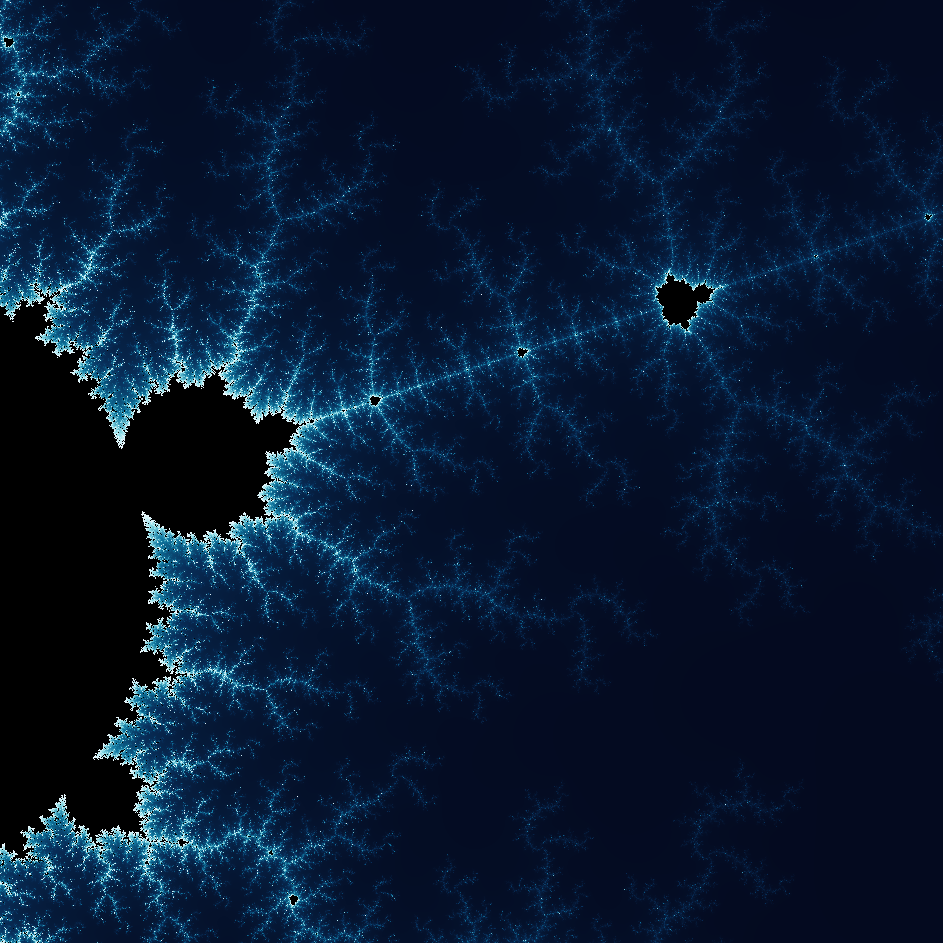
Explore the wonderful world of Fractals
Explore the wonderful world of Fractals. Fractals are complex, detailed geometric patterns found throughout the natural world.
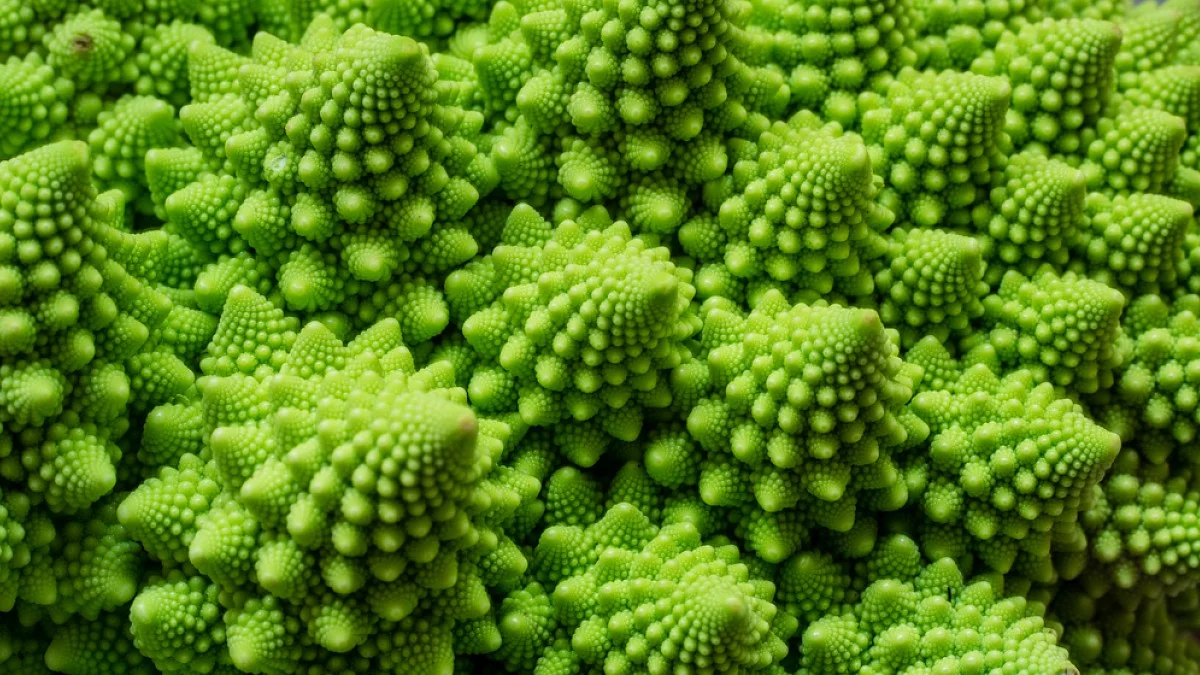
Fractals
Learn how the Mandelbrot set, Julia sets, Newton fractals, and Nova fractals are generated—and why zooming never runs out of detail.
Ready to try it?
Open PictorX in your browser — no install, no credit card required to start.
Try Painting Pendulum