
Kaleidoscopes
Read more about kaleidoscopes—from Brewster’s tube of mirrors to the radial photo filters you can try in PictorX.
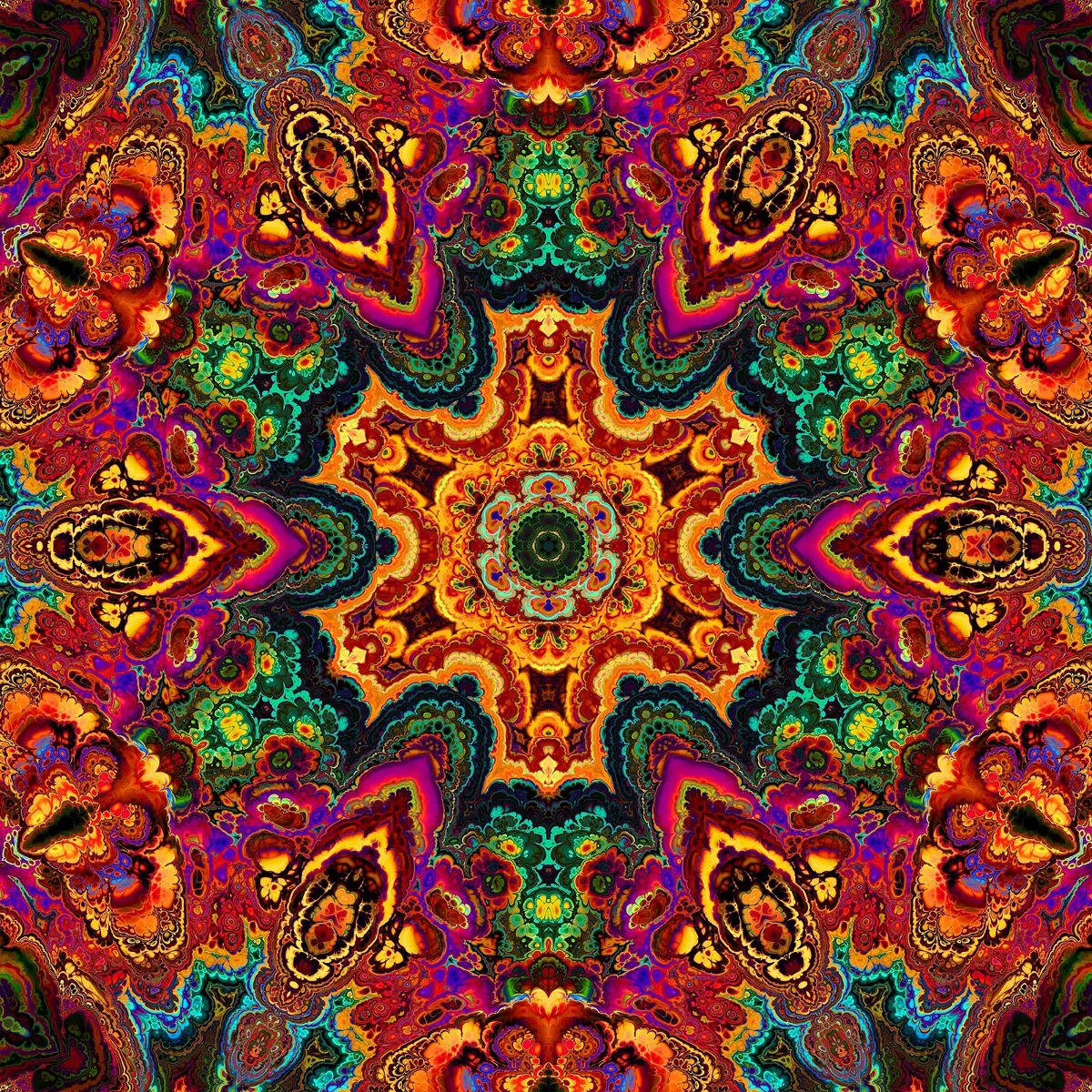
What is a kaleidoscope?
A kaleidoscope is an optical toy that turns loose bits of color into endlessly changing patterns. You look into one end of a tube; at the other end, beads, glass, or paper sit in a cell. Between your eye and those bits, two or three long mirrors meet at an angle. Each reflection of a reflection fills the circle with symmetry—so a handful of shards looks like a stained-glass rose that never stops rearranging itself when you turn the tube.
Brewster and a name from Greek
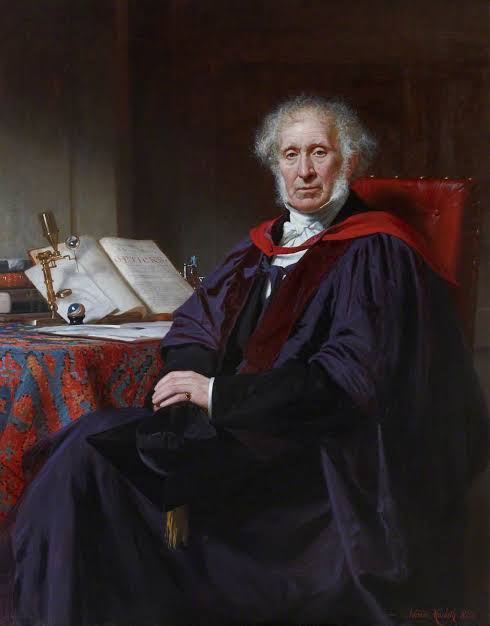
Sir David Brewster, a Scottish scientist known for work on polarized light, invented the kaleidoscope around 1816 and patented it in 1817. The word joins Greek kalos (beautiful), eidos (form), and skopeō (to look): “observer of beautiful forms.” Victorian drawing rooms snapped them up; later makers built pocket tubes, teleidoscopes that point at the world instead of beads, and parlor instruments with brass and stained glass. The idea stayed the same: mirrors plus something colorful to reflect.
How the mirrors work
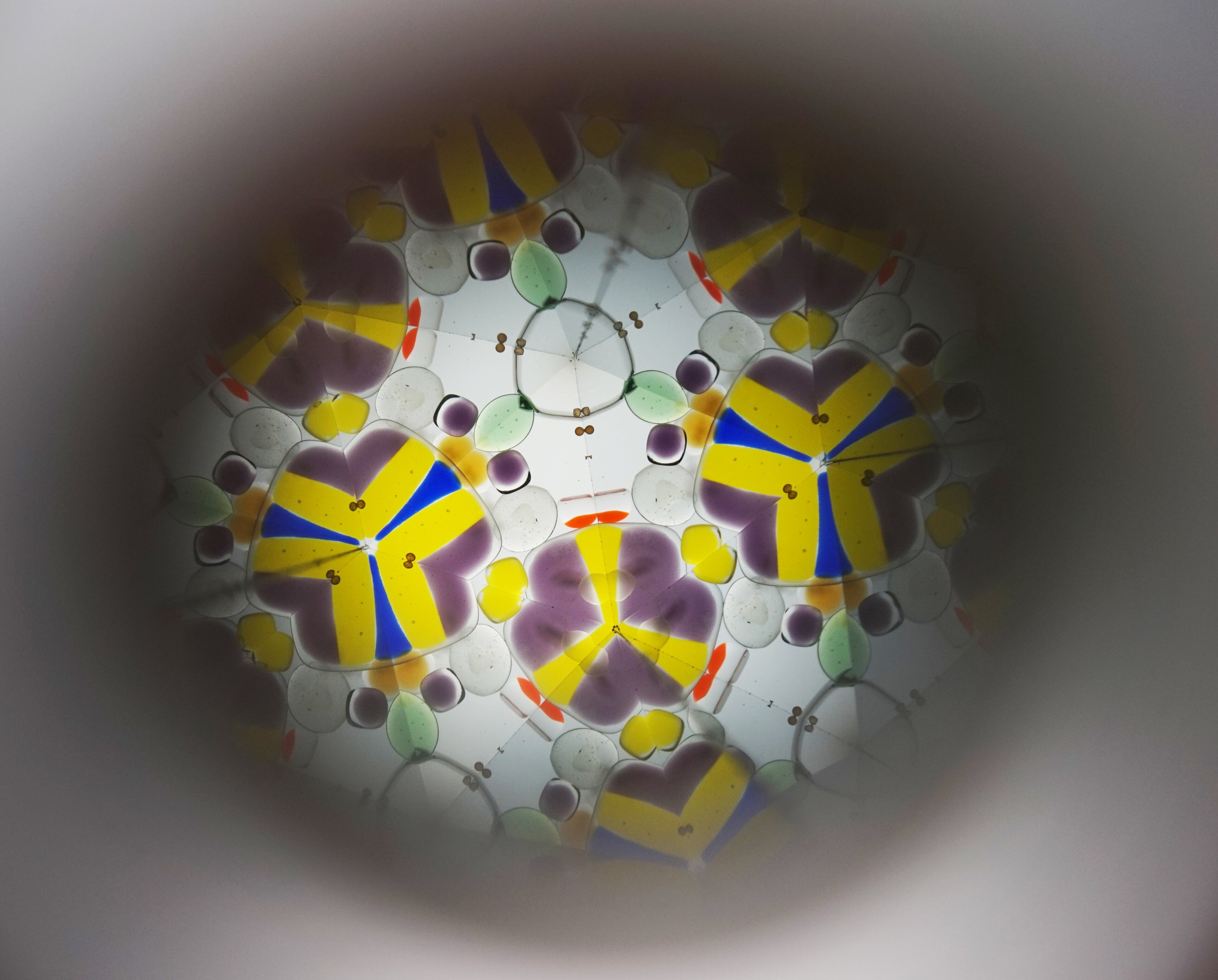
Most classic kaleidoscopes use two or three rectangular mirrors running the length of the tube. With two mirrors, the angle between them decides how many times the scene is repeated around the circle: roughly 360° divided by that angle. A 60° V makes six wedges; 45° makes eight; 30° makes twelve. Three mirrors meeting in a triangular tunnel bounce light into a denser honeycomb of copies. You never see the “real” beads alone—you see a bouquet built from reflections stacked edge to edge.
Patterns, cells, and teleidoscopes
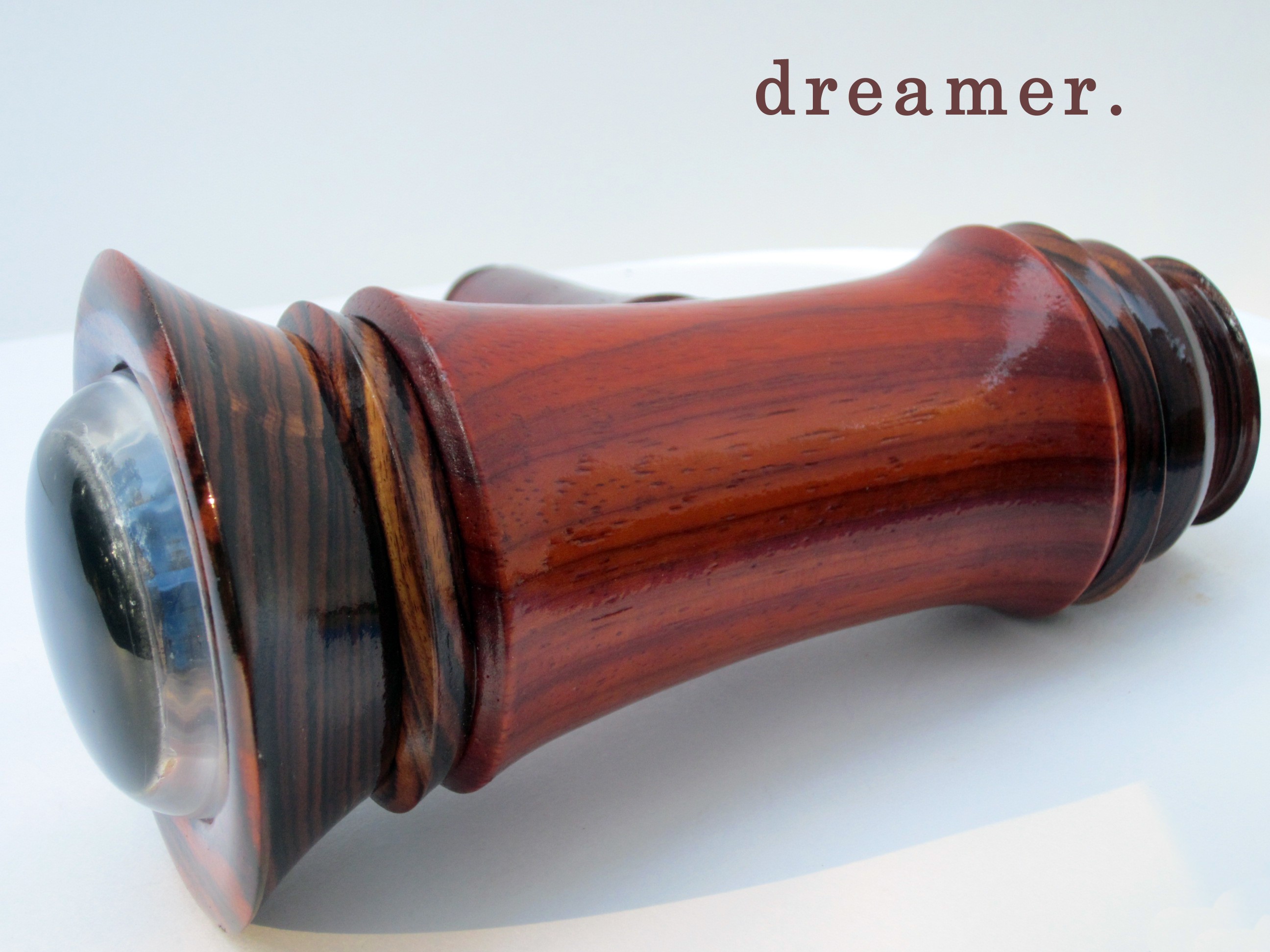
The object cell can hold loose beads, crushed glass, feathers, or oil with glitter. Turn the tube and gravity reshuffles the ingredients; the mirrors multiply every shuffle into a new mandala. A teleidoscope swaps the closed cell for a lens aimed at whatever is in front of you—leaves, neon, a friend’s face—so the world itself becomes the “beads.” Artists and designers still use both: physical tubes for play, and the same geometry for fabrics, logos, and album covers.
Digital kaleidoscope filters
Photo apps and editors copy the same geometry without glass. A digital kaleidoscope picks a wedge of your image—defined by sides (how many copies meet at the center), angle (which slice of the photo repeats), and rotation (how the finished mandala is turned)—then mirrors that wedge around the center. Portraits, flowers, birds, neon signs, and architecture fold into striking symmetry. Fewer sides keep more of the original scene readable; more sides pack denser crystal patterns.
Tips for stronger digital patterns
Start with a subject that has clear edges and color contrast near the center of the frame—eyes, petals, lamps, windows. Busy backgrounds still work, but a strong focal object makes the symmetry feel intentional. Try six sides first, then eight or twelve when you want a tighter crystal. Nudge angle until an interesting feature sits on the seam; rotate last to square the composition for a square export or social crop.
Kaleidoscope in PictorX
PictorX runs the kaleidoscope filter in your browser. Open the kaleidoscope page, load a photo, then tune sides, angle, and rotation until the pattern locks in. Keep editing with layers, text, and other reflection effects in the same workspace, or export the mandala when you are done. Related tools such as reflection effects sit nearby if you want a simple mirror before you fold the image into a full radial pattern.
Frequently asked questions
Who invented the kaleidoscope?
Sir David Brewster invented the kaleidoscope around 1816 and patented it in 1817. The name means “observer of beautiful forms” in Greek roots.
How do the mirrors create the pattern?
Two or three mirrors meet at an angle so each reflection is reflected again. The angle sets how many identical wedges fill the circle—about 360° divided by the mirror angle for a two-mirror V.
How is a kaleidoscope filter different from a mirror?
A mirror flips one side of the photo. A kaleidoscope repeats a wedge around the center into a radial, mandala-like pattern with many identical slices.
What photos work best for a digital kaleidoscope?
Images with a clear subject and color near the center—portraits, flowers, birds, neon, architecture—fold into strong symmetry. Start with about six sides, then raise the count for denser patterns.
Related tools
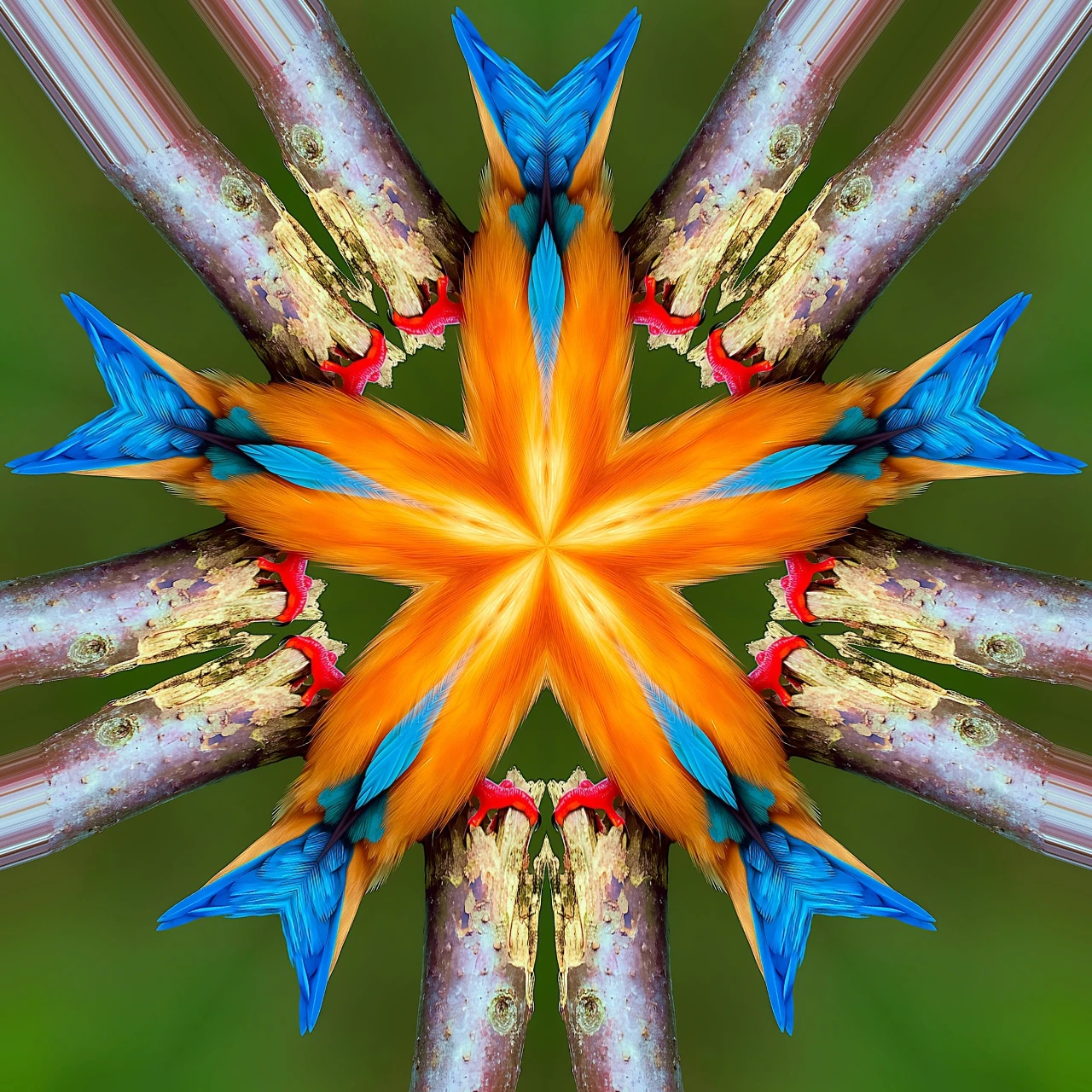
Fold a photo into a kaleidoscope
Turn a photo into a radial kaleidoscope pattern in your browser. Set sides, angle, and rotation.

Reflection effects
Mirror, tile, water, wet-floor, and kaleidoscope looks that flip a photo into a reflected composition.
Spirograph
Draw hypotrochoids and epitrochoids in your browser. Tune R, r, and pen offset, animate the curve, randomize styles, and save a PNG.
Explore the wonderful world of Fractals
Explore the wonderful world of Fractals. Fractals are complex, detailed geometric patterns found throughout the natural world.
Ready to try it?
Open PictorX in your browser — no install, no credit card required to start.
Try kaleidoscope