
Malependuler
Et malependul (Blackburn-pendul) tegner Lissajous-kurver med sand eller maling. Udforsk to harmoniske oscillatorer, rationale frekvensforhold og dæmpning—og tegn dem i PictorX.
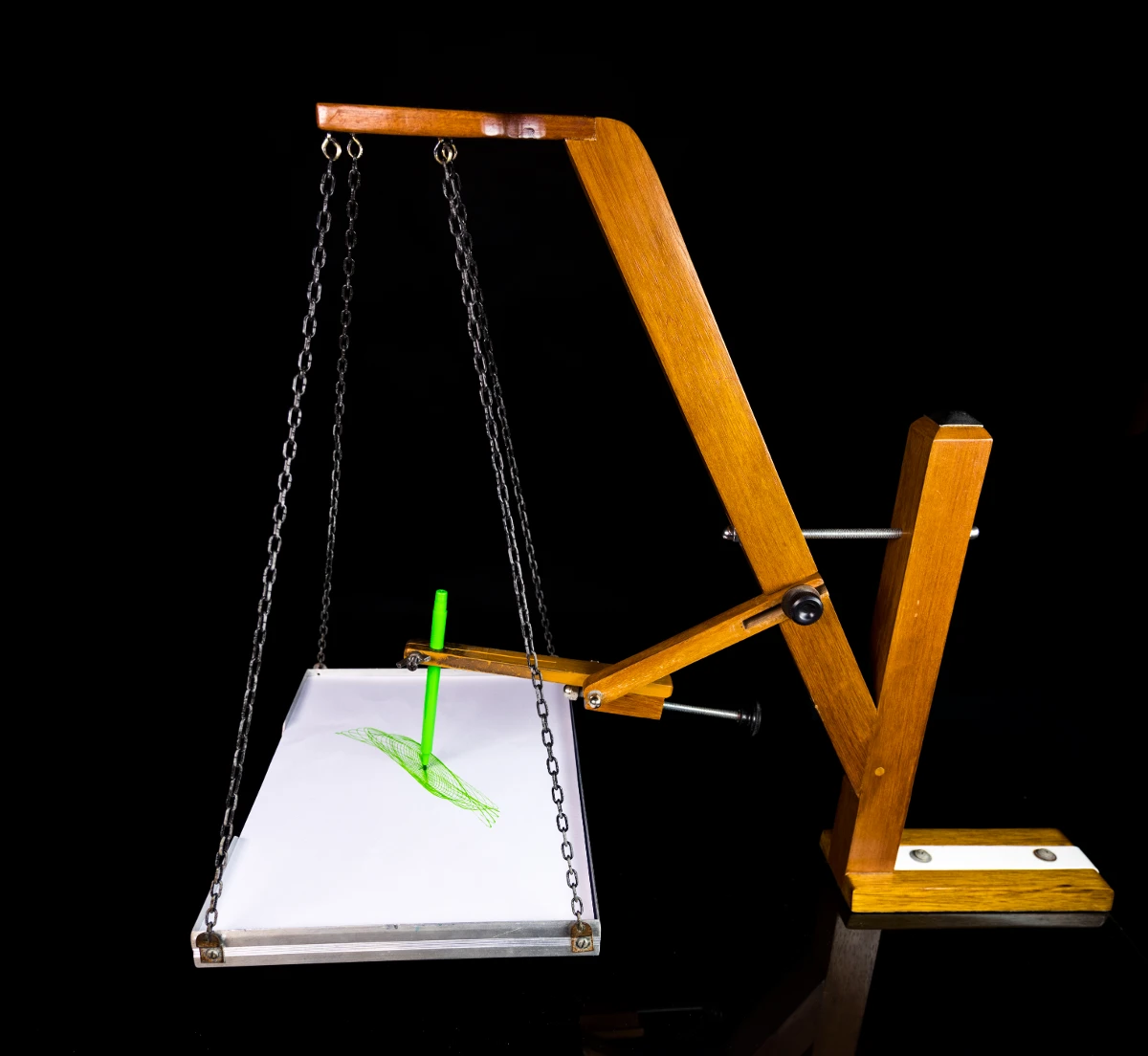
Hvad er et malependul?
A painting pendulum—also called a Blackburn pendulum—is a mass suspended so it can swing freely in two horizontal directions. When the bob carries sand, ink, or paint, its path leaves a curve on paper or canvas. The Dutch name schilder pendel (“painting pendulum”) captures the idea: the swing itself becomes the brush.
Harmonisk svingning
Along one axis a free pendulum behaves like a simple harmonic oscillator: x(t) = A cos(ωt + φ). Amplitude A sets the swing size, angular frequency ω how fast it oscillates, and phase φ where the motion starts. Ideal SHM ignores friction, so the bob would swing forever at constant amplitude.

Y-ophæng og to frekvenser
Blackburn’s arrangement uses a Y-shaped (or V-shaped) suspension: the string splits so the effective lengths for east–west and north–south motion differ. Different lengths mean different restoring rates, so ωx ≠ ωy. The bob therefore combines two perpendicular oscillators at once.
Lissajous-figurer
The plane curve (x(t), y(t)) from two sinusoids is a Lissajous figure. When the frequency ratio ωx:ωy is a simple rational number, the path closes into a neat pattern. Irrational ratios never close and densely fill a region. Phase difference turns a 1:1 ratio from a line into an ellipse or circle.

Frekvensforhold i overblik
1:1 yields a line, ellipse, or circle depending on phase. 1:2 draws a figure-eight (lemniscate-like) family. 2:3 and 3:4 weave denser nets and mandala-like lattices. Those ratios are the classics of both classroom demos and sand pendulums.

Dæmpning og spiralmalen
Real pendulums lose energy. Multiplying each axis by e^(−kt) shrinks the amplitude over time, so loops spiral inward—the familiar “painting pendulum” look on paper. Larger k settles faster; tiny k lets many revolutions paint before the bob rests.
Prøv Painting Pendulum i PictorX
Open /painting-pendulum to paint damped Lissajous curves in your browser. Pick a ratio, tune amplitudes, phases, and damping, animate the trail, and save a PNG. Pair it with Spirograph or Fractal Generator for more geometric play.
Ofte stillede spørgsmål
What is a Blackburn pendulum?
A pendulum suspended so it can swing in two perpendicular directions with different effective lengths (often via a Y-shaped support). The combined motion traces Lissajous curves; with sand or paint it becomes a painting pendulum.
How do Lissajous figures relate to pendulums?
Each horizontal axis acts as a harmonic oscillator. Plotting both positions over time yields a Lissajous figure. Rational frequency ratios close; irrational ones never quite repeat.
Why does the paint spiral inward?
Damping (air drag, friction) reduces amplitude roughly like e^(−kt). Successive loops shrink toward the centre, creating the spiral paint effect.
What does a 1:2 or 3:4 ratio look like?
1:2 often looks like a figure-eight. 3:4 (and 2:3) produce woven, net-like patterns with more crossings—great for dense ornamental trails.
Is PictorX Painting Pendulum a physical device?
No. It is a browser simulation of the same mathematics: two damped oscillators forming Lissajous paint paths you can randomise, animate, and export.
Relaterede værktøjer
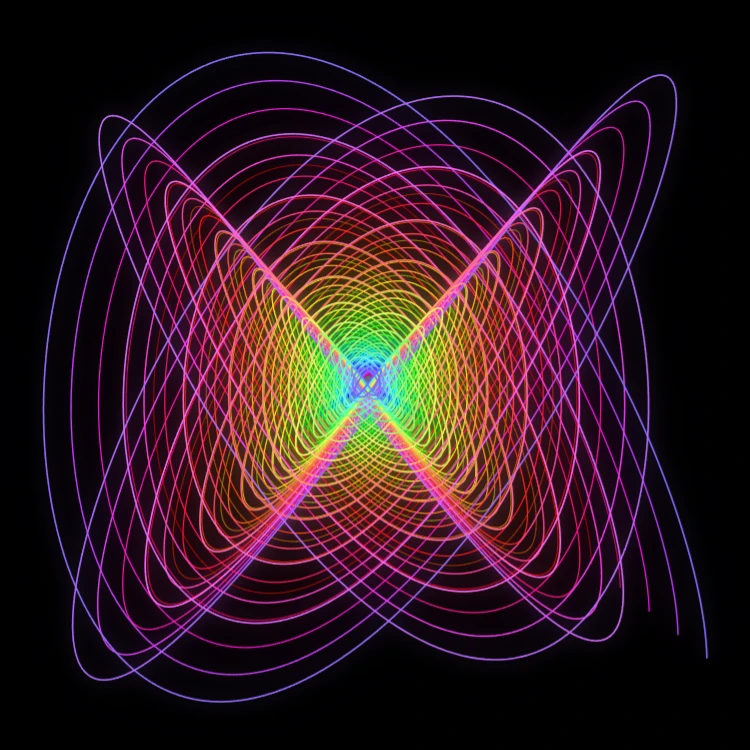
Malependul
Mal dæmpede Lissajous-kurver i browseren—det klassiske Blackburn-malependul. Indstil frekvensforhold, faser og dæmpning, animér sporet og gem en PNG.
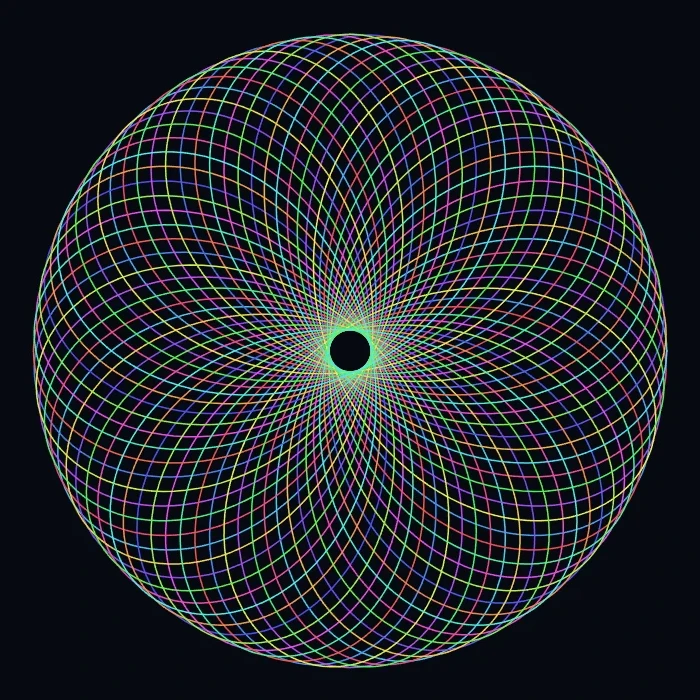
Spirograf
Tegn hypotrochoider og epitrochoider i browseren. Juster R, r og pen-offset, animér, randomisér og gem en PNG.
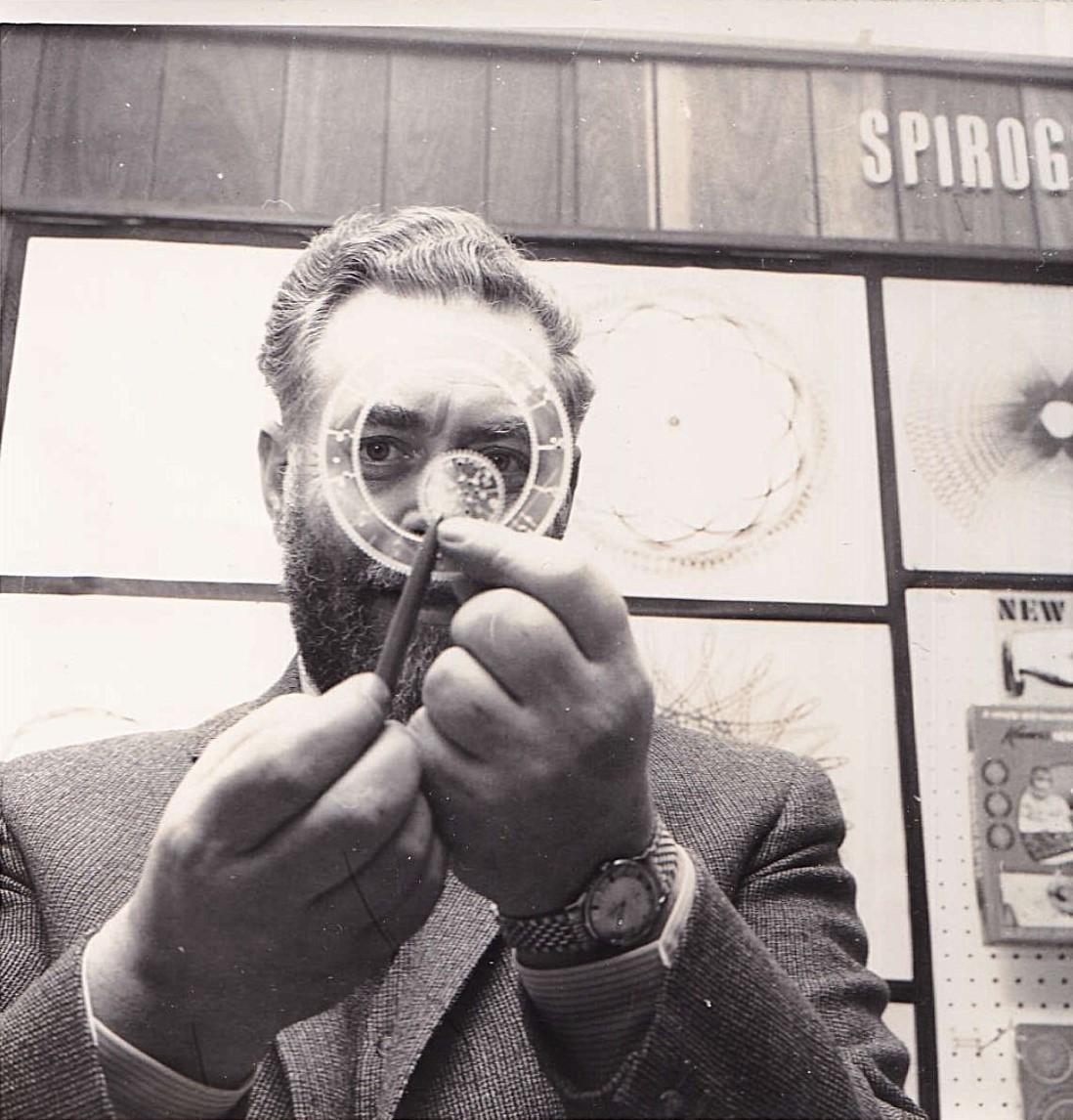
Spirografer
Lær, hvordan hypotrochoider og epitrochoider danner spirografkurver—R, r og d, lukkebetingelser, Denys Fisher-legetøjet og digitale mandalaer i PictorX.
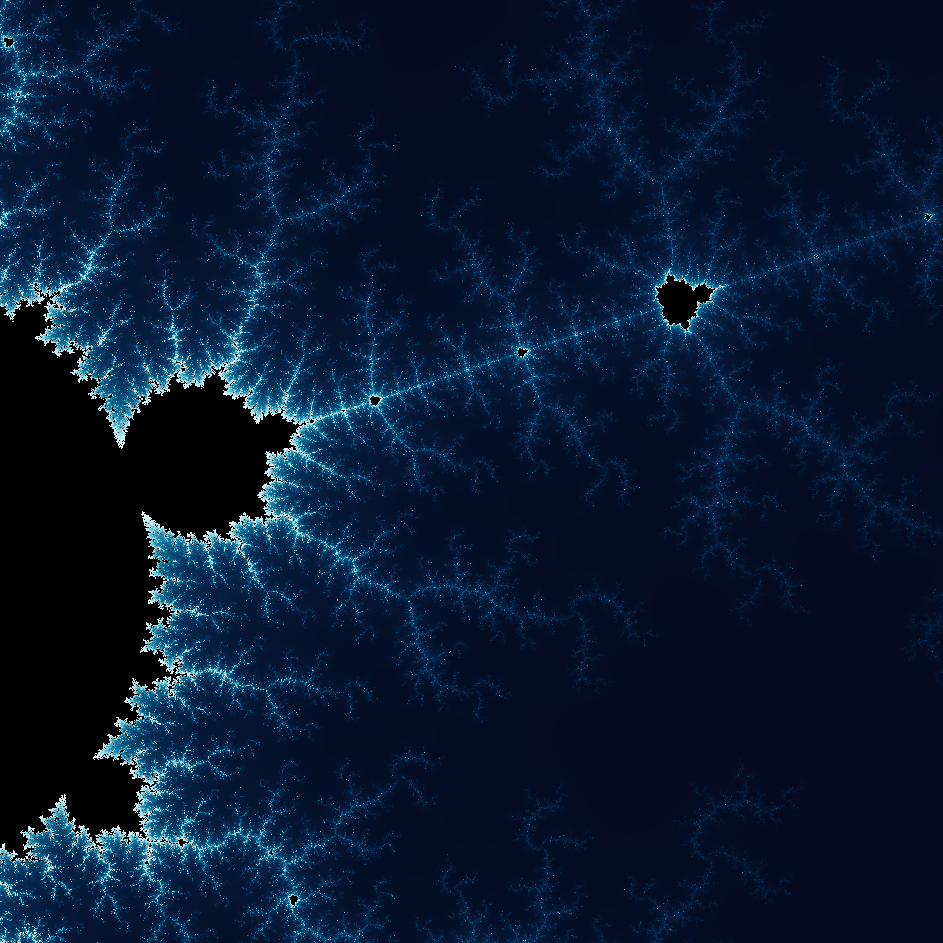
Udforsk den vidunderlige verden af Fractals
Udforsk den vidunderlige verden af Fractals. Fraktaler er komplekse, detaljerede geometriske mønstre findes i hele den naturlige verden.
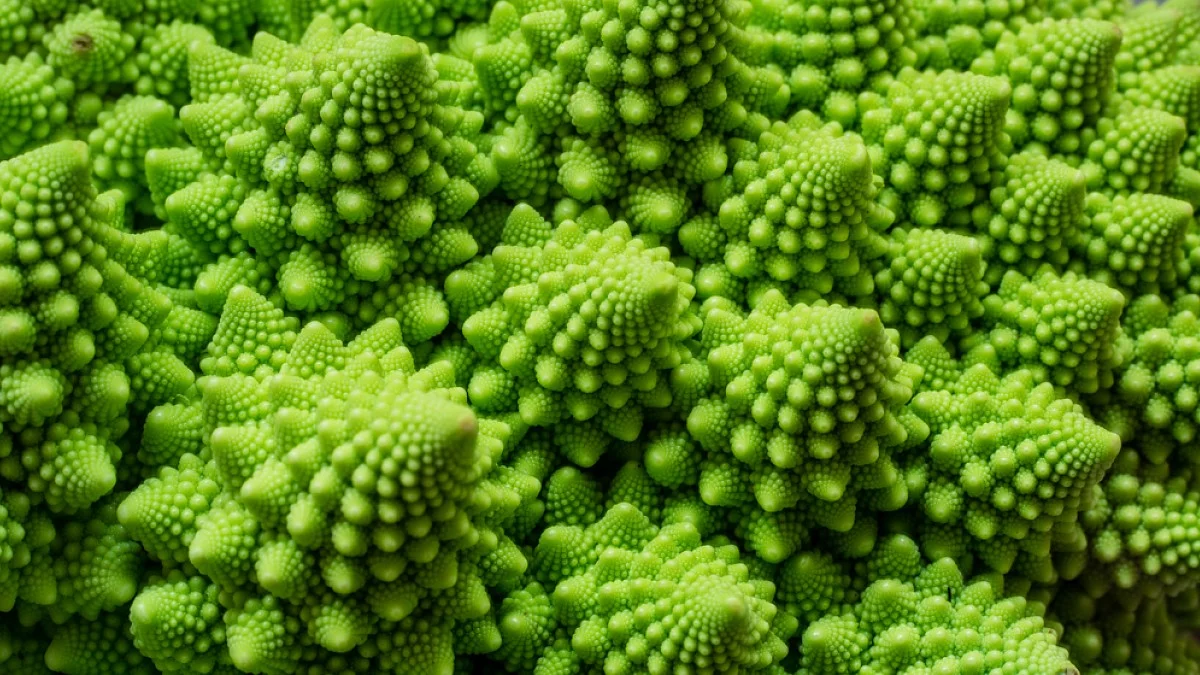
Fraktaler
Lær hvordan Mandelbrot-mængden, Julia-mængder, Newton-fraktaler og Nova-fraktaler genereres—og hvorfor zooming aldrig løber tør for detaljer.
Er du klar til at prøve?
Åbn PictorX i din browser - ingen installation, ingen kreditkort kræves for at starte.
Prøv Painting Pendulum