
Pendoli pittori
Un pendolo pittore (pendolo di Blackburn) traccia curve di Lissajous con sabbia o vernice. Esplora due oscillatori armonici, rapporti razionali e smorzamento—poi disegnali in PictorX.
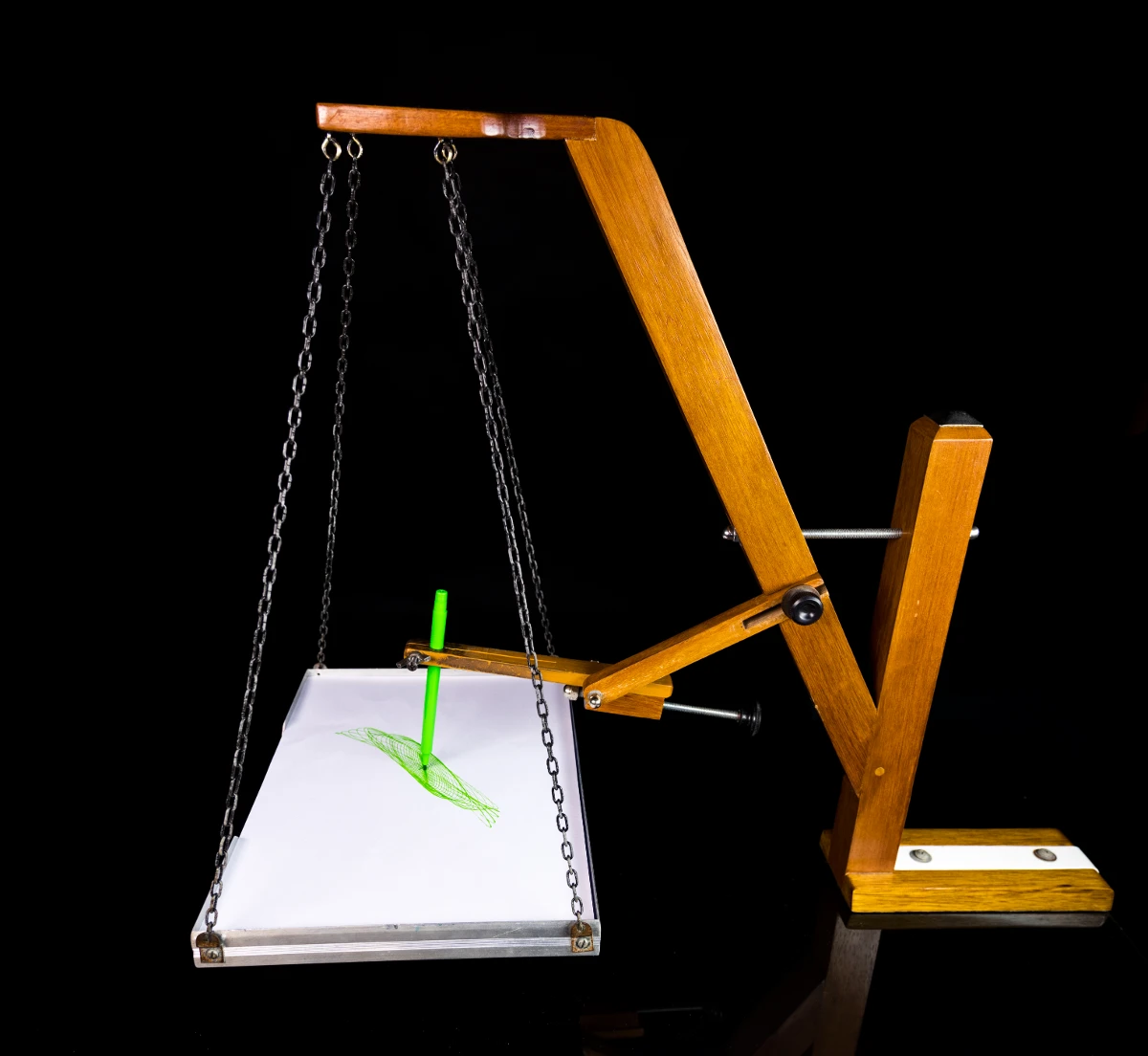
Cos’è un pendolo pittore?
A painting pendulum—also called a Blackburn pendulum—is a mass suspended so it can swing freely in two horizontal directions. When the bob carries sand, ink, or paint, its path leaves a curve on paper or canvas. The Dutch name schilderpendel (“painting pendulum”) captures the idea: the swing itself becomes the brush.
Moto armonico semplice
Along one axis a free pendulum behaves like a simple harmonic oscillator: x(t) = A cos(ωt + φ). Amplitude A sets the swing size, angular frequency ω how fast it oscillates, and phase φ where the motion starts. Ideal SHM ignores friction, so the bob would swing forever at constant amplitude.
Sospensione a Y e due frequenze
Blackburn’s arrangement uses a Y-shaped (or V-shaped) suspension: the string splits so the effective lengths for east–west and north–south motion differ. Different lengths mean different restoring rates, so ωx ≠ ωy. The bob therefore combines two perpendicular oscillators at once.
Figure di Lissajous
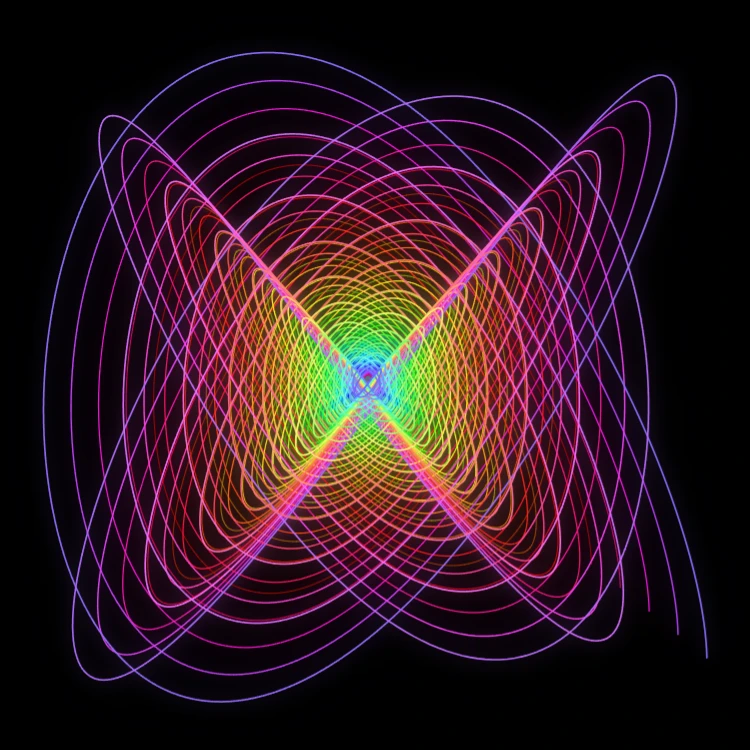
The plane curve (x(t), y(t)) from two sinusoids is a Lissajous figure. When the frequency ratio ωx:ωy is a simple rational number, the path closes into a neat pattern. Irrational ratios never close and densely fill a region. Phase difference turns a 1:1 ratio from a line into an ellipse or circle.
Rapporti di frequenza in sintesi
1:1 yields a line, ellipse, or circle depending on phase. 1:2 draws a figure-eight (lemniscate-like) family. 2:3 and 3:4 weave denser nets and mandala-like lattices. Those ratios are the classics of both classroom demos and sand pendulums.
Smorzamento e effetto spirale
Real pendulums lose energy. Multiplying each axis by e^(−kt) shrinks the amplitude over time, so loops spiral inward—the familiar “painting pendulum” look on paper. Larger k settles faster; tiny k lets many revolutions paint before the bob rests.
Prova Painting Pendulum in PictorX
Open /painting-pendulum to paint damped Lissajous curves in your browser. Pick a ratio, tune amplitudes, phases, and damping, animate the trail, and save a PNG. Nothing is uploaded. Pair it with Spirograph or Fractal Generator for more geometric play.
Domande frequenti
What is a Blackburn pendulum?
A pendulum suspended so it can swing in two perpendicular directions with different effective lengths (often via a Y-shaped support). The combined motion traces Lissajous curves; with sand or paint it becomes a painting pendulum.
How do Lissajous figures relate to pendulums?
Each horizontal axis acts as a harmonic oscillator. Plotting both positions over time yields a Lissajous figure. Rational frequency ratios close; irrational ones never quite repeat.
Why does the paint spiral inward?
Damping (air drag, friction) reduces amplitude roughly like e^(−kt). Successive loops shrink toward the centre, creating the spiral paint effect.
What does a 1:2 or 3:4 ratio look like?
1:2 often looks like a figure-eight. 3:4 (and 2:3) produce woven, net-like patterns with more crossings—great for dense ornamental trails.
Strumenti correlati
Pendolo pittore
Dipingi curve di Lissajous smorzate nel browser—il classico pendolo di Blackburn. Regola rapporti di frequenza, fasi e smorzamento, anima il tratto e salva un PNG. Nulla viene caricato.
Spirografo
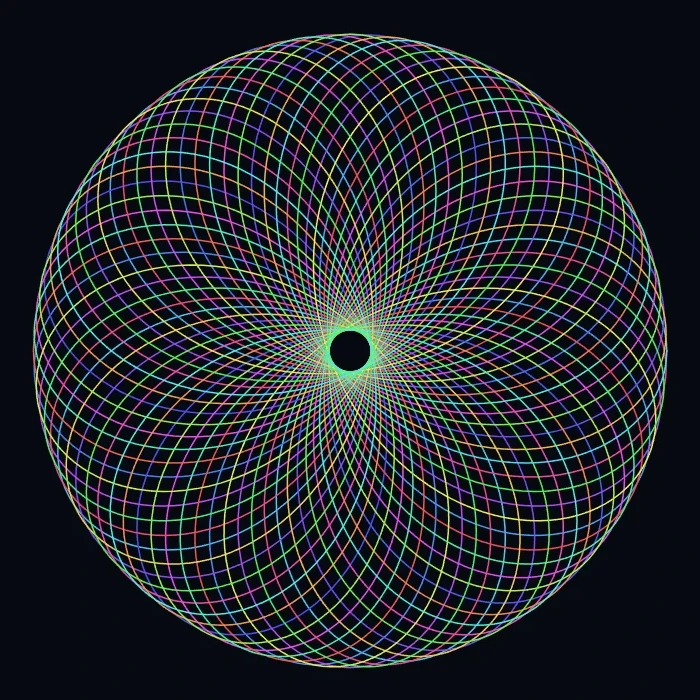
Disegna ipotrocoidi ed epitrocoidi nel browser. Regola R, r e offset della penna, anima, randomizza e salva un PNG. Nulla viene caricato.
Spirografi
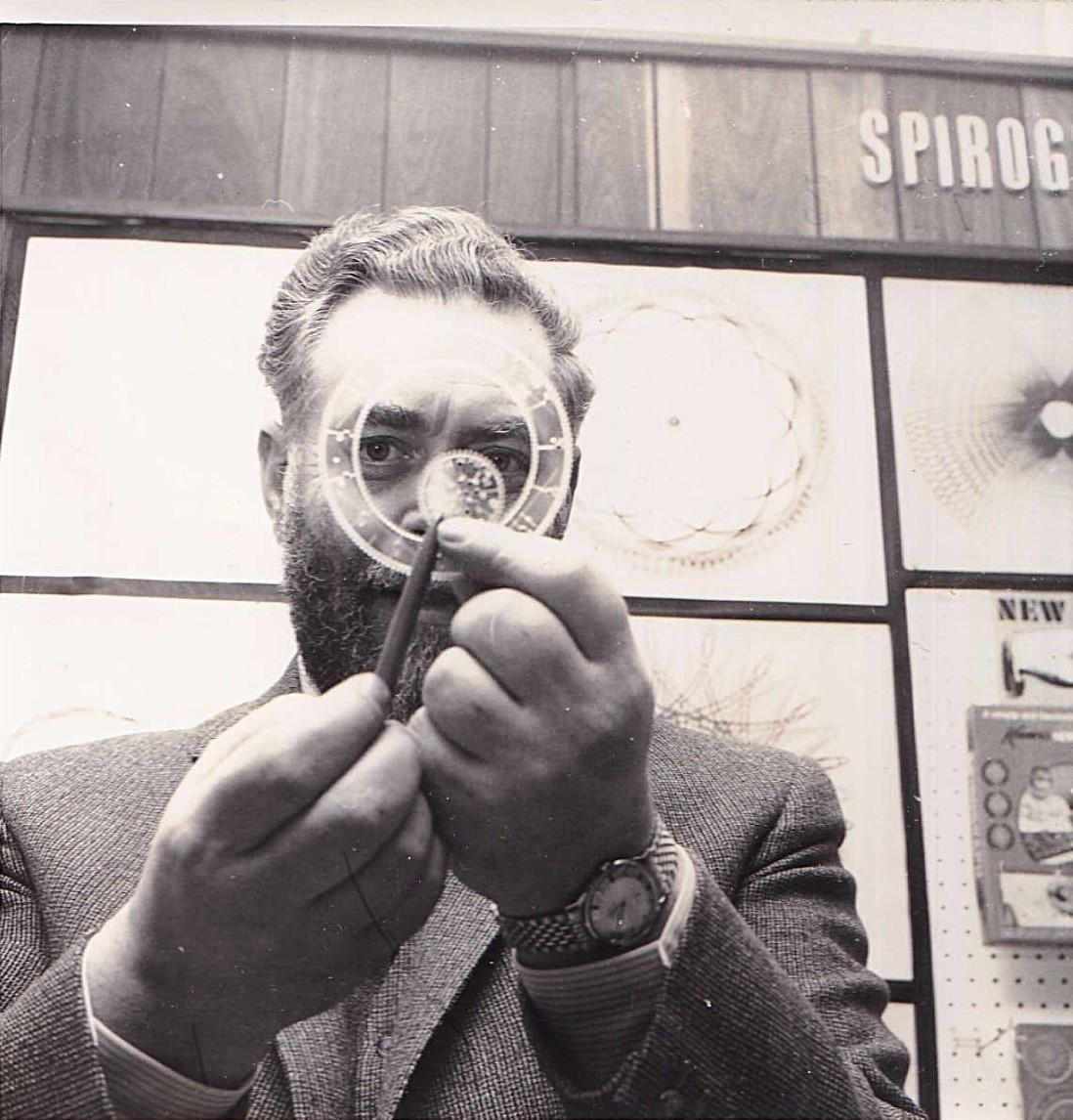
Scopri come ipotrocoidi ed epitrocoidi formano curve a spirografo—R, r e d, condizioni di chiusura, il giocattolo Denys Fisher e mandala digitali in PictorX.
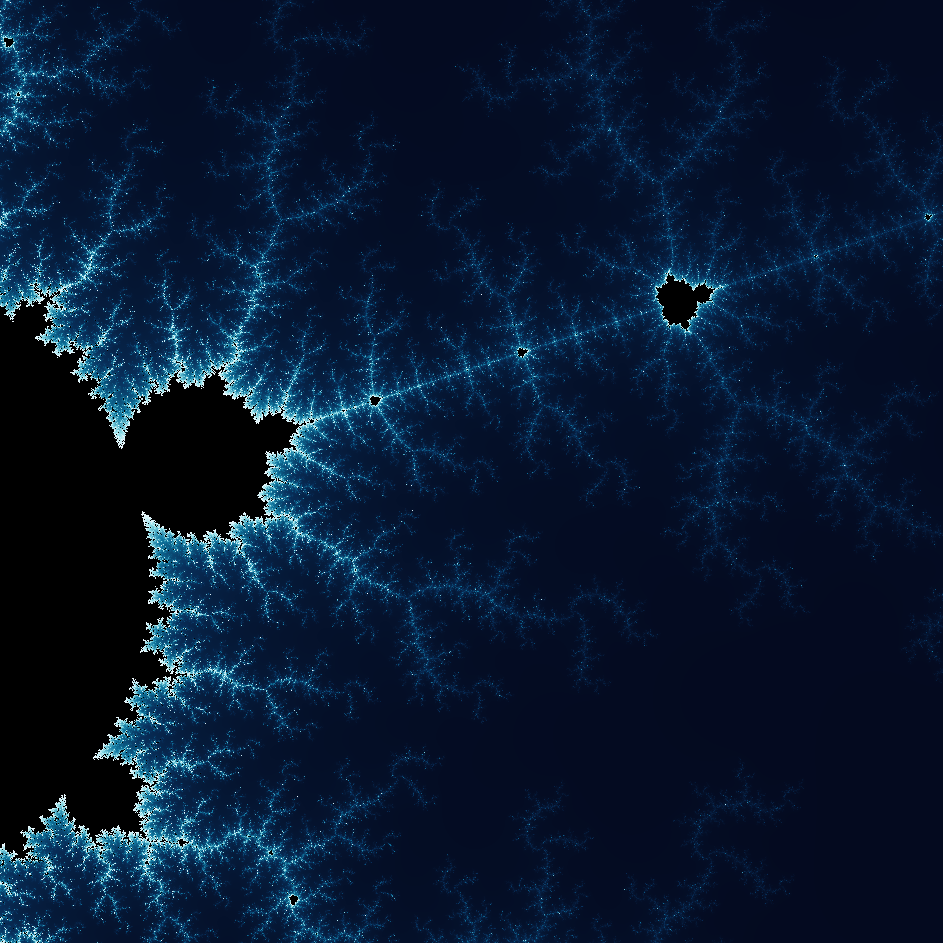
Esplora il meraviglioso mondo dei frattali
Esplora il meraviglioso mondo dei frattali. I frattali sono motivi geometrici complessi e dettagliati presenti in tutta la natura.
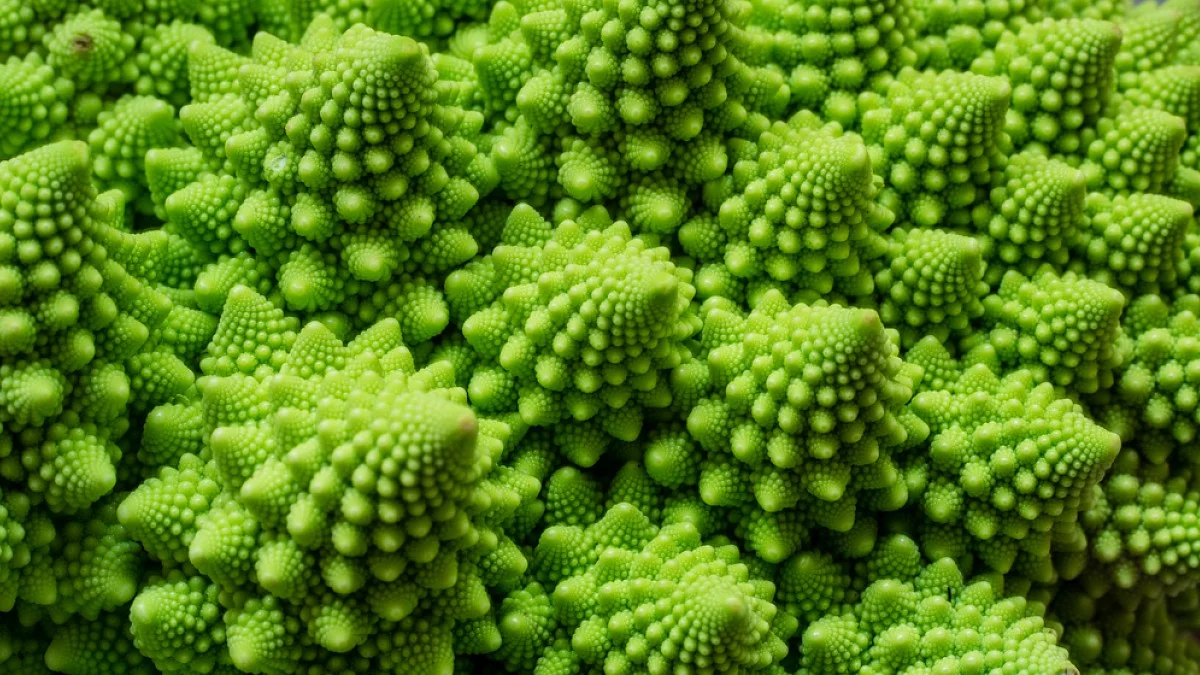
Frattali
Scopri come si generano l’insieme di Mandelbrot, gli insiemi di Julia, i frattali di Newton e i frattali Nova—e perché lo zoom non finisce mai i dettagli.
Pronto a provarlo?
Apri PictorX nel tuo browser: nessuna installazione, nessuna carta di credito richiesta per iniziare.
Prova Painting Pendulum