
Op Art
Read more about Op Art—the art of the 1960s that makes flat pictures swell, ripple and flicker with nothing but stripes, squares and circles, from Victor Vasarely and Bridget Riley to Soto and Cruz-Diez—and turn a photo into an optical illusion with the Op Art app in PictorX.
What is Op Art?
Op Art, short for optical art, is a style of abstract painting that took the art world by storm in the mid-1960s. Its pictures are made of nothing but precise geometric forms—stripes, checkerboards, circles, dots and squares—usually in strongly contrasting black and white or in bright colours. Arranged with great care, these simple forms trick the eye: flat canvases seem to bulge, ripple, flicker, spin or vibrate, and some even make viewers feel slightly dizzy. Op Art does not tell a story or show the world; its subject is the act of seeing itself. The name first appeared in print in Time magazine in 1964, as a counterpart to Pop Art.
Old illusions, new art
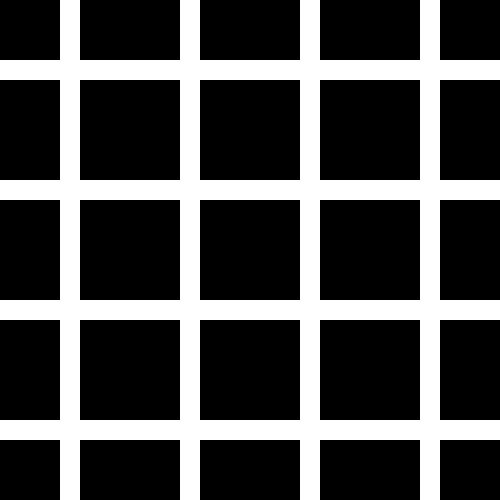
Op Art had roots in science and in the Bauhaus. In the nineteenth century psychologists collected optical illusions that show how easily the eye is fooled: in the Hermann grid of 1870, grey spots flicker at the crossings of white lines on a black ground, although none are there. In the 1920s the Bauhaus taught artists to study perception and to build pictures from simple elements, and teachers such as Josef Albers explored how colours change one another. Marcel Duchamp's spinning Rotoreliefs of 1935 already turned flat circles into moving depth. The op artists of the 1950s and 1960s made such effects the whole point of a painting.
Victor Vasarely, the father of Op Art
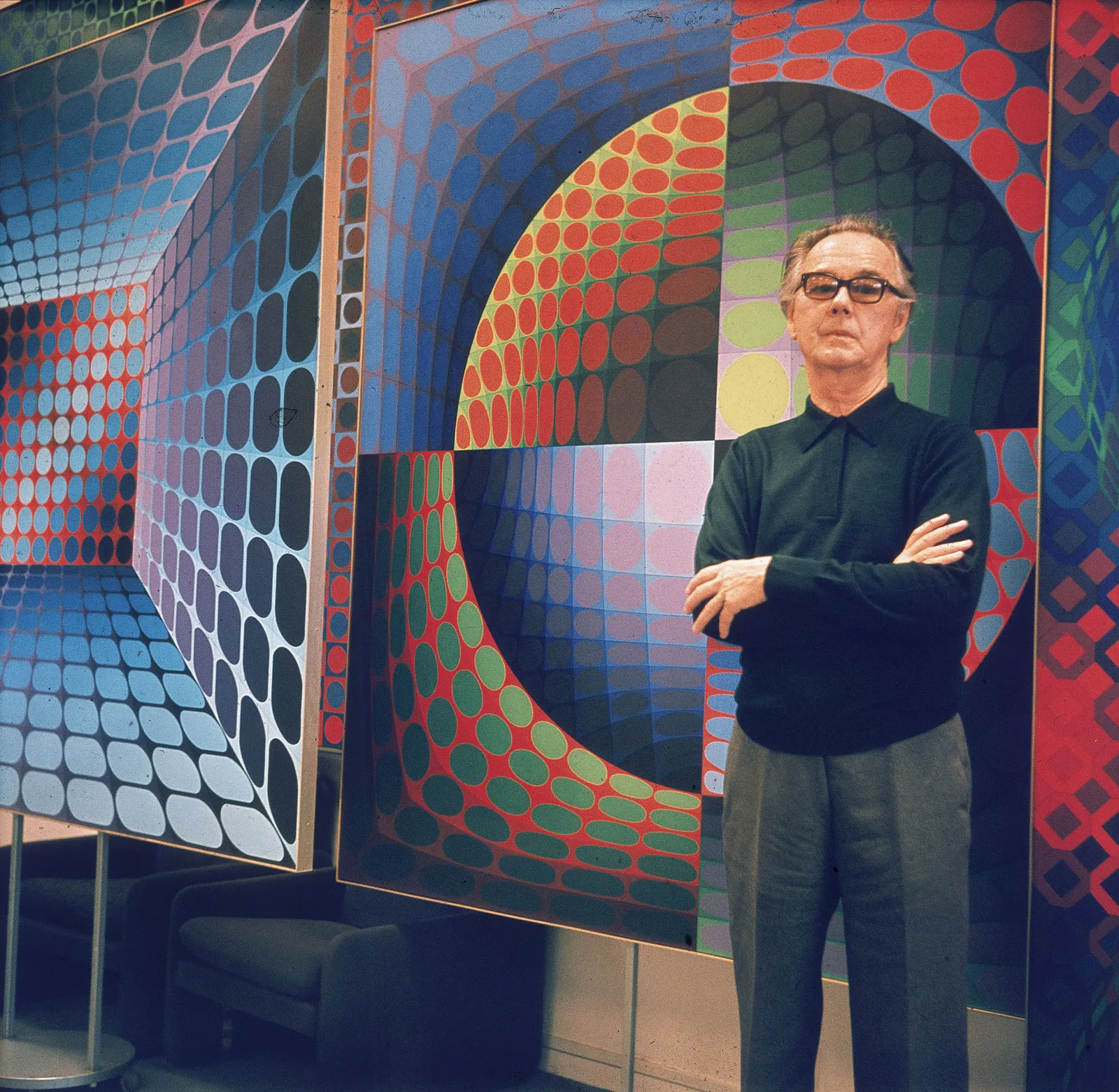
The Hungarian-born painter Victor Vasarely (1906–1997) is often called the father of Op Art. Born in Pécs, he studied in Budapest at a small school known as the Budapest Bauhaus and in 1930 moved to Paris, where he worked for years as a graphic designer for advertising agencies. In 1937 he made Zebras, black and white stripes that bend to form two zebras without a single outline—one of the first works of Op Art. In 1955 he published his Yellow Manifesto for the exhibition Le Mouvement at the Galerie Denise René in Paris, calling for an art of movement and perception, made with new techniques and open to everyone.
Vega: the swelling grid
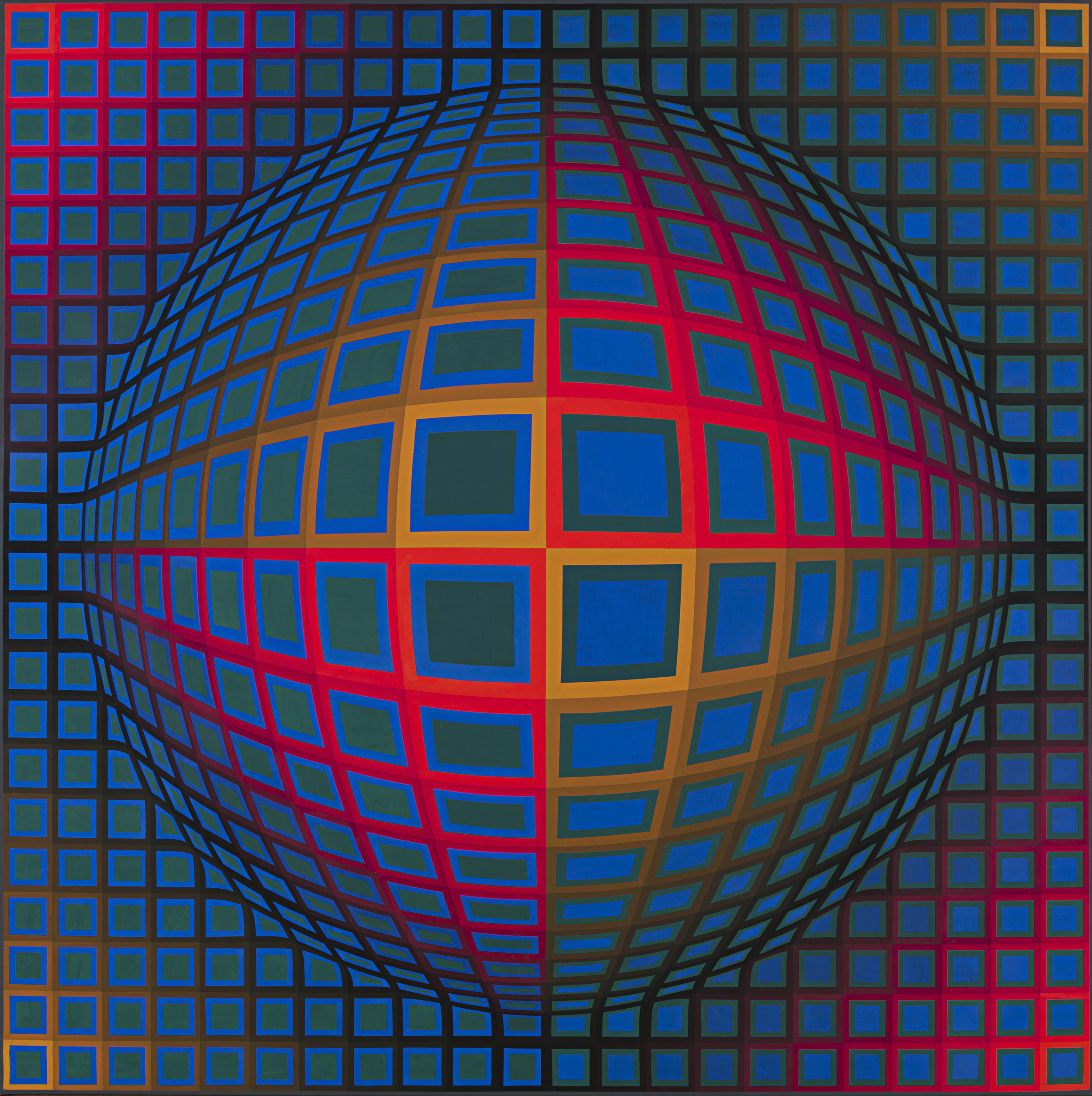
From the 1960s Vasarely built his pictures from what he called plastic units: a coloured square with a smaller shape—a circle, a square or a rhombus—in a contrasting colour inside it. Combined like the letters of an alphabet, these units could be repeated, recoloured and printed endlessly, which suited his dream of an art for everyone, sold as affordable prints. In his Vega series of the late 1960s a checkerboard of such units seems to swell into a sphere: the squares and circles grow towards the middle and shrink towards the edges, so that the flat canvas bulges towards the viewer. Vega-Nor (1969), in the Buffalo AKG Art Museum, is a famous example.
Bridget Riley in black and white
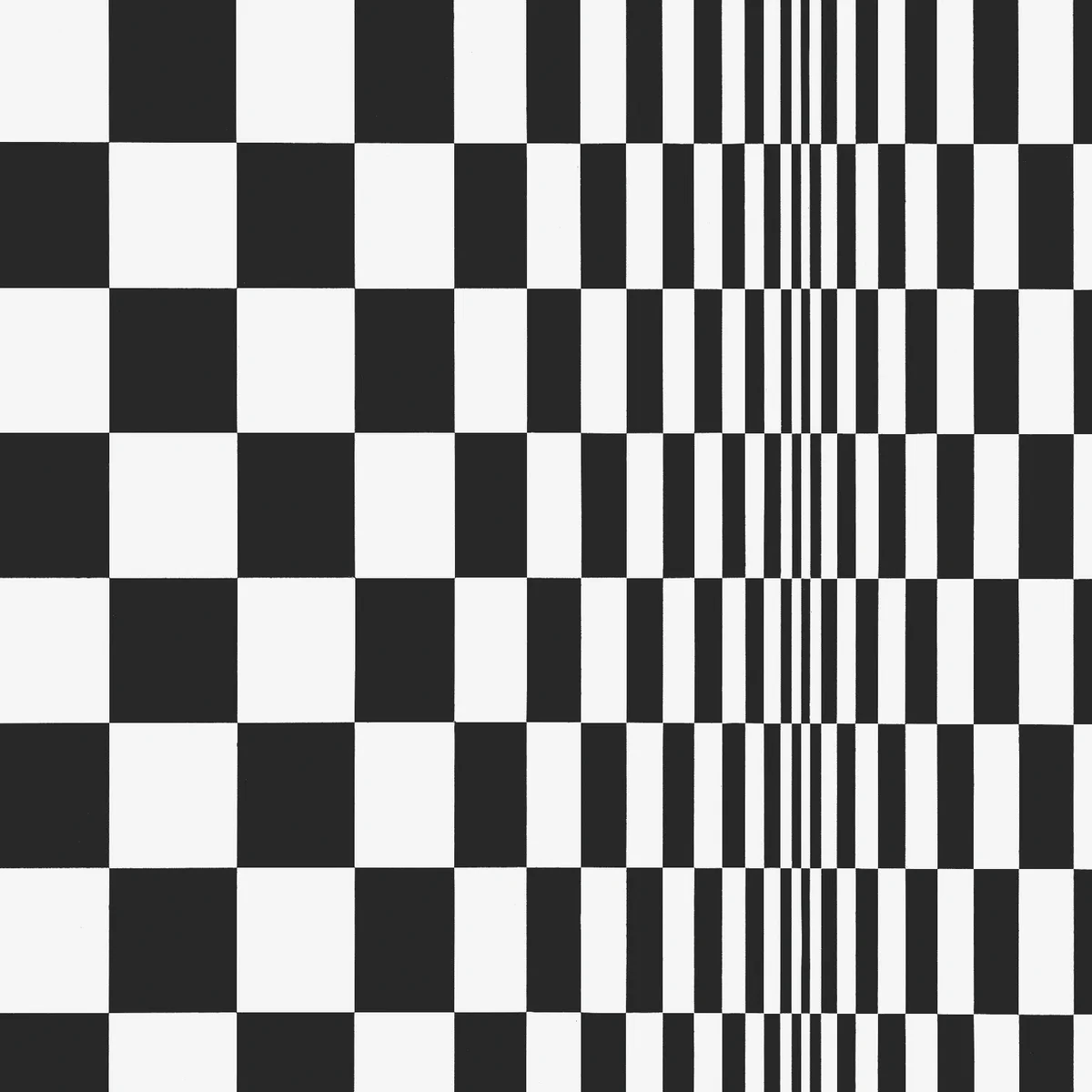
The British painter Bridget Riley, born in London in 1931, made her name with black and white paintings in the early 1960s. In Movement in Squares (1961) a simple checkerboard is squeezed towards a vertical line, and the surface seems to fold away and come back. In Fall (1963) and Current (1964) thin black lines curve and tighten until the whole canvas seems to flow and shimmer. Riley planned every work with exact studies, and later worked with assistants who painted the final canvases. In 1968 she became the first woman to win the International Prize for Painting at the Venice Biennale.
The Responsive Eye
In 1965 the Museum of Modern Art in New York opened The Responsive Eye, an exhibition of more than a hundred works by artists from many countries, curated by William C. Seitz. Riley's Current was on the cover of the catalogue. The show was a huge success with the public, and within weeks op-art patterns appeared on dresses, shop windows, posters and advertisements. Many critics, however, dismissed the style as a passing gimmick, and Riley was dismayed to see her work copied on clothes in New York shop windows. The exhibition made Op Art famous—and made it fashionable almost too quickly.
Light, colour and movement in Latin America
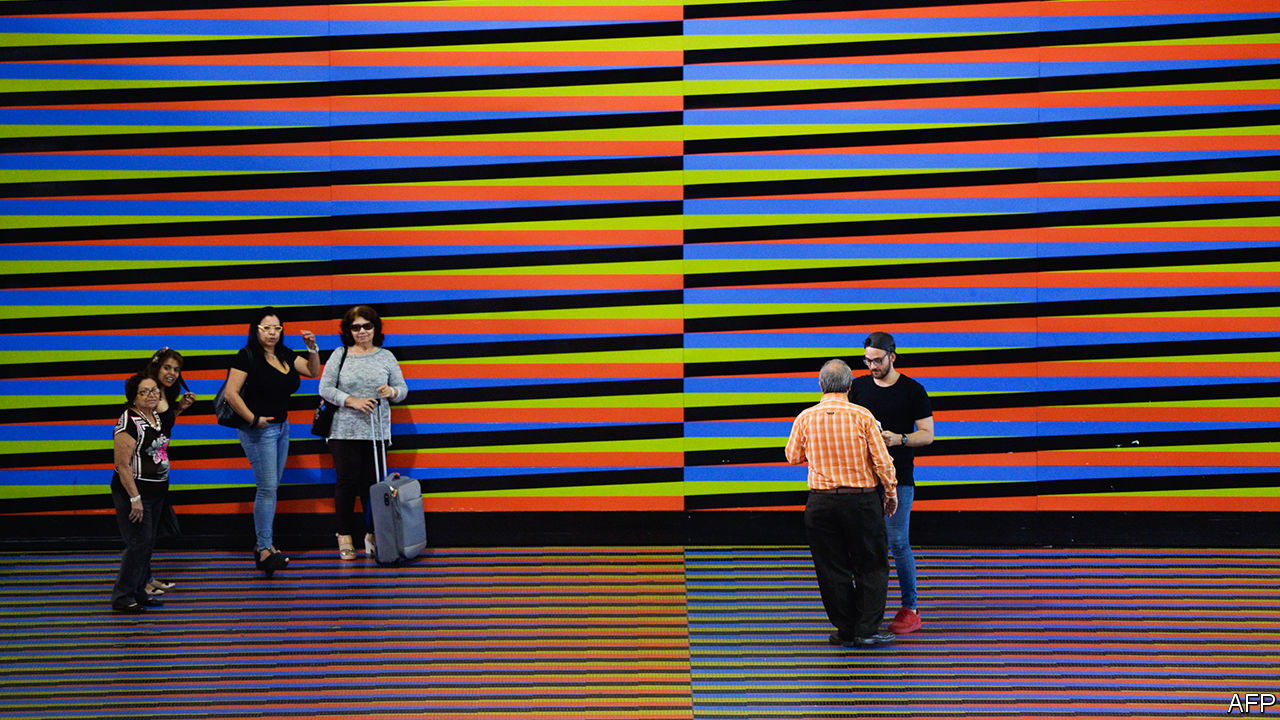
Some of the most inventive optical art came from Latin America. The Venezuelan Jesús Rafael Soto (1923–2005) hung rows of thin rods in front of striped backgrounds, so that the work seems to vibrate as you walk past, and built Penetrables, spaces of hanging threads you can walk through. His compatriot Carlos Cruz-Diez (1923–2019) explored how colours mix in the eye, in his Physichromies and in huge works in public spaces, such as the striped floor of the airport that serves Caracas. In Paris, the Argentine Julio Le Parc and the Groupe de Recherche d'Art Visuel made works that play with light and movement, close to kinetic art.
Why the pictures seem to move
Op Art works on the way the eye and brain process what they see. Sharp edges between black and white make the eye exaggerate contrast, which is why grey ghosts appear between bright lines. Fine repeated lines that overlap create moiré patterns, shimmering bands that move with the slightest shift of the head. Because the eye never stays still but makes tiny, constant movements, high-contrast patterns seem to flicker and flow. Lines that gradually tighten or squares that gradually shrink read as surfaces curving in space, and ambiguous figures, like Vasarely's cubes, flip between two ways of seeing. The artist sets the trap; the viewer's own eyes do the rest.
Op Art everywhere
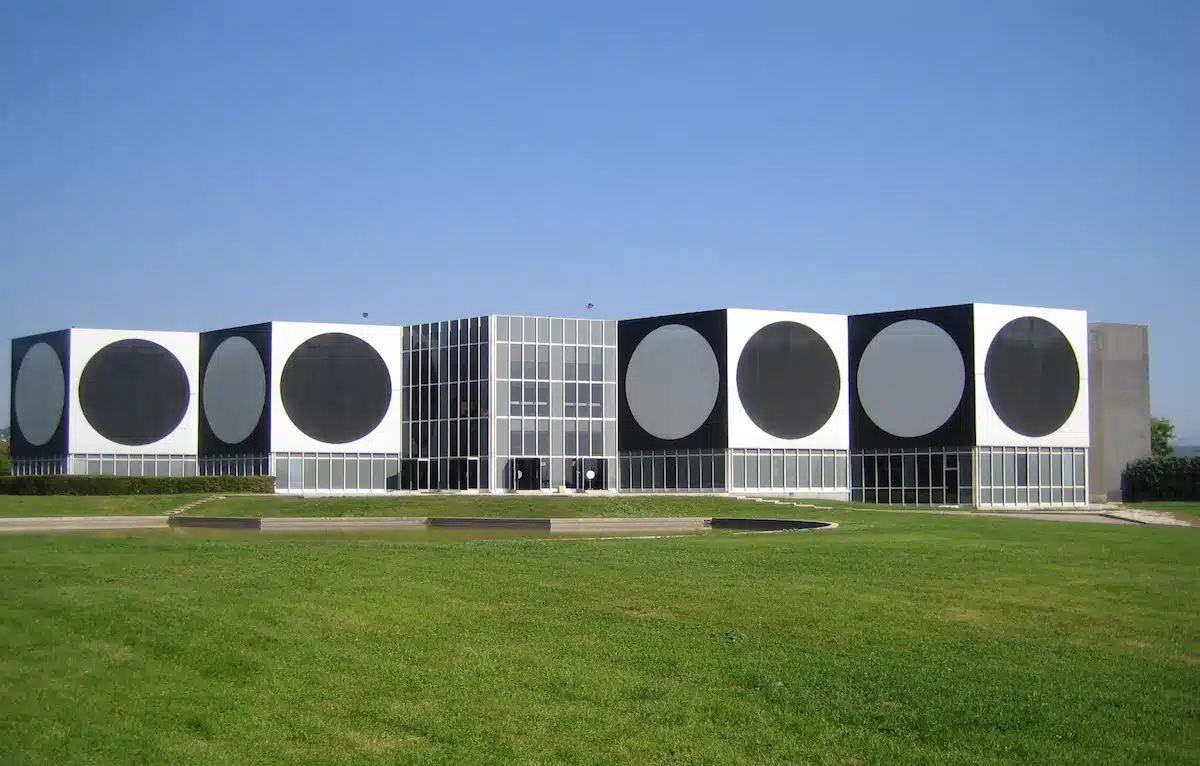
In the mid-1960s Op Art left the gallery. Black and white op-art dresses, scarves and tights filled the boutiques, record sleeves and posters borrowed its spirals and stripes, and designers used its patterns in interiors and advertising. Vasarely welcomed this spread: in 1972 he redesigned the Renault logo with his son Yvaral, and in 1976 he opened the Fondation Vasarely in Aix-en-Provence, a building of linked hexagonal halls that he designed himself to show his monumental works and to bring art and architecture together. Museums of his work also opened in Pécs and Budapest, in his native Hungary.
After the sixties
By the end of the 1960s the fashion for Op Art had faded, but the artists went on. Bridget Riley turned to colour from 1967, painting stripes, curves and, after a journey to Egypt in 1979–80, shimmering rhombuses in a palette inspired by ancient Egyptian art. Vasarely kept developing his plastic alphabet until his death in 1997. Op Art's ideas—art made from rules, repeated units and precise patterns—anticipated computer art and digital design, and its illusions live on in graphic design, fashion, architecture and the screens we look at every day.
A digital homage in PictorX
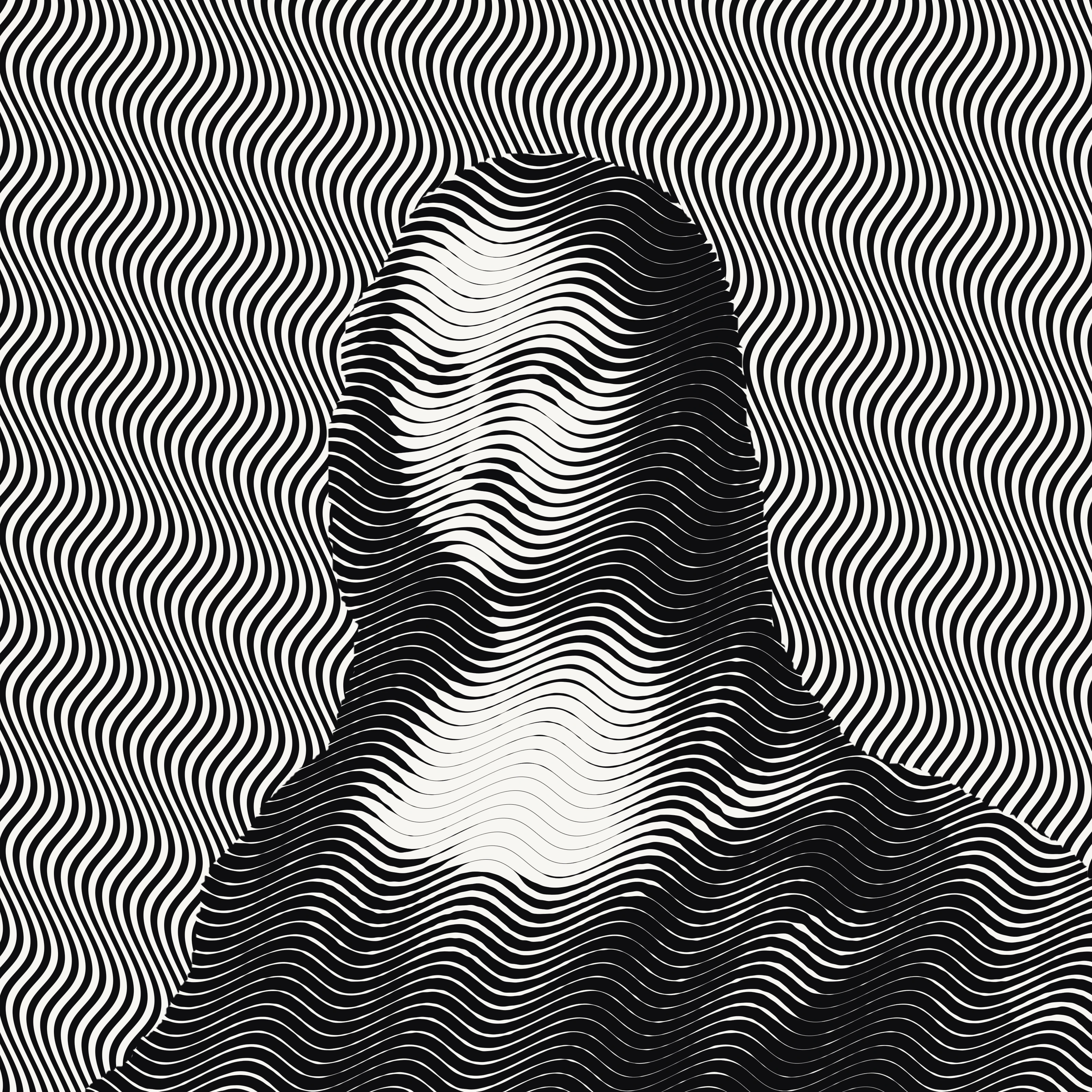
The PictorX Op Art app is a digital homage to these artists. It is not a reproduction of any of their works and not an AI copy: each picture is built from your own photo, whose tones and colours decide the size of every sphere, disc and square and the thickness of every line. It begins with Salvador Dalí's Galatea of the Spheres (1952), a portrait made of floating spheres, and adds the swelling grids of Vasarely and the waves and checkerboards of Bridget Riley. Real op art is best seen in person: at the Museum of Modern Art in New York, Tate in London, the Centre Pompidou in Paris, the Buffalo AKG Art Museum, the Fondation Vasarely in Aix-en-Provence and the Vasarely museums in Hungary.
Make your own op art in PictorX
Open the Op Art app and load a photo—a portrait with a clear subject works best. Choose a Style—Spheres, Vega, Waves, Squares, Rings or Cubes—or start from a favourite such as Galatea of the Spheres, Vega, Riley Current or Zebra. Pick a Palette—Photo, Black and white, Vasarely, Riley, Neon or Pastel—and a Background: the pattern over the whole picture, a counter-pattern, Galatea's sky and sea, or a plain ground. Then use Size, Distortion, Contrast, Shading and Angle, click or drag on the picture to move the centre of the illusion, and turn on Remove background for a clean cut-out. Save a PNG or keep editing in PictorX.
Frequently asked questions
What is Op Art?
Op Art, short for optical art, is a style of abstract art of the 1960s made of precise geometric patterns—lines, squares, circles—that seem to move, swell or vibrate on a flat surface. Its subject is perception itself.
Who are the best-known op artists?
Victor Vasarely and Bridget Riley are the most famous. Others include Jesús Rafael Soto, Carlos Cruz-Diez, Julio Le Parc, Yaacov Agam and Richard Anuszkiewicz.
Why does Op Art seem to move?
Strong contrasts, fine repeated lines and gradual changes in size or spacing play on how the eye and brain see edges, depth and motion. Because the eye is never completely still, such patterns seem to flicker, flow or bulge.
What is the difference between Op Art and Pop Art?
Pop Art, from the same years, borrowed images from comics, advertising and celebrities. Op Art is abstract: it shows no objects at all and uses geometry to create illusions. The name Op Art was coined as a play on Pop Art.
Can I make op art from a photo?
Yes. The PictorX Op Art app rebuilds your photo from spheres, discs, waves, squares, rings or cubes in the manner of Dalí, Vasarely and Riley. It is a digital homage, not a copy of their works.
Related tools
Op Art: your photo as an optical illusion
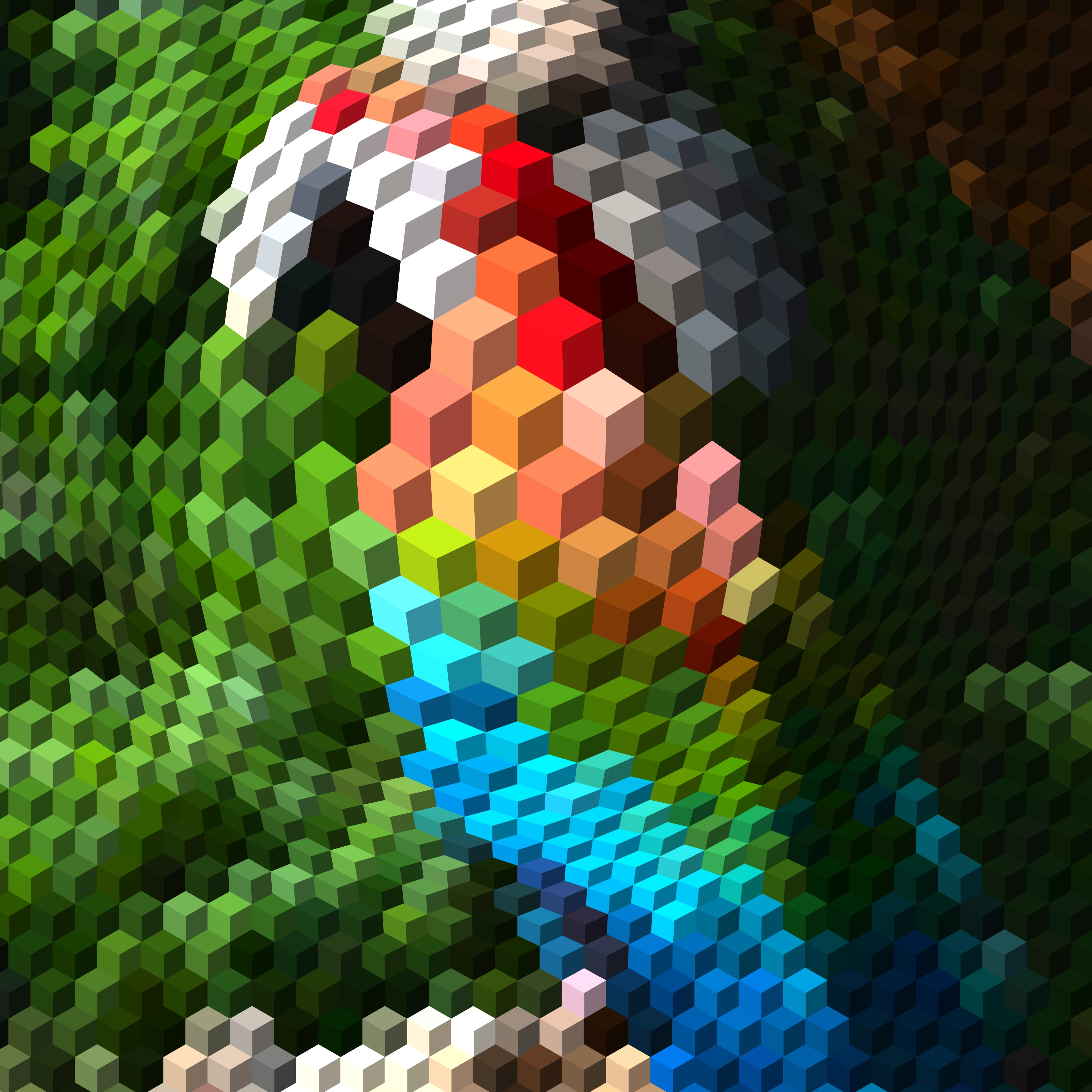
Turn a photo into op art in your browser: Dalí's Galatea of the Spheres, Vasarely's Vega, Bridget Riley waves, relief lines, moiré, spirals and warped grids — in your subject or a shape, still or animated.
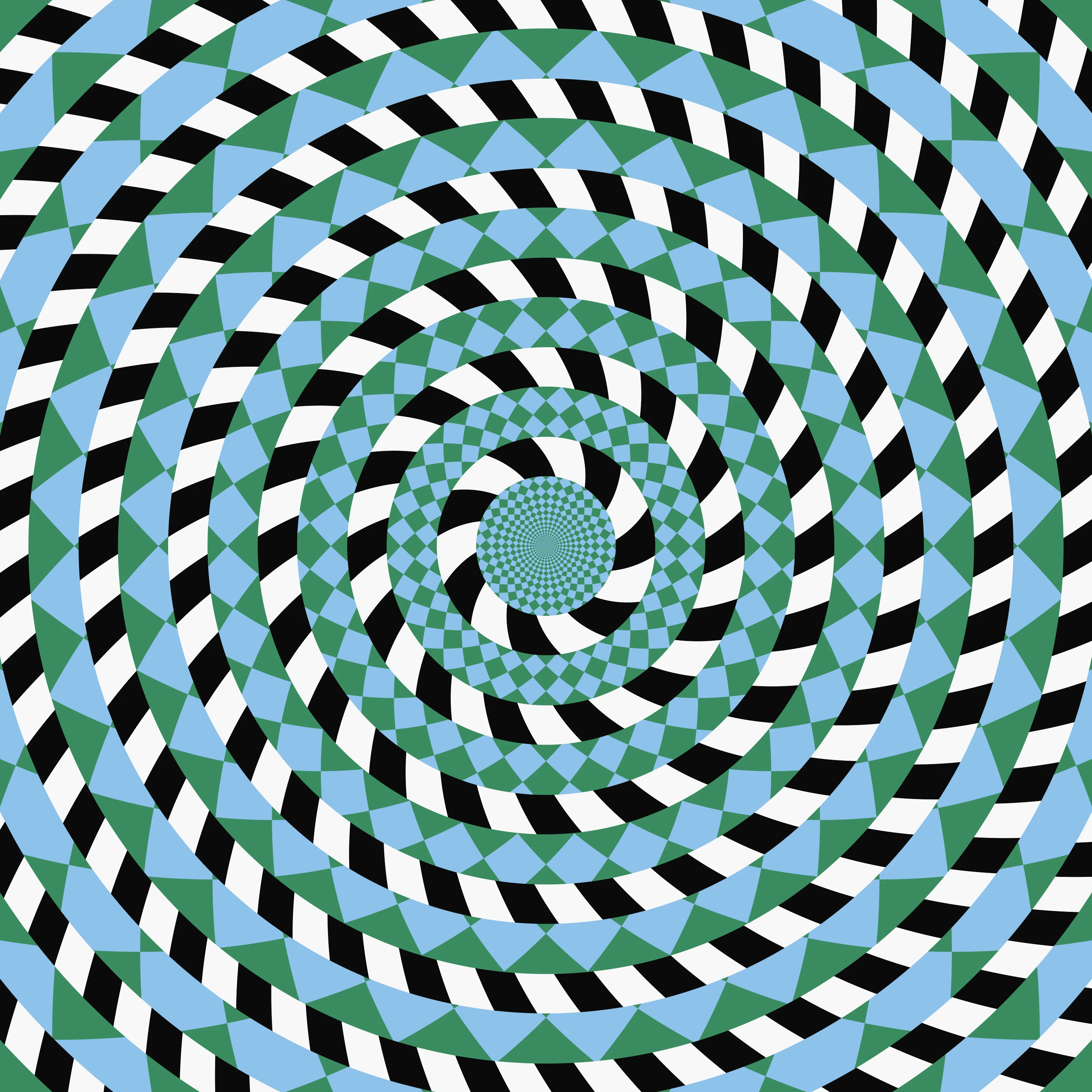
Optical illusions
Play with 13 classic optical illusions in your browser, most made from your own photo: colour from grey, an afterimage, a spinning spiral, a hidden picture, the café wall, the Fraser spiral, drifting wheels and more. Tick Reveal the trick to see how each one works.
Optical illusions
A short guide to optical illusions: colour from grey, afterimages, the motion aftereffect, the café wall, the Fraser spiral, the Hermann grid and why still pictures seem to move — and thirteen classic illusions you can play with, most of them made from your photo, in PictorX.
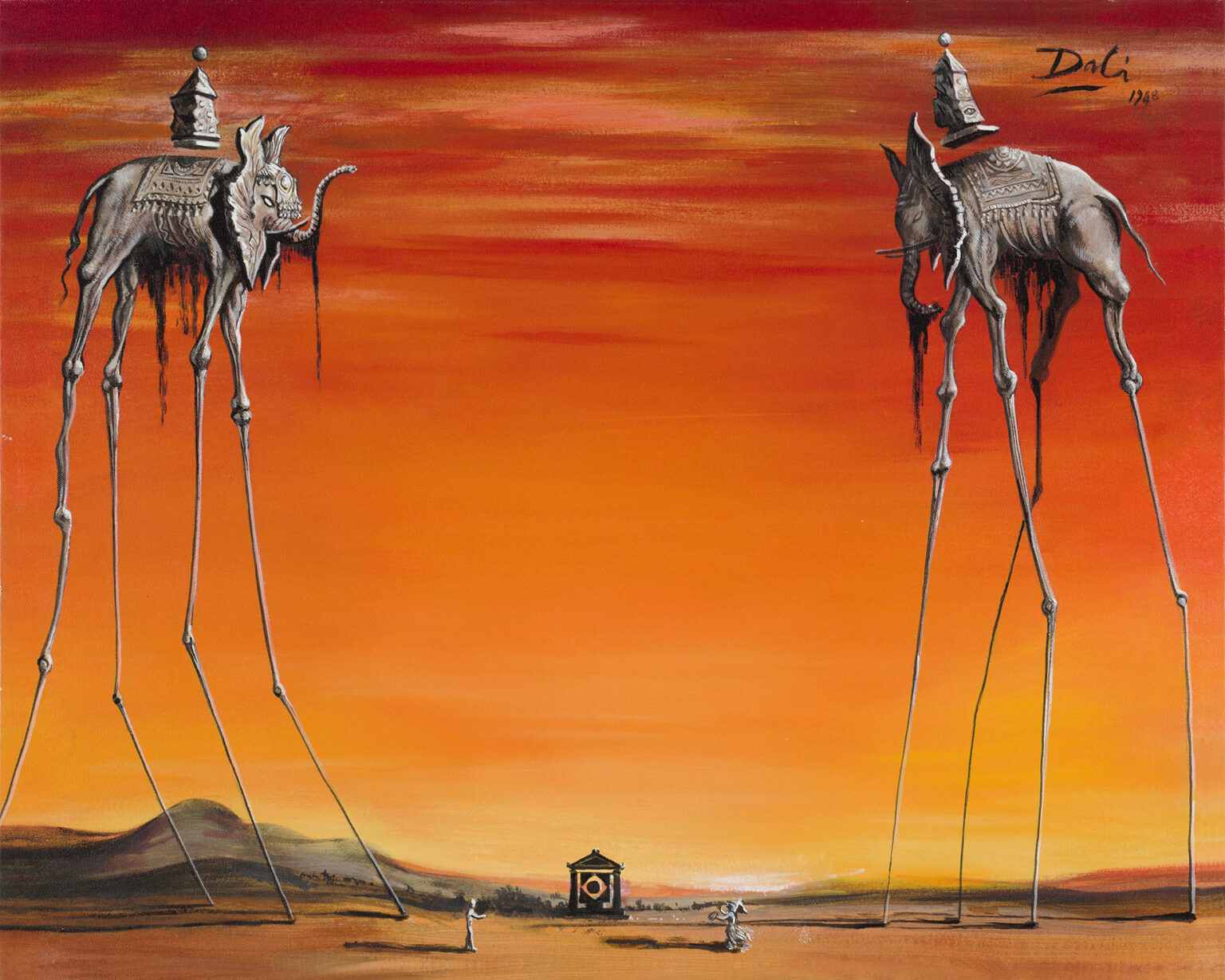
Salvador Dalí
A short guide to Salvador Dalí: his childhood in Figueres and Cadaqués, Lorca and Buñuel, Gala and the Surrealists, The Persistence of Memory, double images, crutches, drawers and a lobster telephone, Hollywood and Disney, Leda Atomica, his Theatre-Museum, and a digital homage you can try in PictorX.
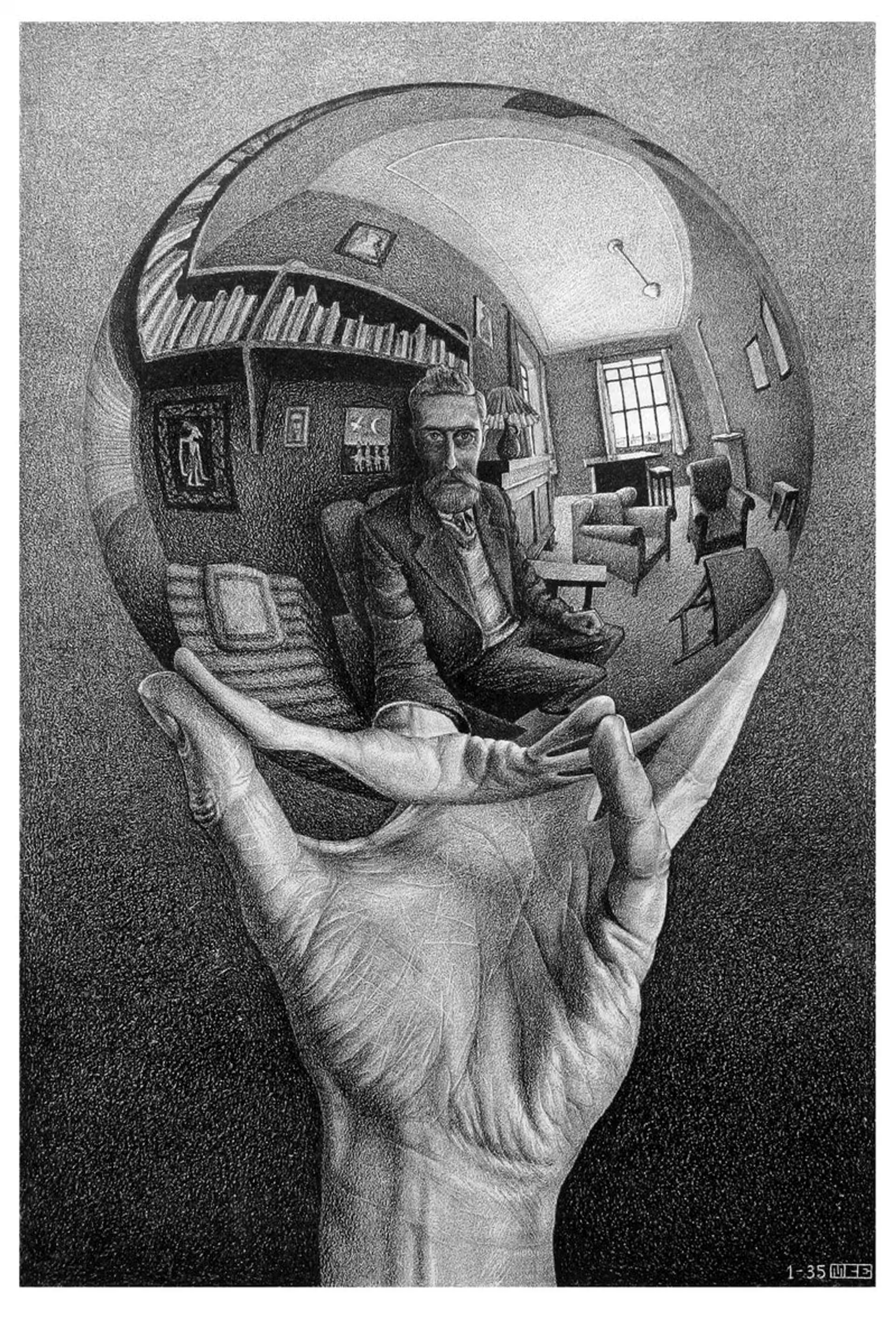
M.C. Escher
M.C. Escher’s regular divisions of the plane: Alhambra tessellations, translation, rotation and reflection, metamorphosis, hyperbolic infinity, and figure–ground duality—plus PictorX M.C. Escher.
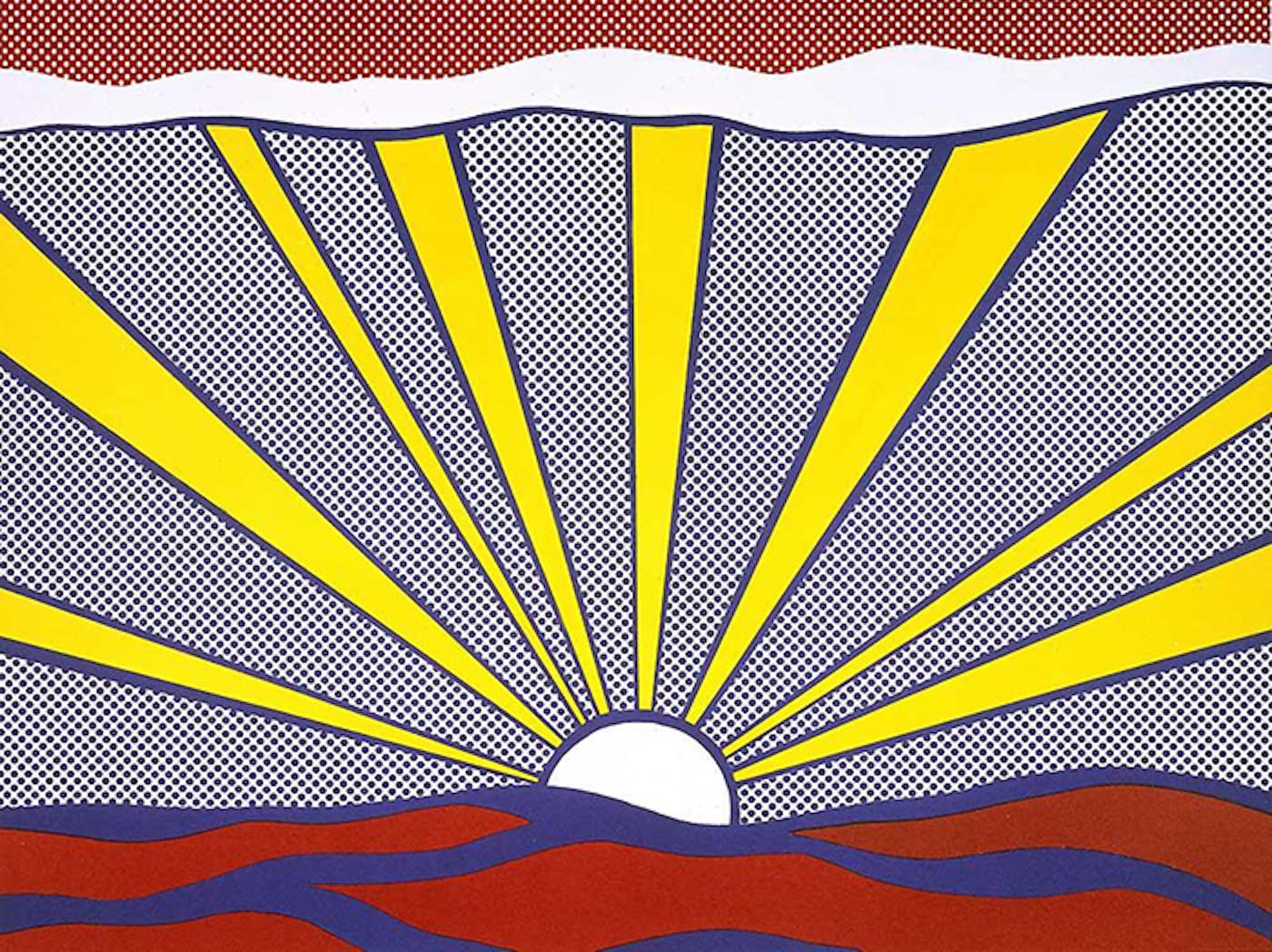
Pop Art
Learn how Pop Art turned advertising, comics, and consumer products into art—Andy Warhol, Roy Lichtenstein, silkscreen, and the rise of mass culture.
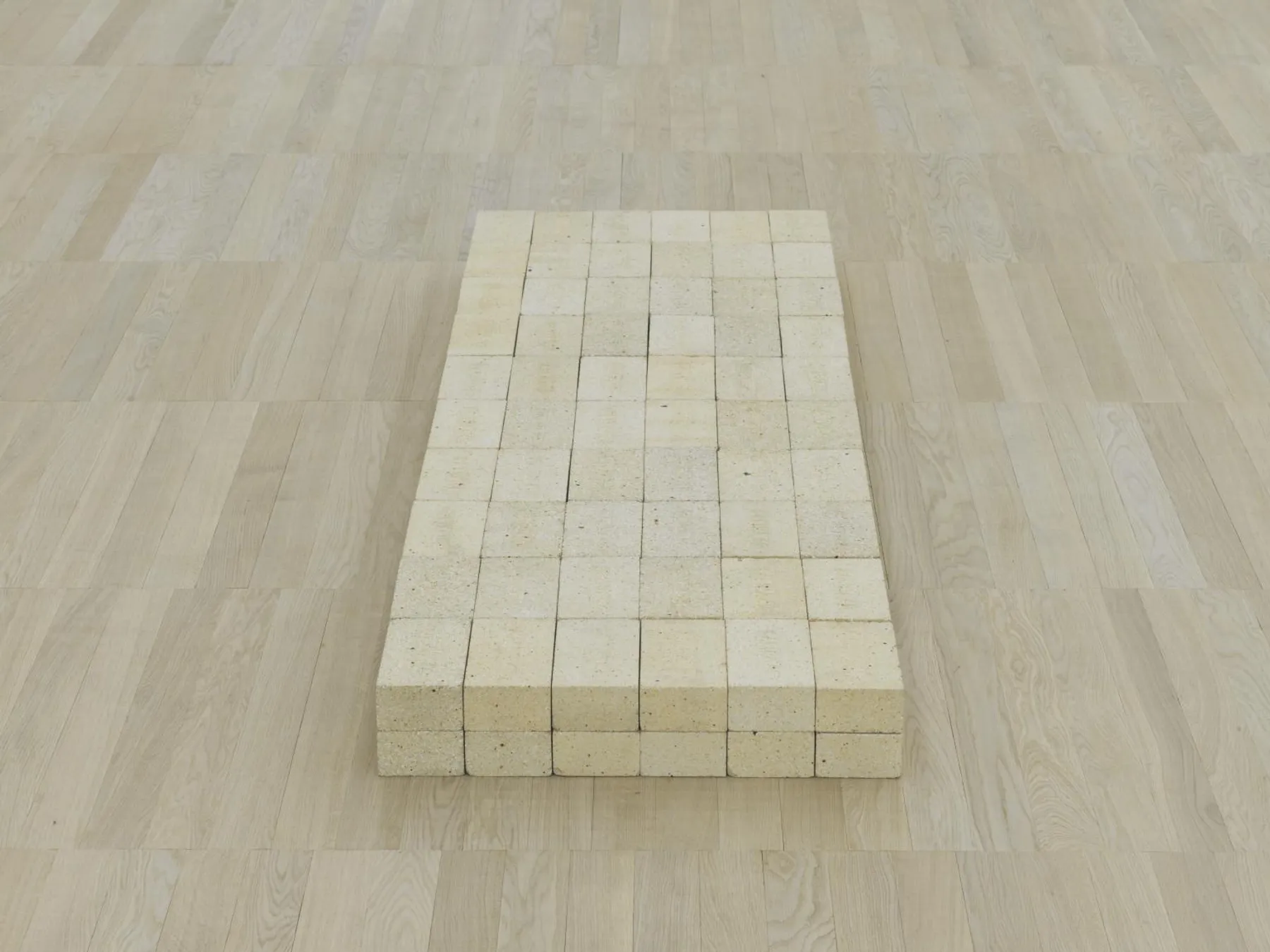
Minimalism
A short guide to Minimalism: late 1950s–60s reaction to Abstract Expressionism, geometry and industrial materials, Judd, Flavin, Stella, and a digital homage you can try in PictorX.
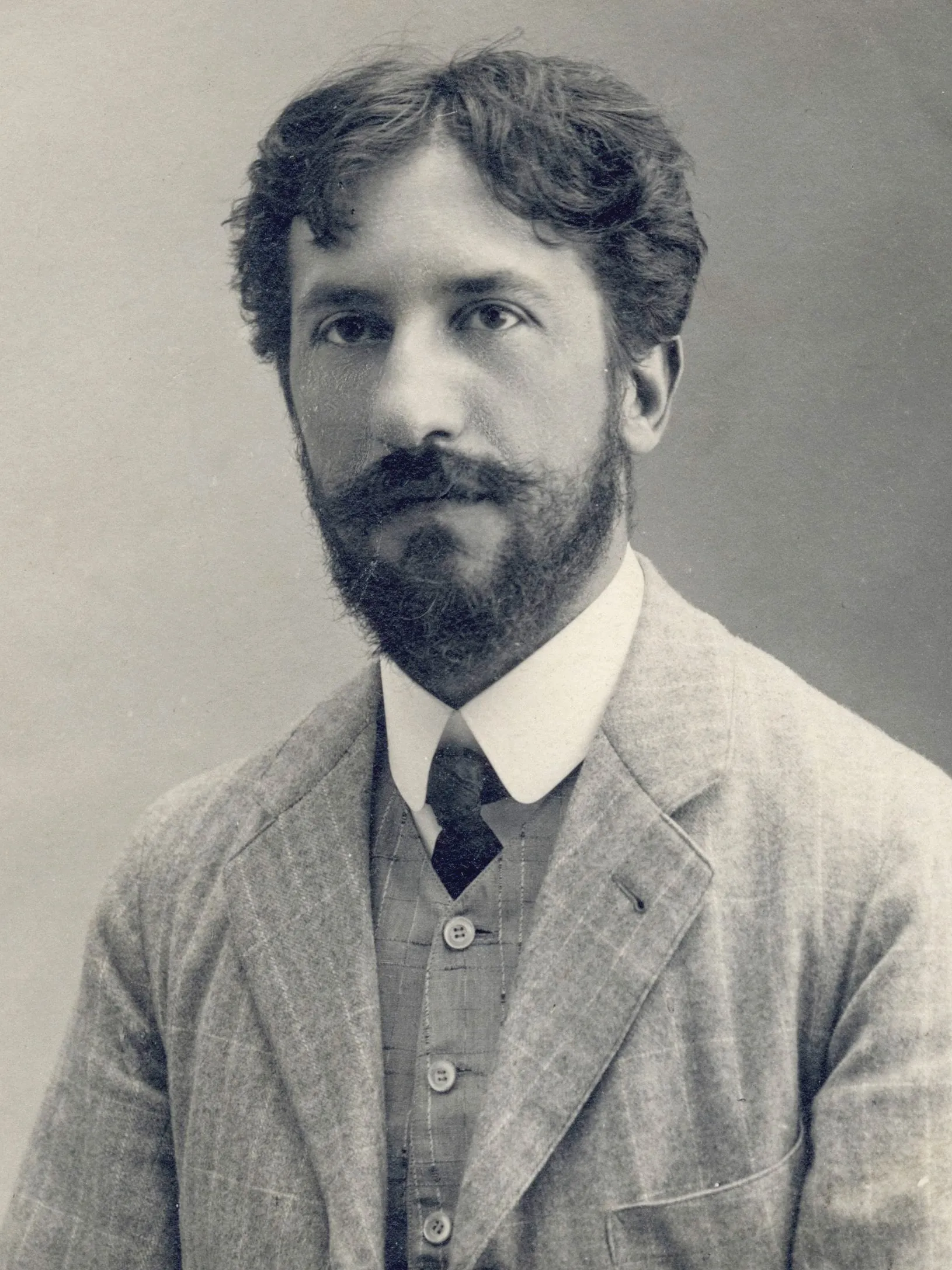
Piet Mondriaan
Piet Mondriaan’s life and art: from The Red Tree to Victory Boogie Woogie, De Stijl and neoplasticism, and how PictorX Mondriaan lets you compose grids in the browser.
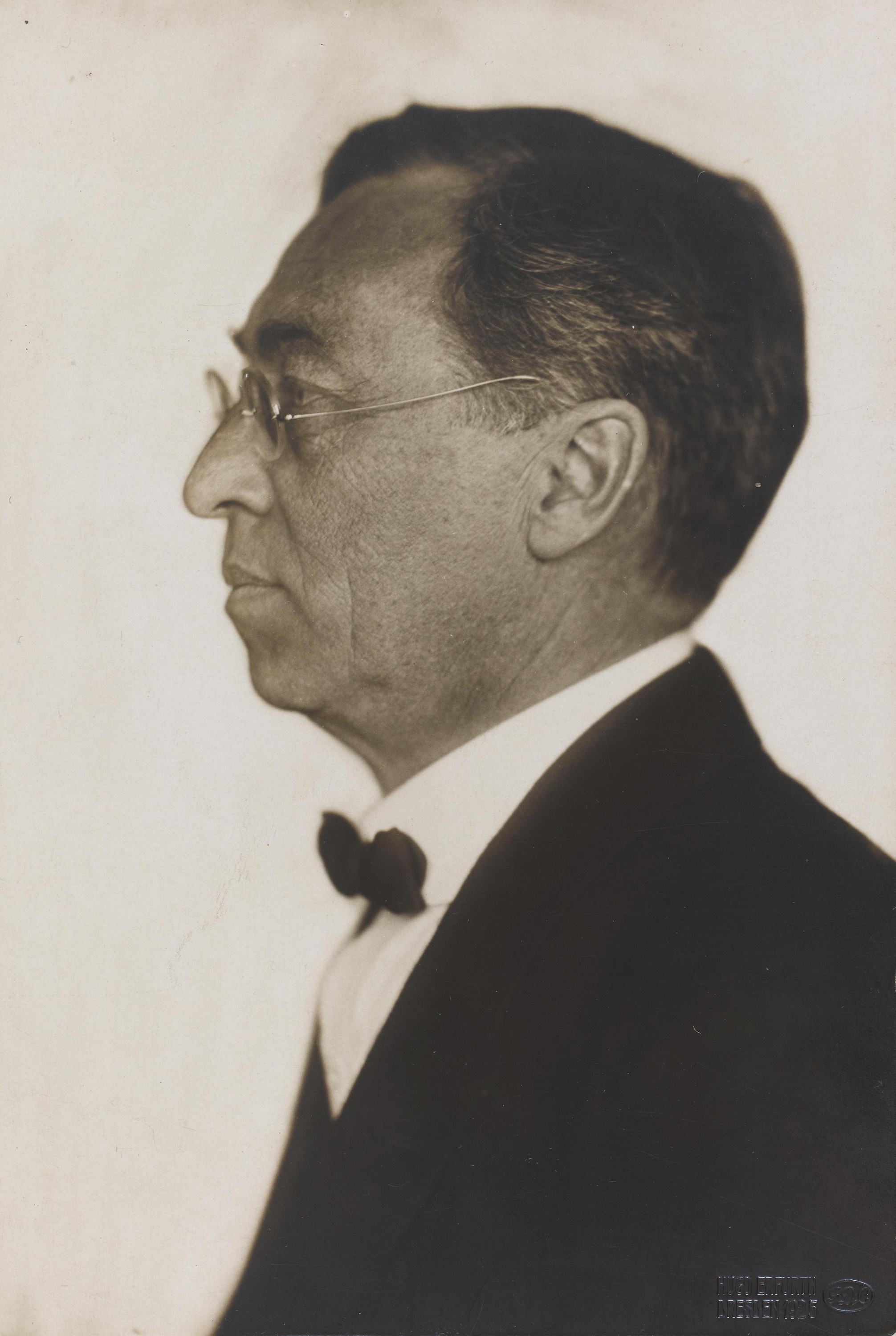
Wassily Kandinsky
A short guide to Wassily Kandinsky: from Moscow to Munich, Murnau and the Blue Rider, colour as music, Squares with Concentric Circles, the Bauhaus and Composition VIII, Several Circles, and a digital homage you can try in PictorX.
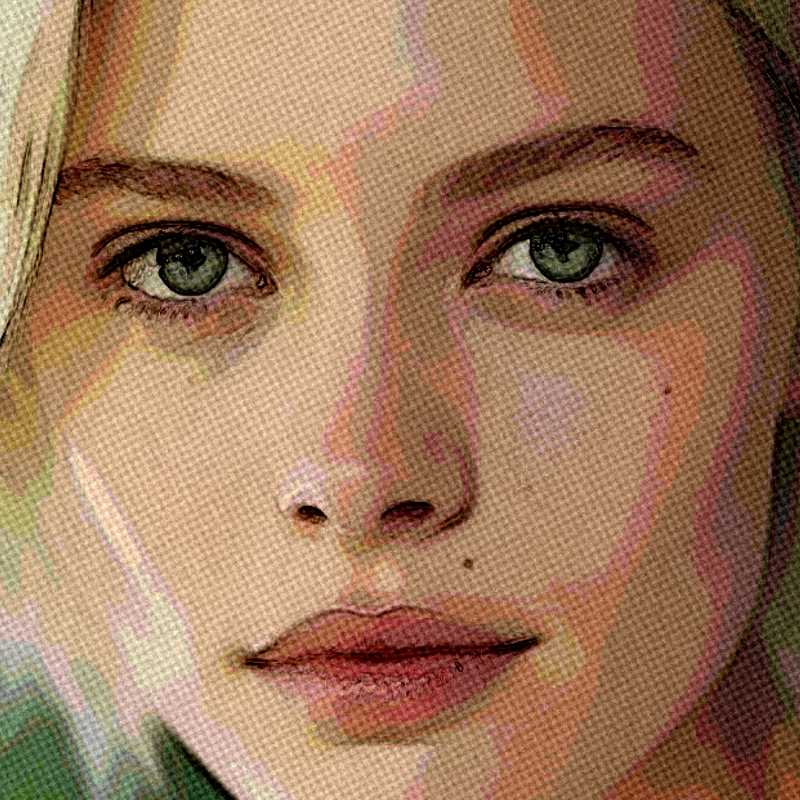
Artistic effects
Transform photos with oil painting, watercolor, pencil, comic ink, pastels, paper cut-out, and other studio art looks.
Ready to try it?
Open PictorX in your browser — no install, no credit card required to start.
Try Op Art