
Brachistochrone race
Which track gets a ball from A to B fastest? Not the straight one. Every ball starts at rest and slides without friction, and the cycloid, the curve a point on a rolling wheel traces, wins every time. Its name is the brachistochrone: shortest time. Drag B to move the finish, or draw your own track on the picture. Every ball starts at A from rest and slides without friction. The cycloid is the fastest way down, even where it dips below the finish.
How it works
- Open this page and the race starts. Five balls leave A together. The time marks show where each ball was every tenth of a second.
- Drag B to move the finish, or draw your own track on the picture. Try to beat the cycloid.
- Set Mode to Cycloid bowl: balls let go from different heights reach the bottom together. Then save a PNG.
Steep first, then fast
A ball that drops steeply at the start picks up speed early and keeps it for the rest of the way. A ball on the straight ramp takes the shortest path, but it gathers speed slowly. The best track balances the two: steep at the start, flatter later. That balance is the cycloid.
The curve of a rolling wheel
Roll a wheel along a line and follow one point on its rim: it traces a cycloid. Turned upside down, from A to B, it is the brachistochrone. When B is far to the side and not very low, the cycloid even dips below B and climbs back up, and it still wins.
The same time from every height
In a bowl shaped like a cycloid, a ball let go from any height reaches the bottom in the same time: π√(a/g), where a is the radius of the rolling wheel. This is the tautochrone. In a round bowl the balls from higher up arrive later.
Frequently asked questions
Why isn't the straight line fastest?
It is the shortest path, but not the quickest. On a gentle slope the ball gains speed slowly. A track that drops steeply first gets the ball moving fast early, and that speed pays off over the longer path.
Who solved the brachistochrone problem?
Johann Bernoulli posed it in 1696. Solutions came from Johann himself, his brother Jakob, Leibniz, Newton, and others. Newton's was published without his name, and Bernoulli is said to have recognized him by it, as the lion by its claw.
Do mass and gravity change the winner?
No. The mass of the ball does not come into it, and stronger gravity speeds up every ball by the same factor. The order of the race stays the same, on the Moon too.
Can my own track win?
Only by coming very close to the cycloid. A track that rises above A never gets the ball to B, because without friction a ball can never climb higher than where it started.
Does this upload anything?
No. The race is drawn on a canvas in your browser. Save downloads a PNG. Edit opens that image in the PictorX editor.
Related tools
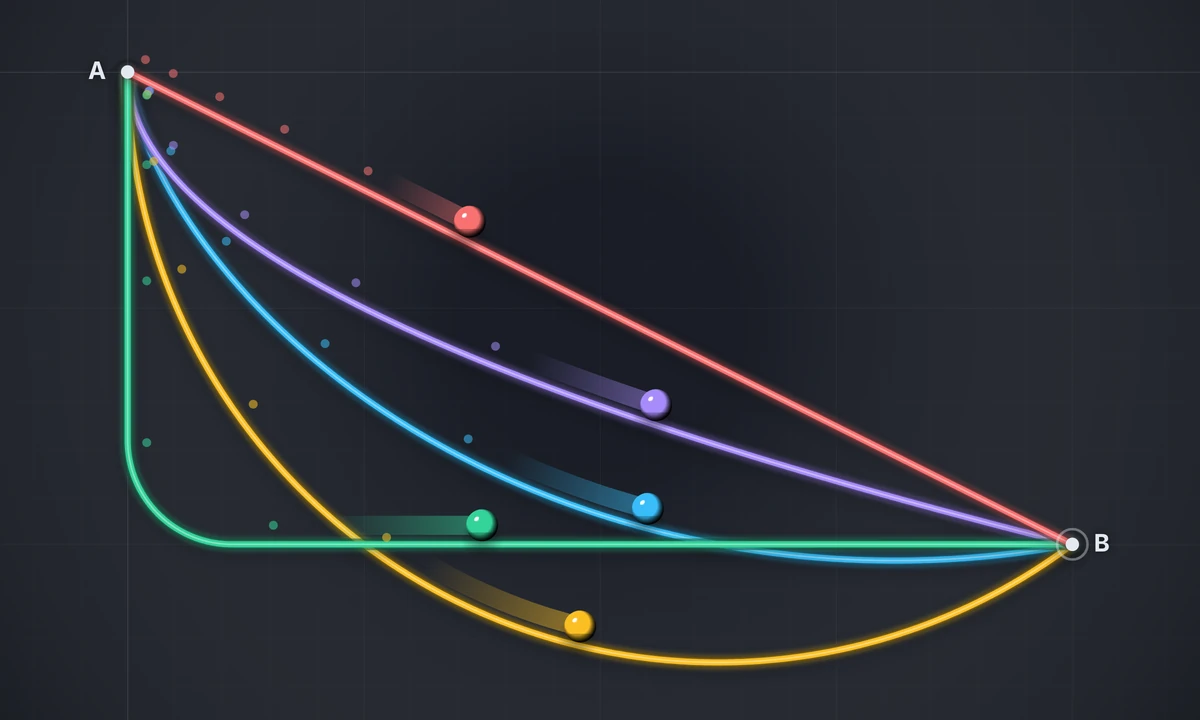
Brachistochrone
What the brachistochrone is: why the cycloid beats the straight line, how Bernoulli's 1696 challenge was solved, and why a cycloid bowl is also the tautochrone.
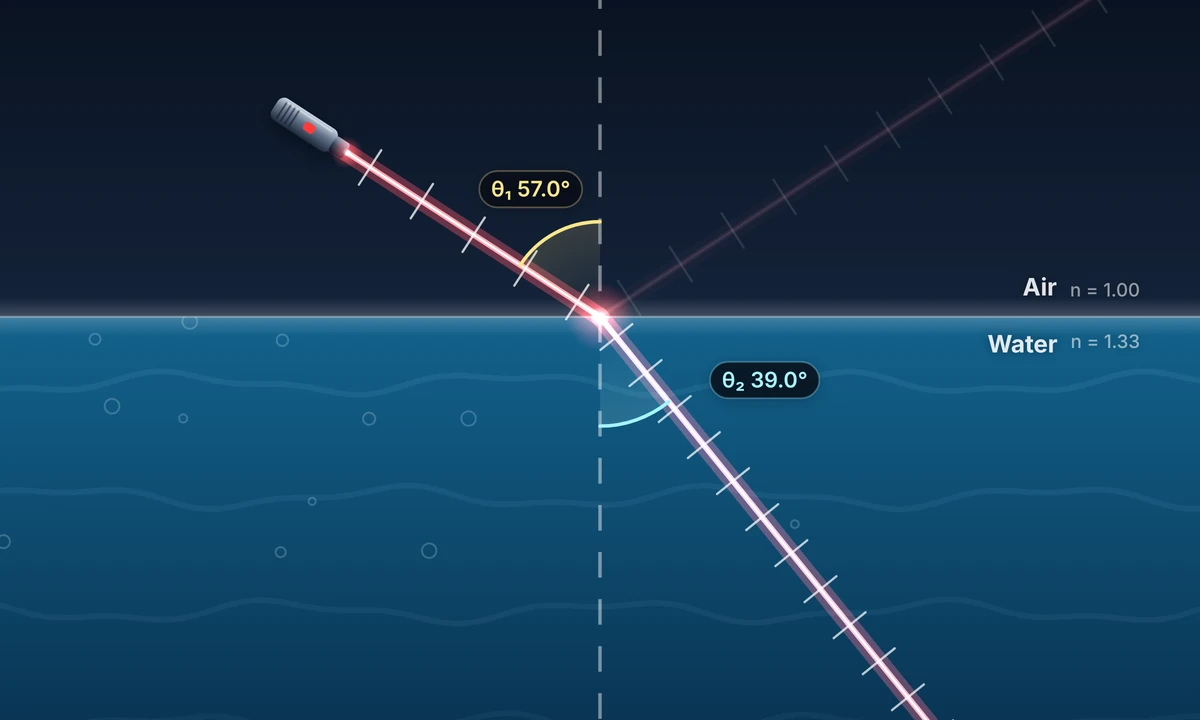
Snell's Law & Light Refraction
See why light bends. Race a lifeguard across sand and sea, shine a laser from air into water, glass, or diamond, and watch light through thin layers trace the brachistochrone.
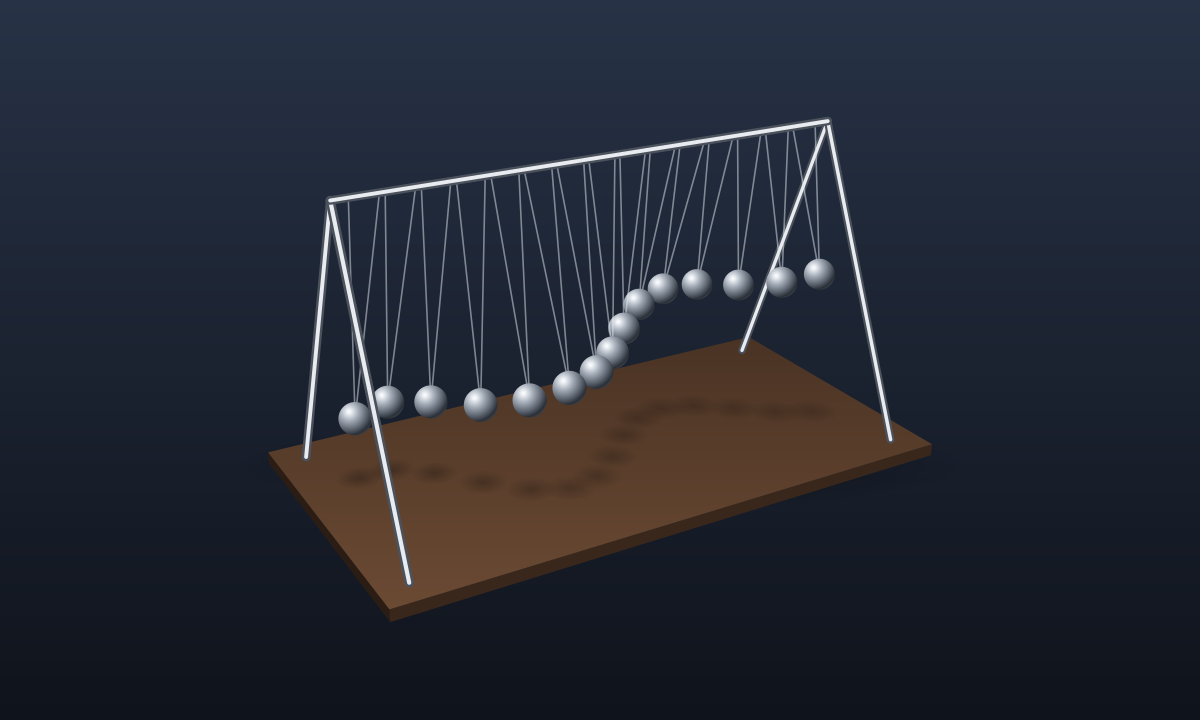
Pendulum wave
Fifteen pendulums, each a little shorter than the last. Let them go together and watch them drift into waves, split into rows, and swing in step again.
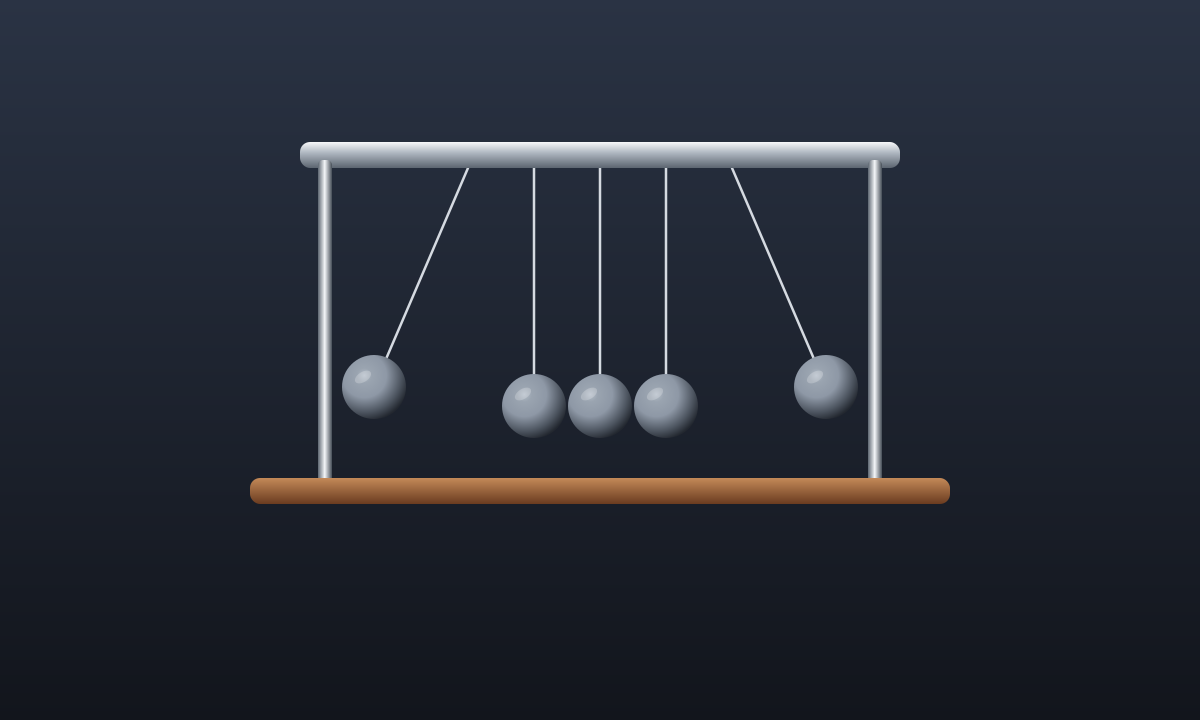
Newton's cradle
Lift a steel ball and let it fall. The click sends that motion out the other side. Watch height turn into motion as the cradle swings.
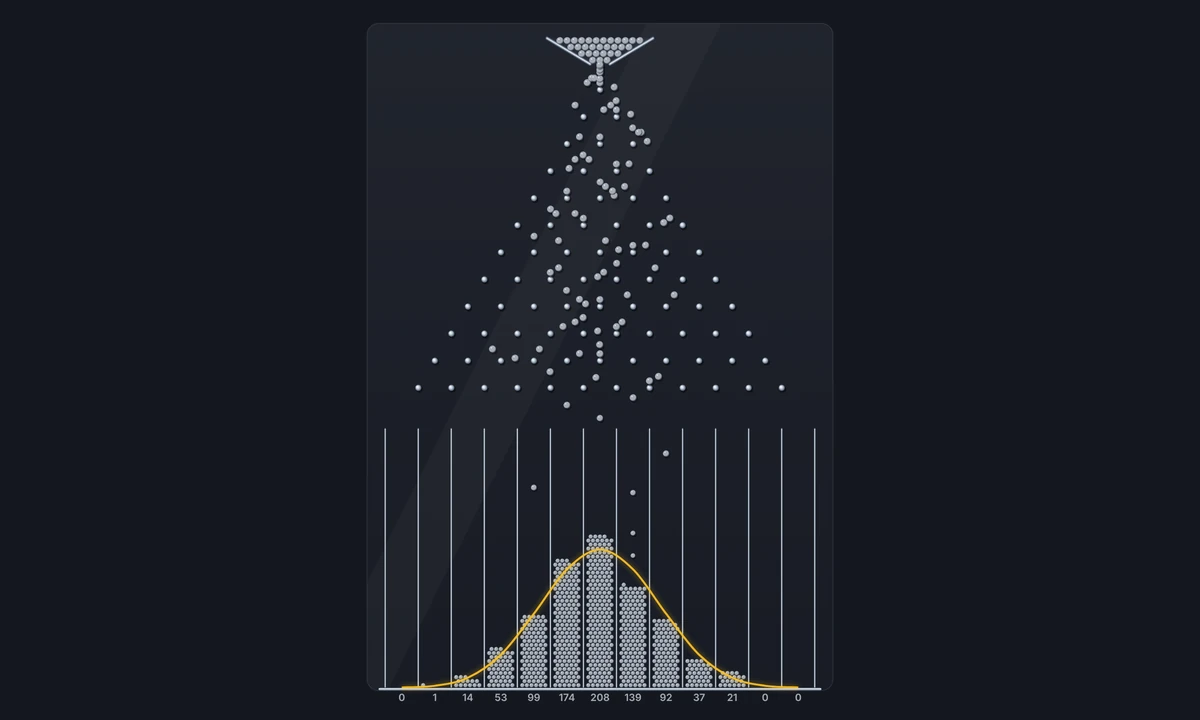
Galton board
Drop balls through rows of pegs and watch a bell curve fill the bins. Change the rows, the bias, and the number of balls, and compare mean and spread with theory.
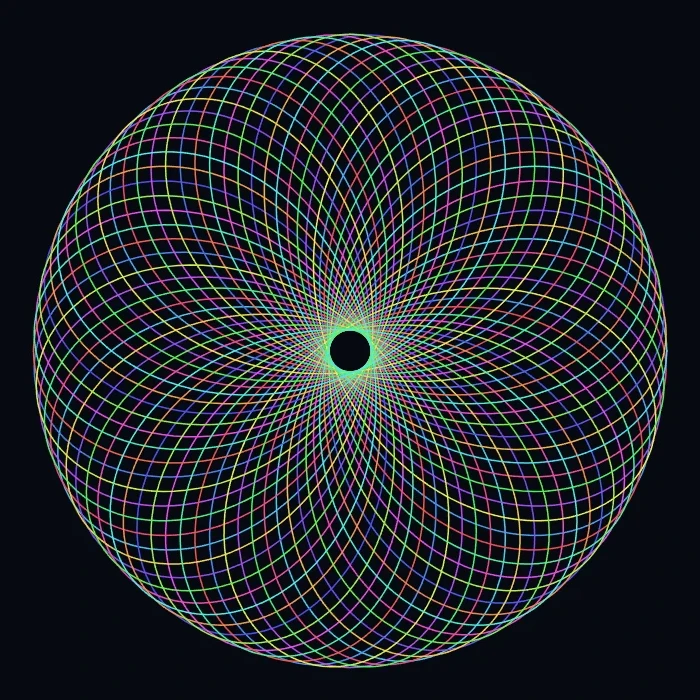
Spirograph
Draw hypotrochoids and epitrochoids in your browser. Tune R, r, and pen offset, animate the curve, randomize styles, and save a PNG.
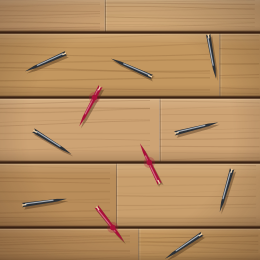
Buffon's Needle
Drop needles on a lined floor in your browser. Count the crossings and watch Buffon's 1777 experiment estimate π.
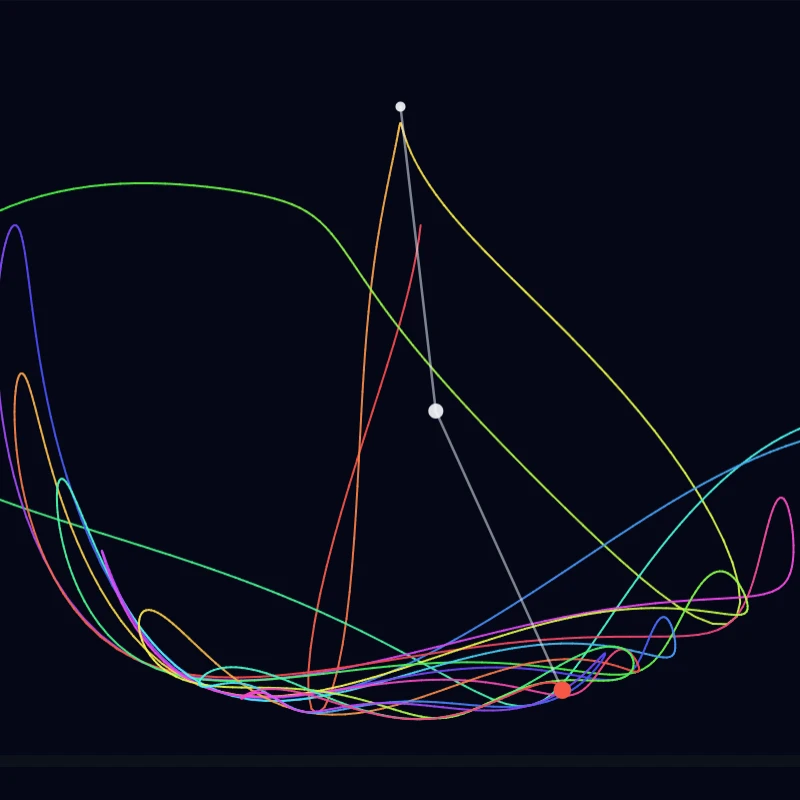
Double Pendulum
Simulate a classical double pendulum in your browser. Paint chaotic tip trails, long-exposure paths, or distort a soft field—then save a PNG.
Ready to try it?
Open PictorX in your browser — no install, no credit card required to start.
Go to Editor