
Newton's cradle
Identical steel balls hang in a row and just touch. Lift one and let go: it stops at the click, and only the ball at the far end swings up. Lift two, and two swing out. Height and motion trade places, until air and the click itself spend the energy. Drag a ball at either end and let go. One ball in sends one ball out the other side. Two balls in send two out. Height and motion trade places until friction and the click spend the energy.
How it works
- Open this page. One ball is already raised. It falls, clicks, and the far ball rises to nearly the same height.
- Drag a ball at either end, or set Balls and Lift. Two balls in send two balls out.
- Read height and motion on the cradle. Friction and Bounce decide how soon it rests. Then save a PNG.
One ball in, one ball out
The balls have the same mass, and at rest they just touch. A swinging ball hits the row and stops. The ball at the other end leaves with almost the same speed. The balls in between barely move. They pass the disturbance through.
Momentum and energy together
Momentum is mass times velocity. During the brief click the strings do not have time to pull, so the balls share that momentum among themselves. One ball in at speed v, and one ball out at speed v, is the split that also keeps the energy. Two balls in send two balls out for the same reason. One ball leaving twice as fast would keep the momentum and waste the energy.
Height, motion, and the slow stop
At the top of a swing the energy is height. At the bottom it is motion. An elastic click keeps it as motion. Air resistance drags on every swing, and each click spends a little more as sound and as a tiny compression of the steel. Lower Friction and raise Bounce and the cradle runs for a long time.
Frequently asked questions
Why does only the far ball move?
The balls have equal mass and the click is elastic. The only result that keeps both momentum and energy is the incoming ball stopping and the far ball leaving at the same speed. The middle balls carry the disturbance across and stay put.
Why do two lifted balls send two balls out?
Two balls arrive side by side at the same speed. Sending two balls off the other end at that speed keeps both momentum and energy. One ball at twice the speed would keep the momentum and lose energy, so the cradle does not do that.
Is momentum conserved for the whole swing?
During the click, among the balls, yes. Over the rest of the swing the strings pull sideways, so the horizontal momentum of the balls alone changes. The frame takes the difference.
Why does the cradle stop?
Air resistance slows every swing. Each click also loses a little energy to sound and heat. Turn Friction down and Bounce up to see a longer run.
Does this upload anything?
No. The cradle is drawn on a canvas in your browser. Save downloads a PNG. Edit opens that image in the PictorX editor.
Related tools
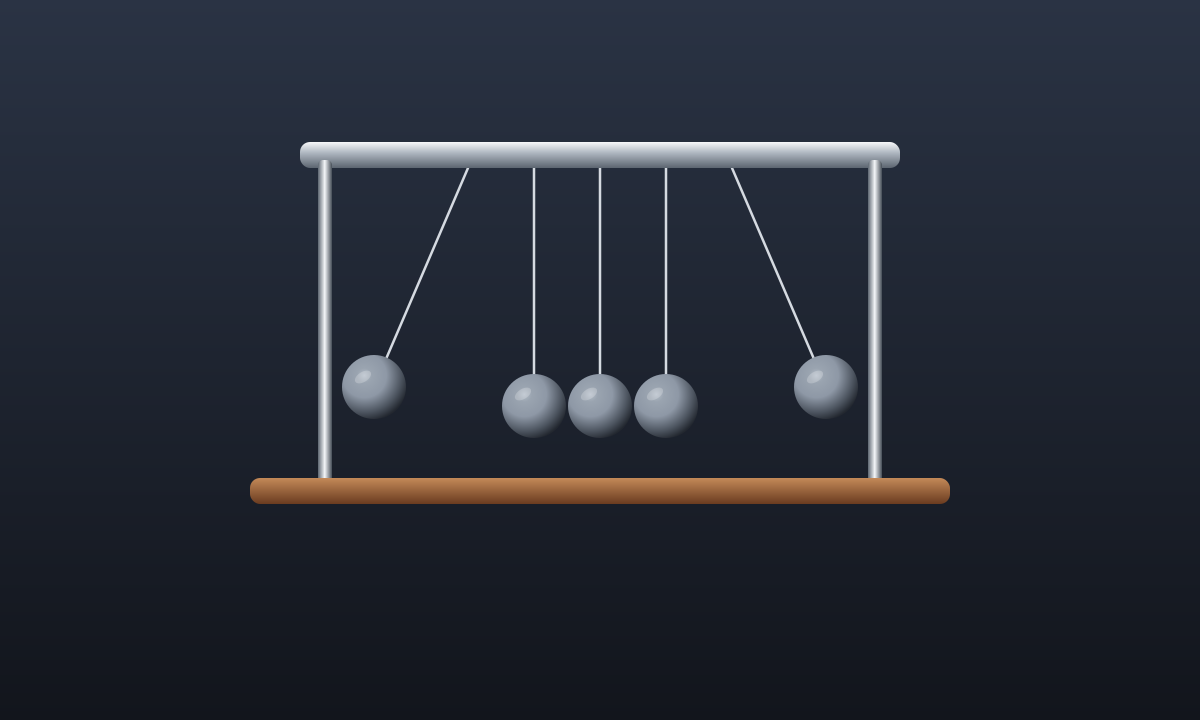
Newton's cradle
How Newton's cradle passes motion through a row of steel balls: conservation of momentum, conservation of energy, an elastic click, and why air and sound eventually stop it.
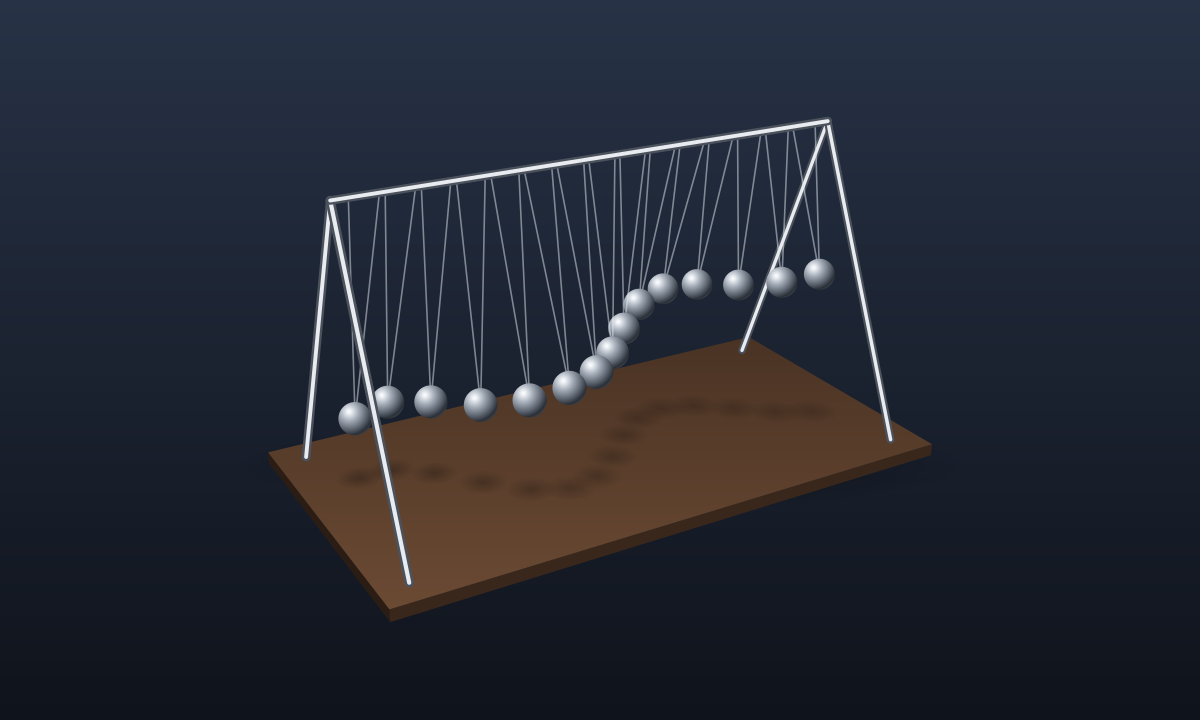
Pendulum wave
Fifteen pendulums, each a little shorter than the last. Let them go together and watch them drift into waves, split into rows, and swing in step again.
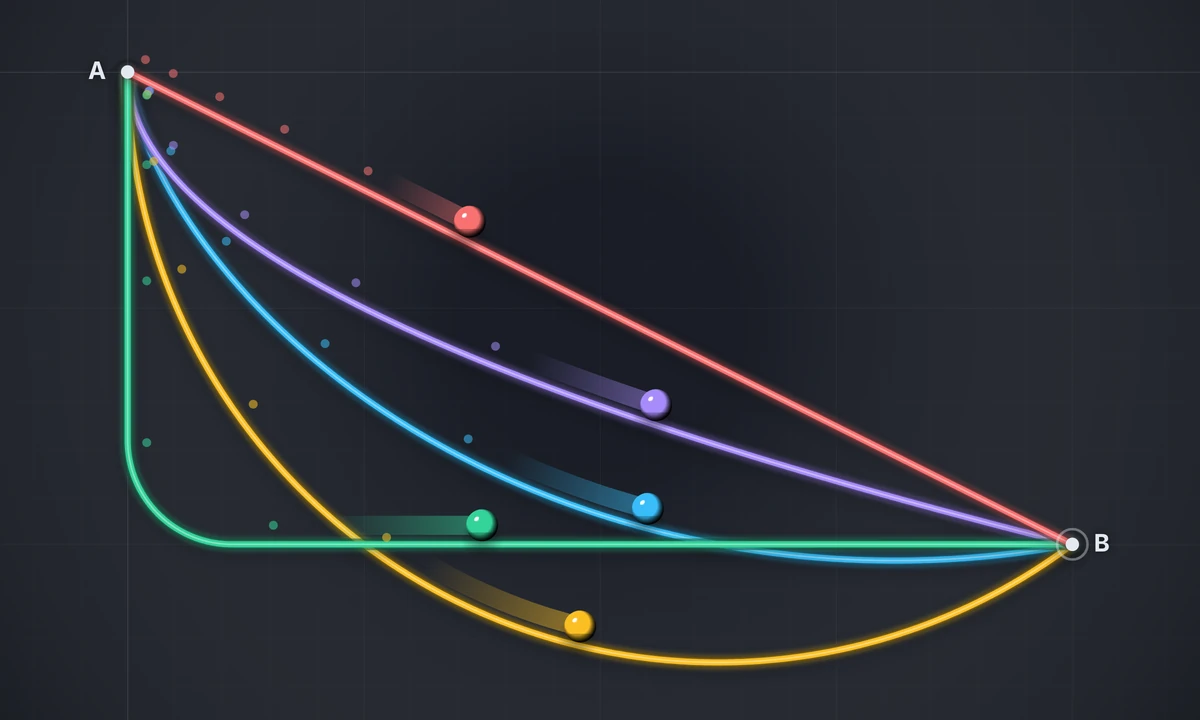
Brachistochrone race
Race balls from A to B on a straight ramp, a circle, a parabola, and a cycloid. The cycloid always wins, even when it dips below the finish. Draw your own track.

N-Body System
Watch Newton's gravity move stars, planets, and moons in 3D in your browser. Turn the view, and see stable orbits, resonances, slingshots, Trojans, and a chaotic cluster.
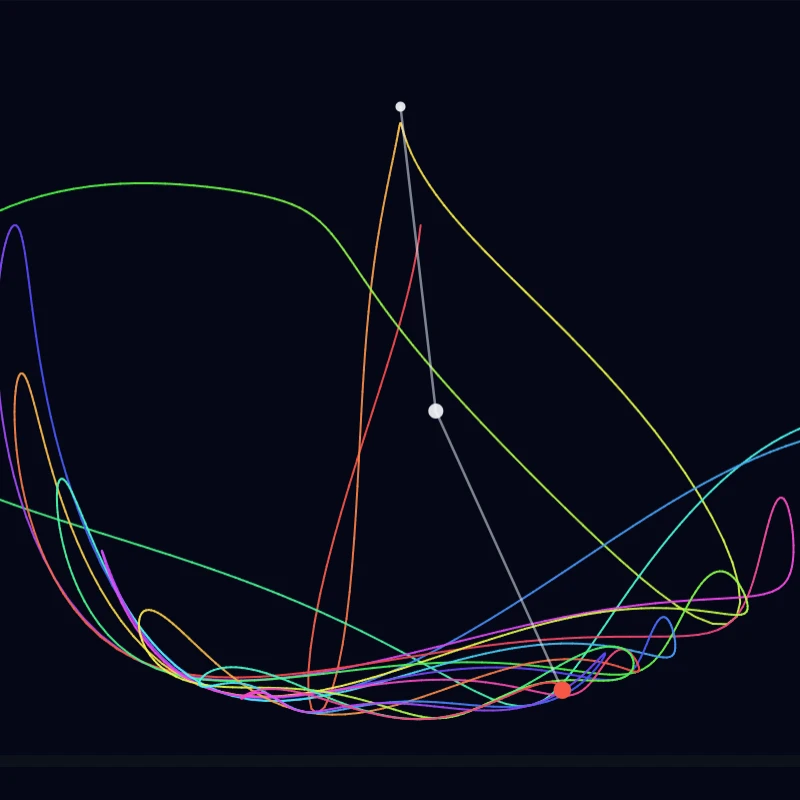
Double Pendulum
Simulate a classical double pendulum in your browser. Paint chaotic tip trails, long-exposure paths, or distort a soft field—then save a PNG.
Buffon's Needle
Drop needles on a lined floor in your browser. Count the crossings and watch Buffon's 1777 experiment estimate π.
Lorenz Attractor
Interactive Lorenz attractor: tune a, b, f, rotate in 3D, try neon/ink/smoke looks, and save a PNG.
Ready to try it?
Open PictorX in your browser — no install, no credit card required to start.
Go to Editor