
Pendulum wave
A row of pendulums hangs from one bar. Each is a little shorter than the one before, so it swings a little faster. Let them go together. They drift into a travelling wave, then into two rows, three groups and back, until after one cycle they all swing in step again. Drag the picture to look from another side. Each pendulum is a little shorter than the one before, so the row drifts into waves, rows, and groups, and swings in step again at the end of the cycle. Slide Time to jump to any moment.
How it works
- Open this page. Fifteen pendulums are already swinging. At first they move as one, then the wave begins.
- Slide Time to any moment of the cycle. At half the cycle the balls form two rows, at a third three groups. Drag the picture to look from another side.
- Set Pendulums, Cycle, and Swings to build your own wave. Turn on Sound to hear each swing, then save a PNG.
One swing more per cycle
Each pendulum makes one swing more per cycle than the pendulum before it. In the classic setup the longest swings 51 times in 60 seconds, the next 52 times, and the shortest 65 times. After 60 seconds every pendulum has finished a whole number of swings, so they all line up again.
Why the length sets the rhythm
A small swing of a pendulum takes 2π√(L/g) seconds. Only the length and gravity count, not the weight of the ball, and for small swings not how far it swings. A shorter string means a quicker swing. A pendulum that swings a quarter faster needs a string about two thirds as long.
Waves, rows, and groups
The pendulums drift a little further out of step with every swing. Side by side they look like a wave running along the row. Halfway through the cycle every other pendulum is half a swing ahead, so the balls stand in two rows. At a third of the cycle they fall into three groups, at a quarter into four. The info panel names the pattern as it appears.
Frequently asked questions
Why do the pendulums line up again?
In one cycle each pendulum completes a whole number of swings: 51, 52, and so on up to 65. At the end of the cycle every one of them is back where it started, at the same moment.
How long are the strings?
For the classic wave, 51 to 65 swings in 60 seconds, the longest string is about 34 cm and the shortest about 21 cm. Cycle and Swings change the lengths, and the picture scales to fit.
Does a bigger swing change the pattern?
A wide swing takes slightly longer than a small one. The simulation sets each length for the Angle you choose, so the cycle still closes. A real pendulum wave is let go from a small angle for the same reason.
What does Friction do?
It is air resistance. The swings shrink while their timing barely changes, so the pattern fades without falling apart. At zero friction the wave keeps going.
Does this upload anything?
No. The pendulums are drawn on a canvas in your browser. Save downloads a PNG. Edit opens that image in the PictorX editor.
Related tools
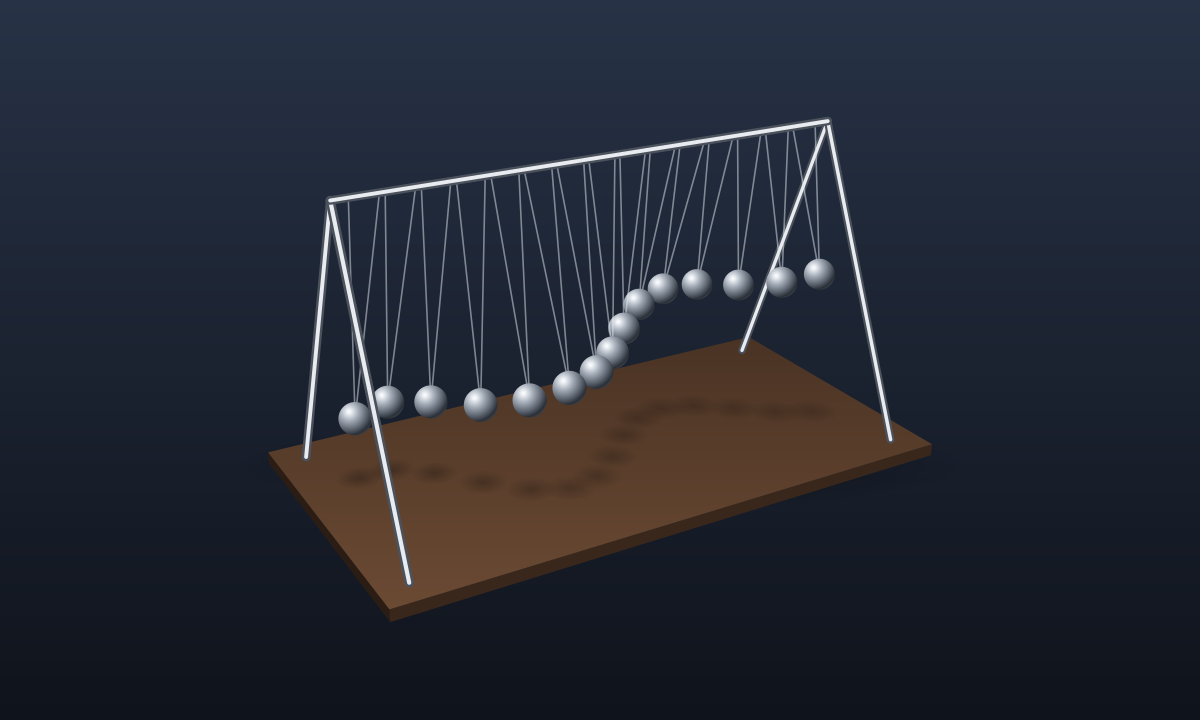
Pendulum wave
How a pendulum wave works: why the length of a pendulum sets its period, how one extra swing per cycle makes waves, rows, and groups, and why the pendulums line up again.
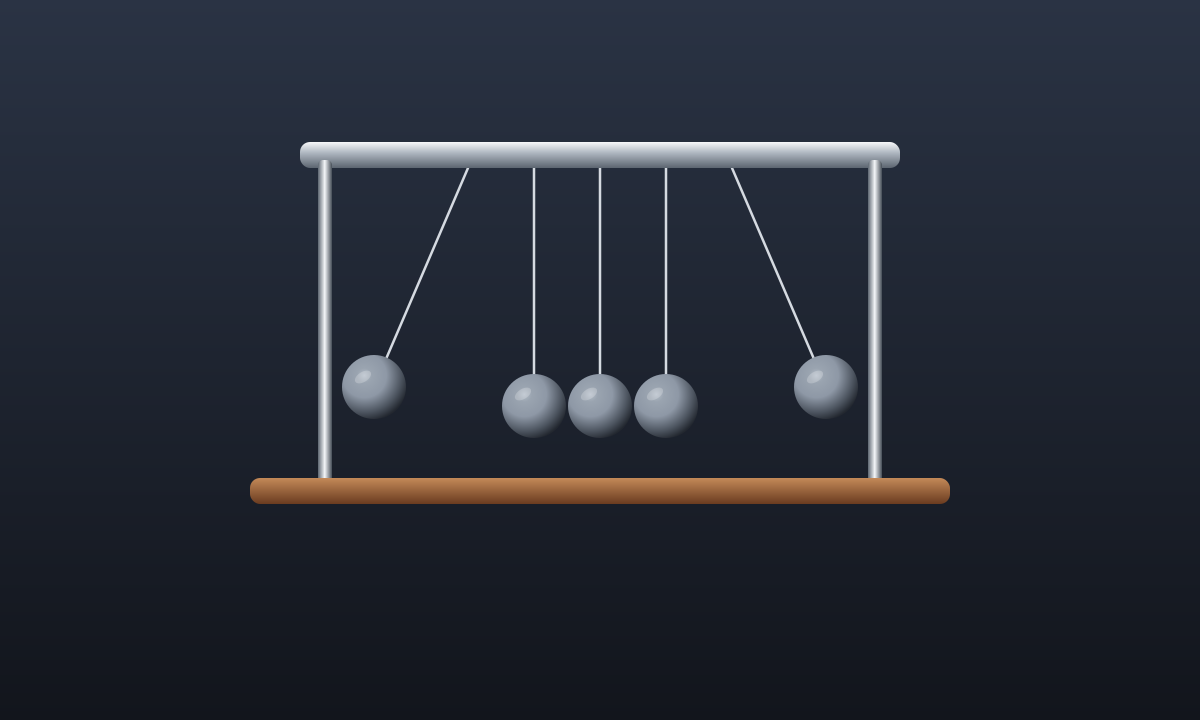
Newton's cradle
Lift a steel ball and let it fall. The click sends that motion out the other side. Watch height turn into motion as the cradle swings.
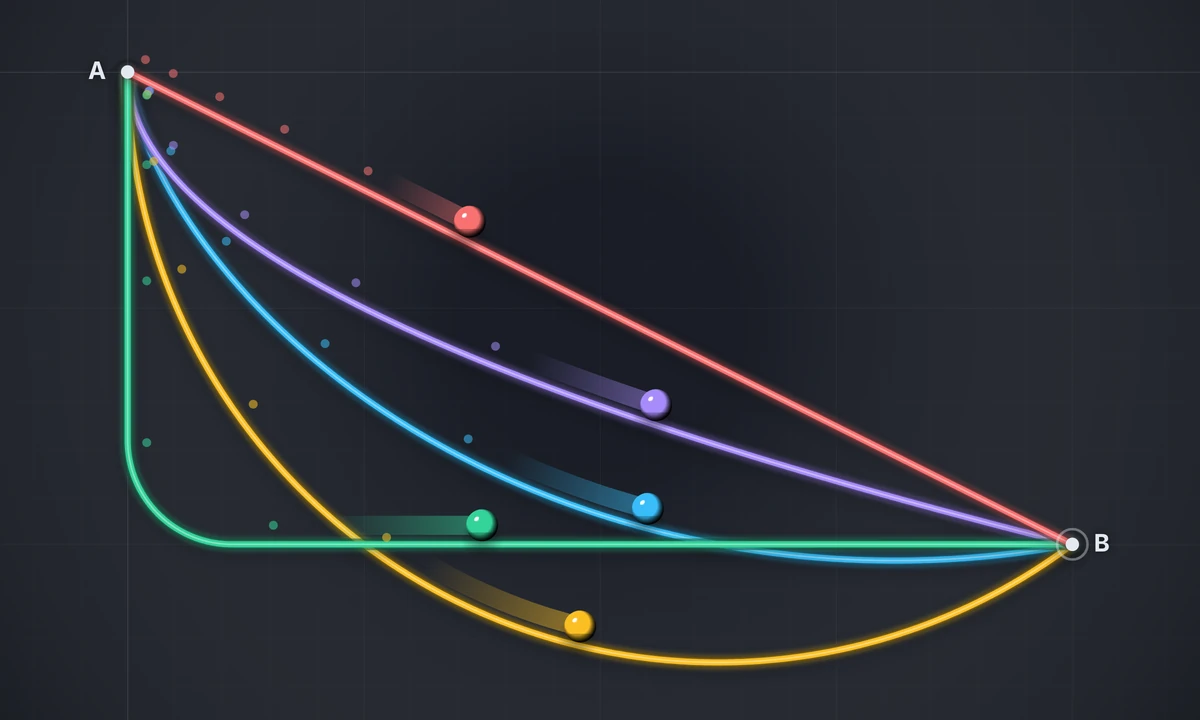
Brachistochrone race
Race balls from A to B on a straight ramp, a circle, a parabola, and a cycloid. The cycloid always wins, even when it dips below the finish. Draw your own track.
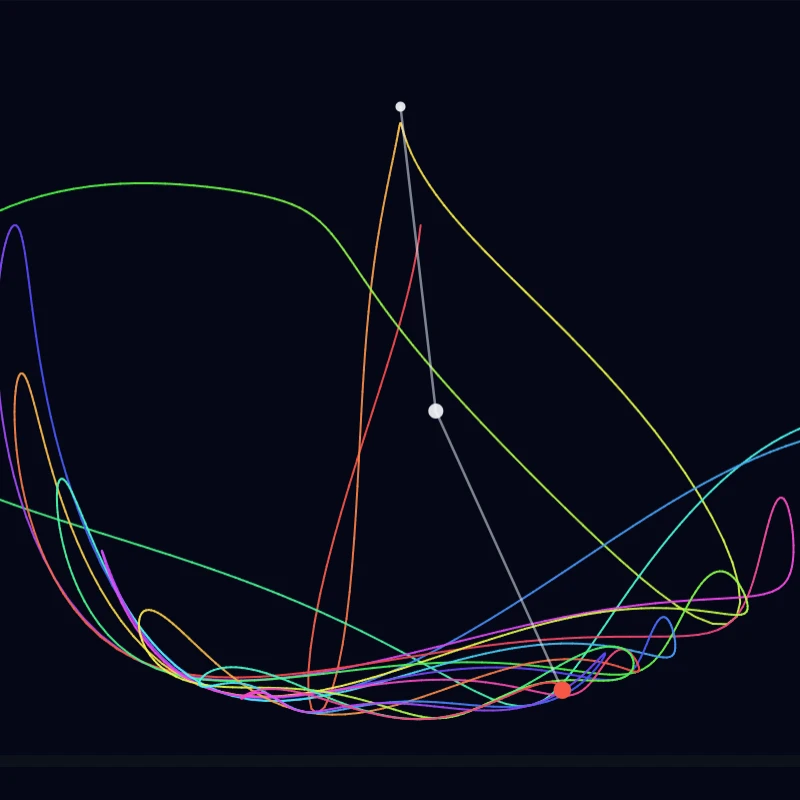
Double Pendulum
Simulate a classical double pendulum in your browser. Paint chaotic tip trails, long-exposure paths, or distort a soft field—then save a PNG.
Painting Pendulum
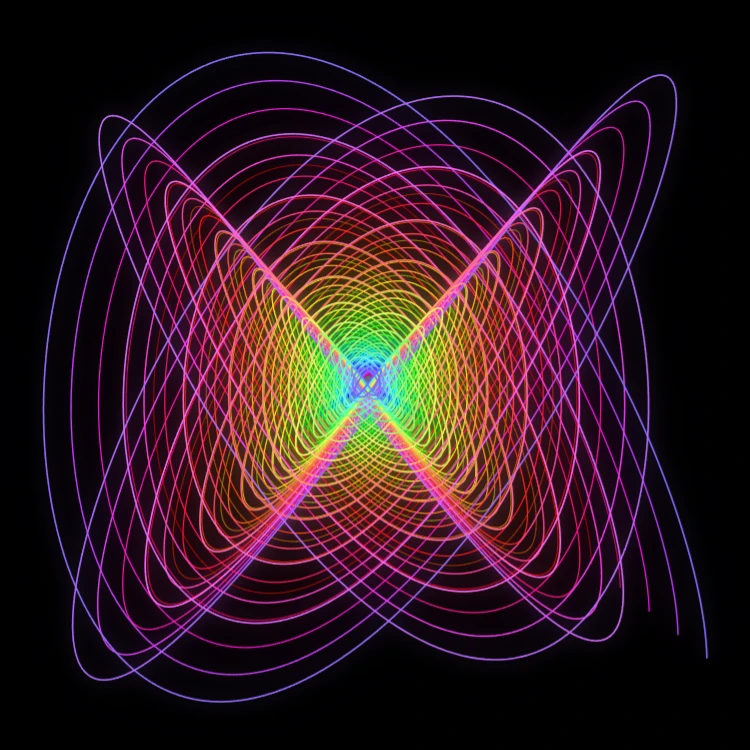
Paint damped Lissajous curves in your browser—the classic Blackburn painting pendulum. Tune frequency ratios, phases, and damping, animate the trail, and save a PNG.
Solar System
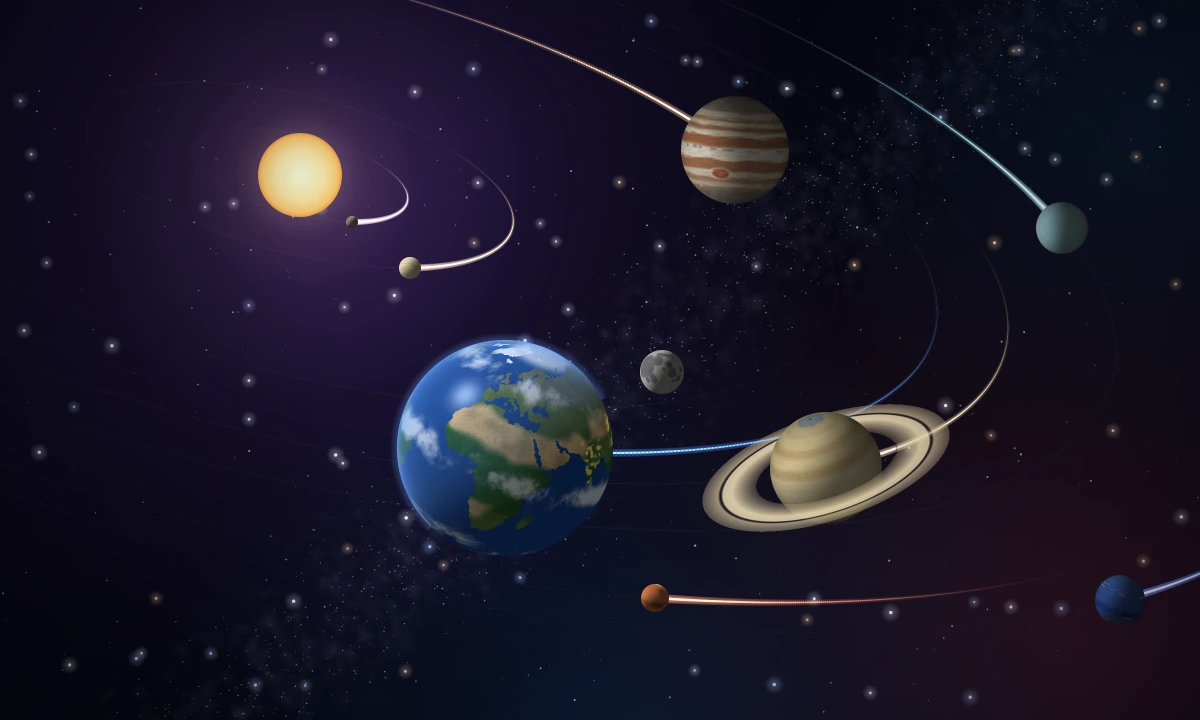
Fly through the solar system in 3D in your browser. The sun, eight planets, their largest moons, the dwarf planets, and the Kuiper belt move on their real, tilted orbits under Newton's gravity.

Lorenz Wheel
Simulate the Malkus/Lorenz chaotic waterwheel in your browser. Tune flow, leak, and friction, watch reversals, or switch to Lorenz ODEs—then save a PNG.
Ready to try it?
Open PictorX in your browser — no install, no credit card required to start.
Go to Editor