
Ukiyo-e
Read more about ukiyo-e—the Japanese woodblock prints of the Edo period that showed the “floating world” of actors, beauties, warriors and famous views in black key lines, flat colour and soft bokashi—and turn a photo into a Hokusai wave, a Hiroshige rain shower, an Utamaro beauty or a Sharaku actor in PictorX.
What is ukiyo-e?
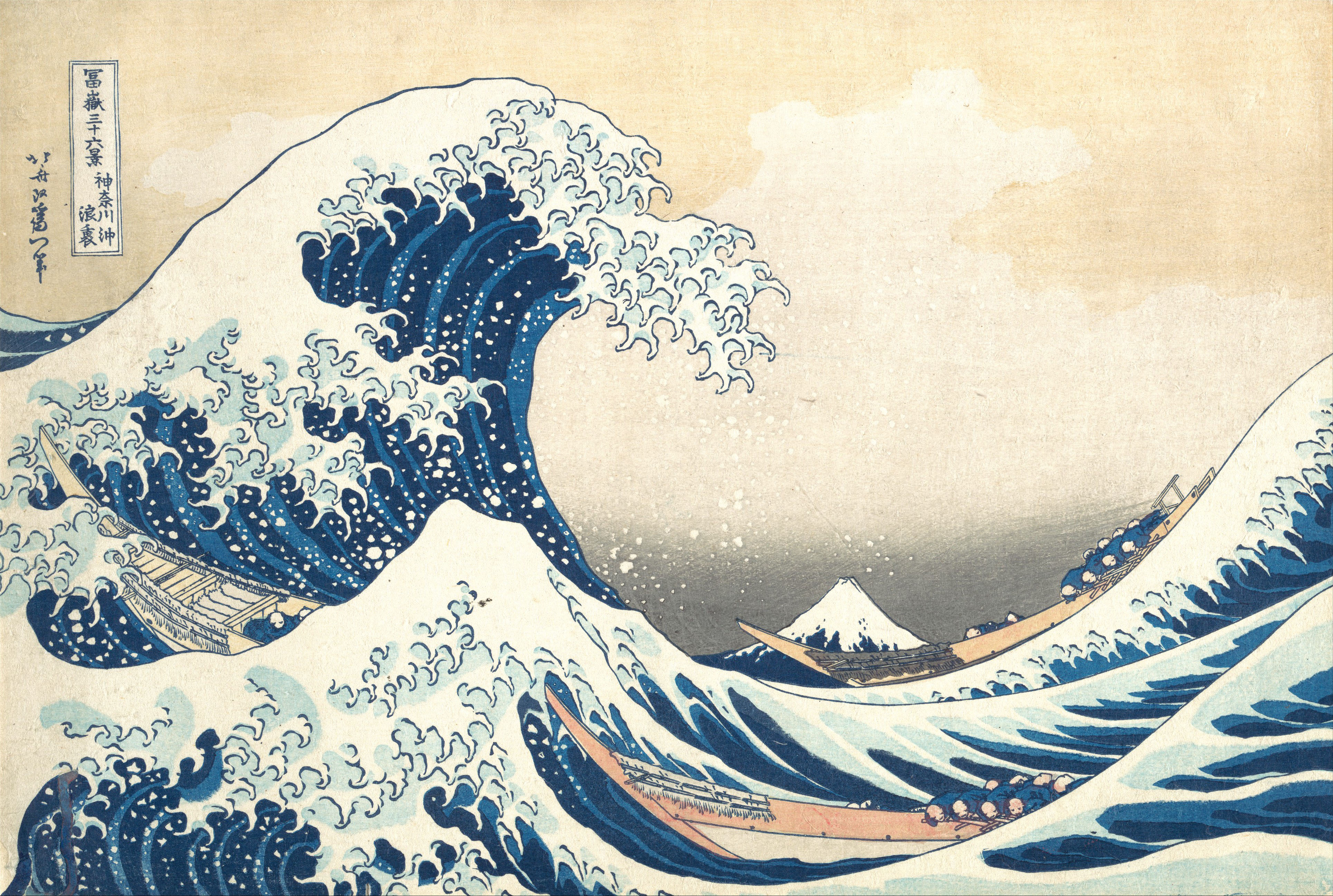
Ukiyo-e means “pictures of the floating world”. It is the art of the Japanese woodblock prints and paintings that flourished from the late 17th to the 19th century. The prints showed what city people loved: famous beauties and kabuki actors, heroes and legends, landscapes and famous places, birds and flowers. They were made in large numbers and sold cheaply—the price of a print is often compared to that of a bowl of noodles—so that ordinary townspeople could buy them, pin them up, collect them and pass them on.
The floating world of Edo
In Buddhism, ukiyo was the “sorrowful world” of suffering and impermanence. In the Edo period (1603–1868), when the shoguns ruled Japan from Edo—today's Tokyo—a word that sounds the same but is written differently came to mean the “floating world”: a life lived for the moment, drifting along like a gourd on a stream. Merchants and craftsmen grew rich but had little social standing, so they spent their money on pleasure: the kabuki theatres, the teahouses and the licensed Yoshiwara district, festivals, travel and fashion. Ukiyo-e were their pictures—posters, fan magazines, souvenirs and guidebooks all at once.
Four craftsmen, one print
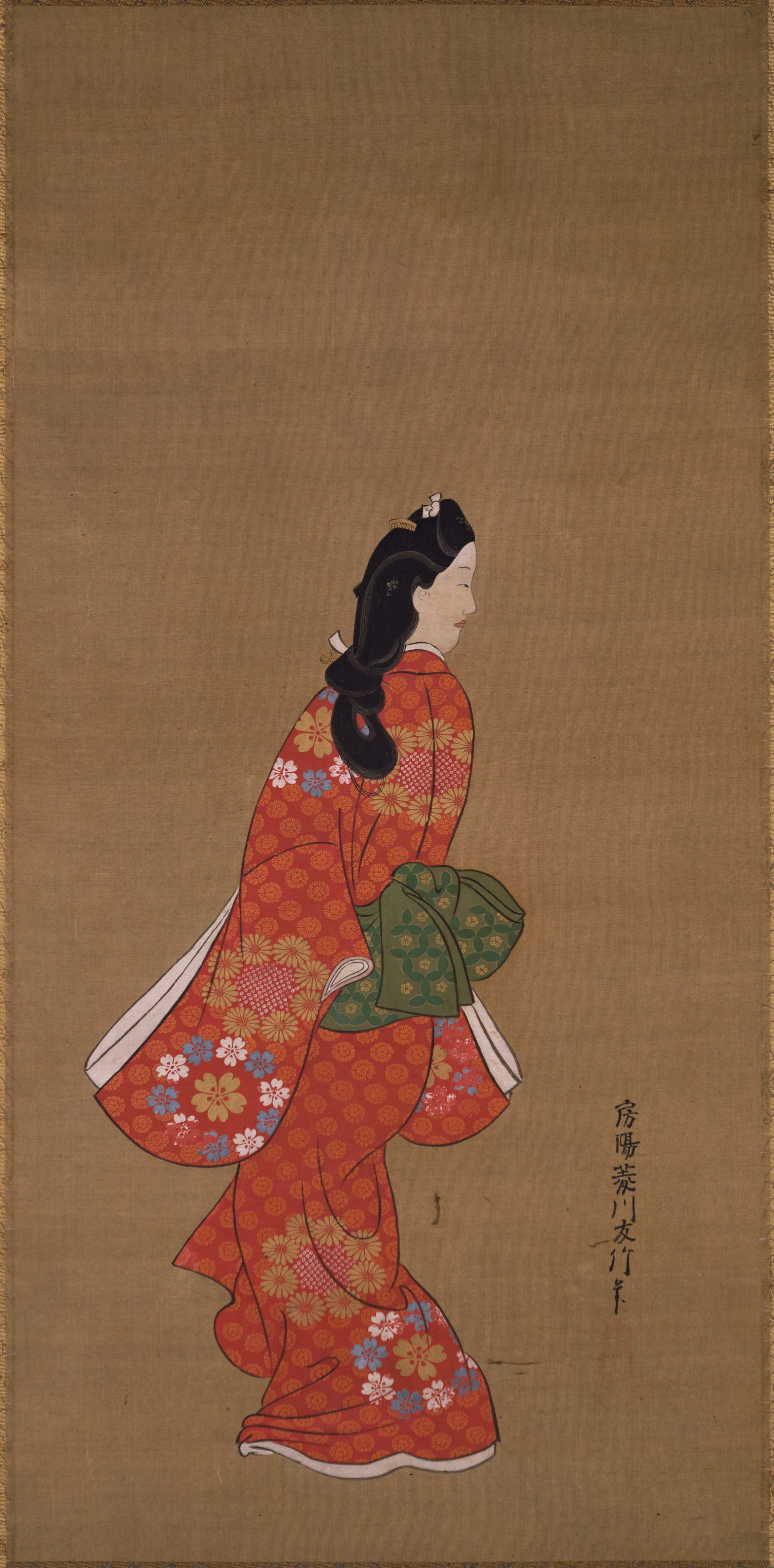
A print was the work of a team. The publisher (hanmoto) chose the subject, paid for it and sold it. The artist (eshi) drew the design in ink on thin paper. The carver (horishi) pasted the drawing face down on a block of mountain-cherry wood and cut away everything but the lines—destroying the drawing—to make the key block. On proofs of it the artist marked the colours, and a separate block was carved for each one. The printer (surishi) then brushed water-based pigment onto each block, laid damp washi paper made from mulberry fibre on top, lined up by registration marks called kentō, and rubbed the back with a round pad called a baren, one colour after another. By wiping the block before printing he could make bokashi, the soft gradients seen in skies and water.
Hokusai and the Great Wave
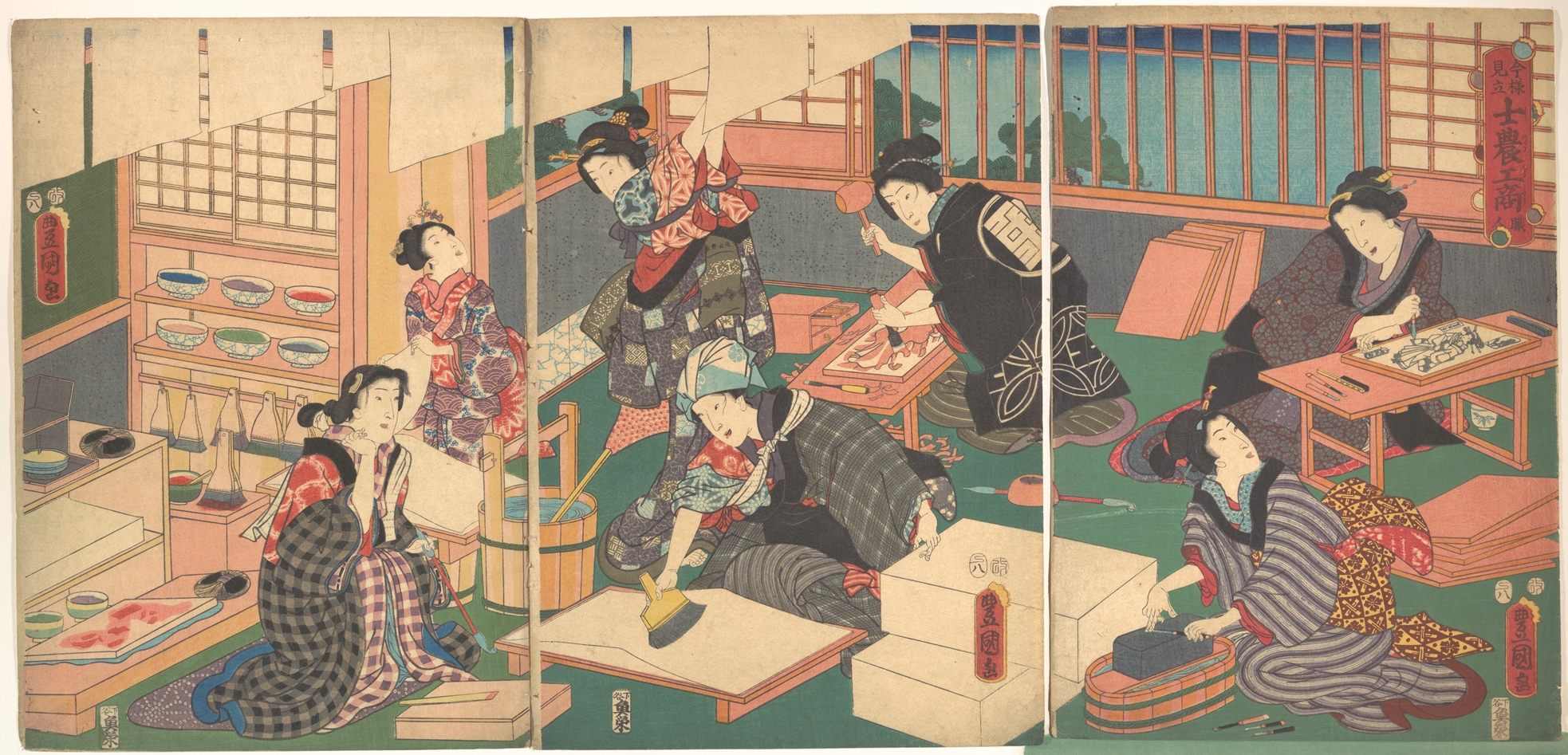
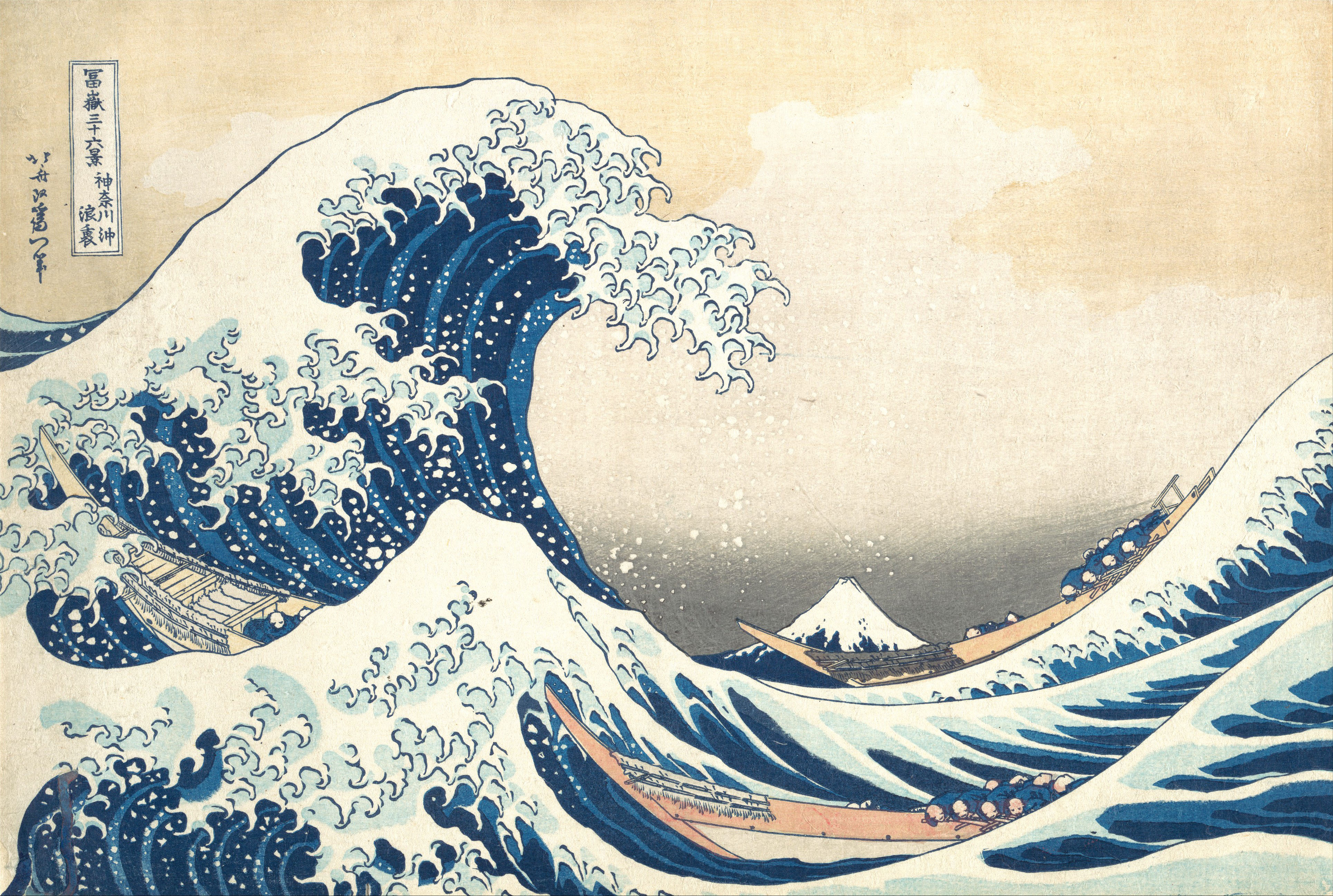
Katsushika Hokusai (1760–1849) worked for some seventy years and used more than thirty names; late in life he signed himself “the old man mad about painting”. Around 1830–1832 he published Thirty-six Views of Mount Fuji, a series of landscape prints that in the end grew to forty-six. Its most famous image, Under the Wave off Kanagawa—better known as the Great Wave—shows a giant wave curling into claws of foam over three boats, with Fuji small and still in the distance. The series made bold use of Prussian blue, a new imported pigment. Hokusai also published the Hokusai Manga, volumes of sketches of everyday life, animals and spirits that became a sourcebook for artists.
Hiroshige: rain, snow and the road
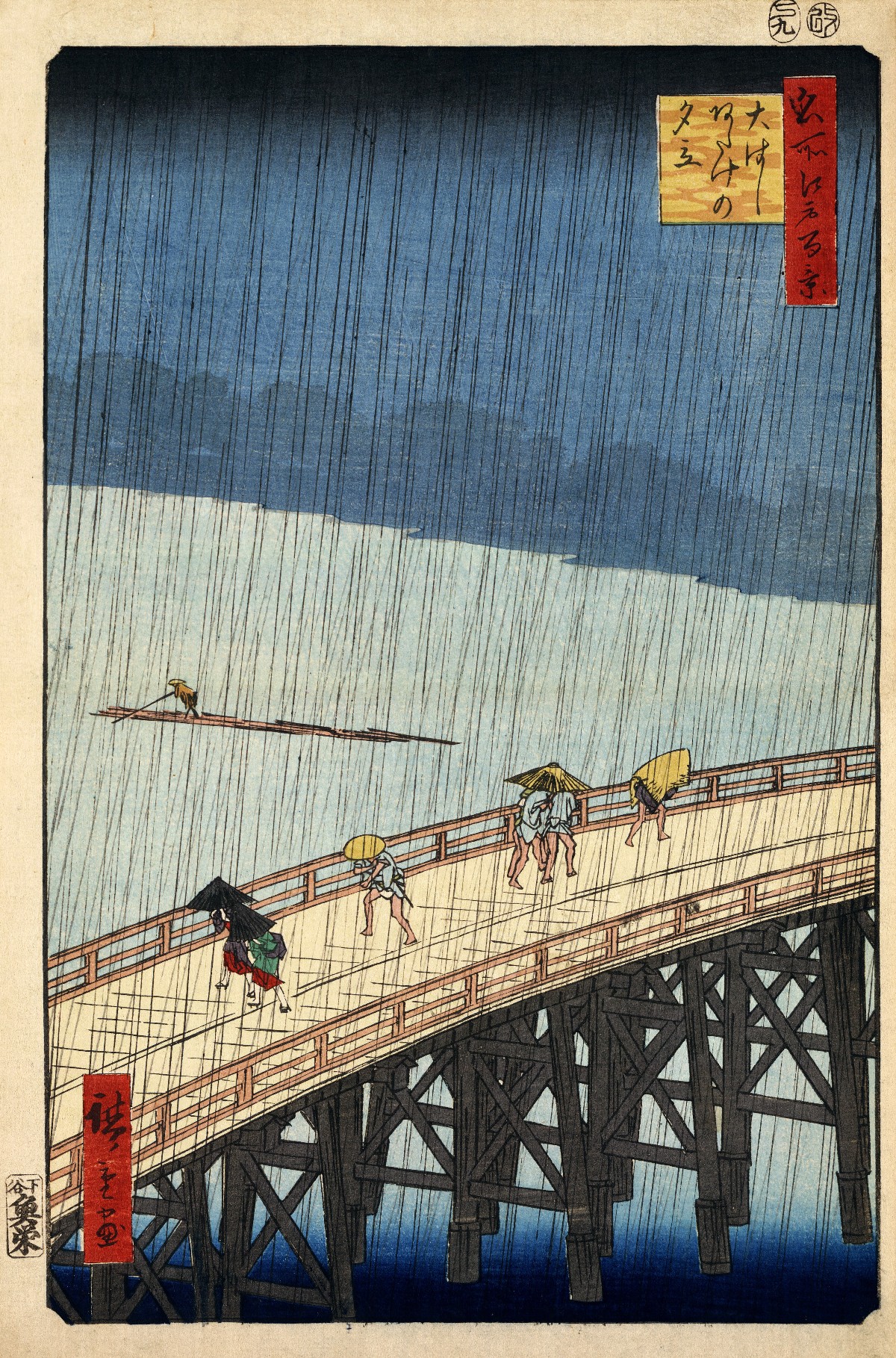
Utagawa Hiroshige (1797–1858) became the great poet of weather and travel. His Fifty-three Stations of the Tōkaidō (1833–1834) follows the highway from Edo to Kyoto through rain, snow, mist and moonlight, with travellers, porters and horses on the road. In One Hundred Famous Views of Edo (1856–1858) he used daring compositions: an object cut off close up in front, a deep view behind. In Sudden Shower over Shin-Ōhashi Bridge and Atake, people hurry across a bridge under fine, dark lines of rain. Hiroshige's deep blues and the gentle bokashi of his skies were admired all over the world.
Utamaro and the beauties
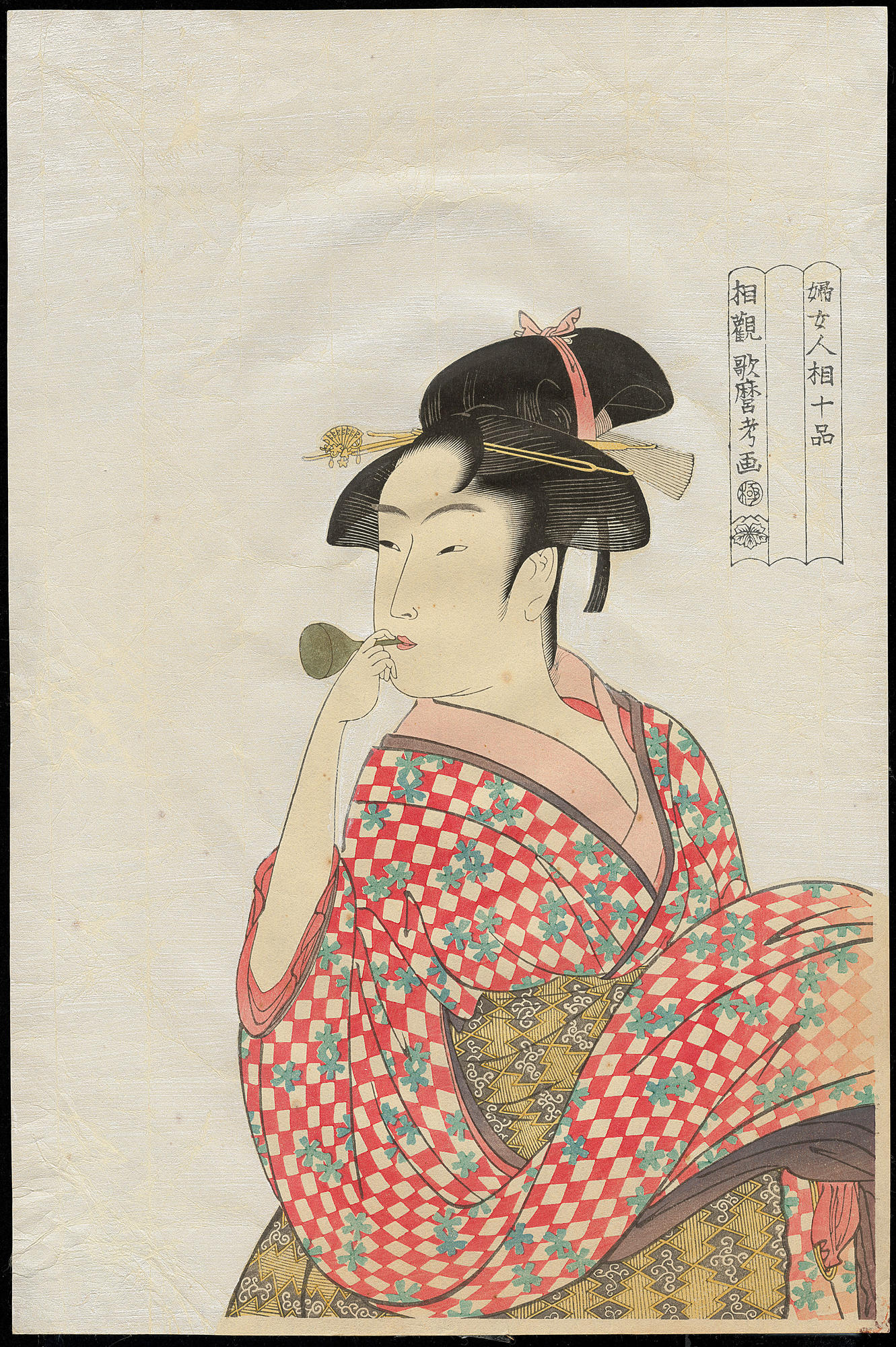
Kitagawa Utamaro (about 1753–1806) was the master of bijin-ga, “pictures of beautiful women”. Working with the publisher Tsutaya Jūzaburō in the 1790s, he moved in close: his ōkubi-e, “large-head pictures”, show women from the chest or shoulders up, with fine, flowing lines for the face and hair, rich kimono patterns and glittering backgrounds of powdered mica. Rather than ideal types, he tried to show character and feeling—a woman reading a letter, blowing into a glass toy, or simply lost in thought.
Sharaku and the kabuki stage
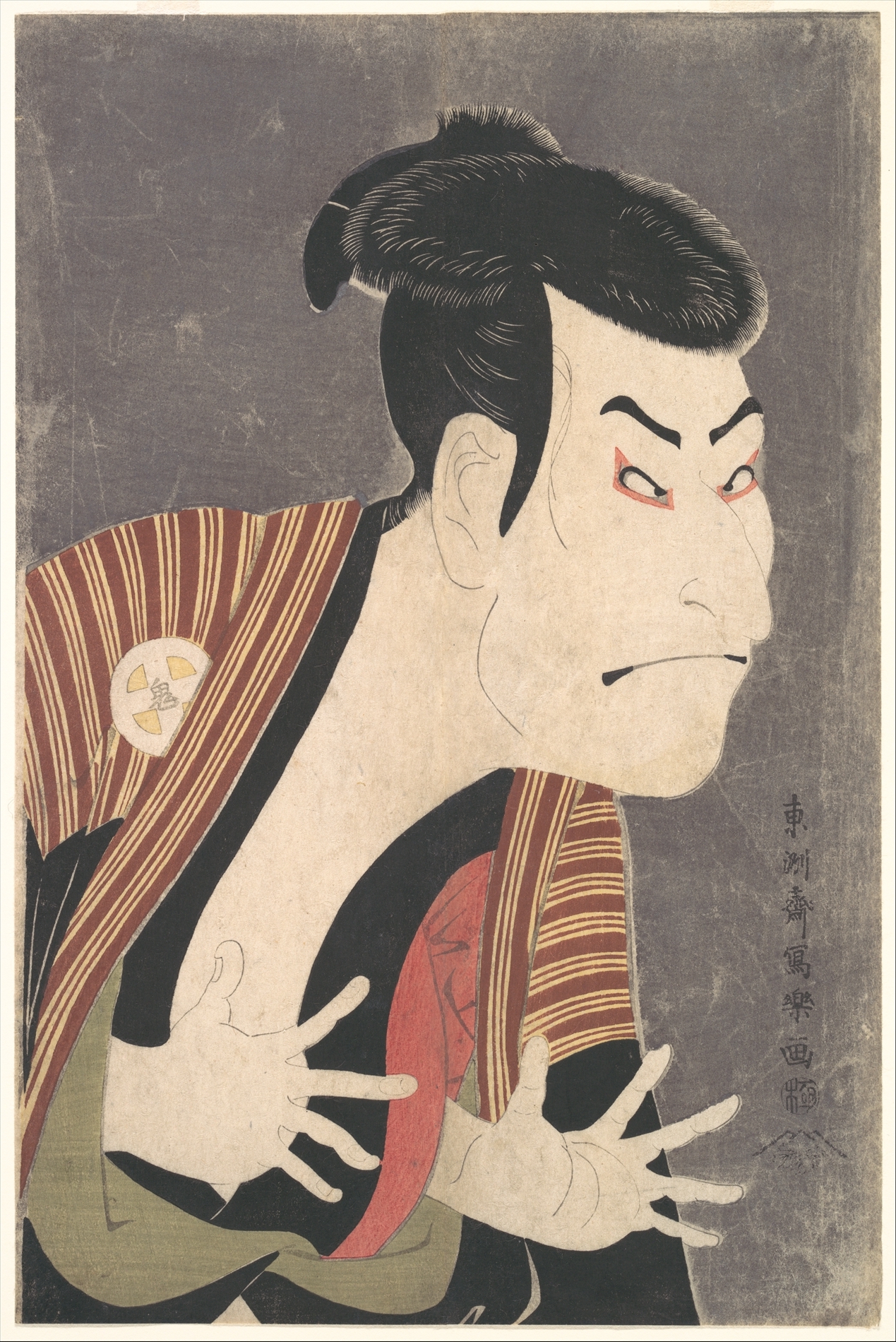
Pictures of kabuki actors, yakusha-e, were the posters and pin-ups of Edo. The most mysterious master of the genre is Tōshūsai Sharaku, who appeared in 1794, made about 140 prints in roughly ten months, and vanished; nobody knows for certain who he was. His actors are shown in close-up against dark, shimmering mica grounds, with crossed eyes, clenched hands and grimacing mouths at the dramatic high point of a role. They were perhaps too frank for the actors' fans at the time, but today they are among the most admired portraits in Japanese art.
Kuniyoshi and the warriors
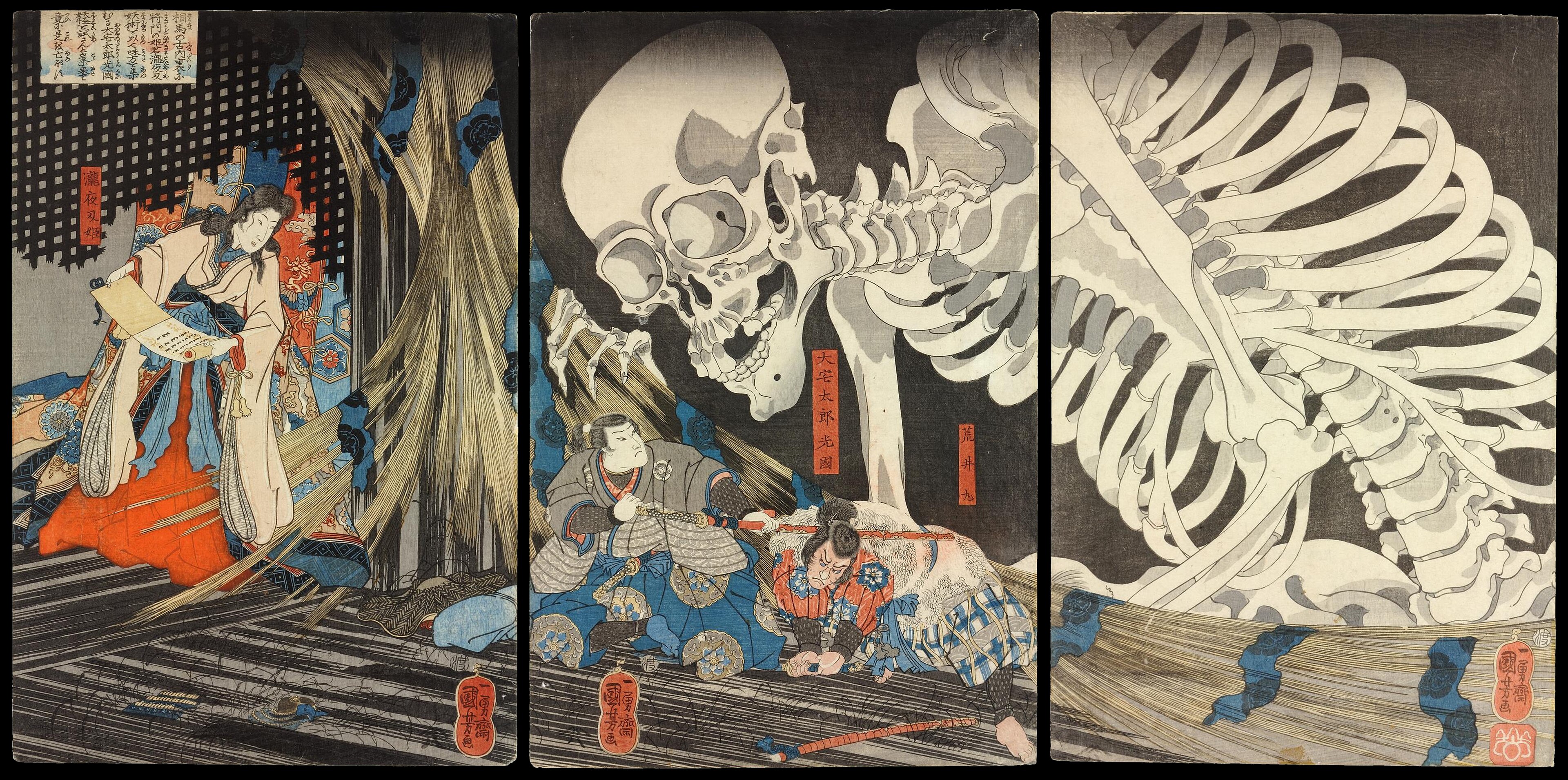
Utagawa Kuniyoshi (1797–1861) made his name with musha-e, warrior prints. His series 108 Heroes of the Popular Suikoden, begun around 1827, shows the outlaws of a Chinese adventure novel twisting in combat, their bodies covered in tattoos—and it helped start a fashion for full-body tattoos in Edo. Kuniyoshi filled whole triptychs with giant skeletons, sea monsters, storms and swirling clouds, and he also loved cats, which appear in many of his prints. His bold, crowded designs are often seen as an early ancestor of manga and comics.
Birds and flowers
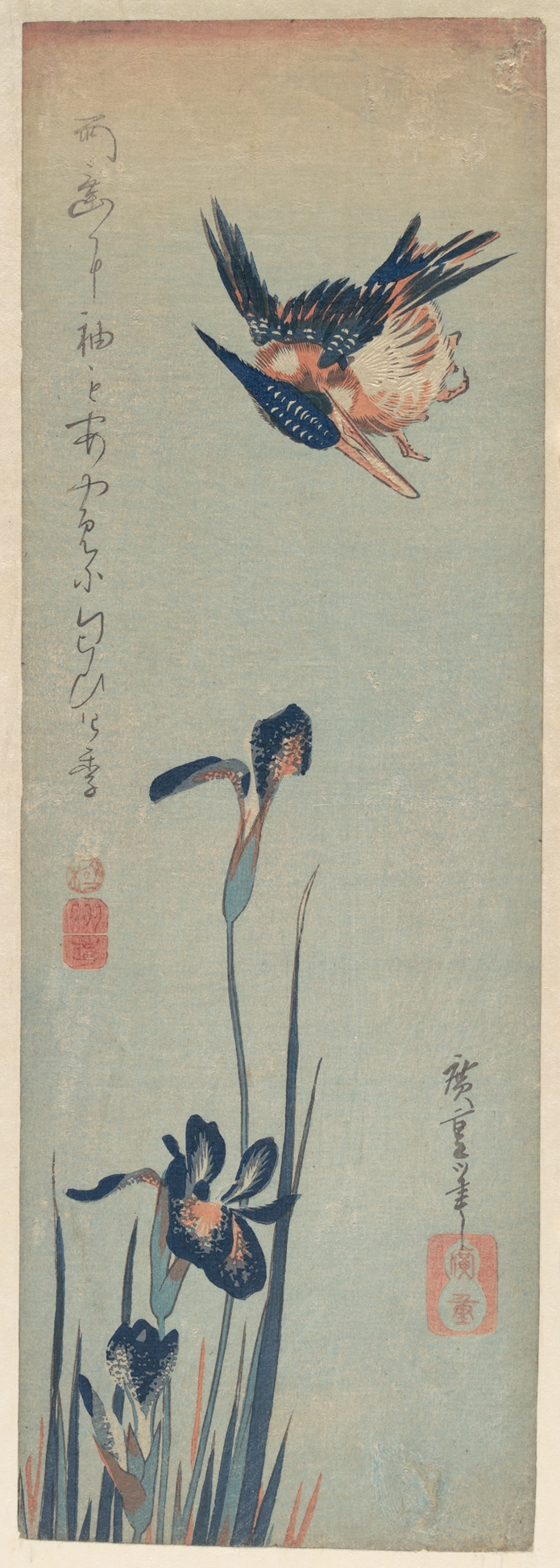
Not every print was about people. Kachō-ga, “pictures of birds and flowers”, came from an old tradition of Chinese and Japanese painting. Hokusai and Hiroshige both made series of them: a bush warbler on a plum branch, a kingfisher above irises, sparrows in the snow, often with a short poem written beside the picture. With a branch reaching in from the side and wide areas of empty space, these quiet prints show the same eye for the seasons that runs through all of ukiyo-e—cherry blossom in spring, the moon in autumn, snow in winter.
Japonisme: ukiyo-e goes west
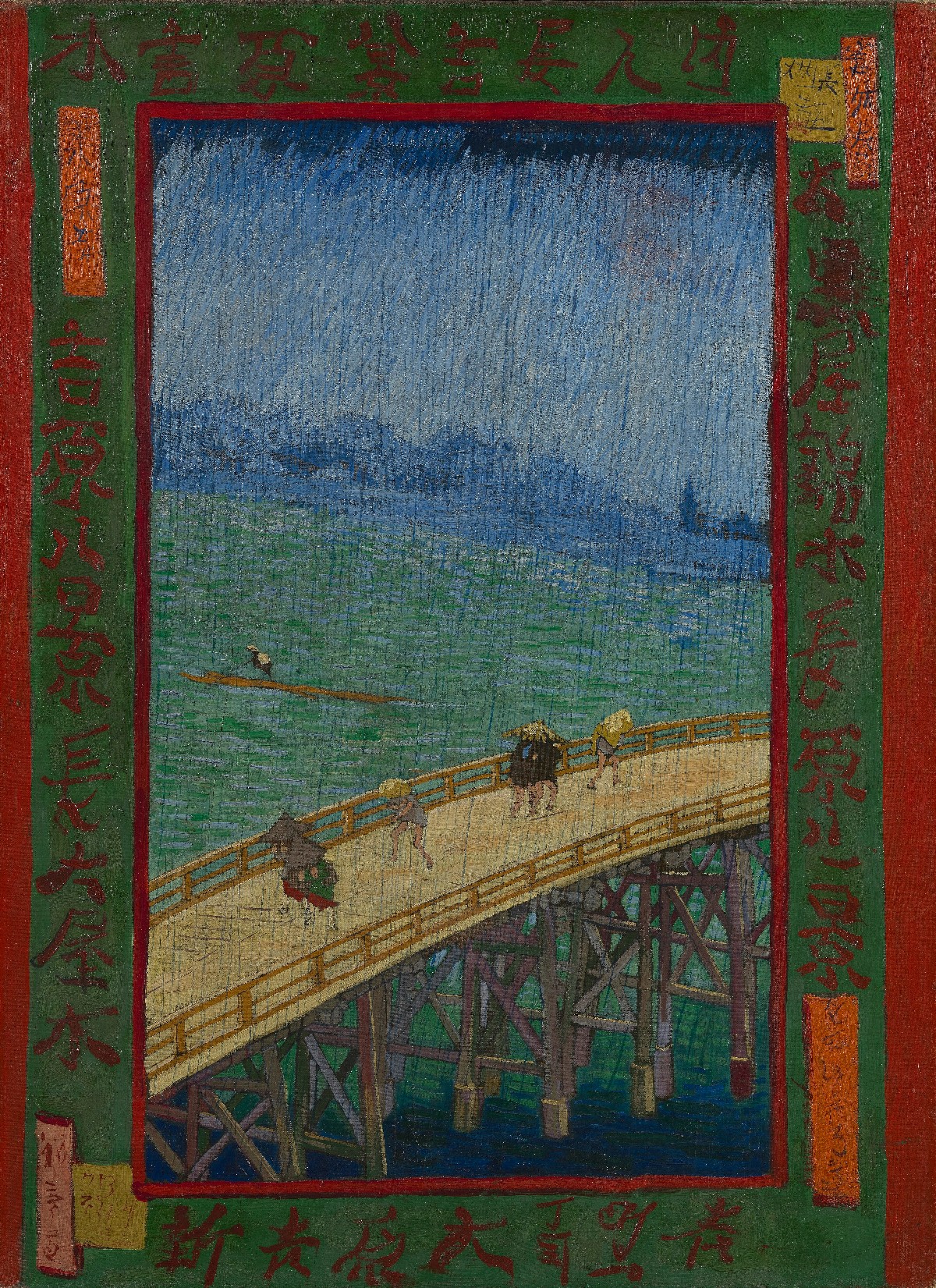
After Japan opened its ports to foreign trade in the 1850s, Japanese prints poured into Europe—according to a famous story, some first arrived as packing paper around porcelain. Artists in Paris fell in love with them, and the fashion got a name: Japonisme. Claude Monet hung more than two hundred prints in his house at Giverny and built a Japanese bridge over his water-lily pond. Vincent van Gogh collected hundreds and copied Hiroshige's Sudden Shower and Plum Park in Kameido in oil paint. Degas, Toulouse-Lautrec, Whistler, Mary Cassatt and the Art Nouveau poster artists learned from their flat colours, strong outlines, cropped views and high horizons, and the cover of Debussy's La Mer (1905) shows Hokusai's wave. In Japan, ukiyo-e faded after 1868 as photography and modern printing arrived, but it lives on in the shin-hanga prints of the 20th century, in manga and anime, and in the Great Wave on the back of the 1,000-yen banknote issued in 2024.
A digital homage in PictorX
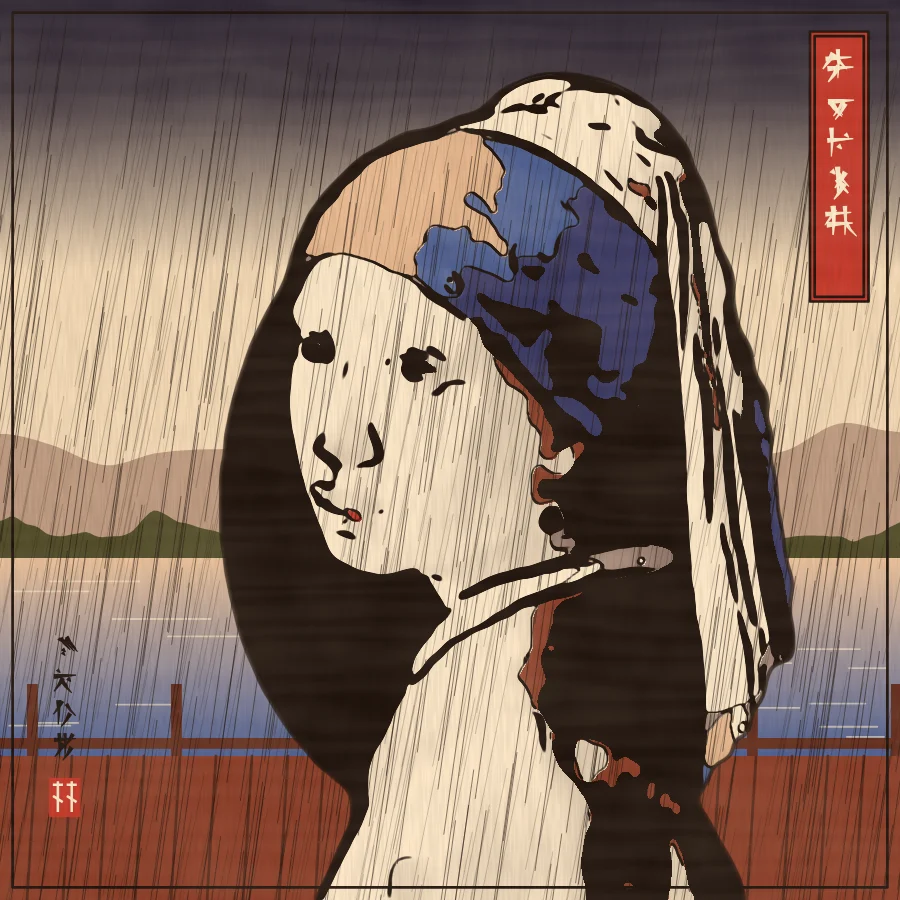
PictorX Ukiyo-e is a filter inspired by Hokusai's waves and Red Fuji, Hiroshige's rain, snow and landscapes, Harunobu's soft colours and blind embossing, Utamaro's beauties, Sharaku's actors on dark mica, Kuniyoshi's warriors, the bird-and-flower prints, the gold and silver of surimono, and Kawase Hasui's moonlit nights. It imitates the look of the woodblock process—a black key block, flat blocks of colour printed slightly out of register, bokashi gradients, wood grain and washi fibres—and adds a title cartouche and a red seal; the brush marks in the cartouche are decorative, not real Japanese writing. It is not a reproduction of any museum print, not an AI copy of an ukiyo-e design and not a claim of authenticity: each picture is made from your own photo. The originals are best seen in places such as the Ōta Memorial Museum of Art and the Sumida Hokusai Museum in Tokyo, the Tokyo National Museum, the British Museum in London, the Museum of Fine Arts in Boston and the Van Gogh Museum in Amsterdam.
Make your own ukiyo-e in PictorX
Open the Ukiyo-e effect, load a photo—a portrait with a clear subject works best—and pick a Style: Hokusai, Hiroshige, Utamaro, Sharaku, Kuniyoshi, Birds and Flowers, Red Fuji, Snow, Harunobu, Hasui or Surimono. Choose a Palette—Edo, Photo, Indigo, Sunset or Faded—then use Line Weight for the black key lines, Ornament for the waves, rain, snow, clouds, mica, blossoms, gold and embossing, Detail for the fineness of the lines, colour blocks and kimono patterns, and Bokashi for the soft gradients in the sky and the colour blocks. Turn the Cartouche on or off, use Remove background to clear the photo's own background so the subject stands alone in front of the scene, then export, or keep editing in PictorX.
Frequently asked questions
What does ukiyo-e mean?
“Pictures of the floating world”. The word ukiyo once meant the sorrowful, passing world of Buddhism; in the Edo period it came to mean the pleasures of city life—theatre, fashion, beauty and travel—that the prints showed.
Who are the most famous ukiyo-e artists?
Katsushika Hokusai (the Great Wave), Utagawa Hiroshige (the Tōkaidō and Edo views), Kitagawa Utamaro (beautiful women), Tōshūsai Sharaku (kabuki actors) and Utagawa Kuniyoshi (warriors), together with earlier masters such as Hishikawa Moronobu and Suzuki Harunobu.
How was an ukiyo-e print made?
By a team: an artist drew the design, a carver cut a key block and one block for each colour in cherry wood, a printer printed them one by one on damp washi paper with a baren, and a publisher paid for and sold the prints.
How did ukiyo-e influence Western art?
From the 1860s Japanese prints inspired Japonisme in Europe. Monet, Van Gogh, Degas, Toulouse-Lautrec, Whistler, Cassatt and the Art Nouveau poster artists borrowed their flat colours, bold outlines, cropped views and unusual angles.
Is the PictorX filter a real ukiyo-e print?
No. It is a digital homage made from your own photo, not a copy of any print, and the writing in its cartouche is decorative. The original woodblock prints remain works of art in museums and collections.
Related tools
Ukiyo-e photo filter
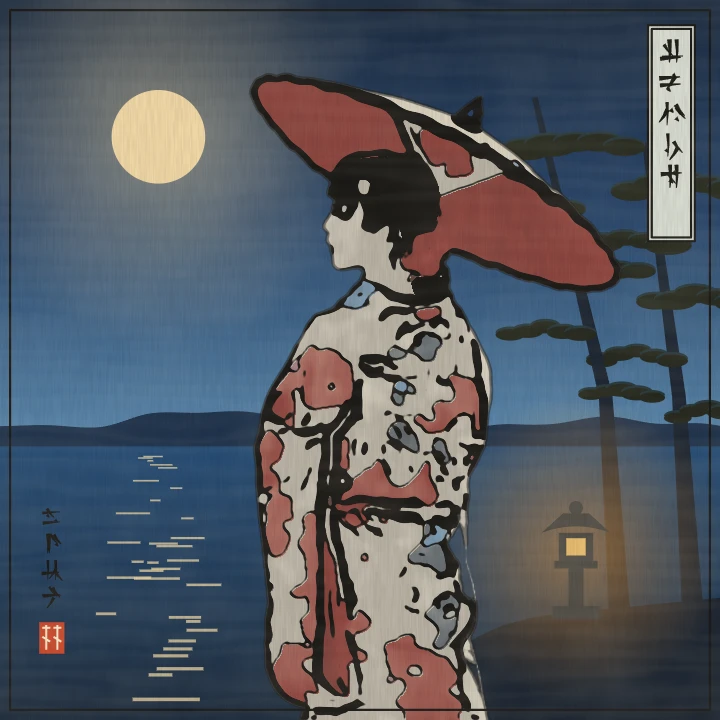
Turn a photo into a Japanese ukiyo-e woodblock print in your browser: before Hokusai's Great Wave, in Hiroshige's rain, as an Utamaro beauty, a Sharaku kabuki actor or a Kuniyoshi warrior, or among birds and flowers.
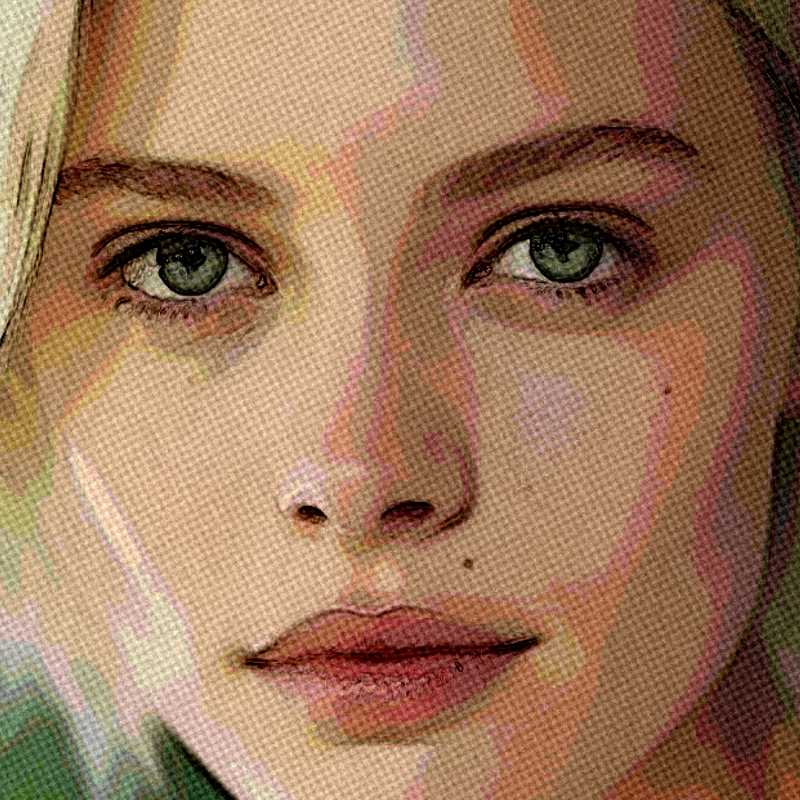
Artistic effects
Transform photos with oil painting, watercolor, pencil, comic ink, pastels, paper cut-out, and other studio art looks.
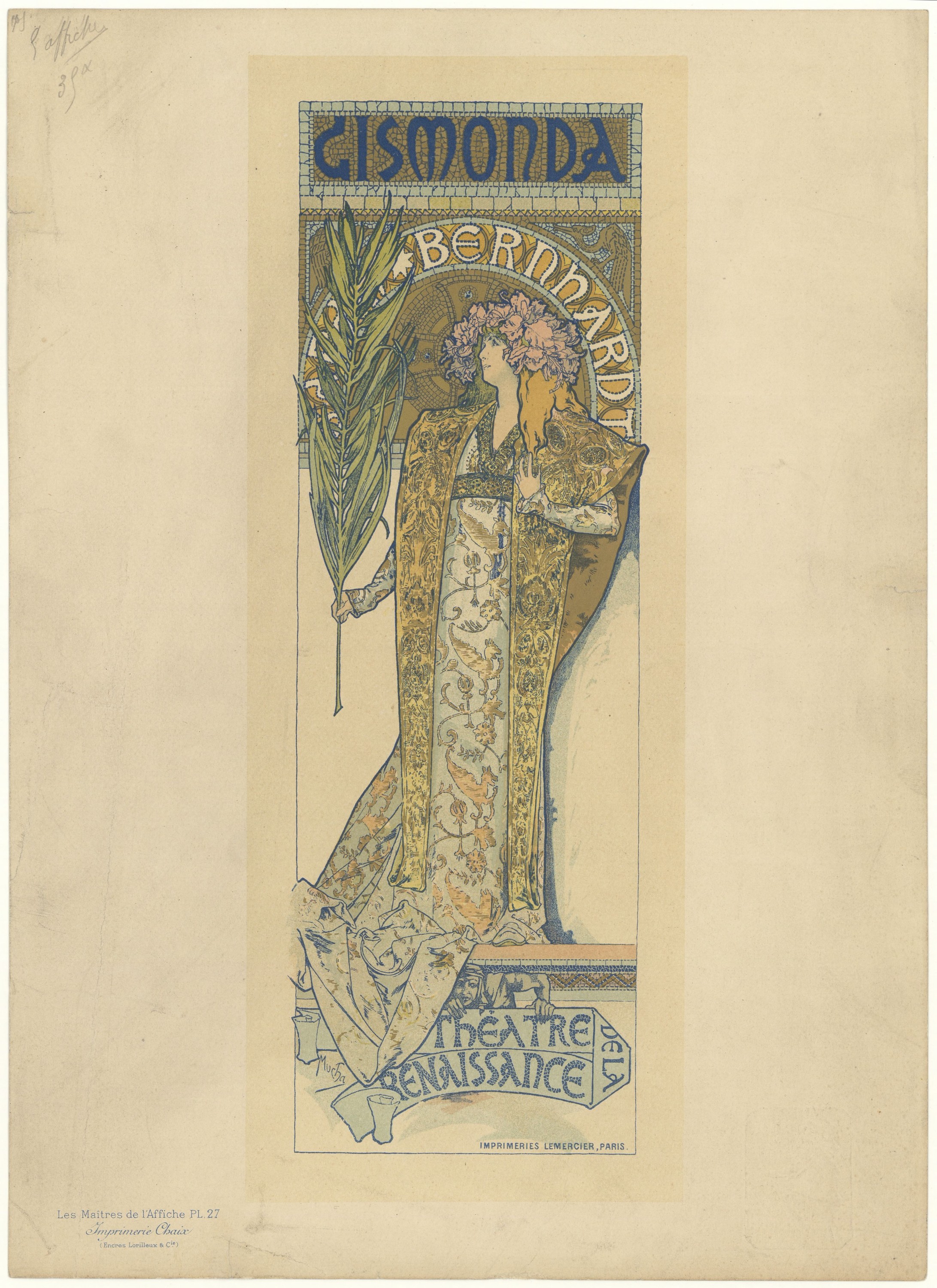
Art Nouveau
A short guide to Art Nouveau: where the name came from, Mucha's posters, the whiplash line and the buildings of Horta, Guimard and Gaudí, Klimt and the Vienna Secession, Tiffany glass and Lalique jewels, Beardsley's ink drawings, the end of the style and its revival, and a digital homage you can try in PictorX.
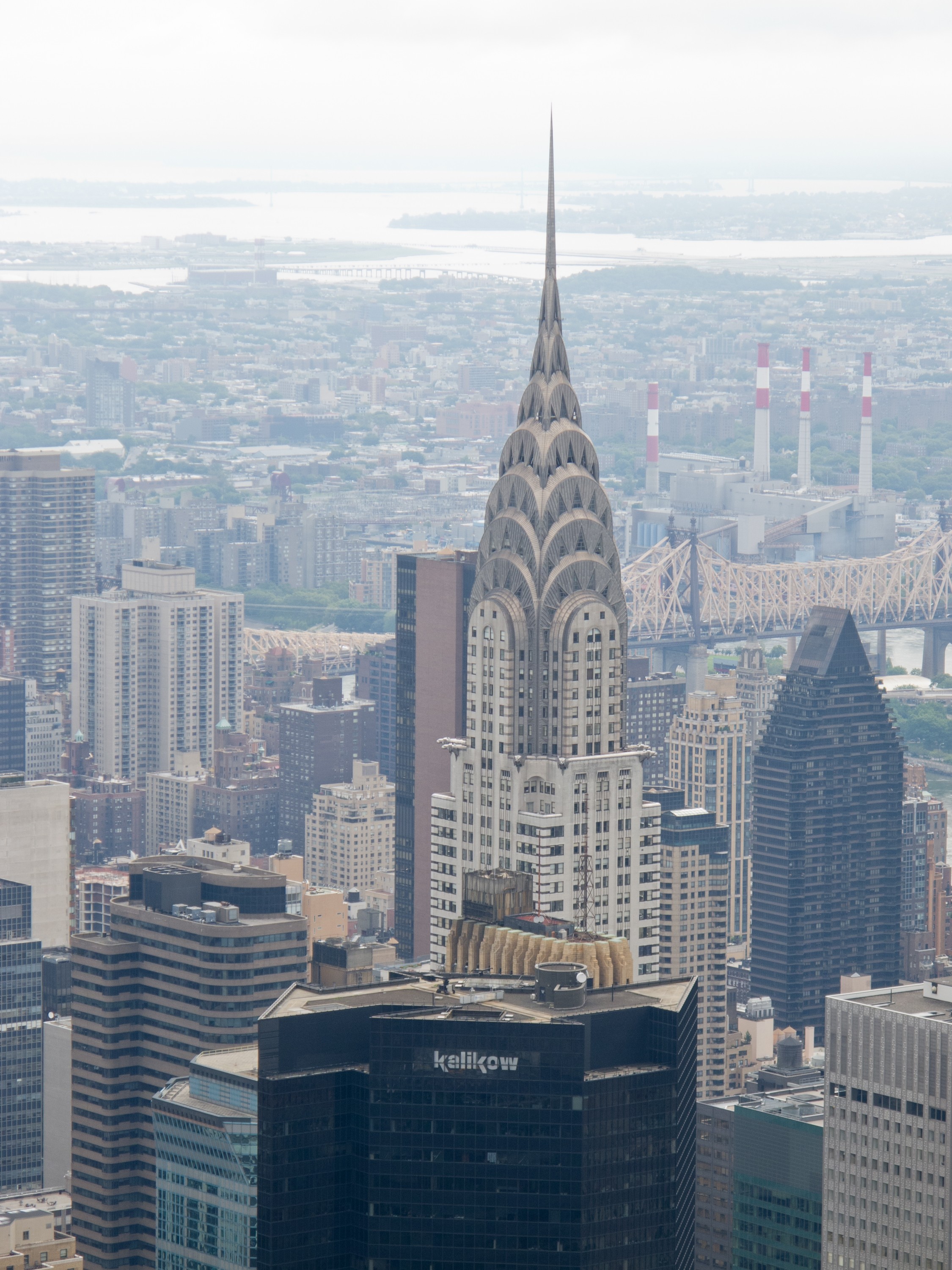
Art Deco
A short guide to Art Deco: the 1925 Paris exhibition and where the name came from, Cassandre's posters, Tamara de Lempicka, the Chrysler Building and the skyscraper age, the luxury and ornament of the Jazz Age, Streamline Moderne, the end of the style and its revival, and a digital homage you can try in PictorX.
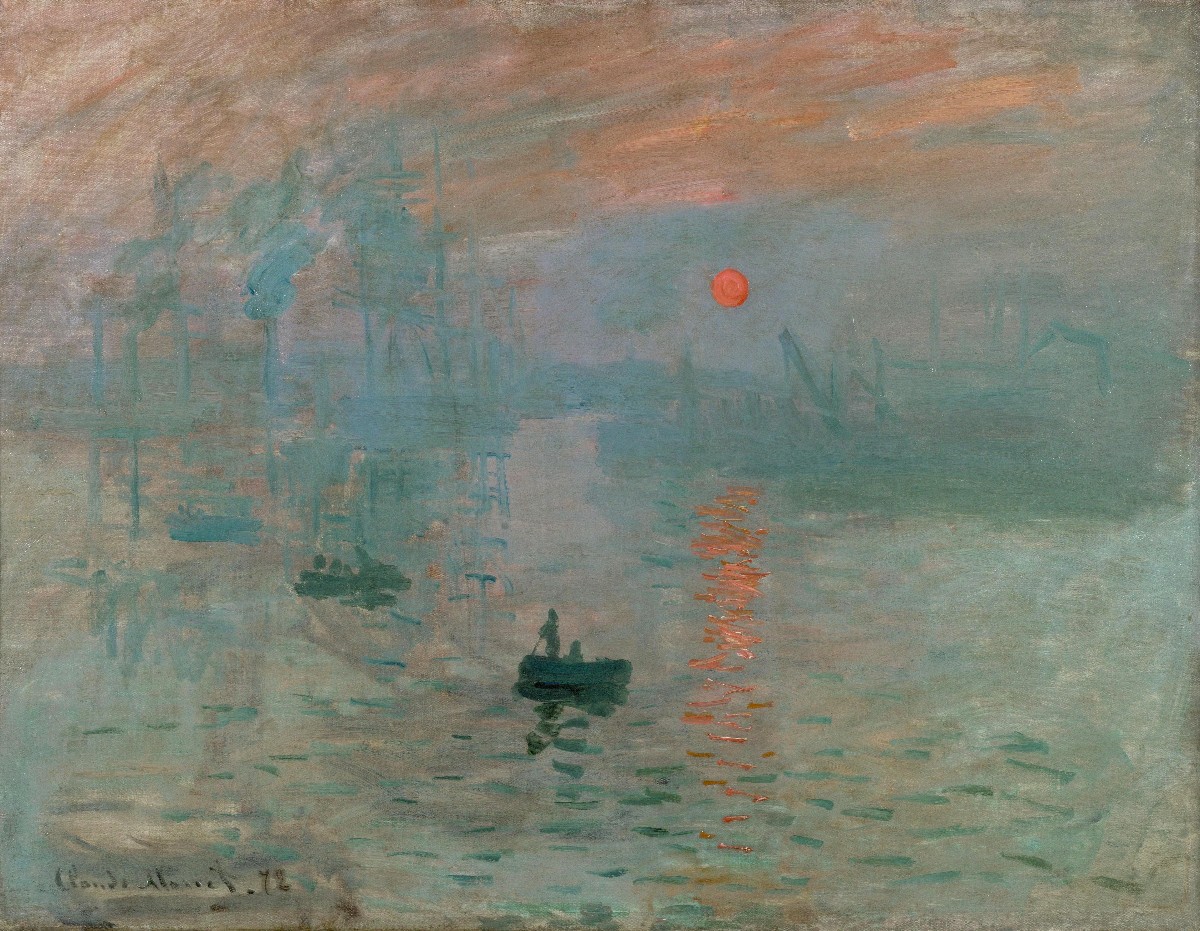
Impressionism
A short guide to Impressionism: the 1874 exhibition in Paris, Monet's Impression, Sunrise, painting in the open air, the water lilies at Giverny, Renoir's dappled light, Degas's dancers, Berthe Morisot and the women Impressionists, broken colour and coloured shadows, and a digital homage you can try in PictorX.
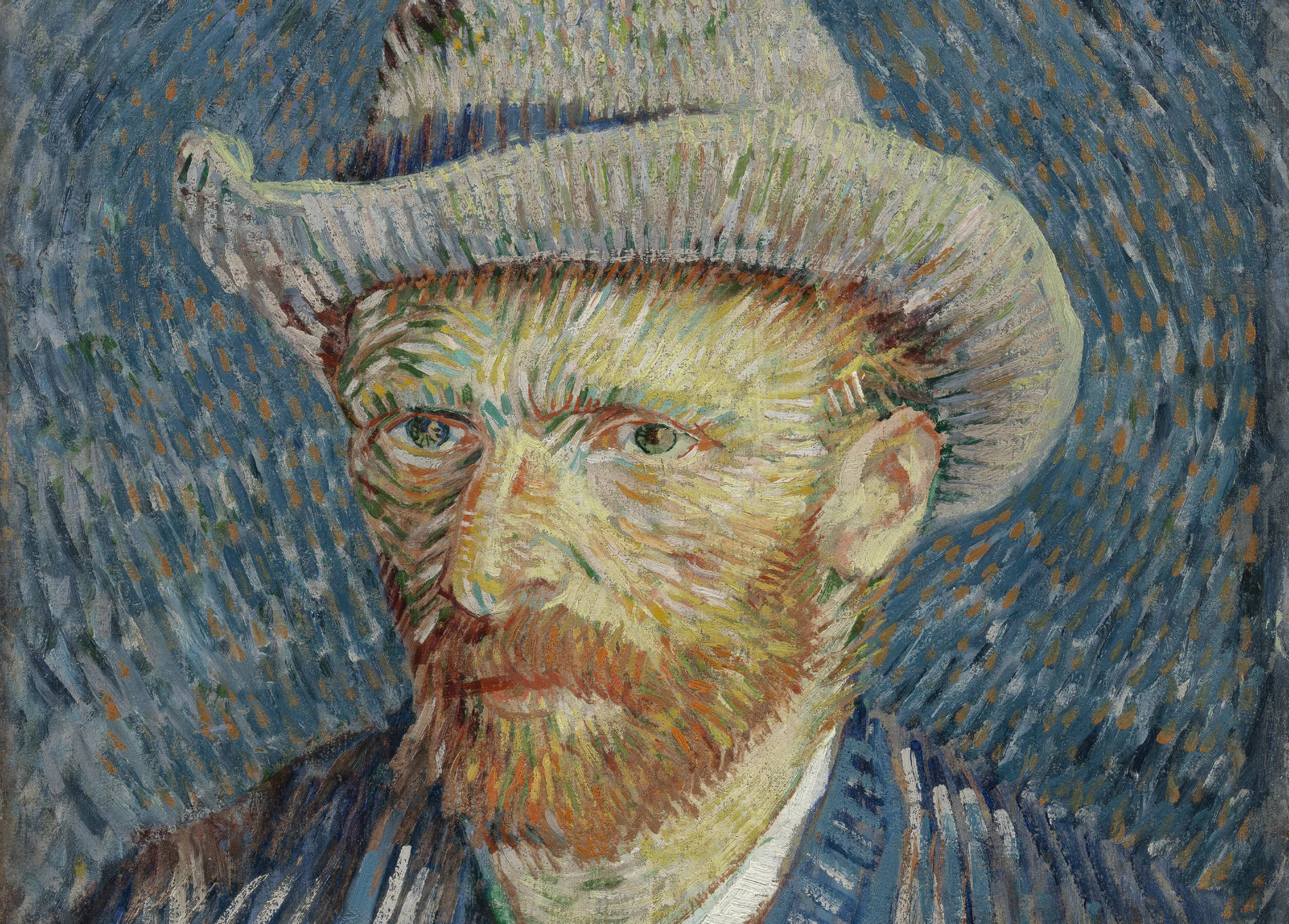
Vincent van Gogh
A short guide to Vincent van Gogh: Dutch Post-Impressionism, swirling brushwork, Starry Night and sunflowers, and a respectful digital homage you can try in PictorX.
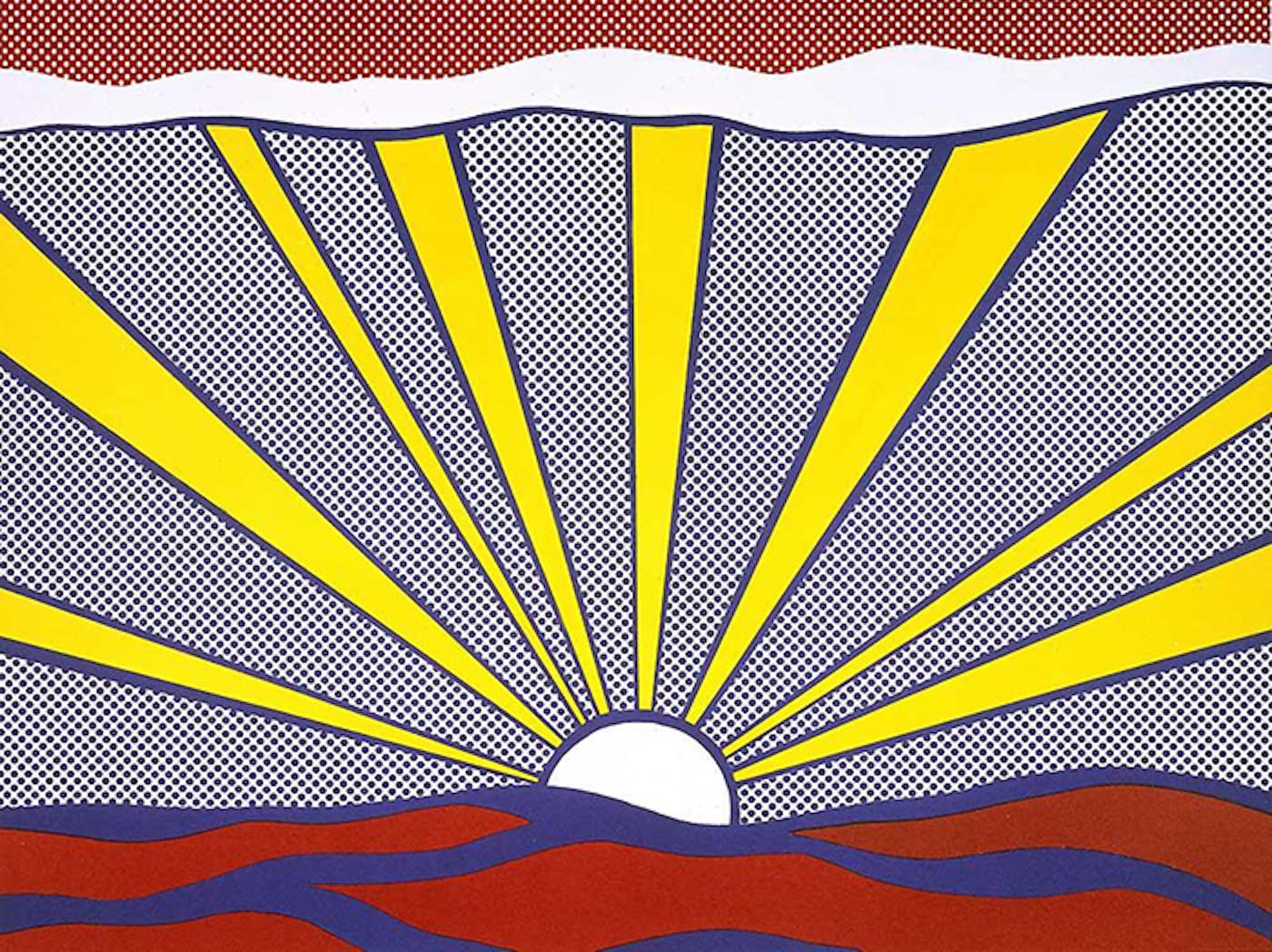
Pop Art
Learn how Pop Art turned advertising, comics, and consumer products into art—Andy Warhol, Roy Lichtenstein, silkscreen, and the rise of mass culture.
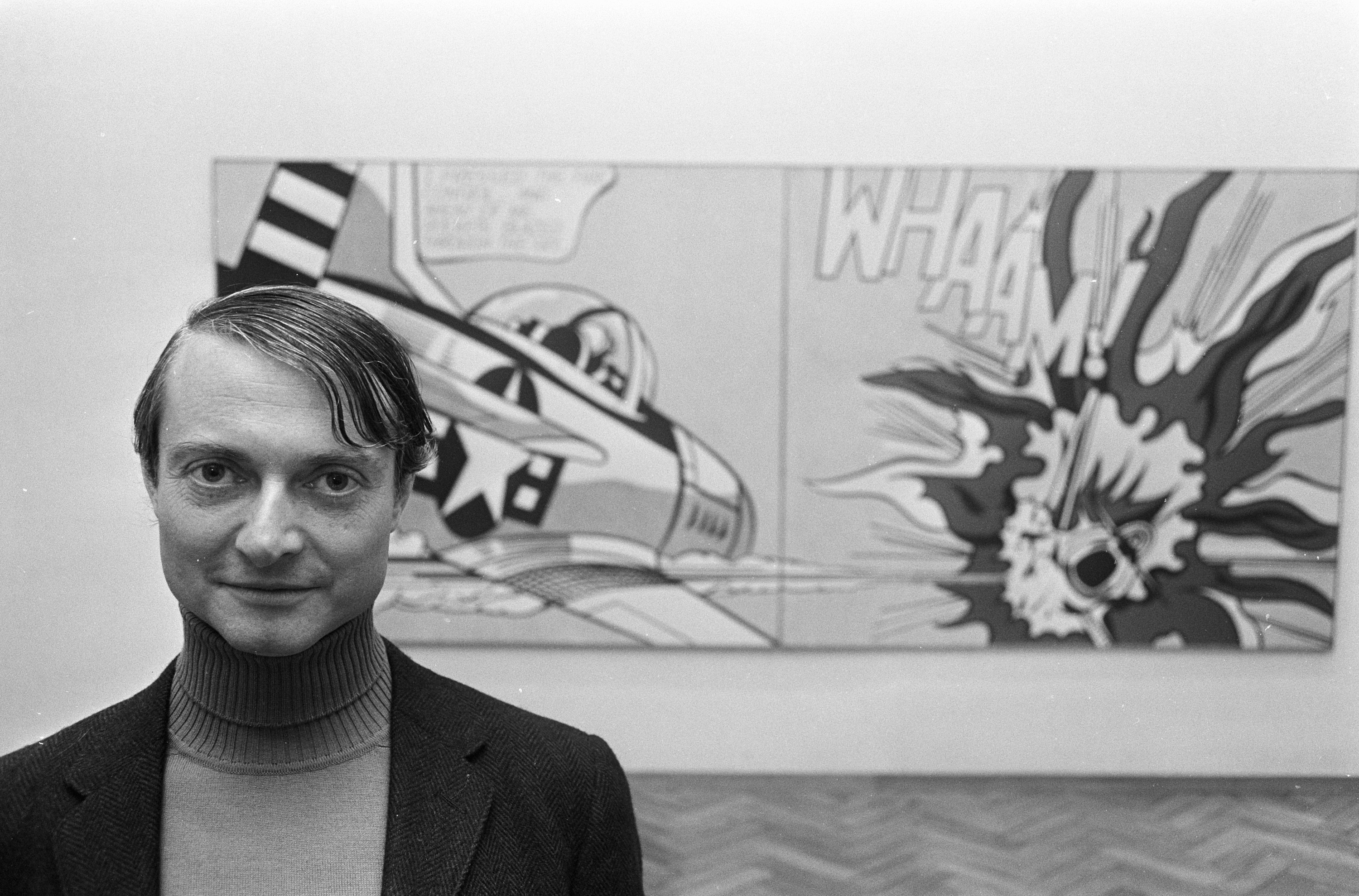
Roy Lichtenstein
A short guide to Roy Lichtenstein: from Look Mickey to the romance and war comics, Drowning Girl and Whaam!, his Ben-Day dots and machine-like technique, the controversy over his sources, the Brushstrokes and Mirrors, and a comic-panel app you can try in PictorX.
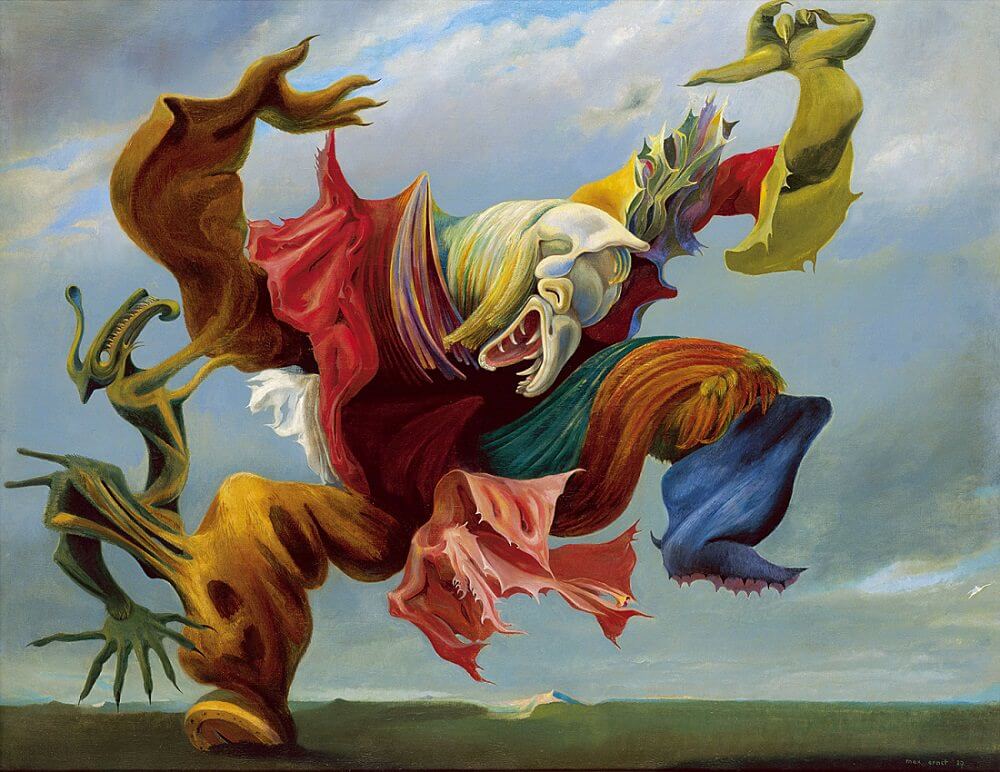
Surrealism
A short guide to Surrealism: André Breton's manifesto of 1924, De Chirico's metaphysical squares, Dalí's soft watches, Magritte's apples and pipes, Ernst, Miró and the Exquisite Corpse, the women and photographers of the movement, its legacy, and a digital homage you can try in PictorX.
Ready to try it?
Open PictorX in your browser — no install, no credit card required to start.
Try Ukiyo-e