
The tangram
The tangram is a square cut into seven pieces, the tans, that can be laid together into thousands of figures: animals, people, boats, houses, and geometric shapes. The rules fit in one sentence: use all seven pieces, lay them flat, and let them touch but never overlap.

Seven boards of skill
In Chinese the puzzle is called qīqiǎobǎn, the seven boards of skill. It is first recorded in China around 1800, and the oldest known tangram books were printed there in 1813. Sets of furniture that could be pushed together into many shapes, described in Chinese books from the Song and Ming dynasties, are sometimes named as its ancestors.
A craze in the West
Tangram sets and books reached America and Europe on trading ships soon after 1813. In 1817 and 1818 the puzzle became a craze, and new books of figures came out in France, Italy, Germany, Britain, Austria, and the United States. The English name tangram came later, in the 19th century, and where the word comes from is not known.
Sam Loyd's invented history
In 1903 the American puzzle maker Sam Loyd published The Eighth Book of Tan. It claimed that the tangram was 4,000 years old and had been invented by a god called Tan, and that its figures had been collected in seven ancient Books of Tan. None of it was true, but the story was copied for decades.
The seven tans
Cut a square along one diagonal and cut one half again into two large triangles. The other half gives a medium triangle, two small triangles, a square, and a parallelogram. With the small triangle as one unit of area, each large triangle is 4 units, the medium triangle, the square, and the parallelogram are 2 units each, and the whole set is 16. Every corner is 45°, 90°, or 135°, so the pieces fit together in steps of 45°.
Thirteen convex shapes
In 1942 Fu Traing Wang and Chuan-Chih Hsiung proved that the seven tans can make exactly 13 convex shapes, shapes without dents or holes: one triangle, six quadrilaterals, two pentagons, and four hexagons. The square, the rectangle, the triangle, and the parallelogram in PictorX are four of them.
Paradoxes
Some pairs of figures look almost the same, yet one seems to have a piece more than the other. In the best-known pair, the two monks of the English puzzle writer Henry Dudeney, one monk has a foot and the other has none. Both use all seven pieces, so both have the same area: the foot is paid for by small differences elsewhere in the figure that the eye hardly notices.
Try it in PictorX
Open the Tangram Puzzle and pick a silhouette: animals, people, a house, a sailboat, or one of the convex shapes. Drag the pieces in, click a picked piece to turn it, and flip the parallelogram. Hint outlines where one piece goes, Solve shows one solution, and Free play lets you lay a picture of your own and save it.
Frequently asked questions
Where does the tangram come from?
From China, where it is first recorded around 1800. It reached Europe and America soon after, and in 1817 it became a craze.
How many tangram figures are there?
There is no fixed number: any shape that the seven pieces can fill counts. Collections from the 19th century alone hold thousands of figures, and people keep inventing new ones.
How many convex shapes can a tangram make?
Thirteen, as Fu Traing Wang and Chuan-Chih Hsiung proved in 1942: one triangle, six quadrilaterals, two pentagons, and four hexagons.
Does PictorX upload anything?
No. The puzzle is drawn on a canvas in your browser. Save downloads a PNG, and Edit opens that image in the PictorX editor.
Related tools
Tangram Puzzle
Play the old Chinese tangram puzzle in your browser. Drag, turn, and flip the seven tans to fill a cat, a swan, a runner, a sailboat, or the square, without overlaps. Ask for a hint, or watch it solve.
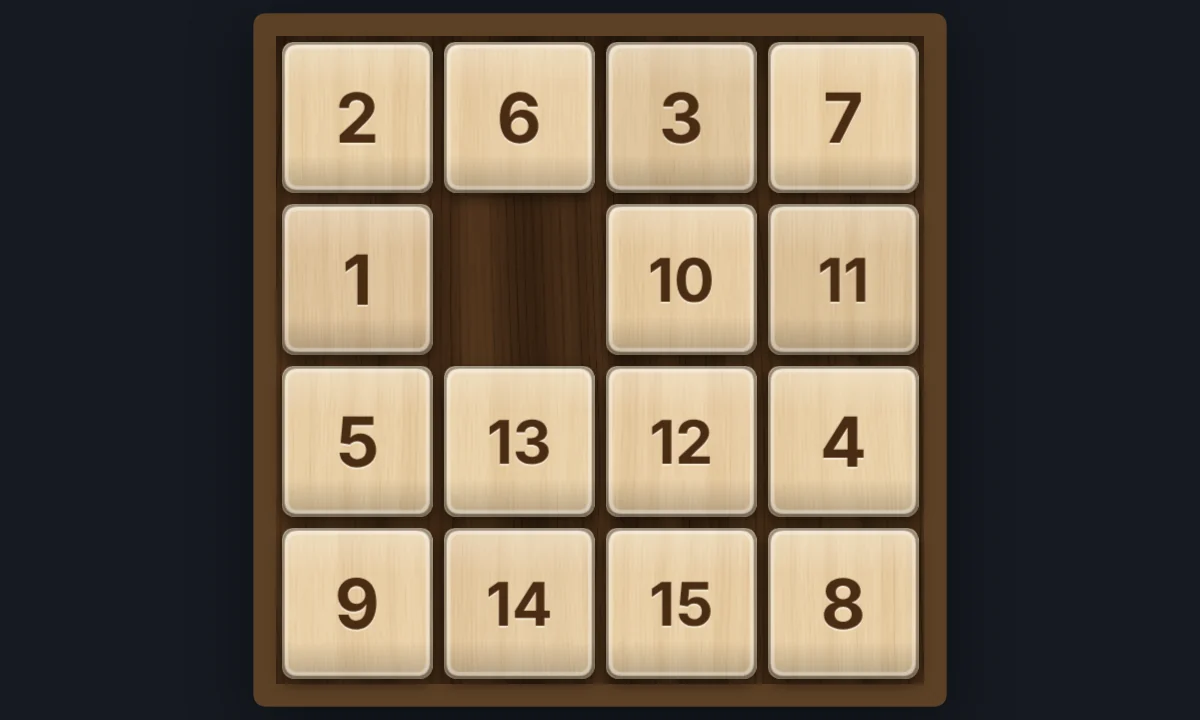
15 Puzzle
Play the classic 15 sliding puzzle in your browser on 3×3, 4×4, or 5×5 wooden tiles. Shuffle, slide whole rows at once, try Sam Loyd's impossible 14-15, or watch Solve finish it.
The 15 puzzle
The history and mathematics of the 15 sliding puzzle: the 1880 craze, Sam Loyd's 14-15, the parity proof that half of all positions cannot be solved, and how a computer solves it.
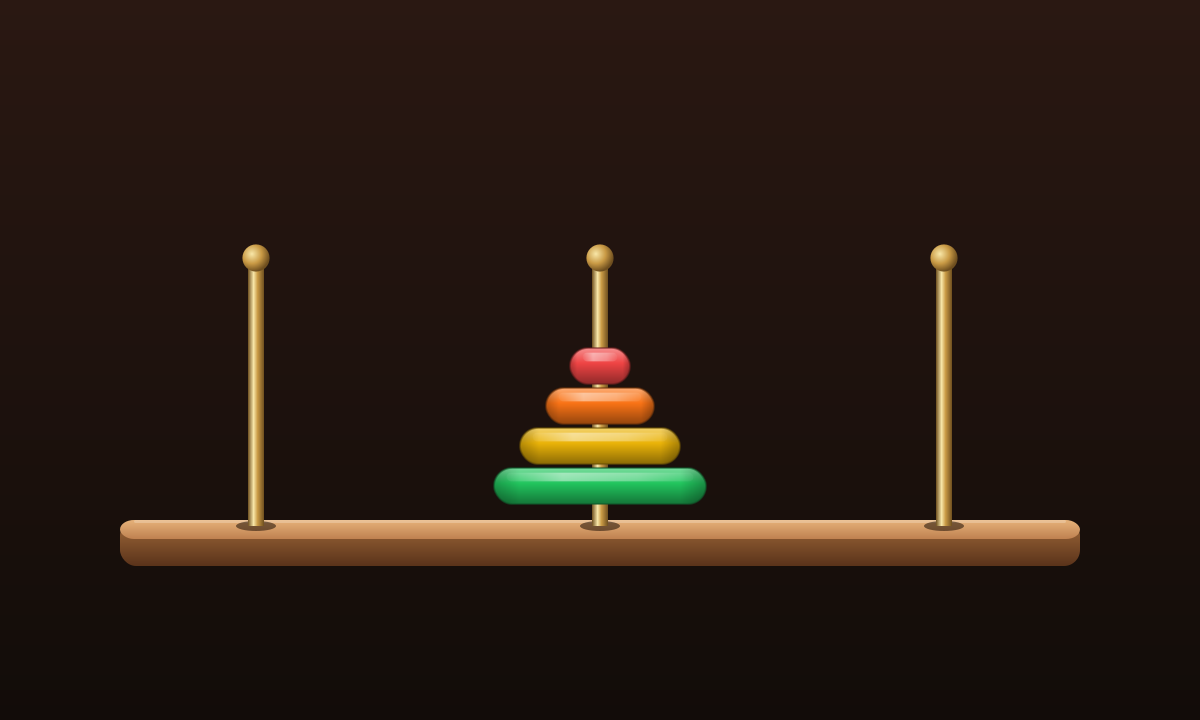
Tower of Hanoi
Move a tower of disks across three pegs in your browser. One disk at a time, never a larger disk on a smaller one. The shortest solution is 2ⁿ − 1 moves.
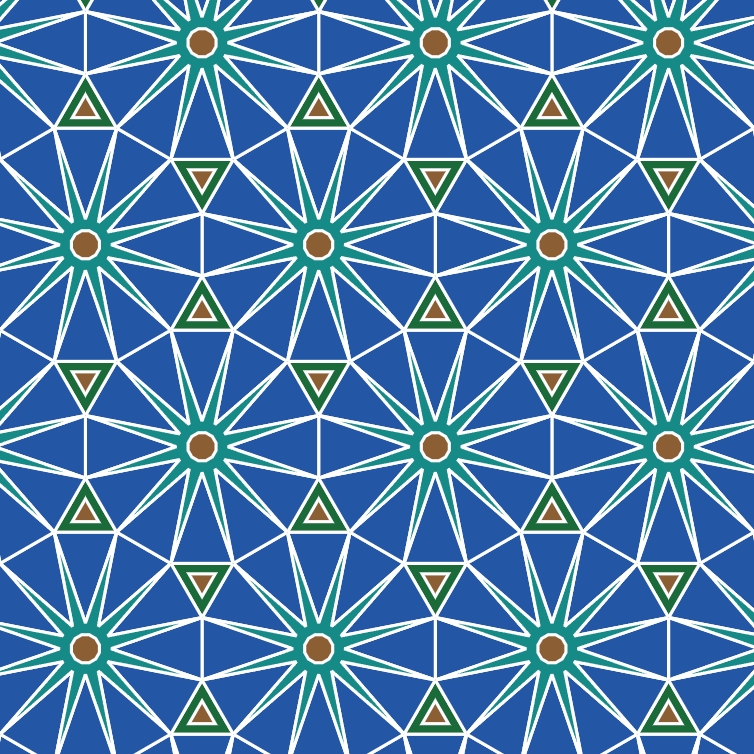
Tessellation
Cover the plane with regular and Archimedean tessellations. Tune scale, colours, and warp square edges Escher-style — then save a PNG.
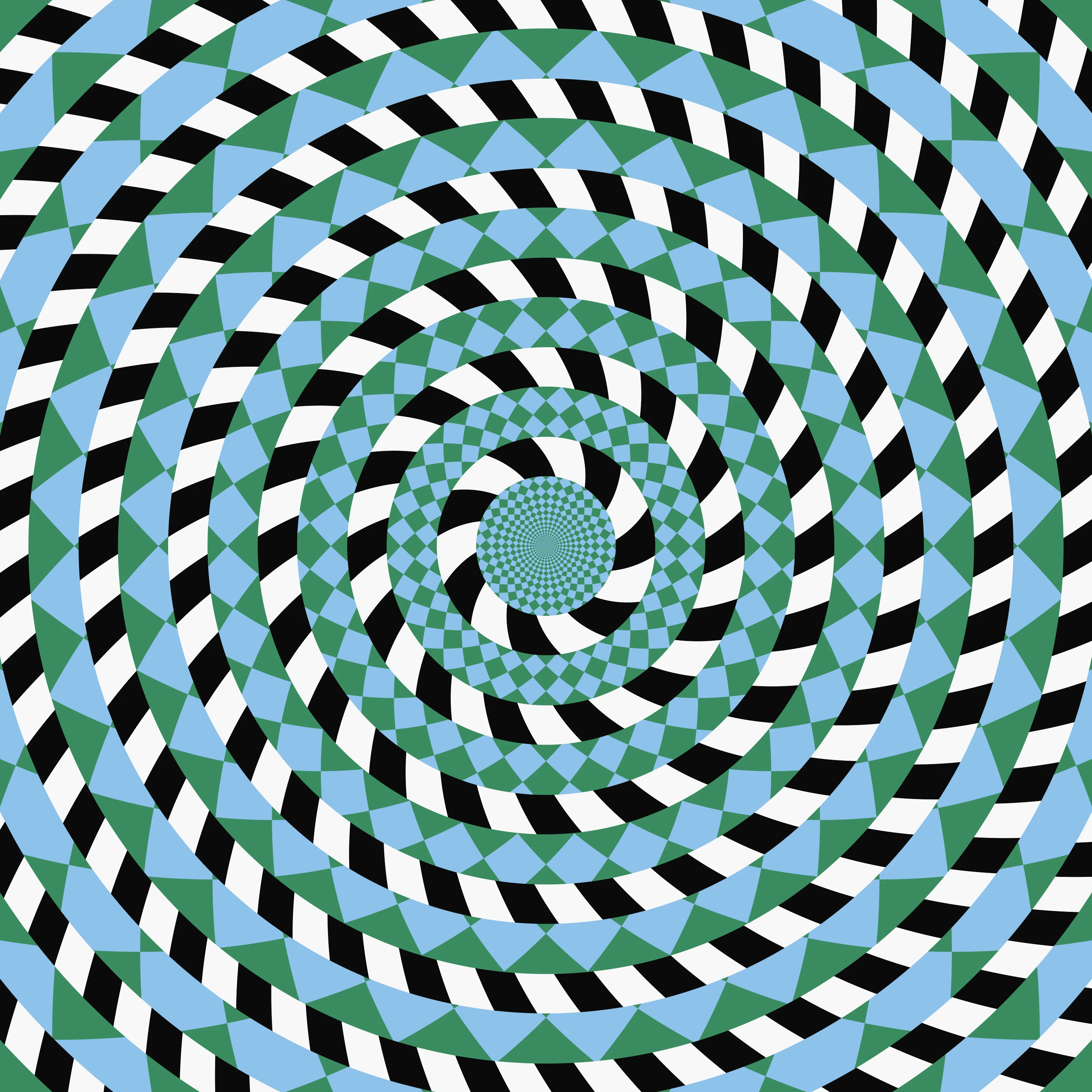
Optical illusions
Play with 13 classic optical illusions in your browser, most made from your own photo: colour from grey, an afterimage, a spinning spiral, a hidden picture, the café wall, the Fraser spiral, drifting wheels and more. Tick Reveal the trick to see how each one works.
Ready to try it?
Open PictorX in your browser — no install, no credit card required to start.
Play the Tangram Puzzle