
Pendulum wave
A pendulum wave is a row of pendulums on one bar, each a little shorter than the one before. Let them go together and they swing as one. Then they drift apart into a snake, into two rows, into three groups, and after a minute they swing together again. Nothing pushes them. The pattern is in the lengths.
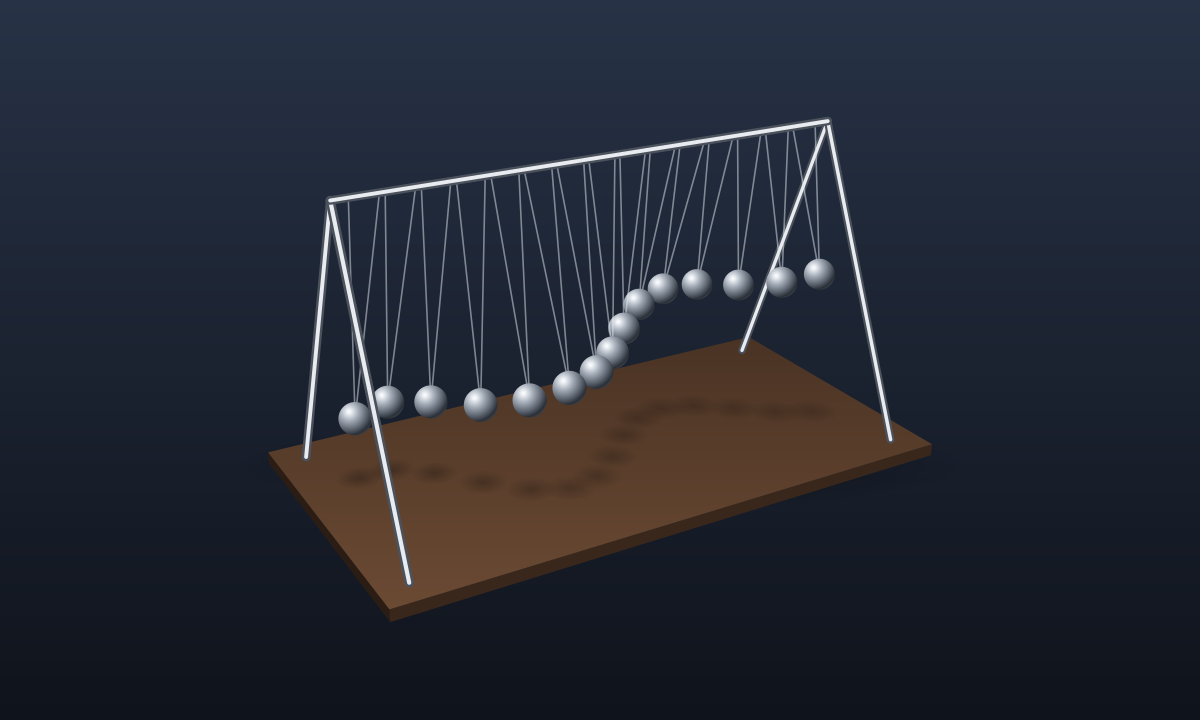
The apparatus
A pendulum wave has a horizontal bar, often on a stand at each end, and a row of balls. Each ball hangs from two strings in a V, so it can only swing at right angles to the bar. The strings get shorter along the row. The classic version has 15 pendulums.
The period of a pendulum
The time of one full swing, out and back, is the period. For a small swing it is 2π√(L/g), where L is the length to the center of the ball and g is the pull of gravity. The mass of the ball does not appear, and for small swings neither does the width of the swing. Galileo is said to have noticed this in the cathedral of Pisa, timing a swinging lamp against his pulse.
One more swing per cycle
The lengths are chosen so that in one cycle, often 60 seconds, the longest pendulum swings a whole number of times, say 51. The next swings 52 times, the next 53, and the shortest 65. Each length follows from its period T: L = g·(T/2π)². Because every pendulum completes a whole number of swings in the cycle, all of them are back at the start together when it ends.
Phase: how far along a swing is
The phase of a pendulum says where it is in its swing. At the start all phases are equal. Each pendulum gains one swing on its neighbor per cycle, so the difference in phase between neighbors grows steadily, from nothing to a whole swing. While the difference is small, the row looks like a wave. When it is half a swing, neighbors move in opposite directions.
Rows and groups
Halfway through the cycle each pendulum is half a swing ahead of the one before it. Every other ball is on the far side, so the balls form two rows. At a third of the cycle the phases repeat every three pendulums, and the balls fall into three groups. A quarter gives four. In between, the patterns pass so quickly that the eye sees waves and snakes.
A wave that carries nothing
No energy travels along the row. Each pendulum swings on its own, and none of them touch. The wave is the pattern of their positions at one moment. The eye joins evenly spaced balls into a smooth curve, much as it joins the spokes of a wheel in a film and sees the wheel turn slowly or even backward.
Why a real one slows down
Air resistance shrinks every swing, and the strings and the bar take a little energy too. The timing barely changes, so the pattern stays clear while it fades. A wide swing takes slightly longer than a small one, which is why a real pendulum wave is let go from a small angle.
Try it in PictorX
Open the pendulum wave and it is already running. Slide Time to jump to any moment: the marks in the info panel show where the rows and groups appear. Drag the picture to look along the bar or from above. Set Pendulums, Cycle, and Swings, add a wave line or a color for each ball, and save a PNG.
Frequently asked questions
Is a pendulum wave a real wave?
Not in the usual sense. No energy moves along the row, and the pendulums never touch. What looks like a wave is the pattern of their phases at one moment.
Why do the pendulums line up again after one cycle?
Each one completes a whole number of swings in the cycle, 51, 52, and so on. At the end of the cycle all of them are back where they started, at the same moment.
Does the weight of the balls matter?
No. The period of a small swing depends on the length and on gravity, not on the mass. Heavier balls only keep swinging longer against the air.
What happens with a shorter cycle?
A shorter cycle needs bigger differences in length, so the patterns pass faster. With 12 to 26 swings in 20 seconds, the shortest string is about a fifth as long as the longest.
Related tools
Pendulum wave
Fifteen pendulums, each a little shorter than the last. Let them go together and watch them drift into waves, split into rows, and swing in step again.
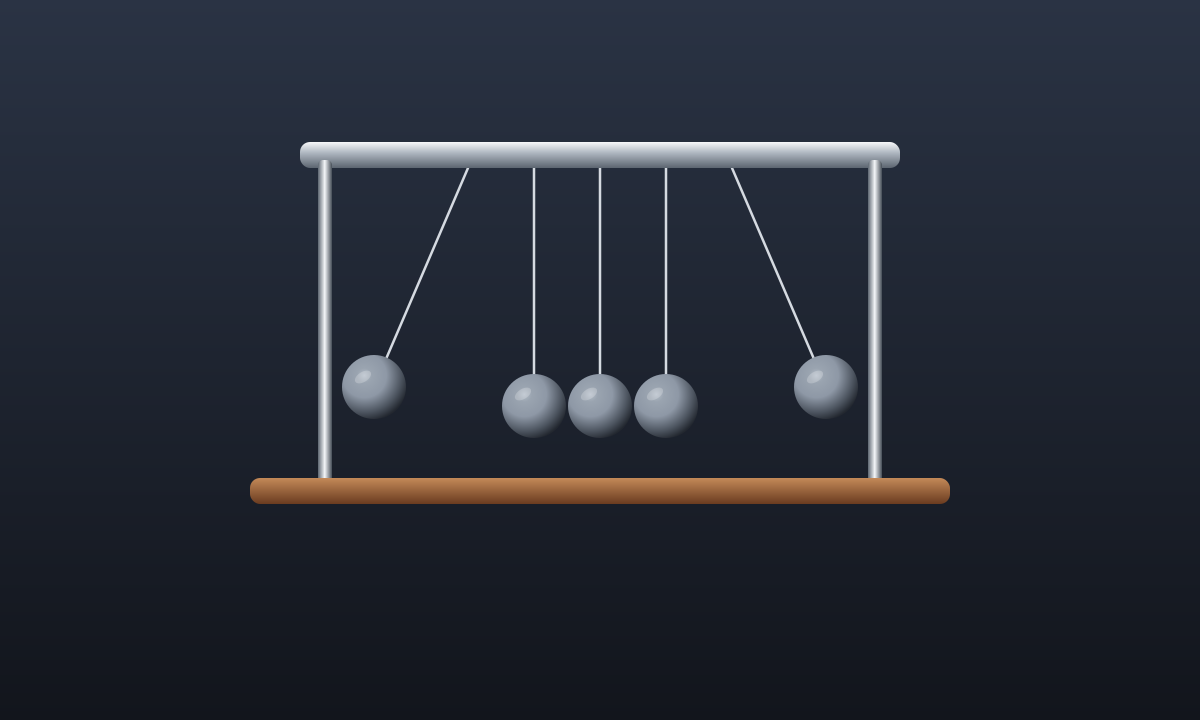
Newton's cradle
Lift a steel ball and let it fall. The click sends that motion out the other side. Watch height turn into motion as the cradle swings.
Newton's cradle
How Newton's cradle passes motion through a row of steel balls: conservation of momentum, conservation of energy, an elastic click, and why air and sound eventually stop it.
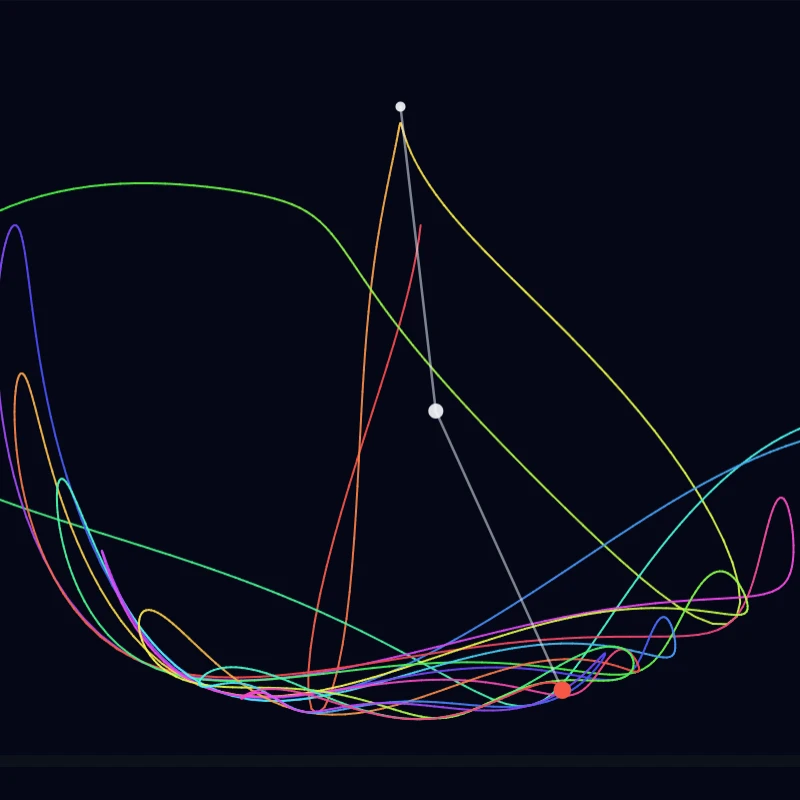
Double Pendulum
Simulate a classical double pendulum in your browser. Paint chaotic tip trails, long-exposure paths, or distort a soft field—then save a PNG.
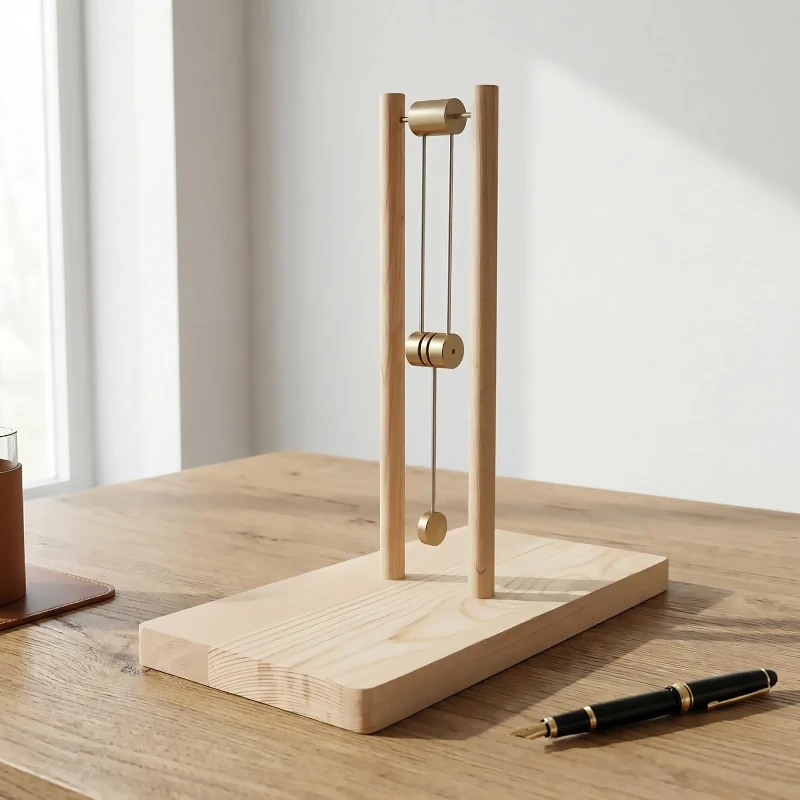
The double pendulum
How a double pendulum turns simple gravity into chaos: coupled angles, sensitive dependence on initial conditions, and why its tip paints stunning light trails in PictorX.
Painting Pendulum
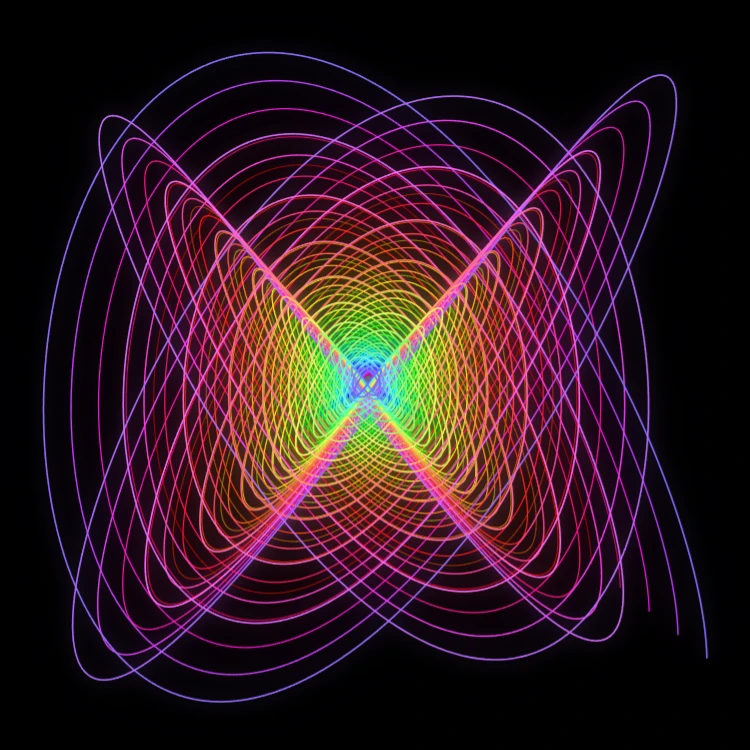
Paint damped Lissajous curves in your browser—the classic Blackburn painting pendulum. Tune frequency ratios, phases, and damping, animate the trail, and save a PNG.
Ready to try it?
Open PictorX in your browser — no install, no credit card required to start.
Try the pendulum wave