
VAT, from a French idea to a tax in 170 countries
Value added tax is a tax on consumption that businesses collect a little at a time, at every step from raw material to shop counter. Here is how it works, how to calculate it in both directions, when the customer pays it instead of the seller, and where it came from.
What is VAT?
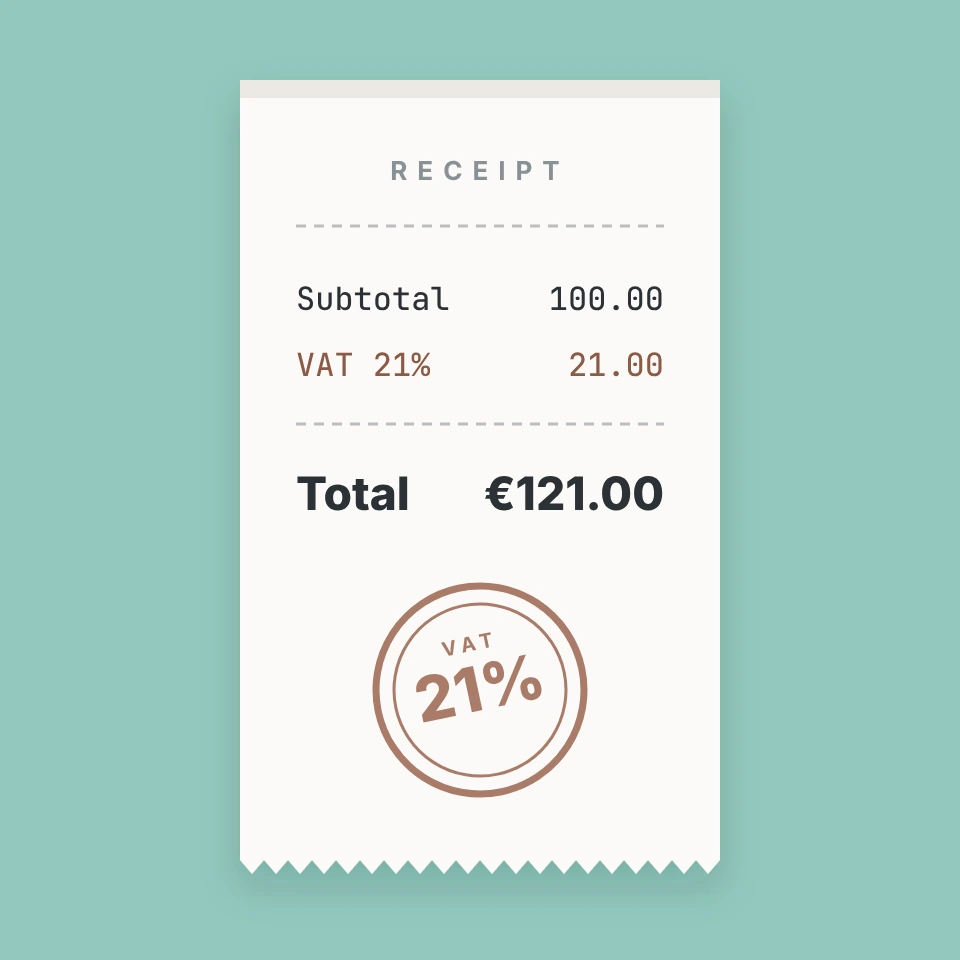
Value added tax is charged at every step of a supply chain, but each business only pays tax on the value it adds. A sawmill sells wood for 100 plus 21 VAT; the carpenter sells a table for 300 plus 63 VAT, pays the 21 back as input tax and sends 42 to the tax office. In the end the consumer carries the full 63, while the state receives it in instalments from everyone in the chain. Most countries use a standard rate plus one or two reduced rates for things such as food, books or medicine.
Formulas - including and excluding VAT
With rate r in percent: incl = excl x (1 + r / 100), and excl = incl / (1 + r / 100). The VAT inside a price that includes VAT is incl x r / (100 + r), so at 21% it is 21/121 of the price, not 21%. At 9%, 109.00 including VAT holds 9.00 VAT. Invoices usually round the VAT to cents per rate, so a total of many small lines can differ by a cent from rounding each line.
Reverse charge
Normally the seller charges VAT and pays it to the tax office. With the reverse charge the customer accounts for the VAT instead. It is common for services between businesses in different EU countries and, in some countries, inside sectors such as construction. The invoice then shows no VAT, mentions the reverse charge and includes the customer's VAT number. The customer declares the VAT and, if entitled, deducts it in the same return, so usually no money changes hands.
A short history of VAT
The idea was sketched by the German industrialist Wilhelm von Siemens around 1918, but the French tax official Maurice Lauré turned it into law: France introduced the taxe sur la valeur ajoutée on 10 April 1954. The European Economic Community adopted VAT as its common turnover tax in 1967. Denmark went first that year, West Germany followed in 1968 and the Netherlands in 1969, and the UK replaced its purchase tax with VAT in 1973. Today more than 170 countries use a VAT or a similar goods and services tax; the United States is the best-known exception.
Frequently asked questions
Is VAT the same as sales tax?
Not quite. A sales tax, as in most US states, is charged once at the final sale. VAT is charged at every step, with each business deducting the VAT it paid, which makes it harder to evade.
What does a 0% rate mean?
A zero rate still counts as a taxable supply, for example exports outside the EU, so the seller can deduct the VAT on its own costs. An exemption is different: no VAT is charged, but the seller cannot reclaim the VAT it paid either.
Do I have to charge VAT as a small business?
It depends on the country. Many have a small business scheme below a turnover threshold, such as the KOR in the Netherlands or the Kleinunternehmerregelung in Germany, and the UK has a registration threshold. Check the current rules with your tax office or adviser.
Related tools
VAT calculator
A free online VAT calculator: add or remove VAT with rates for the Netherlands, Belgium, Germany, France, the UK and more, and print a simple invoice overview.
Calculator
A free online calculator with a basic and a scientific mode: trigonometry, logarithms, powers, roots, factorials, memory and history, with the correct order of operations.
Fraction calculator
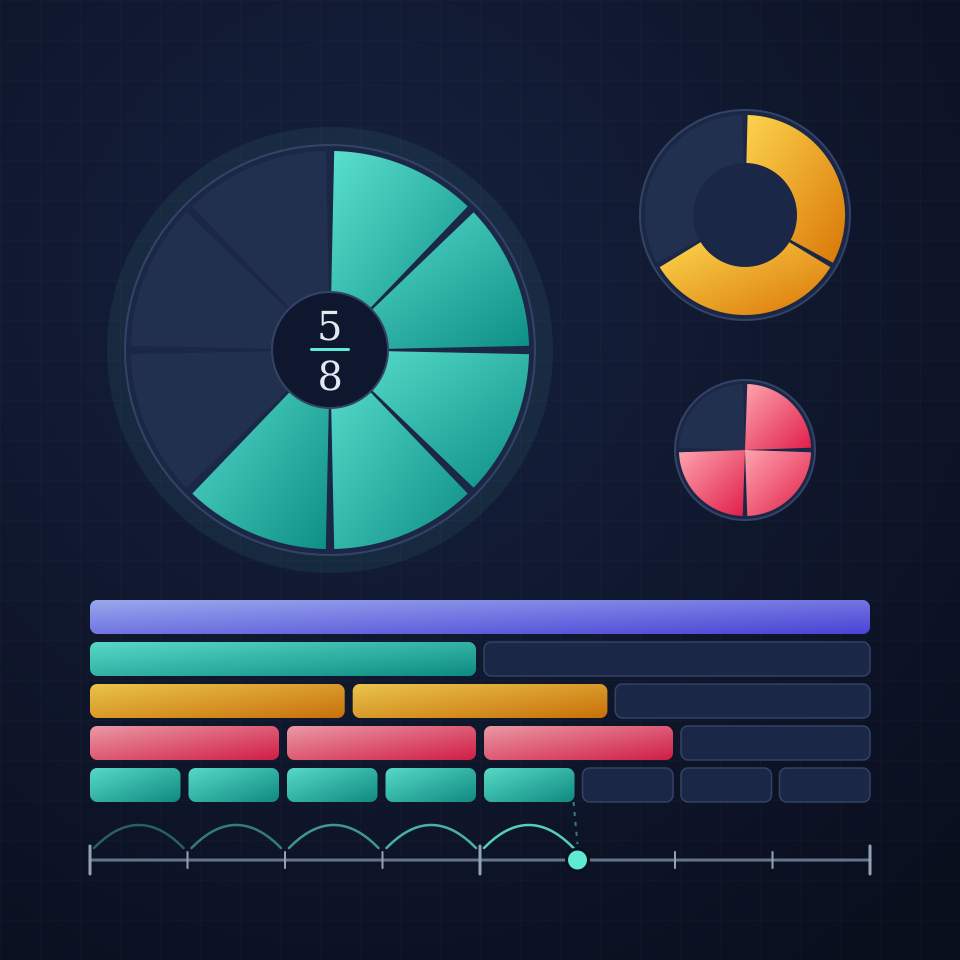
A free online fraction calculator: add, subtract, multiply, divide, simplify and compare fractions and mixed numbers, with the steps explained and a picture.
Statistics calculator
A free online statistics calculator: paste numbers and get the mean, median, mode, variance, standard deviation, quartiles and a histogram instantly.
Ready to try it?
Open PictorX in your browser — no install, no credit card required to start.
Open the VAT calculator