
René Magritte
Read more about René Magritte—the Belgian Surrealist who painted apples, pipes, clouds and men in bowler hats as calmly as a sign painter, then put them where they could not possibly be—and put a photo into one of his impossible pictures in PictorX.
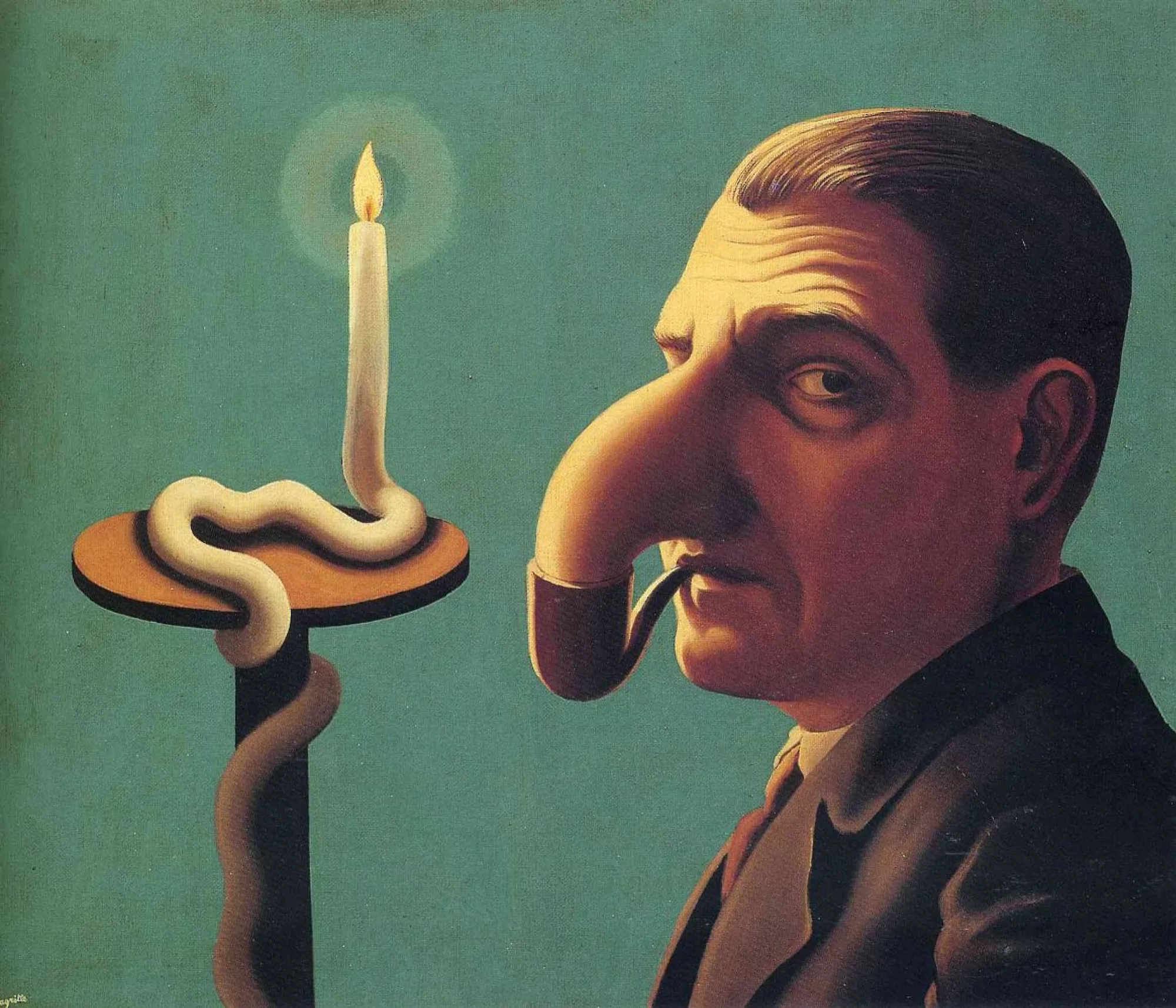
Who was René Magritte?
René Magritte (1898–1967) was a Belgian painter and one of the great Surrealists. Unlike Dalí, he did not paint melting dreams: he painted ordinary things—an apple, a pipe, a bowler hat, a cloud, a window—in a clear, flat, almost impersonal style, and then put them together in ways that make no sense. A rock floats over the sea, night falls on a street under a daylight sky, men rain from the sky. His pictures are quiet, witty puzzles about the gap between things, their names and their pictures, and they have become some of the most recognisable images of the twentieth century.
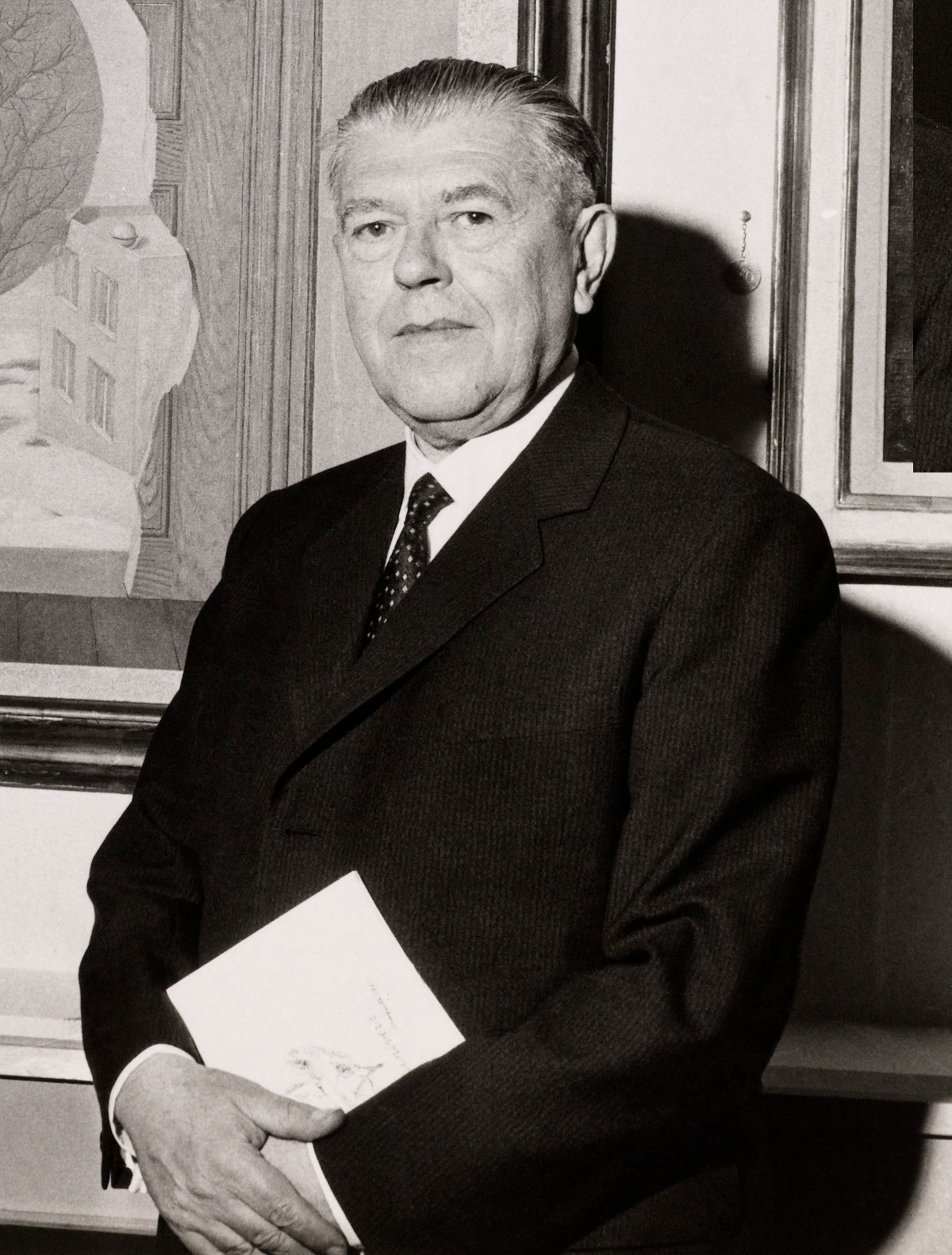
A childhood by the Sambre
Magritte was born on 21 November 1898 in Lessines, in the French-speaking south of Belgium, and grew up in Châtelet and Charleroi. In 1912, when he was thirteen, his mother drowned herself in the river Sambre; according to a story told much later, her nightdress was wrapped around her face when she was found. Many have linked this to the veiled faces of his painting The Lovers, though Magritte himself rejected such explanations. He remembered other moments of his childhood more fondly—above all an old cemetery where he watched a painter at work among broken stone columns, and felt that painting had something magical about it.
Wallpaper, posters and The Song of Love
In 1916 Magritte went to study at the Academy of Fine Arts in Brussels, and in 1922 he married Georgette Berger, whom he had first met as a teenager and who remained his wife and model all his life. To earn a living he designed wallpaper in a factory and drew posters and advertisements, a trade that taught him to paint clearly and simply. In the early 1920s a friend showed him a reproduction of Giorgio de Chirico's The Song of Love (1914), in which a plaster head and a rubber glove hang on a wall beside a green ball. Magritte said it brought tears to his eyes and showed him a new kind of painting, in which the poetry lies in strange meetings of ordinary things.
Paris and the Surrealists
Magritte painted his first Surrealist picture, The Lost Jockey, in 1926, and held his first exhibition in Brussels the next year; the critics were hostile. In 1927 he and Georgette moved to Le Perreux-sur-Marne, just outside Paris, where he met André Breton, Paul Éluard and the other Surrealists and painted some of his most daring pictures, among them The Lovers (1928), in which a man and a woman kiss through white cloths that cover their heads. But Magritte never really fitted into the Paris group, quarrelled with Breton, and in 1930 returned to Brussels, where he lived for the rest of his life—a modest man in a suit and bowler hat, who painted in his dining room.
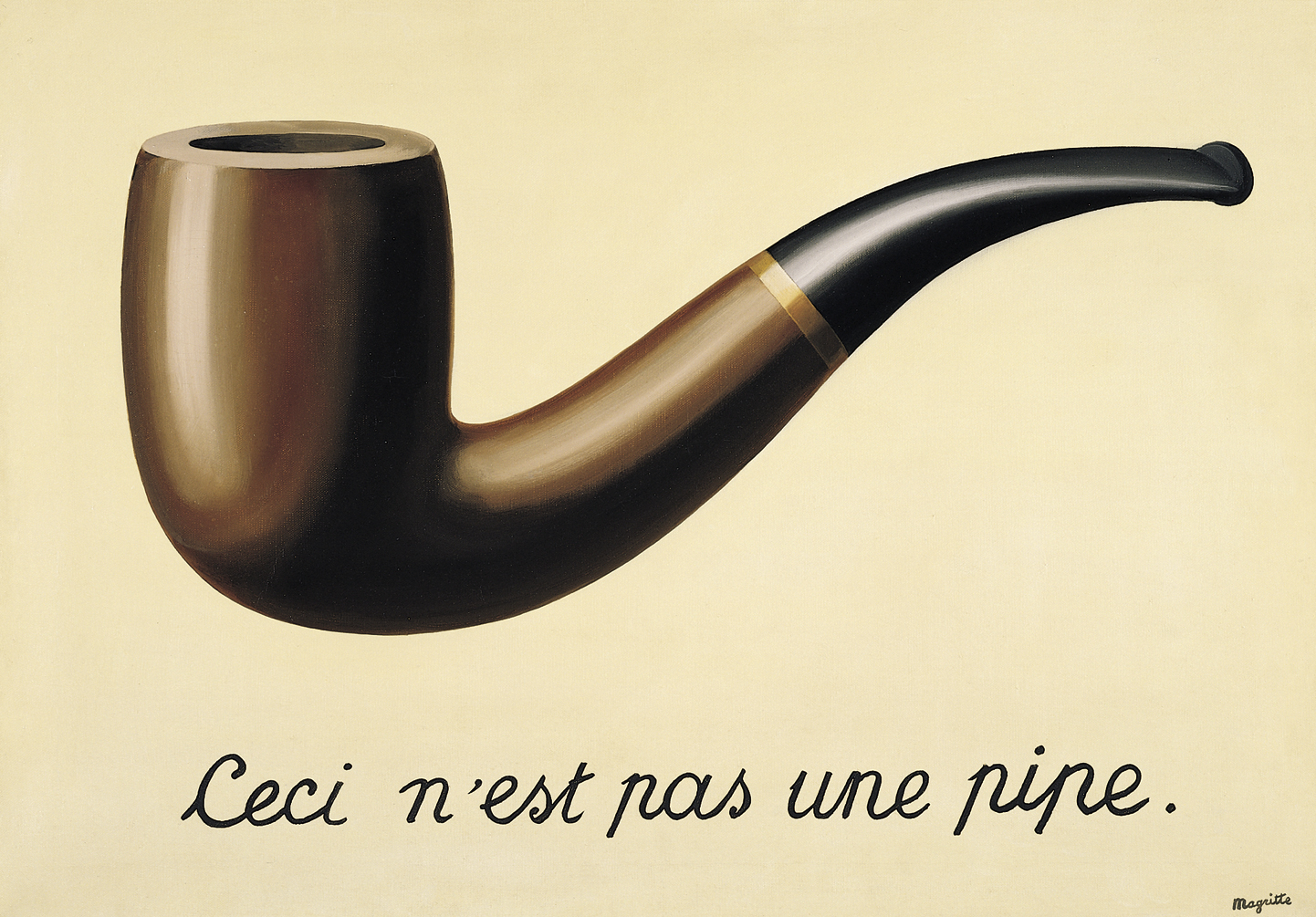
Ceci n'est pas une pipe
The Treachery of Images (1929), now in the Los Angeles County Museum of Art, shows a pipe painted as plainly as an illustration in a shop catalogue, above the handwritten words “Ceci n'est pas une pipe”—“This is not a pipe.” The sentence sounds absurd until one sees that it is true: it is only a picture of a pipe, which cannot be filled with tobacco or smoked. In the same year Magritte published Words and Images, a short illustrated text about the slippery relationship between things, their names and their pictures, and in The Key of Dreams (1930) he labelled pictures of an egg, a shoe and a hat with the wrong words. The French philosopher Michel Foucault later wrote a whole book about the painting, This Is Not a Pipe (1973).
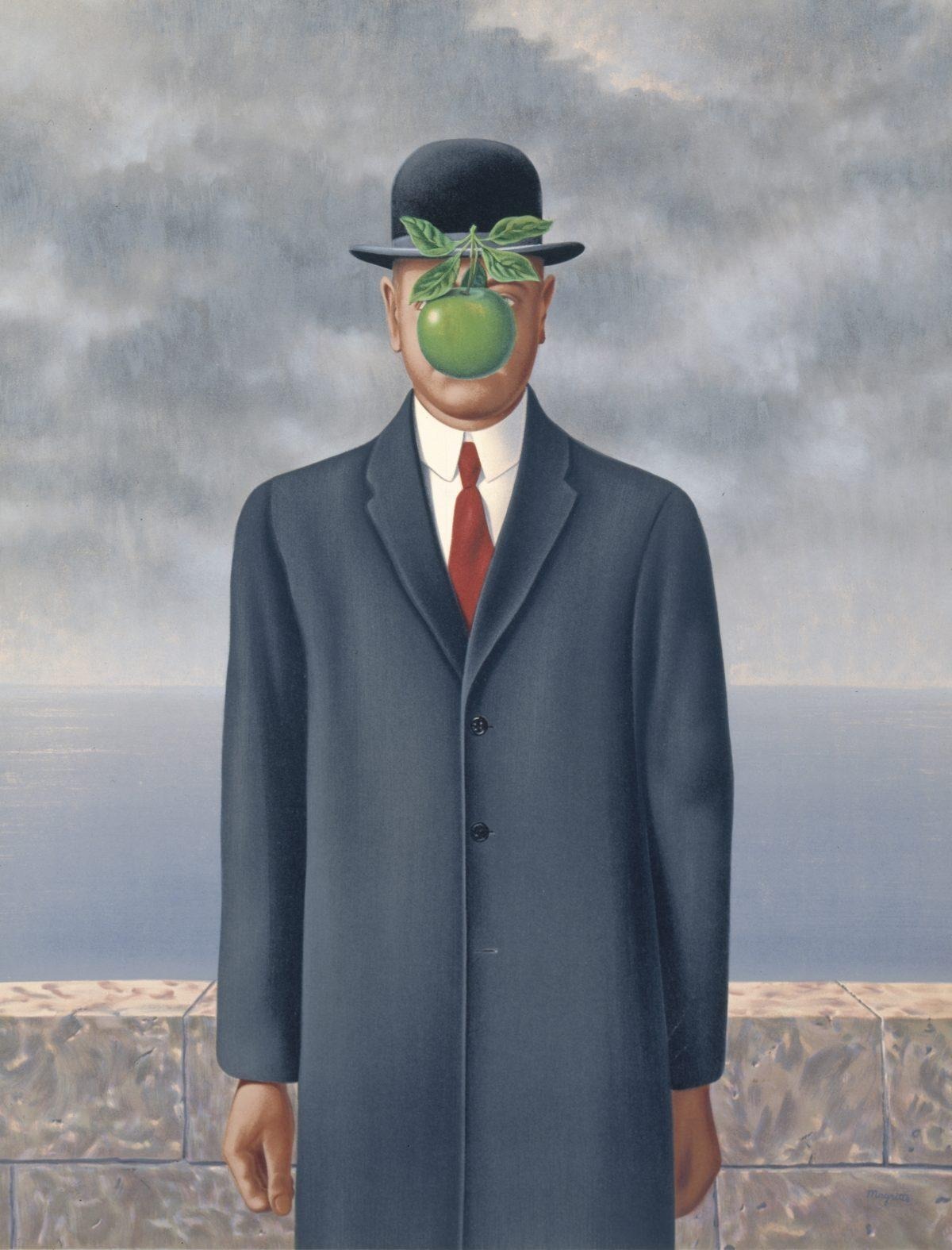
Bowler hats, apples and clouds
Over the years the man in the bowler hat, seen from the front or from behind, became Magritte's best-known figure—an ordinary, anonymous city man, much like Magritte himself. In The Son of Man (1964), a self-portrait, a green apple floats in front of his face. “Everything we see hides another thing,” Magritte explained; “we always want to see what is hidden by what we see.” Apples, clouds, pipes, birds, curtains, windows and easels come back again and again in his pictures, painted with the same calm care, and he often repeated an idea in several versions, each a little different.
Golconda and The Empire of Light
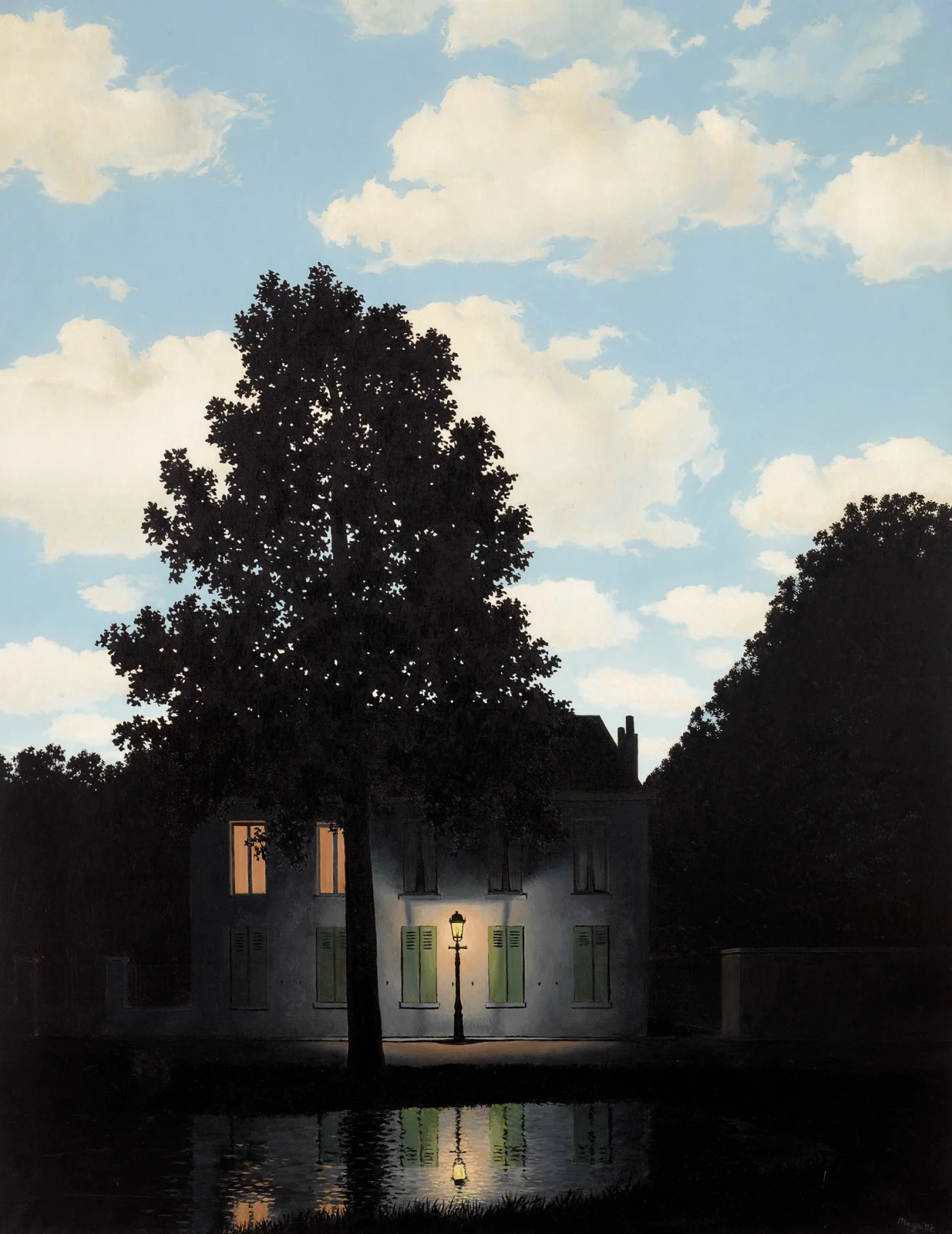
In Golconda (1953) dozens of men in dark overcoats and bowler hats hang in the air in front of plain houses, as still as raindrops in a photograph—or as if they were rising. The Empire of Light, which Magritte painted in more than a dozen versions between 1949 and 1964, shows a quiet street at night, with a street lamp and lit windows, under a bright blue daytime sky with white clouds. Nothing in it is fantastic, yet it is impossible: day and night side by side. In 2024 one version sold at auction in New York for more than 120 million dollars, a record for any Surrealist painting.
Mysteries in plain sight
Magritte loved to hide and to reveal. In The Lovers (1928) two heads kiss through white cloths; in Not to Be Reproduced (1937) a man looks into a mirror and sees the back of his own head; in The Human Condition (1933) a painting on an easel before a window continues the landscape outside so exactly that we cannot tell where the picture ends and the view begins. The Great Family (1963) fills the shape of a great bird with a blue sky and white clouds above a dark, stormy sea, and The Castle of the Pyrenees (1959) sets a castle on top of a huge rock floating above the waves.
Sunlight, war and the “cow” period
During the German occupation of Belgium in the Second World War, Magritte answered the darkness of the times with a surprising change of style: for a few years he painted in bright, broken colours borrowed from Renoir and the Impressionists, a period he called “Surrealism in full sunlight.” In 1948, for his first solo exhibition in Paris, he went further and painted, in a few weeks, a series of crude, garish and deliberately vulgar pictures—his période vache, or “cow” period—that shocked his admirers. Afterwards he returned to his calm, clear manner, and his fame grew steadily, above all in the United States.
Rue Esseghem and the Magritte Museum
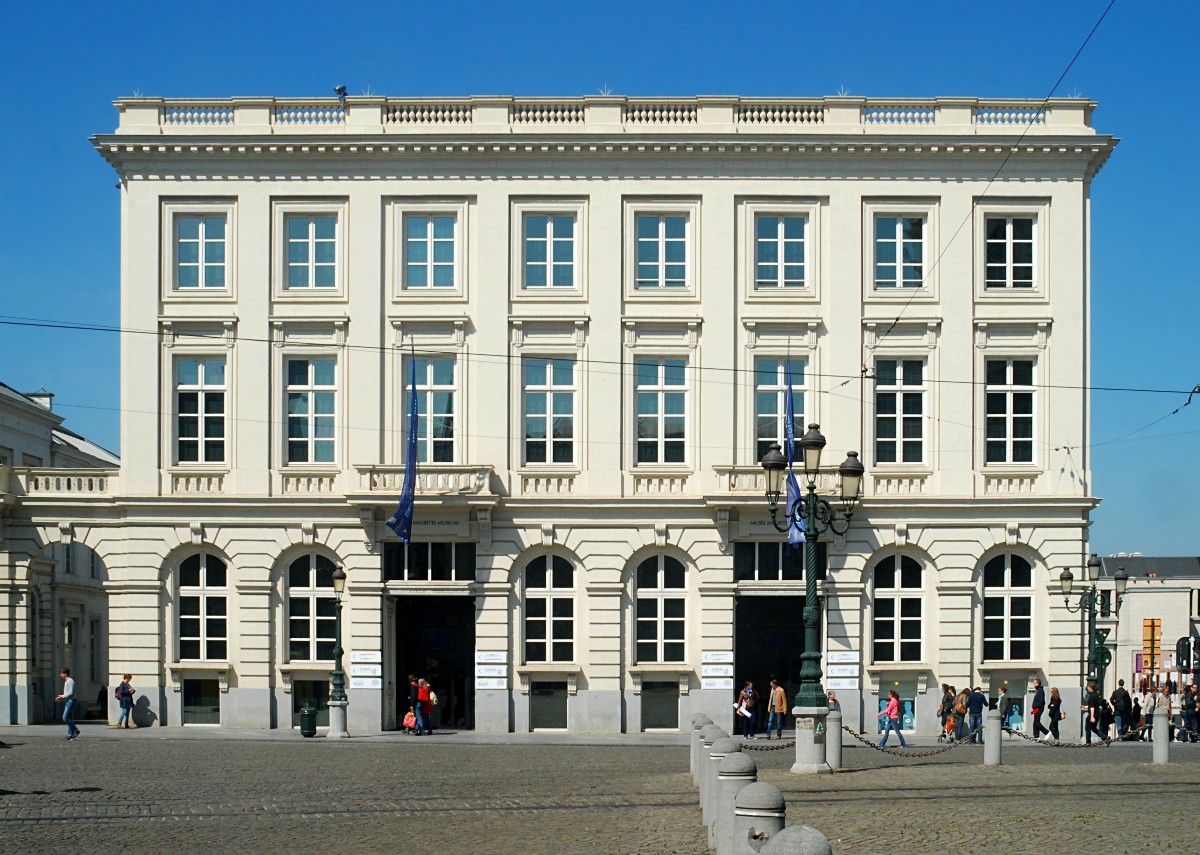
From 1930 to 1954 Magritte and Georgette lived in a modest house at 135 rue Esseghem in Jette, a district of Brussels, where he painted about half of his works; it is now the René Magritte Museum. Magritte died in Brussels on 15 August 1967. In 2009 the Royal Museums of Fine Arts of Belgium opened the Magritte Museum on the Place Royale in Brussels, with the world's largest collection of his paintings, drawings, photographs and films. His work influenced Pop Art and conceptual art, film-makers and advertisers: Paul McCartney bought one of his paintings of a green apple, which inspired the logo of the Beatles' company, Apple.
A digital homage in PictorX
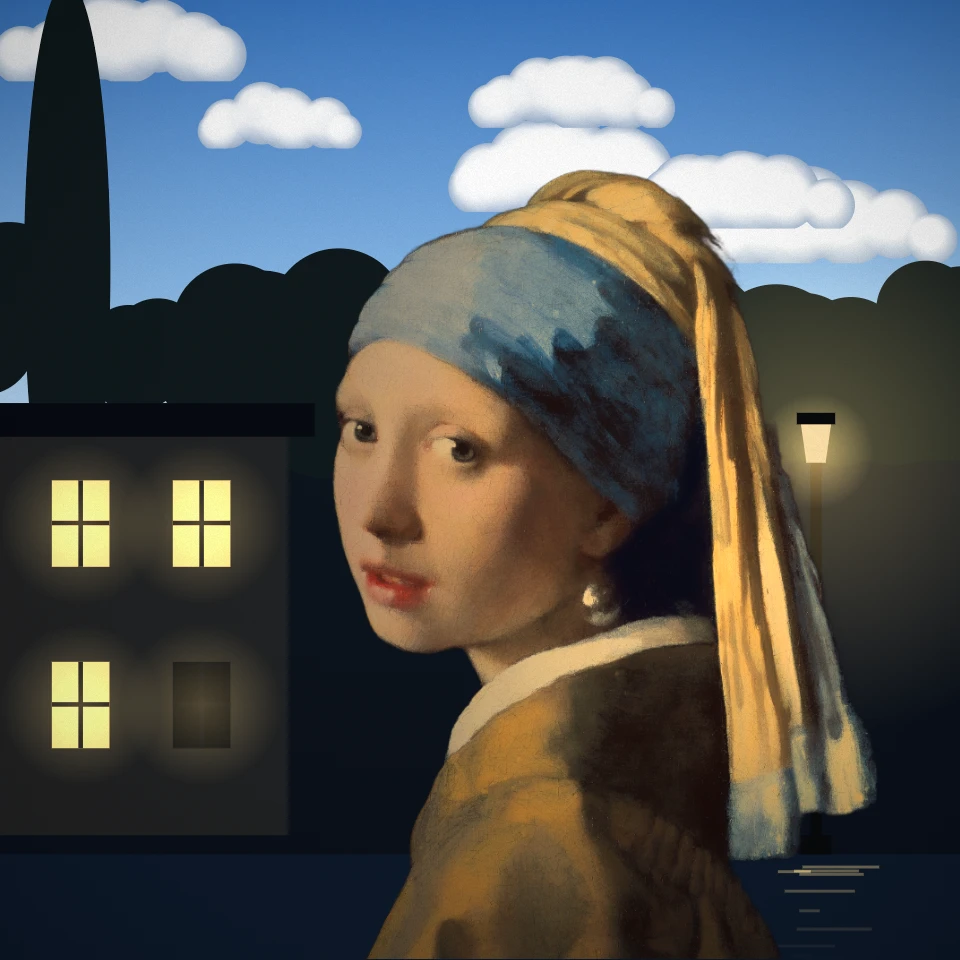
PictorX René Magritte is a filter inspired by The Son of Man, Golconda, The Empire of Light, Decalcomania, The Lovers, The Treachery of Images, The Great Family and The Castle of the Pyrenees. It is not a reproduction of any of Magritte's paintings, not an AI copy of his work and not connected with the Magritte Foundation or his estate: each scene is built from your own photo, and its caption says “Ceci n'est pas une photo”—because it is not one any more. Magritte's own pictures are best seen in the Magritte Museum and the René Magritte Museum in Brussels, the Los Angeles County Museum of Art, the Menil Collection in Houston, the Museum of Modern Art in New York and the Peggy Guggenheim Collection in Venice.
Make your own Magritte in PictorX
Open the René Magritte effect, load a photo—a portrait with a clear subject works best—and pick a Style: Son of Man, Golconda, Empire of Light, Decalcomania, The Lovers, Treachery of Images, Great Family or Castle of the Pyrenees. Choose a Palette—Dream, Photo, Dusk, Night or Desert—then use Distortion to make the scene stranger, Dreaminess to smooth the photo into calm, even paint, Detail to add clouds, hats, men and folds, and Shadows to deepen the shadows. Turn Floating Objects on or off, use Remove background so the subject stands out cleanly, then export, or keep editing in PictorX.
Frequently asked questions
What does “Ceci n'est pas une pipe” mean?
“This is not a pipe.” The words appear under a painted pipe in Magritte's The Treachery of Images (1929). They are true: the picture is only an image of a pipe, not a pipe you could smoke. The painting asks us to think about the difference between things, their names and their pictures.
Why does a green apple hide the face in The Son of Man?
Magritte said that everything we see hides something else, and that we always want to see what is hidden by what we see. The apple hides the very face we most want to see, so the picture is both a self-portrait and a puzzle.
What are Magritte's most famous paintings?
The Lovers (1928), The Treachery of Images (1929), The Human Condition (1933), Golconda (1953), The Empire of Light (from 1949), The Castle of the Pyrenees (1959), The Great Family (1963) and The Son of Man (1964).
Where can I see Magritte's work?
The largest collection is in the Magritte Museum in Brussels, and his former house in Jette is the René Magritte Museum. Other important works are in the Los Angeles County Museum of Art, the Menil Collection in Houston, the Museum of Modern Art in New York and the Peggy Guggenheim Collection in Venice.
Is the PictorX filter a real Magritte painting?
No. It is a digital homage made from your own photo, not a copy of any of his paintings, and it is not connected with the Magritte Foundation. Magritte's own works remain works of art in museums and collections.
Related tools
René Magritte photo filter
Put a photo into a painting after René Magritte in your browser: an apple before the face as in The Son of Man, raining men in Golconda, The Empire of Light, Decalcomania, The Lovers, “Ceci n'est pas une photo”, The Great Family or The Castle of the Pyrenees.
Artistic effects
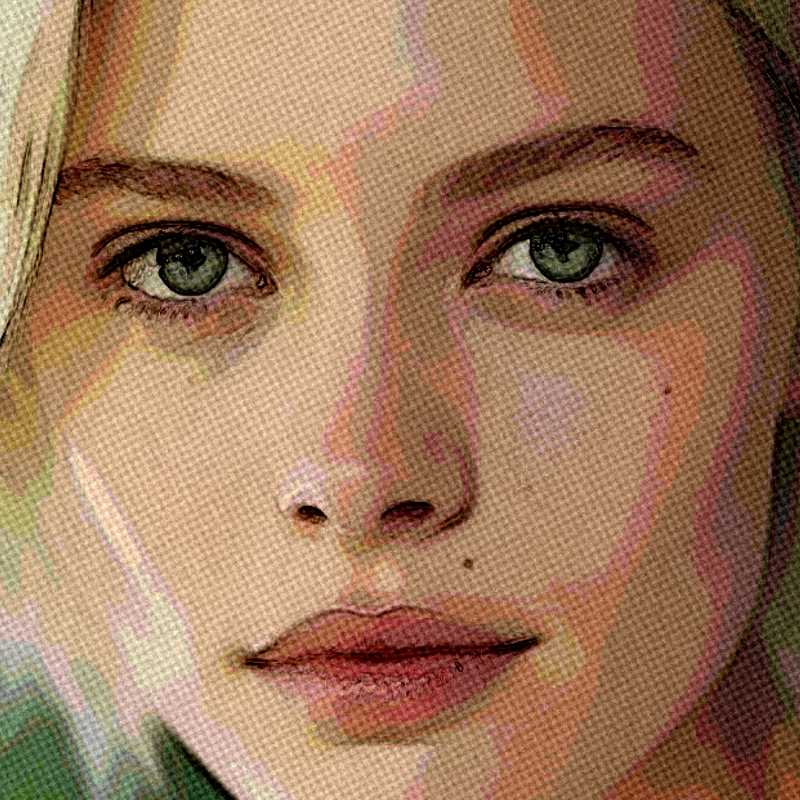
Transform photos with oil painting, watercolor, pencil, comic ink, pastels, paper cut-out, and other studio art looks.
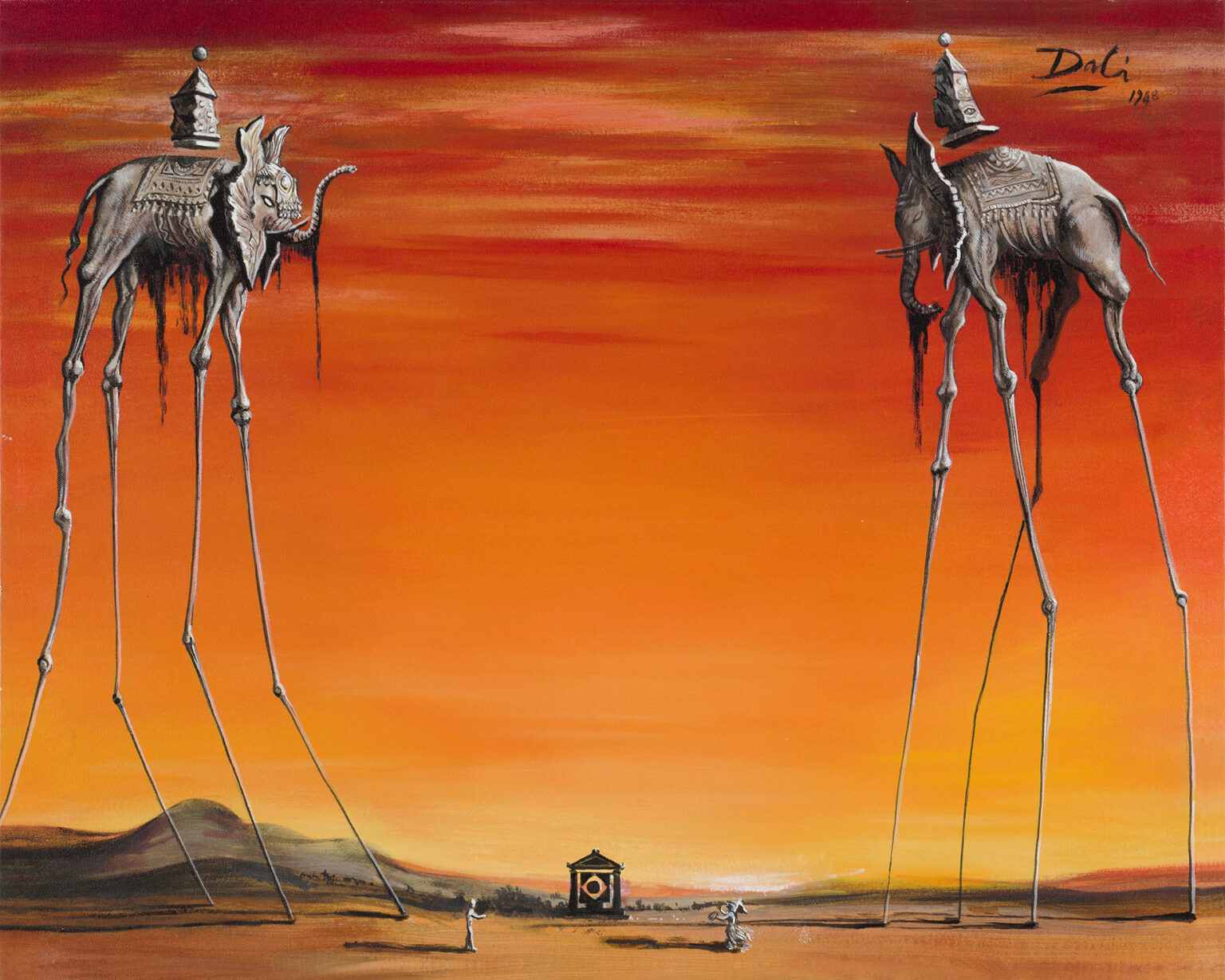
Salvador Dalí
A short guide to Salvador Dalí: his childhood in Figueres and Cadaqués, Lorca and Buñuel, Gala and the Surrealists, The Persistence of Memory, double images, crutches, drawers and a lobster telephone, Hollywood and Disney, Leda Atomica, his Theatre-Museum, and a digital homage you can try in PictorX.
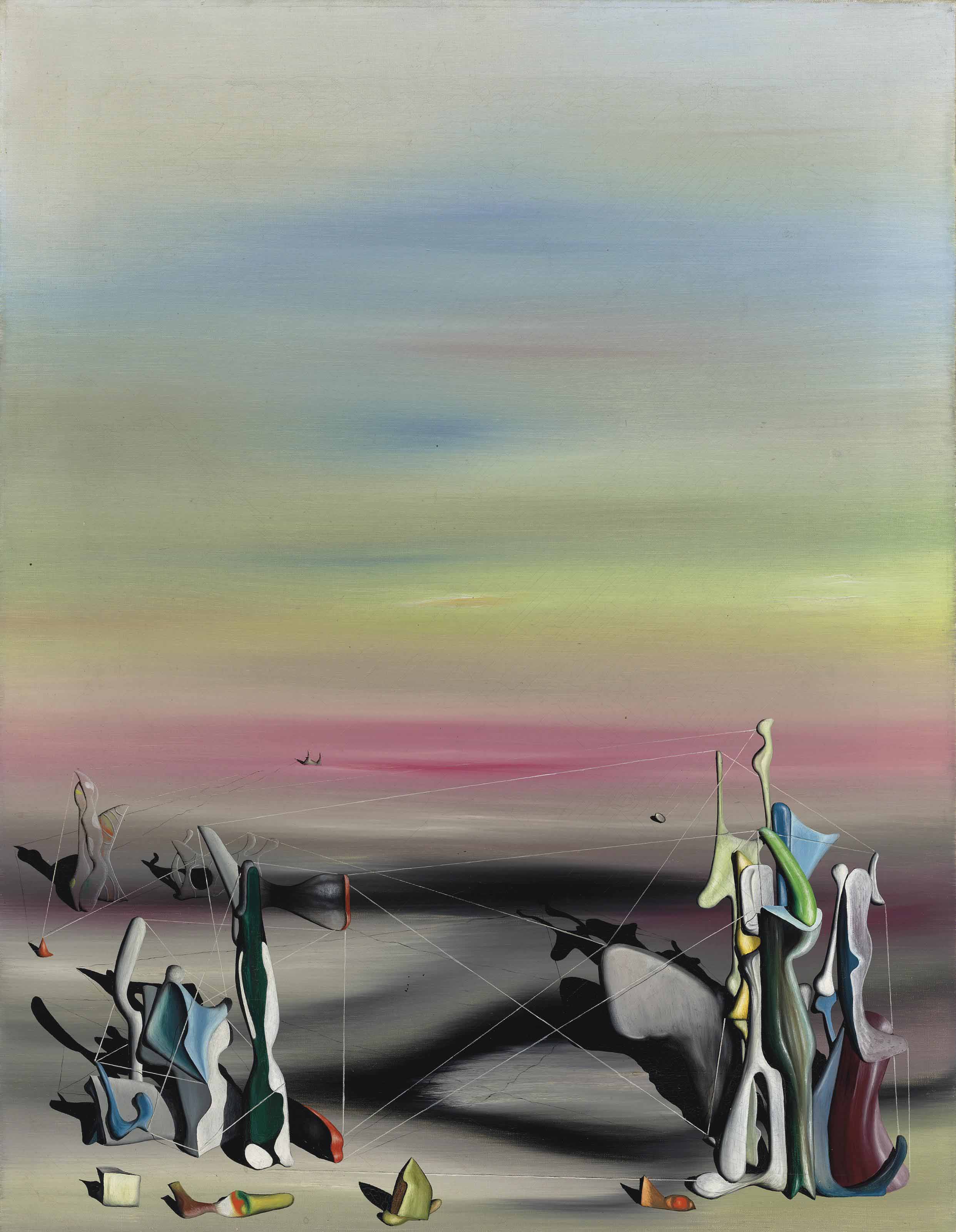
Yves Tanguy
A short guide to Yves Tanguy: his childhood in Paris and Brittany, the merchant navy, the De Chirico painting he saw from a bus, the Surrealists of the rue du Château, Mama, Papa is Wounded!, plains without a horizon, Kay Sage and America, Indefinite Divisibility, Multiplication of the Arcs, and a digital homage you can try in PictorX.
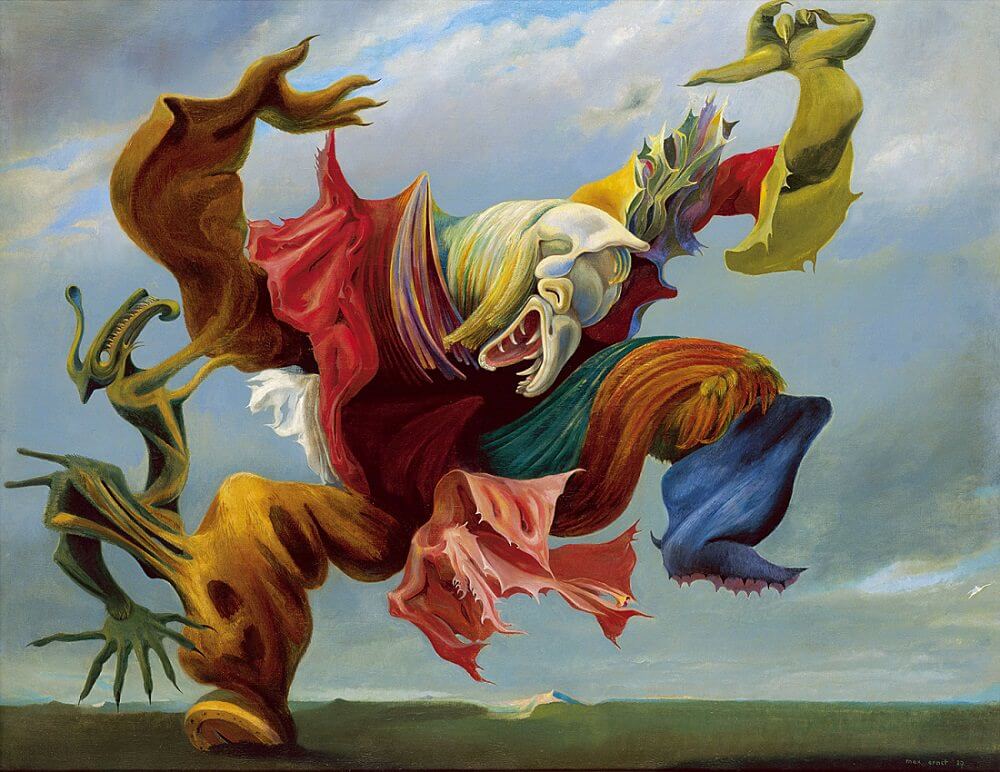
Surrealism
A short guide to Surrealism: André Breton's manifesto of 1924, De Chirico's metaphysical squares, Dalí's soft watches, Magritte's apples and pipes, Ernst, Miró and the Exquisite Corpse, the women and photographers of the movement, its legacy, and a digital homage you can try in PictorX.
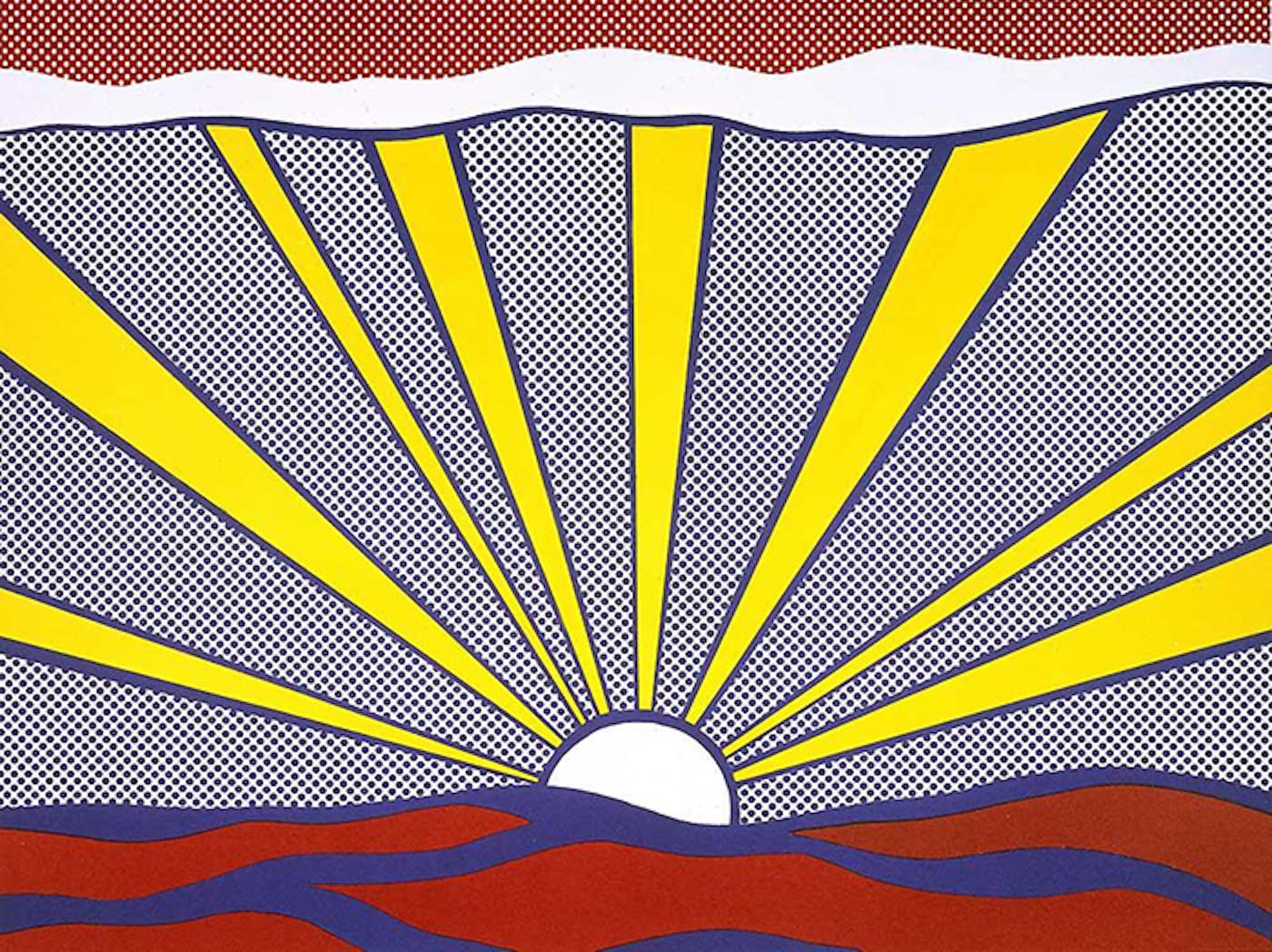
Pop Art
Learn how Pop Art turned advertising, comics, and consumer products into art—Andy Warhol, Roy Lichtenstein, silkscreen, and the rise of mass culture.
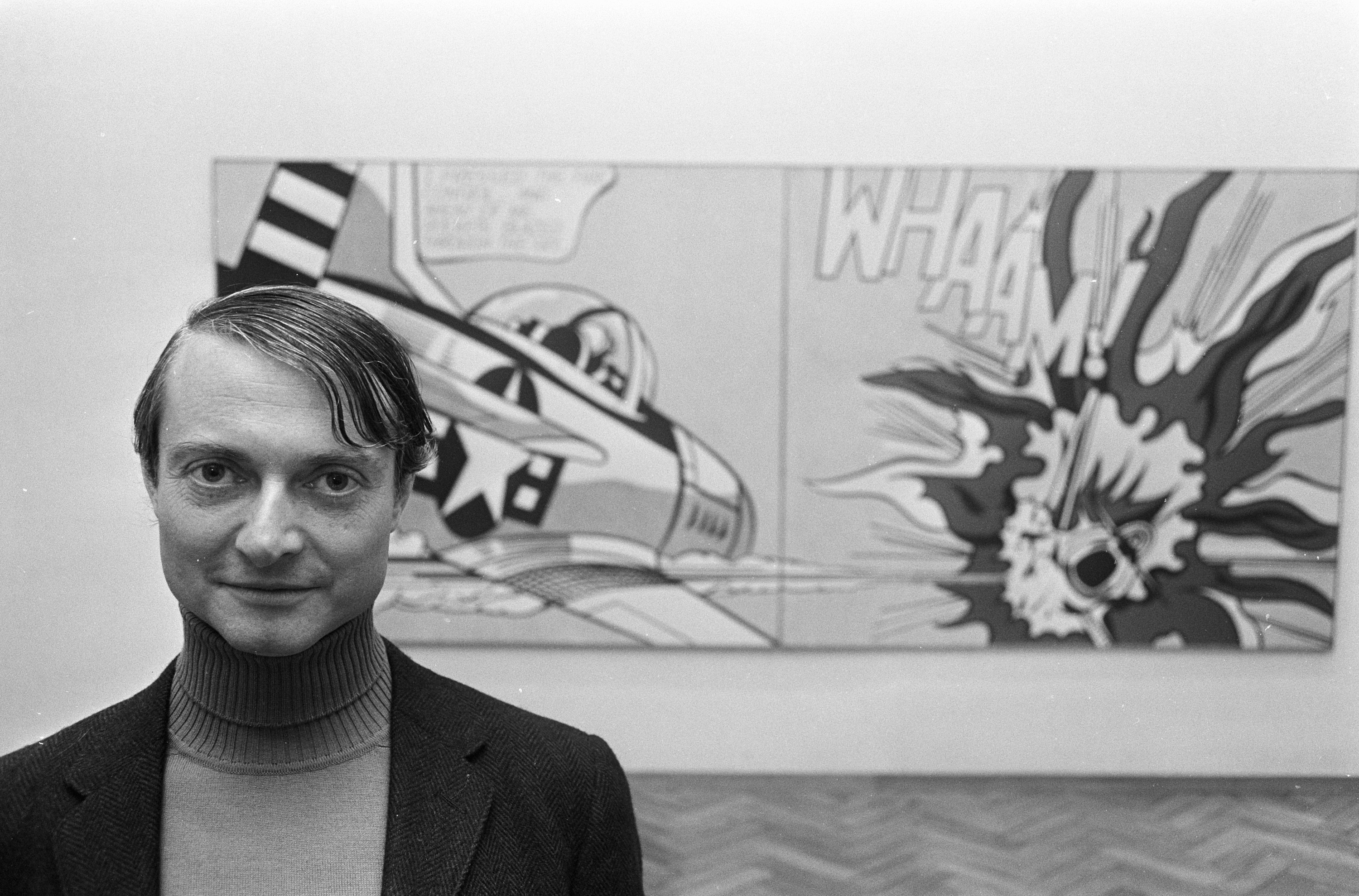
Roy Lichtenstein
A short guide to Roy Lichtenstein: from Look Mickey to the romance and war comics, Drowning Girl and Whaam!, his Ben-Day dots and machine-like technique, the controversy over his sources, the Brushstrokes and Mirrors, and a comic-panel app you can try in PictorX.
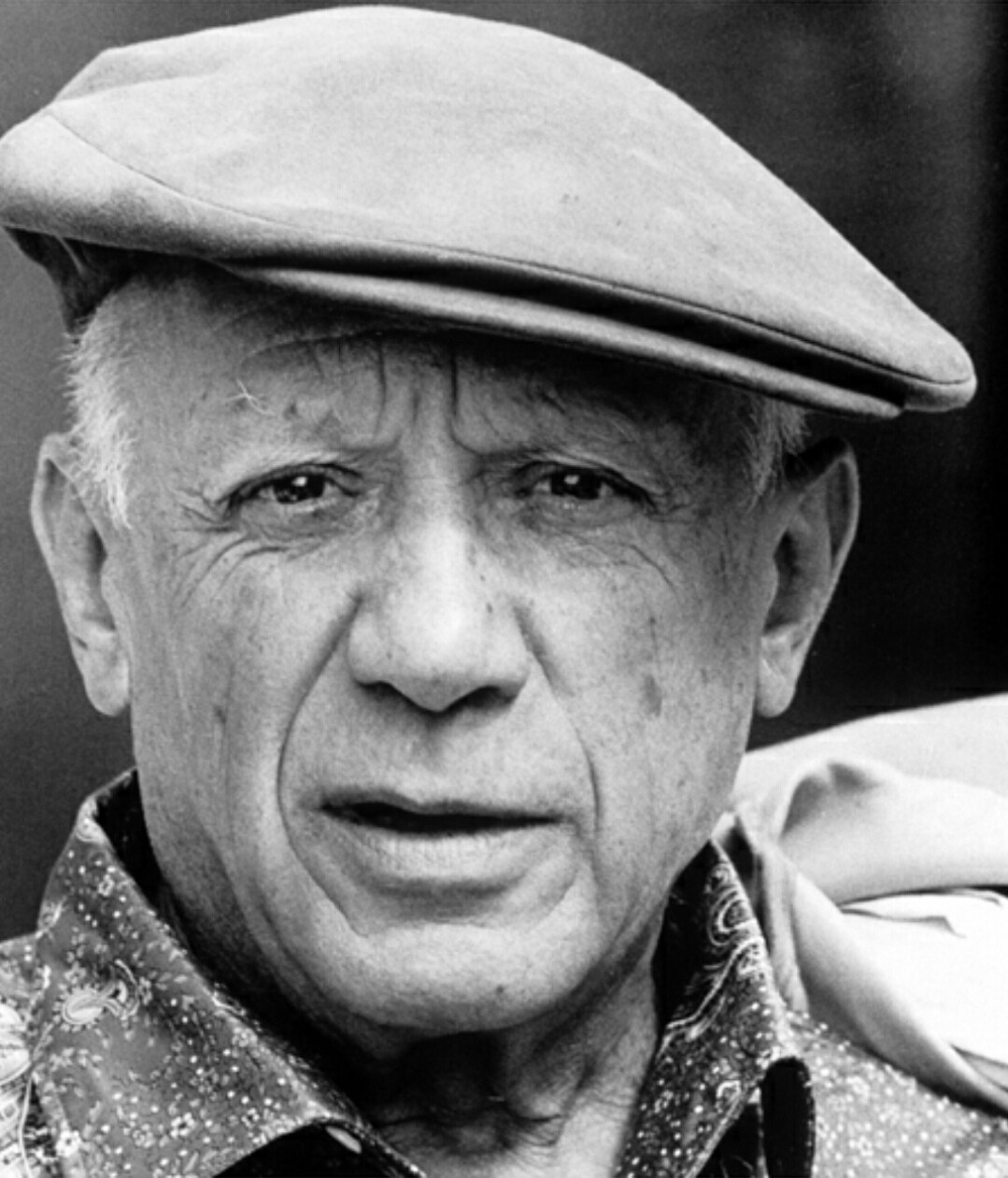
Pablo Picasso
A short guide to Pablo Picasso: the prodigy from Málaga, the Blue and Rose Periods, Les Demoiselles d'Avignon and Cubism with Braque, Guernica and The Weeping Woman, his endless reinventions, and a digital homage you can try in PictorX.
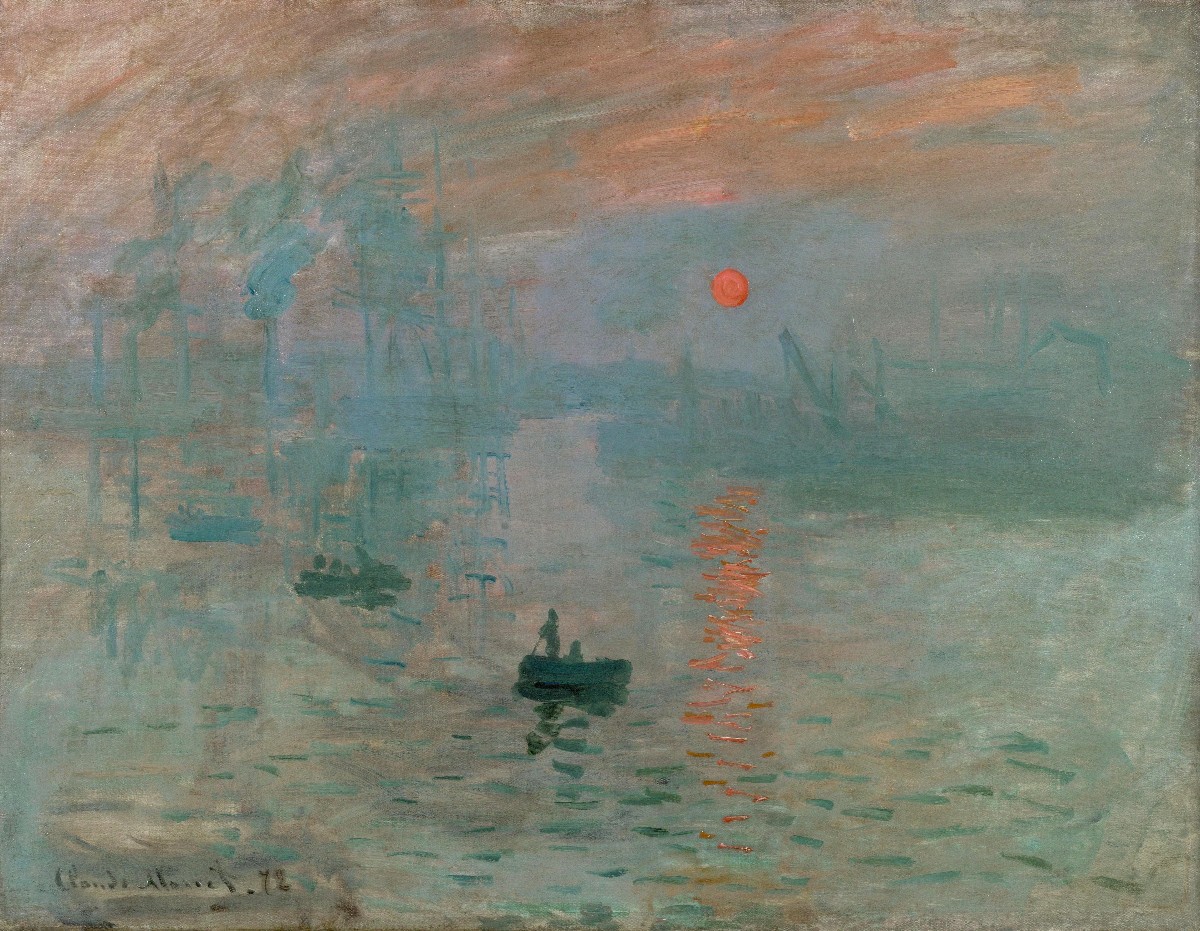
Impressionism
A short guide to Impressionism: the 1874 exhibition in Paris, Monet's Impression, Sunrise, painting in the open air, the water lilies at Giverny, Renoir's dappled light, Degas's dancers, Berthe Morisot and the women Impressionists, broken colour and coloured shadows, and a digital homage you can try in PictorX.
Ready to try it?
Open PictorX in your browser — no install, no credit card required to start.
Try René Magritte