
두 봉투의 역설
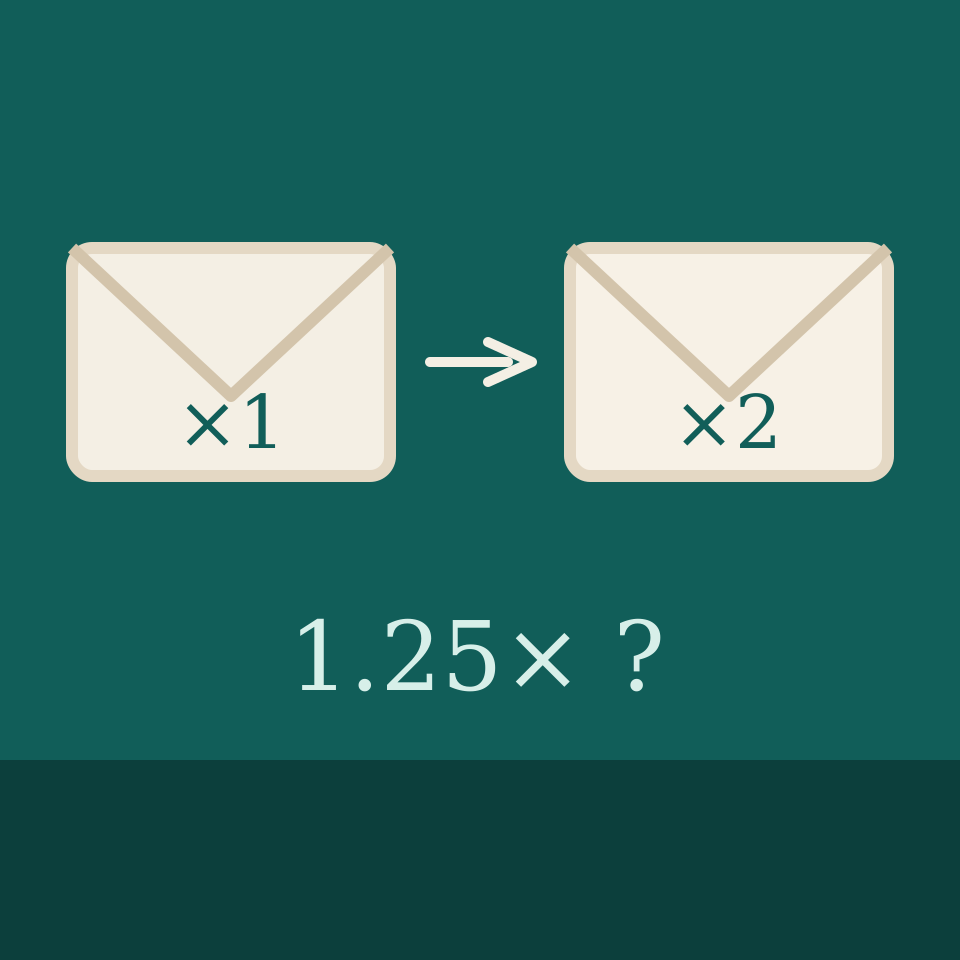
봉투가 두 개, 하나는 다른 하나의 두 배입니다. 하나를 고릅니다. 짧은 논증은 다른 봉투가 1.25배의 가치이니 바꿔야 한다고 말합니다. 그 논증은 틀렸고, 이유는 미묘합니다.
The puzzle
You are given two envelopes. One contains twice as much money as the other. You pick one at random. You may keep it, or switch to the other. Should you switch?
The tempting argument
Call the amount in your envelope X. The other envelope holds either half of X or double X. If each were equally likely, the expected amount in the other envelope would be 0.5 × (X/2) + 0.5 × (2X) = 1.25X. That is more than X, so switching looks strictly better. The reasoning never used the value of X, so it seems to say: always switch, whatever you find.
Where it goes wrong
The two possibilities are not equally likely just because you can name them. "The other has double" means your envelope holds the smaller amount. "The other has half" means it holds the larger amount. Once the amount is fixed at a particular X, those are claims about how the pair was chosen, and they need not have the same probability. Without a rule for that choice, the expected value of switching is not defined, and 1.25 is not a result.
A fixed pair
Suppose the envelopes always contain 10 and 20, and you are given one at random. If you do not open yours, each envelope has expected amount 15. Switching changes nothing. If you open it and see 10, the other holds 20 and you should switch. If you see 20, the other holds 10 and you should stay. Following that rule, you always end with 20. The 1.25 argument would have told you to switch even when you were holding 20.
A range, and an infinite average
Suppose the smaller amount is a whole number drawn from 1 to 100, and the other envelope holds double. For many amounts you might open, half and double are equally likely and the other envelope really does average 1.25 times yours. For an odd amount, or any amount that can only be the smaller one, the other envelope has double. For the largest amounts you can only be holding the larger one, and switching loses. Over all pairs, blind switching still averages the same as staying. Switching only when the opened amount favors it does better.
There is also a rule on the powers of two, where the smaller amount is 2ⁿ with probability (1/3)·(2/3)ⁿ. Under that rule every finite amount you can open makes switching look better: 1.1 times yours, or double for the smallest amount. The average amount is infinite. Conditional expectations can all point one way while there is still no finite expected gain. A long simulation does not settle, because one rare huge pair moves the average by a lot.
Explore it
Open the app and the envelopes are closed: the verdict is that either choice is fine. Open yours and the chart marks where that amount sits. Above the line at 1, switching has the higher expectation. Below it, staying does. The dashed line at 1.25 is what the tempting argument claims for every amount. Run 10,000 pairs to see blind switching match staying, and a selective switch come out ahead, except for the powers of two, where the average does not settle.
자주 묻는 질문
두 봉투의 역설은 진짜 모순인가요?
아닙니다. 사실이 아닌 한 단계를 받아들일 때만 모순이 나타납니다. 봉투의 금액이 정해진 뒤에도 절반과 두 배가 같은 확률로 남는다는 단계입니다. 금액을 고르는 방식이 완전히 정해져 있으면 기댓값은 잘 정의되고 모순은 없습니다.
바꾸기가 옳은 경우가 있나요?
있습니다. 봉투를 열었고 금액을 정한 방식 때문에 다른 봉투의 평균 가치가 더 크면 바꾸세요. 열지 않았다면 바꾸기는 기댓값을 바꾸지 않습니다.
두 봉투의 역설은 누가 제시했나요?
이 수수께끼는 20세기 중반부터 돌았습니다. 모리스 크라이치크는 1953년에 관련된 교환 역설을 다루었고, 두 봉투 형태는 확률과 결정 이론의 표준 예가 되었습니다. 어려운 점은 금액의 분포를 정하는 것입니다.
왜 모든 금액이 바꾸기를 유리하게 만들 수 있나요?
평균이 무한대이면 ‘무엇을 보든 더 낫다’가 ‘전체로 더 낫다’를 뜻하지 않기 때문입니다. 전체 기댓값의 법칙은 조건부 조각을 더하기 전에 유한한 평균이 필요합니다. 2의 거듭제곱에서는 그 평균이 무한대이므로, 조각들이 유한한 이득이 되지 않습니다.
관련 도구
두 봉투의 역설
바꾸기가 언제나 더 낫지는 않은 이유를 보세요. 금액을 열고 그럴듯한 1.25배 평균과 올바른 기댓값을 비교한 뒤 1만 쌍을 실행합니다.
몬티 홀 문제
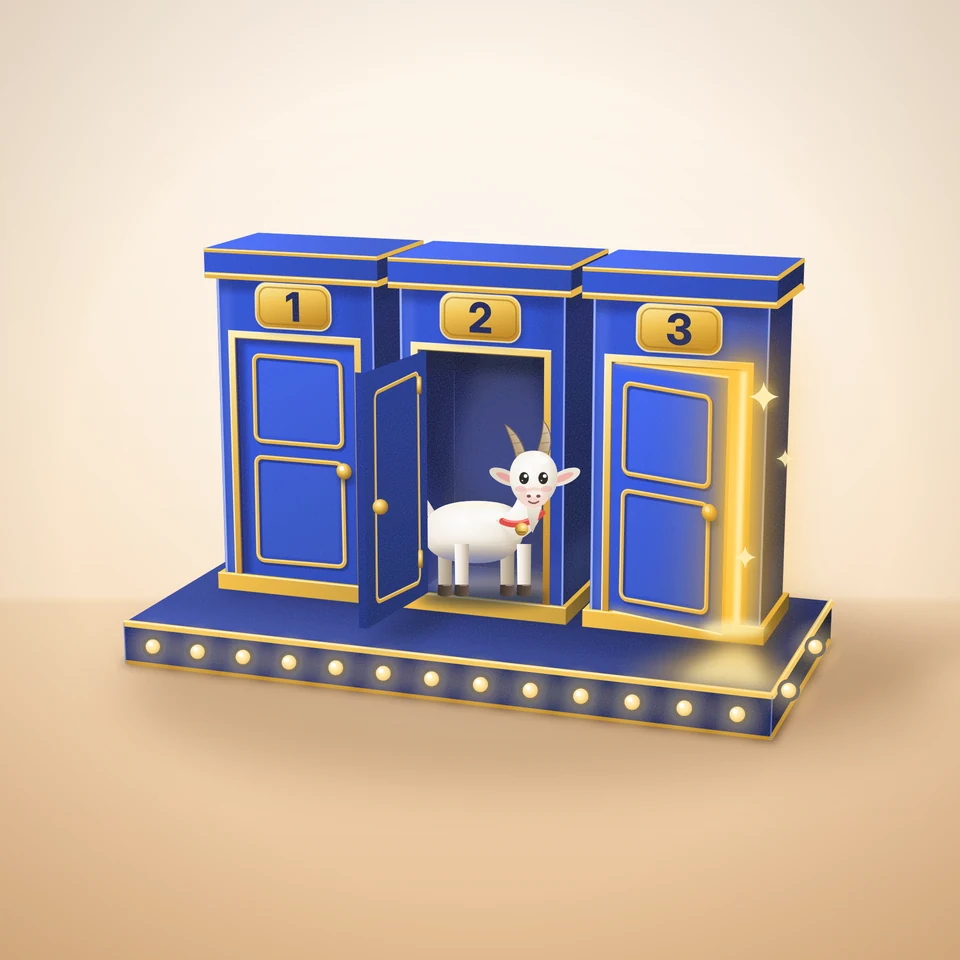
몬티 홀 문제를 직접 해 보세요. 세 문 중 하나를 고르고, 몬티가 염소가 있는 문을 열면 유지하거나 바꾸세요. 직접 플레이하거나 컴퓨터가 1,000게임을 하게 해서 바꾸면 세 번에 두 번 이긴다는 것을 확인하세요.

생일 역설
23명인 그룹에서 두 사람의 생일이 같을 확률은 50.7%, 57명이면 99%입니다. 253쌍 전부와 달력, 곡선을 보고, 브라우저에서 무작위 그룹 수천 개를 테스트해 보세요.
심슨의 역설
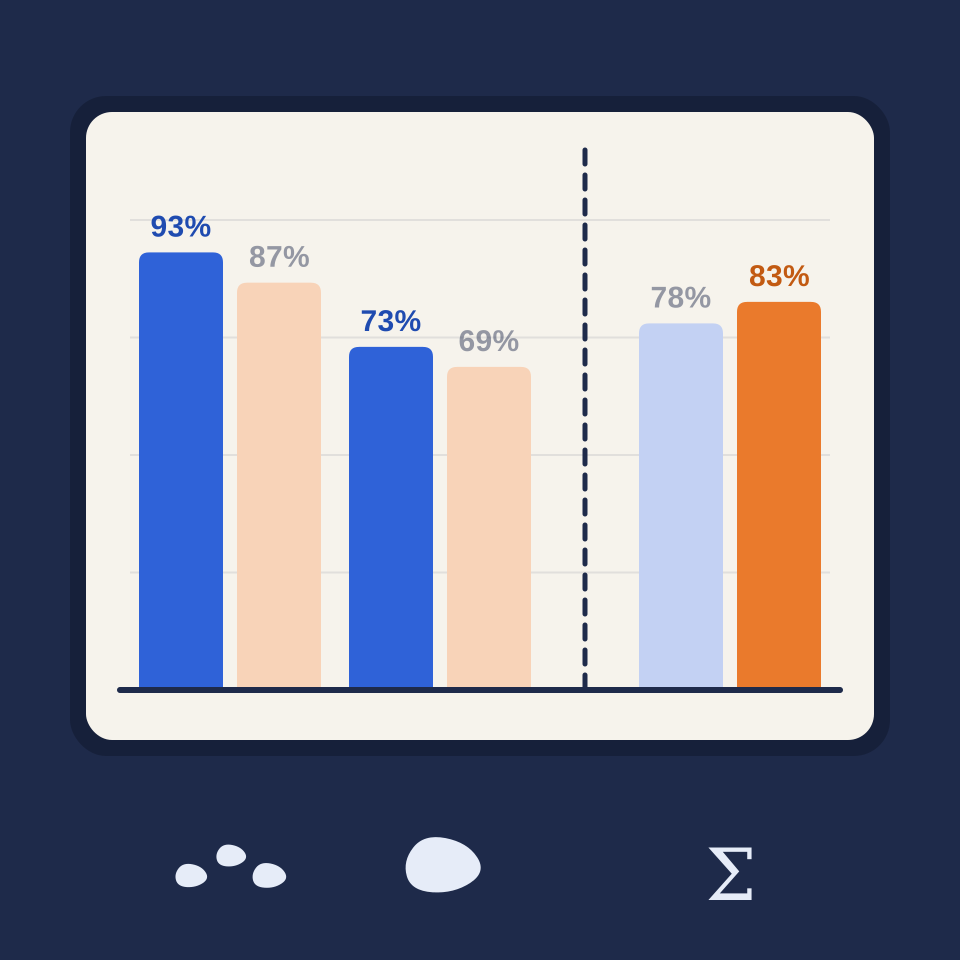
심슨의 역설을 직접 살펴보세요. 한 선택지가 모든 그룹에서 더 나은데도 전체로는 더 나쁠 수 있는 이유를 신장 결석 치료, 버클리 입학 사정, 야구 타율의 실제 데이터나 직접 입력한 숫자로 확인할 수 있습니다.

도박사의 오류
공정한 동전을 1초에 100번 던지고, 앞면이 5번이나 8번 연속 나온 뒤에 무엇이 나오는지 확인하세요. 여전히 50/50입니다. 동전에는 기억이 없습니다.
시도해 볼 준비가 되셨나요?
브라우저에서 PictorX를 엽니다. 설치가 필요 없고 시작하는 데 신용 카드가 필요하지 않습니다.
두 봉투를 해 보기