
二つの封筒のパラドックス
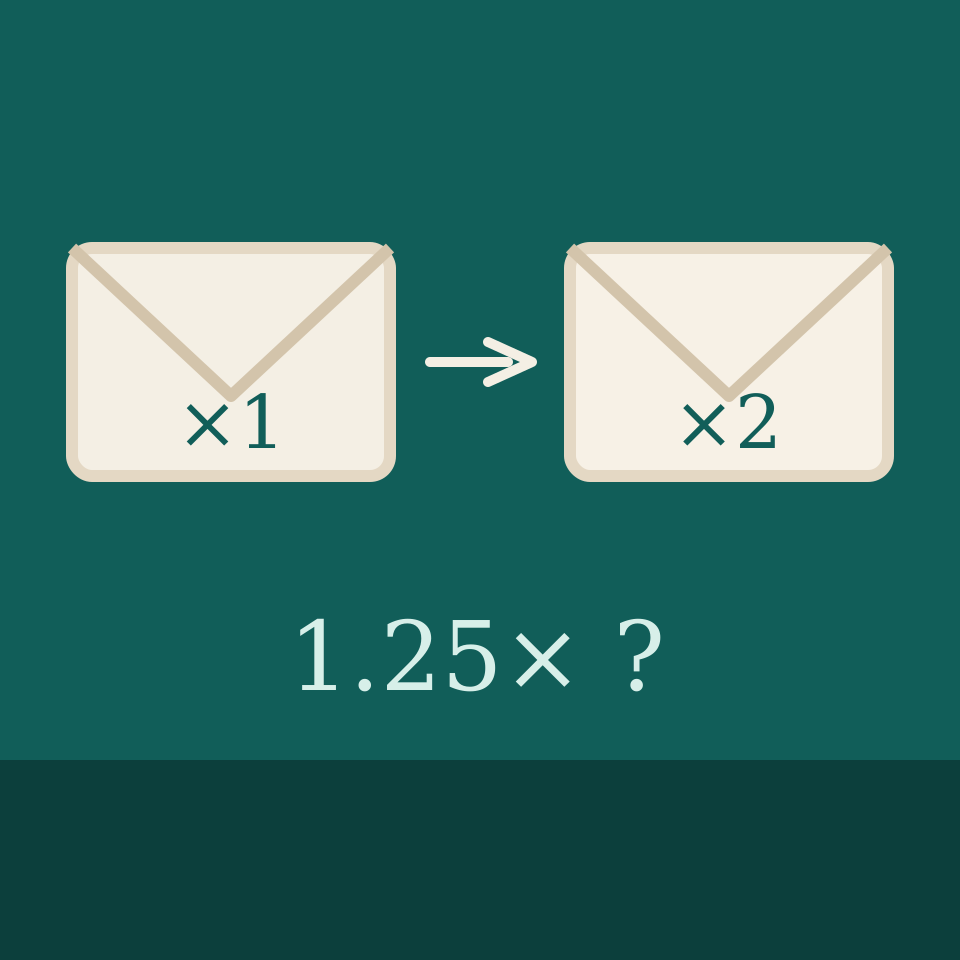
封筒が二つ、一方はもう一方の2倍です。一つを選びます。短い議論は、もう一方が1.25倍の価値があるから取り替えるべきだと言います。その議論は誤りで、理由は微妙です。
The puzzle
You are given two envelopes. One contains twice as much money as the other. You pick one at random. You may keep it, or switch to the other. Should you switch?
The tempting argument
Call the amount in your envelope X. The other envelope holds either half of X or double X. If each were equally likely, the expected amount in the other envelope would be 0.5 × (X/2) + 0.5 × (2X) = 1.25X. That is more than X, so switching looks strictly better. The reasoning never used the value of X, so it seems to say: always switch, whatever you find.
Where it goes wrong
The two possibilities are not equally likely just because you can name them. "The other has double" means your envelope holds the smaller amount. "The other has half" means it holds the larger amount. Once the amount is fixed at a particular X, those are claims about how the pair was chosen, and they need not have the same probability. Without a rule for that choice, the expected value of switching is not defined, and 1.25 is not a result.
A fixed pair
Suppose the envelopes always contain 10 and 20, and you are given one at random. If you do not open yours, each envelope has expected amount 15. Switching changes nothing. If you open it and see 10, the other holds 20 and you should switch. If you see 20, the other holds 10 and you should stay. Following that rule, you always end with 20. The 1.25 argument would have told you to switch even when you were holding 20.
A range, and an infinite average
Suppose the smaller amount is a whole number drawn from 1 to 100, and the other envelope holds double. For many amounts you might open, half and double are equally likely and the other envelope really does average 1.25 times yours. For an odd amount, or any amount that can only be the smaller one, the other envelope has double. For the largest amounts you can only be holding the larger one, and switching loses. Over all pairs, blind switching still averages the same as staying. Switching only when the opened amount favors it does better.
There is also a rule on the powers of two, where the smaller amount is 2ⁿ with probability (1/3)·(2/3)ⁿ. Under that rule every finite amount you can open makes switching look better: 1.1 times yours, or double for the smallest amount. The average amount is infinite. Conditional expectations can all point one way while there is still no finite expected gain. A long simulation does not settle, because one rare huge pair moves the average by a lot.
Explore it
Open the app and the envelopes are closed: the verdict is that either choice is fine. Open yours and the chart marks where that amount sits. Above the line at 1, switching has the higher expectation. Below it, staying does. The dashed line at 1.25 is what the tempting argument claims for every amount. Run 10,000 pairs to see blind switching match staying, and a selective switch come out ahead, except for the powers of two, where the average does not settle.
よくある質問
二つの封筒のパラドックスは本当の矛盾ですか?
いいえ。矛盾は、正しくない一歩を認めるときにだけ現れます。封筒の金額が決まったあとも、半分と2倍が同じ確率のままだという一歩です。金額の選び方が完全に決まっていれば期待値はきちんと定義され、矛盾はありません。
取り替えるのが正しいことはありますか?
あります。開けて、金額の決め方のせいで平均してもう一方の方が高いなら、取り替えてください。開けていなければ、取り替えは期待値を変えません。
二つの封筒のパラドックスは誰が述べましたか?
この謎は20世紀半ばから流通しています。モーリス・クライチックは1953年に関連する交換のパラドックスを論じ、二つの封筒の形は確率と意思決定の標準的な例になりました。難しいのは金額の分布を指定することです。
なぜどの金額でも取り替えが有利に見えるのですか?
平均が無限大のとき、「何を見ても良い」は「全体として良い」を意味しないからです。全期待値の法則は、条件付きの部分を足す前に有限の平均を必要とします。2の累乗ではその平均が無限大なので、部分は有限の利得になりません。
関連ツール
二つの封筒のパラドックス
取り替えがいつも得とは限らない理由を見ます。金額を開け、見かけの1.25倍と正しい期待値を比べ、1万組を実行します。
モンティ・ホール問題
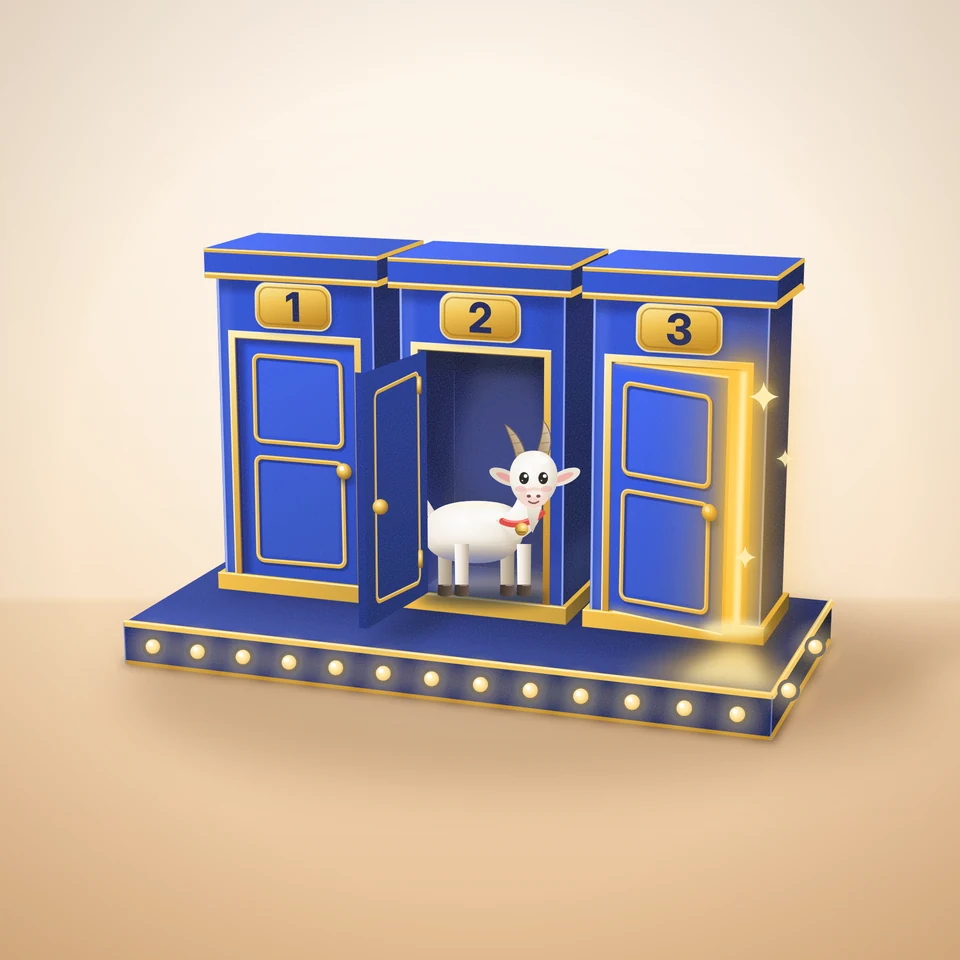
モンティ・ホール問題を体験しましょう。3つの扉から1つを選び、モンティがヤギのいる扉を開けたら、そのままにするか変えるかを決めます。自分で遊ぶことも、コンピューターに1,000ゲームを任せて、変えると3回に2回勝つのを確かめることもできます。

誕生日のパラドックス
23人のグループで2人の誕生日が同じになる確率は50.7%、57人なら99%です。253組すべてのペア、カレンダー、曲線を見ながら、ブラウザーで何千ものランダムなグループをテストしましょう。
シンプソンのパラドックス
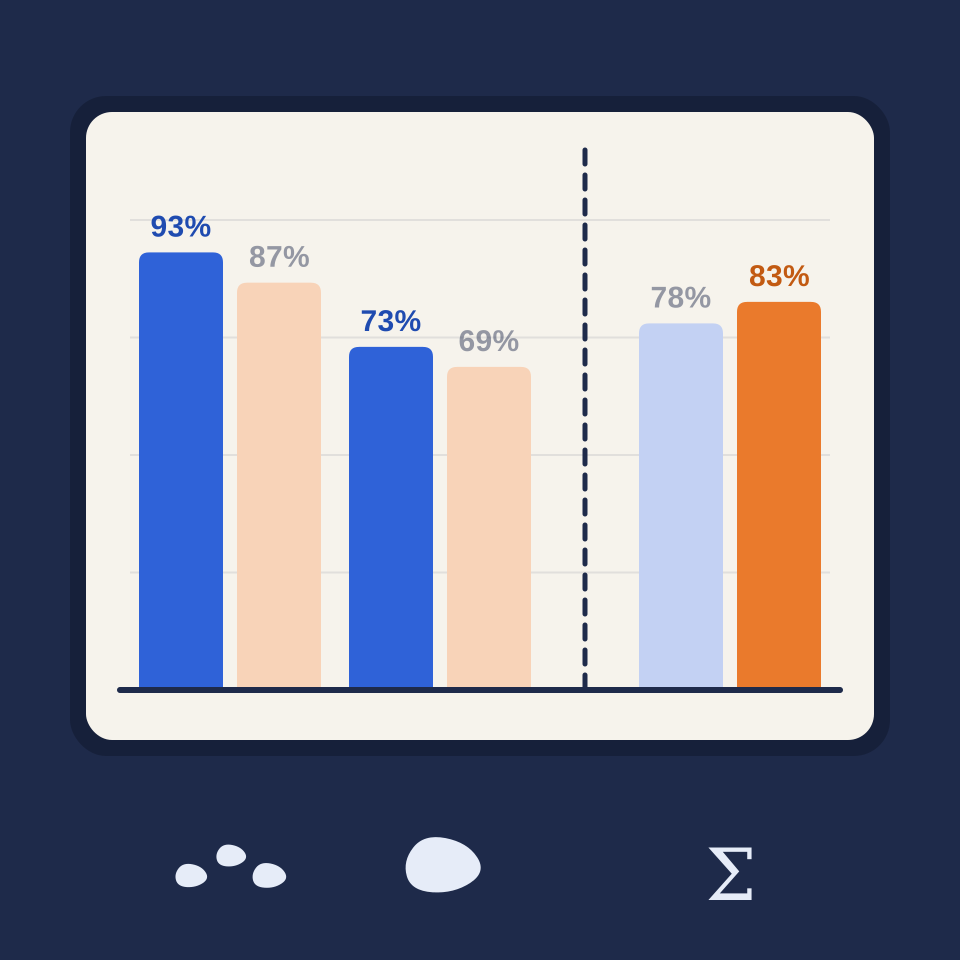
シンプソンのパラドックスを体験しましょう。ある選択肢がどのグループでも優れているのに全体では劣ることがある仕組みを、腎臓結石の治療、バークレー校の入学審査、野球の打率の実データや、自分の数値で確かめられます。

ギャンブラーの誤謬
公正なコインを1秒に100回投げ、表が5回や8回続いたあとに何が出るかを見てみましょう。それでも50/50。コインには記憶がありません。
試してみますか?
ブラウザで PictorX を開きます。インストール不要、始めるのにクレジットカードも不要です。
二つの封筒を試す