
Nghịch lý hai phong bì
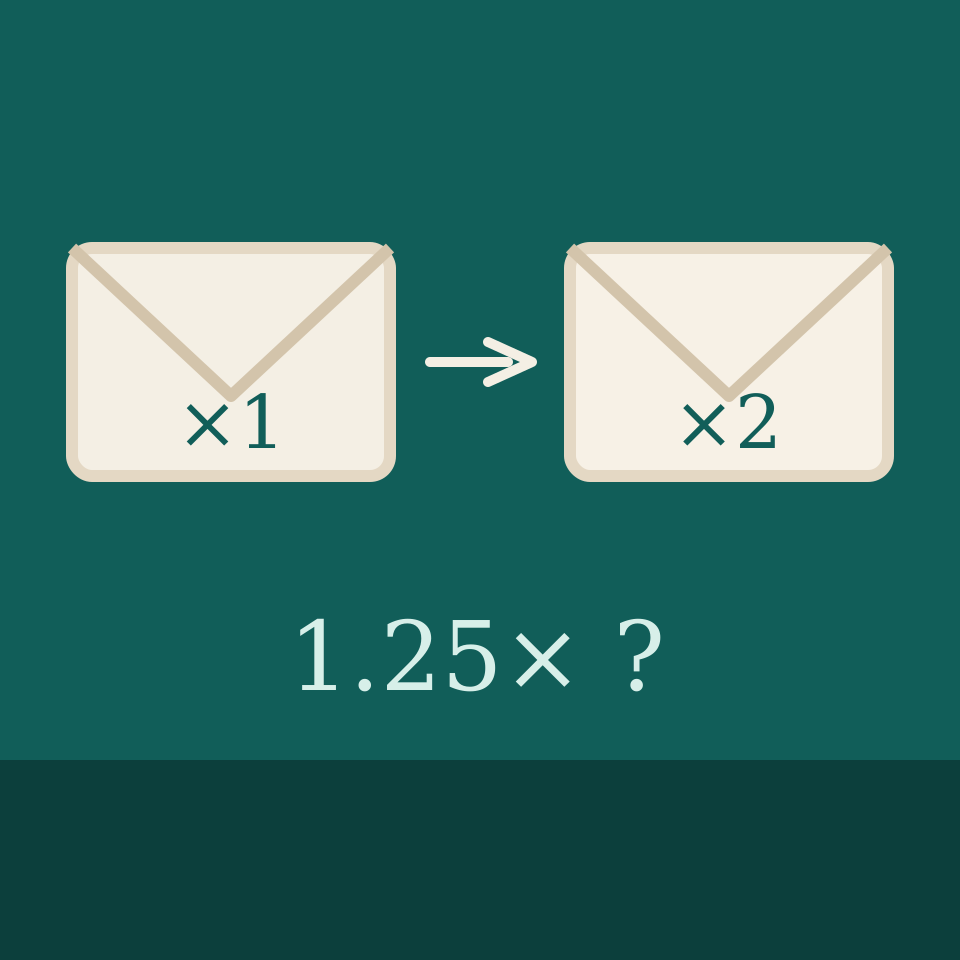
Hai phong bì, một cái chứa gấp đôi cái kia. Bạn chọn một. Một lập luận ngắn nói phong bì kia đáng giá gấp 1,25 lần, nên bạn nên đổi. Lập luận đó sai, và lý do thì tinh tế.
The puzzle
You are given two envelopes. One contains twice as much money as the other. You pick one at random. You may keep it, or switch to the other. Should you switch?
The tempting argument
Call the amount in your envelope X. The other envelope holds either half of X or double X. If each were equally likely, the expected amount in the other envelope would be 0.5 × (X/2) + 0.5 × (2X) = 1.25X. That is more than X, so switching looks strictly better. The reasoning never used the value of X, so it seems to say: always switch, whatever you find.
Where it goes wrong
The two possibilities are not equally likely just because you can name them. "The other has double" means your envelope holds the smaller amount. "The other has half" means it holds the larger amount. Once the amount is fixed at a particular X, those are claims about how the pair was chosen, and they need not have the same probability. Without a rule for that choice, the expected value of switching is not defined, and 1.25 is not a result.
A fixed pair
Suppose the envelopes always contain 10 and 20, and you are given one at random. If you do not open yours, each envelope has expected amount 15. Switching changes nothing. If you open it and see 10, the other holds 20 and you should switch. If you see 20, the other holds 10 and you should stay. Following that rule, you always end with 20. The 1.25 argument would have told you to switch even when you were holding 20.
A range, and an infinite average
Suppose the smaller amount is a whole number drawn from 1 to 100, and the other envelope holds double. For many amounts you might open, half and double are equally likely and the other envelope really does average 1.25 times yours. For an odd amount, or any amount that can only be the smaller one, the other envelope has double. For the largest amounts you can only be holding the larger one, and switching loses. Over all pairs, blind switching still averages the same as staying. Switching only when the opened amount favors it does better.
There is also a rule on the powers of two, where the smaller amount is 2ⁿ with probability (1/3)·(2/3)ⁿ. Under that rule every finite amount you can open makes switching look better: 1.1 times yours, or double for the smallest amount. The average amount is infinite. Conditional expectations can all point one way while there is still no finite expected gain. A long simulation does not settle, because one rare huge pair moves the average by a lot.
Explore it
Open the app and the envelopes are closed: the verdict is that either choice is fine. Open yours and the chart marks where that amount sits. Above the line at 1, switching has the higher expectation. Below it, staying does. The dashed line at 1.25 is what the tempting argument claims for every amount. Run 10,000 pairs to see blind switching match staying, and a selective switch come out ahead, except for the powers of two, where the average does not settle.
Câu hỏi thường gặp
Nghịch lý hai phong bì có phải mâu thuẫn thật không?
Không. Mâu thuẫn chỉ xuất hiện nếu bạn chấp nhận một bước không đúng: rằng một nửa và gấp đôi vẫn cùng xác suất sau khi số tiền trong phong bì đã cố định. Với một cách chọn số tiền được nêu đầy đủ, các kỳ vọng được định nghĩa rõ và không có mâu thuẫn.
Đổi có khi nào là đúng không?
Có. Nếu bạn mở phong bì và cách chọn số tiền khiến phong bì kia trung bình đáng giá hơn, hãy đổi. Nếu bạn chưa mở, đổi không làm thay đổi giá trị kỳ vọng.
Ai nêu nghịch lý hai phong bì?
Câu đố lưu truyền từ giữa thế kỷ 20. Maurice Kraitchik bàn một nghịch lý trao đổi liên quan năm 1953, và dạng hai phong bì trở thành ví dụ chuẩn trong xác suất và lý thuyết quyết định. Khó ở chỗ phải nêu phân bố của các số tiền.
Vì sao mọi số tiền đều có thể nghiêng về việc đổi?
Vì „tốt hơn dù bạn thấy gì“ không có nghĩa „tốt hơn về tổng thể“ khi số trung bình là vô hạn. Luật kỳ vọng toàn phần cần một trung bình hữu hạn trước khi các phần có điều kiện có thể cộng lại. Với lũy thừa của 2, trung bình đó là vô hạn, nên các phần không bao giờ thành một khoản lời hữu hạn.
Công cụ liên quan
Nghịch lý hai phong bì
Xem vì sao đổi không phải lúc nào cũng hơn. Mở một số tiền, so trung bình hấp dẫn gấp 1,25 lần với kỳ vọng đúng, và chạy 10.000 cặp.

Bài toán Monty Hall
Tự mình thử bài toán Monty Hall: chọn một trong ba cánh cửa, xem Monty mở một cửa có dê, rồi giữ nguyên hoặc đổi. Tự chơi hoặc để máy tính chơi 1.000 ván và thấy đổi cửa thắng hai trong ba lần.

Nghịch lý ngày sinh nhật
Trong một nhóm 23 người, xác suất có hai người trùng sinh nhật là 50,7%, và với 57 người là 99%. Xem đủ 253 cặp, tấm lịch và đường cong, rồi thử hàng nghìn nhóm ngẫu nhiên ngay trong trình duyệt.
Nghịch lý Simpson
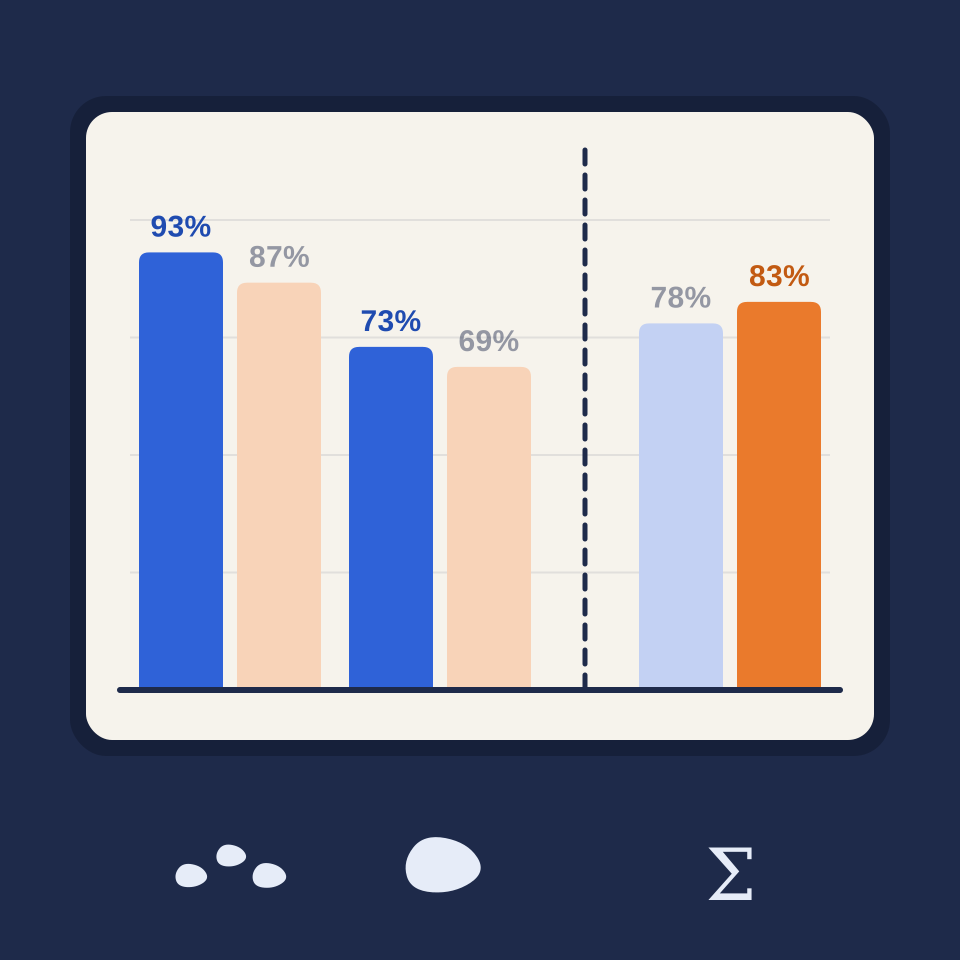
Khám phá nghịch lý Simpson: xem vì sao một phương án có thể tốt hơn trong mọi nhóm nhưng lại kém hơn khi tính chung, với dữ liệu thật về điều trị sỏi thận, tuyển sinh ở Berkeley và tỷ lệ đánh bóng chày, hoặc với số liệu của riêng bạn.

Ngụy biện của con bạc
Tung một đồng xu công bằng 100 lần mỗi giây và xem điều gì đến sau mỗi chuỗi 5 hoặc 8 lần ngửa liên tiếp. Vẫn là 50/50: đồng xu không có trí nhớ.
Sẵn sàng thử chưa?
Mở PictorX trong trình duyệt — không cần cài đặt, không cần thẻ tín dụng để bắt đầu.
Thử hai phong bì