
مفارقة المظروفين
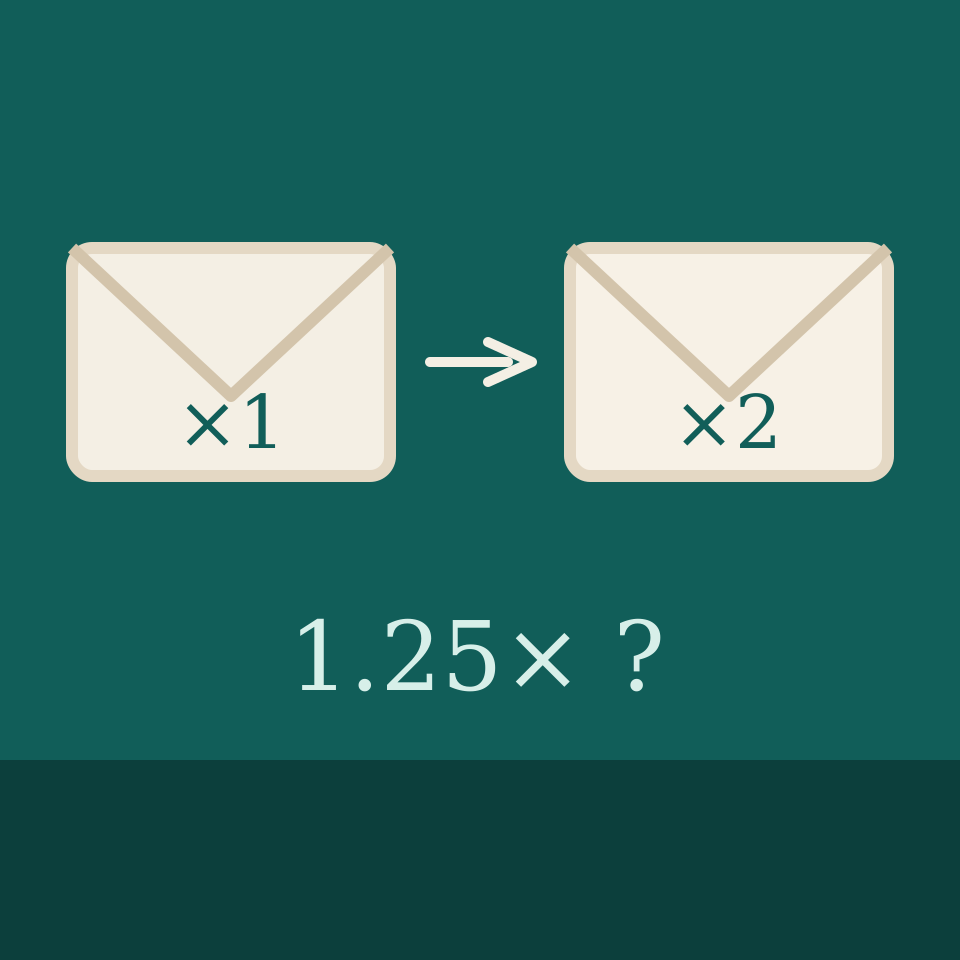
مظروفان، أحدهما فيه ضعف الآخر. تختار واحدًا. تقول حجة قصيرة إن الآخر يساوي 1.25 ضعفًا، لذا ينبغي أن تبدّل. الحجة خاطئة، والسبب دقيق.
The puzzle
You are given two envelopes. One contains twice as much money as the other. You pick one at random. You may keep it, or switch to the other. Should you switch?
The tempting argument
Call the amount in your envelope X. The other envelope holds either half of X or double X. If each were equally likely, the expected amount in the other envelope would be 0.5 × (X/2) + 0.5 × (2X) = 1.25X. That is more than X, so switching looks strictly better. The reasoning never used the value of X, so it seems to say: always switch, whatever you find.
Where it goes wrong
The two possibilities are not equally likely just because you can name them. "The other has double" means your envelope holds the smaller amount. "The other has half" means it holds the larger amount. Once the amount is fixed at a particular X, those are claims about how the pair was chosen, and they need not have the same probability. Without a rule for that choice, the expected value of switching is not defined, and 1.25 is not a result.
A fixed pair
Suppose the envelopes always contain 10 and 20, and you are given one at random. If you do not open yours, each envelope has expected amount 15. Switching changes nothing. If you open it and see 10, the other holds 20 and you should switch. If you see 20, the other holds 10 and you should stay. Following that rule, you always end with 20. The 1.25 argument would have told you to switch even when you were holding 20.
A range, and an infinite average
Suppose the smaller amount is a whole number drawn from 1 to 100, and the other envelope holds double. For many amounts you might open, half and double are equally likely and the other envelope really does average 1.25 times yours. For an odd amount, or any amount that can only be the smaller one, the other envelope has double. For the largest amounts you can only be holding the larger one, and switching loses. Over all pairs, blind switching still averages the same as staying. Switching only when the opened amount favors it does better.
There is also a rule on the powers of two, where the smaller amount is 2ⁿ with probability (1/3)·(2/3)ⁿ. Under that rule every finite amount you can open makes switching look better: 1.1 times yours, or double for the smallest amount. The average amount is infinite. Conditional expectations can all point one way while there is still no finite expected gain. A long simulation does not settle, because one rare huge pair moves the average by a lot.
Explore it
Open the app and the envelopes are closed: the verdict is that either choice is fine. Open yours and the chart marks where that amount sits. Above the line at 1, switching has the higher expectation. Below it, staying does. The dashed line at 1.25 is what the tempting argument claims for every amount. Run 10,000 pairs to see blind switching match staying, and a selective switch come out ahead, except for the powers of two, where the average does not settle.
الأسئلة المتداولة
هل مفارقة المظروفين تناقض حقيقي؟
لا. يظهر التناقض فقط إذا سلّمت بخطوة غير صحيحة: أن النصف والضعف يبقيان متساويي الاحتمال بعد تثبيت المبلغ في مظروفك. ومع طريقة محددة تمامًا لاختيار المبالغ تكون التوقعات معرّفة جيدًا ولا تناقض.
هل يصح التبديل أحيانًا؟
نعم. إذا فتحت المظروف وجعلت طريقة اختيار المبالغ الآخر أعلى قيمة في المتوسط، فبدّل. وإذا لم تفتحه، فالتبديل لا يغيّر القيمة المتوقعة.
من صاغ مفارقة المظروفين؟
اللغز متداول منذ منتصف القرن العشرين. ناقش موريس كرايتشيك عام 1953 مفارقة تبادل قريبة، وصارت صورة المظروفين مثالًا معتادًا في الاحتمال ونظرية القرار. والصعوبة في تحديد توزيع المبالغ.
لماذا قد يرجّح كل مبلغ التبديل؟
لأن «أفضل مهما رأيت» لا يعني «أفضل إجمالًا» عندما يكون المتوسط لانهائيًا. يحتاج قانون التوقع الكلي إلى متوسط محدود قبل أن تُجمع الأجزاء المشروطة. ولقوى الاثنين هذا المتوسط لانهائي، فلا تصير الأجزاء ربحًا محدودًا.
الأدوات ذات الصلة
مفارقة المظروفين
انظر لماذا لا يكون التبديل أفضل دائمًا. افتح مبلغًا، وقارن متوسط 1.25 مرة المغري بالتوقع الصحيح، وشغّل 10,000 زوجًا.
مسألة مونتي هول
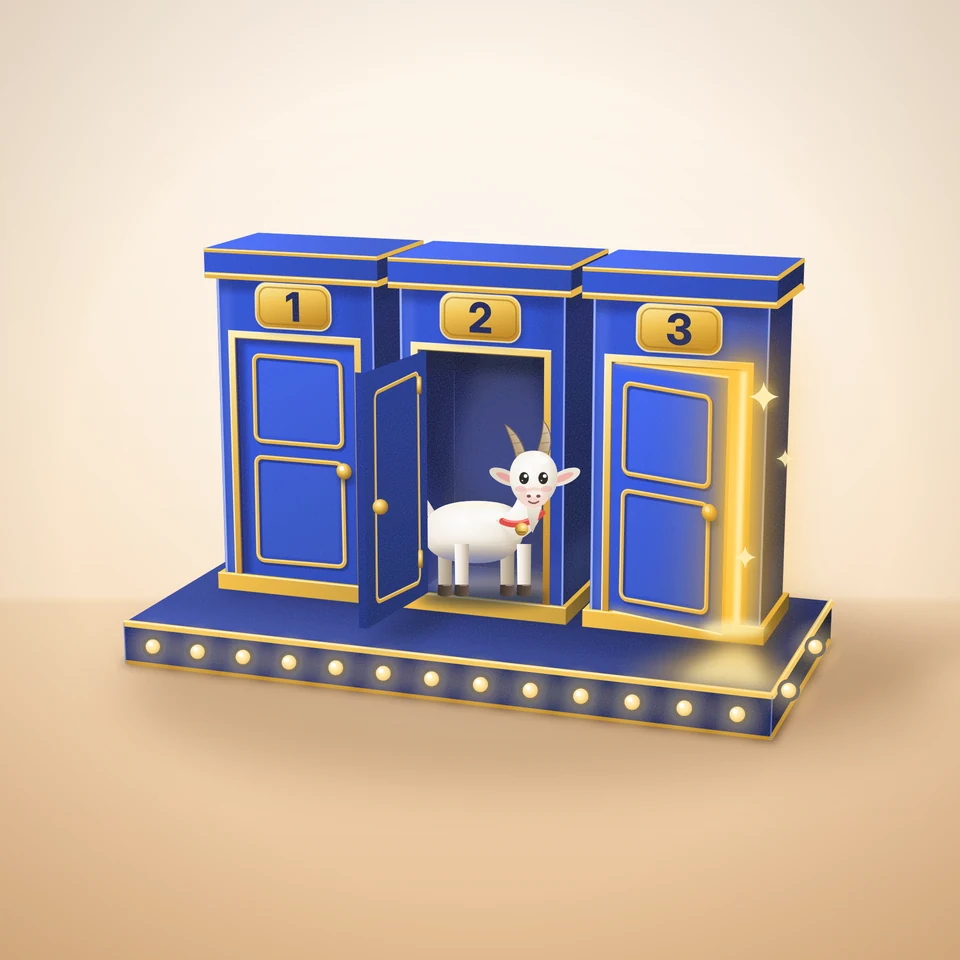
جرّب مسألة مونتي هول بنفسك: اختر بابًا من ثلاثة، وشاهد مونتي يفتح بابًا خلفه عنزة، ثم ابقَ أو بدّل. العب بنفسك أو دع الحاسوب يلعب 1000 لعبة، وشاهد التبديل يربح مرتين من كل ثلاث.

مفارقة عيد الميلاد
في مجموعة من 23 شخصًا يبلغ احتمال أن يشترك اثنان في عيد الميلاد 50.7%، ومع 57 شخصًا يبلغ 99%. شاهد الأزواج الـ253 كلها والتقويم والمنحنى، واختبر آلاف المجموعات العشوائية في متصفحك.
مفارقة سيمبسون
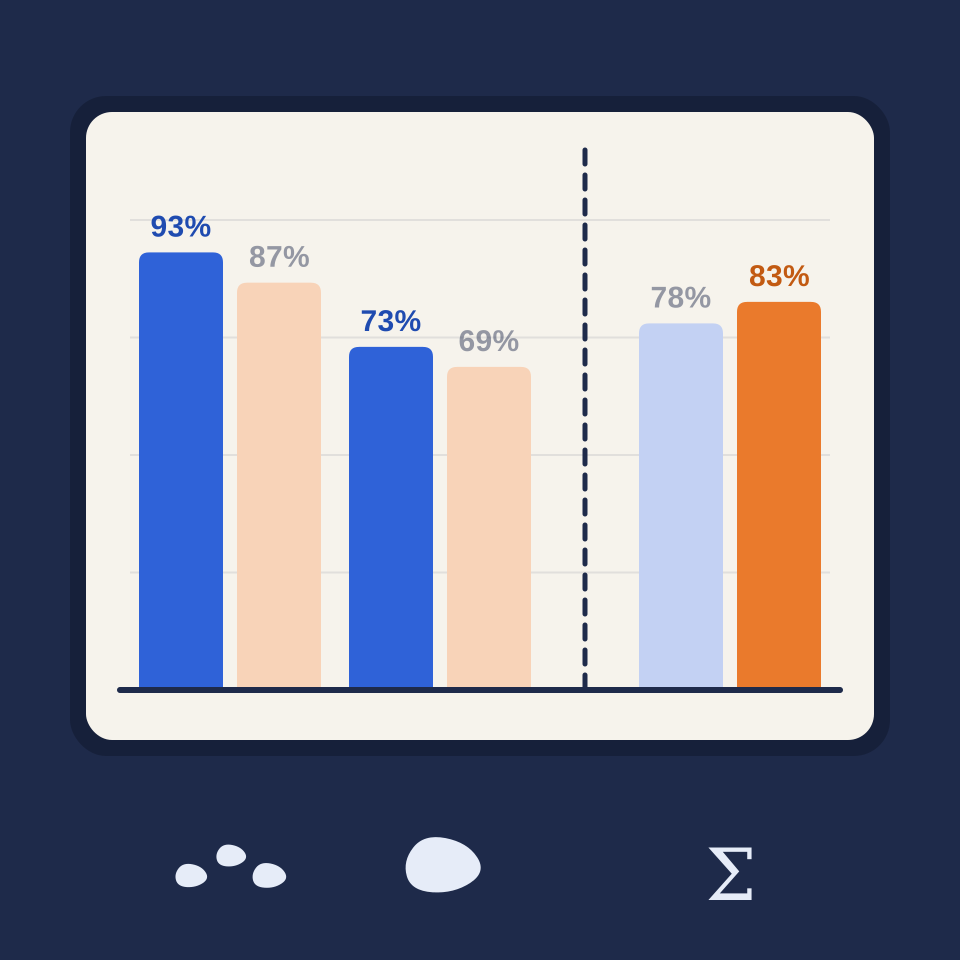
استكشف مفارقة سيمبسون: شاهد كيف يمكن لخيار أن يتفوق في كل مجموعة ويتأخر إجمالًا، ببيانات حقيقية عن علاج حصى الكلى والقبول في جامعة بيركلي ومتوسطات الضرب في البيسبول، أو بأرقامك الخاصة.

مغالطة المقامر
ارمِ عملة عادلة 100 مرة في الثانية وشاهد ما يأتي بعد كل مرة تظهر فيها الصورة 5 أو 8 مرات متتالية. لا يزال الاحتمال 50/50: العملة لا ذاكرة لها.
هل أنت مستعد لتجربتها؟
افتح PictorX في متصفحك - بدون تثبيت، ولا يلزم وجود بطاقة ائتمان للبدء.
جرّب المظروفين