
The story behind the world clock
Two hundred years ago every town set its clocks by the sun. Trains, telegraphs and later the internet needed one shared time, and the result is the patchwork of time zones the world clock follows today.
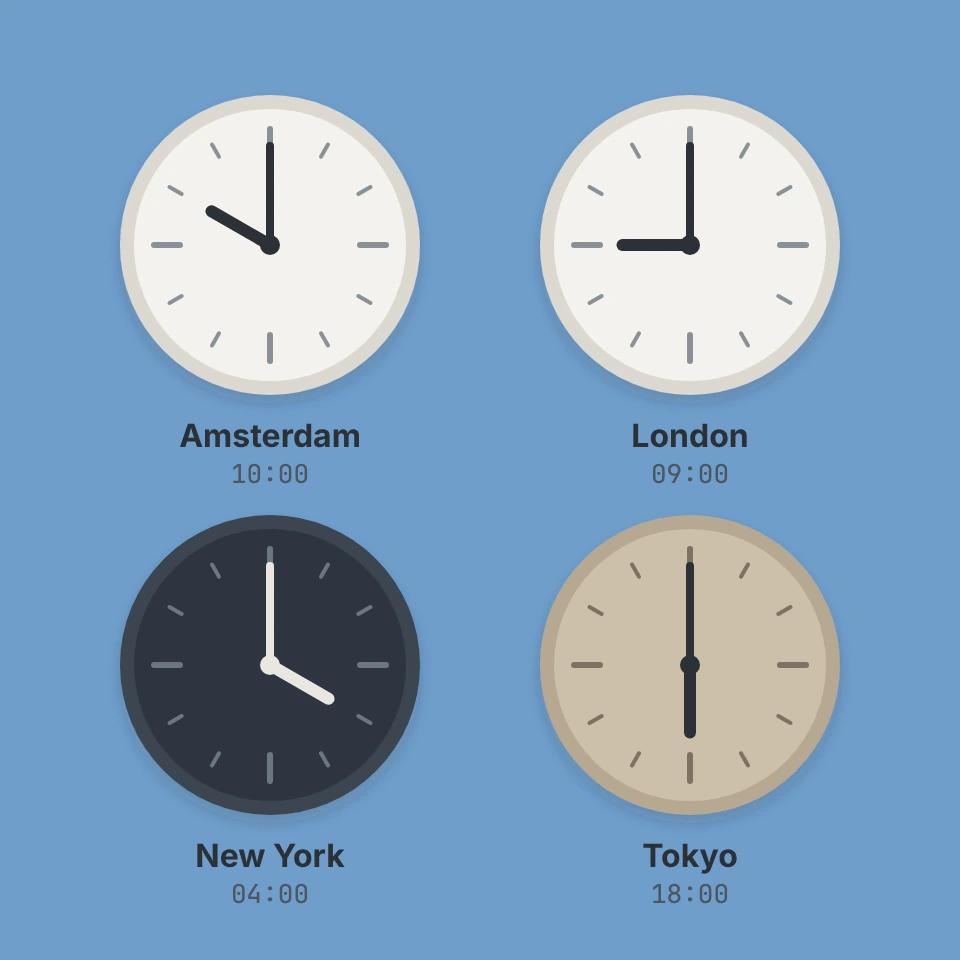
From sun time to railway time
Until the nineteenth century every town used its own local solar time, so noon in Bristol came about ten minutes after noon in London. Railways made this impractical. British railways adopted London time from 1847, and in 1883 the railways of the United States and Canada introduced standard time zones an hour apart.
The prime meridian and UTC
In 1884 the International Meridian Conference in Washington chose the meridian through Greenwich as longitude zero. Today the reference is Coordinated Universal Time, UTC, kept by atomic clocks around the world. Every time zone is written as an offset from UTC, such as UTC+1 for Amsterdam in winter or UTC-5 for New York.
Not every offset is a whole hour
India uses UTC+5:30, Nepal UTC+5:45 and the Chatham Islands UTC+12:45. Kiribati moved its eastern islands to UTC+14 in 1995 so the whole country shares one date, while Baker Island sits at UTC-12. China, as wide as five time zones, uses a single one. That is why a world clock needs real rules and not a simple hour difference.
Daylight saving time and the IANA database
Germany and Austria-Hungary were the first countries to use daylight saving time nationwide, in 1916. Today the European Union switches on the last Sunday of March and October, the United States on the second Sunday of March and the first Sunday of November, and the southern hemisphere the other way round. All these rules live in the IANA time zone database, started by Arthur David Olson in 1986, with names like Europe/Amsterdam. It is updated several times a year when governments change their rules, and your browser ships a copy.
Frequently asked questions
Is UTC the same as GMT?
For everyday use they show the same time. GMT is a time zone used by the United Kingdom in winter and several African countries, while UTC is the atomic time standard that all time zones are defined against.
Why are time zones named after cities?
Country borders and zone names change, cities rarely do. The IANA database therefore names each zone after its largest city, in the form Area/City, such as America/New_York or Asia/Kolkata.
Why does the difference between two cities change during the year?
Because they switch to daylight saving time on different dates, or only one of them uses it. London and New York are five hours apart most of the year, but four hours apart for a few weeks in March and in autumn.
Related tools
World clock
A free world clock: compare the time in cities around the world with analog and digital clocks, UTC offsets, day and night and daylight saving time, and plan meetings across time zones.
Date calculator
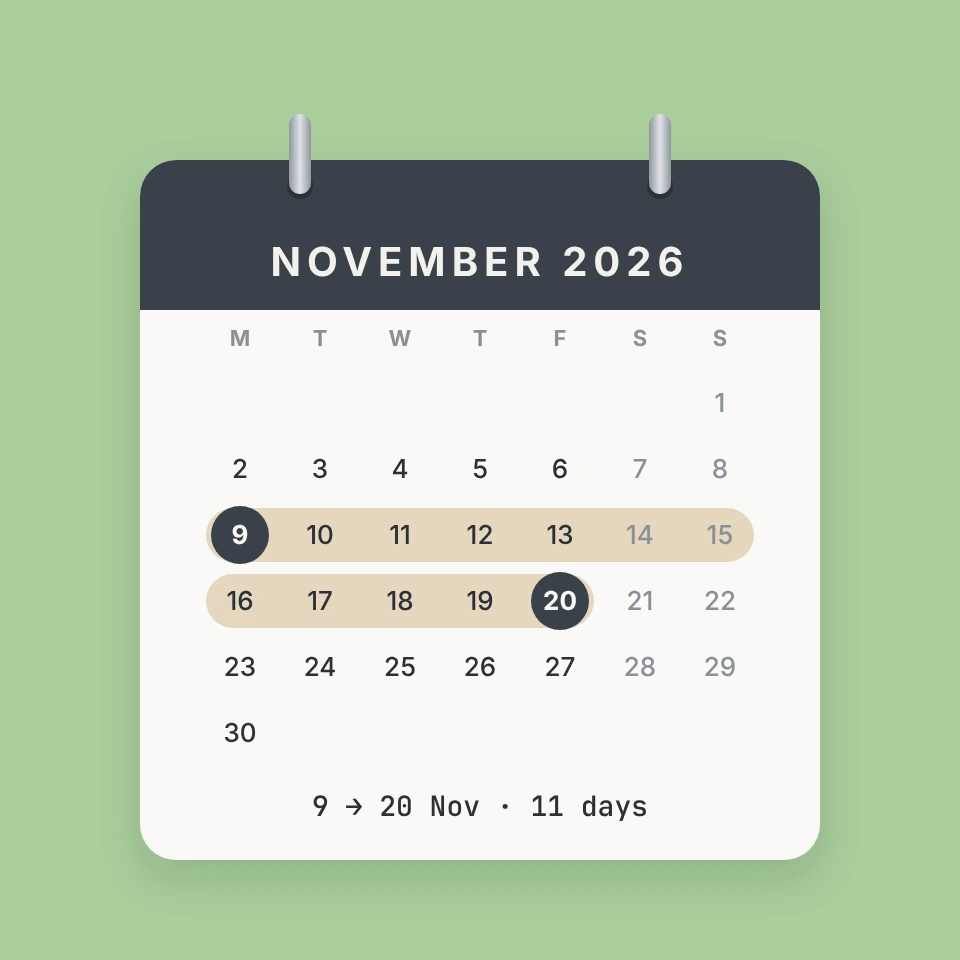
A free date calculator: count the days between two dates, add or subtract months and days, count working days with public holidays, find an exact age and look up the ISO week number.

Meeting cost calculator
A free meeting cost calculator: add roles with hourly rates or salaries, start the live ticker and see what the meeting costs per minute. Log past meetings and copy a summary.

Pomodoro timer
A free Pomodoro timer: 25 minutes of focus, 5-minute breaks and a long break after four sessions, with a progress ring, sound signals, notifications and daily stats.

To-do list
A free, minimalist to-do list: add tasks with Enter, tick them off, filter by status, tag and priority, sort by due date and keep several lists, all stored in your browser.
Ready to try it?
Open PictorX in your browser — no install, no credit card required to start.
Open the world clock