
How hourly rates and salaries compare
An employee is paid for every contracted hour, including holidays and sick days, while the employer pays for the desk, the laptop and part of the pension. A freelancer pays for all of that from the hours they can bill. That is why the same net income needs a much higher hourly rate.
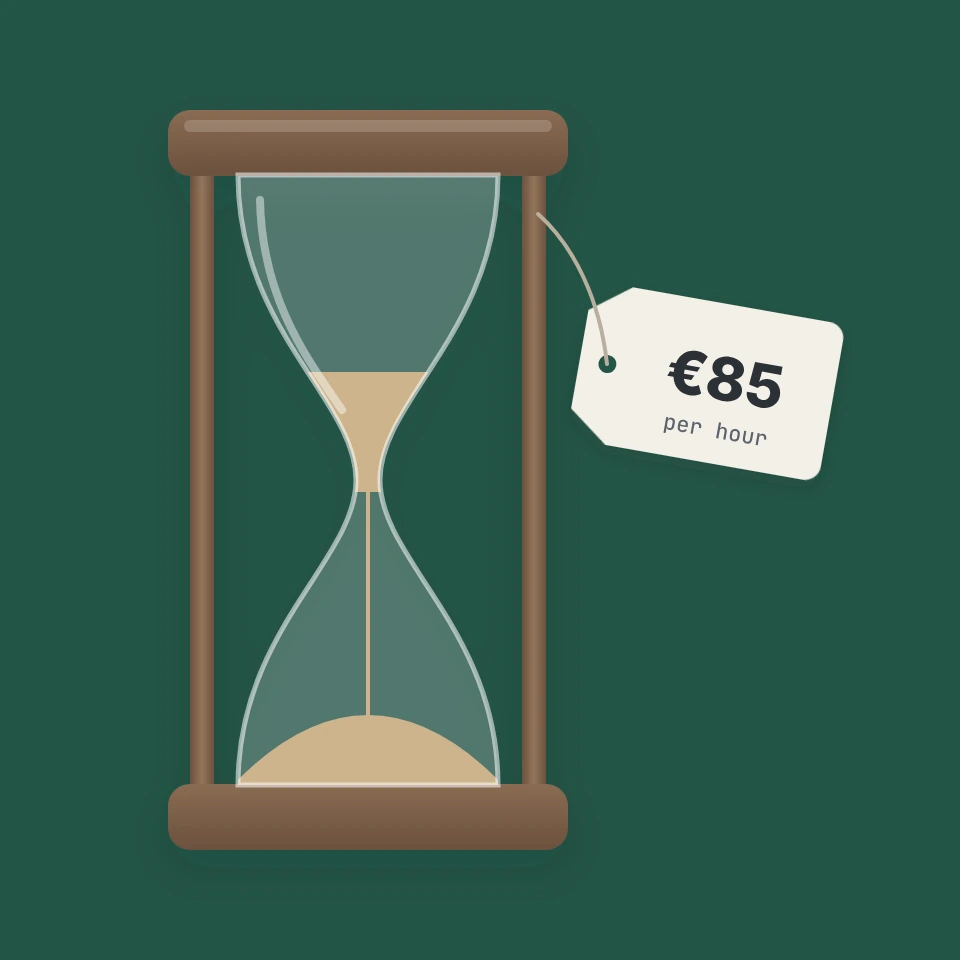
Billable hours
A full-time year has about 2,080 hours (52 weeks of 40 hours). A freelancer cannot bill all of them. Take off holidays and public holidays, a few sick days, and then the share of time spent on sales, admin, quotes, invoicing and learning. With 6 weeks off, 5 sick days and 20% non-billable time, 40 hours a week leaves about 1,440 billable hours. Every euro of income, cost and reserve has to come from those hours.
Why freelance rates are higher than hourly wages
An employee's hourly wage is the salary divided by all paid hours, so holidays and sick days are already paid for. On top of that, the employer pays social charges, pension contributions, the office, equipment and training, and carries the risk of quiet months. A freelancer covers all of this alone, from fewer hours. As a rough rule, a freelancer often needs 1.5 to 2.5 times the hourly wage of a comparable employee to end up with a similar net income. The calculator shows the exact factor for your own numbers.
Business costs and reserves
Business costs are everything you pay to be able to work: software, equipment, a workspace, insurance, accountancy, travel and marketing. Enter them per month. What is left after costs is your profit, and from that you set aside a reserve for income tax, pension and personal insurance such as disability cover. The calculator uses one percentage for the whole reserve. It does not apply any country's tax tables, so the reserve is an estimate: check the right percentage with an accountant or your tax office.
A worked example
An employee earns 4,000 a month for 40 hours a week, with 8% holiday pay. That is 51,840 a year over 2,080 paid hours, or about 24.92 an hour. A freelancer who wants 3,000 net a month, has 1,440 billable hours, 500 a month in business costs and a 40% reserve needs a profit of 60,000 (36,000 divided by 0.6) plus 6,000 in costs. 66,000 over 1,440 hours is about 45.83 an hour, nearly twice the employee's hourly wage.
Frequently asked questions
What reserve percentage should I use?
It depends on your country, your income and what you include. Many freelancers start with 30% to 45% of profit for tax, pension and insurance together, then adjust once they know their real figures. Treat the result as an estimate and check it with an accountant.
Why does the employee mode use all 52 weeks?
Because an employee is paid during holidays and sick leave too. The salary covers every contracted hour of the year, so the hourly wage is the yearly total divided by hours per week times 52.
Is my data sent anywhere?
No. All calculations run in your browser, and your last inputs are only kept in your browser's local storage so they are there next time.
Related tools
Hourly rate calculator
A free hourly rate calculator for freelancers and employees: hourly rate to estimated net monthly income, target income to required rate, and salary to hourly wage, with a breakdown chart.
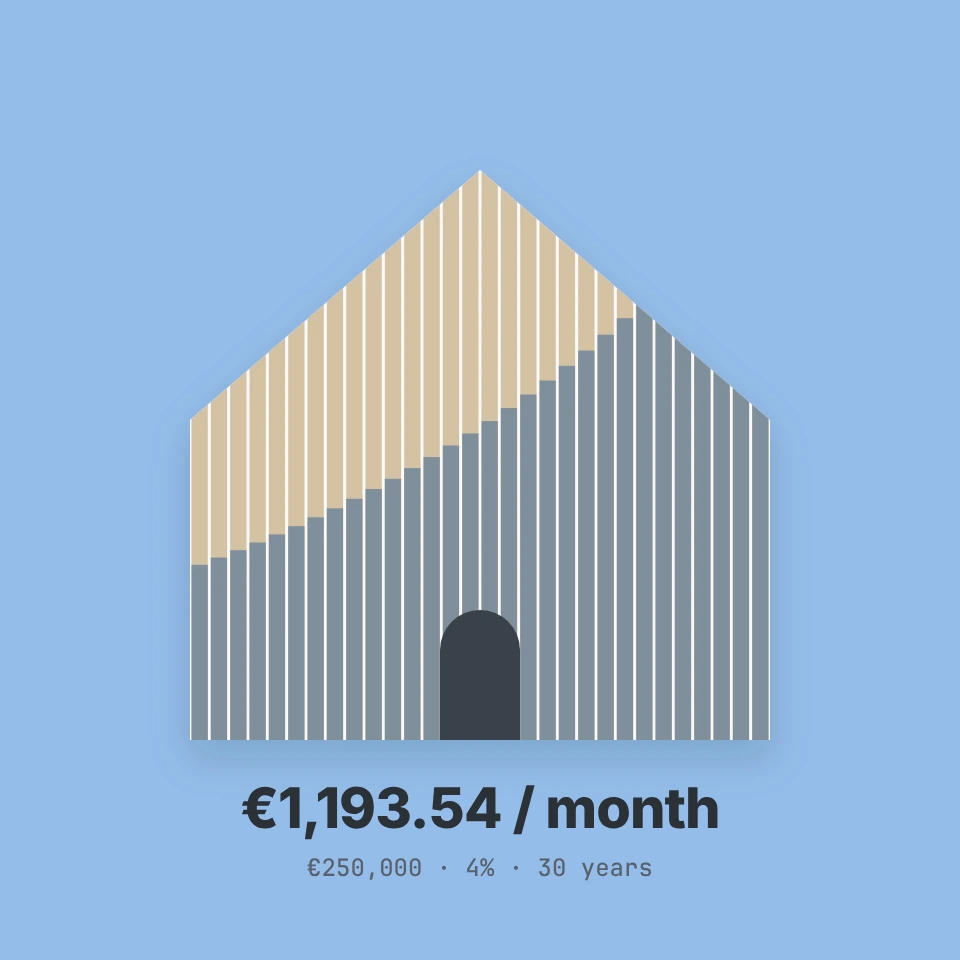
Mortgage calculator
A free mortgage and loan calculator: monthly payment, total interest and payoff date for annuity, linear or interest-only repayment, with a chart, an amortisation table and CSV export.
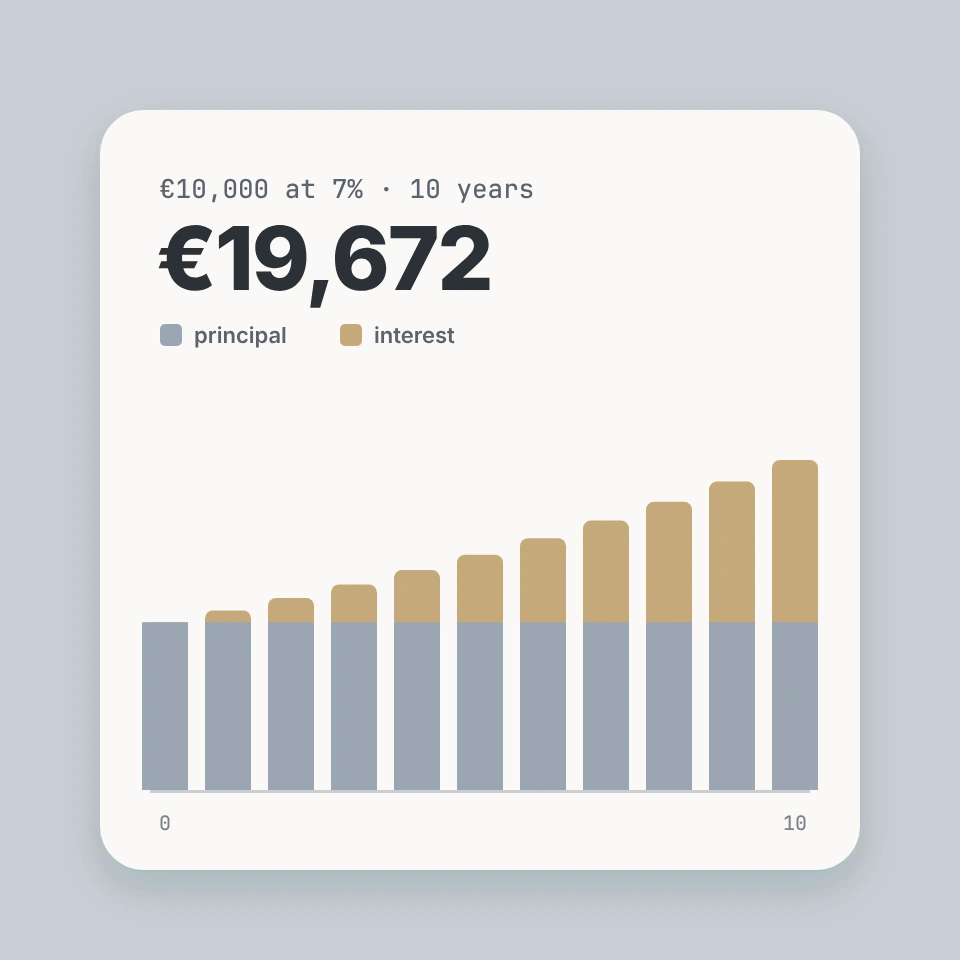
Compound interest calculator
A free compound interest calculator with a clear growth chart: starting amount, monthly or yearly contributions, compounding frequency, inflation, a year-by-year table and CSV export.
Calculator
A free online calculator with a basic and a scientific mode: trigonometry, logarithms, powers, roots, factorials, memory and history, with the correct order of operations.
Ready to try it?
Open PictorX in your browser — no install, no credit card required to start.
Open the Hourly rate calculator