
- Total contributions
- Total interest
- Simple interest
| Year | Total contributions | Interest this year | Total interest | Balance | Real value (after inflation) | Simple interest |
|---|
Compound interest calculator
Watch interest earn interest. Enter what you start with, what you add each month or year and the expected rate, and the chart shows how your money grows, how much of it you paid in yourself and how much came from compound interest. Enter a starting amount, a regular contribution, the interest rate and the number of years. The chart shows how your contributions and the interest on interest add up, and the dashed line shows simple interest for comparison. Hover over the chart for the values of each year.
How it works
- Enter your starting amount and how much you add each month or each year.
- Set the interest rate, how often interest is added and the number of years.
- Read the result in the chart and the table, then save the chart as an image or copy the table.
What the chart shows
The lower band is the money you put in yourself: the starting amount plus every contribution. The upper band is the interest, which grows faster each year because it is earned on earlier interest as well. The dashed line shows what you would have with simple interest, paid only on your own money, so the gap between the two is the effect of compounding. If you enter inflation, the real value tells you what the final balance would buy in today's money.
How the calculation works
The calculator works through every month. The annual rate is turned into an equivalent monthly growth factor for the chosen compounding: yearly, quarterly, monthly, daily (365 times a year) or continuous, using e raised to the rate. Contributions made at the start of a period earn interest for that period, contributions at the end do not. A yearly increase raises the contribution once each year, for example to follow your salary. All figures are estimates: real savings accounts and investments change their rates and may charge costs and taxes.
Frequently asked questions
What is the difference between monthly and yearly compounding?
With monthly compounding, interest is added twelve times a year and starts earning interest straight away, so the same nominal rate gives a slightly higher result. At 5% a year, monthly compounding equals about 5.12% compounded yearly. Daily and continuous compounding add only a little more.
Why does the real value differ from the final balance?
Prices rise over time, so money in the future buys less than the same amount today. The real value divides the final balance by the growth of prices over the period. With 2% inflation over 30 years, prices rise by about 81%, so a balance of 100,000 buys what about 55,000 buys today.
Is the result guaranteed?
No. The calculator assumes the same rate every year and ignores taxes, fees and market swings. A fixed-rate deposit comes close, but shares and funds go up and down. Use the result to compare scenarios, such as starting earlier or adding a little more each month.
Related tools
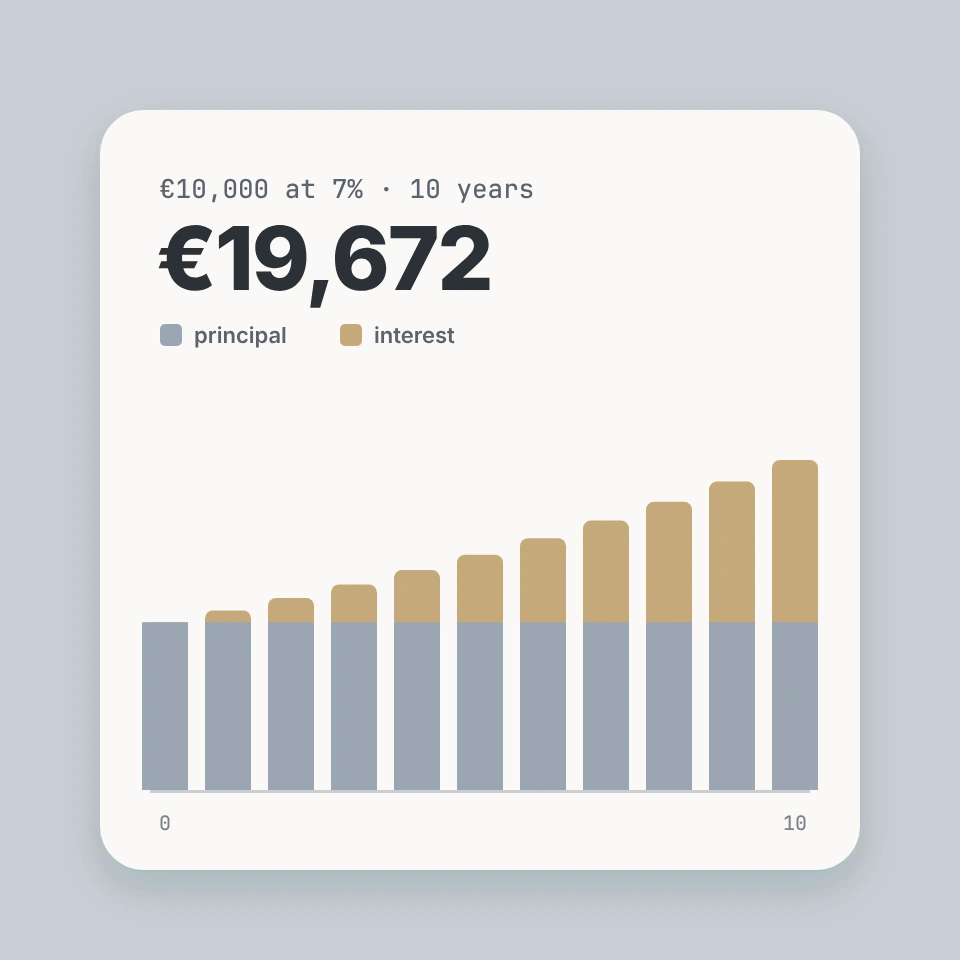
Compound interest, from Fibonacci to the number e
Simple versus compound interest, the formula A = P(1 + r/n)^(nt) explained with an example, the rule of 72, and how Fibonacci, Bernoulli and the number e shaped the maths of interest.
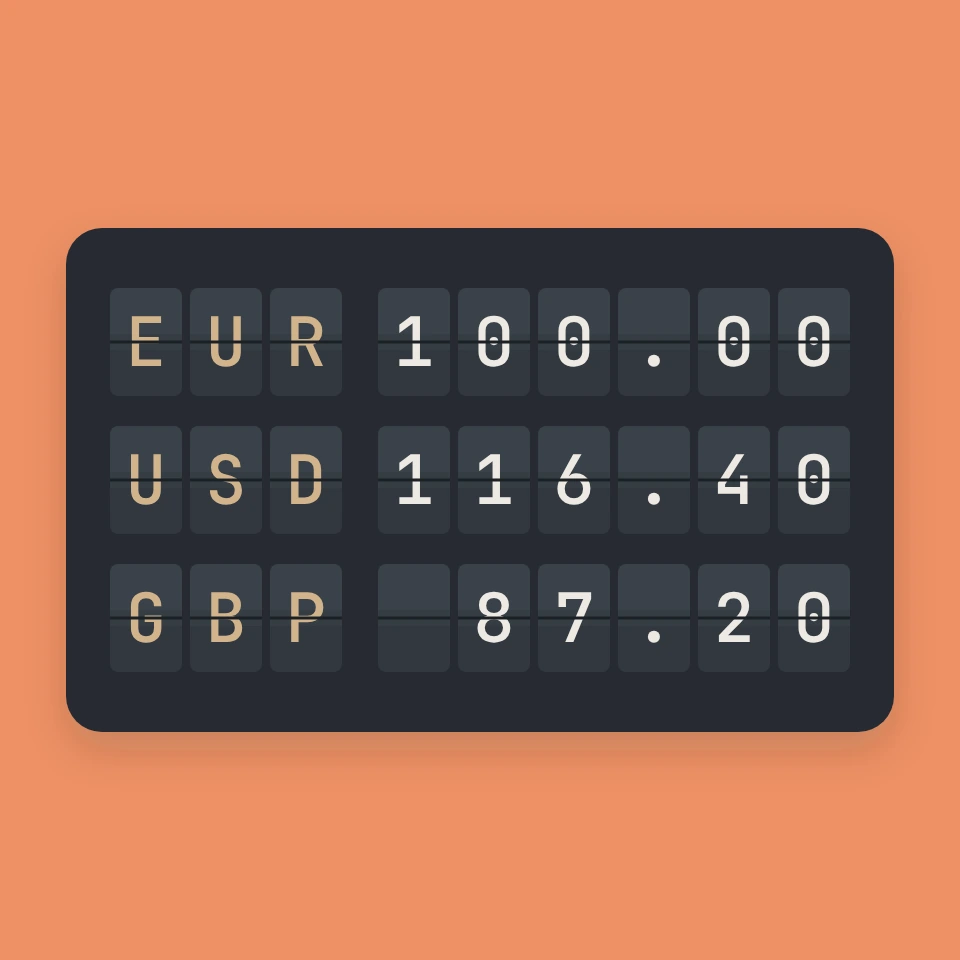
Currency converter
A free online currency converter with live exchange rates: convert euros, pounds, dollars, yen and more than 150 other currencies, with favourites and an offline fallback.
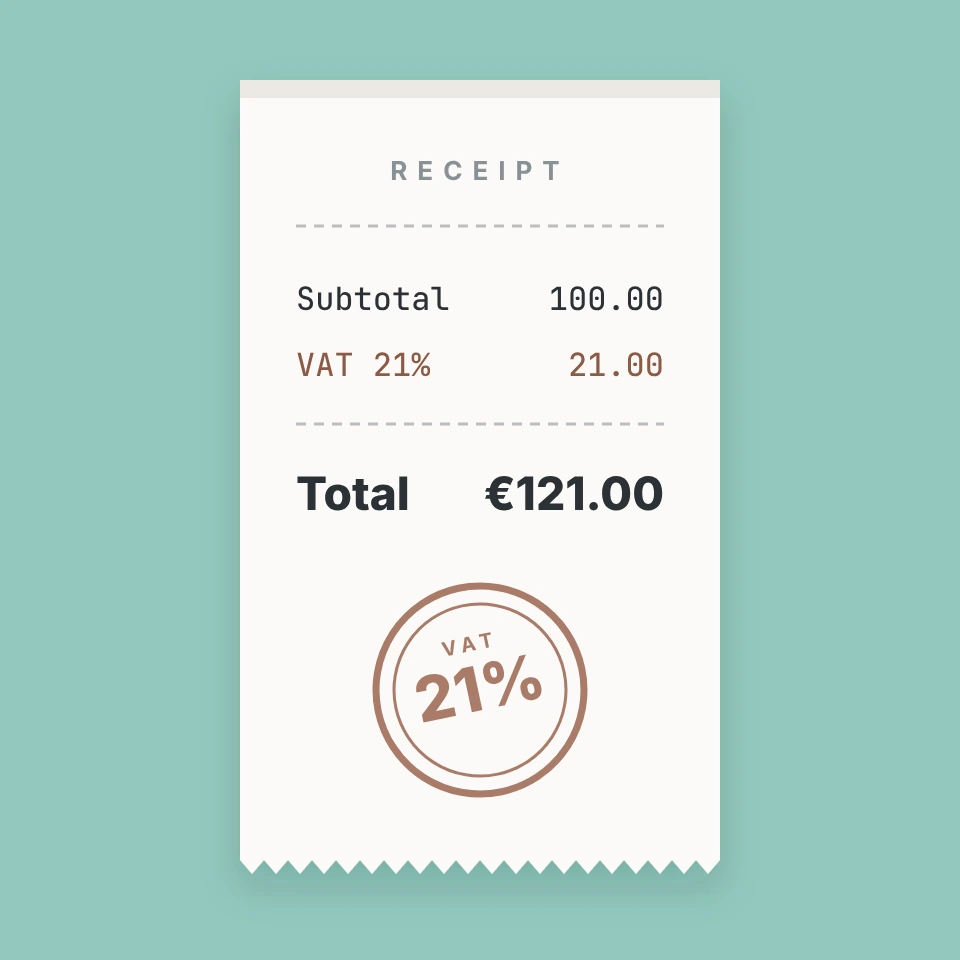
VAT calculator
A free online VAT calculator: add or remove VAT with rates for the Netherlands, Belgium, Germany, France, the UK and more, and print a simple invoice overview.
Calculator
A free online calculator with a basic and a scientific mode: trigonometry, logarithms, powers, roots, factorials, memory and history, with the correct order of operations.
Ready to try it?
Open PictorX in your browser — no install, no credit card required to start.
Go to Editor