
| Item | Per year | Per month | Per hour |
|---|
Hourly rate calculator
Find out what an hourly rate really earns. Freelancers see how holidays, sick days, non-billable time, costs and a reserve for tax and pension turn a rate into a net monthly income, or which rate a target income needs. Employees convert a salary with holiday pay and a 13th month into an hourly wage and back. Choose freelancer or employee. As a freelancer, enter your hourly rate (or the net income you want), your hours, time off, costs and a reserve percentage to see an estimated net income. As an employee, convert a salary into an hourly wage or back. Tax is a percentage you set: no country tax tables are used, so all results are estimates.
How it works
- Choose freelancer or employee, then the direction you want to calculate.
- Enter your rate or income, hours per week, time off and costs, and set a percentage for tax and other deductions.
- Read the result, the breakdown chart and the summary table, and copy the results if you need them elsewhere.
What the chart shows
The bar splits a year of gross revenue or gross pay into its parts. For a freelancer these are business costs, the reserve for tax, pension and insurance, and what is left as net income. For an employee they are tax and deductions and net pay. The table shows each part per year, per month and per hour.
How the calculation works
Billable hours are 52 weeks minus weeks off, times hours per week, minus sick days at a fifth of a week each, minus the non-billable share. Revenue minus costs gives profit, and the reserve percentage is taken from profit. An employee's hourly wage is total yearly pay, including holiday pay and a 13th month, divided by 52 weeks of paid hours. Tax is only the percentage you enter: no country tax rules, allowances or brackets are applied.
Frequently asked questions
Does this include the tax rules of my country?
No. Tax, social contributions, pension and insurance are covered by one percentage that you set yourself, so every net figure is an estimate. For an exact figure, use your country's official calculator or ask an accountant.
Why are there far fewer billable hours than working hours?
Freelancers are not paid for holidays, sick days, admin, sales or learning. With 40 hours a week, 6 weeks off, 5 sick days and 20% non-billable time, about 1,440 of roughly 2,080 hours can be billed.
How are holiday pay and a 13th month handled?
Holiday pay is a percentage of the yearly base salary, and a 13th month adds one extra monthly salary. Both are added to yearly pay before it is divided by the paid hours, so they raise the equivalent hourly wage.
Related tools
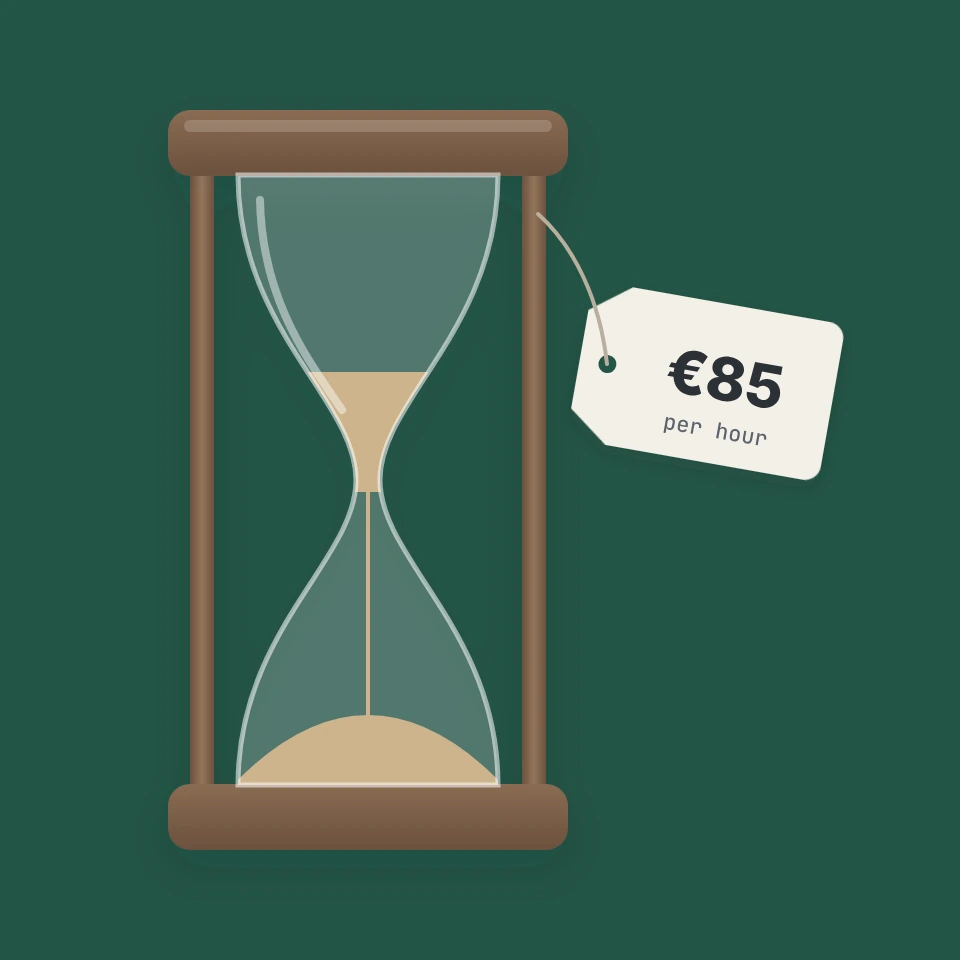
How hourly rates and salaries compare
Why a freelance hourly rate must be higher than an hourly wage: billable hours, holidays and sick days, business costs and reserves for tax and pension, with worked examples.
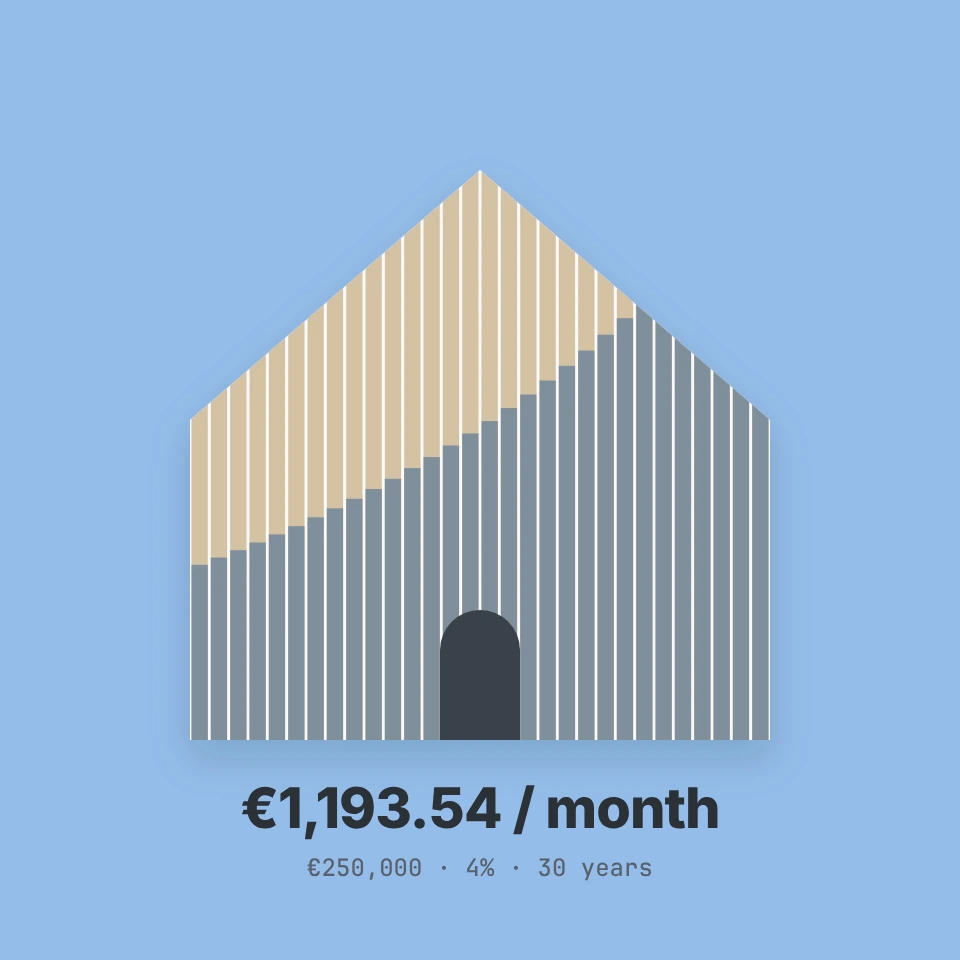
Mortgage calculator
A free mortgage and loan calculator: monthly payment, total interest and payoff date for annuity, linear or interest-only repayment, with a chart, an amortisation table and CSV export.
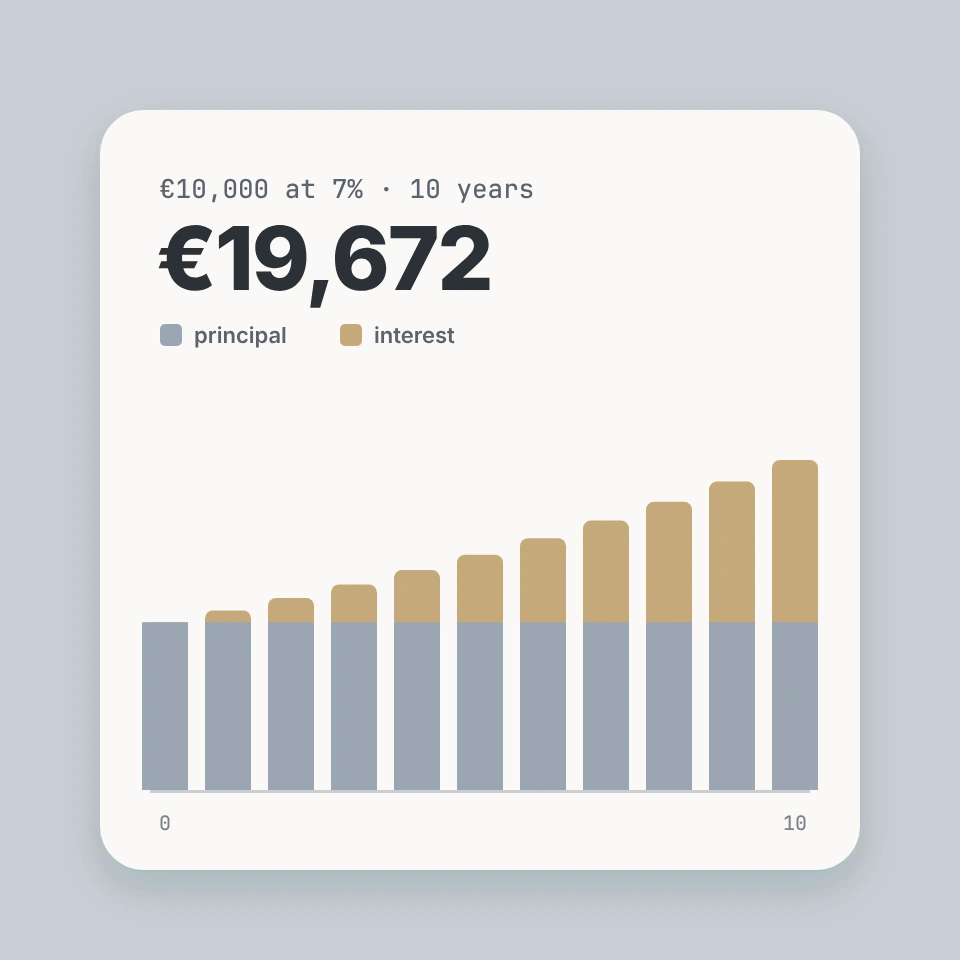
Compound interest calculator
A free compound interest calculator with a clear growth chart: starting amount, monthly or yearly contributions, compounding frequency, inflation, a year-by-year table and CSV export.
Calculator
A free online calculator with a basic and a scientific mode: trigonometry, logarithms, powers, roots, factorials, memory and history, with the correct order of operations.
Ready to try it?
Open PictorX in your browser — no install, no credit card required to start.
Go to Editor