
Pop Art Studio
Pop Art Studio gathers the Andy Warhol silkscreen prints. Open Marilyn, Ten Marilyns, Che Guevara, 1968, Mao, Jackie, Gold Marilyn, Diamond Dust, Camouflage, or any of the other Factory looks, and print your own photo in that style.
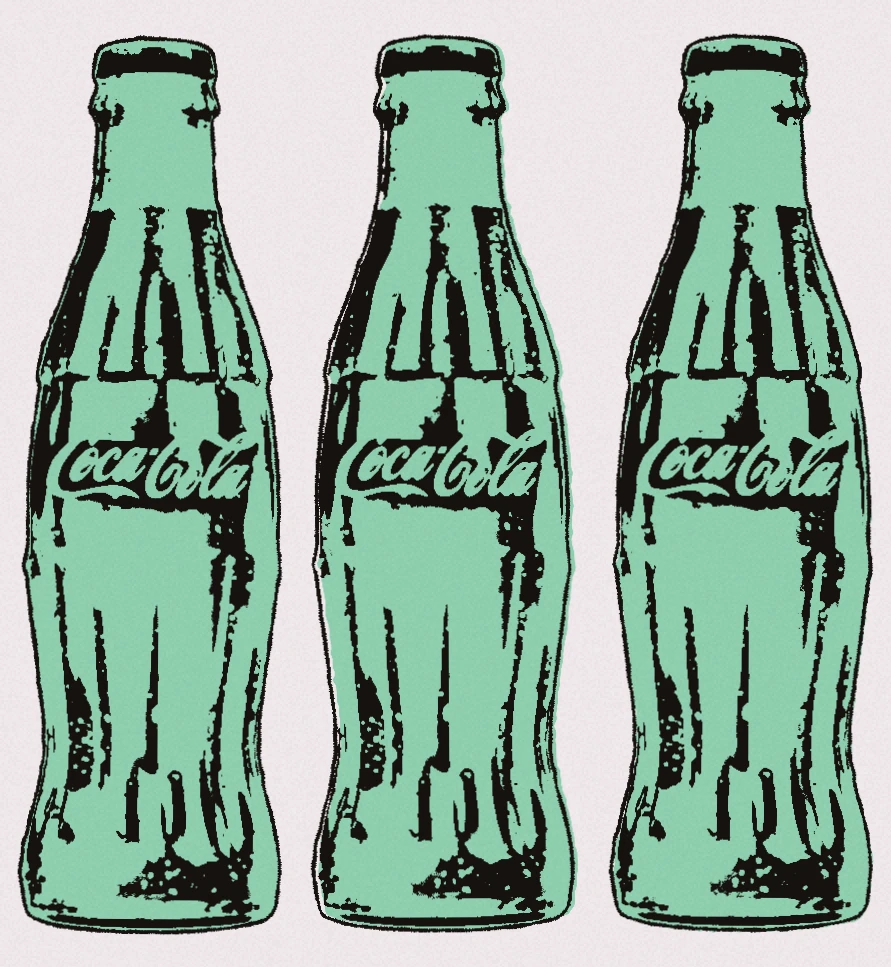
Warhol painted the Coca-Cola bottle in 1961 and 1962, and liked to say that a Coke is the same drink whether you are rich or not. This look stamps the bottle in rows, as on Green Coca-Cola Bottles: mint under black-green lines, every bottle inked a little differently and set a little askew.
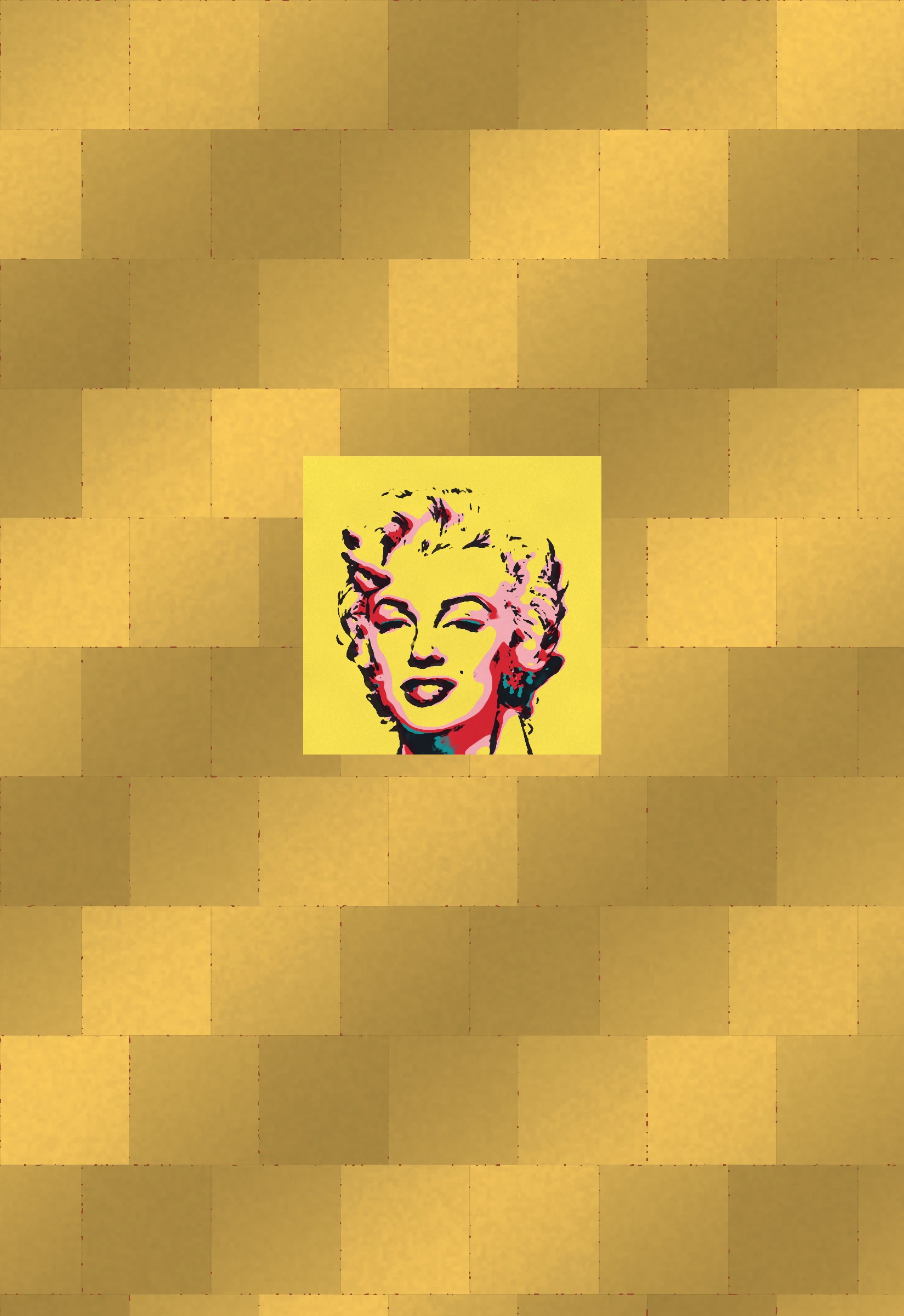
Gold Marilyn Monroe (1962), now in the Museum of Modern Art, places a small silkscreen of Marilyn on a wide field of gold. Warhol painted it in August 1962, the month after she died.
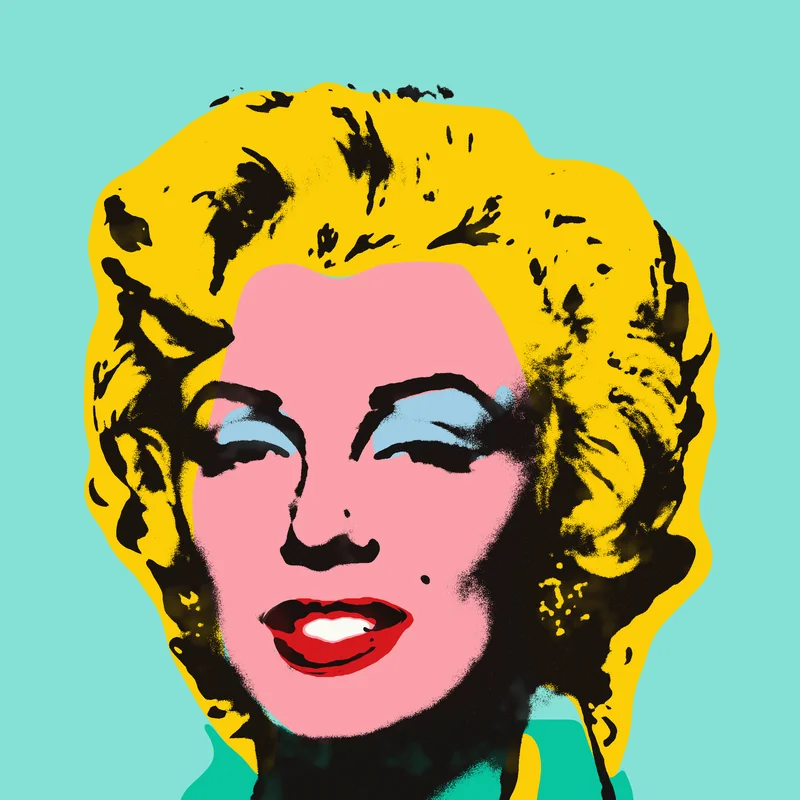
Warhol printed Marilyn on her own as well: on the 1964 canvases, such as Turquoise Marilyn, and in the ten screenprints of 1967. Flat, hand-cut shapes of color for the ground, the hair, the face, the eyeshadow and the lips lie under the photograph in black ink, never quite in register.
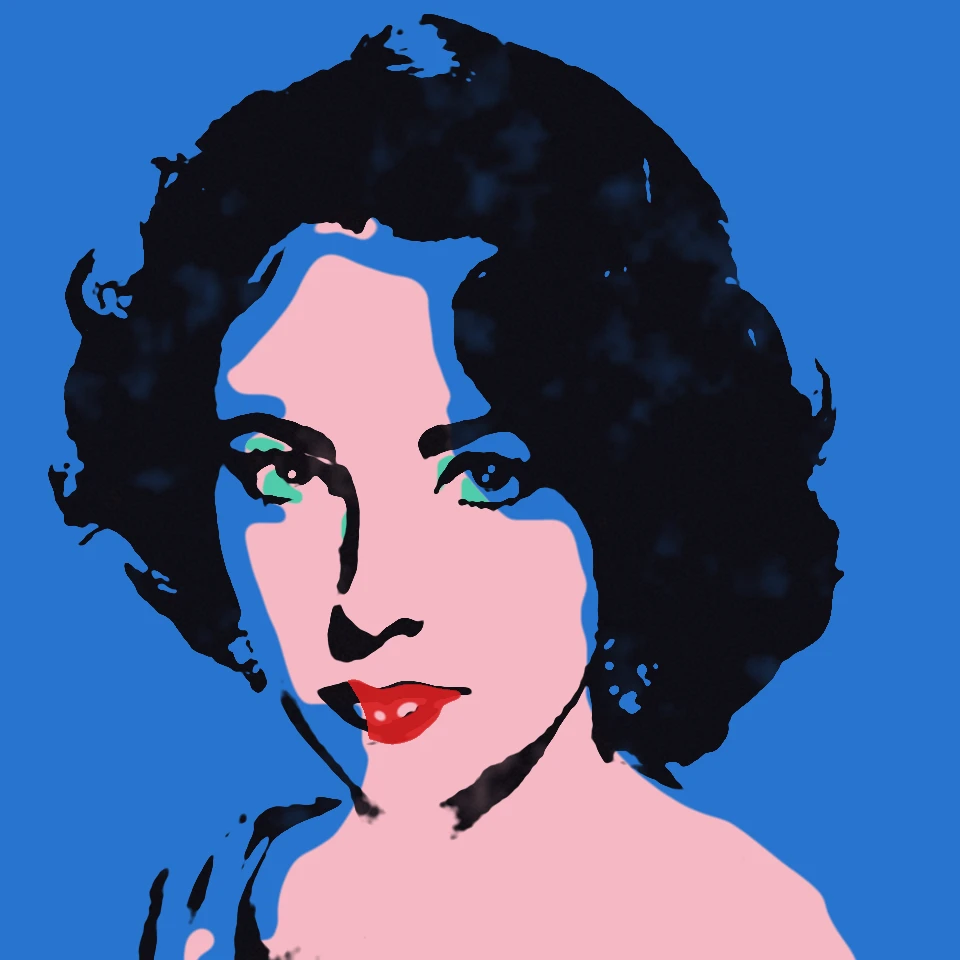
In 1963 Warhol silkscreened Elizabeth Taylor from a publicity still, around the time of Cleopatra. Silver, turquoise, and violet versions of the same face followed: a movie star printed like a postage stamp, the ink never quite sitting on the color.
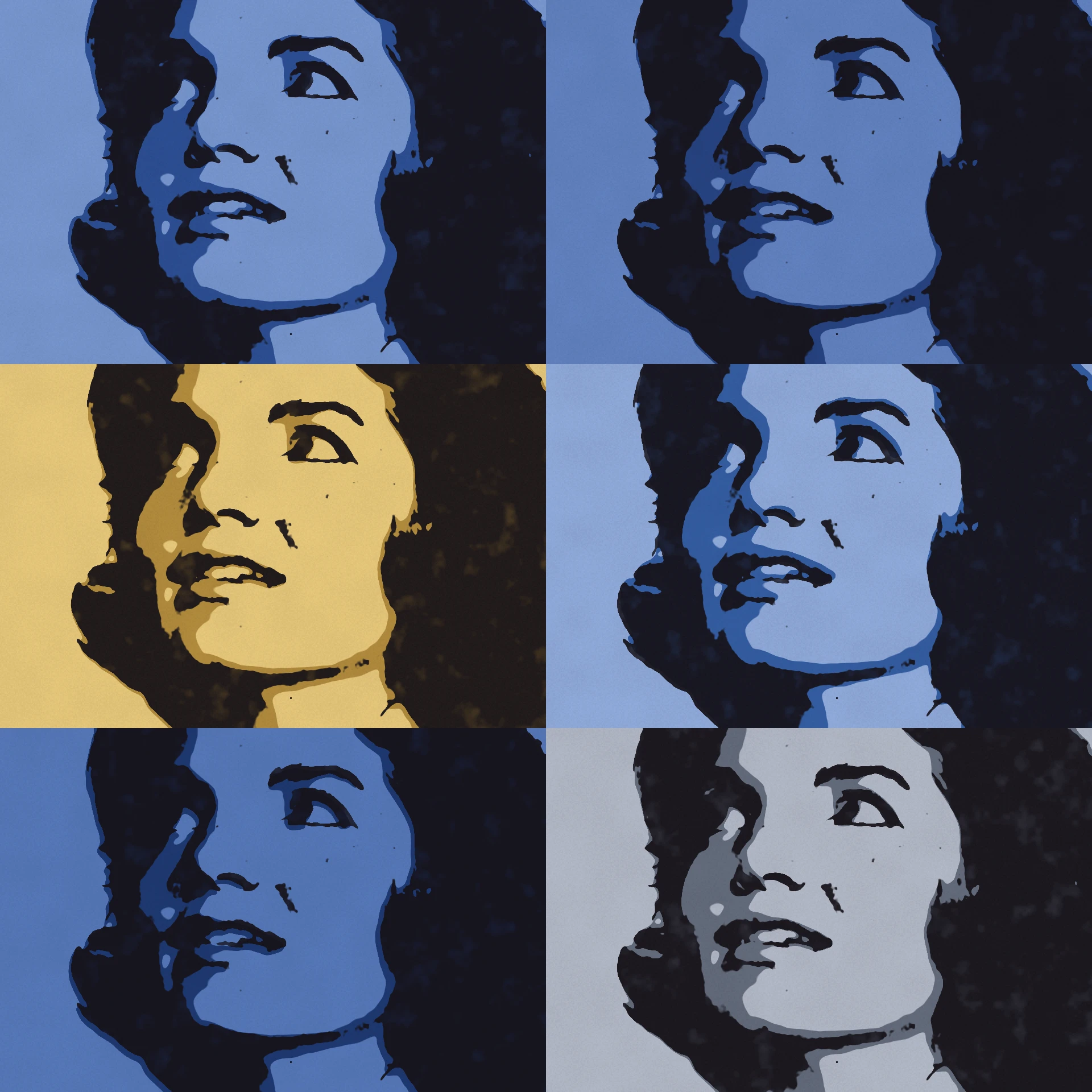
After the assassination of President Kennedy, Warhol silkscreened press photographs of Jacqueline Kennedy in mourning. The 1964 Jackie paintings repeat those news pictures in blue, gold, and black until a public grief becomes a grid.
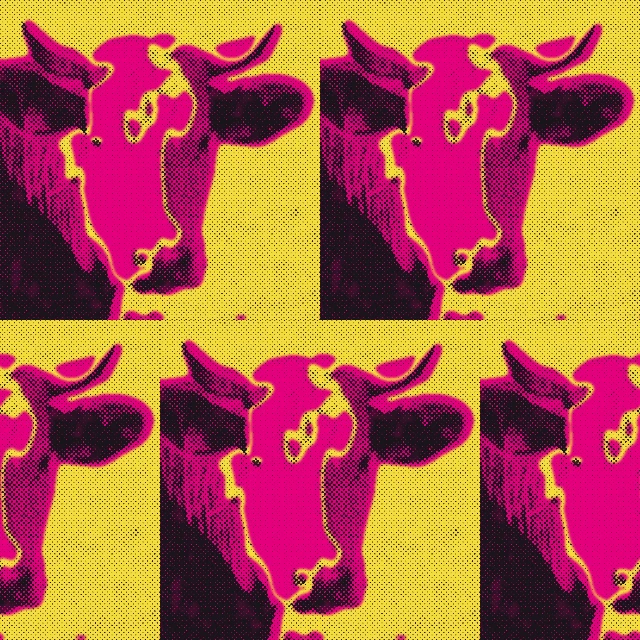
For his April 1966 show at Leo Castelli, Warhol papered the gallery with cow wallpaper, a hot-pink cow repeated on a yellow ground, and filled the back room with silver clouds. Each row of the repeat is dropped half a cow out of line.
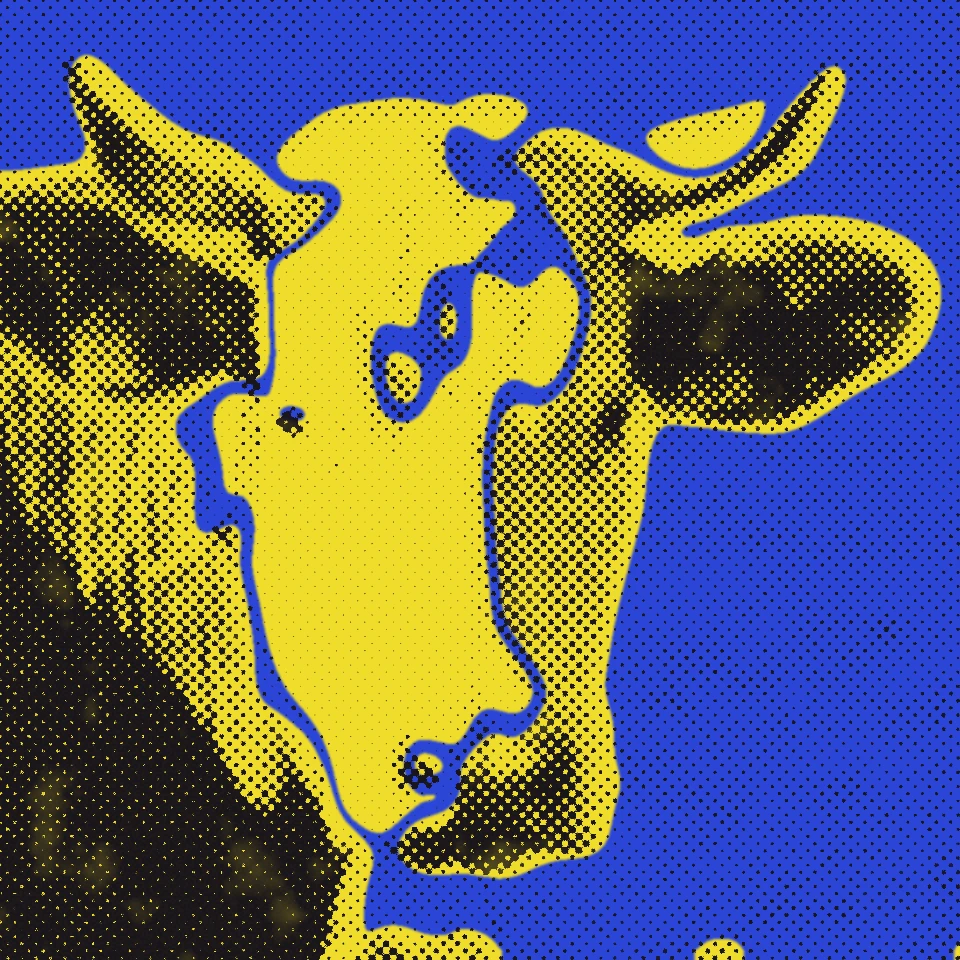
The same 1966 cow, printed once instead of as wallpaper. Warhol’s pink cow on yellow was made to cover a wall at Leo Castelli; this state is that screenprint on its own, one cow filling the sheet.
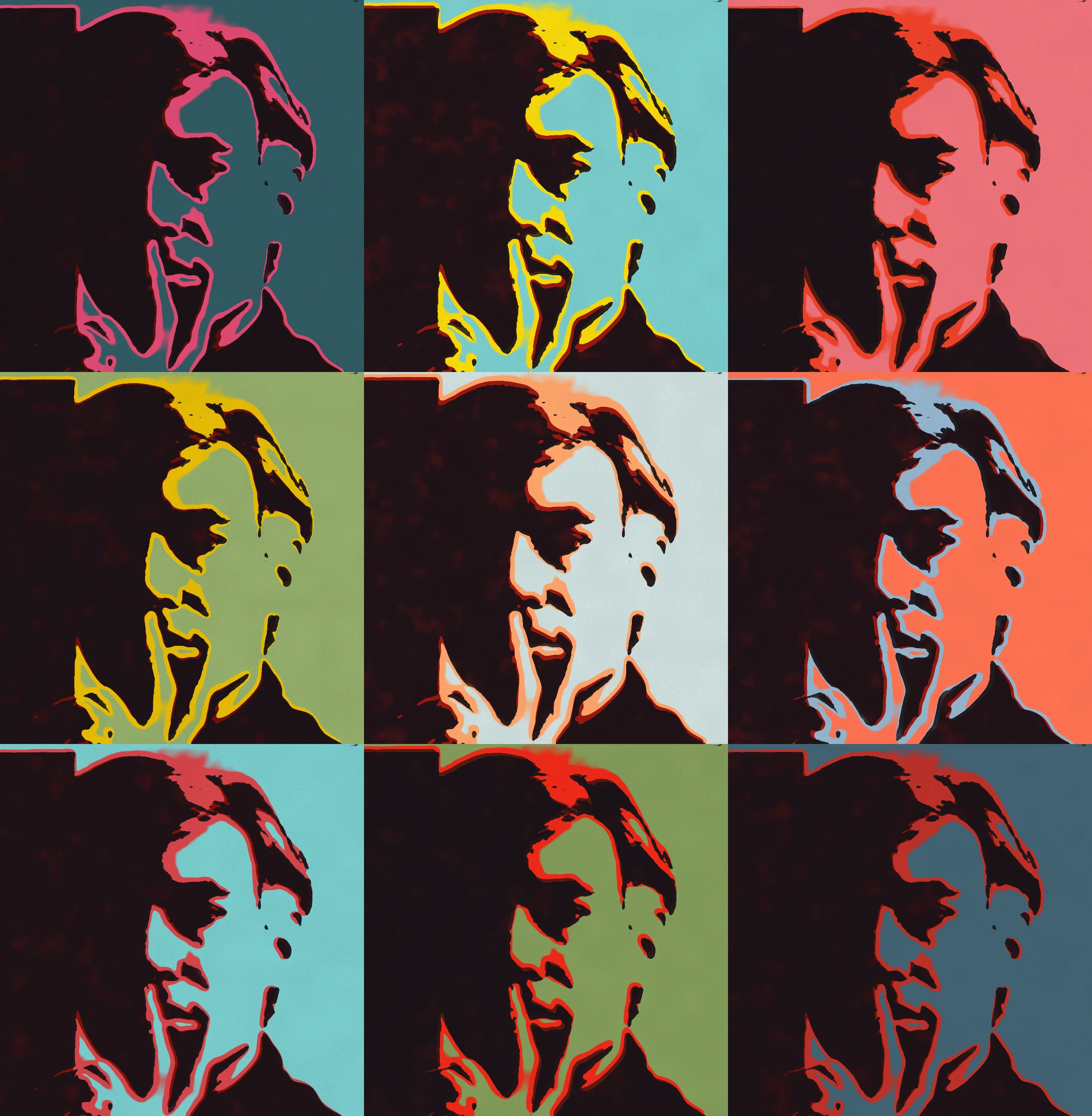
In 1966 Warhol turned the silkscreen on his own face. The photograph repeats across the sheet the way his Marilyns do: one exposure, a new palette in every tile, the person and the product printed in the same ink.
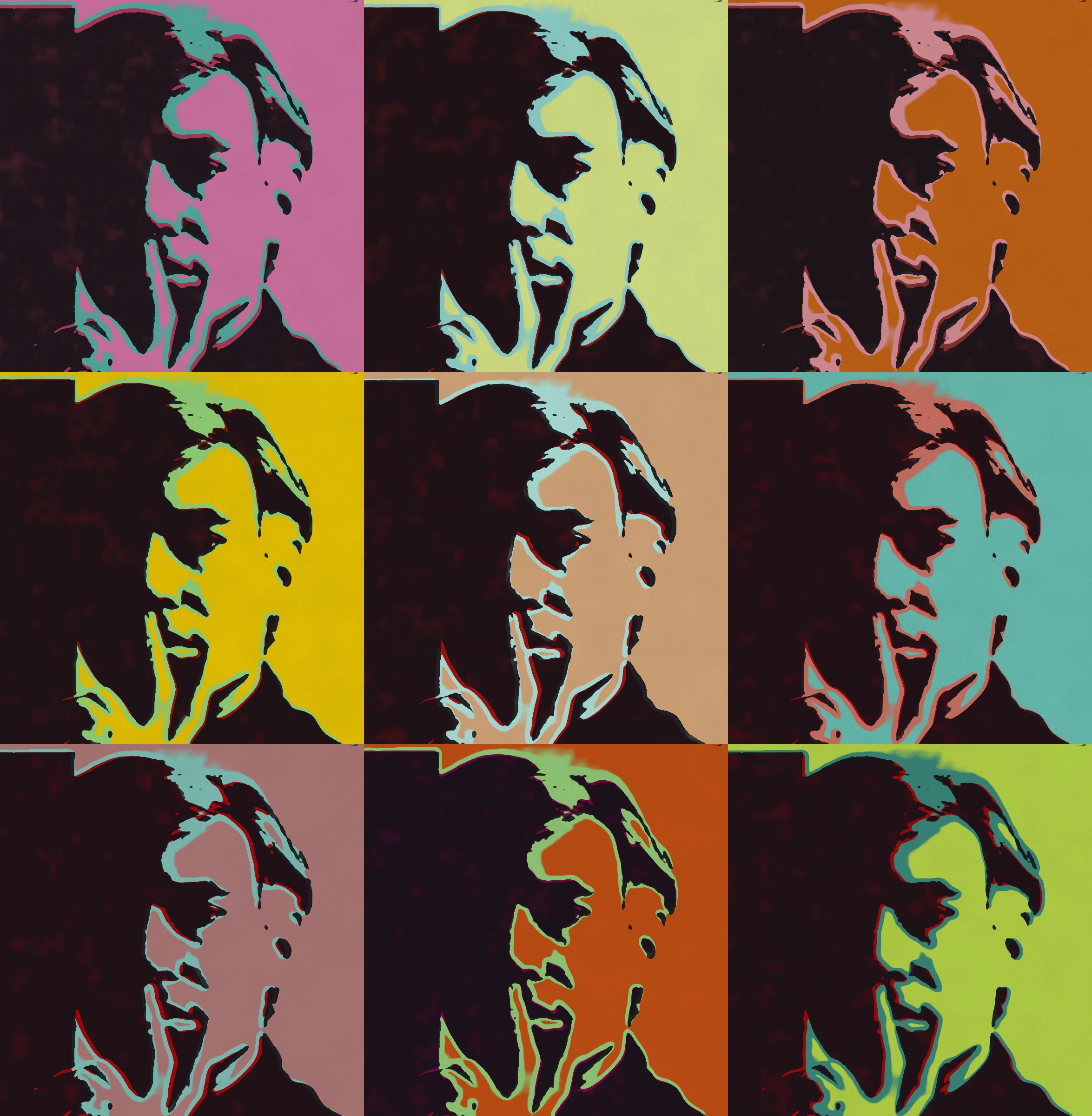
A second state of the 1966 self-portrait. The same photograph of Warhol with his fingers to his mouth is printed nine times: teal on pink, lime on yellow, red on cyan, each tile a new pair of inks.
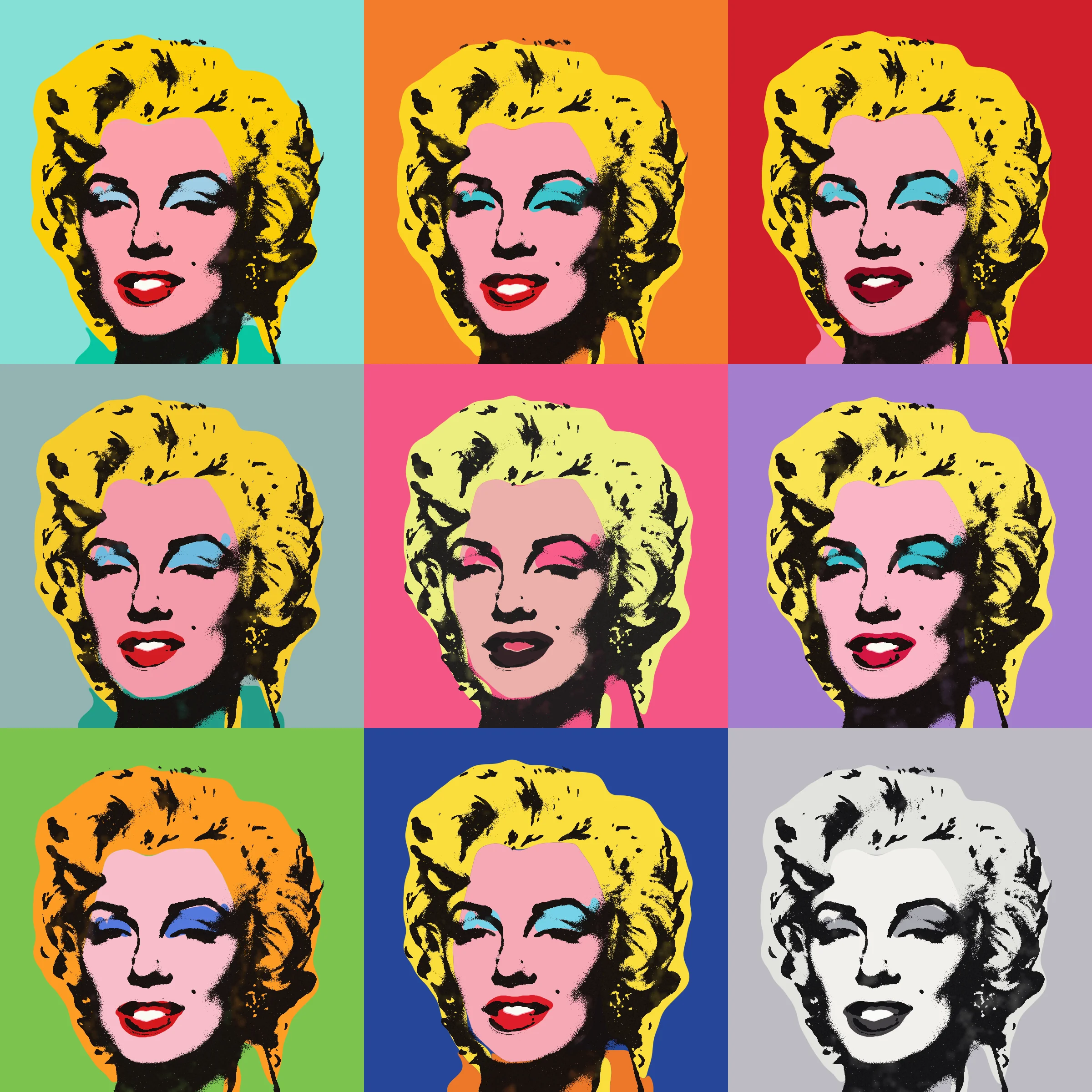
In August 1962, weeks after Marilyn Monroe died, Andy Warhol silkscreened a 1953 publicity still from Niagara. Fluorescent color sits under a black ink face that never quite lines up, and the same photograph repeats until the star becomes a pattern.
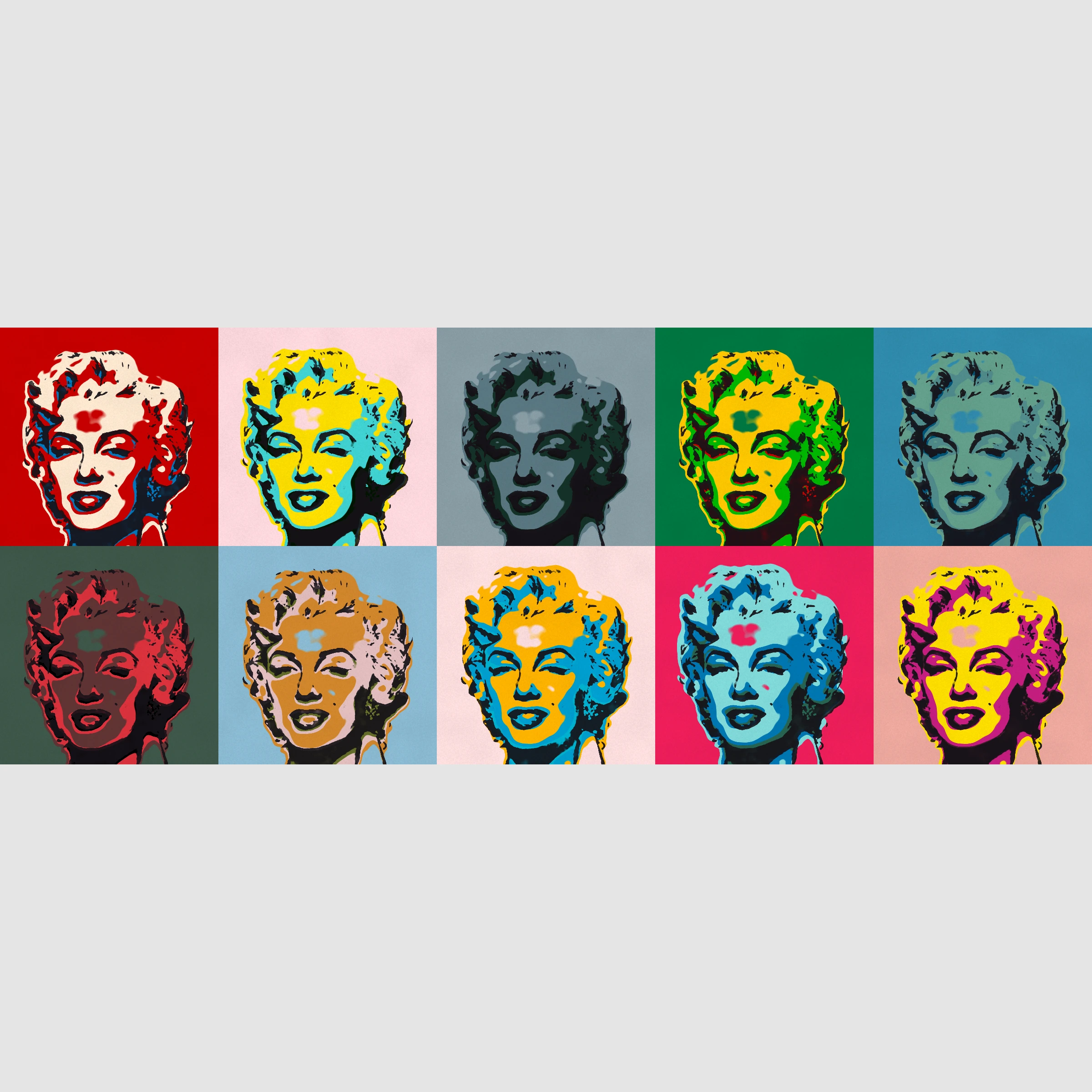
In 1967 Warhol published Marilyn Monroe, a portfolio of ten screenprints, through Factory Additions in New York. The same publicity still is printed ten times, each sheet in a different set of inks and each one a little off register from the last.
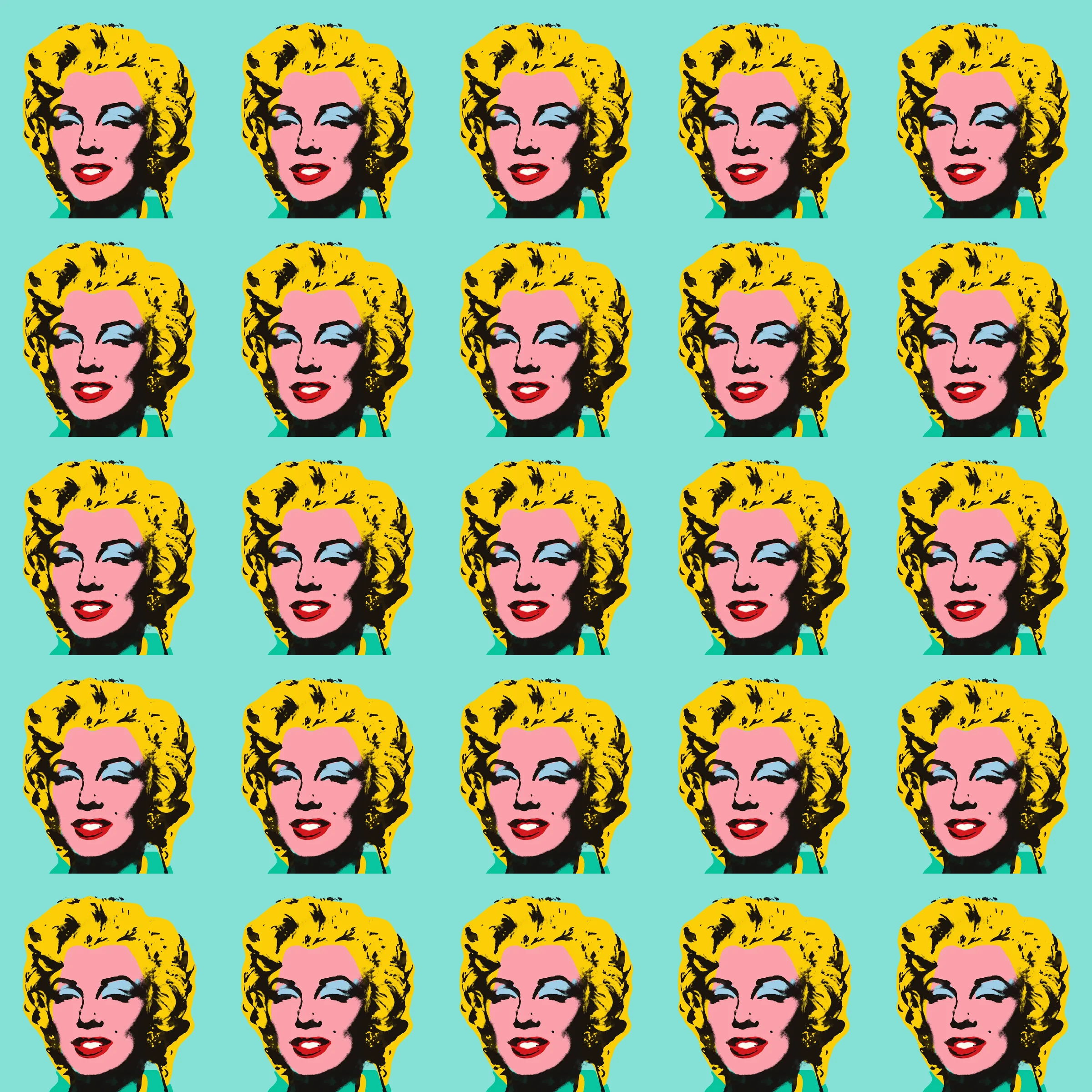
The single Marilyn print, repeated five across and five down. Every cell is that same hand-cut screenprint: one ground, one face, the photograph in black ink, twenty-five times across the sheet.
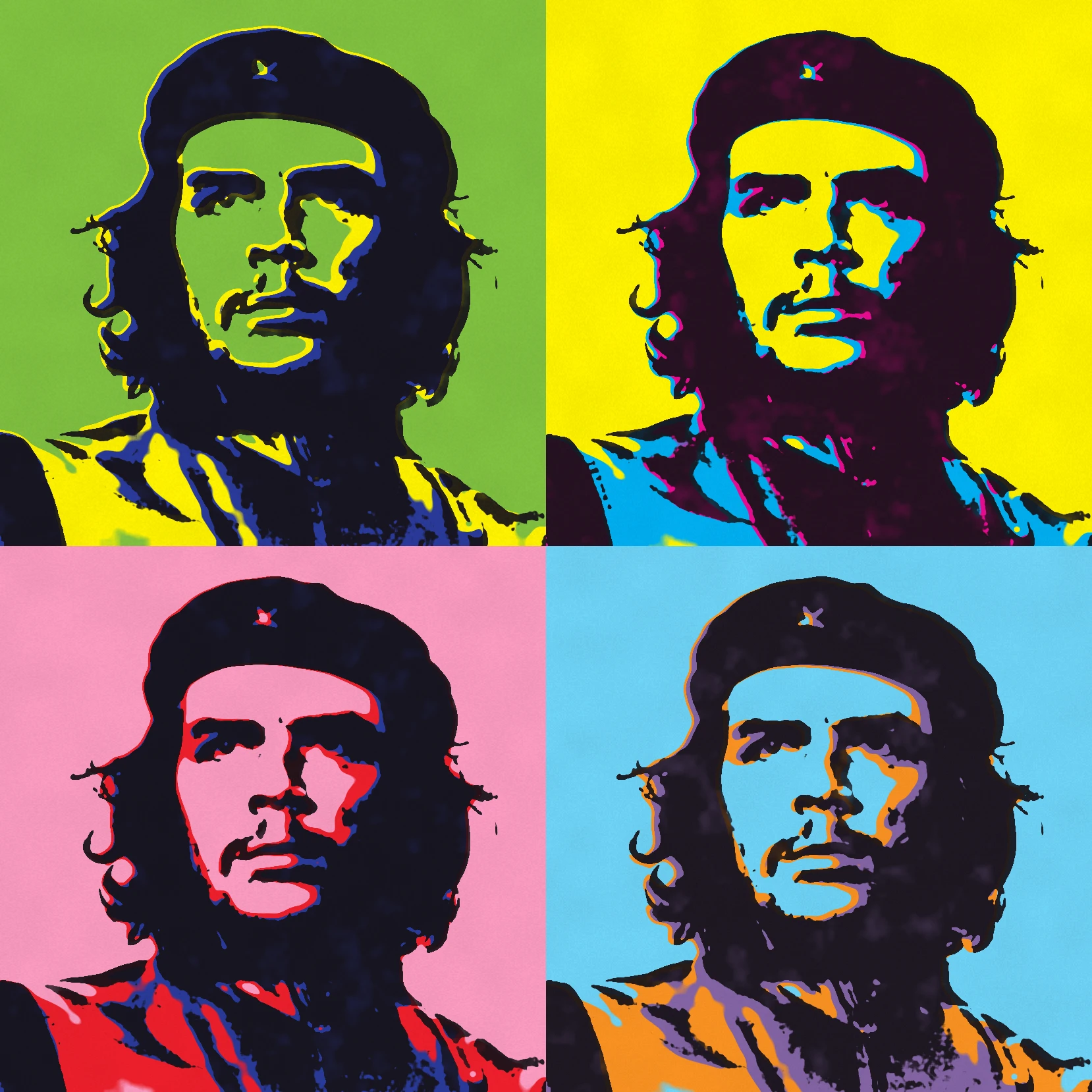
The poster portrait of Che Guevara, drawn from Alberto Korda’s 1960 photograph and carried around the world in 1968, is printed here as a silkscreen grid. Each tile is the same high-contrast face in a different flat palette, the black ink shifted a little against the color.
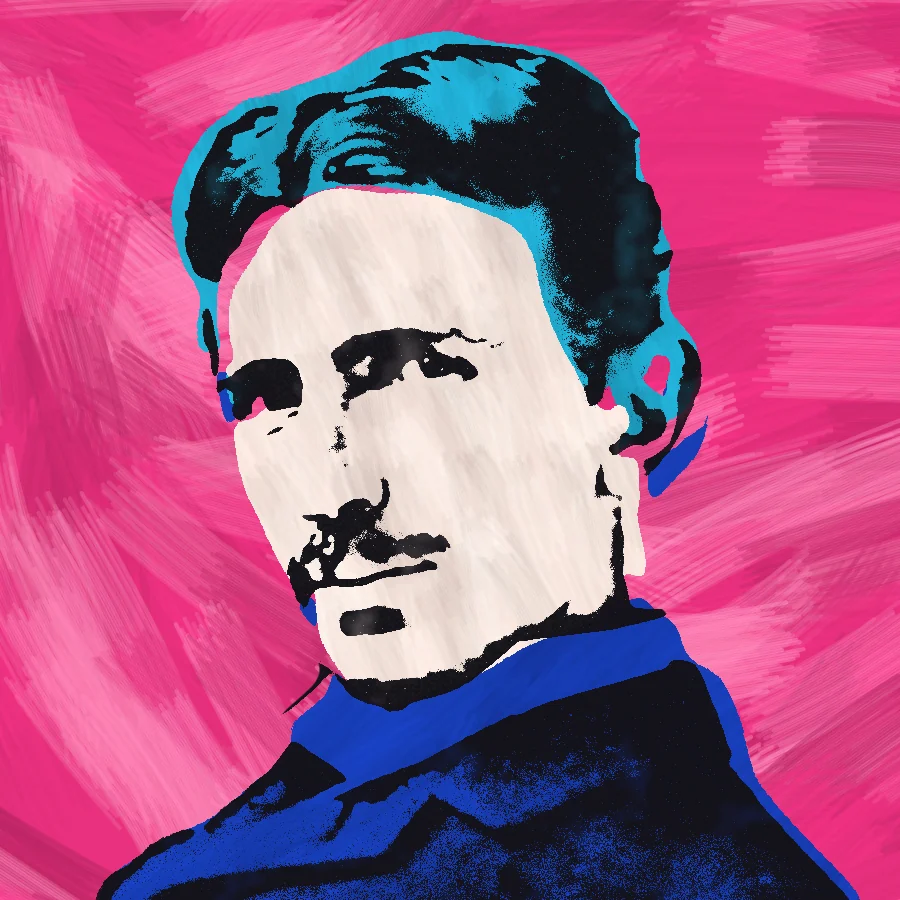
From the early 1970s Warhol ran a portrait business. A sitter was photographed with a Polaroid Big Shot, color was brushed on in loose patches, and the face was screened in black over the paint. The price was famous; the method was always the same.
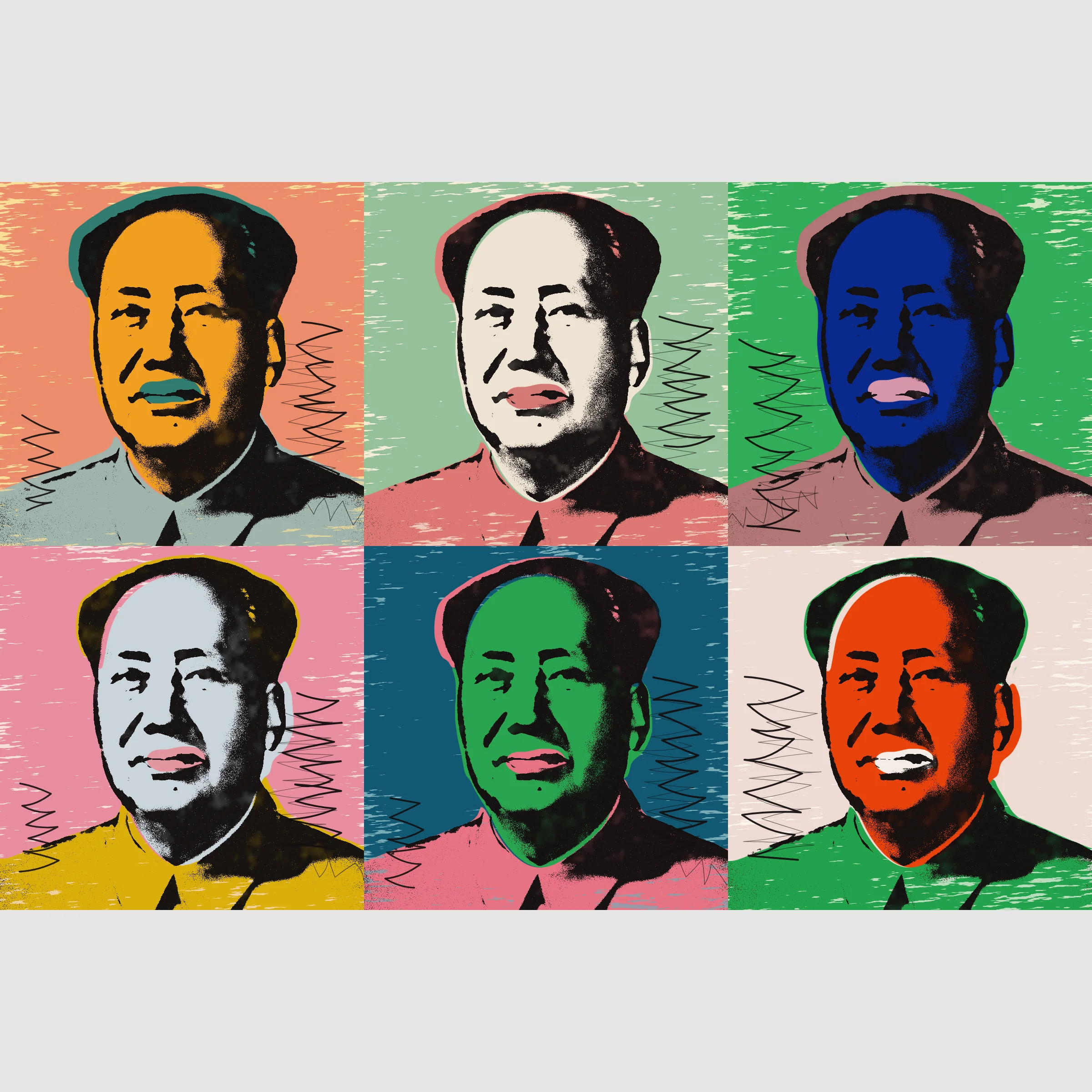
After Richard Nixon’s visit to China in 1972, Warhol silkscreened the official portrait of Mao Zedong. The paintings of that year, and the 1973 portfolio of ten screenprints published with Castelli Graphics and Multiples, Inc., turn a state photograph into loose, candy-colored Pop.
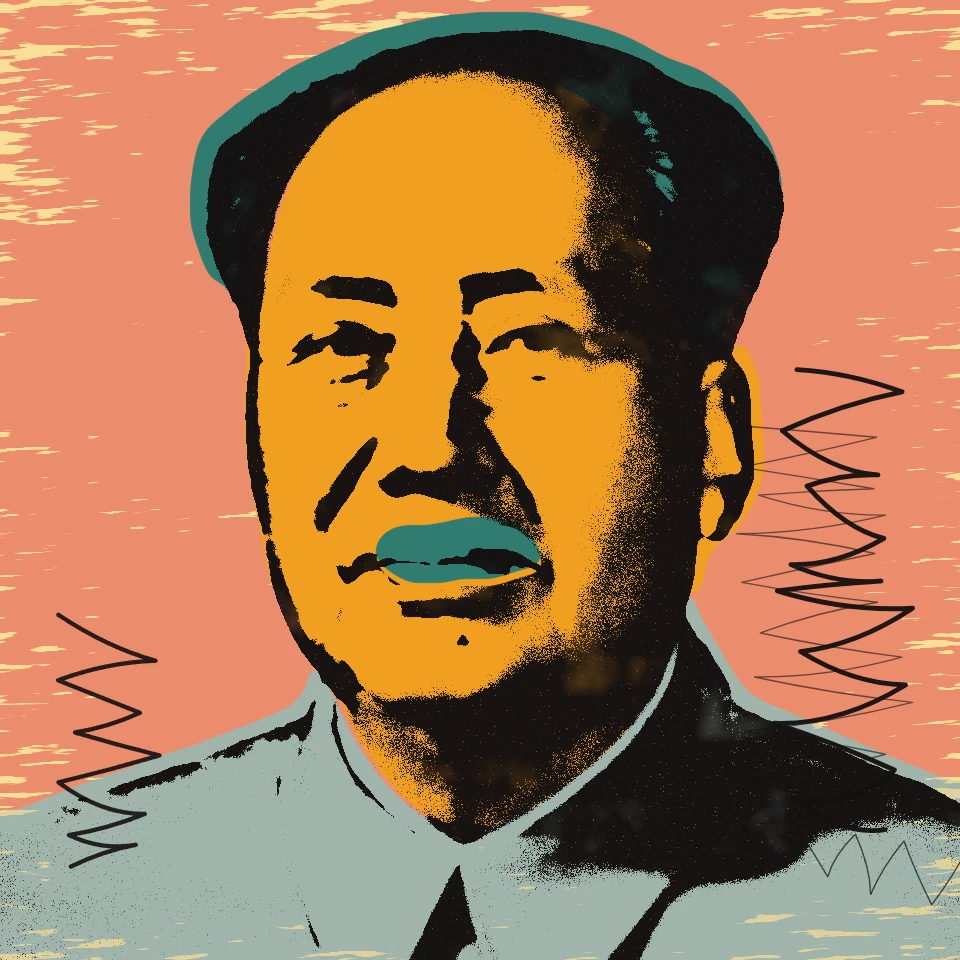
Warhol printed Mao on his own as well: the 1972 paintings and the 1973 portfolio of ten screenprints. Flat, hand-cut shapes of color for the ground, the face, the jacket and the lips lie under the photograph in black ink, with scribbles drawn over it.
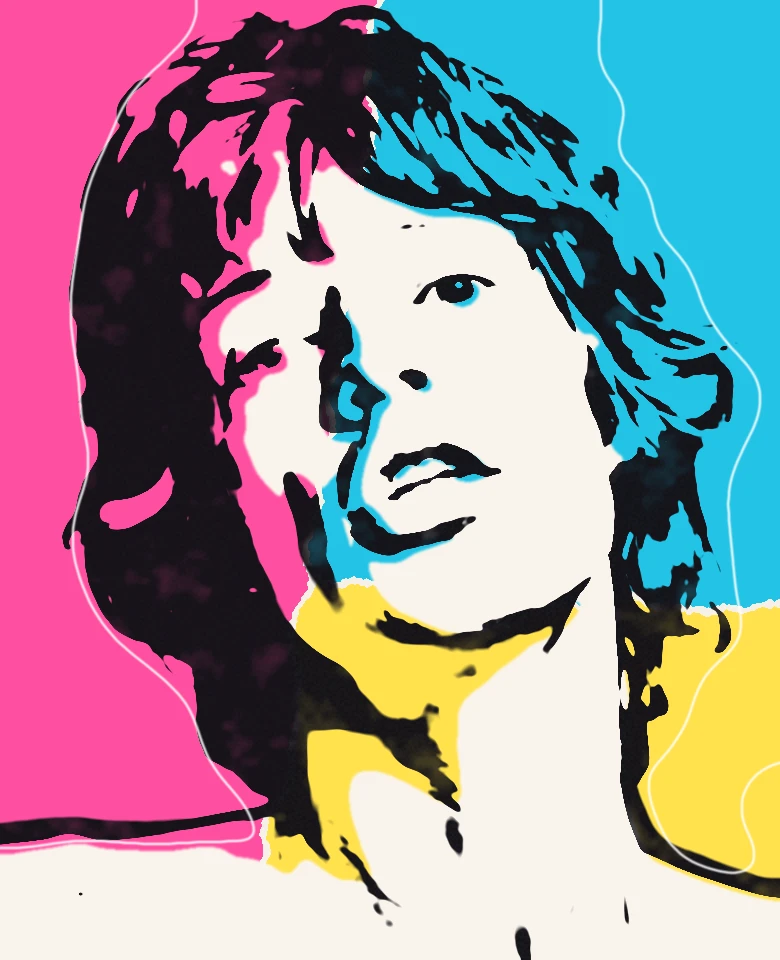
The Mick Jagger portfolio of 1975 is ten screenprints, published by Seabird Editions in London. Warhol drew loose lines over photographs of Jagger and printed the drawing with the photograph, so the face and the scribble share one sheet.
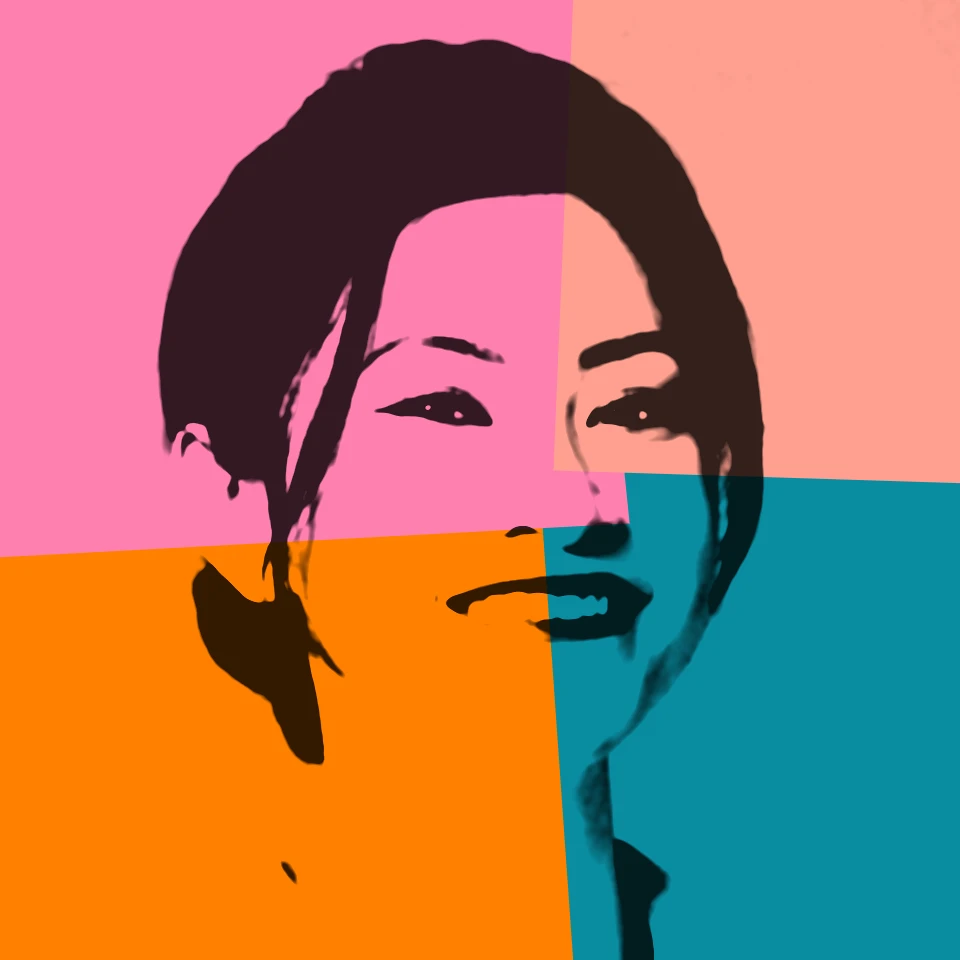
Sachiko (1977) is a commissioned portrait in the manner Warhol used for sitters in the late 1970s: large geometric fields of color, then the face screened in black over them, slightly out of register. This first state keeps the blocks broad and the ink dark.
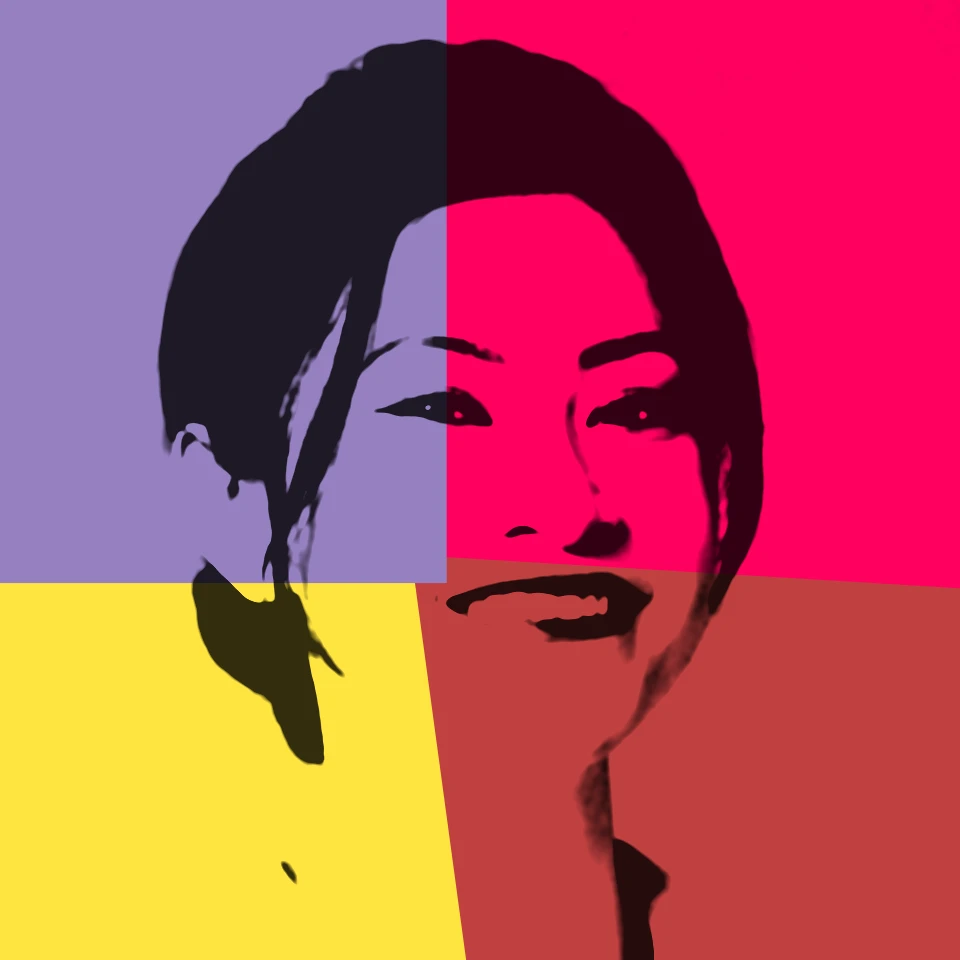
The second state of Sachiko (1977) rearranges the same sitting. The color planes behind the face change, and the black screen is still the last layer to hit the paper, the way Warhol finished a commissioned portrait.
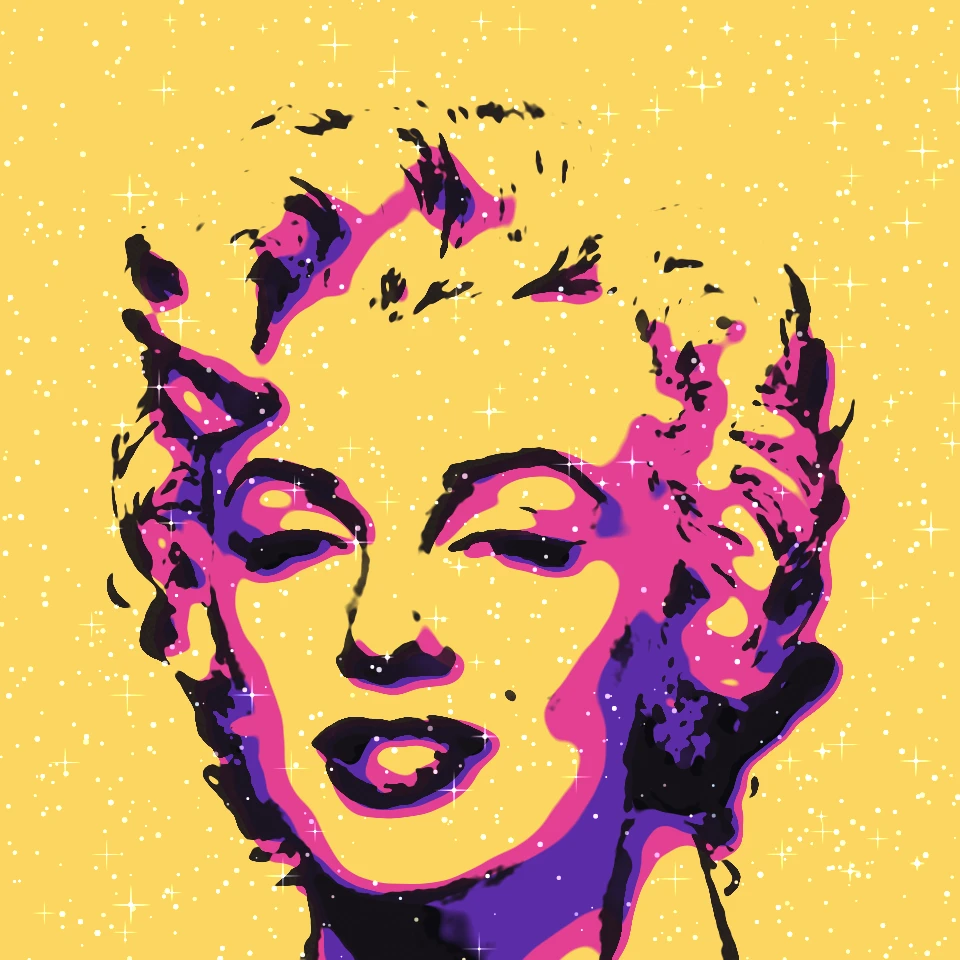
Around 1980 Warhol began dusting wet silkscreen ink with diamond dust, a crushed glass that flashes like stones. Shoes, shadows, and portraits from that year sparkle on a dark ground, the glitter sitting in the ink rather than on top of the photograph.
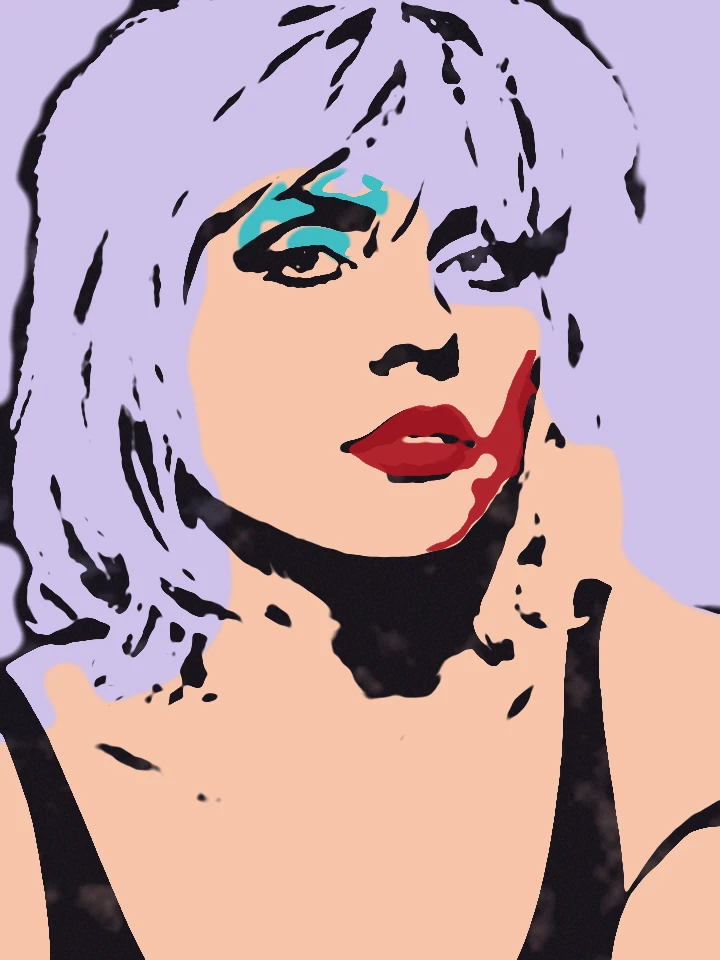
In 1980 Warhol portrayed Debbie Harry of Blondie, Polaroid first, then a screenprint with blocks of flat color under the face. It is one of his sharpest commissioned portraits, a pop singer printed with the same ink he had used for Liz and Marilyn.
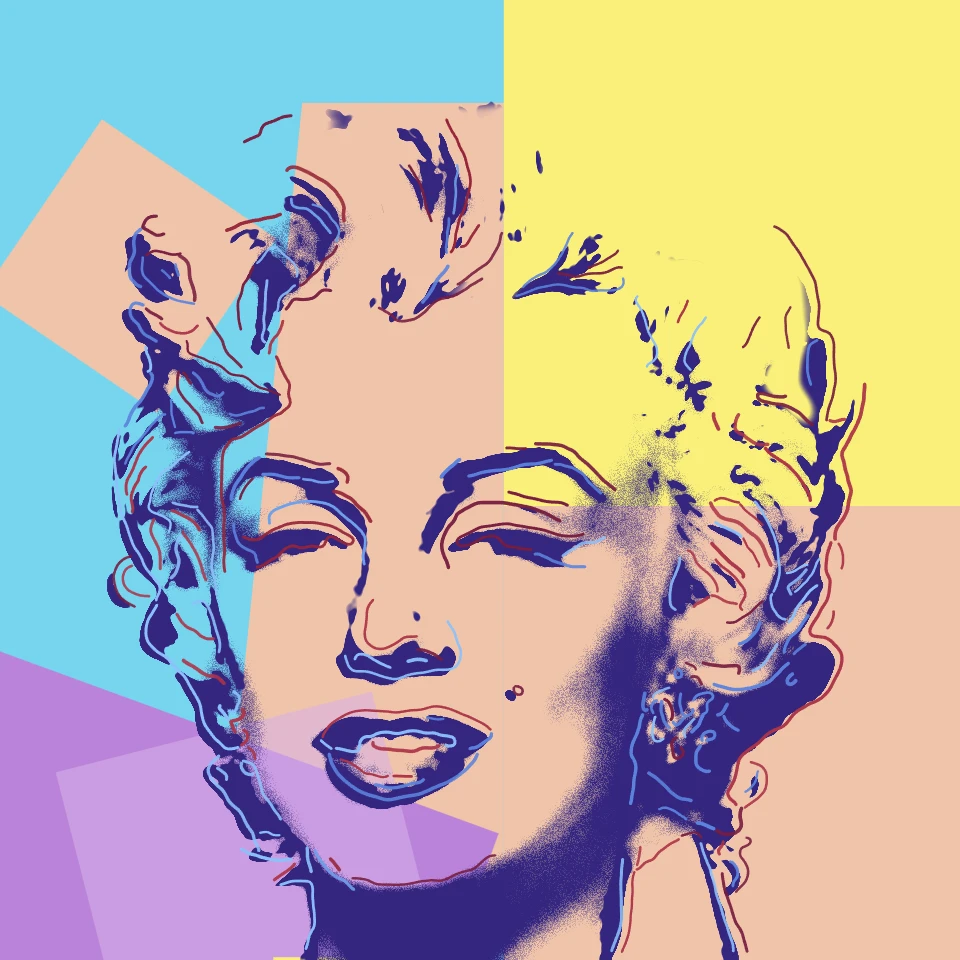
Mildred Scheel, a physician and the founder of Deutsche Krebshilfe, sat for Warhol in 1980. The portrait follows his commissioned method of those years: a photographed face, flat color, and a black screen, made for a sitter better known in Germany than on a movie poster.
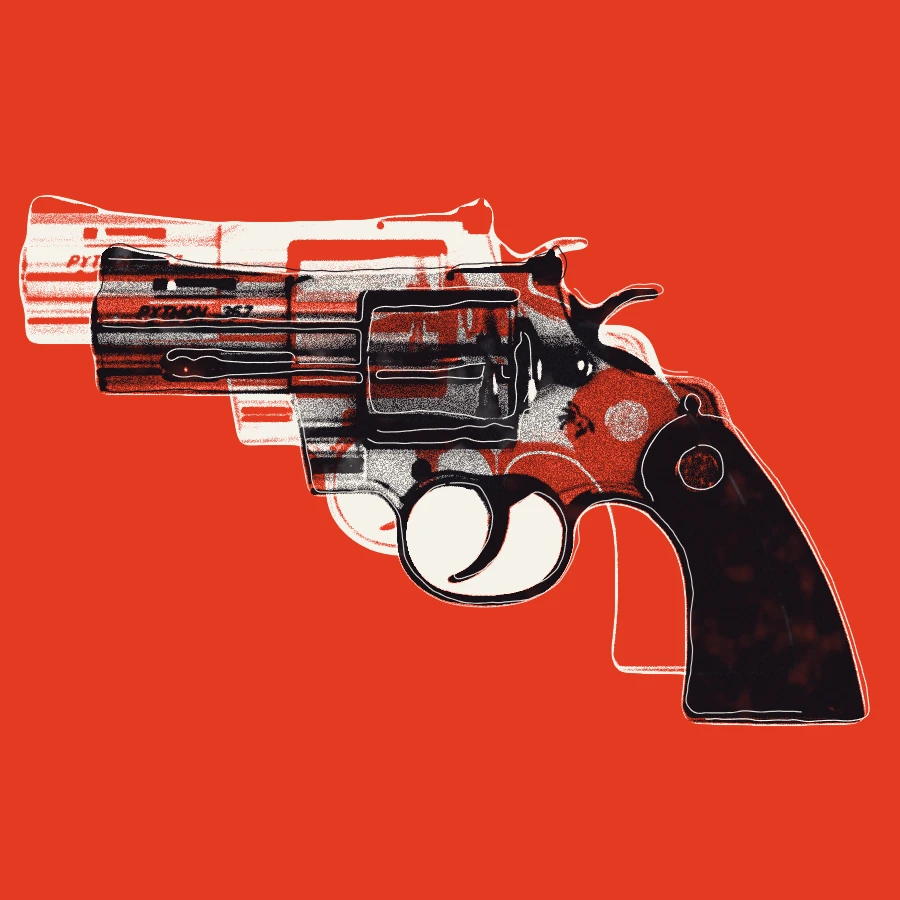
Warhol’s Guns, made in 1981 and 1982, set a handgun on a flat field of color and printed it twice: a pale ghost shifted up and to the left, then the gun itself in black ink, with the middle tones left open so the ground shows through.
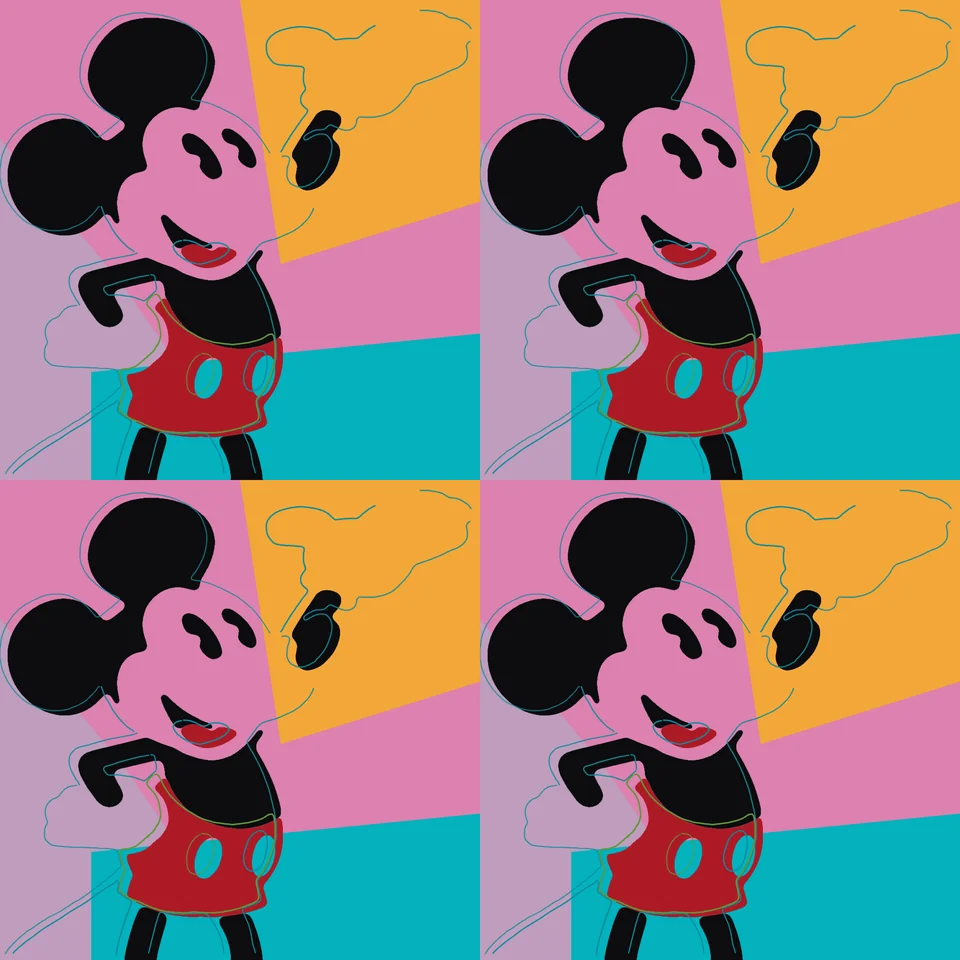
Mickey Mouse (1981), from the Myths portfolio, is printed in flat black over cut-paper blocks of pink, orange, lavender and turquoise, with a red mouth and shorts and a crayon line off register. Some impressions were dusted with diamond dust.
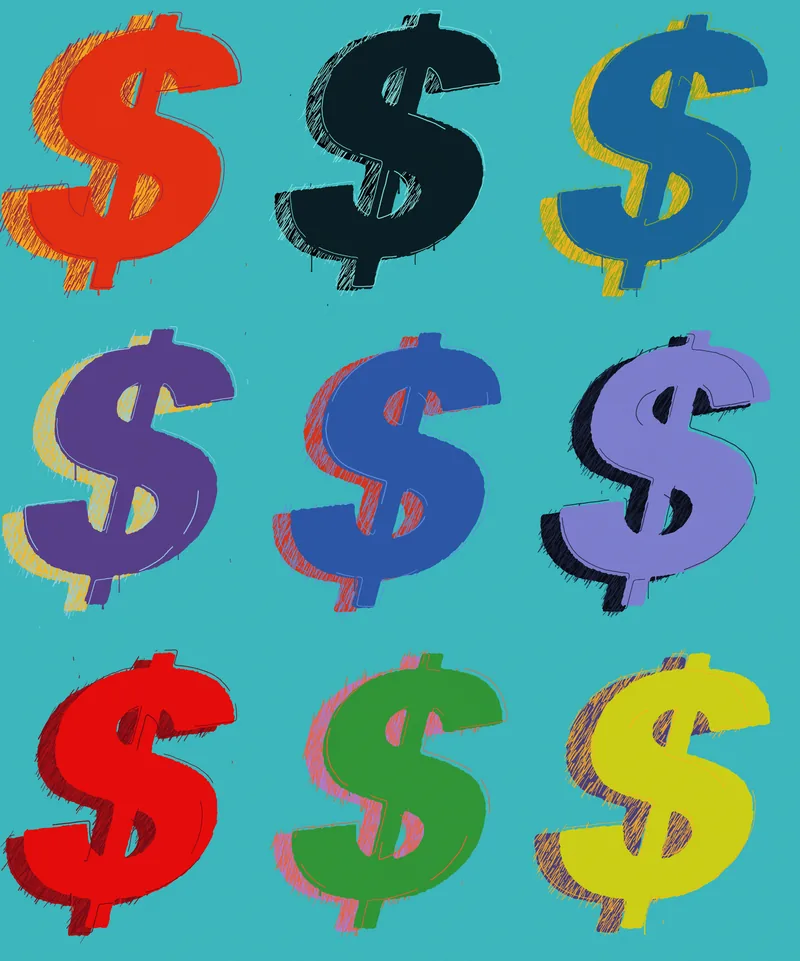
In 1981 and 1982 Warhol painted the dollar sign as a picture in its own right, then published a 1982 suite of screenprints. The symbol repeats in clashing colors until money reads as a logo.
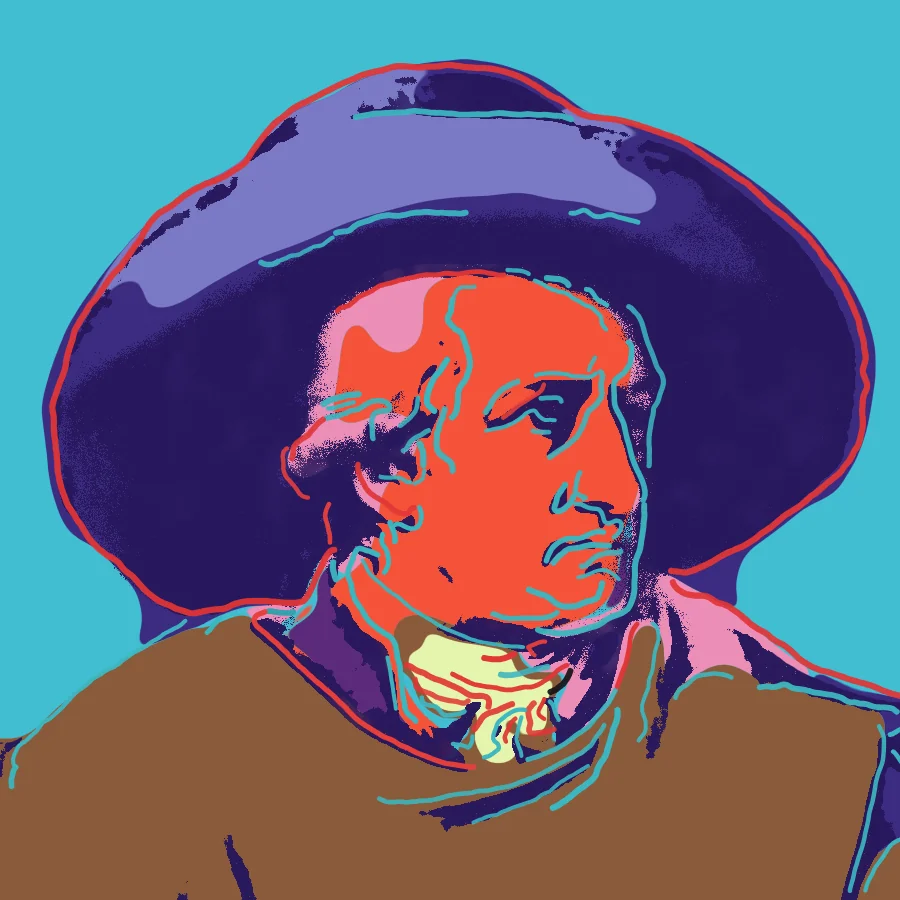
Goethe (1982) follows Johann Heinrich Wilhelm Tischbein’s Goethe in the Roman Campagna, painted in 1787 and now in the Städel Museum in Frankfurt. Warhol keeps the wide hat and the cloak as large flat areas of color, prints the shadows over them in a single ink, and draws loose crayon lines along the face, the curls and the folds.
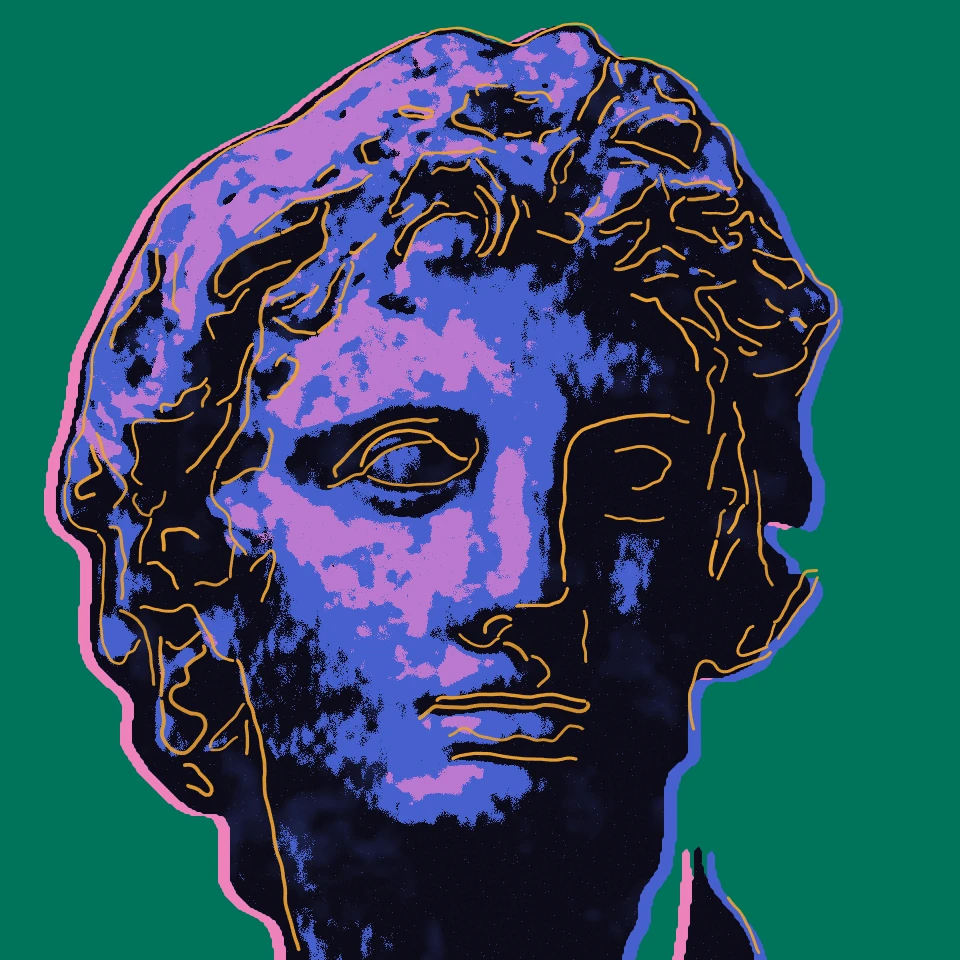
Alexander the Great (1982) was commissioned by Alexander Iolas, Warhol’s first dealer. Warhol printed an antique marble head on a flat ground, mostly in black ink over a single colour that shows only in broken patches, with a rim of a second colour along the profile where the screens slip, and loose crayon lines over the curls, the eye and the profile.
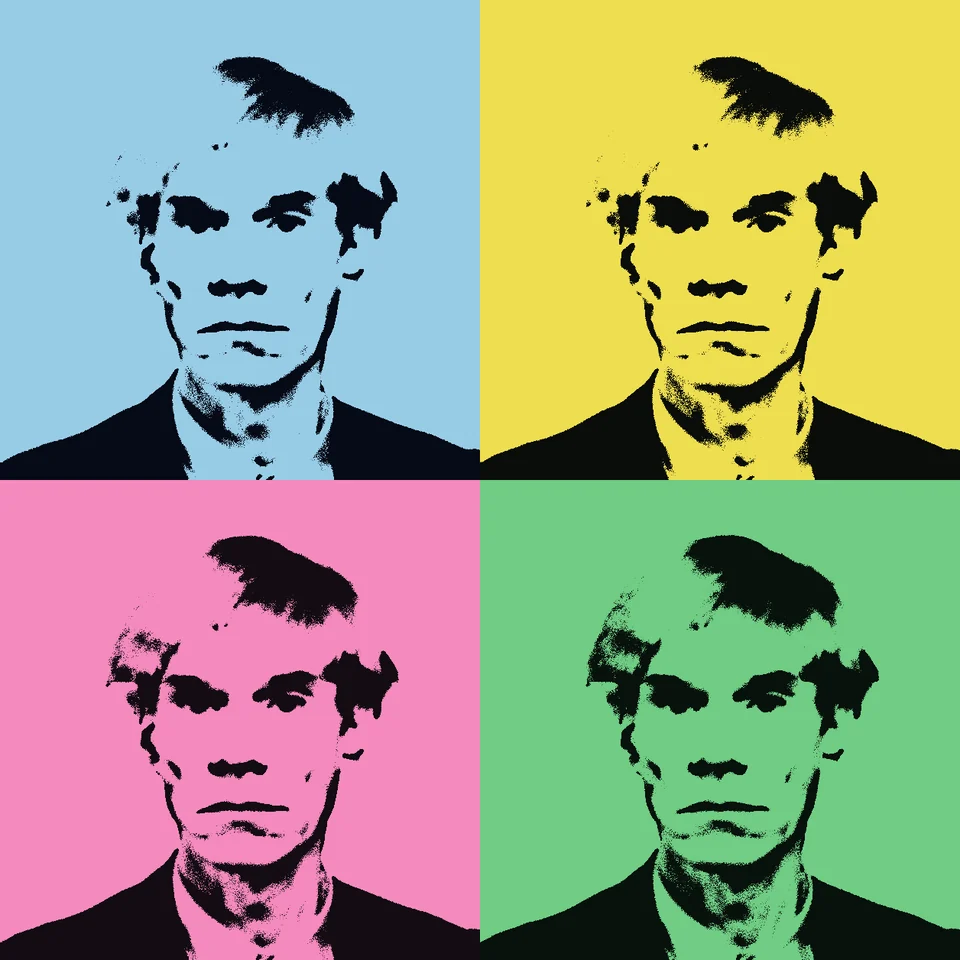
Warhol’s self-portraits of the early 1980s start from a Polaroid of himself: the silver hair, the plaid shirt, the striped tie. Printed in one dark ink on a flat colour, light blue, yellow or pink, the face takes the colour of the ground, and only the hair, the eyes, the brows, the nostrils and the jaw remain, as if the flash had burnt the rest away.
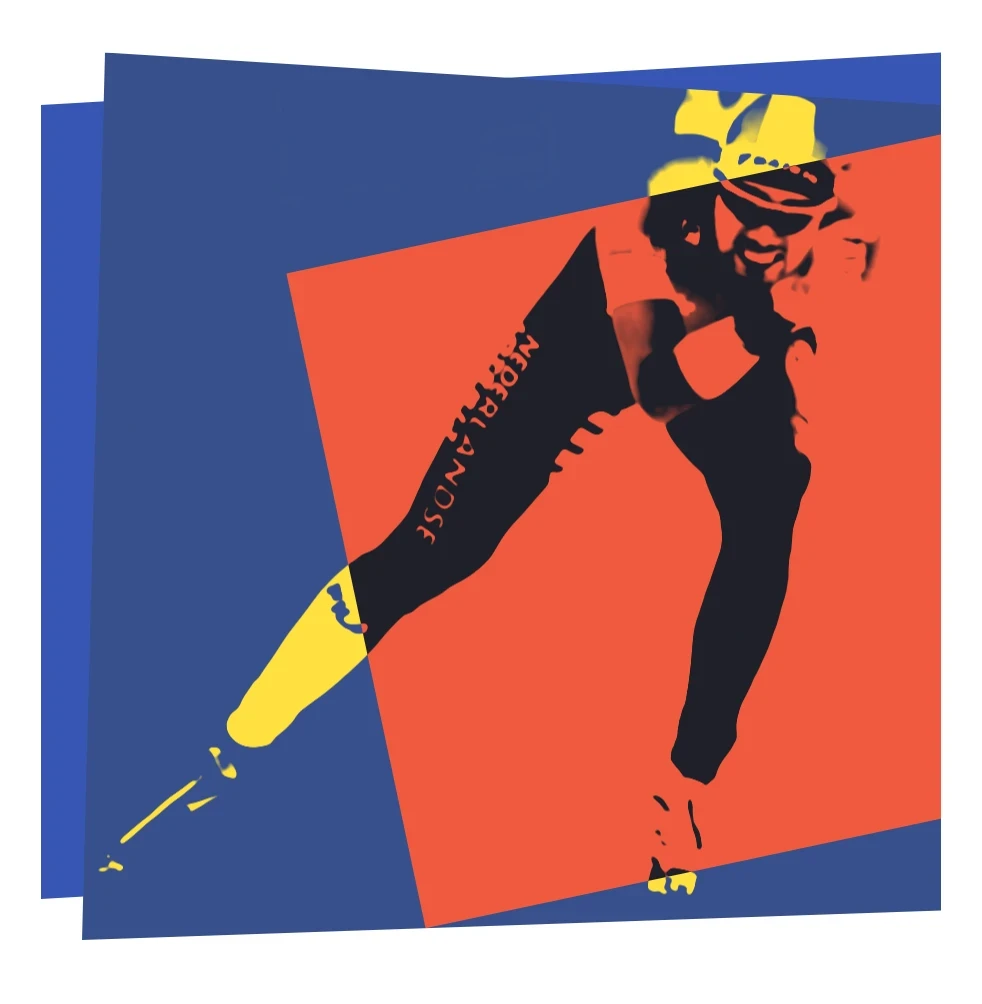
Warhol’s 1983 screenprint of a speed skater cuts the body into flat bands of color, the way he printed athletes: motion reduced to a few inks, a hard edge, and a ground that does not recede.
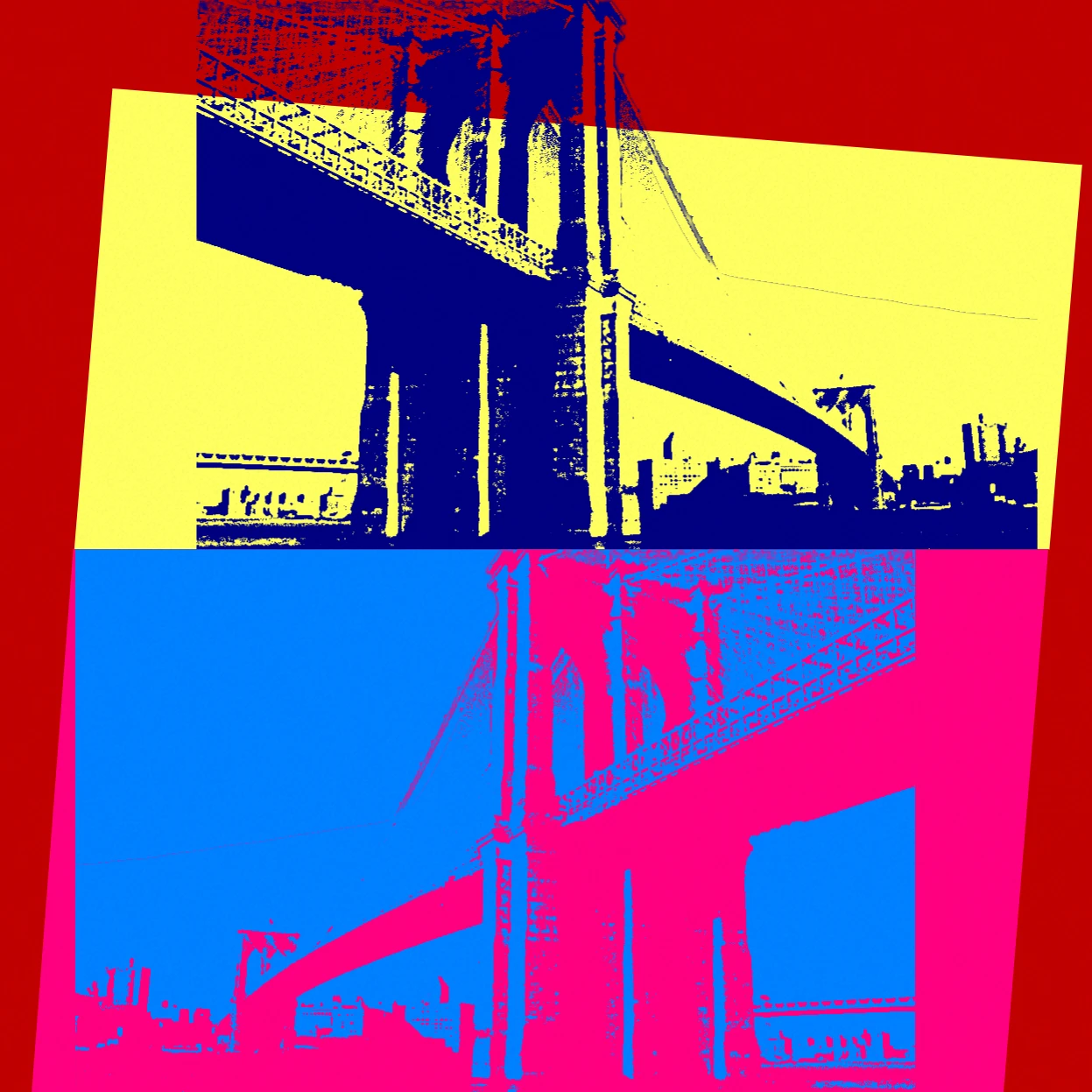
In 1983, the centennial year of the Brooklyn Bridge, Warhol screened the bridge in several color states. This first state stacks two impressions, one upright and one mirrored, over slanted fields of flat color.
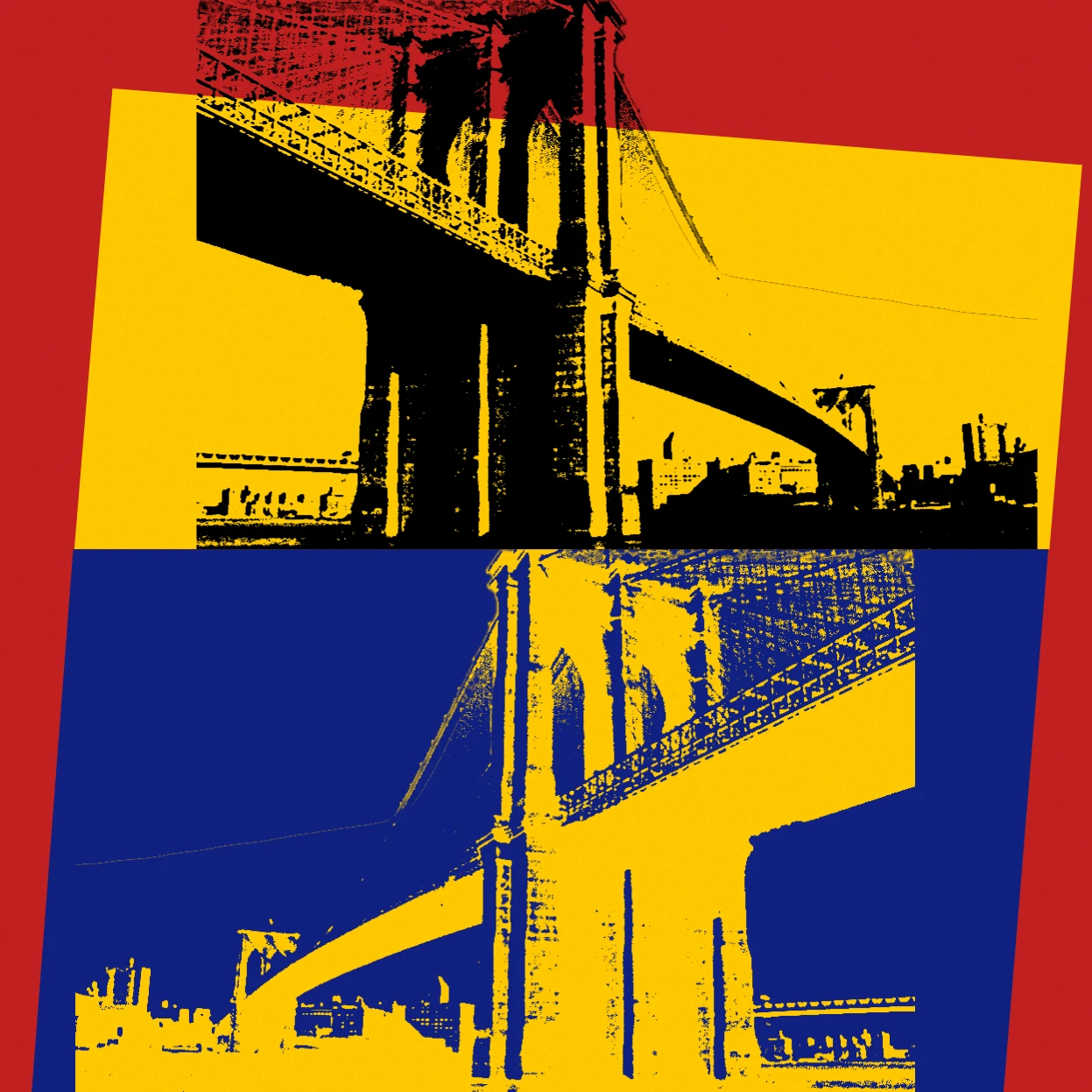
A second state of the 1983 Brooklyn Bridge screenprints sets a tipped plane of color behind the bridge and repeats the image below it, lighter and reversed, so the cables read twice.
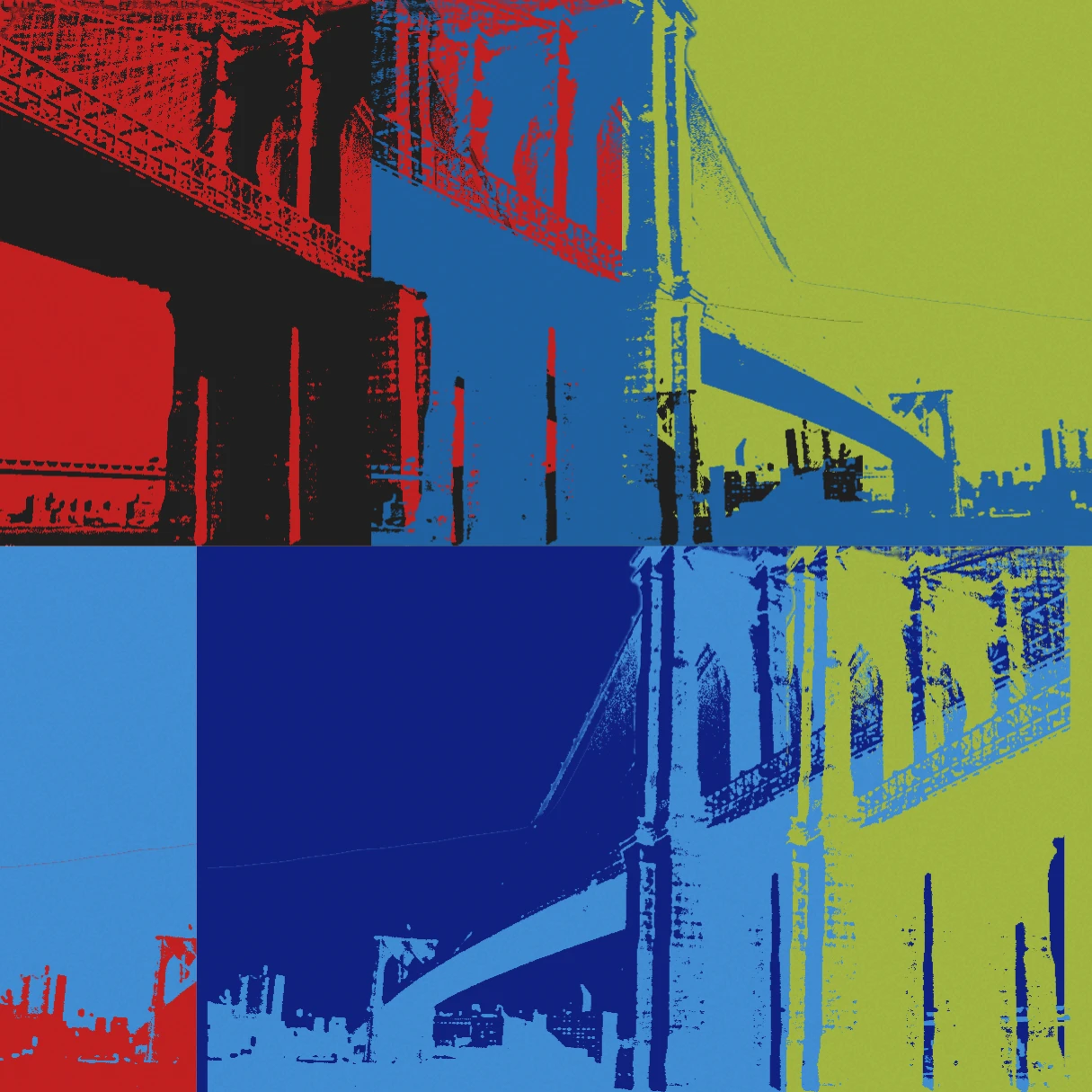
The third 1983 Brooklyn Bridge state splits the sheet into vertical bands of color and overlaps several ink impressions of the bridge, some flipped, none of them quite in the same place.
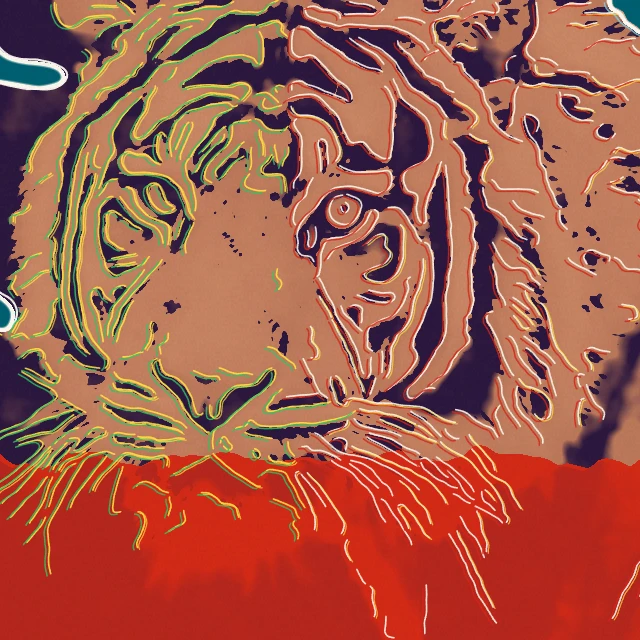
Siberian Tiger (1983) was published by Ronald Feldman Fine Arts in New York. It belongs to Warhol’s Endangered Species portfolio, a series of ten vibrant silkscreen prints that applied his signature Pop art aesthetic to animals facing the threat of extinction.
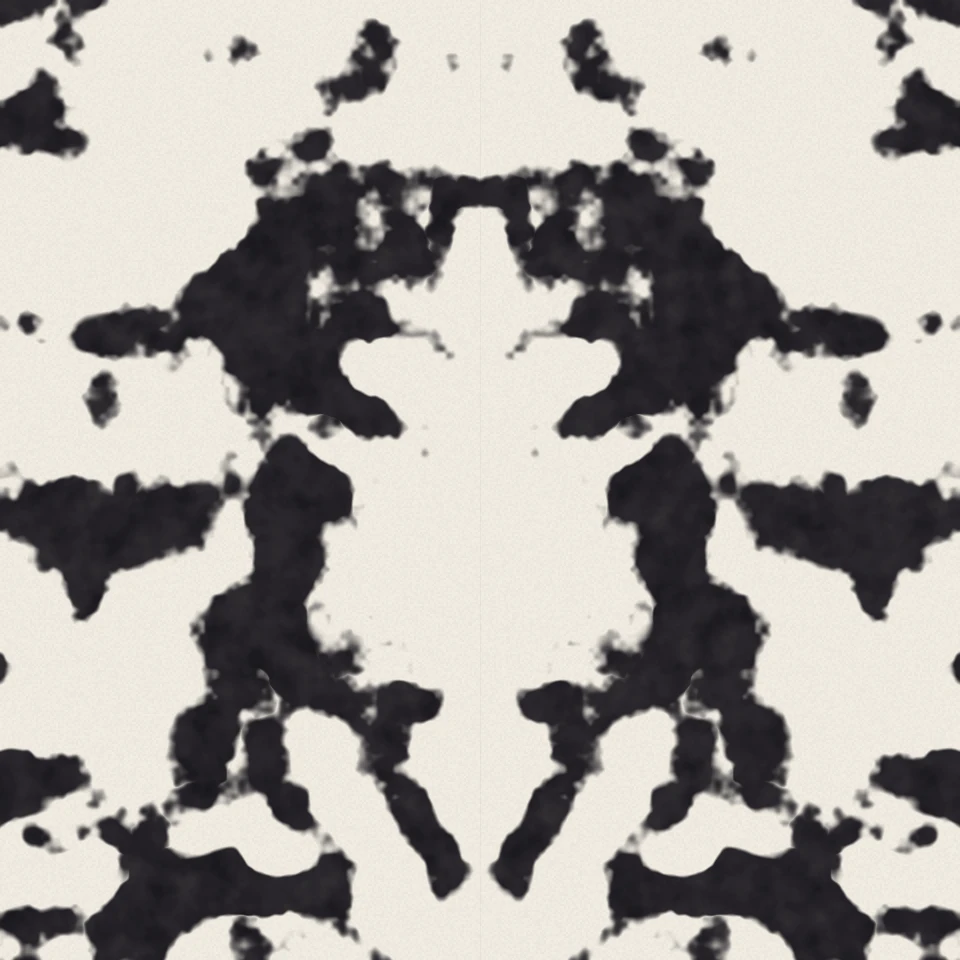
The Rorschach paintings of 1984 were made the way a blot is made: paint one half of the canvas and fold it. Warhol said he never looked up what the shapes were supposed to mean. This look folds a photograph into that mirrored stain.
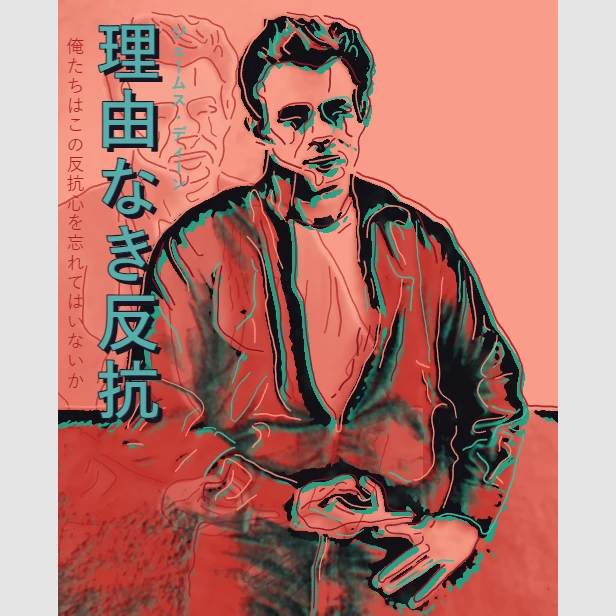
Rebel Without a Cause (James Dean) belongs to Warhol’s Ads portfolio, published in 1985 by Ronald Feldman Fine Arts. He screens the film poster almost tone for tone, then ghosts the figure in a second color and draws loose lines over the ink.
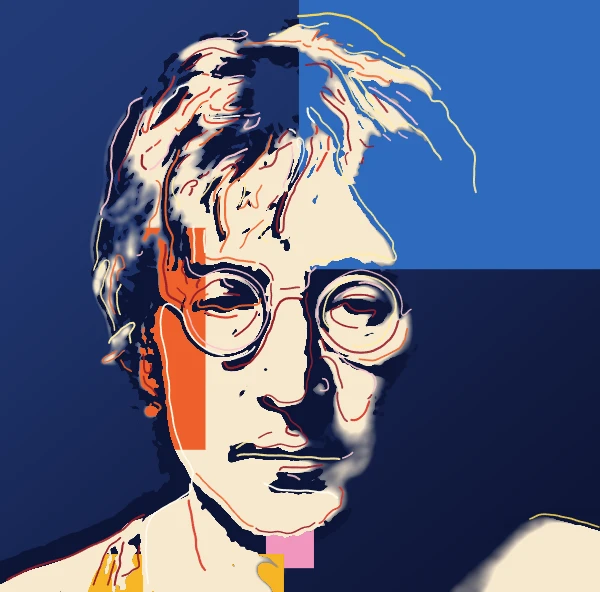
A 1985 portrait of John Lennon in two tones: the light of the face in cream on a deep ground, a few flat blocks of color laid over it, and thin lines drawn freehand along the edges of the photograph, a little off register.
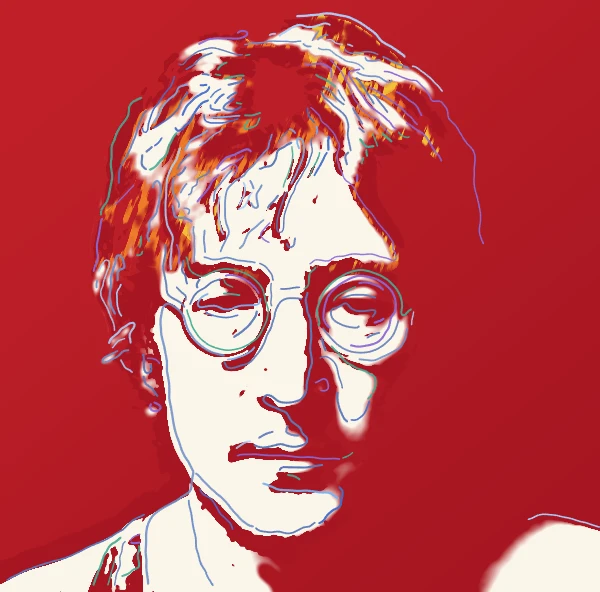
The second state of the 1985 John Lennon portrait drops the color blocks. The hair is brushed over in a warm dry stroke, and the freehand lines run cooler against a redder ground.
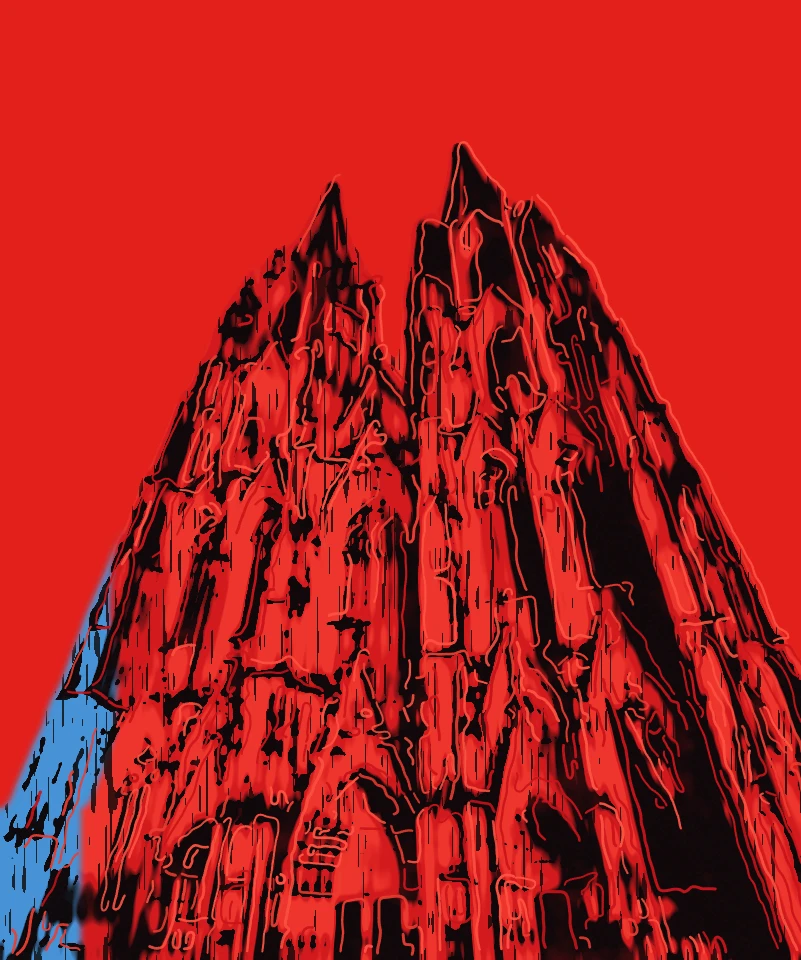
Andy Warhol created the Cologne Cathedral (Kölner Dom) portfolio in 1985. Published by Hermann Wünsche in Germany, the suite consists of four color screenprints with diamond dust on Lenox Museum Board, transforming Germany's famous Gothic landmark into a vibrant Pop Art icon.
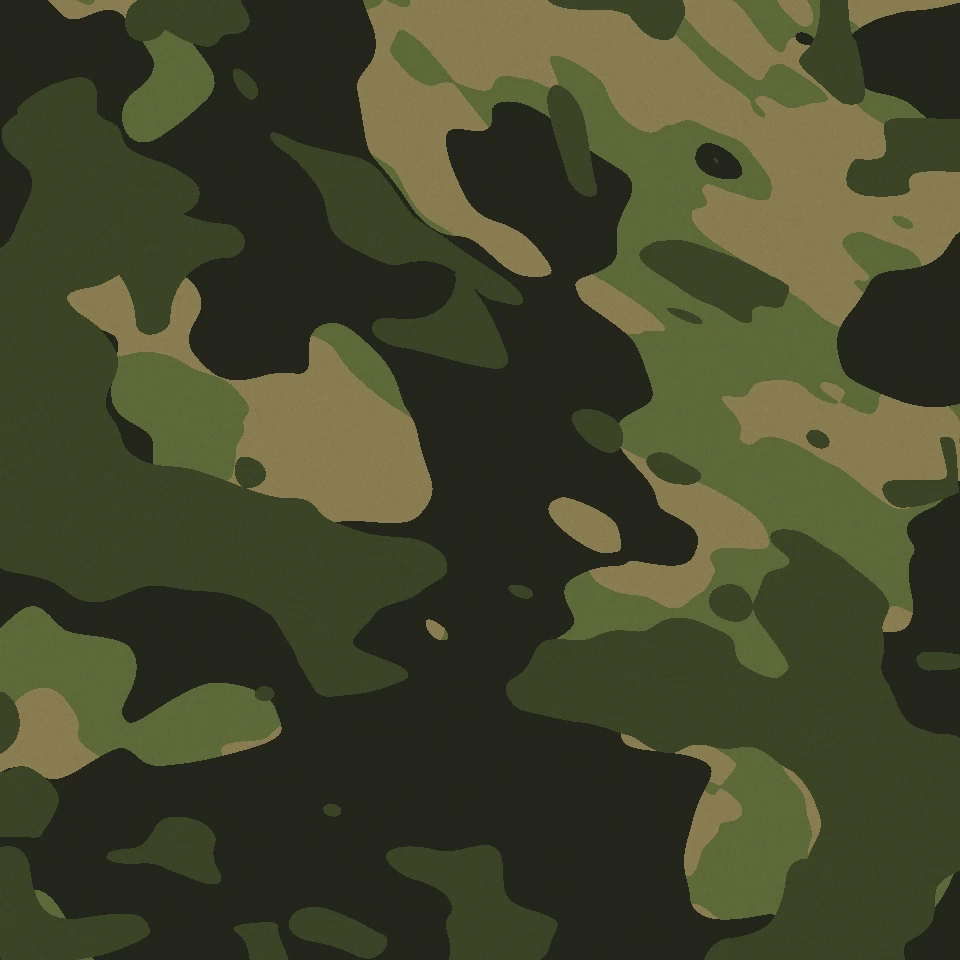
In 1986 Warhol painted camouflage as a picture, not a uniform, and printed faces over it. The pattern fills the sheet in pink, desert, or acid color, and the portrait is only the black ink on top. A screenprint portfolio of the series followed in 1987.
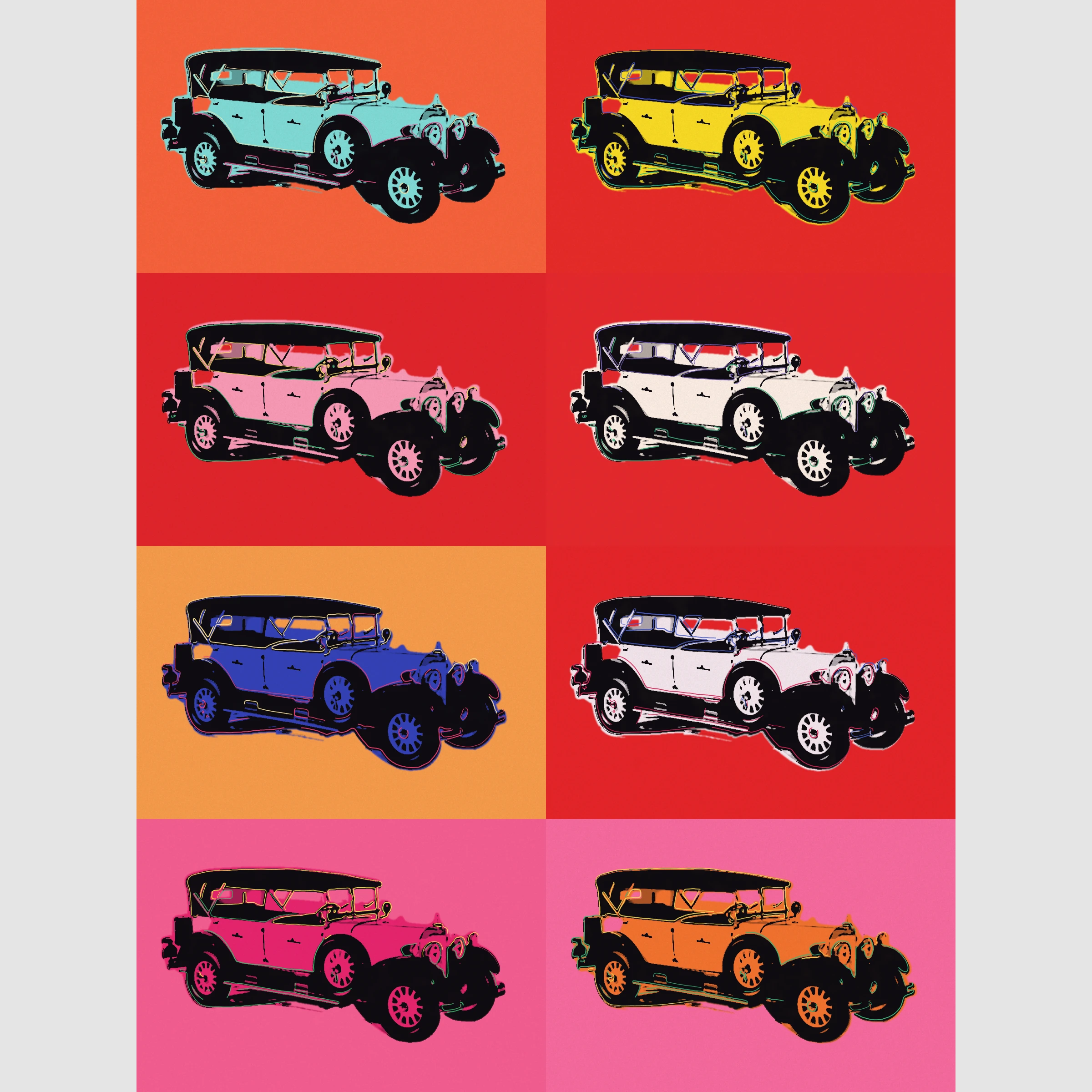
In 1986 Mercedes-Benz commissioned Warhol’s Cars series, a painted history of its models. The 1925 Mercedes-Benz Type 400 was one of them. He was still working on the series when he died in 1987, and the car is repeated here as a grid of mismatched silkscreen colors.
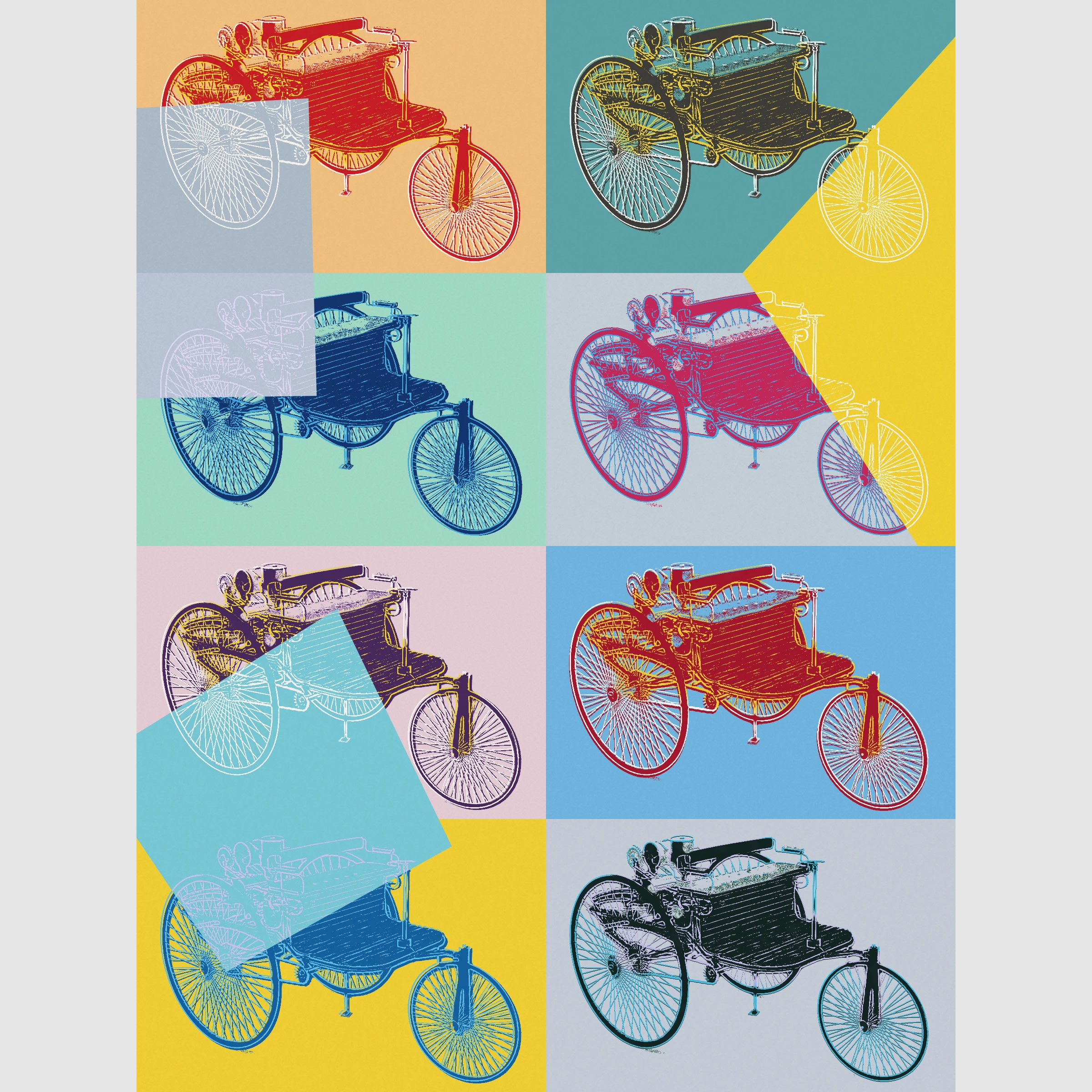
In 1986 Andy Warhol screened the Benz Patent-Motorwagen of 1886 for the Cars series commissioned by Mercedes-Benz. The three-wheeler is drawn in a few inks so the spokes stay lines and the openings in the wheels stay the ground, and each panel of the sheet lays a flat color behind the machine, a square or a triangle.
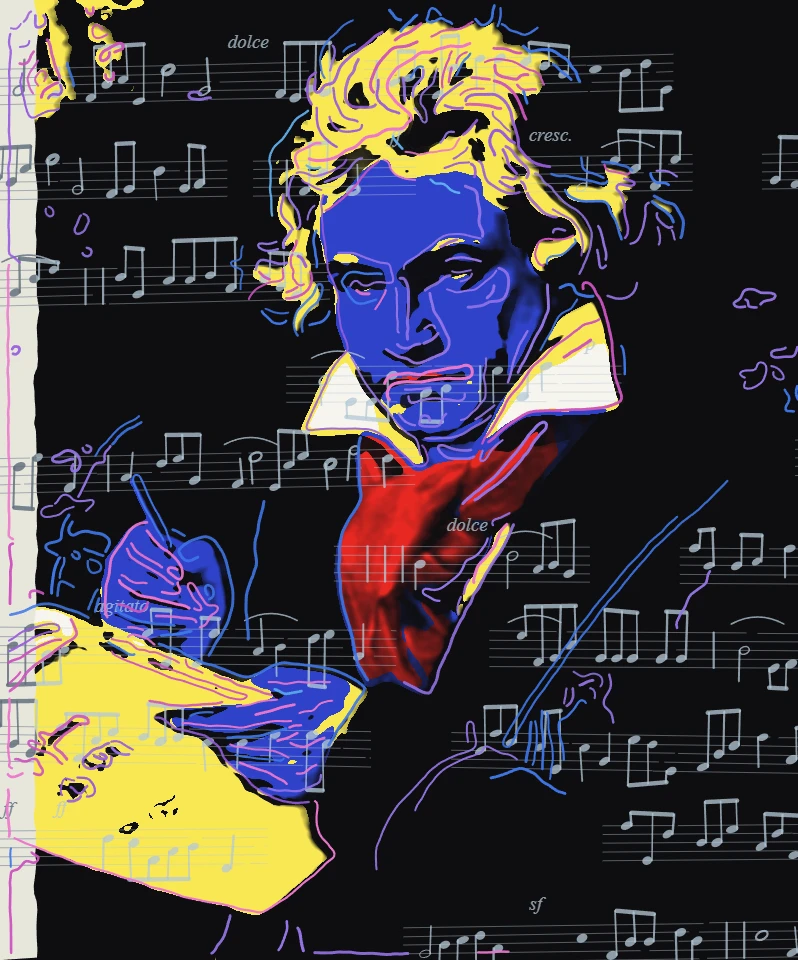
In 1987 Warhol screened Beethoven’s head over a field of sheet music. The composer is treated as a Pop celebrity: a flat portrait, a few inks, and the notation sitting behind the face like wallpaper.
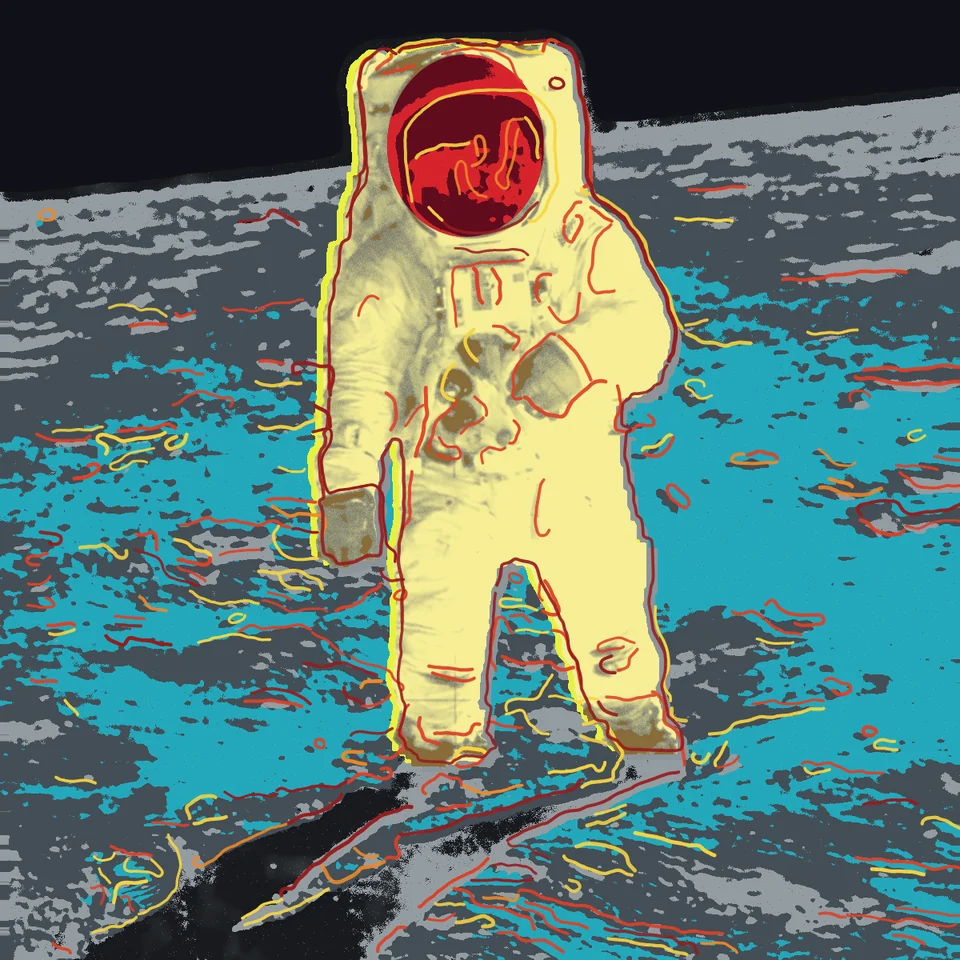
Moonwalk (1987), from the year Warhol died, follows the photograph of Buzz Aldrin beside the American flag on the moon in 1969. The astronaut is one flat colour, pink on one print and yellow on the other, on a flat sky and a grainy lunar ground, the screens slipping into rims of other colours, with loose crayon lines over the suit, the visor, the flag and the rocks.