
Units, the SI system and binary prefixes
Every measurement is a number and a unit, and the same distance can be 5 kilometres or 3.1 miles. This page explains the International System of Units, how the metric system began and why computer memory has two kinds of kilobyte.
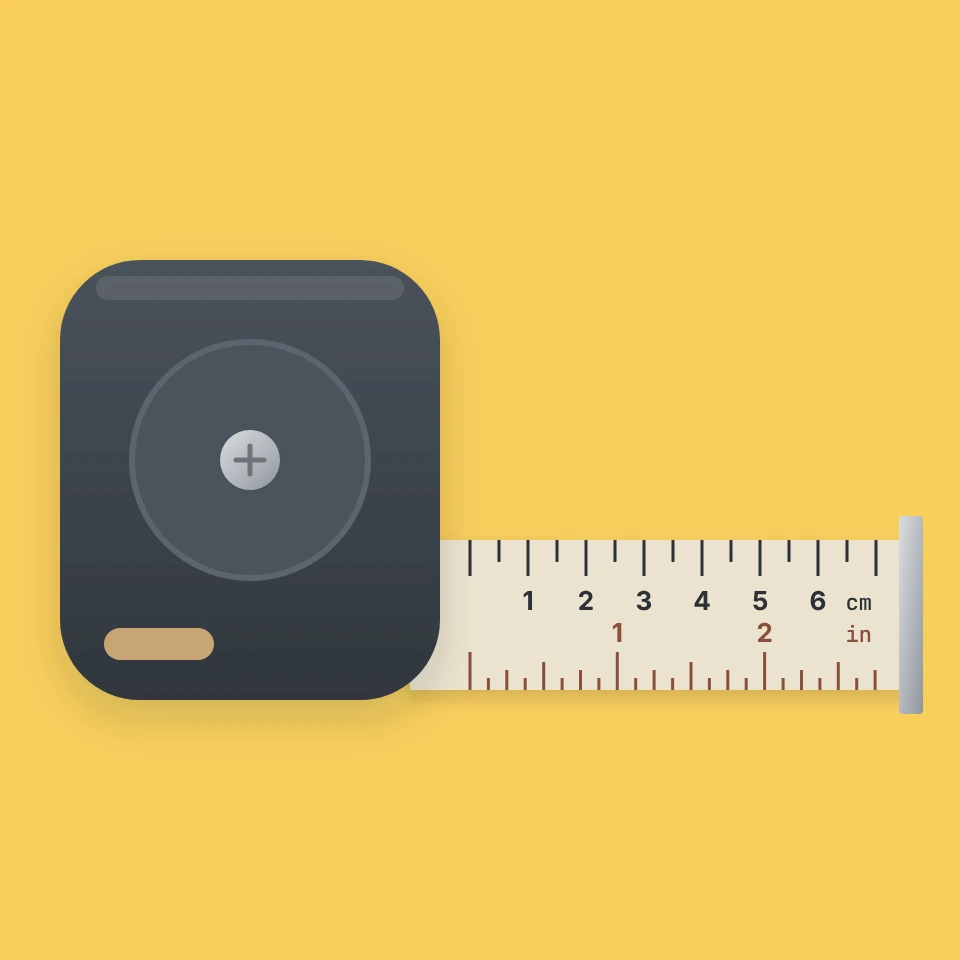
The International System of Units
The SI is built on seven base units: the metre, kilogram, second, ampere, kelvin, mole and candela. Every other unit, such as the newton, joule or pascal, is made from these. Since 2019 all seven are defined by fixed constants of nature, such as the speed of light and the Planck constant, so anyone with the right equipment can reproduce them anywhere.
How the metric system began
In the 1790s revolutionary France replaced hundreds of local measures with one decimal system 'for all people, for all time'. The metre was set at one ten-millionth of the distance from the North Pole to the equator, measured along the meridian through Paris. The Metre Convention of 1875 made it international, and the modern SI followed in 1960.
Decimal and binary prefixes
In the SI, kilo always means 1000, mega a million and giga a billion. Computers count in powers of two, so memory makers long used kilobyte for 1024 bytes. To end the confusion, the IEC introduced kibi (Ki, 1024), mebi (Mi) and gibi (Gi) in 1998. A drive sold as 1 TB holds 10^12 bytes, which an operating system counting in binary shows as about 931 GiB.
Imperial and US customary units
Inches, feet, pounds and gallons are still common in the United States and in parts of daily life in the United Kingdom. Since 1959 they are defined exactly in metric terms: an inch is 25.4 mm and a pound is 0.45359237 kg. Volumes differ, though: an imperial gallon is about 4.546 litres and a US gallon about 3.785 litres.
Frequently asked questions
Why was the kilogram redefined in 2019?
Until then the kilogram was a metal cylinder kept near Paris, and its copies slowly drifted apart by tens of micrograms. Now it is fixed through the Planck constant, so it can no longer change.
What is a kibibyte?
A kibibyte (KiB) is exactly 1024 bytes, while a kilobyte (kB) is 1000 bytes. The difference grows with each step: a gibibyte is about 7.4% larger than a gigabyte.
Which countries do not use the metric system?
Almost every country has adopted it officially. The United States still uses customary units in daily life, and Liberia and Myanmar use a mix. Even in the US, science, medicine and the military work largely in metric.
Related tools
Unit converter
A free online unit converter for length, weight, temperature, speed, area, volume, time, pressure, energy and computer data - bytes to gigabytes and GB to GiB.
Calculator
A free online calculator with a basic and a scientific mode: trigonometry, logarithms, powers, roots, factorials, memory and history, with the correct order of operations.
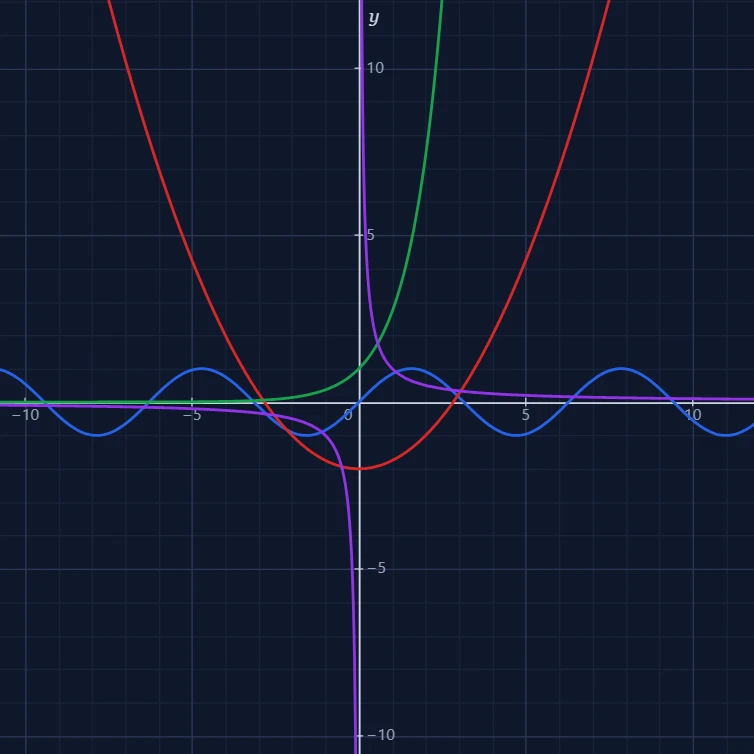
Function plotter
A free online function plotter: draw x², sin x, ln x, 1/x and your own formulas on an interactive grid. Pan, zoom, trace x and y, and save the graph as a PNG.
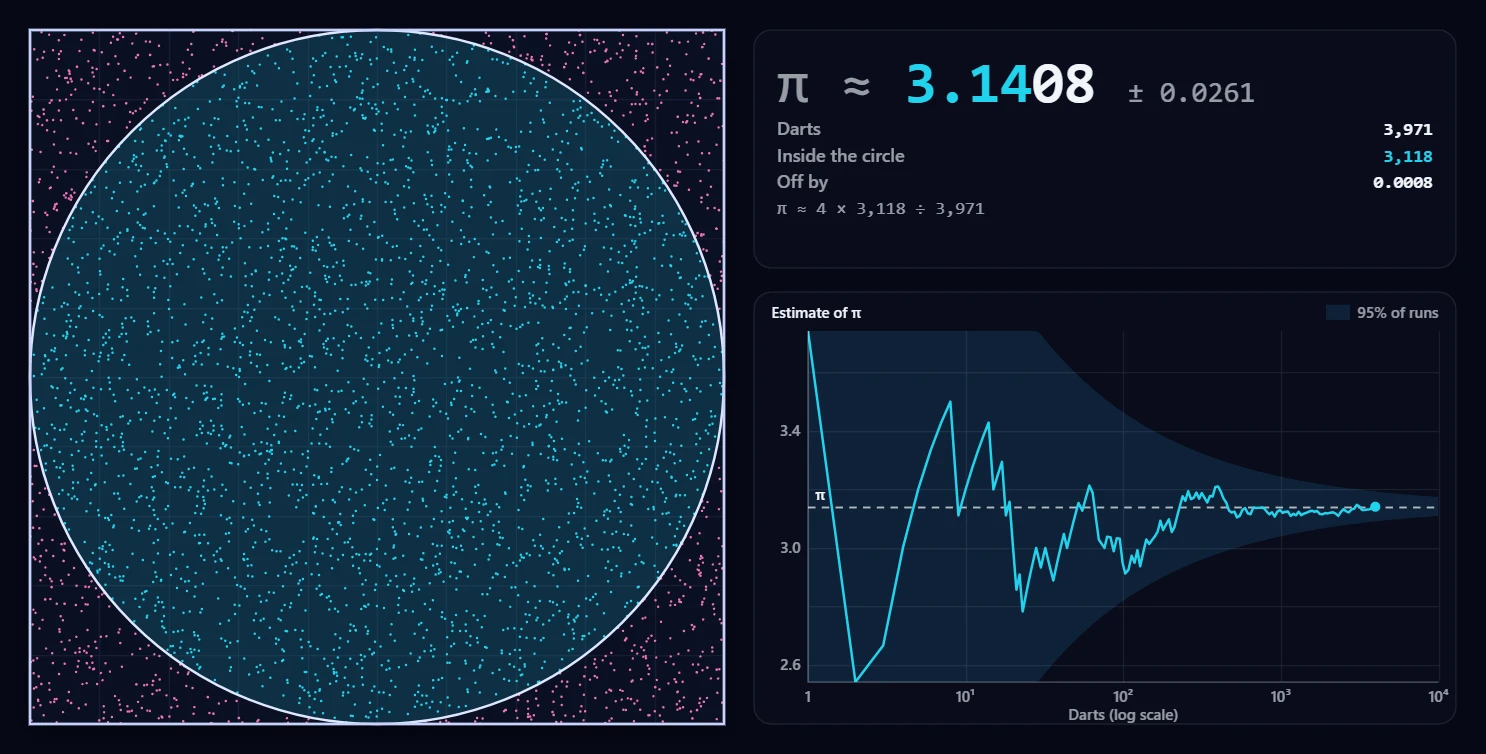
Monte Carlo π
Throw thousands of random darts at a square with a circle in it and watch the share that lands inside turn into π. Start, stop, and follow the estimate as it converges.
Ready to try it?
Open PictorX in your browser — no install, no credit card required to start.
Open the Unit converter