
The story behind the text case converter
Capital and small letters feel as old as writing, yet for most of history people wrote in one case only. The two cases we mix today, and the rules for mixing them, grew out of scribes, printers, style guides and, much later, programmers.
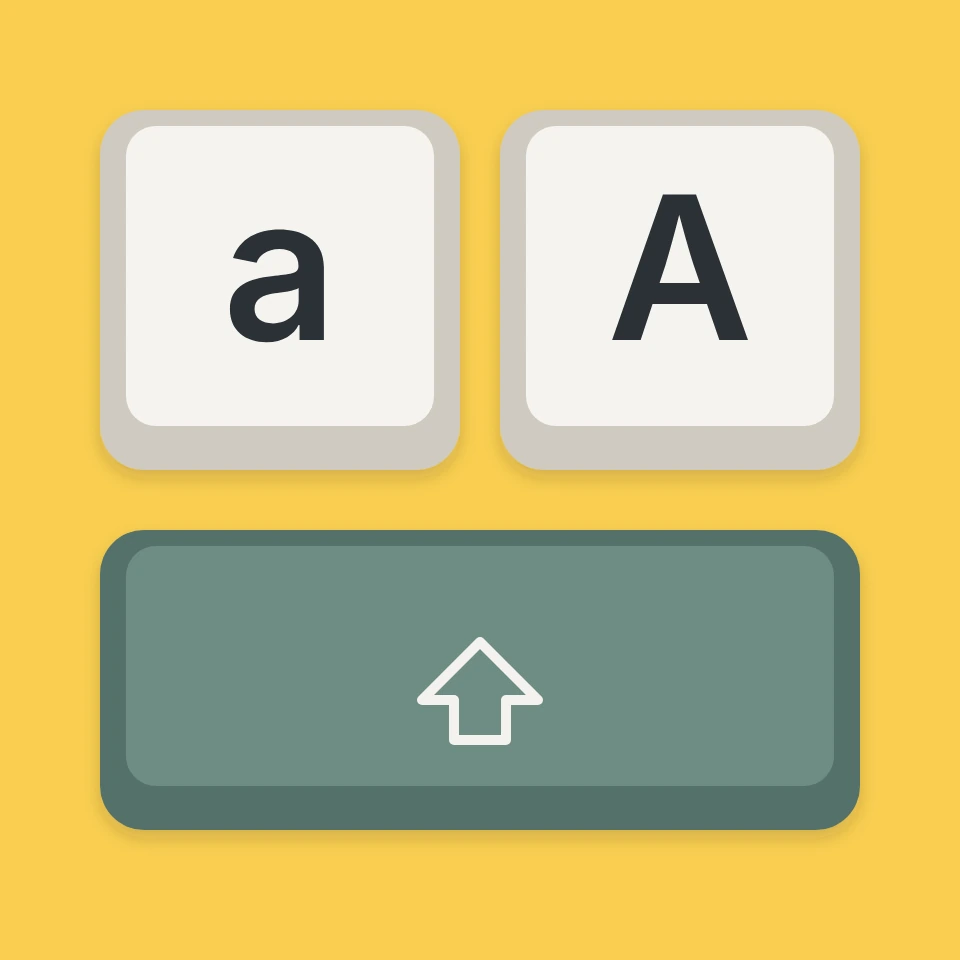
Why it is called upper case
Roman inscriptions used only capitals. Small letters developed from quick handwriting, and around 800 the scribes of Charlemagne's empire standardised a clear script now called Carolingian minuscule, the ancestor of our lower case. When printers set type by hand, they kept capitals in the upper case of a pair of wooden type cases and small letters in the lower one, closer to hand. The furniture gave the letters their names.
Title case or sentence case
English headlines often capitalise every important word, and style guides such as Chicago, APA and AP disagree on details like whether to capitalise short prepositions. Many other languages, from Dutch and French to Swedish, prefer sentence case for titles, while German capitalises every noun anyway. That is why this converter keeps a small word list per language and also offers a simple style.
camelCase and snake_case
Programmers cannot put spaces in names, so they found other ways to separate words. Capitals inside a name, later nicknamed camelCase for their humps, appear in many programming languages from the 1970s on. Underscores between lowercase words became known as snake_case, hyphens as kebab-case, and all capitals with underscores, often called CONSTANT_CASE or screaming snake case, traditionally marks constants.
The Turkish i and the capital ẞ
When Turkey adopted the Latin alphabet in 1928 it gave dotted and dotless i their own capitals: i and İ, ı and I. Software that upper cases without knowing the language turns the Turkish word for Istanbul into the wrong letters, a classic bug known as the Turkey test. German long had no capital sharp s, so ß became SS; Unicode added ẞ in 2008 and official German spelling has allowed it since 2017.
Frequently asked questions
Why does my text look different after UPPERCASE in Turkish?
Turkish has four forms of i. With the Turkish language rules, i becomes İ and ı becomes I, which is correct Turkish. Use English or another language if you need the plain Latin result.
Why do code cases ignore the language?
Identifiers such as variable names should be the same on every computer. camelCase, snake_case and the other code styles therefore use language neutral rules, and URL slugs remove accents so links stay plain ASCII where possible.
Does Sentence case know names?
It keeps words written fully in capitals, such as NASA, and names with an inner capital, such as iPhone, but it cannot know that paris is a city. Check proper names after converting.
Related tools
Text case converter
A free text case converter: UPPERCASE, lowercase, Title Case with language rules, Sentence case, camelCase, PascalCase, snake_case, kebab-case, CONSTANT_CASE, dot.case and URL slugs, plus cleanup for spaces, line breaks, bullets and emojis.
JSON formatter
A free JSON formatter and validator: beautify or minify JSON, find the exact line and column of an error, sort keys, browse a collapsible tree, copy paths and convert arrays to CSV, all in your browser.
Color contrast checker
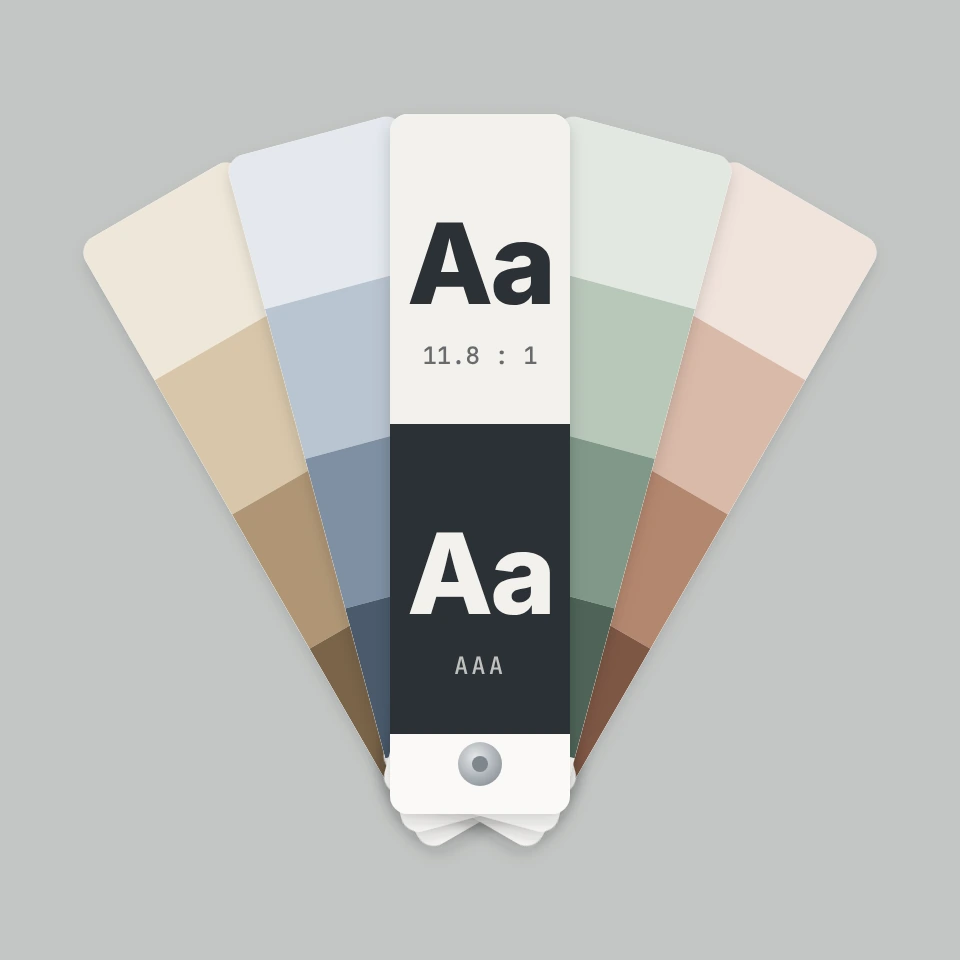
A free WCAG color contrast checker: enter text and background colors as HEX, RGB or HSL, see the contrast ratio with AA and AAA results, get the nearest passing color and simulate color blindness.
The story behind the color contrast checker
Where the WCAG contrast numbers come from: 4.5:1 and 7:1, relative luminance from sRGB, the 3:1 rule for UI components added in WCAG 2.1, color blindness and the APCA work for WCAG 3.
Hourly rate calculator
A free hourly rate calculator for freelancers and employees: hourly rate to estimated net monthly income, target income to required rate, and salary to hourly wage, with a breakdown chart.
Ready to try it?
Open PictorX in your browser — no install, no credit card required to start.
Open the text case converter