
Newton's cannon
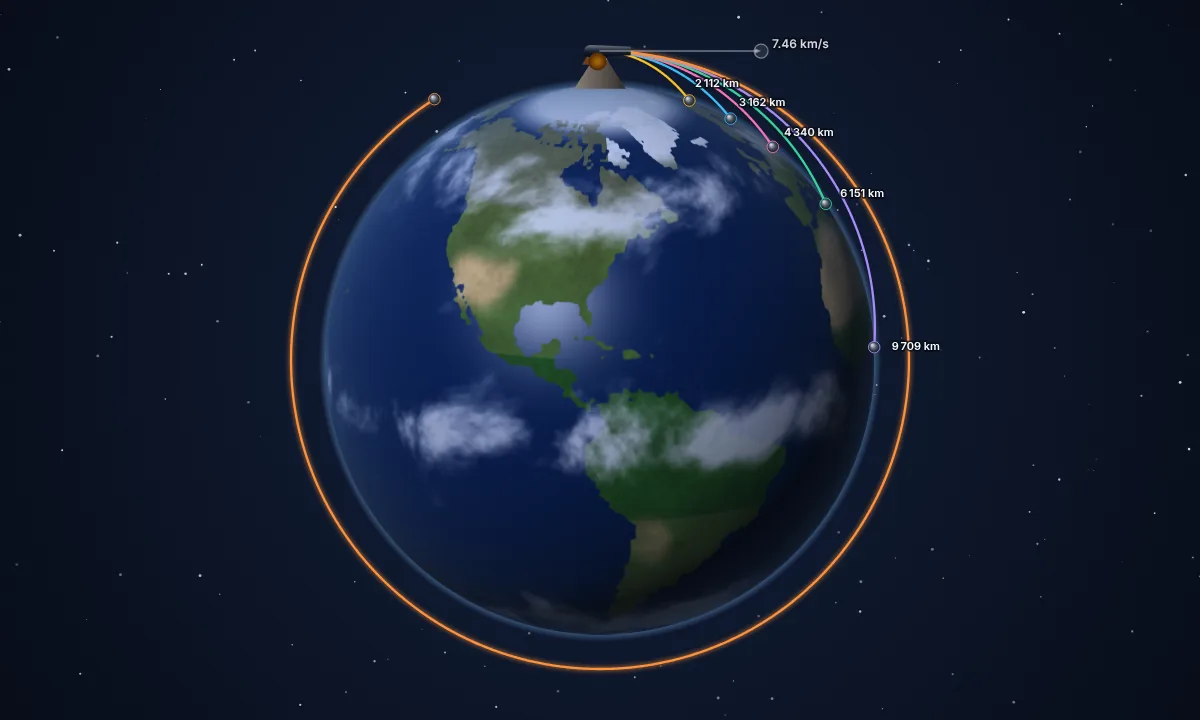
Newton's cannon is a thought experiment about a cannon on a mountain so high that it reaches above the air. Fired sideways, its ball falls back to Earth. Fired faster, it lands further away. Fired fast enough, it never lands at all: it falls around the Earth forever. With this picture Isaac Newton showed that throwing a stone and keeping the Moon in its orbit are the same thing.
Newton's thought experiment
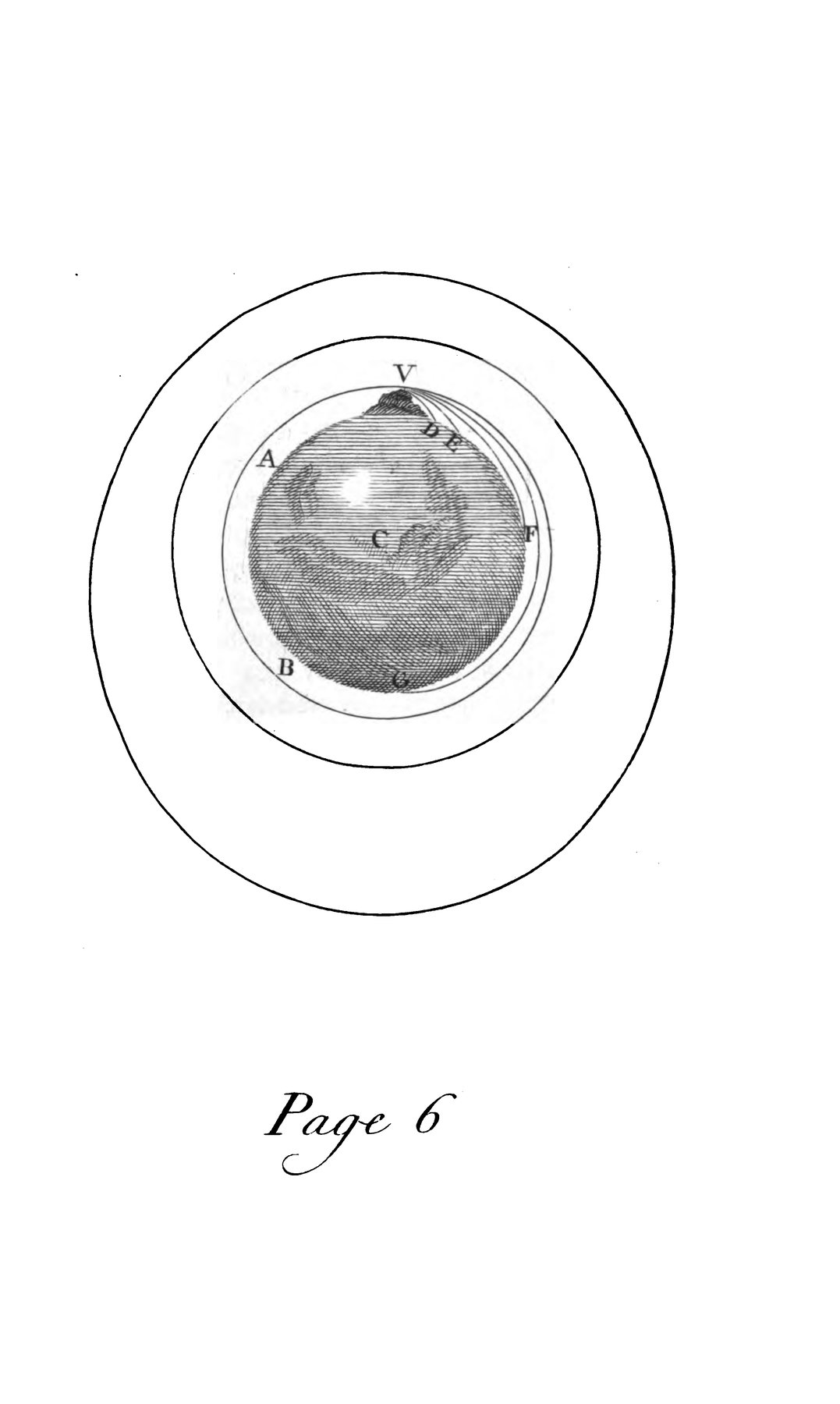
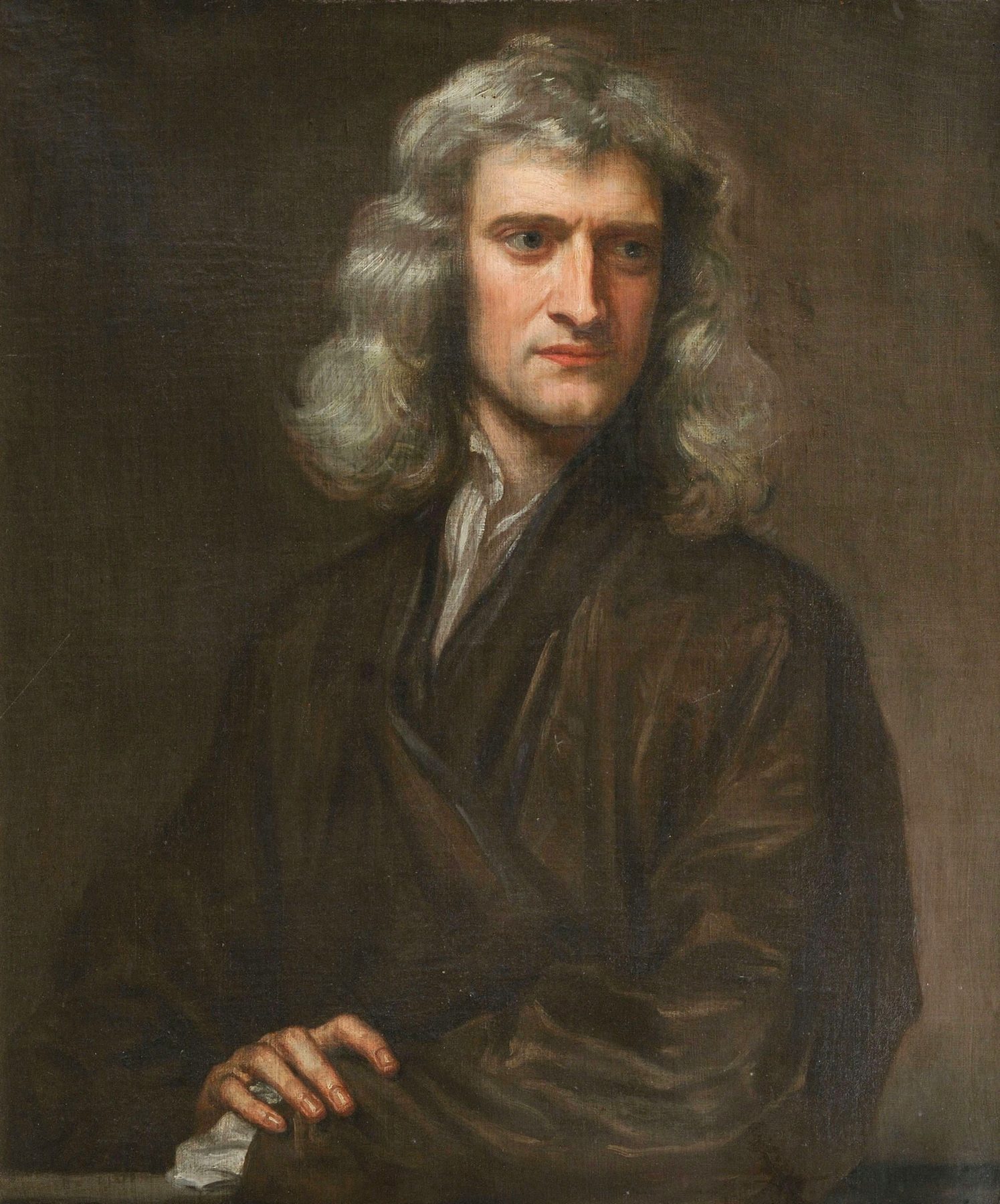
In De mundi systemate, written in the 1680s and published in 1728, Isaac Newton imagined a cannon on top of a very high mountain, firing horizontally. The faster the ball leaves the barrel, the further it travels before it reaches the ground. His drawing shows the paths landing further and further away, until one goes all the way round the Earth.
Why the ball keeps missing
Gravity pulls the ball toward the centre of the Earth all the time. On a flat Earth it would always hit the ground sooner or later. But the surface curves away: over 8 km it drops about 5 m. In one second a ball falls about 5 m, so a ball moving 8 km sideways every second falls exactly as fast as the ground curves away below it. It is falling, but it never gets any lower.
Circular speed
The speed for a circular orbit is v = √(GM/r): G is the gravitational constant, M the mass of the planet and r the distance from its centre. Just above the Earth's surface it is about 7.9 km/s. Higher up gravity is weaker, so the speed needed is lower, but the circle is longer and a lap takes more time. The International Space Station, about 400 km up, does 7.7 km/s and goes round in about 92 minutes.
Ellipses
Fire slower than the circular speed and the ball follows an ellipse with the centre of the Earth at one focus and the cannon at its far end. If the ellipse dips below the surface, the ball crashes. Fire faster than the circular speed and the cannon becomes the near end of a larger ellipse: the ball swings out, slows down, and comes back to the mountain.
Escape speed
At √2 times the circular speed, about 11.2 km/s at the Earth's surface, the ellipse never closes. The path becomes a parabola, and the ball slows down forever without ever turning back. Faster still, the path is a hyperbola. Circle, ellipse, parabola and hyperbola are the conic sections that Greek mathematicians studied two thousand years earlier.
Kepler's equal areas
A line from the centre of the Earth to the ball sweeps out equal areas in equal times. That is why a ball on an ellipse moves fastest at its low point and slowest at its high point. Johannes Kepler discovered this in 1609 from the orbit of Mars. Newton showed that it follows from any force that pulls toward a centre, such as gravity.
From cannonballs to the Moon
Newton's point was that nothing special is needed to keep the Moon up. It is like a cannonball that was given enough sideways speed: it falls toward the Earth all the time and keeps missing it. The same gravity that pulls an apple down, weakened by distance, holds the Moon in its orbit.
Try it in PictorX
Open Newton's cannon and press Fire. Each shot keeps its colour so you can compare the paths, and Fire a series fires a row of speeds like Newton's drawing. The info panel gives the circular and escape speed at the top of the mountain and tells you what kind of path each shot takes. Turn on Arrows, Path without gravity or Equal areas, and switch between Space and Newton's sketch, or between the Earth, the Moon and Mars.
Frequently asked questions
Could Newton's cannon work for real?
Not from the ground: the air would slow the ball down long before it reached orbit, and no mountain is high enough to stick out above the atmosphere. Rockets solve this by first climbing above the air and then speeding up sideways, which is exactly what Newton's cannon describes.
What is the difference between circular speed and escape speed?
At circular speed the ball goes round on a circle and stays at the same height. At escape speed, √2 times as fast, it leaves and never comes back. In between, it is on an ellipse.
Why is a higher orbit slower?
Further from the Earth gravity is weaker, so less speed is needed to keep falling around it. The circle is also longer, so a high orbit takes much longer: the Moon, 384,000 km away, needs about 27 days for one lap.
Does the mass of the ball matter?
No. Gravity pulls a heavy ball harder, but a heavy ball is also harder to speed up, and the two cancel out. Every ball fired at the same speed from the same place follows the same path.
Related tools
Newton's Cannon & Orbital Speed
Fire a cannonball from Newton's mountain and watch it fall back, land further away, fall all the way around the Earth, or escape. See circular and escape speed, ellipses and Kepler's equal areas.
Ballistic Trajectory & Projectile Motion
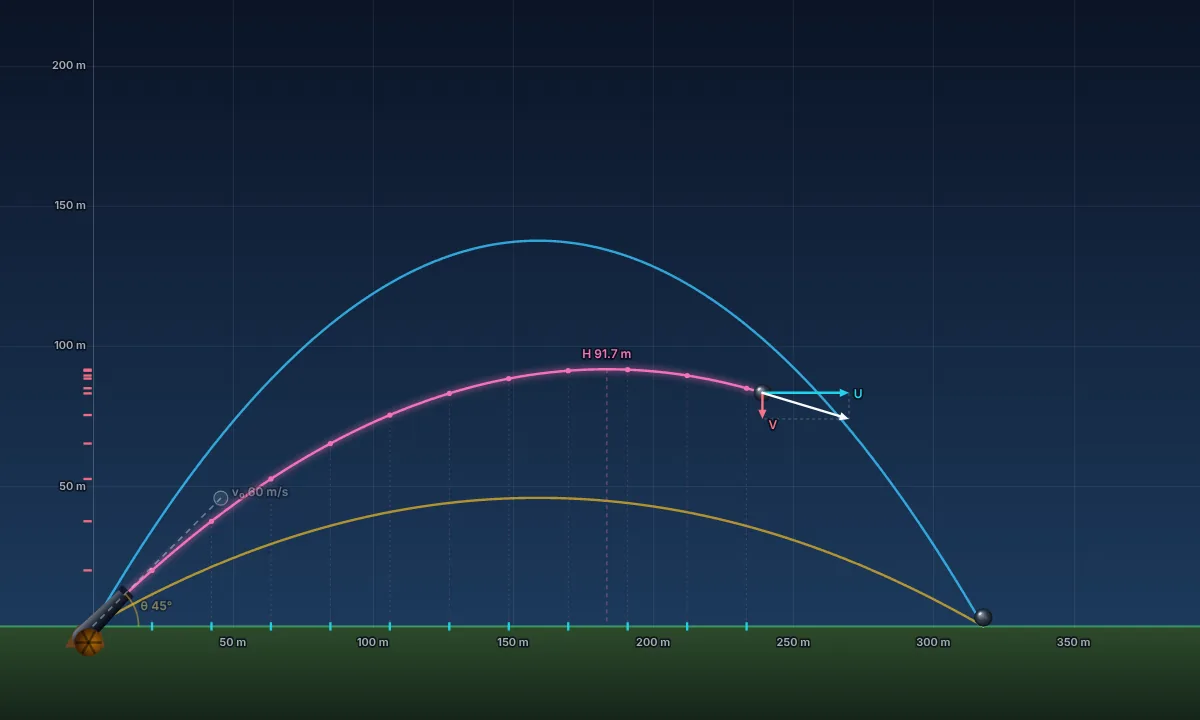
Launch a cannonball, a football or a ping-pong ball and watch gravity bend its path into a parabola. Turn on air resistance, compare launch angles, and follow a ballistic missile on its ellipse around the Earth.
Ballistic trajectory
What is a ballistic trajectory? Why a thrown object flies on a parabola, range and height formulas, how air bends the path and a missile's three phases.
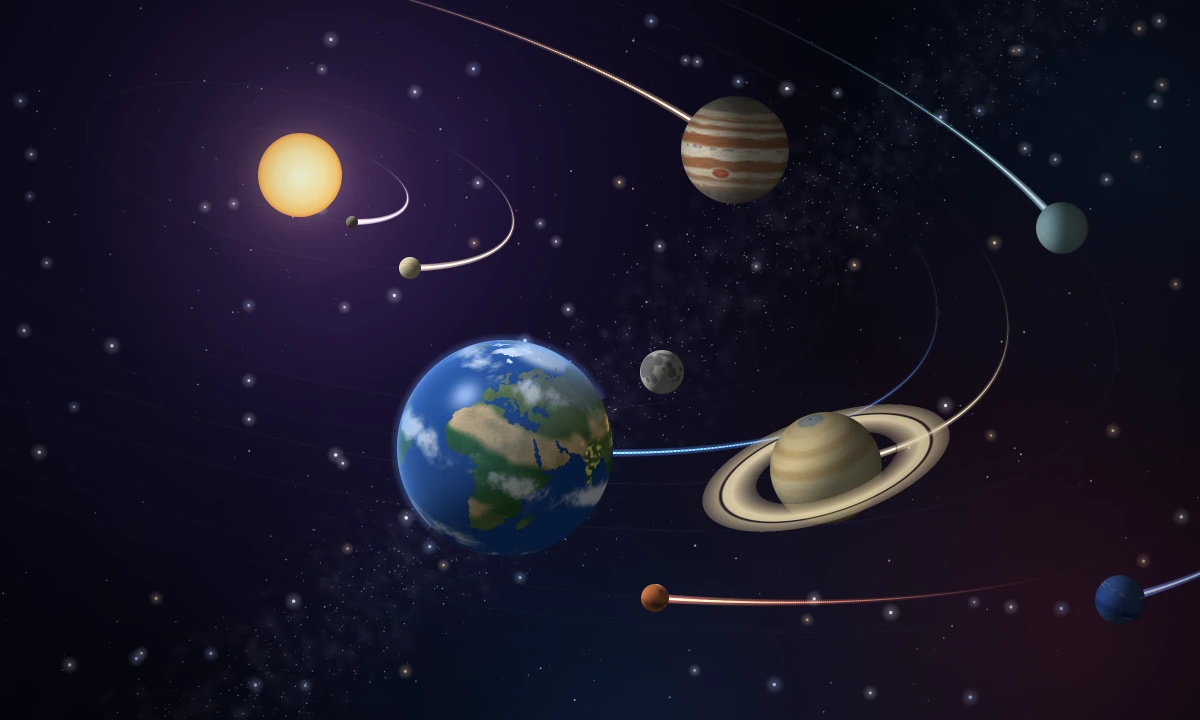
Solar System
Fly through the solar system in 3D in your browser. The sun, eight planets, their largest moons, the dwarf planets, and the Kuiper belt move on their real, tilted orbits under Newton's gravity.
Gravity shapes the solar system
How does gravity shape the solar system? Eight planets and their moons on tilted orbits, the dwarf planets and Kuiper belt, and Jupiter's Galilean moons.

N-Body System
Watch Newton's gravity move stars, planets, and moons in 3D in your browser. Turn the view, and see stable orbits, resonances, slingshots, Trojans, and a chaotic cluster.
Ready to try it?
Open PictorX in your browser — no install, no credit card required to start.
Try Newton's cannon