
Newton's Cannon & Orbital Speed
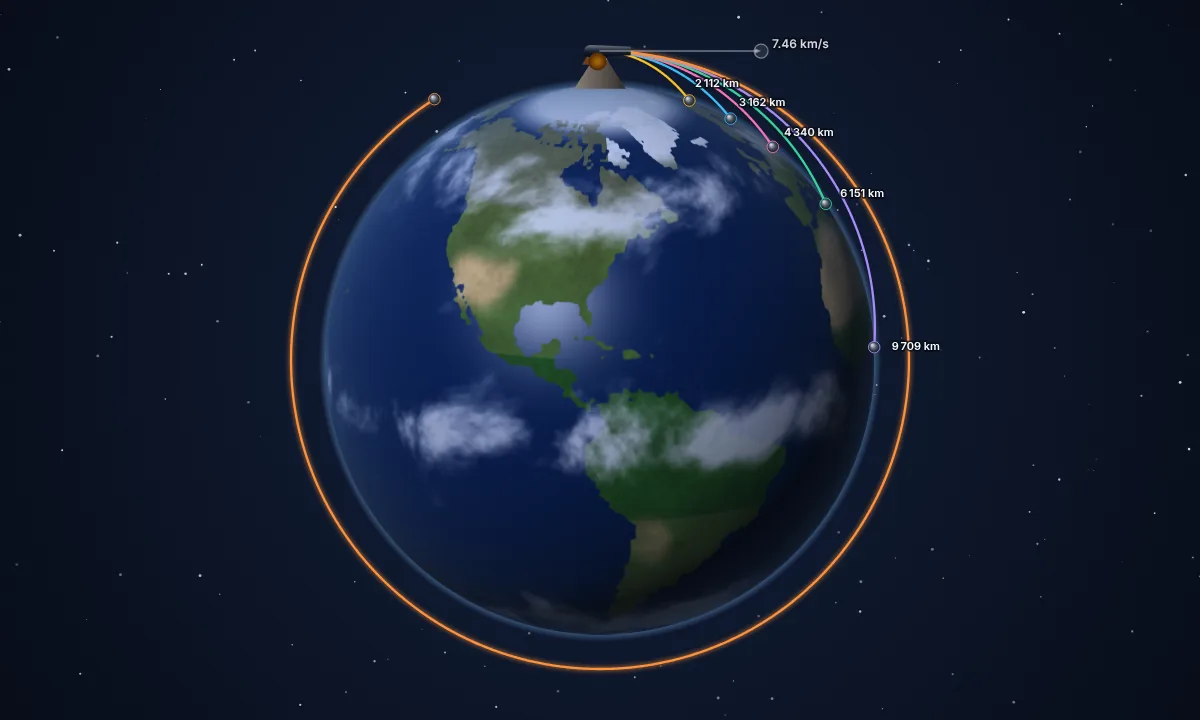
Put a cannon on a mountain so high that it sticks out above the air, and fire it sideways. A slow ball falls back to the ground. A faster one lands further away, because the Earth curves away beneath it. Fire fast enough and the ground curves away exactly as fast as the ball falls: it falls all the way around the Earth and is in orbit. Isaac Newton used this thought experiment to show that the force that pulls an apple down also keeps the Moon going round. Set the launch speed and press Fire, or drag from the cannon to aim. Slow balls fall back to the ground and faster ones land further away. At the circular speed the ball falls all the way around the Earth; faster still, the orbit becomes an ellipse, and past the escape speed the ball never comes back.
How it works
- Set the launch speed and press Fire, or drag from the cannon to aim. Each shot keeps its own colour, so you can compare the paths.
- Press Fire a series to recreate Newton's drawing, or turn on Arrows and Path without gravity to see why the ball keeps missing the ground.
- Go faster than the circular speed for an ellipse, and past the escape speed for a ball that never comes back. Try the Moon and Mars too.
Falling around the Earth
Without gravity the ball would fly off along a straight line. Gravity bends its path toward the centre of the Earth, and at low speed it hits the ground. But the Earth is round: over 8 km the surface drops about 5 m. A ball that falls 5 m in the time it travels 8 km never gets any closer to the ground. That takes about 7.9 km/s just above the surface.
Circular and escape speed
The speed for a circular orbit is v = √(GM/r), where M is the mass of the planet and r the distance from its centre. It gets smaller further out: 7.9 km/s just above the ground, 7.6 km/s from a mountain 500 km high. The escape speed is √2 times as much, about 11.2 km/s at the surface. Faster than that, the ball leaves for good.
Ellipse, parabola, hyperbola
Every path in the app is a conic section with the centre of the planet at one focus. Below the circular speed the ball is on an ellipse whose far end is the cannon; if that ellipse dips below the surface, the ball crashes. Above the circular speed the ellipse grows outward. At exactly the escape speed it opens into a parabola, and beyond it into a hyperbola.
Kepler's equal areas
Turn on Equal areas and the app shades the area that the line from the centre to the ball sweeps out in equal times. On an ellipse the ball races past its low point and dawdles at its high point, yet every slice has the same area. Johannes Kepler found this rule in the orbit of Mars; Newton showed that it holds for any force that pulls toward a centre.
Frequently asked questions
What is Newton's cannon?
A thought experiment from Isaac Newton's De mundi systemate. A cannon on a very high mountain fires horizontally. The faster the shot, the further away it lands, until it is so fast that it goes all the way round the Earth without touching it.
Why does a satellite not fall down?
It does fall, all the time. It moves sideways so fast that the Earth curves away beneath it as fast as it falls. In a low orbit, at about 7.7 km/s, one lap takes about an hour and a half.
Why is the mountain so high?
So that the ball starts above the air. Newton left out air resistance, which would slow a real ball down. The mountain in the app reaches far above the atmosphere, much higher than any real mountain.
Does the ball come back to the mountain?
On a circle or an ellipse, yes: after one lap it returns to the point it was fired from, at the same speed. A real cannon would be hit from behind. In the app the ball simply keeps going round.
Does this upload anything?
No. Everything is calculated and drawn on a canvas in your browser. Save downloads a PNG. Edit opens that image in the PictorX editor.
Related tools
Newton's cannon
What is Newton's cannon? Why a fast enough ball falls around the Earth, circular and escape speed, ellipses, Kepler's equal areas and the Moon's orbit.
Ballistic Trajectory & Projectile Motion
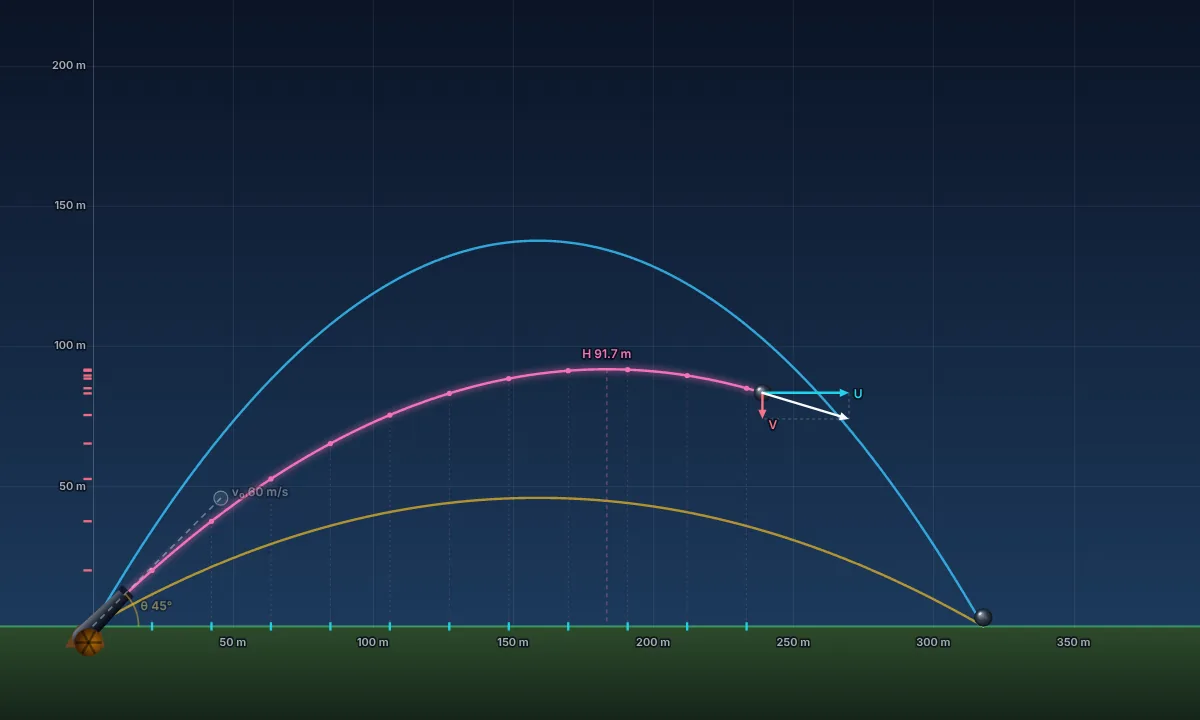
Launch a cannonball, a football or a ping-pong ball and watch gravity bend its path into a parabola. Turn on air resistance, compare launch angles, and follow a ballistic missile on its ellipse around the Earth.
Solar System
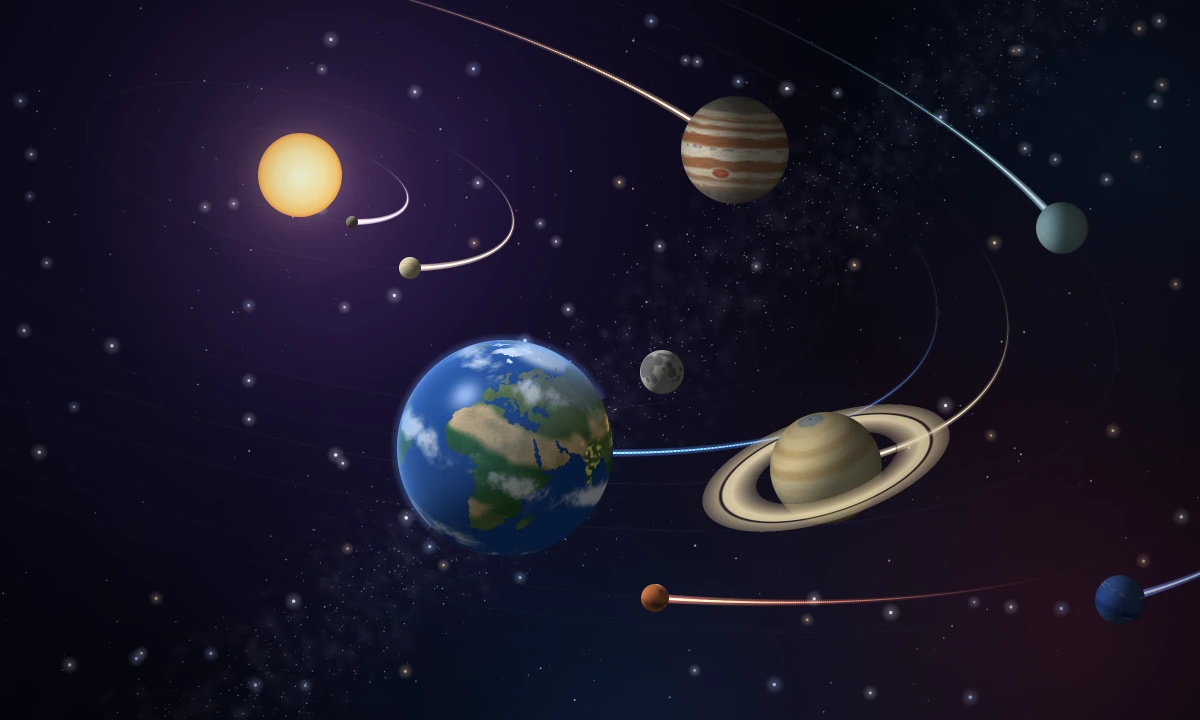
Fly through the solar system in 3D in your browser. The sun, eight planets, their largest moons, the dwarf planets, and the Kuiper belt move on their real, tilted orbits under Newton's gravity.

N-Body System
Watch Newton's gravity move stars, planets, and moons in 3D in your browser. Turn the view, and see stable orbits, resonances, slingshots, Trojans, and a chaotic cluster.
Newton's cradle
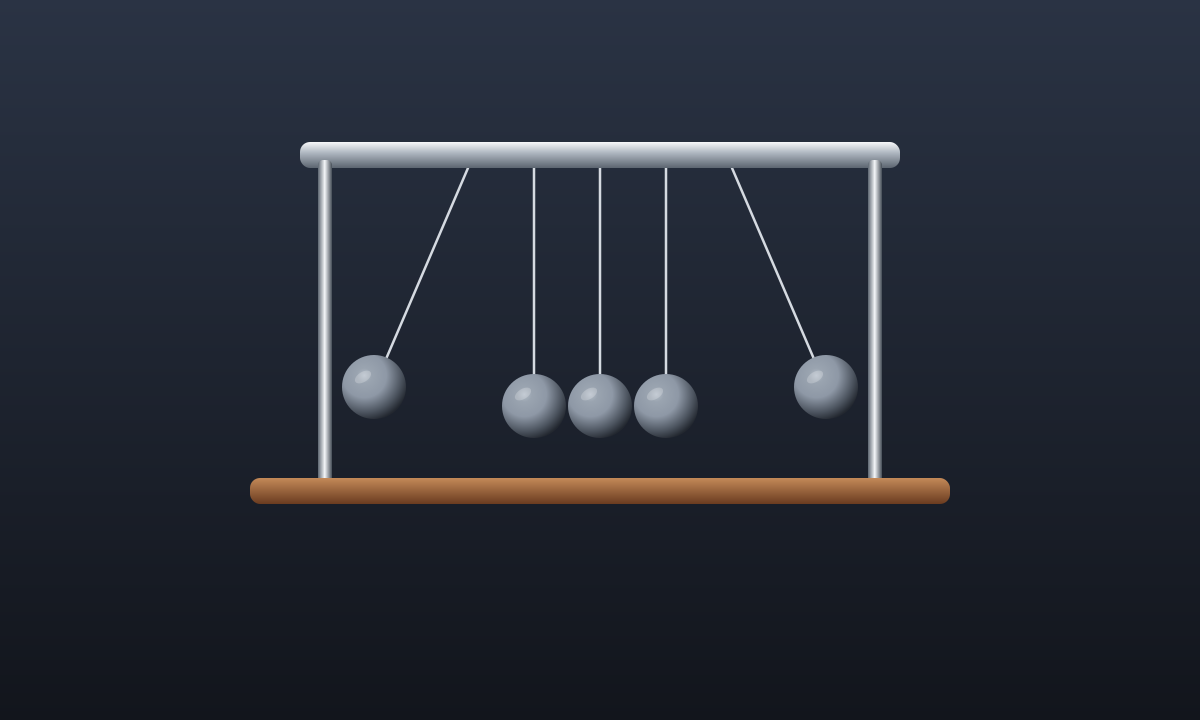
Lift a steel ball and let it fall. The click sends that motion out the other side. Watch height turn into motion as the cradle swings.
Brachistochrone race
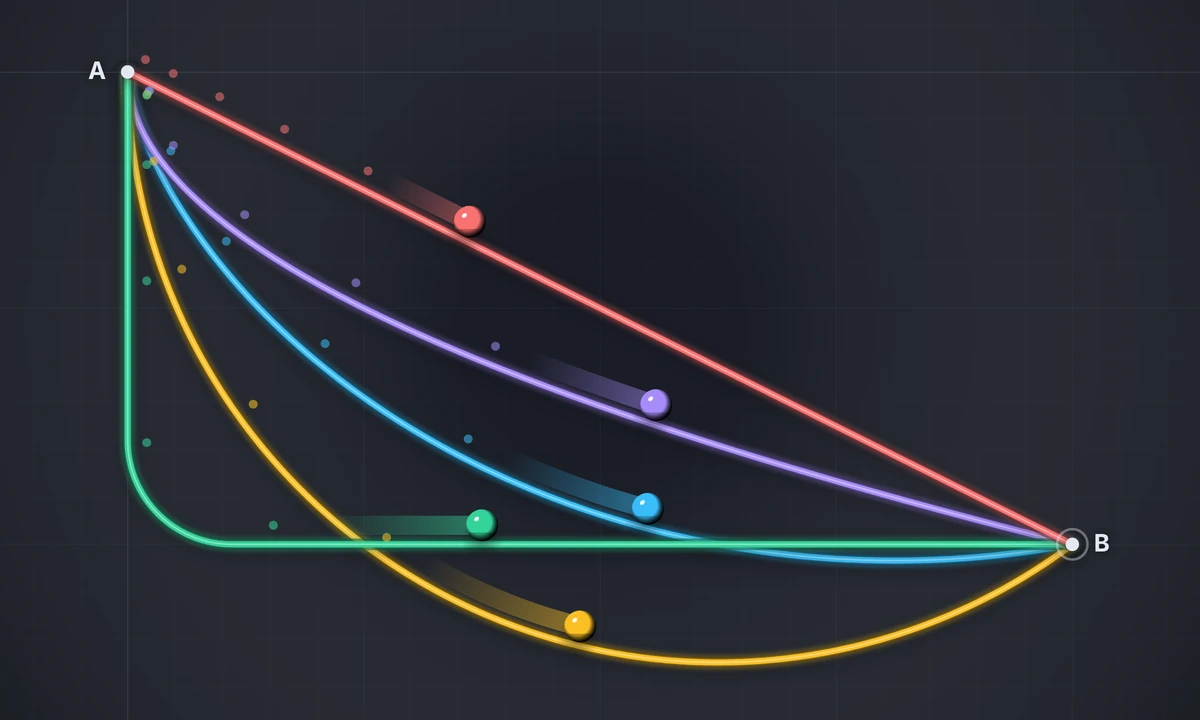
Race balls from A to B on a straight ramp, a circle, a parabola, and a cycloid. The cycloid always wins, even when it dips below the finish. Draw your own track.
Ready to try it?
Open PictorX in your browser — no install, no credit card required to start.
Go to Editor