
About Checkers - History, Rules, Variants and Chinook
Checkers, or draughts, is one of the oldest board games still played. It looks simple, with one kind of piece that moves diagonally, but compulsory captures make it a game of sharp tactics and deep endgames. This page tells where it came from, compares the two main sets of rules and explains how computers learned to play it perfectly.
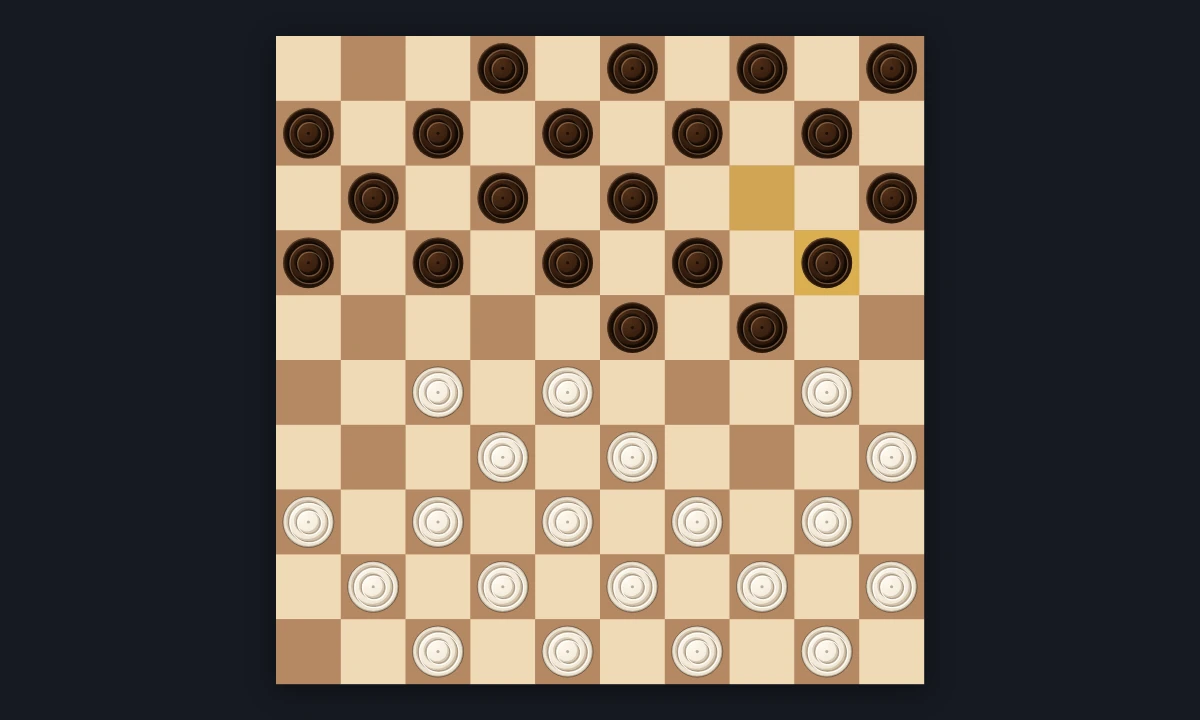
A short history
Games of jumping pieces are ancient, but checkers as we know it appeared in southern France around the twelfth century, when the pieces of the game alquerque were moved onto a chessboard. Compulsory capture became a rule in the sixteenth century. The game spread to Britain and America as draughts and checkers, while in the Netherlands and France the larger 10×10 game grew in the eighteenth century and became International draughts.
The board and the pieces
Only the dark squares are used, and each player starts with men on the dark squares of the rows nearest to them: three rows of twelve men on 8×8, four rows of twenty on 10×10. A man that reaches the far row is crowned and becomes a king.
English checkers
In English checkers, also called American checkers, Black moves first. Men move and capture only forwards, one square at a time. Kings move one square along any diagonal, forwards or backwards. Capturing is compulsory, a jump must be continued as long as possible, but you may choose any capture. A man crowned during a jump stops there.
International draughts
International draughts is played on 10×10 with twenty men each, and White moves first. Men move forwards but may capture backwards too. Kings fly: they move and capture along a whole diagonal and may land on any empty square beyond the piece they take. You must take the largest number of pieces possible, and captured pieces are removed only after the whole jump, so none can be jumped twice.
How the computer plays and Chinook
The computer on PictorX looks ahead with an alpha-beta search that deepens step by step until its time runs out, remembers positions it has already scored, and always plays out captures before judging a position. It counts material, values kings, advanced men, the back row, the centre and mobility. In 1994 the program Chinook, built by Jonathan Schaeffer's team at the University of Alberta, became the first computer to win a human world championship, and in 2007 the team proved that with perfect play by both sides checkers is a draw.
Frequently asked questions
Is checkers solved?
Yes. In 2007 the Chinook team proved that English checkers is a draw when both sides play perfectly. The proof took eighteen years of computation. International draughts on 10×10 has not been solved.
What is the difference between checkers and draughts?
They are the same family of games. Checkers is the American name and draughts the British one for the 8×8 game; International draughts is the larger 10×10 game with flying kings, popular in the Netherlands, Africa and Eastern Europe.
Is capturing compulsory?
Yes, in both English checkers and International draughts. If you can jump, you must, and a multi-jump must be finished.
Who moves first?
In English checkers Black moves first, in International draughts White does.
Related tools
Checkers
Play checkers in your browser: English checkers on 8×8 or International draughts on 10×10, with compulsory captures, multi-jumps and kings. Play the computer from Easy to Hard, a friend, or watch the computer play itself.
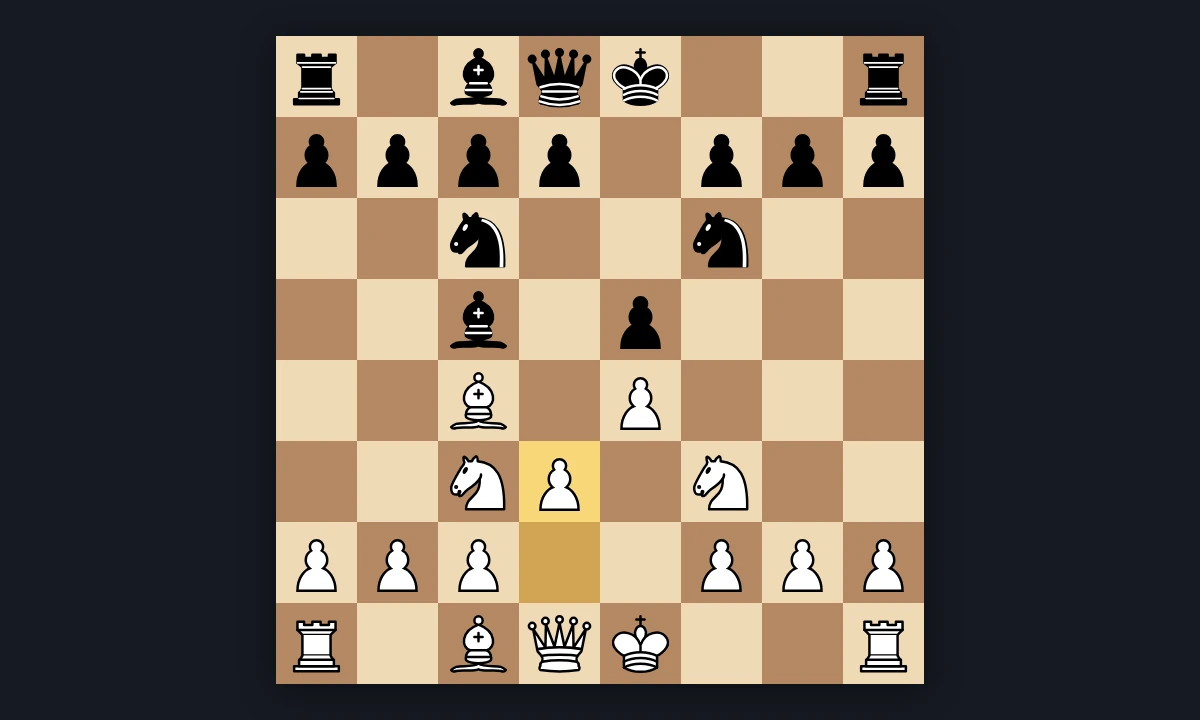
About Chess - History, Rules and How the Computer Plays
A short guide to chess: where it came from, how the pieces move, the special moves and draws, and how a simple chess computer chooses its moves with minimax and alpha-beta search.
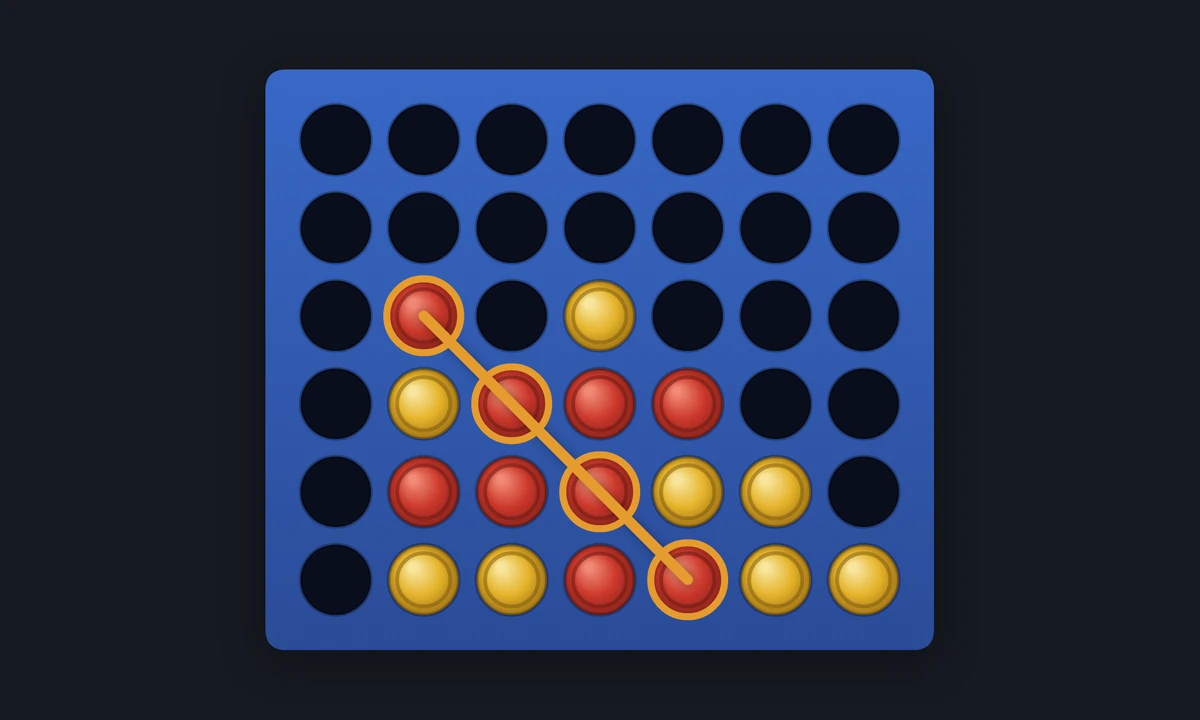
Connect Four - history, rules, and strategy
Connect Four, Vier op 'n rij in Dutch: its history since 1974, the rules, the strategy of threats and the middle column, and how James D. Allen and Victor Allis solved it in 1988.
Chess
Play chess in your browser with all the rules: castling, en passant, promotion, check and checkmate. Play the computer from Easy to Expert, a friend on the same screen, or watch the computer play itself.
Connect Four
Play Connect Four in your browser: drop red and yellow discs and get four in a row to win. Play a friend on the same screen, or the computer from Easy to Hard. Or watch the computer play itself.
Ready to try it?
Open PictorX in your browser — no install, no credit card required to start.
Play checkers