
Setzen Sie ein Foto in einen surrealistischen Traum — Dalís weiche Uhren, Magrittes Melonen oder De Chiricos Piazza — wählen Sie einen Künstler und einen Stil und passen Sie dann Verzerrung und Verträumtheit an.
Unbestimmte Teilbarkeit – Surrealismus, Dalí und Magritte
The Surrealists painted dreams with the precision of a photograph, or let chance take over. This app puts your photo into one of their pictures: choose Salvador Dalí for soft watches, elephants on stilt legs and crutches, René Magritte for green apples, bowler hats and blue skies, or Other for De Chirico's empty squares, Max Ernst's crusts, Tanguy's endless plains, Carrington's giantess, Varo's tower and Man Ray's solarized prints. All processed on-device. Setzen Sie ein Foto in einen surrealistischen Traum — Dalís weiche Uhren, Magrittes Melonen oder De Chiricos Piazza — wählen Sie einen Künstler und einen Stil und passen Sie dann Verzerrung und Verträumtheit an.
Wie es funktioniert
- Open PictorX in your browser and load a photo — portraits with a clear subject work best.
- Pick an Artist—Salvador Dalí, René Magritte or Other for the rest of the Surrealists—then one of their Styles and a Palette, and adjust Distortion, Dreaminess, Detail, Shadows and Floating Objects. Turn on Remove background for a cleaner cutout of the subject.
- Export the painting, or keep editing with layers and other effects in the same workspace.
Salvador Dalí, René Magritte or another Surrealist
The Artist list at the top of the panel chooses whose dream you step into, and the Style list below it shows that artist's pictures. Salvador Dalí has seven: Persistence of Memory, Elephants, Galatea of the Spheres, Swans Reflecting Elephants, Burning Giraffe, Sleep and Leda Atomica. René Magritte has eight: Son of Man, Golconda, Empire of Light, Decalcomania, The Lovers, Treachery of Images, Great Family and Castle of the Pyrenees. Other gathers the rest of the movement: De Chirico's Metaphysical, Max Ernst's Europe after the Rain, the Exquisite Corpse, Yves Tanguy's Indefinite Divisibility, Leonora Carrington's The Giantess, Remedios Varo's Embroidering the Earth's Mantle and Man Ray's Solarization.
Seven dreams after Dalí
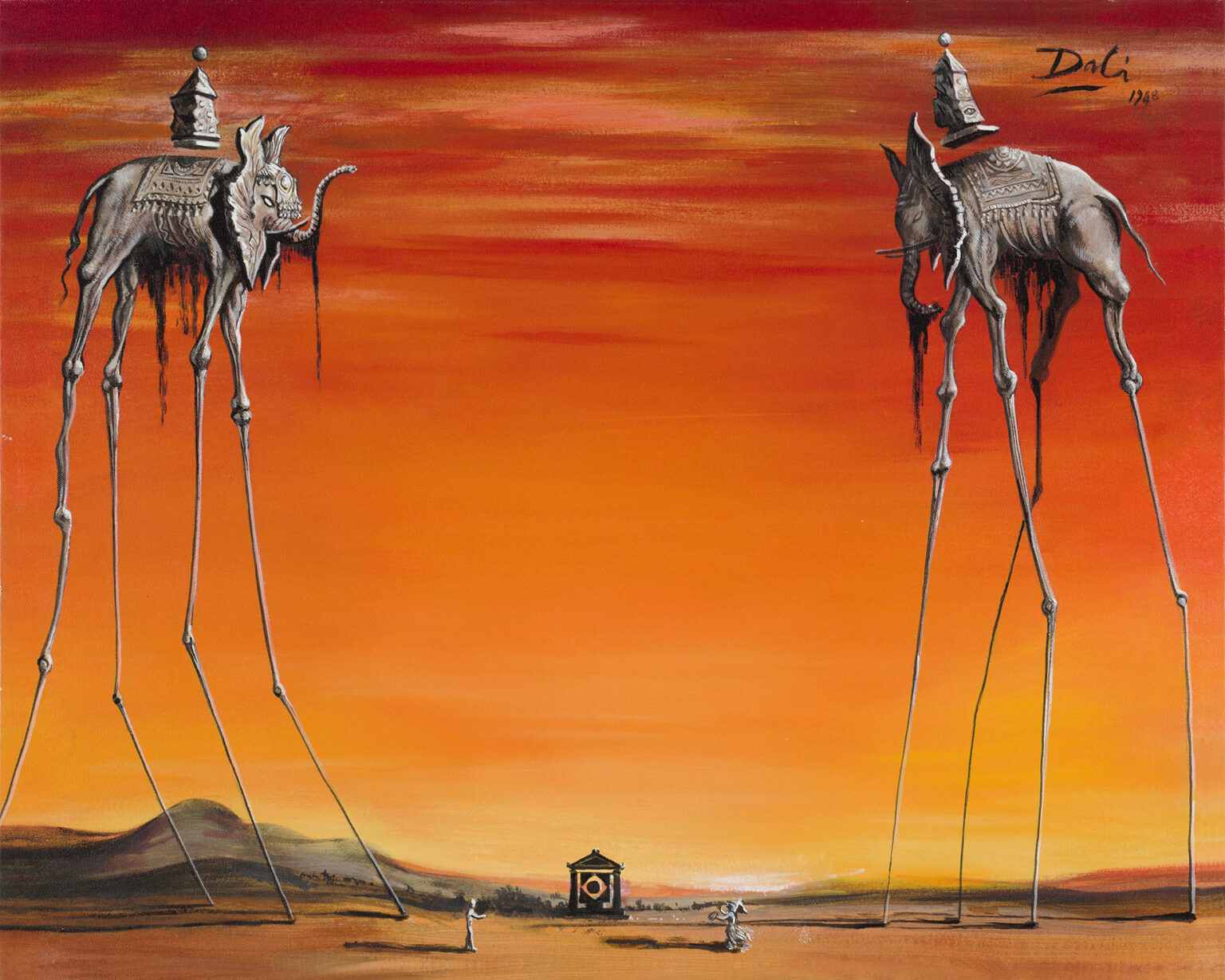
Persistence of Memory follows the painting of 1931: your photo goes soft and droops over the edge of a ledge beside a melting watch, in a bare landscape of golden cliffs and a calm sea. Elephants sets the subject on a plain at sunset between elephants on impossibly long, thin legs that carry obelisks. Galatea of the Spheres rebuilds the subject from shaded spheres floating in space. Swans Reflecting Elephants stands it on the shore of a still lake among the rocks of Cap de Creus, where swans float on the water and their reflections are elephants. Burning Giraffe opens drawers in the figure, props it up with crutches and sets a giraffe on fire far off on a blue evening plain. Sleep turns it into a huge soft mass hanging in the air on crutches, and Leda Atomica lets everything float: the figure in separate slabs, the sea above the beach, and an egg, a book and a stool in the air.
Eight impossible pictures after Magritte
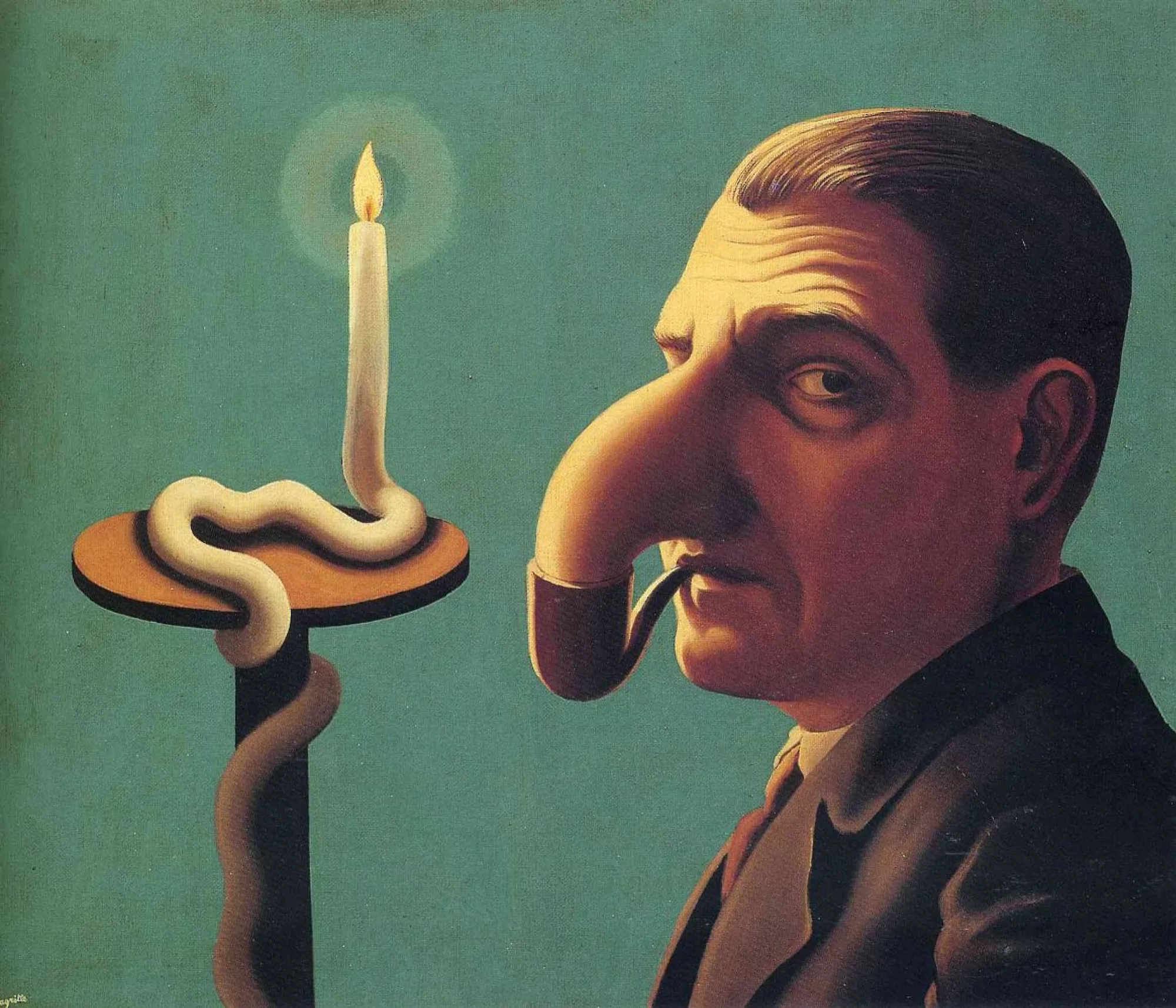
Son of Man sets the subject before a low wall, a grey sea and a blue sky of cumulus clouds, with a green apple floating before the face and bowler hats drifting overhead. Golconda fills the air with men in bowler hats before plain houses with red roofs. Empire of Light puts a bright day sky over a street already deep in the night, with a street lamp and lit windows. Decalcomania stands the subject beside a curtain with their silhouette cut out of it, through which the sea and sky continue. The Lovers wraps the head in a white cloth, in a room with a red wall and a wall painted as sky. Treachery of Images paints the subject plainly on a bare ground above the handwritten words “Ceci n'est pas une photo.” Great Family fills the subject's silhouette with a bright day sky against a stormy sea, and Castle of the Pyrenees sets the subject on a huge rock floating over the waves, beside a small castle.
De Chirico, Max Ernst and the Exquisite Corpse
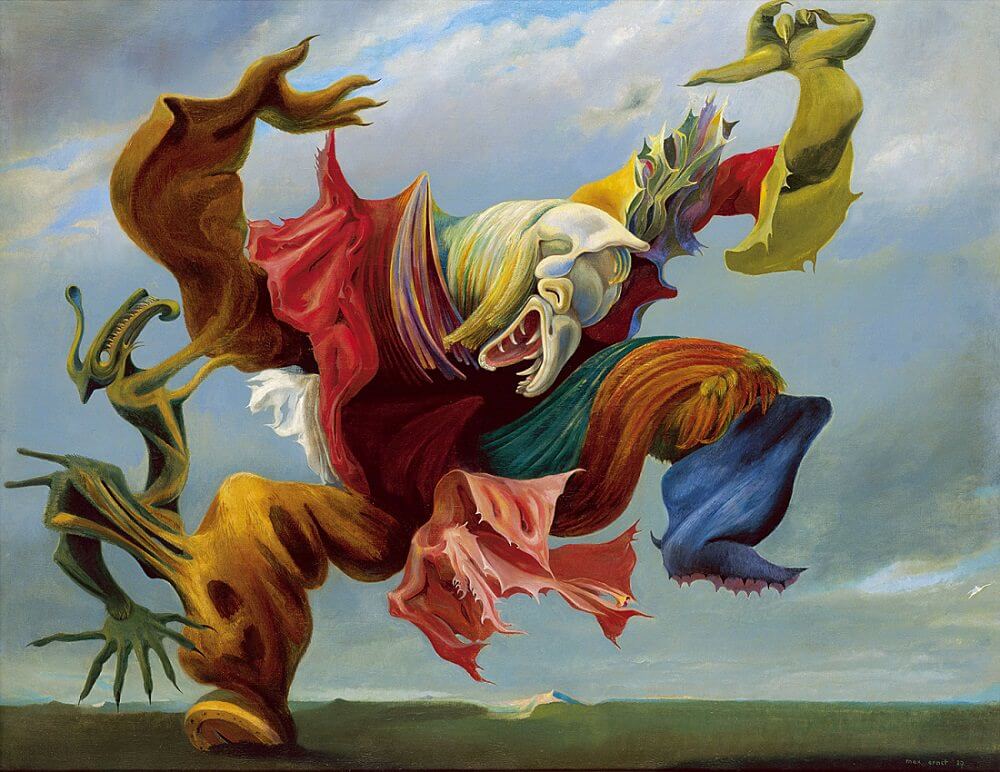
Metaphysical follows Giorgio de Chirico, setting the subject as a statue on a plinth in an empty square with an arcade, a green sky, long shadows, a red chimney and a little train. Europe after the Rain follows Max Ernst, pressing the photo into decalcomania crusts of rust and verdigris under a clear sky and a ring-shaped sun. Exquisite Corpse cuts the picture into bands drawn in ink, pencil, watercolour and halftone, like the Surrealists' folding game in which each player adds a part without seeing the others.
Tanguy, Carrington, Varo and Man Ray
Indefinite Divisibility follows Yves Tanguy, turning the subject into a smooth stone form on an endless plain that melts into the sky without a horizon, among bone-like shapes that throw long, crisp shadows. The Giantess follows Leonora Carrington: the subject towers over a tiny landscape of sea, ships and wheat in a long pale cloak, guarding an egg while geese fly from her cloak and little people look up at her feet. Embroidering the Earth's Mantle follows Remedios Varo, setting the subject in the window of a round tower while threads spill down and become an embroidered landscape, all covered in her fine, hair-thin brushstrokes. Solarization follows Man Ray's photographs of about 1930: a silver print whose highlights fold over into dark, with pale lines glowing along the edges, and rayograph objects—a key, a spiral, a comb, a pair of lips—around it.
From a hint to a strange dream
Distortion sets how strange the scene becomes: how far Dalí's photo melts or his elephants' legs grow, how high Magritte's subject floats or how far his night rises into the day sky, how steep De Chirico's perspective is or how far the Exquisite Corpse's bands shift. Dreaminess smooths the photo into glazed paint and tones it towards the palette; Detail adds clouds, swans, hats, arches, crusts, forms or threads; Shadows deepens the shadows. Palette chooses the light—Dream for each painter's own colours, Photo to keep your hues, Dusk, Night or Desert—and Floating Objects adds the watches, crutches, apples, bowler hats, castle, caption, the chimney and the train, Carrington's geese or Man Ray's rayograph objects. Remove background cuts out the subject first, so it stands cleanly in the scene.
Privacy and keep editing
Processing stays in your browser—photos are not uploaded to PictorX servers for this filter. After Surrealism, Dalí and Magritte, continue with layers, text, Picasso and Cubism, Matisse and Fauvism, Pop Art, or export.
Häufig gestellte Fragen
Was macht die App Surrealismus, Dalí und Magritte?
Sie verwandelt ein Foto in ein traumartiges Gemälde nach den Surrealisten. Wählen Sie einen Künstler: Salvador Dalí lässt es zerfließen wie die weichen Uhren aus Die Beständigkeit der Erinnerung, stellt es zwischen langbeinige Elefanten oder stützt es auf Krücken; René Magritte setzt einen grünen Apfel vor das Gesicht, füllt den Himmel mit Männern mit Melone oder schreibt „Ceci n'est pas une photo“ darunter; Andere versetzt es auf De Chiricos leere Piazza, in Max Ernsts Krusten, einen Cadavre exquis, Tanguys endlose Ebene, zu Carringtons Riesin, in Varos Turm oder in eine Solarisation von Man Ray. Es entsteht aus Ihrem Foto und ist keine Kopie eines Museumsgemäldes.
Was war der Surrealismus?
Eine Kunst- und Literaturbewegung, die 1924 in Paris gegründet wurde, als André Breton das Manifest des Surrealismus veröffentlichte. Ihre Maler, darunter Salvador Dalí, René Magritte, Max Ernst und Joan Miró, schöpften aus Träumen, Zufall und dem Unbewussten und malten oft unmögliche Szenen mit großem Realismus. Giorgio de Chiricos frühere metaphysische Gemälde hatten großen Einfluss.
Wer waren Salvador Dalí und René Magritte?
Die beiden bekanntesten Maler des Surrealismus. Salvador Dalí (1904–1989) aus Katalonien in Spanien malte Traumbilder mit der Präzision eines alten Meisters – zerfließende Uhren, Elefanten auf Stelzenbeinen, Krücken, Schubladen und Doppelbilder – und war für seinen gewachsten Schnurrbart und seine Selbstinszenierung ebenso berühmt wie für seine Bilder. René Magritte (1898–1967), ein Belgier, der vor allem in Brüssel arbeitete, malte alltägliche Dinge mit großer Klarheit und brachte sie in unmögliche Situationen: Seine Männer mit Melone, seine grünen Äpfel und seine blauen Himmel mit weißen Wolken sind auf der ganzen Welt bekannt.
Wer waren Tanguy, Carrington, Varo und Man Ray?
Yves Tanguy (1900–1955) war ein französischer Maler endloser Traumebenen, übersät mit glatten, knochenartigen Formen. Leonora Carrington (1917–2011), geboren in England, und Remedios Varo (1908–1963), geboren in Spanien, wurden in Mexiko-Stadt enge Freundinnen und malten magische Welten voller Riesinnen, Türme, Alchemisten und Reisender. Man Ray (1890–1976), ein Amerikaner in Paris, brachte den Surrealismus mit seinen kameralosen Rayografien und seinen solarisierten Porträts in die Fotografie.
Was ist ein Cadavre exquis?
Ein surrealistisches Spiel, bei dem mehrere Personen auf einem gefalteten Blatt nacheinander an einer Zeichnung oder einem Satz weiterarbeiten, ohne zu sehen, was die anderen gemacht haben, sodass die Teile nie ganz zusammenpassen. Der Stil Cadavre exquis ahmt das nach, indem er jeden Streifen Ihres Fotos in einer anderen Technik zeichnet und gegeneinander versetzt.
Was bedeutet „Ceci n'est pas une photo“?
„Das ist kein Foto.“ Der Satz spielt auf Magrittes Gemälde Der Verrat der Bilder (1929) an, auf dem unter einer gemalten Pfeife die Worte „Ceci n'est pas une pipe“ stehen: Ein Bild ist nur ein Abbild eines Dings, nicht das Ding selbst.
Ist das ein offizielles Dalí- oder Magritte-Produkt?
Nein. Die App Surrealismus, Dalí und Magritte von PictorX ist eine digitale Hommage, inspiriert von ihren Gemälden. Sie steht in keiner Verbindung zur Fundació Gala-Salvador Dalí, zur Fondation Magritte oder zu den Nachlässen der Künstler, sie gibt keines ihrer Werke wieder, und jedes Bild, das sie erzeugt, entsteht aus Ihrem eigenen Foto.
Welche Fotos eignen sich am besten?
Porträts und Fotos mit einem klaren Motiv, denn die meisten Stile schneiden das Motiv aus und setzen es in eine neue Szene – schalten Sie „Hintergrund entfernen“ ein, um den saubersten Umriss zu erhalten. Dalís „Die Beständigkeit der Erinnerung“ sowie „Europa nach dem Regen“, „Cadavre exquis“ und „Solarisation“ unter „Andere“ funktionieren mit jedem Foto, auch mit Landschaften und Gebäuden.
Verwandte Tools
Surrealismus
Was war der Surrealismus? Bretons Manifest 1924, De Chirico, Dalís weiche Uhren, Magrittes Äpfel und Pfeifen, Ernst, Miró, das Cadavre exquis und das Erbe.
Salvador Dalí
Wer war Salvador Dalí? Der Surrealist, seine zerfließenden Uhren der „Beständigkeit der Erinnerung“, Elefanten, Hummertelefon und sein Museum in Figueres.
René Magritte
Wer war René Magritte? Der belgische Surrealist hinter Der Menschensohn, Ceci n'est pas une pipe, den Melonen und Das Reich der Lichter – und was sie bedeuten.
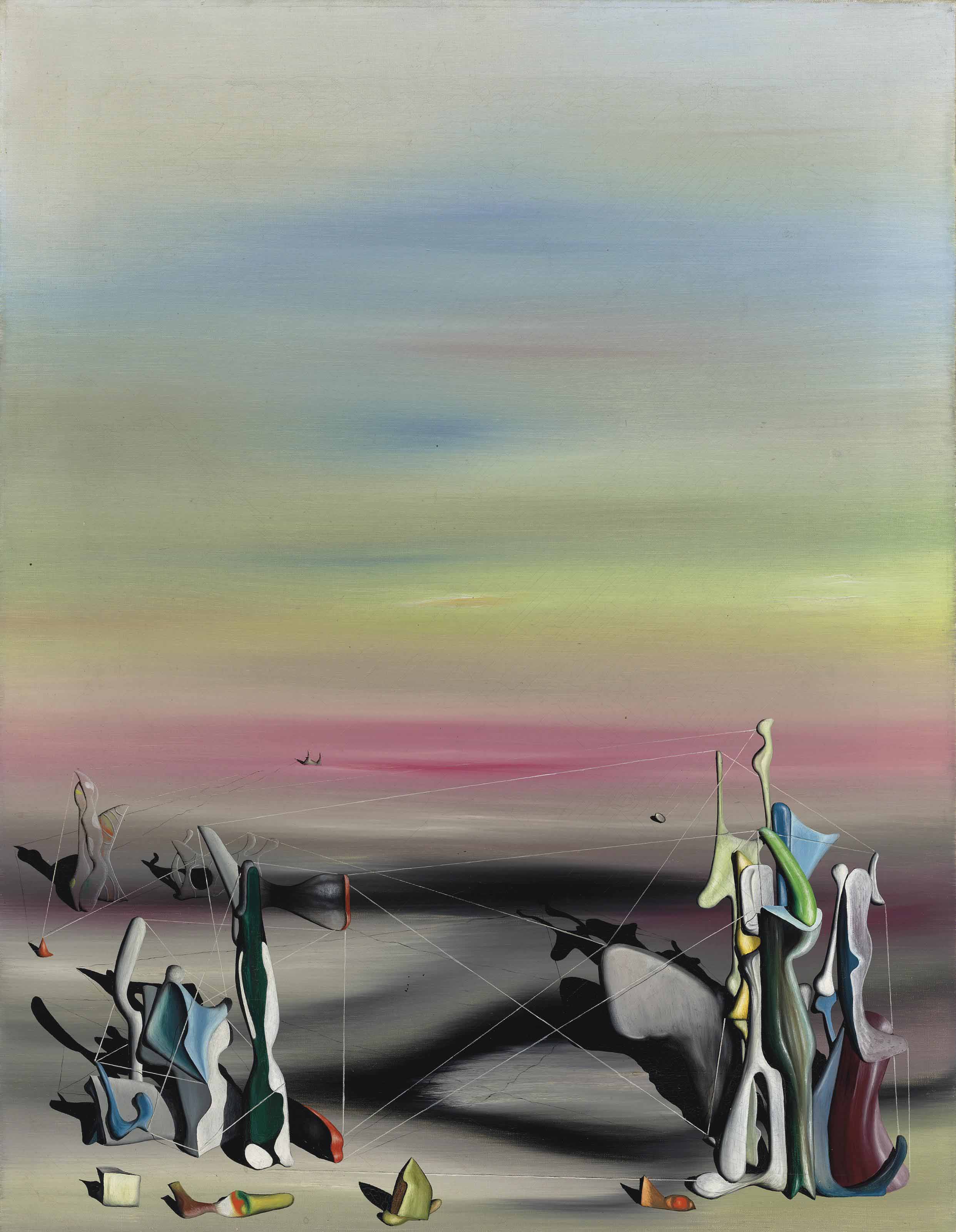
Yves Tanguy
Wer war Yves Tanguy? Der autodidaktische bretonische Surrealist: ein De Chirico vom Bus aus, Mama, Papa ist verwundet!, Ebenen ohne Horizont, Kay Sage, Amerika.
Op-Art: Ihr Foto als optische Täuschung
Verwandeln Sie ein Foto im Browser in Op-Art: Dalís Galatea der Sphären, Vasarelys Vega, Bridget-Riley-Wellen, Relieflinien, Moiré, Spiralen und verzerrte Raster – im Motiv oder in einer Form, still oder animiert.
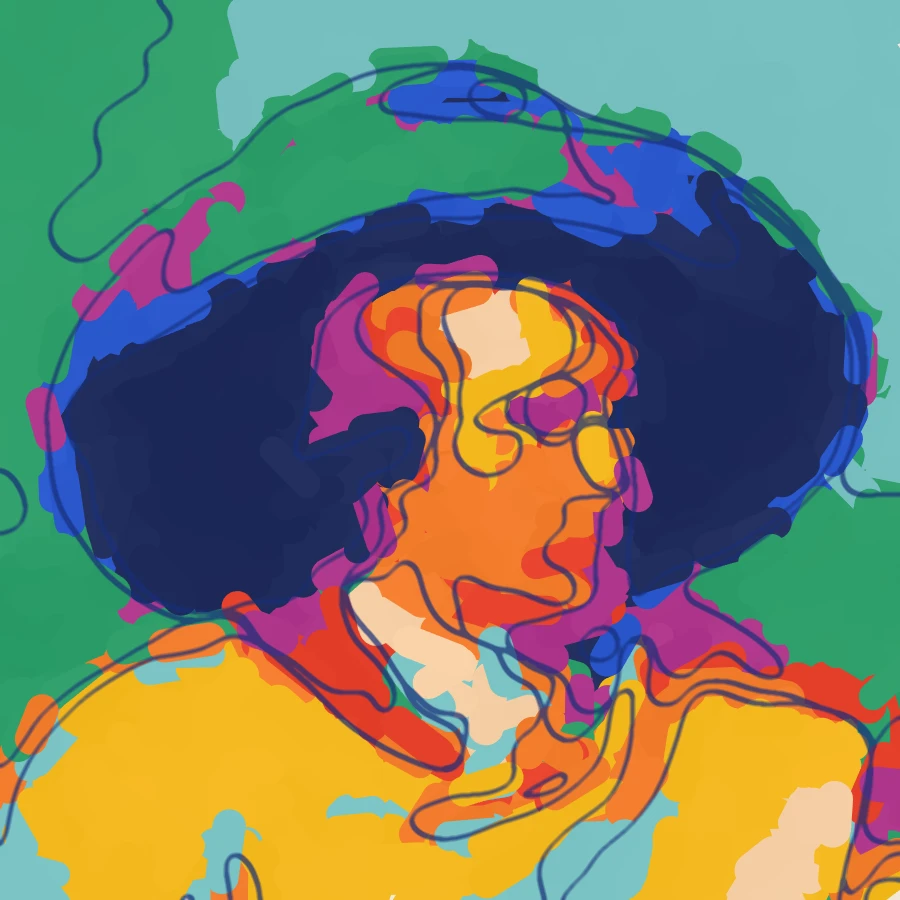
Henri Matisse und der Fauvismus
Verwandeln Sie ein Foto im Browser in Henri Matisse und den Fauvismus: Scherenschnitte wie Jazz und die Blauen Akte, Harmonie in Rot, eine fließende Strichzeichnung oder die wilde fauvistische Farbe von Matisses Frau mit Hut, Collioure, Derains London und Vlaminck.
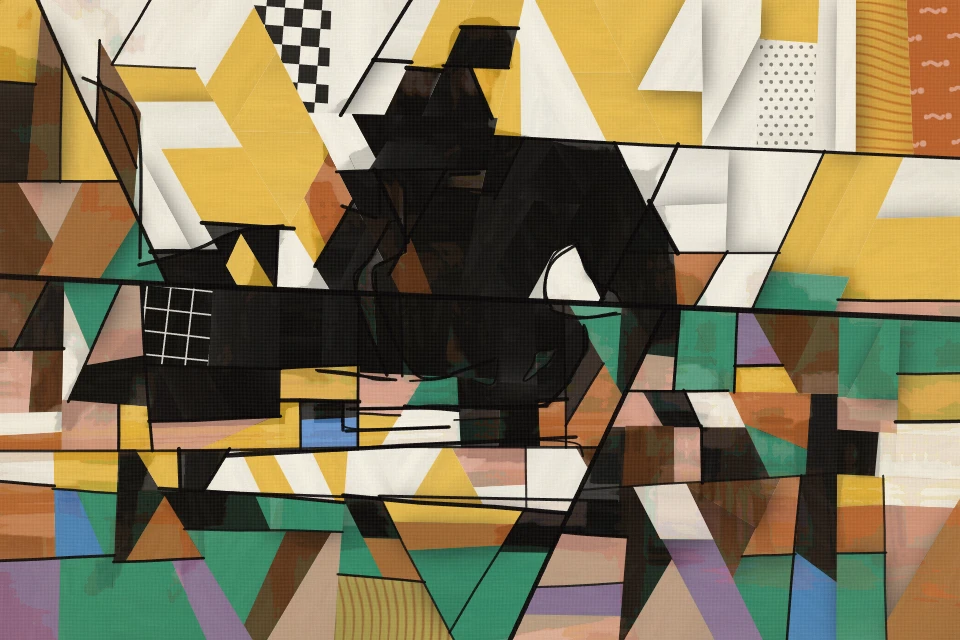
Pablo Picasso und der Kubismus
Verwandeln Sie ein Foto im Browser in Pablo Picasso und den Kubismus: die Blaue und die Rosa Periode, analytischer oder synthetischer Kubismus, ein kubistisches Porträt, Papier collé, kristalliner Kubismus, die zersplitterten Porträts der Weinenden Frau oder die schwarz-weißen Splitter von Guernica.
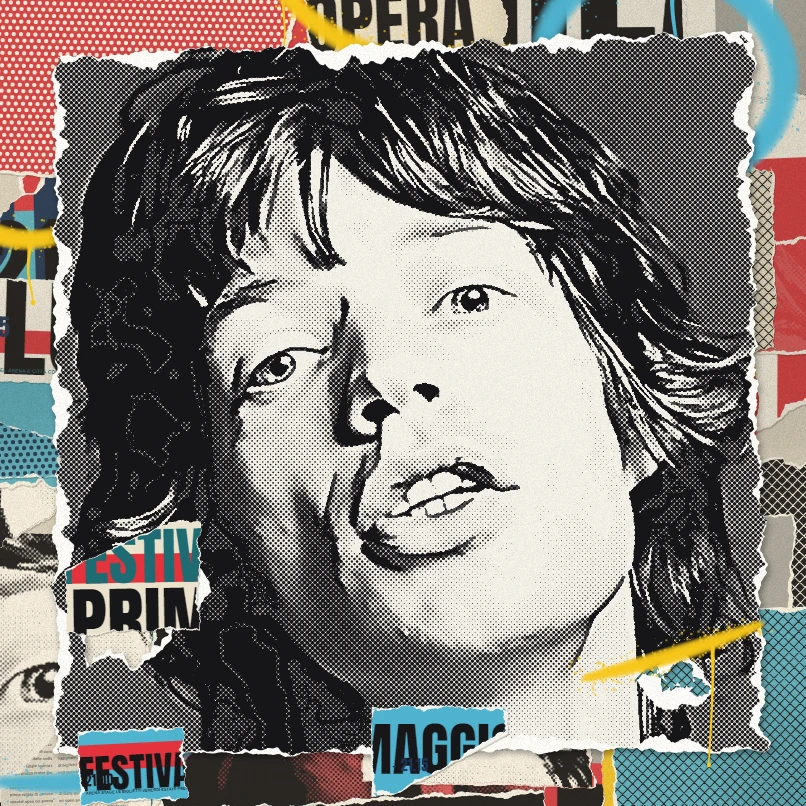
Pop-Art-Fotofilter
Verwandeln Sie ein Foto im Browser in Pop-Art: ein Retro-Pop-Poster, ein Pop-Muster, ein WPAP-Porträt in Regenbogenfacetten, eine Street-Collage, einen Tuschespritzer, Blattgold, eine Silhouette, einen Strahlenkranz oder ein Raster aus Pop-Emblemen.
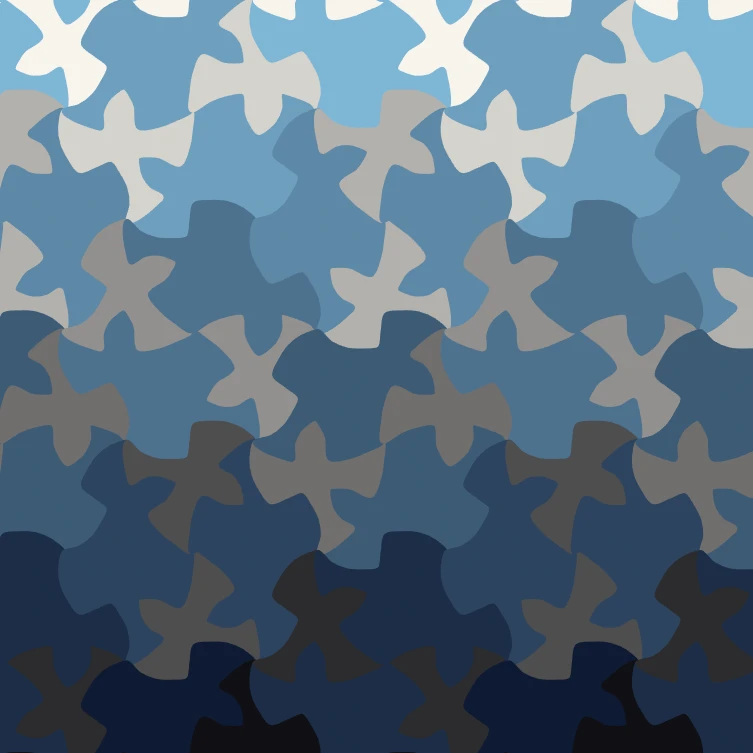
M.C.-Escher-Parkettierung erstellen
Parkettierungen im Stil von M.C. Escher online: verzahnte Eidechsen, Vögel, Fische, Pegasus und mehr. Motiv umformen, umfärben, als PNG oder SVG speichern.
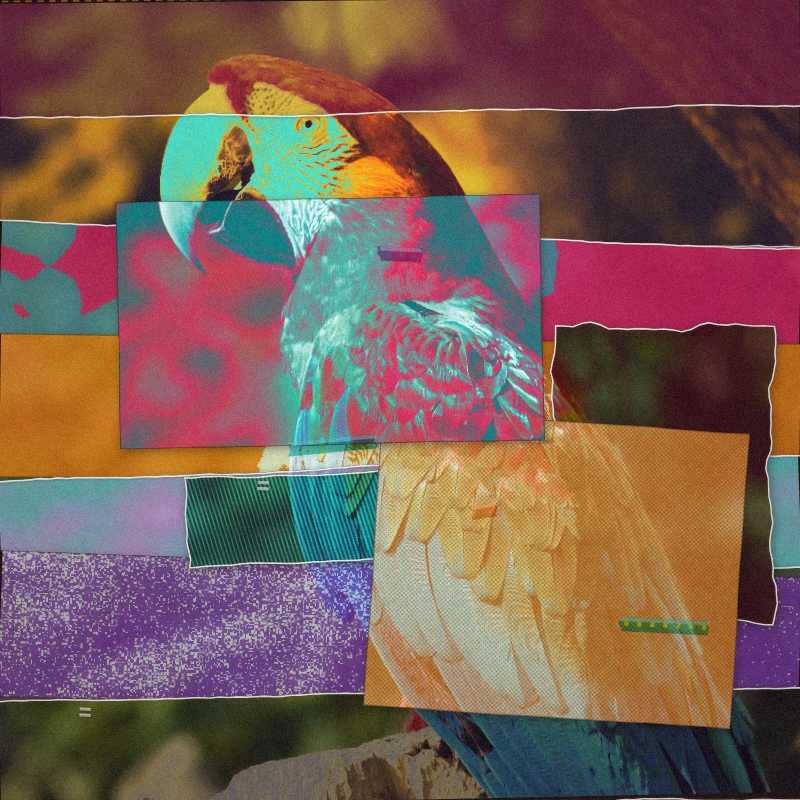
Verwandeln Sie ein Foto in eine Mixed-Media-Collage
Bauen Sie ein Foto im Browser als Mixed-Media-Collage neu auf—zerrissene Schnipsel, Drucktexturen, Klebeband und Xerox.
Künstlerische Effekte
Verwandeln Sie Fotos mit Ölgemälden, Aquarellen, Bleistiften, Comic-Tusche, Pastellkreiden, Papierausschnitten und anderen Studiokunst-Looks.
Bereit, es auszuprobieren?
Öffnen Sie PictorX in Ihrem Browser – keine Installation, zum Starten ist keine Kreditkarte erforderlich.
Zum Editor