
About Spades - history, rules and strategy
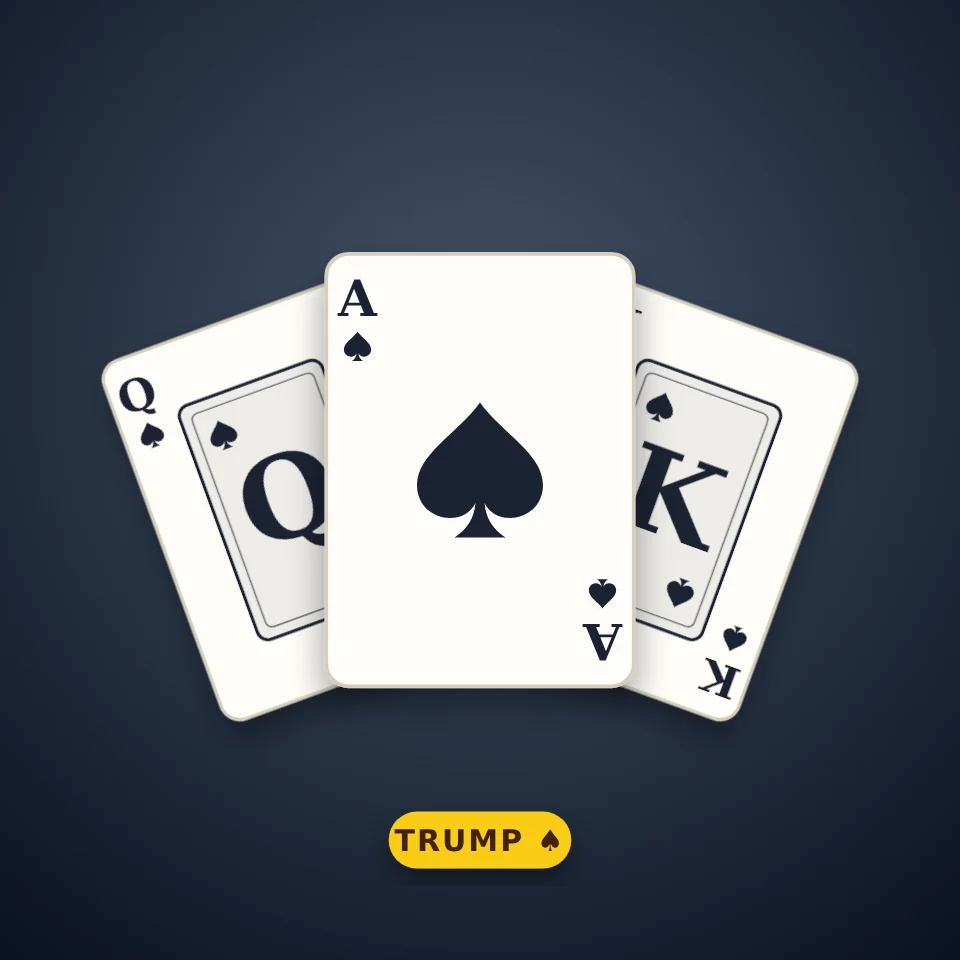
Spades is a partnership trick-taking game in which spades are always trump and every player says in advance how many tricks they will take. This page tells where it comes from, how bidding, play and scoring work, what Nil and bags mean, and how to play well with a partner.
Where it comes from
Spades belongs to the Whist family of trick-taking games, the same family as Bridge. It appeared in the United States in the 1930s and spread widely in the 1940s; it is often said that American soldiers carried it around the world during the Second World War. It took from Bridge the idea of bidding a number of tricks, but keeps a fixed trump suit and a much simpler auction.
Spades today
Spades remained a favourite in the United States, among college students, in the armed forces and at family tables, and moved online early: Windows Me and Windows XP came with Internet Spades, played against other people over the internet, and it returned in Windows 7. House rules differ from table to table, so players usually agree on them before the first deal.
How a hand is played
Four players in two partnerships sit with partners facing each other, and each gets 13 cards. After the bidding, the player to the dealer's left leads to the first trick. Everyone must follow the suit led if they can; a player who cannot may play any card, including a spade. The trick goes to the highest spade in it, or, if it holds no spade, to the highest card of the suit led, aces high, and its winner leads next. Spades may not be led until one has been played on an earlier trick (spades are then broken), unless the leader holds nothing but spades. A common variant has the two of clubs lead the first trick instead.
Bidding
Starting left of the dealer, each player bids once: the number of tricks, from 1 to 13, they expect to take. The two partners' bids are added together into the side's contract. A useful rough count gives a trick for each ace and for a king with at least one other card of its suit, tricks for the high spades, a trick for every spade past the third, and a trick or two for short side suits when there are spades to spare for trumping them.
Nil
A player who bids Nil (zero) promises to take no trick at all. The bid is scored on its own: 100 points for the side if the Nil bidder takes no trick, minus 100 if they take any, while the partner's bid is scored as usual. Many tables also allow Blind Nil, bid before looking at the cards for 200 points; the game on PictorX plays without it. Rules differ on what happens to tricks a failed Nil bidder takes; on PictorX they do not count toward the partner's bid but count as bags.
Scoring and bags
A side that takes at least as many tricks as its contract scores 10 points for each trick bid, plus 1 point for each extra trick. A side that falls short loses 10 points for each trick bid. The extra tricks are called bags, or sandbags, and they pile up from hand to hand: every time a side reaches 10 bags, it loses 100 points and starts counting again. The game is usually played to 500 points, sometimes 300; a common house rule ends the game when a side falls to minus 200. If both sides pass the target in the same hand, the higher score wins.
Playing as a partnership
Bid what you can count, since your partner's bid is added to yours. Do not overtake a trick your partner is already winning; when the opponents are winning, take it as cheaply as you can, playing low in second seat and high in third. Lead aces and suits your partner has run out of, so your partner can trump. Once your side has made its contract, extra tricks are only bags, so duck when you can, unless the opponents need nearly every remaining trick and can still be set. When your partner bids Nil, play high to take the tricks your partner might win; when an opponent bids Nil, lead low and let them win a trick if you can.
Frequently asked questions
Is Spades like Bridge?
They are relatives: both are partnership games of the Whist family in which you bid a number of tricks. Spades is simpler, because spades are always trump and each player bids only once, and partners' bids are added together rather than built up in an auction.
Why are bags bad?
Each bag earns a single point, but every tenth bag costs 100. Taking far more tricks than you bid therefore costs points in the long run, and good players try to bid accurately rather than low.
Can I lead a spade on the first trick?
Not unless your hand holds only spades. Spades cannot be led until one has been played on an earlier trick, which happens when a player who cannot follow suit trumps with a spade.
How many people play Spades?
The standard game is for four players in two fixed partnerships, sitting across from each other. There are versions for two, three or six players, but the four-player partnership game is the classic one.
Related tools
Spades
Play Spades free in your browser with a computer partner against two computer players. Bid your tricks, spades are always trump, go Nil for 100 points and watch your bags.
About Hearts - history, rules and strategy
Where the card game Hearts comes from, from Reversis to Black Lady and the Hearts that came with Windows, how passing and scoring work, what shooting the moon is and how to play well.
About Crazy Eights - rules, variants and strategy
How Crazy Eights is played, how the eights and the stock work, how a round is scored, which variants are common, how it relates to Mau-Mau, Switch and Uno, and how to play it well.
About Blackjack - history, rules and strategy
Where blackjack comes from, how a round works, what soft hands and the dealer's rules mean, why 6:5 and insurance are poor deals, and how basic strategy cuts the house edge.
About Solitaire - history and rules of Klondike
Where does Klondike solitaire come from? How the seven piles, stock and foundations work, why draw 3 is harder and how many deals can be won.
Ready to try it?
Open PictorX in your browser — no install, no credit card required to start.
Play Spades