
About Solitaire - history and rules of Klondike
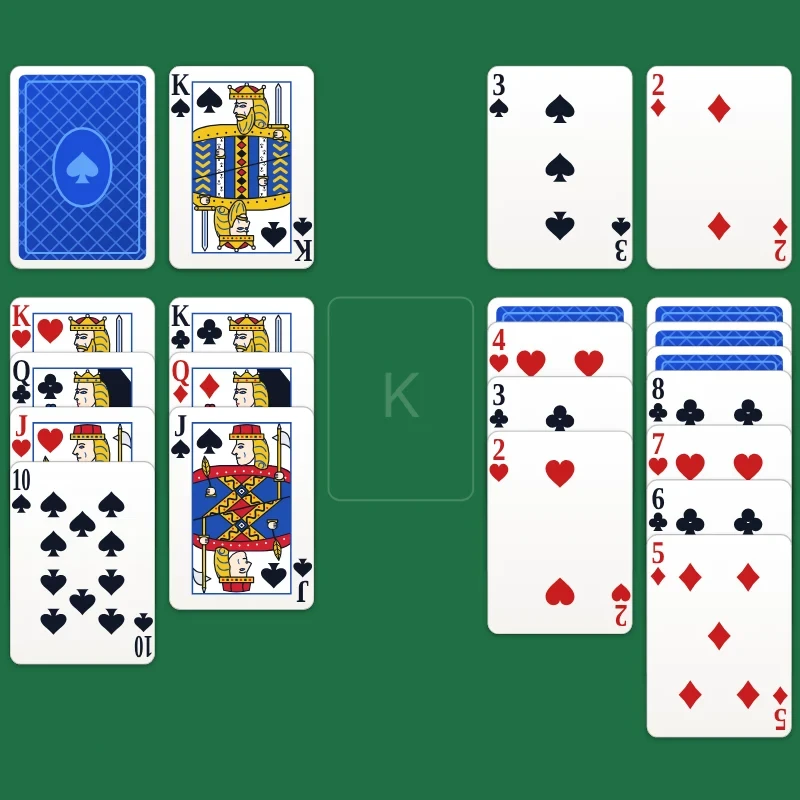
Klondike is the solitaire most people know: seven piles, a stock and four foundations. It is a game of patience, planning and a little luck.
Where it comes from
Patience games appeared in Europe in the late 18th century. Klondike is named after the gold rush in the Canadian Klondike in the 1890s, and it became famous worldwide when it was included with Windows in 1990.
How the game works
Twenty-eight cards are dealt to seven piles, with only the top card of each pile face up. The other cards form the stock. You win when all 52 cards are on the four foundations.
Luck and skill
Studies with computer solvers suggest that around eight in ten deals can be won with perfect play. People win fewer, because cards are hidden and an early choice can block a later one.
Frequently asked questions
Why is it called patience?
In Britain solitaire card games are traditionally called patience, because you need a lot of it.
What is the hardest version?
Draw 3 is harder than Draw 1, because only every third card in the stock can be played directly.
Who invented Klondike?
Nobody knows. The game developed over time and its name first appeared in print around 1907.
Related tools
Solitaire
Play Klondike solitaire free in your browser. Drag cards or click to move them automatically, choose draw 1 or draw 3, undo any move and let auto-complete finish the game.
Memory
Play the classic memory card game free in your browser. Turn over two cards at a time and find all the pairs on your own, with a friend or against the computer. Four grid sizes and three picture sets.
Yahtzee
Play Yahtzee free in your browser. Roll five dice up to three times, hold the ones you want and fill 13 boxes. Play solo, with up to 4 players or against the computer.
About Yahtzee - the dice game of luck and choices
How Yahtzee works: the five dice and three rolls, the 13 boxes, the upper bonus, Yahtzee bonuses, the Joker rules and tips to raise your score.
Ready to try it?
Open PictorX in your browser — no install, no credit card required to start.
Play Solitaire