
About Crazy Eights - rules, variants and strategy
Crazy Eights is one of the simplest card games to learn and one of the most widely played: match the top card by suit or rank, and get rid of your cards before anyone else. This page explains the rules, the scoring, its many relatives and how to play it well.
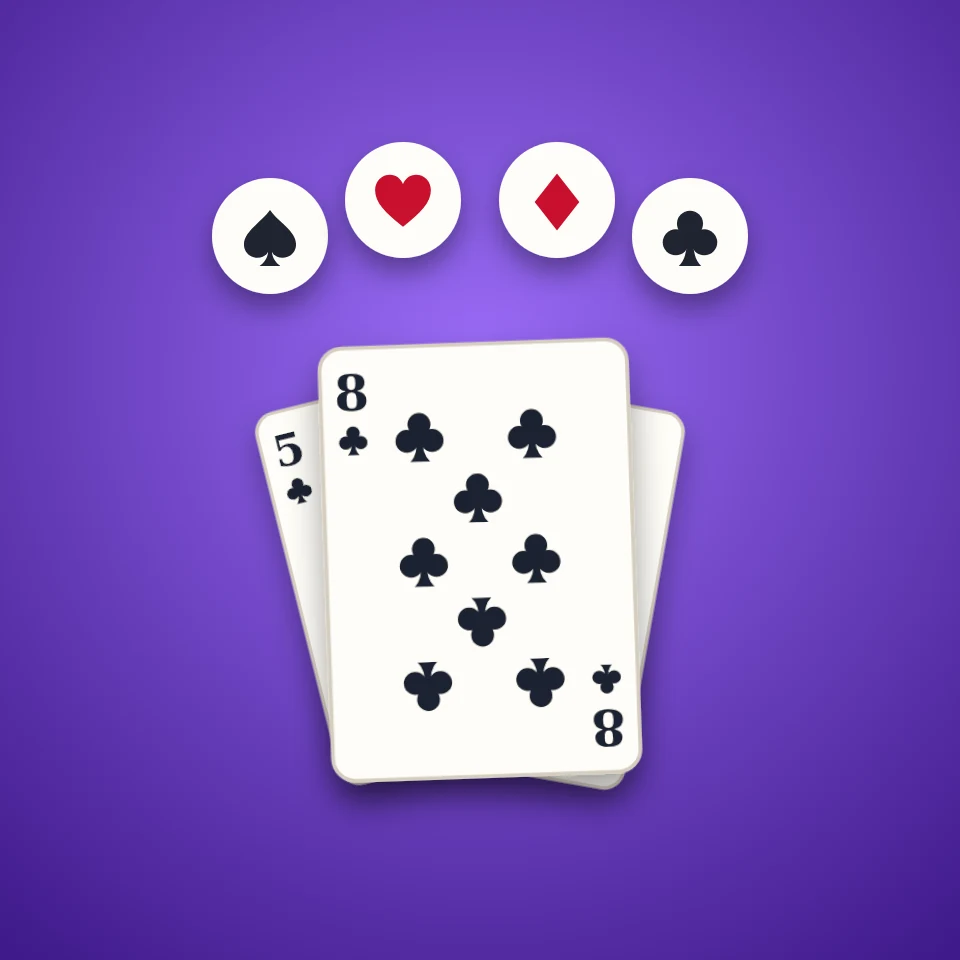
A shedding game
Crazy Eights belongs to the shedding games, where the aim is to be the first to get rid of all your cards. It is also called Eights, and older books sometimes list it as Swedish Rummy. The name comes from its one special card: an eight can be played at any time, and whoever plays it chooses the suit that must follow.
Its relatives: Mau-Mau, Switch and Uno
The same idea is played all over the world under other names and with other special cards. In German-speaking countries Mau-Mau is the classic: there the jack is wild, a seven makes the next player draw two and an eight makes them miss a turn. The Dutch play Pesten, the Czechs Prší and the British Switch, with similar draw-two and skip cards. Uno, the commercial card game invented by Merle Robbins in Ohio in 1971, is the best known member of the family: it uses its own deck of coloured cards with Skip, Reverse, Draw Two and Wild cards, but the basic rule of matching colour or number is that of Crazy Eights.
How a round is played
A standard 52-card deck is used. With two players each gets seven cards; with more players five each is usual. The rest form the stock, and its top card is turned up to start the discard pile; if it is an eight, it goes back into the stock and another card is turned. In turn, each player lays one card on the discard pile that matches its suit or its rank, so a seven of hearts can take any heart or any seven. An eight can always be played, and its player names the suit for the next card. A player who cannot play draws from the stock. When the stock is empty, the discard pile apart from its top card is shuffled to form a new stock.
Scoring
The first player to play their last card wins the round and scores the cards still held by everyone else: 50 points for each eight, 10 for each king, queen or jack, 1 for each ace and the face value for every other card. Rounds continue until a player reaches a target agreed before the game; here it is 100 points, or every round can be played on its own. If nobody can play and no card can be drawn, the game is blocked, and the player with the lowest count wins the difference to each other hand.
Common variants
Rule books and families disagree on the details, so agree on them before you start. The biggest difference is drawing: in some rules you draw until you can play, in others you draw one card and pass if it does not fit, and some allow up to three draws. Many players borrow the special cards of Mau-Mau and Switch: a two makes the next player draw two cards, a jack or an eight skips the next player, an ace or a queen reverses the direction of play. As in Mau-Mau, where a player says "Mau" with one card left, some tables make you announce your last card.
Strategy
Keep your eights for when you really need them: one played early only changes the suit once, while one kept back can rescue you when nothing else fits, though it costs 50 points if someone else goes out first. When you name a suit, choose the one you hold most of. Watch the other players: whoever draws when a suit is asked for probably has none of it, and that is the suit to call when they are close to going out. Cards of the same rank let you switch suits without an eight. When an opponent is down to one or two cards, get rid of your court cards and eights first, so you lose fewer points if they win.
Frequently asked questions
Can I play an eight on another eight?
Yes. An eight can be played on any card, including another eight, and you choose a new suit each time.
May I draw a card even when I could play?
In most rule sets, yes: you may draw instead of playing, for example to keep an eight for later. With the draw until you can play rule you then keep drawing until you get a card that fits.
What happens when the stock runs out?
The discard pile apart from its top card is shuffled and turned over as a new stock. If even that is not possible and nobody can play, the round is blocked and the lowest count wins.
How is Crazy Eights different from Uno?
Uno uses its own deck of four colours with action cards such as Skip, Reverse, Draw Two and Wild Draw Four. Crazy Eights is played with an ordinary deck of cards, and in its basic form the eight is the only special card.
Related tools
Crazy Eights
Play Crazy Eights free in your browser against one, two or three computer players. Match the suit or rank, play an eight to call a new suit, and be first to empty your hand. Easy or Smart opponents, scored to 100 points.
About Hearts - history, rules and strategy
Where the card game Hearts comes from, from Reversis to Black Lady and the Hearts that came with Windows, how passing and scoring work, what shooting the moon is and how to play well.
Hearts
Play Hearts free in your browser against three computer players. Pass three cards, follow suit, dodge the hearts and the queen of spades, or take them all and shoot the moon.
About Blackjack - history, rules and strategy
Where blackjack comes from, how a round works, what soft hands and the dealer's rules mean, why 6:5 and insurance are poor deals, and how basic strategy cuts the house edge.
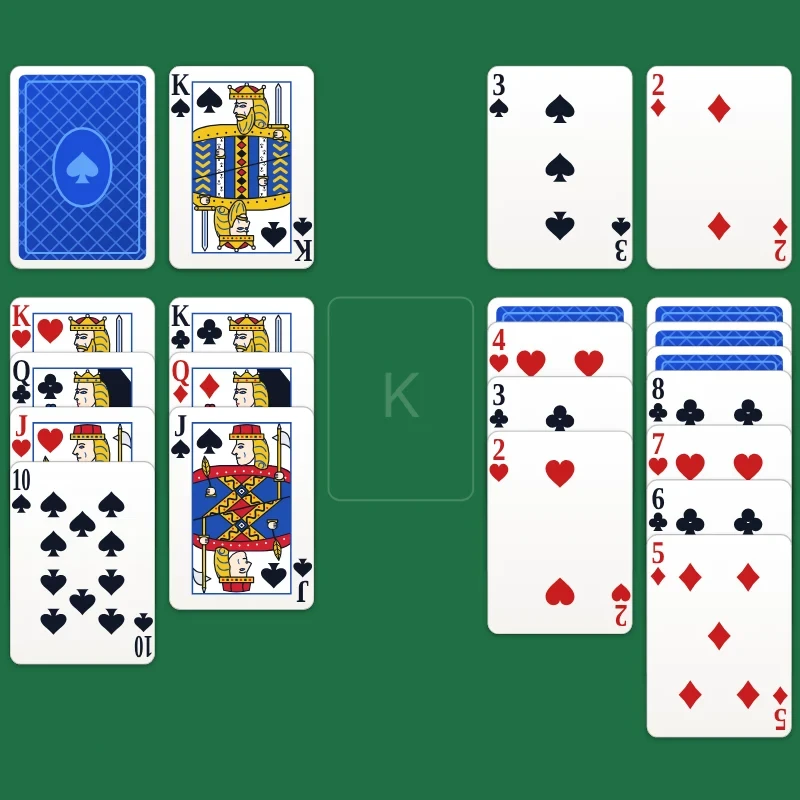
About Solitaire - history and rules of Klondike
Where does Klondike solitaire come from? How the seven piles, stock and foundations work, why draw 3 is harder and how many deals can be won.
Ready to try it?
Open PictorX in your browser — no install, no credit card required to start.
Play Crazy Eights