
About Simon - the electronic memory game
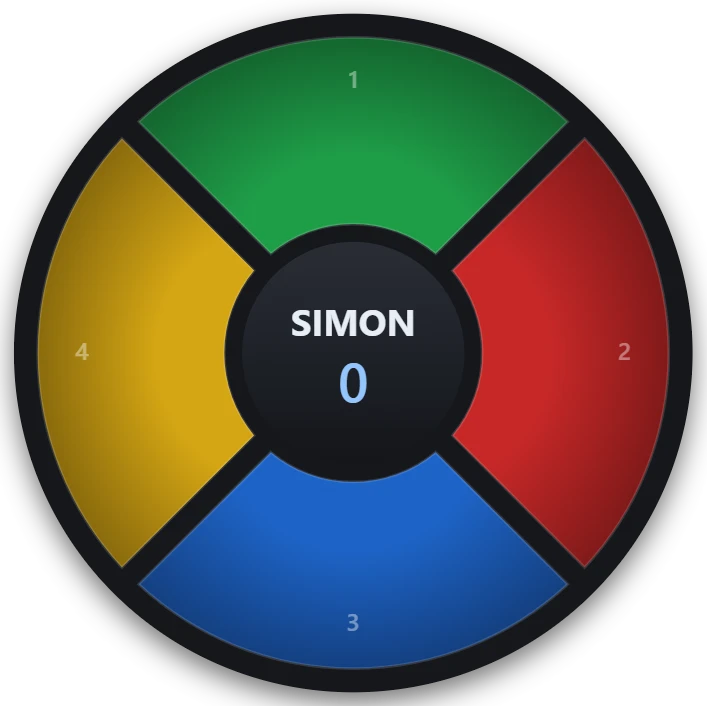
Simon is one of the best-known electronic games. Four coloured buttons light up in a sequence with a tone each, and you have to repeat it. It looks simple, but every round makes the sequence one step longer.
Where Simon comes from
Simon was invented by Ralph Baer and Howard Morrison and launched in 1978. It was inspired by the arcade game Touch Me and named after the children's game Simon says. The round shape with four coloured quarters and a dark centre became a classic toy of the late seventies and eighties.
How the game works
The game plays a sequence of buttons, each with its own tone. You repeat it. If you get it right, the game plays the same sequence again with one more step at the end. A wrong button ends the game, and on the harder levels waiting too long does too.
Why it is good for your memory
Simon trains working memory, the short-term memory you use to hold a phone number in your head. Most people can hold about seven items at once, so long sequences need tricks such as grouping, naming the colours or humming the tune.
Tips for longer sequences
Say the colours quietly to yourself, or remember the tones as a little tune. Split the sequence into groups of three or four. Do not rush: on Easy you have as much time as you need to think before each press.
Frequently asked questions
Who invented Simon?
Ralph Baer, who is also known for the first home video game console, and Howard Morrison. The game was launched in 1978.
How long a sequence can people remember?
Most players manage around eight to fifteen steps. With practice and grouping tricks, some people remember sequences of thirty steps or more.
Can I play Simon online for free?
Yes. The PictorX version of Simon is free and runs in your browser, with three to six buttons and three difficulty levels.
Related tools
Simon
Play the classic Simon memory game free in your browser. Watch the coloured buttons light up, listen to the tones and repeat the sequence. Three to six buttons, three difficulties and your best score saved.
About Memory - the pairs card game
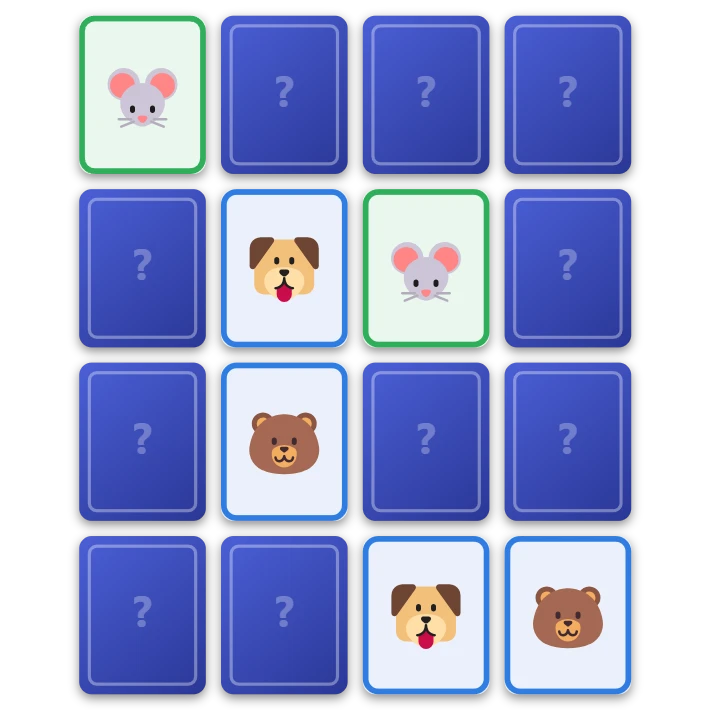
The history of the memory card game, also called Concentration or Pairs, the rules, and tips for remembering where the cards are. Then play Memory free online.
About Mancala - one of the oldest board games
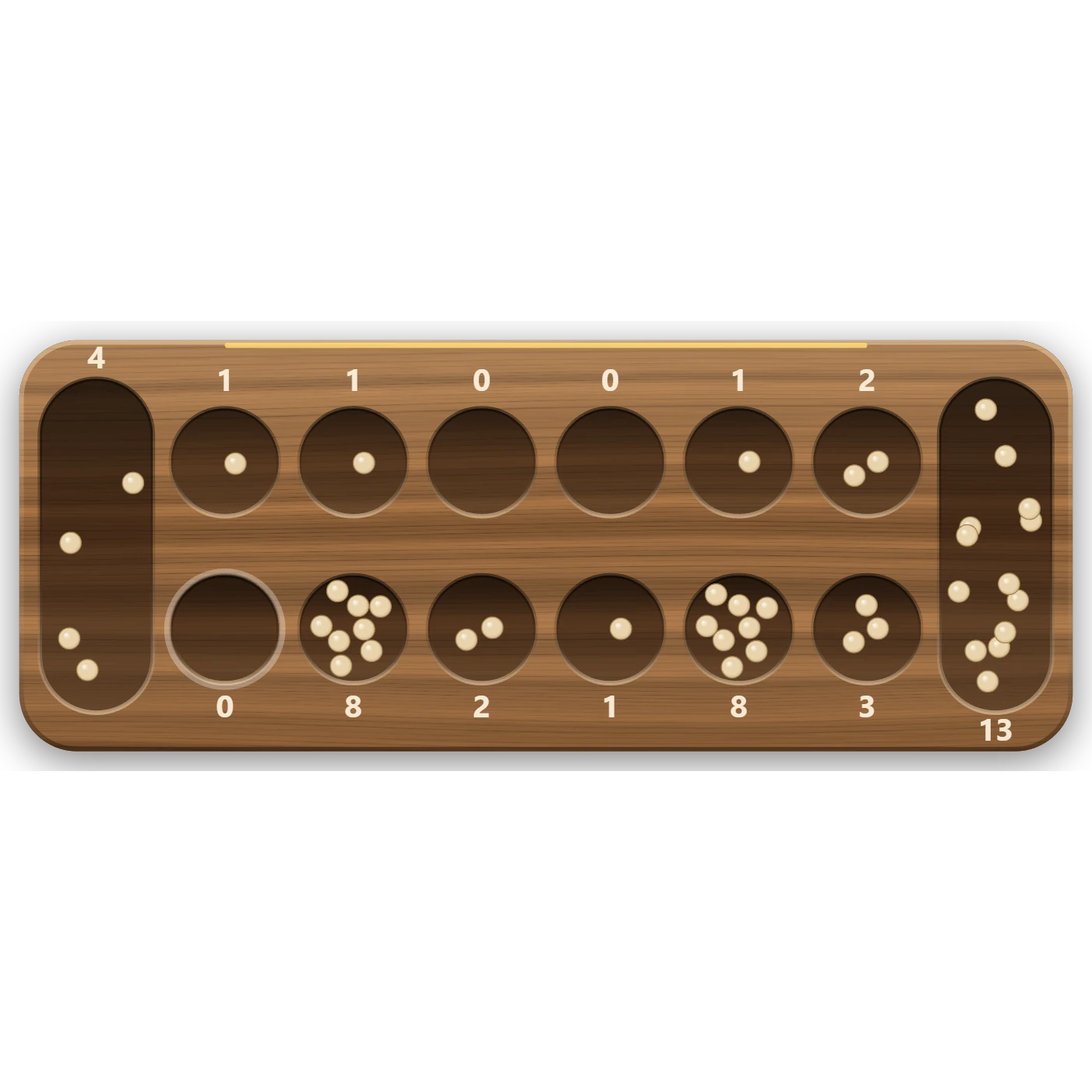
Mancala is one of the oldest board game families in the world. Learn where it comes from, the rules of Kalah, and strategy tips for extra turns and captures. Then play Mancala free online.
Memory
Play the classic memory card game free in your browser. Turn over two cards at a time and find all the pairs on your own, with a friend or against the computer. Four grid sizes and three picture sets.
Mancala
Play Mancala (Kalah) free in your browser. Sow the stones round the board, land in your store for an extra turn and capture your opponent's stones. Play the computer on three levels, a friend, or watch two computers.
Ready to try it?
Open PictorX in your browser — no install, no credit card required to start.
Play Simon