
Roman mosaics explained
A Roman mosaic is a floor laid in thousands of small stones: tesserae set in mortar, row by row, into borders, geometric patterns and pictures. Read how they were made, which patterns the Romans loved and why the stones run the way they do, then lay a floor of your own in the Roman Mosaic Maker.
What is a Roman mosaic?
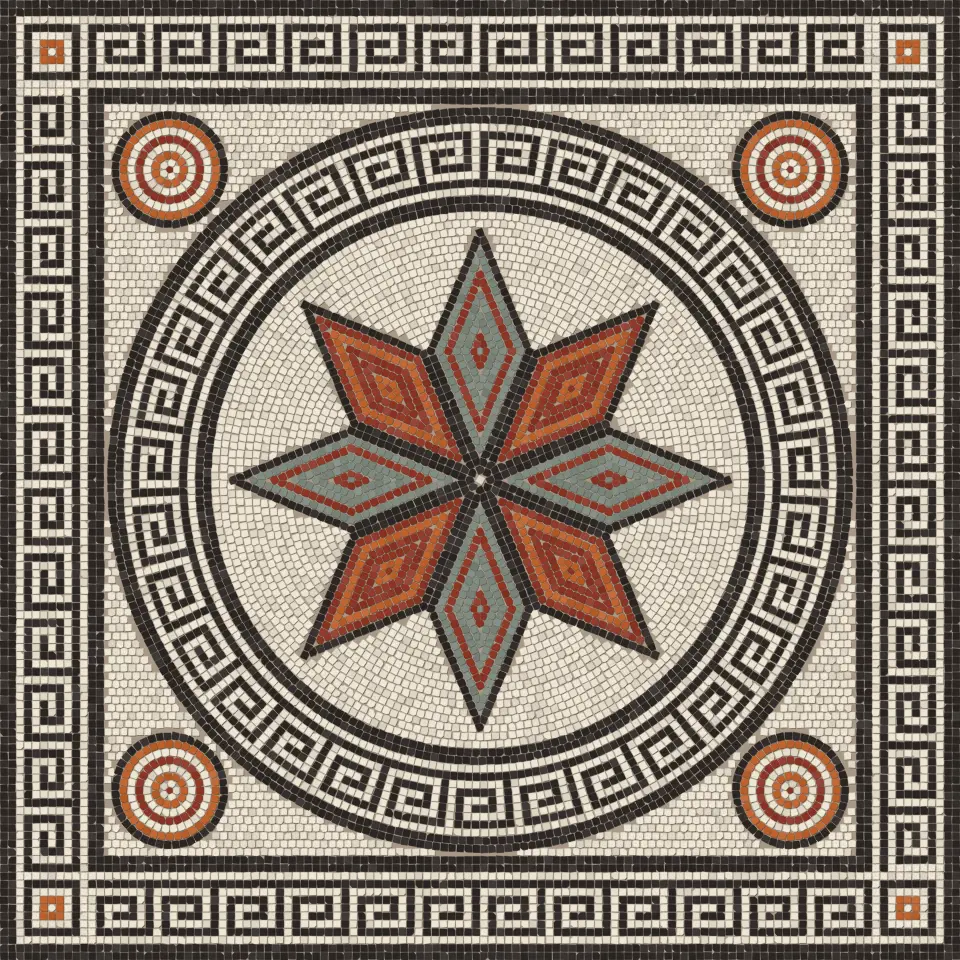
A mosaic is a picture or pattern made of many small pieces set side by side. The Romans laid them mostly on floors: in houses and villas, baths, shops and public buildings, so that a floor could be swept and washed and still carry a carpet of color. The pieces are called tesserae, after the Greek for four, because they were cut with four corners. Thousands of Roman floors survive, from Britain and Spain to North Africa, Syria and Turkey, many of them still where they were laid.
From pebbles to tesserae
The first mosaics were made of river pebbles: the Greek floors of Pella in Macedonia, from the 4th century BC, show hunting scenes in pebbles of white and black, with thin strips of lead or clay for some of the outlines. Cut stones replaced pebbles in the Hellenistic period, because they fit together closely and give a flat, hard floor. The Romans took the technique over and made it their own, and from the 1st century BC to late antiquity mosaic was the normal way to make a fine floor.
How a floor was laid
Vitruvius describes the foundation in his book on architecture: a layer of large stones, the statumen, then a layer of rubble and lime, the rudus, and a fine mortar, the nucleus, on which the tesserae were bedded. The mosaicist cut the stones with a hammer on a small anvil, drew the main lines on the wet mortar and laid the outlines first, then the patterns, then the ground. Once the mortar had set, more mortar was rubbed into the joints and the surface was ground and polished smooth.
Opus tessellatum, vermiculatum and sectile
Most floors are opus tessellatum: tesserae of about a centimeter, used for borders, geometric patterns and the plain ground. Opus vermiculatum uses far smaller pieces, a few millimeters across, for pictures as fine as paintings, such as the Alexander Mosaic from the House of the Faun at Pompeii. A small picture of this kind, the emblema, was often made in a workshop on a tray of stone or terracotta and set into the middle of a floor. Opus sectile is something else again: larger pieces of colored marble cut to shape, such as triangles, lozenges and hexagons.
Andamento: how the stones run
The rows of tesserae have a direction, which mosaicists call the andamento. In a Roman floor the stones follow the outlines: a band of meander is laid in straight rows along the border, a lozenge is filled with rows parallel to its sides, nested like smaller and smaller lozenges, a circle with rings, and a strand of guilloche with rows along its curve. The ground is laid in straight rows, often with one or two rows that follow the outline of each motif first. This flow is what makes a mosaic look alive even when every stone is a plain square.
The geometric patterns
Roman floors share a large vocabulary of patterns. The meander, or Greek key, named after the winding river Maeander in Asia Minor, is a line turning back on itself in right angles. The guilloche is a braid of two or more strands, often with a light eye in each loop; Solomon's knot is two closed loops interlaced. The running wave or Vitruvian scroll rolls along a border in spirals. Fields are covered with scales, overlapping like fish scales or roof tiles, with octagons and squares, with stars of eight lozenges and with reversible cubes, lozenges in three tones that read as stacked boxes from one side and hollow corners from the other.
Black and white, and color
In Italy in the 1st and 2nd centuries AD many floors were black and white only: white limestone and black or grey stone, as in the houses of Pompeii and the baths of Ostia, where great figures of sea creatures and athletes are drawn in black on white. In the provinces, and later everywhere, floors were richly colored with red and yellow limestone, pink and green marble, terracotta and, for the brightest blues and greens, pieces of glass. The colors of the stones were limited, so mosaicists set lighter and darker stones of one color side by side to shade a form.
Design your own
The Roman Mosaic Maker lays a floor the same way. Choose a field of reversible cubes, scales, octagons and squares, diamonds or Solomon's knots, or a medallion with a star, a rosette, a knot, interlaced squares or rings, and frame it with a meander, a guilloche, a running wave, triangles, a chequer or stripes. It lays every part in rows that follow the outlines, cuts each stone to fit its neighbours and leaves a line of grout between them. Pick a palette after Pompeii, Ostia or a colored villa floor, watch it laid stone by stone and open it in the photo editor with every part on a layer of its own.
Frequently asked questions
What were Roman mosaics made of?
Mostly of natural stone: white and colored limestone, marble, basalt and other local stones, cut into small cubes. Terracotta gave reds and oranges, and glass gave bright blues, greens and, with gold leaf, gold. The tesserae were set in lime mortar on a foundation of rubble and lime.
How big are the tesserae?
In geometric floors and borders, about 0.5 to 1.5 centimeters across. Pictures in opus vermiculatum used pieces of only a few millimeters. A floor of a few square meters can contain tens of thousands of tesserae, and a large villa floor more than a million.
Where can I see Roman mosaics?
In museums and in the ruins where they were found: Pompeii and Herculaneum, the baths and houses of Ostia, the Villa Romana del Casale at Piazza Armerina in Sicily, the Bardo Museum in Tunis, Zeugma in Turkey, Conímbriga in Portugal and villas across Britain, France and Spain, among many others.
What does Solomon's knot mean?
Its name is much later than the Roman floors; nobody knows for certain what it meant to the Romans. Two loops woven into each other without a beginning or an end, it is often read as a sign of eternity or of good luck, and it appears in floors across the empire.
Related tools
Roman Mosaic Maker
Design a Roman mosaic floor online: reversible cubes, scales, octagons, Solomon's knots or a medallion, framed by a meander, a guilloche or a running wave, laid in small stones in grout. Save a PNG or SVG.
Stone Mosaic
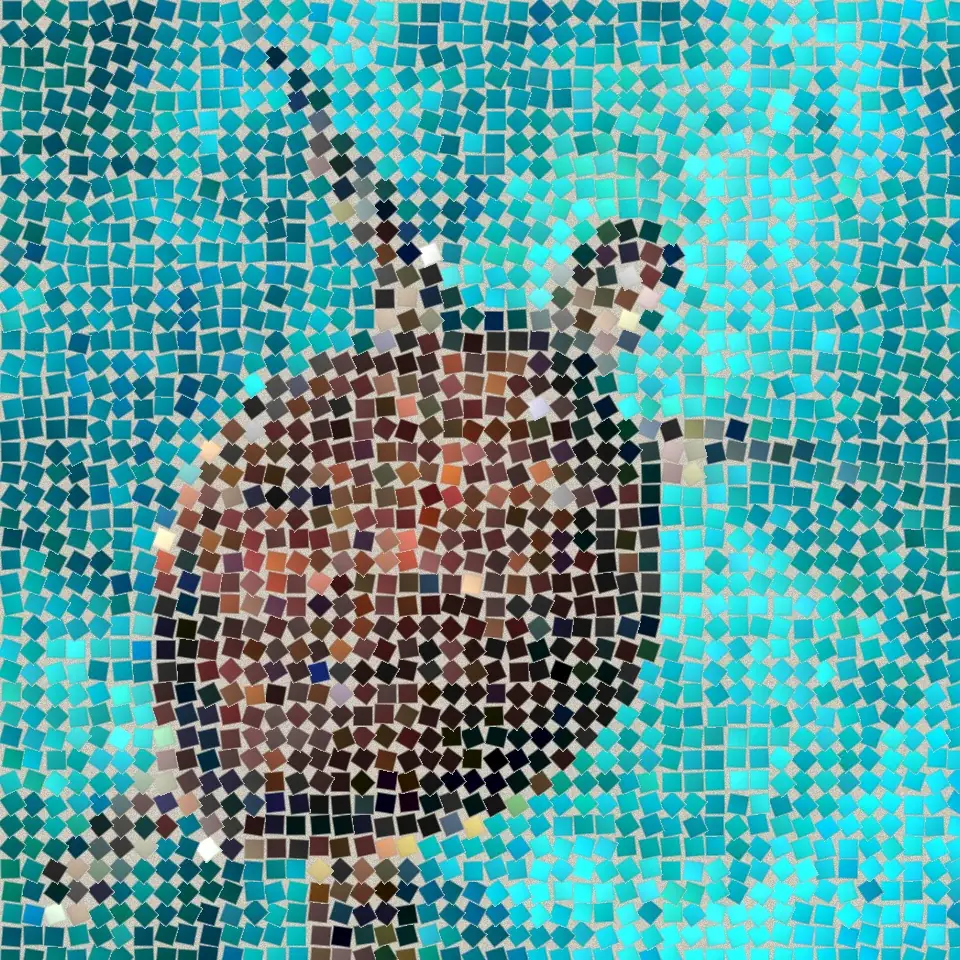
Turn a photo into a real stone mosaic in your browser: square stones in grout that follow the picture's edges like a Roman mosaic. Free, no upload.
Tessellation maker
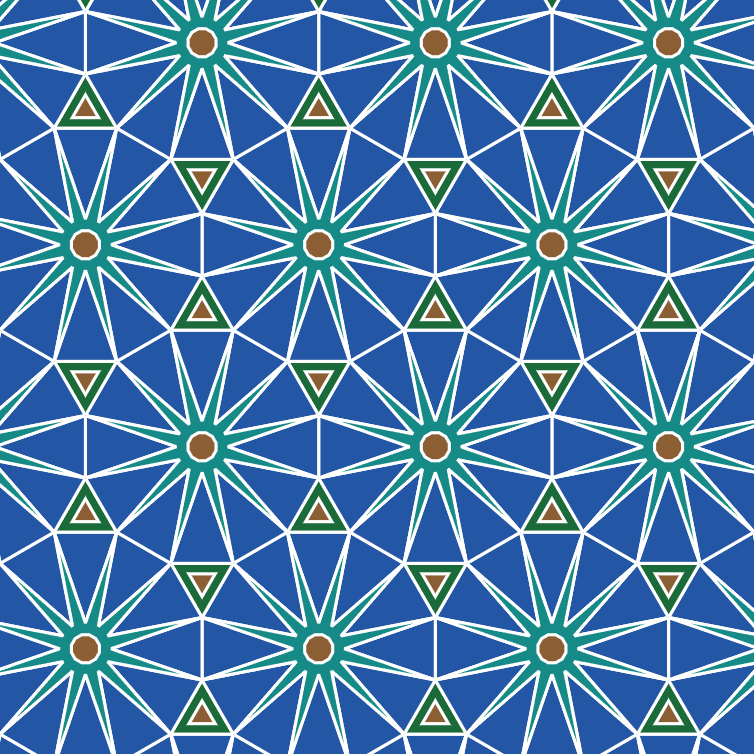
Cover the plane with regular and Archimedean tessellations. Tune scale, colours, and warp square edges Escher-style — then save a PNG.
Tessellation
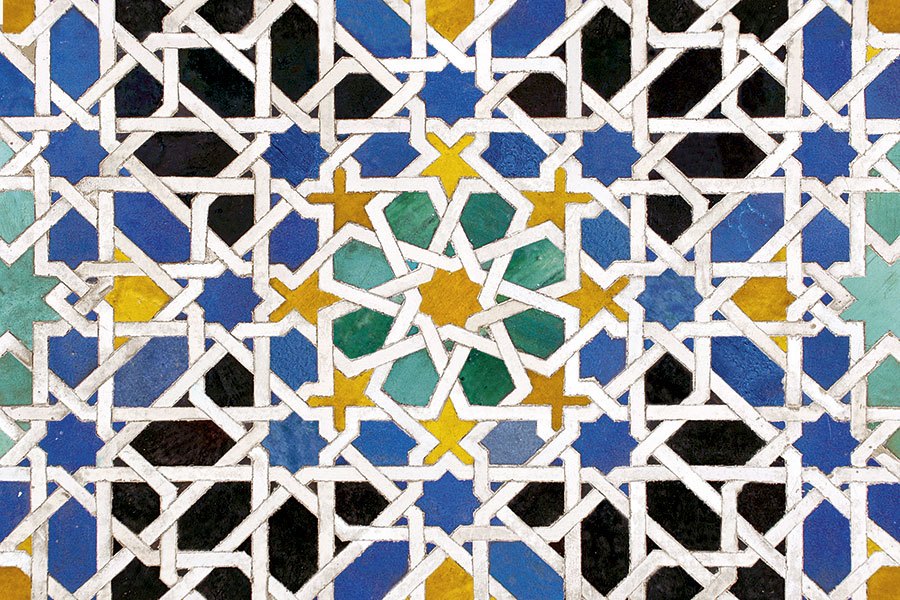
What is a tessellation? How shapes tile the plane with no gaps or overlaps, the three regular tilings, all eight Archimedean tilings, and edge pairing.
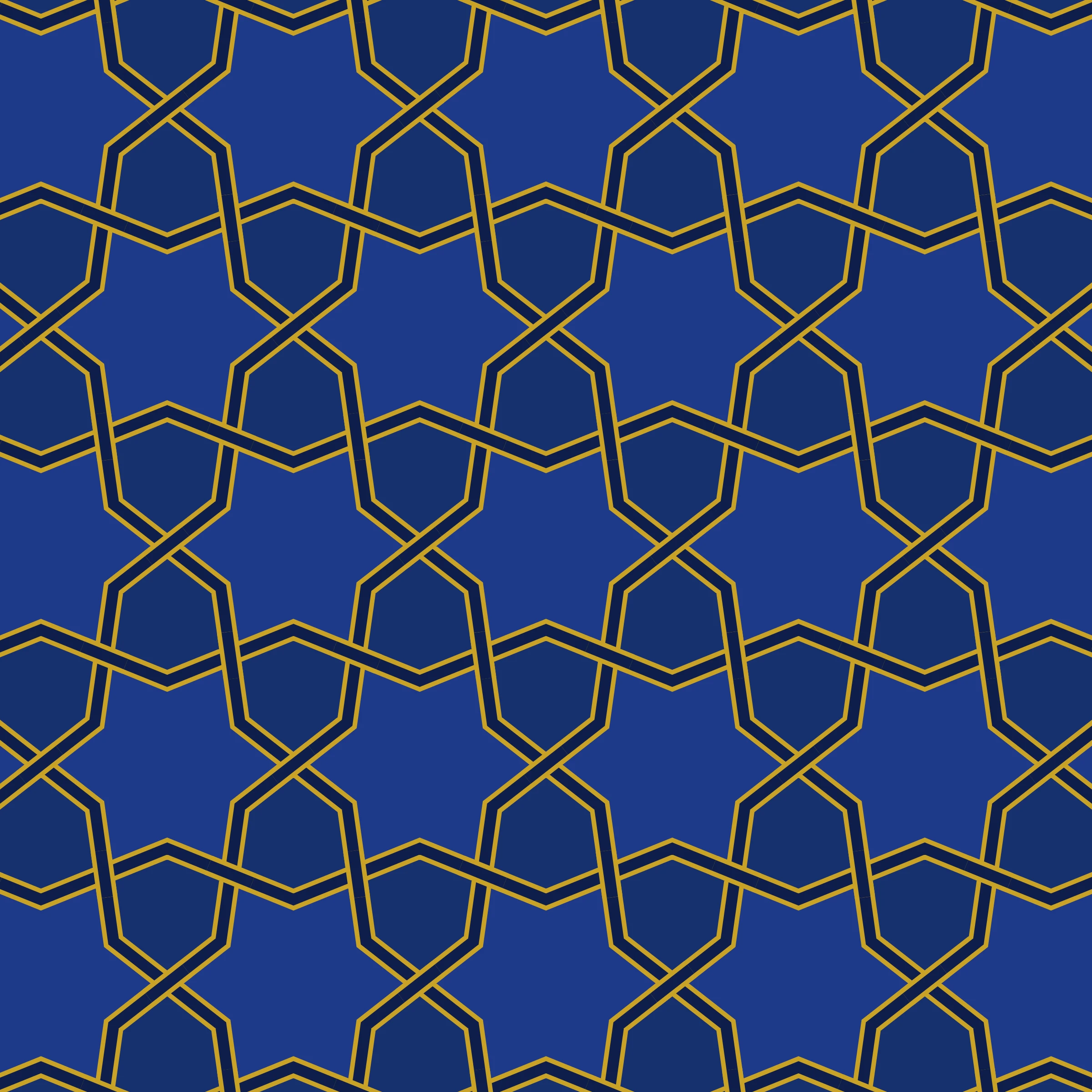
Islamic Pattern Maker
Make Islamic geometric patterns online: Alhambra stars, rosettes, girih, muqarnas and zellige, or star patterns of interlaced bands in six-, eight- and twelve-fold symmetry. Save a PNG or SVG.
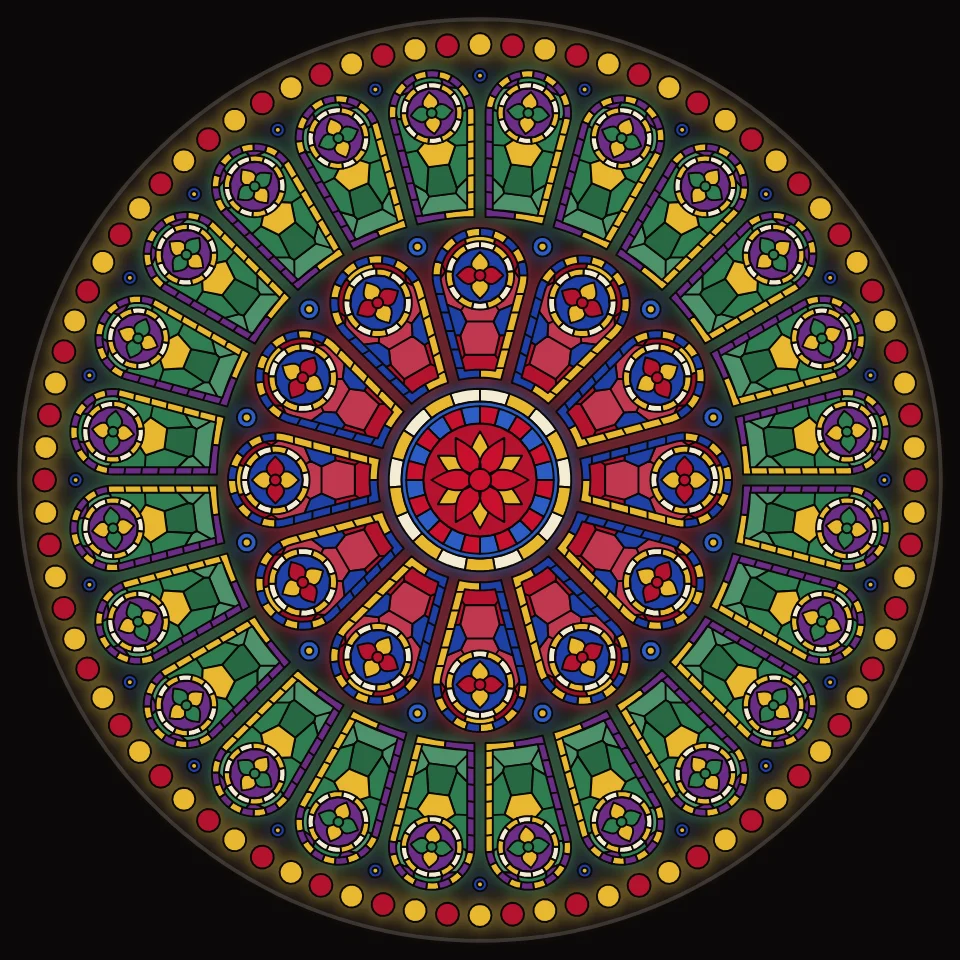
Rose Window Maker
Design a Gothic rose window online: stone tracery round a medallion, rings of round, pointed or trefoil petals, roundels and a border, filled with leaded stained glass. Save a PNG or SVG.
Ready to try it?
Open PictorX in your browser — no install, no credit card required to start.
Open the Roman Mosaic Maker