
How Kakuro works
Kakuro is a crossword in which the words are numbers: every run of white cells has a sum, and the digits in it may not repeat. This page explains the rules, where the puzzle comes from, the combinations every solver learns, the techniques that crack a grid, and how the puzzles on PictorX are made.
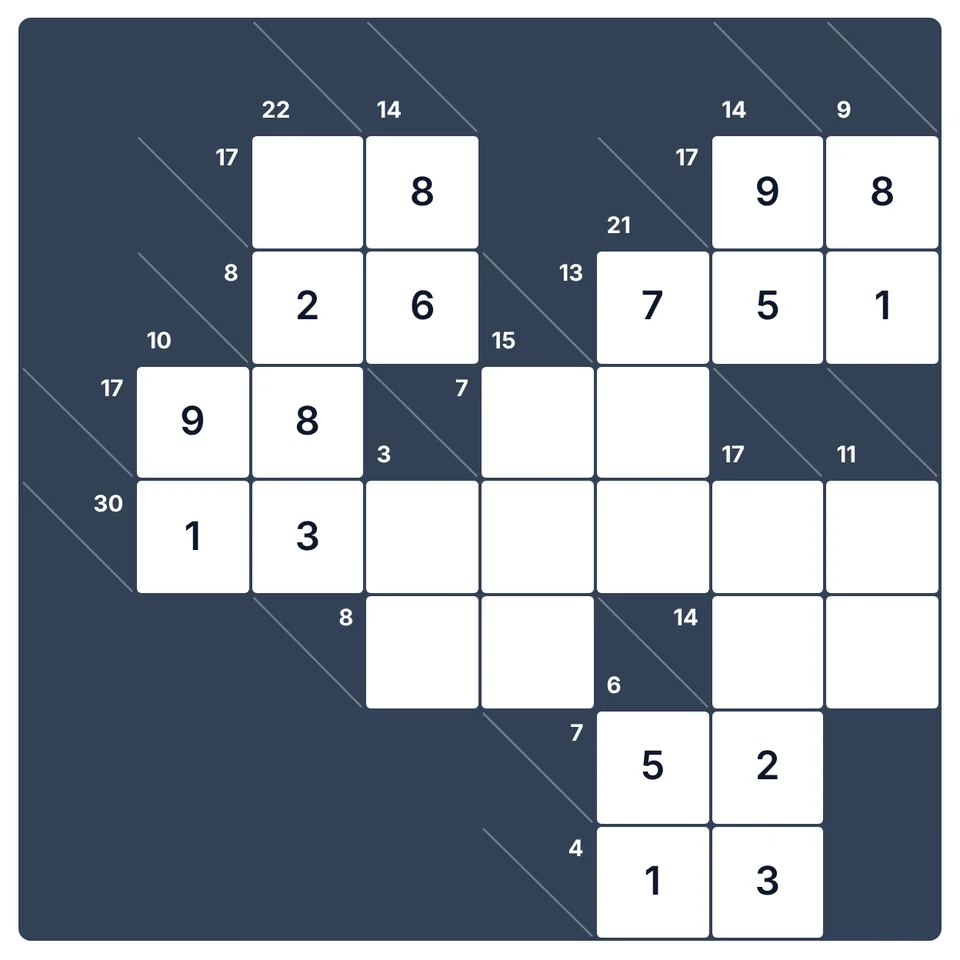
The rules
A Kakuro grid has black cells and white cells. Some black cells hold one or two clues, split by a diagonal: the number above it is the sum of the run of white cells to the right, the number below it the sum of the run beneath. You fill every white cell with a digit from 1 to 9 so that each run adds up to its clue, and no digit appears twice in the same run.
From cross sums to Kakuro
The puzzle was published in the United States as Cross Sums in the middle of the 20th century, in Dell puzzle magazines. In the 1980s the Japanese publisher Nikoli made it hugely popular under the name Kakuro, short for kasan kurosu, Japanese for addition cross. After the Sudoku wave of 2005 it found its way into newspapers around the world.
Combinations worth knowing
Some sums have only one combination. In two cells: 3 is 1 + 2, 4 is 1 + 3, 16 is 7 + 9 and 17 is 8 + 9. In three cells: 6 is 1 + 2 + 3, 7 is 1 + 2 + 4, 23 is 6 + 8 + 9 and 24 is 7 + 8 + 9. In four cells: 10 is 1 to 4 and 30 is 6 to 9. These unique sums are the doors into almost every puzzle.
Crossings and elimination
Where an across run meets a down run, the digit has to fit both combinations. If the across run is 1 + 2 and the down run is 1 + 3, the shared cell is 1, and the rest follows. As a run fills up, its remaining digits shrink: a run of three summing to 15 with a 9 already in it needs 6 more from two different digits, so 1 + 5 or 2 + 4.
How the puzzles are made
The generator draws a symmetric pattern of black cells in which every white cell belongs to an across run and a down run of two to nine cells. It fills the white cells with random digits that never repeat in a run, leaning each run towards small or large digits so its sum has few combinations, and writes the sums. A solver then checks for a second solution; where one exists, a cell where the two differ turns black, and the check runs again until exactly one solution is left.
Frequently asked questions
Why can a run have at most nine cells?
Because a run uses each of the digits 1 to 9 at most once. A run of nine cells always sums to 45, which makes it easy to work out a missing digit.
Can a digit repeat in a row?
Yes, as long as it is in different runs. The rule is about runs: a black cell in the middle of a row starts a new run, and the same digit may appear on both sides of it.
What does Kakuro mean?
It is a Japanese shortening of kasan kurosu, a mix of the Japanese word for addition and the English word cross. In English it is also called Cross Sums.
Do I need to be good at maths?
No more than adding small numbers. The puzzle is mainly logic: knowing which combinations make a sum, and seeing where they meet.
Related tools
Kakuro
Play Kakuro, the cross sums puzzle, free in your browser. Fill the grid with 1 to 9 so every run adds up to its clue, on boards from 6 x 6 to 12 x 12, with the combinations shown, hints and the solution.
Sudoku
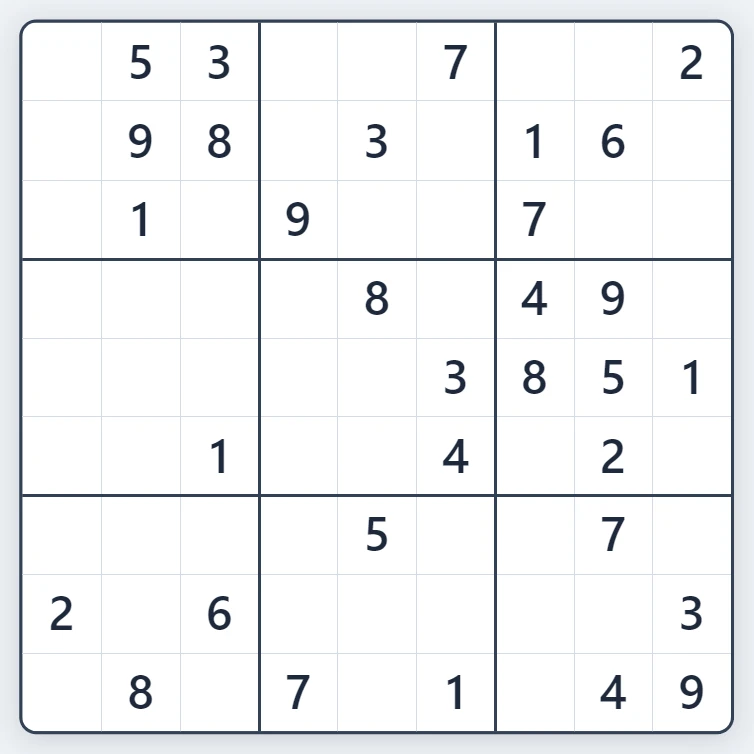
Play Sudoku free in your browser. Fresh puzzles with exactly one solution, four levels from Easy to Expert, pencil notes, hints, mistake highlighting and undo.
About Sudoku - history, rules and techniques
How does Sudoku work? Where the puzzle comes from, the simple rules, techniques such as singles, pairs and pointing, and why a good puzzle has one solution.
Binary Puzzle
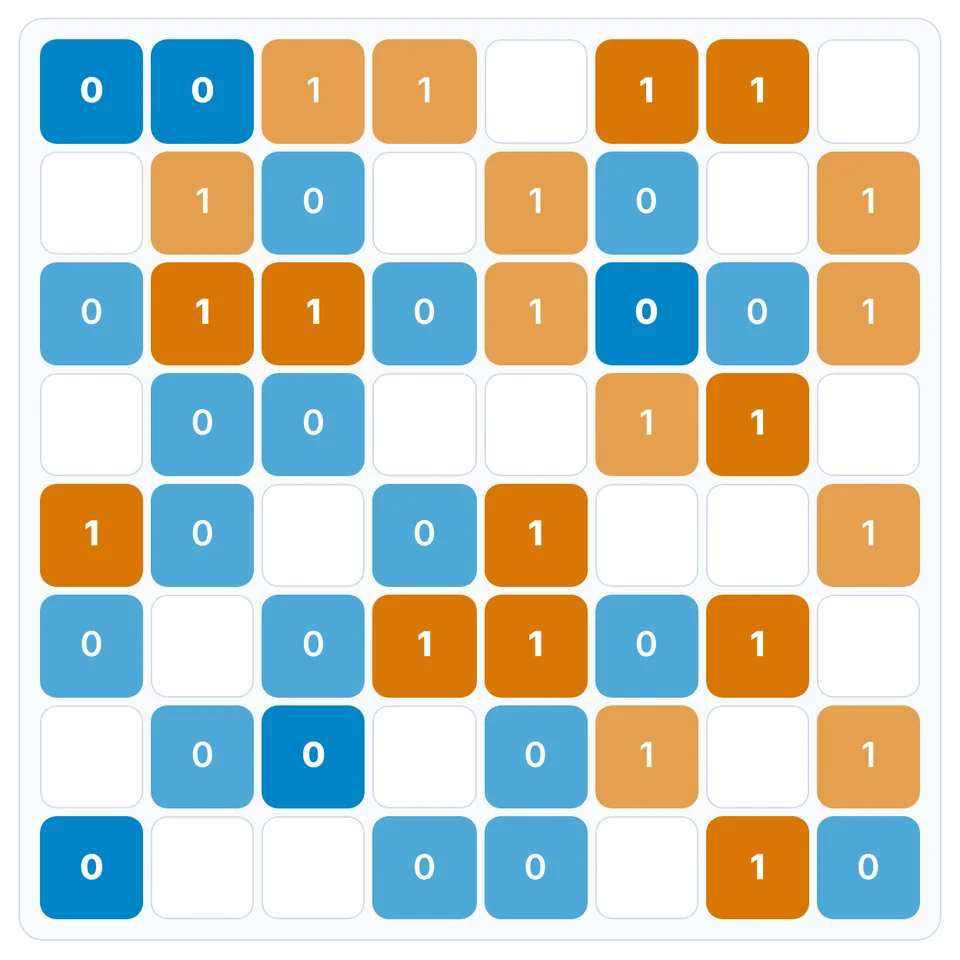
Play the binary puzzle, also called Takuzu or Binairo, free in your browser. Fill the grid with 0s and 1s on boards from 6 x 6 to 14 x 14, easy to hard, with hints that explain the next step.
How the binary puzzle works
How the binary puzzle works: the three rules of Takuzu and Binairo, the techniques that solve it, how many rows are possible, and how puzzles with one solution are made.
Bridges
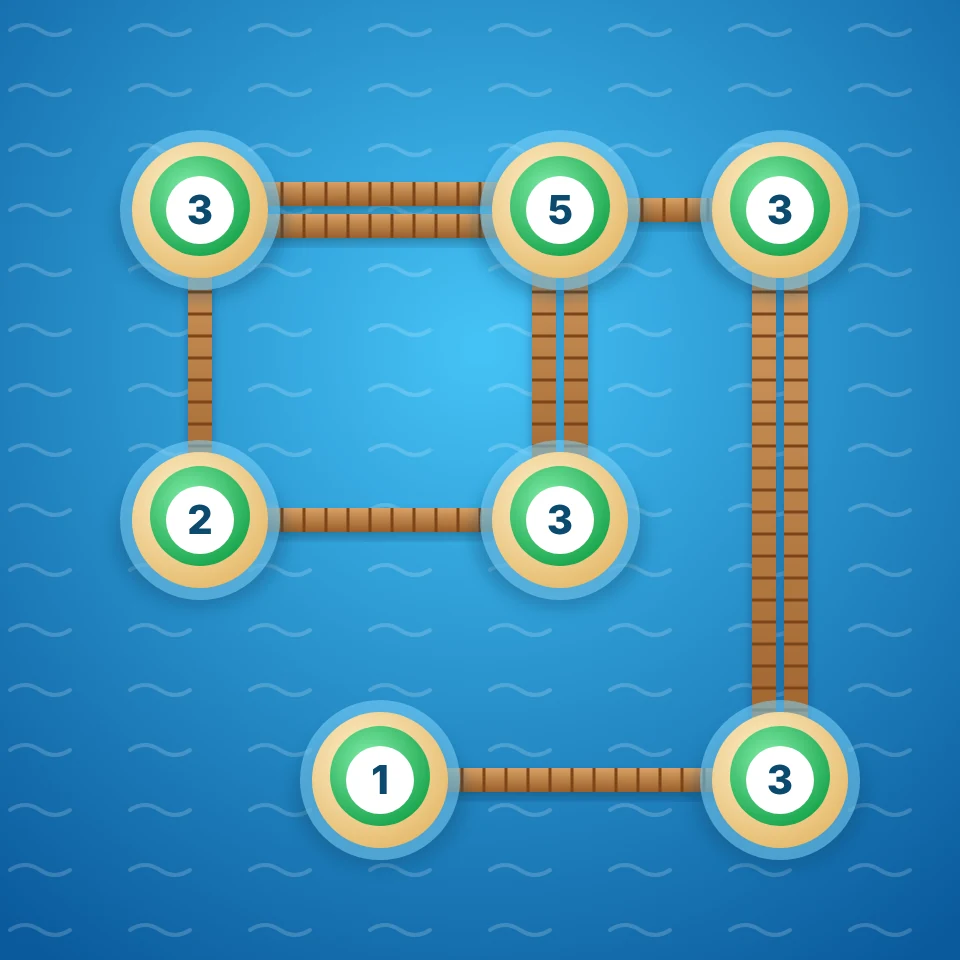
Play Bridges, the island puzzle also called Hashi, free in your browser. Join numbered islands with bridges on boards from 7 x 7 to 15 x 15, easy to hard, with hints, the solution and your best times.
Ready to try it?
Open PictorX in your browser — no install, no credit card required to start.
Play Kakuro