
About Sudoku - history, rules and techniques
Sudoku is a logic puzzle with numbers but no arithmetic. The rules fit in one sentence, yet the puzzles range from a few relaxed minutes to a real challenge.
Where it comes from
The modern puzzle was published in the United States in 1979 as Number Place. It became popular in Japan in the 1980s, where it got the name Sudoku, and swept across the world in 2004 and 2005 when newspapers began to print it daily.
Singles
Start with singles. A naked single is a cell where only one digit is still possible. A hidden single is a digit that can go in only one cell of a row, column or box. Easy puzzles can be solved with singles alone.
Pairs and pointing
Harder puzzles need more. If two cells in a unit can only hold the same two digits, those digits can be removed from the rest of the unit. If a digit in a box can only sit in one row, it can be removed from that row in the other boxes.
Frequently asked questions
Do I need maths for Sudoku?
No. The digits are just symbols. You only need to check which ones are still missing in each row, column and box.
Why should a puzzle have one solution?
With one solution, every step can be worked out by logic. A puzzle with two solutions forces a guess somewhere.
What is the fewest number of givens?
A Sudoku with a unique solution needs at least 17 given digits. This was proved by a computer search in 2012.
Related tools
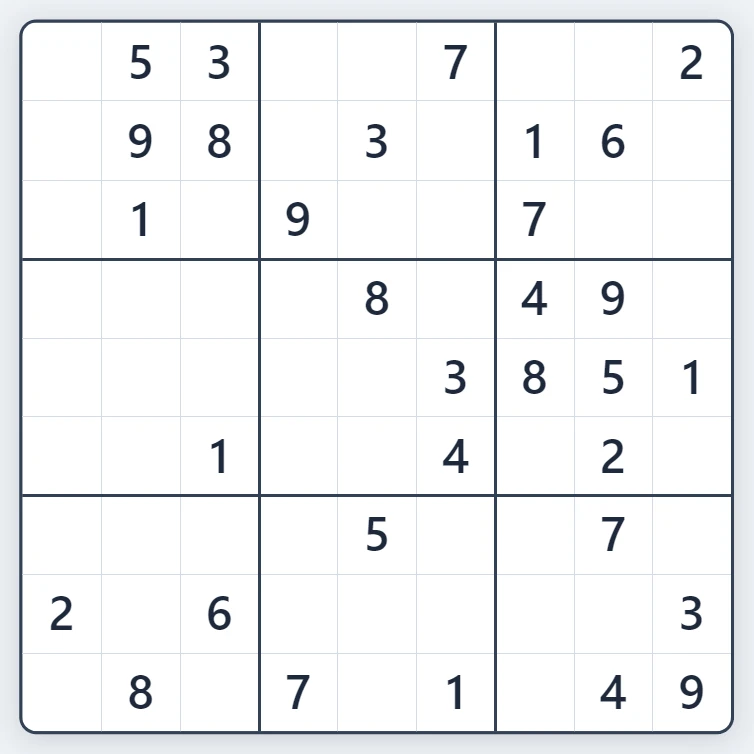
Sudoku
Play Sudoku free in your browser. Fresh puzzles with exactly one solution, four levels from Easy to Expert, pencil notes, hints, mistake highlighting and undo.
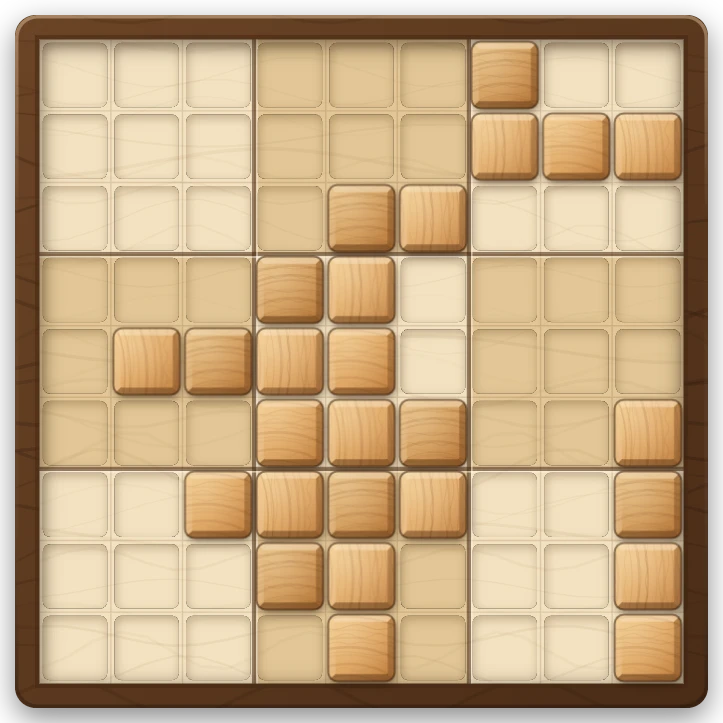
Wood Block Sudoku Puzzle
Play Wood Block Sudoku free in your browser. Drag wooden pieces onto a 9x9 board and clear rows, columns and 3x3 boxes. Combos, streaks, a holder slot and no time limit.
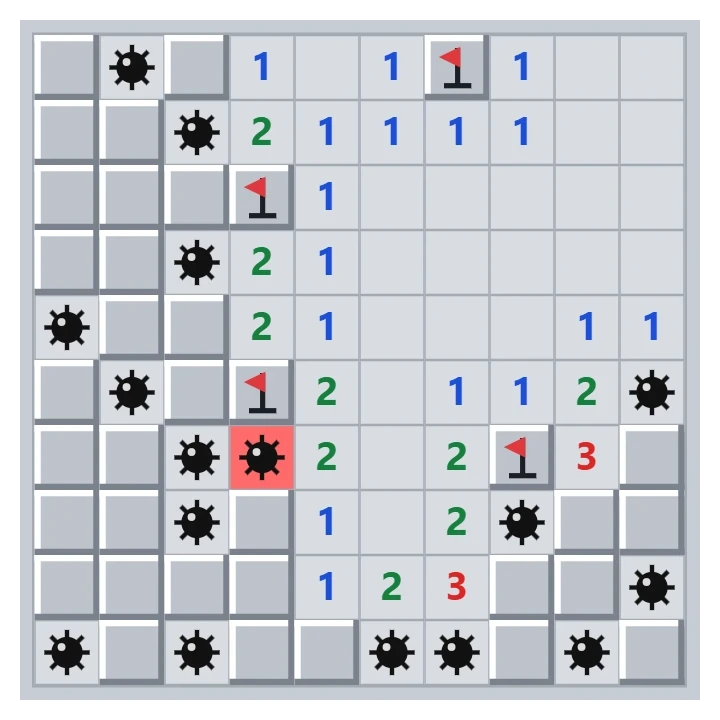
Minesweeper
Play classic Minesweeper free in your browser. Beginner, Intermediate, Expert or a custom field, a safe first click, flags, chording and best times.
About Minesweeper - history, rules and strategy
How does Minesweeper work? Where the game comes from, what the numbers mean, safe patterns such as 1-2-1, when you have to guess, and tips for faster times.
Ready to try it?
Open PictorX in your browser — no install, no credit card required to start.
Play Sudoku