
About Cribbage - rules, scoring and strategy
Cribbage is a card game for two in which points are scored all the time, while the cards are played and again when the hands are counted, and kept on a wooden board with pegs. This page explains where it comes from, how the board, the deal and the crib work, how the play and the show are scored, what a skunk is, and how to play it well.
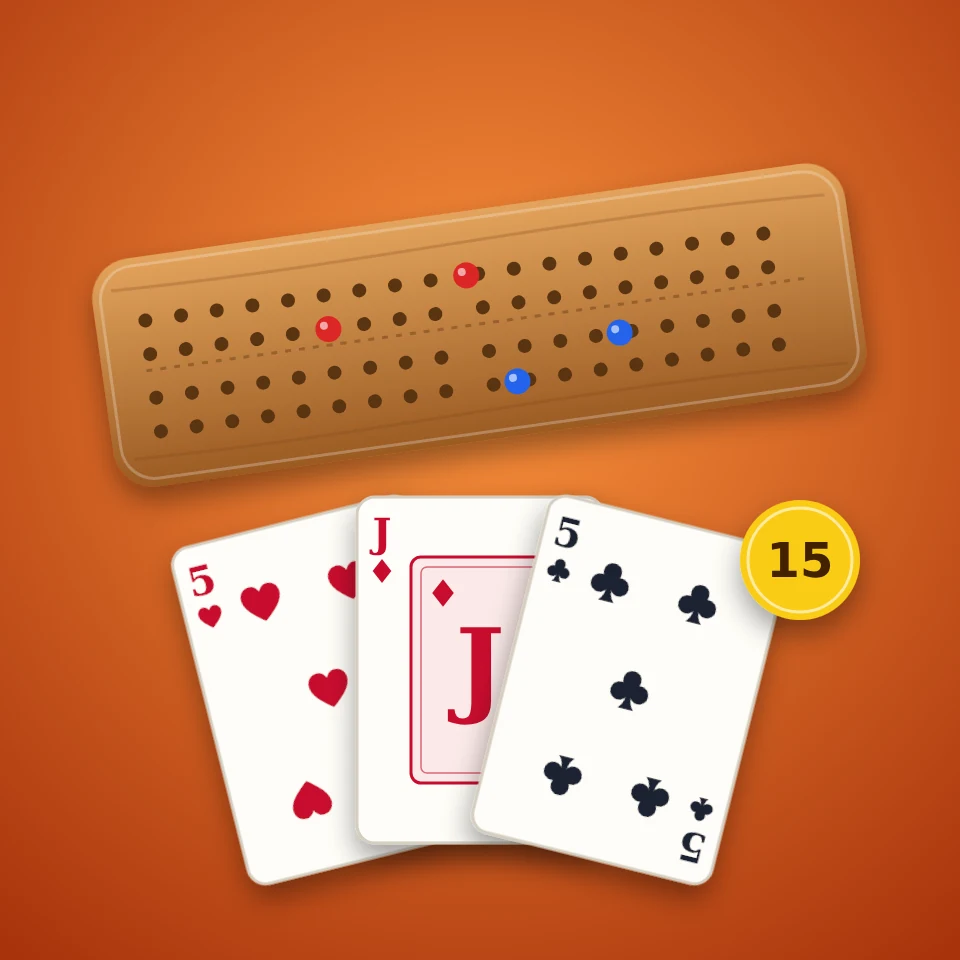
Where Cribbage comes from
Cribbage is commonly credited to the English poet and courtier Sir John Suckling, in the early 17th century, who is said to have developed it from an older card game called Noddy. The scoring board with pegs, used to keep the many small scores of a hand, became the game's trademark. Cribbage spread through Britain and its colonies and became especially popular in pubs, among sailors and in North America, where it has a strong tradition to this day. The six-card game for two players described here is the standard form today; there are also five-card and seven-card versions, and games for three and four players.
The board and the pegs
Scores are kept on a cribbage board: a wooden board with rows of holes, usually in groups of five. Each player has a track, and on the usual 121-point board a player goes up one row and down the other twice, 120 holes in all, then into the game hole. Each player has two pegs. When you score, you move your back peg in front of your front peg by the number of points, so the pegs leapfrog one another. The gap between them always shows your last score, which makes counting mistakes easy to spot. Shorter games to 61 points go once around the board.
The deal and the crib
A standard 52-card deck is used. The ace is low and counts 1, court cards count 10 and the other cards their number. The players cut, and the lower card deals first; after that the deal alternates. The dealer gives each player six cards. Each player then puts two cards face down into the crib, an extra hand that belongs to the dealer and is counted at the end. The non-dealer cuts the rest of the pack and the dealer turns up the top card of the lower half: the starter. If the starter is a jack, the dealer pegs 2 points at once, for his heels.
The play: fifteens, pairs, runs, go and 31
The non-dealer leads. The players take turns laying a card face up in front of them and announce the running total of the cards played, which may not go past 31. Making the count exactly 15 scores 2, and making it exactly 31 scores 2. Playing a card of the same rank as the one just played scores 2 for a pair, a third of that rank 6 for a pair royal, and a fourth 12 for a double pair royal. When the last three or more cards played form a sequence, in any order, the player who completed it scores one point per card, so 4, 6, 5 is a run of three. A player who cannot play without going over 31 says go, and the other player plays on as long as they can, scoring as usual. The last player to lay a card scores 1 for the go, or 2 for reaching 31. The count then starts again at zero with the player who did not play the last card, and the last card of the whole play scores 1.
The show: counting the hands and the crib
After the play, the hands are counted in a fixed order: the non-dealer's hand first, then the dealer's hand, then the crib, which also belongs to the dealer. Each counts its four cards together with the starter. Every combination of cards that adds up to 15 scores 2. Every pair scores 2, so three of a kind is three pairs, 6, and four of a kind is six pairs, 12. Every run of three or more scores its length, and the same run made with a different card counts again: 3, 3, 4, 5 holds two runs of three and a pair, a double run. Four cards of one suit in the hand score 4 for a flush, or 5 when the starter matches too; in the crib a flush only counts when all five cards are of one suit. A jack of the starter's suit in the hand or the crib scores 1, for his nob. Players traditionally count aloud: fifteen two, fifteen four, a pair is six, and so on.
Winning and skunks
The first player to peg 121 points wins, and the game ends at that moment, even in the middle of the play or the count. Because the non-dealer counts first, being the non-dealer near the end of a game is an advantage. A player who wins while the other has not reached 91 points, the last stretch of the board, scores a skunk, which in match play often counts as two games; a loser below 61 is double skunked. The highest possible hand is 29: three fives and the jack, with the fourth five, of the jack's suit, as the starter. Some totals cannot be made at all, such as 19, 25, 26 and 27, which is why players jokingly call a hand with no points a nineteen.
Strategy
When you choose your discards, think about your hand and the crib together. When the crib is yours, you can throw cards that score well together, such as a pair, two cards that make 15, or fives. When it is your opponent's, avoid giving away fives, pairs and cards that make 15, and prefer cards far apart in rank, such as a king and a nine. In the play, leading a four or lower is safe because your opponent cannot make 15 in reply; leading a five invites a ten-card for 15. Avoid making the count 5 or 21, which a ten-card turns into 15 or 31. Be careful about pairing or playing next to your opponent's card when they may answer with a pair royal or a longer run. Keep a low card for late in the count to take the go, and near the end of a game play to peg points rather than to protect your hand.
Frequently asked questions
Who counts first in Cribbage?
The non-dealer always counts first, then the dealer counts their hand, then the dealer counts the crib. Since the game ends as soon as a player reaches 121, the non-dealer can win before the dealer counts at all.
What is the best possible Cribbage hand?
29 points: three fives and the jack, with the fourth five, of the same suit as the jack, turned as the starter. It holds eight fifteens (16), four fives that make six pairs (12) and his nob (1).
What are his heels and his nob?
His heels is the 2 points the dealer scores when the starter turned up is a jack. His nob is the 1 point for holding the jack of the same suit as the starter in your hand or in the crib.
Does a flush count in the crib?
Only when all four crib cards and the starter are of the same suit, for 5 points. In a hand, four cards of one suit score 4, or 5 when the starter matches as well.
What is a skunk in Cribbage?
Winning a game to 121 while your opponent has fewer than 91 points is a skunk, and in many clubs and matches it counts as two games. Winning while they have fewer than 61 is a double skunk.
Related tools
Cribbage
Play Cribbage free in your browser against an Easy or Smart computer player. Discard to the crib, peg fifteens, pairs, runs, go and 31, and watch every hand and the crib counted step by step on a wooden board with pegs, to 121 or 61.
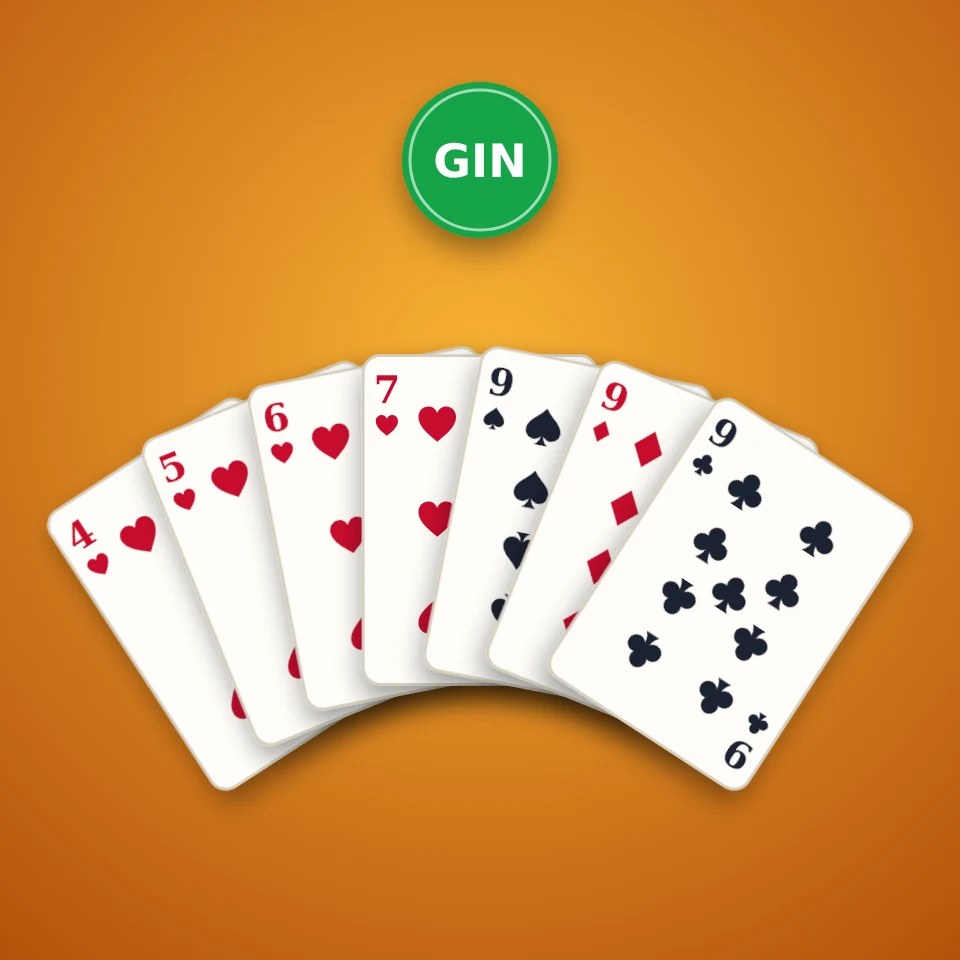
About Gin Rummy - rules, scoring and strategy
Where Gin Rummy comes from, how a hand is played, when you may knock, how laying off, gin and the undercut work, how a game to 100 is scored with the box bonus, and how to play it well.
Gin Rummy
Play Gin Rummy free in your browser against an Easy or Smart computer player. Draw and discard to build sets and runs, knock with 10 or less deadwood or go gin. Melds are grouped for you, scored to 100 with game and box bonuses.
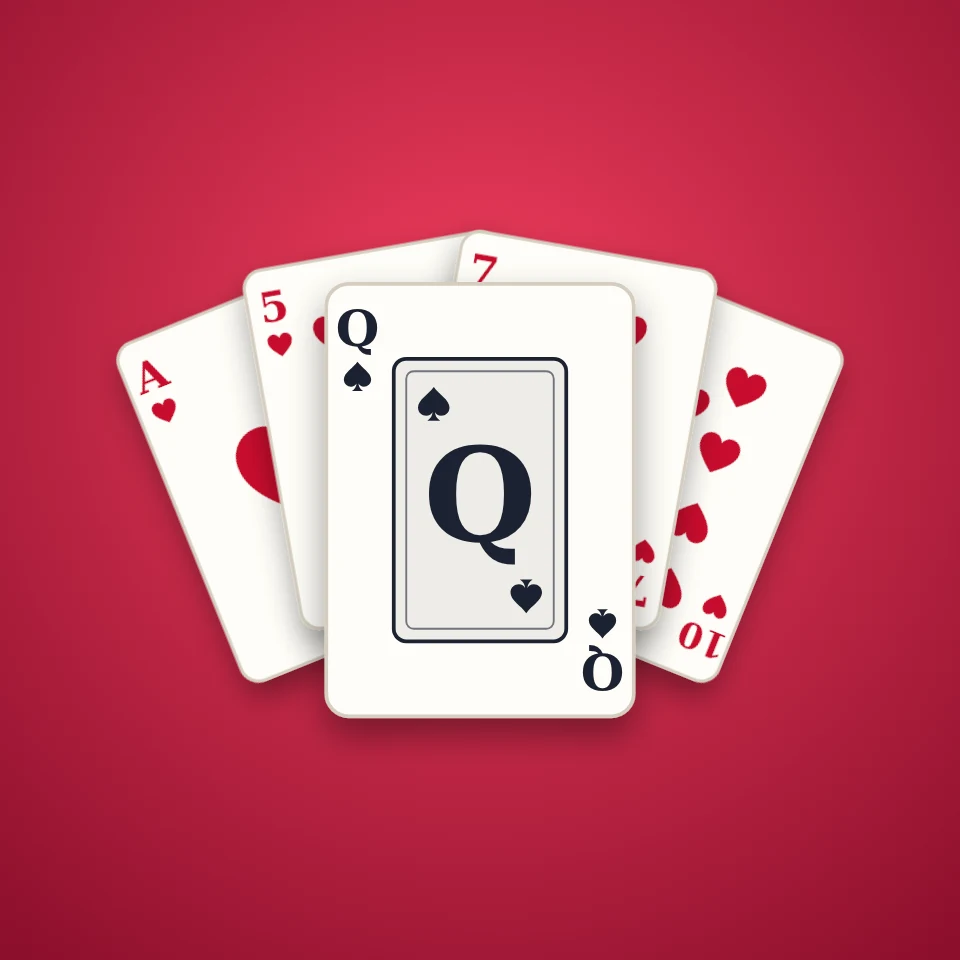
About Hearts - history, rules and strategy
Where the card game Hearts comes from, from Reversis to Black Lady and the Hearts that came with Windows, how passing and scoring work, what shooting the moon is and how to play well.
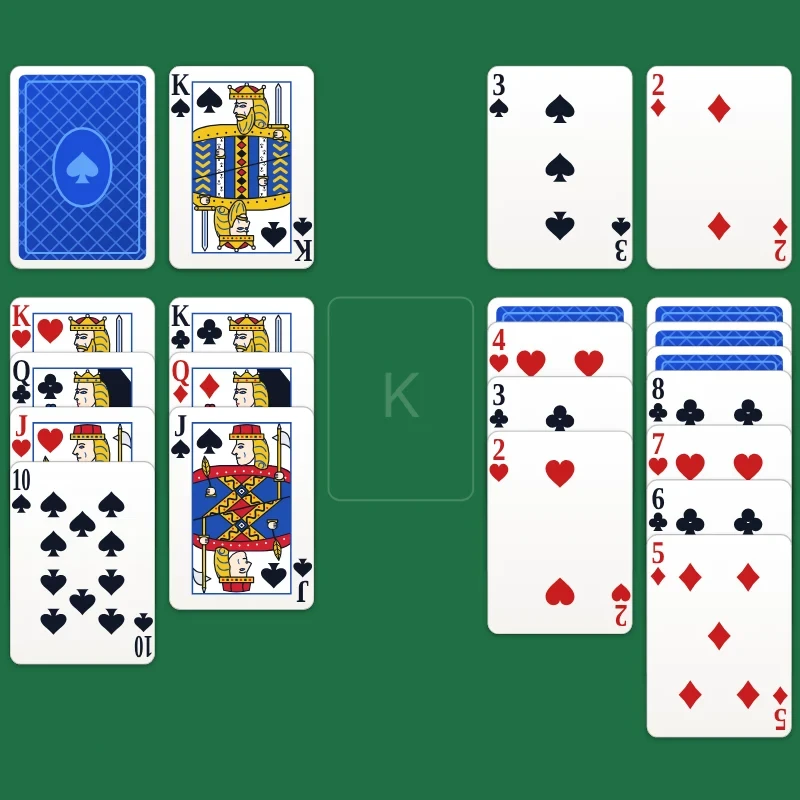
About Solitaire - history and rules of Klondike
Where does Klondike solitaire come from? How the seven piles, stock and foundations work, why draw 3 is harder and how many deals can be won.
Ready to try it?
Open PictorX in your browser — no install, no credit card required to start.
Play Cribbage