
About Gin Rummy - rules, scoring and strategy
Gin Rummy is the classic two-player rummy game: draw and discard to build sets and runs, and knock as soon as your unmatched cards are worth little enough. This page explains where it comes from, the rules of knocking, gin and the undercut, how a game is scored, and how to play it well.
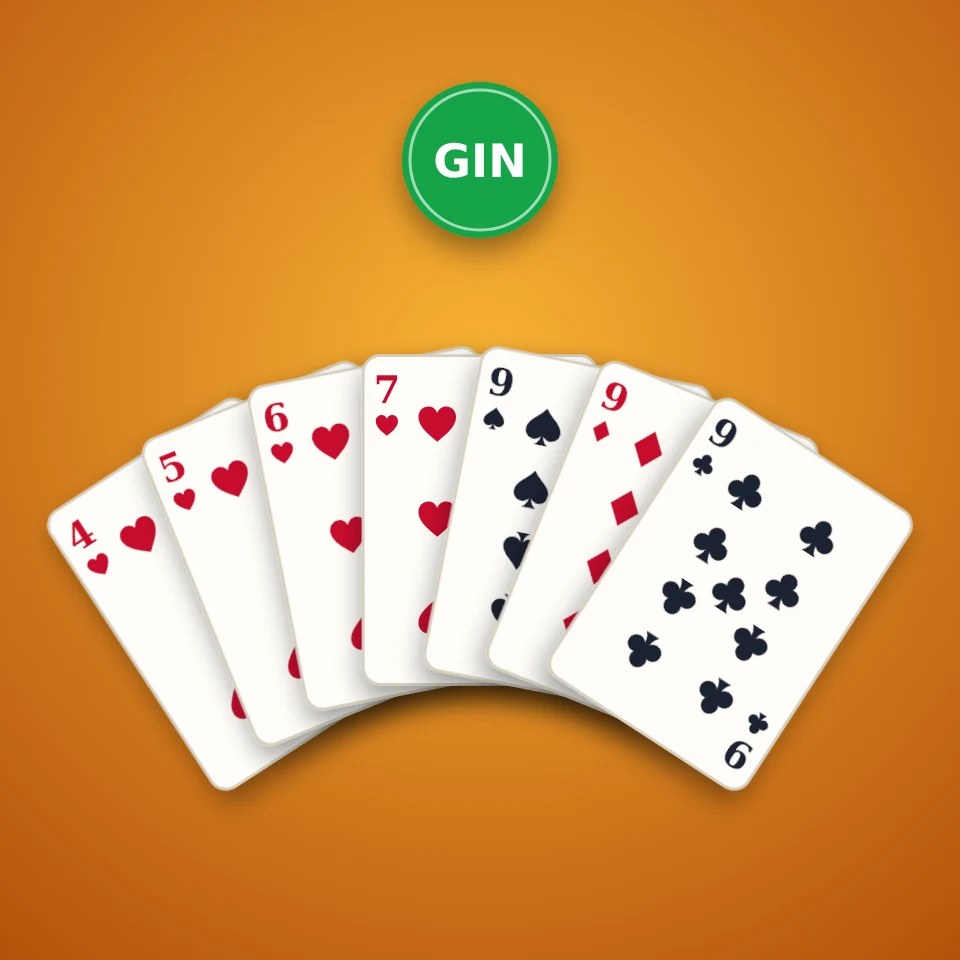
Where Gin Rummy comes from
Gin Rummy belongs to the large rummy family, games in which you collect matched sets of cards. Rummy itself is thought to descend from the Mexican game Conquian and from Whiskey Poker, an American game in which players exchanged cards with a spare hand on the table. The two-player game with knocking and deadwood is commonly credited to Elwood T. Baker, a whist teacher, and his son C. Graham Baker, in the early 1900s in the United States. The name is usually explained as a play on rummy: gin in place of rum. It became especially popular in the 1930s and 1940s, when it was a well-known pastime among Hollywood actors and studio people, and it has remained one of the most played two-player card games since.
Melds and deadwood
A standard 52-card deck is used, with the ace low. A meld is either a set of three or four cards of the same rank, such as three sevens, or a run of three or more cards in sequence in one suit, such as the four, five and six of hearts. A queen, king and ace is not a run, because the ace only counts as one. Every card that is not part of a meld is deadwood. Deadwood is counted at face value: kings, queens and jacks are 10, aces 1 and the other cards their number. A card can only be in one meld at a time, so with the seven of clubs next to three other sevens and the five and six of clubs, you have to choose where it goes.
How a hand is played
Each player is dealt ten cards. The next card is turned face up to start the discard pile, and the rest form the stock. In the first turn the non-dealer may take that upcard; if they pass, the dealer may take it; if both pass, the non-dealer starts by drawing from the stock. After that, each turn has two parts: draw the top card of the stock or the top card of the discard pile, then discard one card face up. A card taken from the discard pile may not be thrown back in the same turn. If the stock is down to its last two cards and the player who drew from it discards without knocking, the hand is a draw and nobody scores.
Knocking and laying off
You may end the hand by knocking when, after your discard, your deadwood adds up to 10 points or less. You lay down your hand arranged into melds and deadwood. Your opponent then lays down theirs, and may lay off: add their unmatched cards to your melds, such as the fourth card of your set or cards that extend your run at either end. Laid-off cards no longer count as their deadwood. Then both deadwood totals are compared. If the knocker has less, the knocker scores the difference.
Gin, big gin and the undercut
Knocking with no deadwood at all is going gin. The opponent may not lay off on a gin hand, and the gin player scores the opponent's whole deadwood plus a bonus, usually 25 points. Many players also allow big gin: when all eleven cards are melded after drawing, the player goes out without discarding and scores a bigger bonus, often 31 or 50. Knocking carries a risk: if the defender's deadwood, after laying off, is equal to or less than the knocker's, the defender has undercut the knocker and scores the difference plus an undercut bonus, usually 25. A gin hand cannot be undercut.
Scoring a game
Hands are played until one player reaches 100 points. That player wins the game and gets a game bonus of 100. Each player then also gets a line or box bonus, commonly 25 points, for every hand they won. Many players add a shutout bonus, doubling the winner's score when the loser won no hand at all. The deal alternates or goes to the winner of the previous hand, depending on the house. In Hollywood Gin, a popular variant, each player's scores are entered in three games at once, so that three games run side by side. In Oklahoma Gin the rank of the first upcard sets the highest deadwood with which a player may knock in that hand.
Strategy
Early in a hand, throw away high cards that do not belong to anything, such as a lone king or queen, because they cost the most if your opponent knocks. Keep pairs and two cards in sequence of the same suit, as they need only one more card, and count how many of those cards are still unseen. Watch the discard pile: a card your opponent picks up tells you what they are collecting, so avoid discarding cards of the same rank or next to it in that suit. Cards your opponent has discarded, or passed over, show what they do not need and make safer discards. Knock early when you can, because each turn gives your opponent a chance to improve. Later in the hand, with the opponent likely close as well, knock only with a low count, or hold out for gin to avoid being undercut.
Frequently asked questions
Do I have to knock as soon as I can?
No. Knocking is always your choice. You may keep playing to lower your deadwood or to go for gin, which earns a bonus and cannot be undercut, but every extra turn also gives your opponent a chance to knock first.
Can the ace be high in a run?
Not in standard Gin Rummy. The ace is always low, so ace, two, three is a run but queen, king, ace is not. The ace counts one point as deadwood.
Can the defender lay off cards on a gin hand?
No. Laying off is only allowed when the knocker has some deadwood. Against gin, the defender's whole deadwood counts.
What happens when the stock runs out?
The stock is never played to the end. When only two cards are left and the player who drew the last playable card discards without knocking, the hand is a draw: nobody scores and a new hand is dealt.
What is the box bonus?
At the end of a game each player gets a bonus, commonly 25 points, for every hand they won during it. It is called the box or line bonus because the hands won were marked in boxes or lines on the score sheet.
Related tools
Gin Rummy
Play Gin Rummy free in your browser against an Easy or Smart computer player. Draw and discard to build sets and runs, knock with 10 or less deadwood or go gin. Melds are grouped for you, scored to 100 with game and box bonuses.
About Crazy Eights - rules, variants and strategy
How Crazy Eights is played, how the eights and the stock work, how a round is scored, which variants are common, how it relates to Mau-Mau, Switch and Uno, and how to play it well.
Crazy Eights
Play Crazy Eights free in your browser against one, two or three computer players. Match the suit or rank, play an eight to call a new suit, and be first to empty your hand. Easy or Smart opponents, scored to 100 points.
About Hearts - history, rules and strategy
Where the card game Hearts comes from, from Reversis to Black Lady and the Hearts that came with Windows, how passing and scoring work, what shooting the moon is and how to play well.
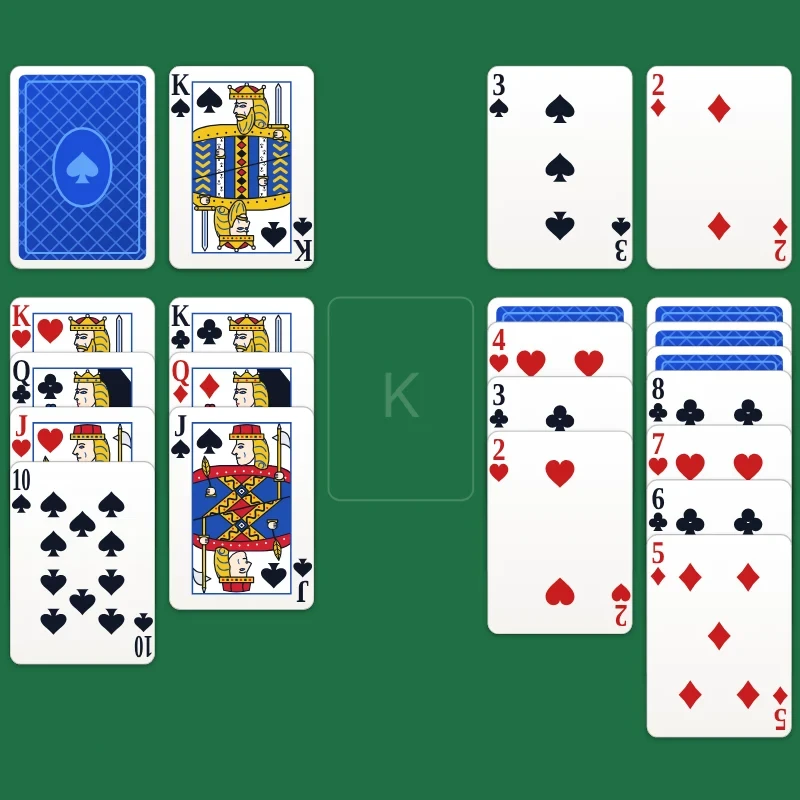
About Solitaire - history and rules of Klondike
Where does Klondike solitaire come from? How the seven piles, stock and foundations work, why draw 3 is harder and how many deals can be won.
Ready to try it?
Open PictorX in your browser — no install, no credit card required to start.
Play Gin Rummy