
How the Bridges puzzle works
Bridges looks like a map of islands, and it plays like a chain of small certainties: each island's number and its neighbours narrow down where the bridges go, until one network connects them all. This page explains the rules, where the puzzle comes from, the techniques that solve it, and how the puzzles on PictorX are made.
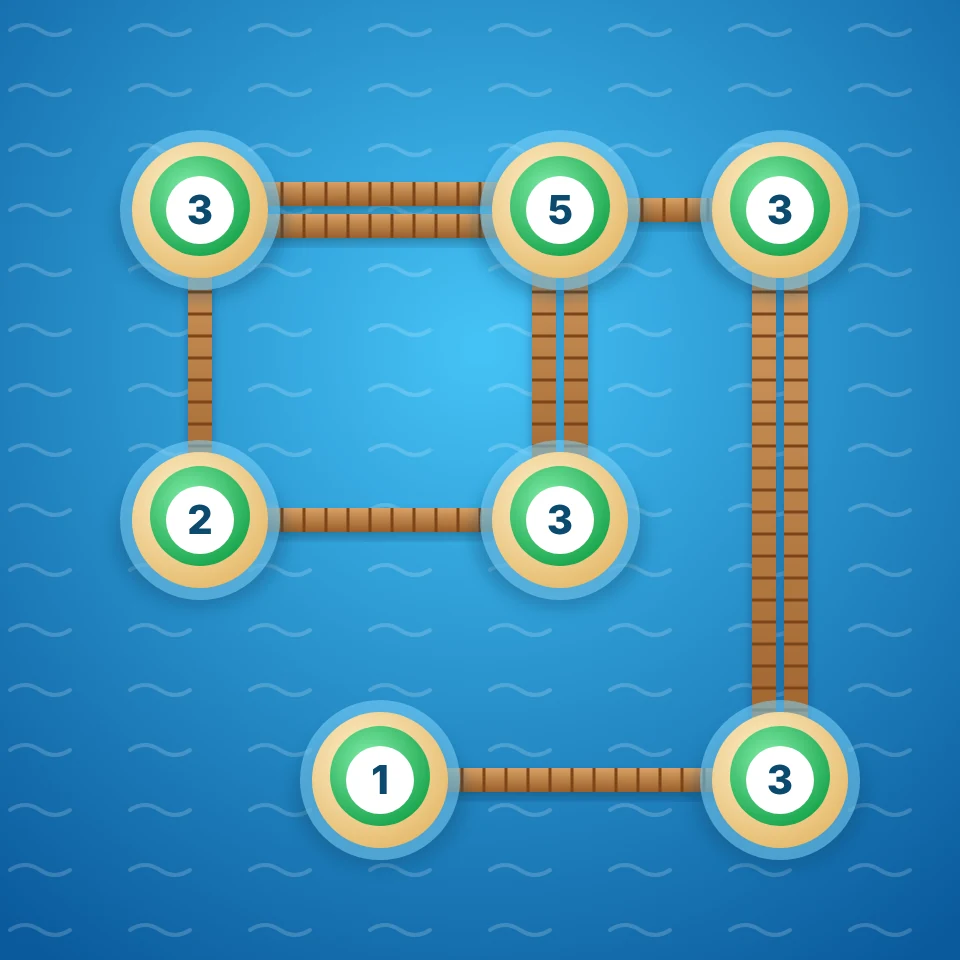
The rules
The board shows islands, each with a number from 1 to 8. Bridges join two islands in the same row or column, with no island in between. Two islands can share one or two bridges, a bridge may not cross another bridge, and the number on an island says how many bridges end on it. The puzzle is solved when every island has its number and all of them are connected into one network.
Where it comes from
Hashiwokakero, Japanese for build bridges, was published by the puzzle magazine Nikoli in 1990, the same publisher that gave Sudoku its name. Like Sudoku it spread around the world under simpler names: Hashi, Bridges, or Ai-Ki-Ai in France. Its appeal is that the rules fit in two sentences, while a large puzzle can take a long time.
Techniques that solve it
Start with the islands that leave no choice. An island whose number is twice its number of neighbours needs double bridges to all of them: a 4 in a corner, a 6 on an edge, an 8 anywhere. An island with one bridge too few for that still needs at least one bridge to every neighbour. Count what each island still needs against what its neighbours can still give, and remember that a finished bridge can block a crossing one.
Keeping it connected
The rule that everything must be connected does more work than it seems. Two islands of 1 next to each other may not be joined, because the pair would be cut off. Two islands of 2 may not share a double bridge for the same reason. In larger puzzles, look for a group of islands that would be complete and closed off if a certain bridge were built: then that bridge is impossible.
How the puzzles are made
Each puzzle on PictorX starts as a random network: islands grow out from a first one, each joined by one or two bridges, and a few extra bridges make loops. The numbers are written from that network, and a solver checks that no other placement of bridges fits them. Only puzzles with exactly one solution are kept. The solver also grades them: an Easy puzzle falls to plain deductions, a Hard one needs several rounds of what-if reasoning.
Frequently asked questions
Is Bridges the same as Hashiwokakero?
Yes. Bridges and Hashi are the English names of Hashiwokakero, the puzzle published by Nikoli. The rules are the same everywhere: at most two bridges between two islands, no crossings, and all islands connected.
What is the highest number on an island?
Eight. An island can have at most four neighbours, one in each direction, and at most two bridges to each, so an 8 needs every possible bridge. A 7 needs at least one bridge in every direction.
Can a Bridges puzzle have more than one solution?
A badly made one can, but a good puzzle has exactly one, so it can be solved by logic alone. Every puzzle on PictorX is checked by a solver and kept only when exactly one solution fits.
Is there always a next certain bridge?
In the puzzles here, yes. On Easy the numbers alone lead to the next certain bridge; on Medium and Hard you sometimes need to ask what would happen if a bridge were there, and see that it leads to a contradiction.
Related tools
Bridges
Play Bridges, the island puzzle also called Hashi, free in your browser. Join numbered islands with bridges on boards from 7 x 7 to 15 x 15, easy to hard, with hints, the solution and your best times.
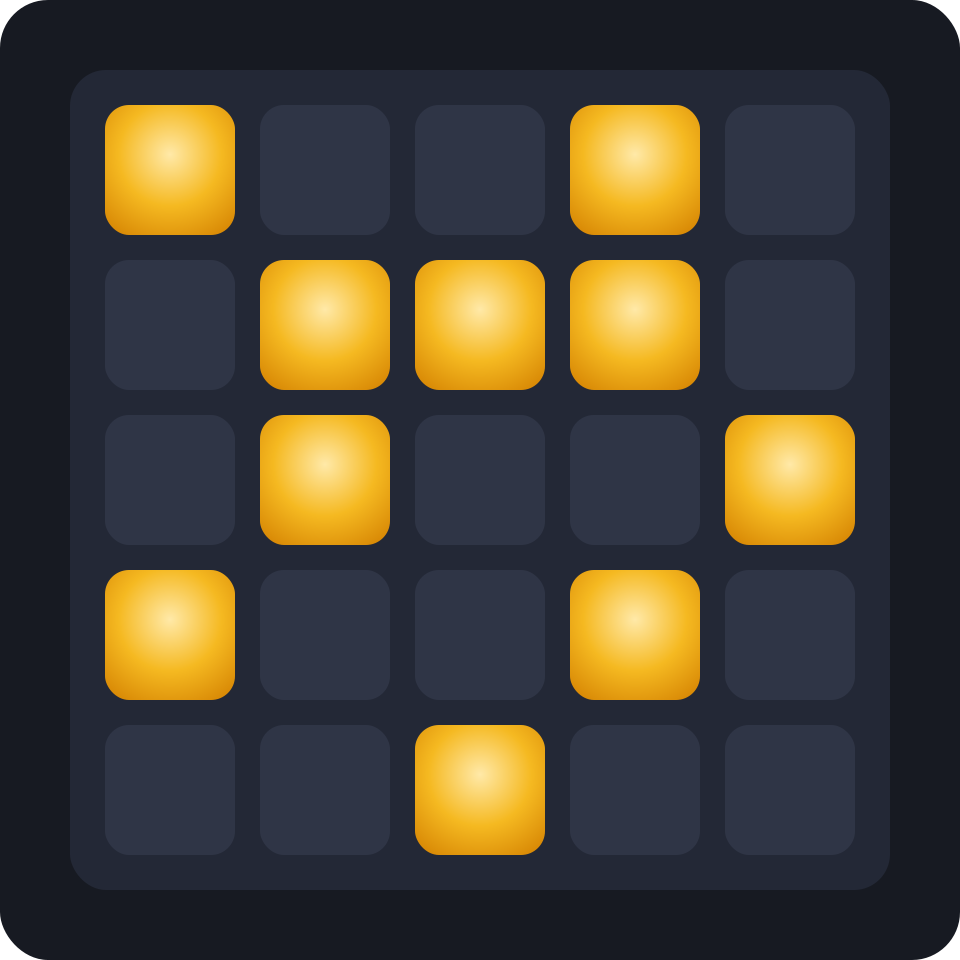
Lights Out
Play Lights Out, the classic lamp puzzle: press a lamp to toggle it and its neighbours until every lamp is off. Boards from 3×3 to 6×6, always solvable, with hints, a solver and best scores.
How Lights Out works
How Lights Out works: the rules behind the lamp puzzle, where it comes from, the linear algebra that solves it, why some positions have no solution, and tips to solve it faster.
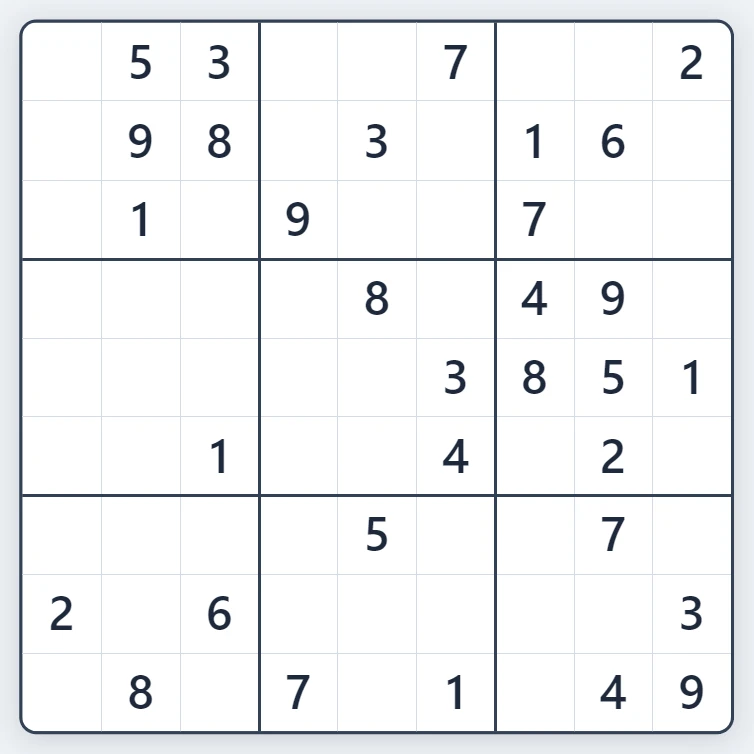
Sudoku
Play Sudoku free in your browser. Fresh puzzles with exactly one solution, four levels from Easy to Expert, pencil notes, hints, mistake highlighting and undo.
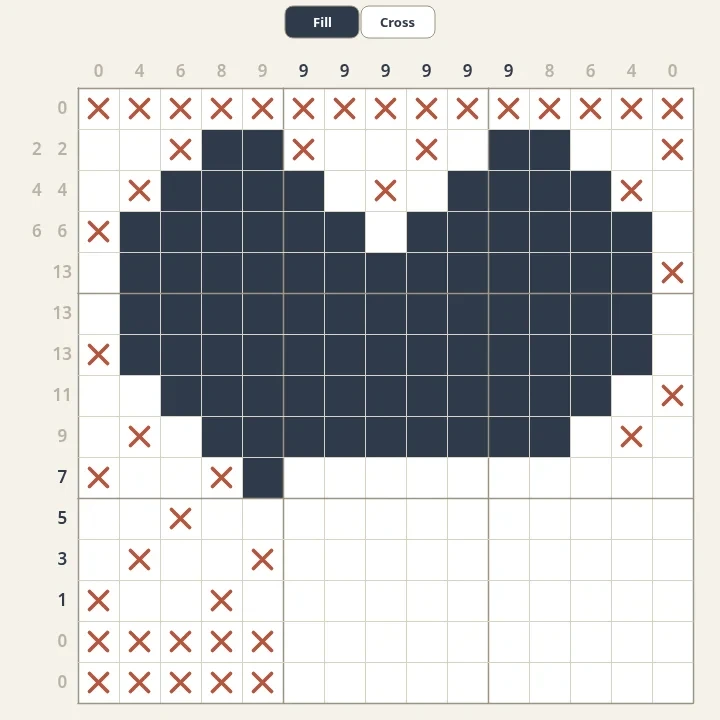
Nonograms
Solve free nonograms in your browser. Every puzzle is generated, has one logical solution and reveals a pixel picture. Choose sizes from 5x5 to 20x20 and mark empty cells with crosses.
Thread Link
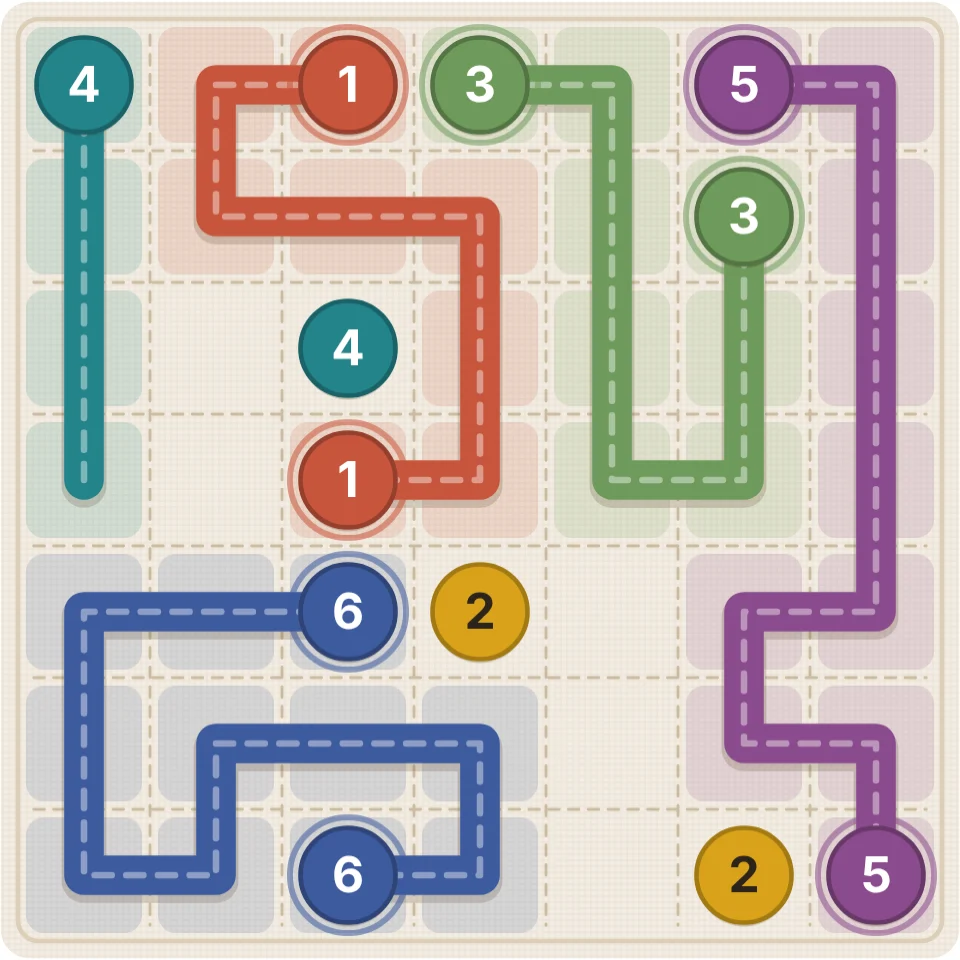
Play Thread Link, a free numberlink puzzle: draw a thread between each pair of matching numbers, without crossings, until every square is used. Seven board sizes, endless numbered puzzles, hints and undo.
Ready to try it?
Open PictorX in your browser — no install, no credit card required to start.
Play Bridges