
How Lights Out works
Lights Out is a puzzle of lamps that refuse to switch off alone: every press also toggles the neighbours. Behind the simple rule sits a neat piece of linear algebra, a family of unsolvable positions, and one strategy that solves any board from the top row down.
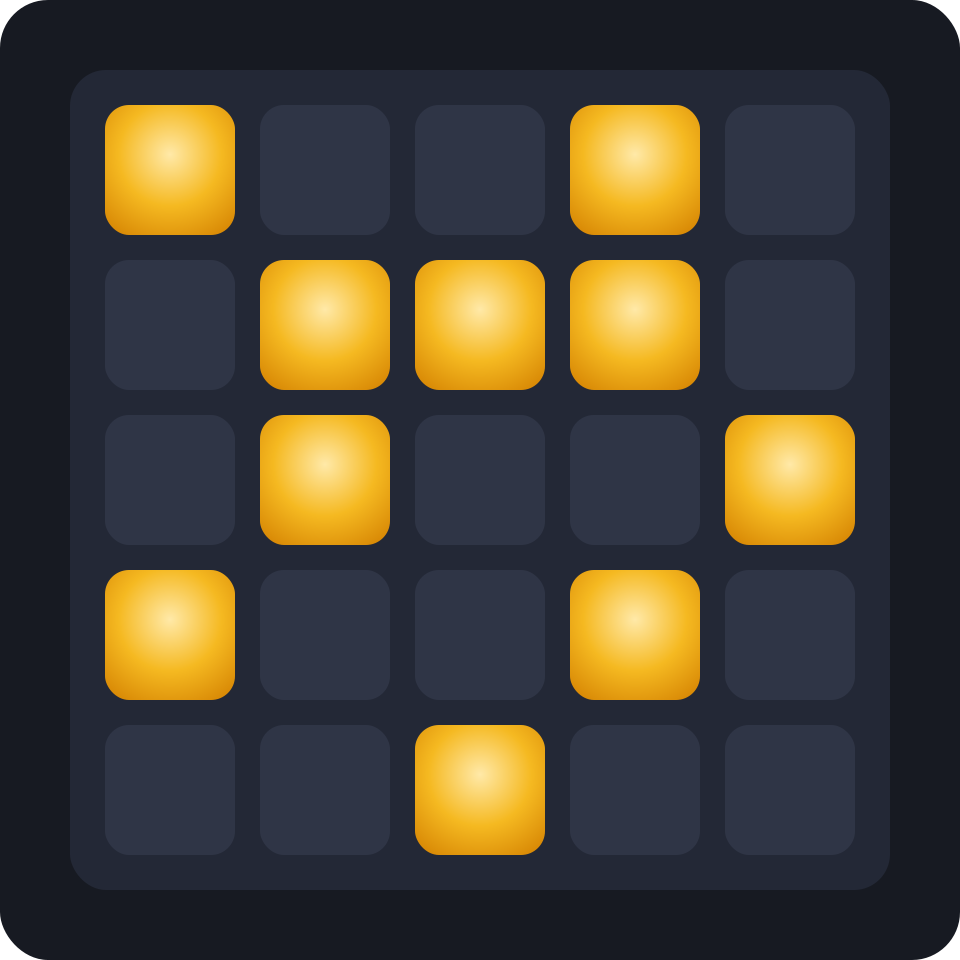
The rules
The board is a square of lamps, some on and some off. Pressing a lamp toggles it and the lamps directly above, below, left and right of it; lamps in a corner have only two neighbours, lamps on an edge three. Pressing the same lamp twice undoes the press, and the order of presses does not matter, only which lamps were pressed an odd number of times. The puzzle is solved when every lamp is off.
From Merlin to Tiger Electronics
The idea first reached players in 1978 as Merlin, a handheld electronic game by Parker Brothers, whose Magic Square game toggled a 3×3 field of lights in much the same way. Tiger Electronics released the 5×5 version as Lights Out in 1995, and it became the classic form: 25 lamps, a handful of starting patterns, and a rule a child can learn in a minute. Mathematicians adopted it at once, because the little game is a perfect doorway into linear algebra.
Why algebra solves it
Write 1 for a lamp that is on and 0 for one that is off. A press adds 1 (and flips the lamp) to a cross of five cells, and addition is modulo 2: two presses on the same lamp cancel. So a whole game is a system of linear equations over the two numbers 0 and 1, one equation per lamp, and it can be solved by the same elimination used in school algebra. Some press patterns, the quiet patterns, toggle every lamp an even number of times and so change nothing at all; on the 5×5 board there are four of them, and adding one to a solution gives another solution of the same puzzle.
Why some positions cannot be solved
A position can only be solved when its lit lamps can be built out of crosses. On the 5×5 board only a quarter of all positions qualify: a single lit corner lamp, for instance, can never be turned off without leaving something else on. Our puzzles are scrambled by pressing lamps on a dark board, so they are solvable by construction, but pressing lamps at random while you play can still walk you into a dead end on the sizes that have quiet patterns. The line under the board tells you honestly when that has happened; undoing a few presses walks you back out.
Tips for solving
Chase the lights down: work row by row from the top, and for every lit lamp press the lamp directly below it, which turns it off without disturbing the rows above. When you reach the bottom row, a small table of patterns (or a few minutes of experimenting) finishes the board, or shows that this start has no solution and a different first row is needed. Keep presses light: because order does not matter, never press a lamp twice, and if two of your planned presses are neighbours, check whether a shorter route does the same. On small boards, simply plan the first row - everything after that is forced.
Frequently asked questions
Is Lights Out the same as Merlin's Magic Square?
Nearly. Merlin (1978) played the same toggle-your-neighbours rule on a 3×3 field. Lights Out (1995) made it 5×5 and gave the puzzle its name.
Does every position have a solution?
No. On 5×5 only a quarter of all positions can be solved; a single lit corner is a famous impossible one. Every puzzle this game deals is scrambled from a dark board, so it always has a solution, but your own presses can lead into an unsolvable position, and the status line says so when that happens.
Which board size should I start with?
3×3 to learn the rule, 4×4 or the classic 5×5 for a real puzzle, and 6×6 when you want a longer chase down the board.
Related tools
Lights Out
Play Lights Out, the classic lamp puzzle: press a lamp to toggle it and its neighbours until every lamp is off. Boards from 3×3 to 6×6, always solvable, with hints, a solver and best scores.
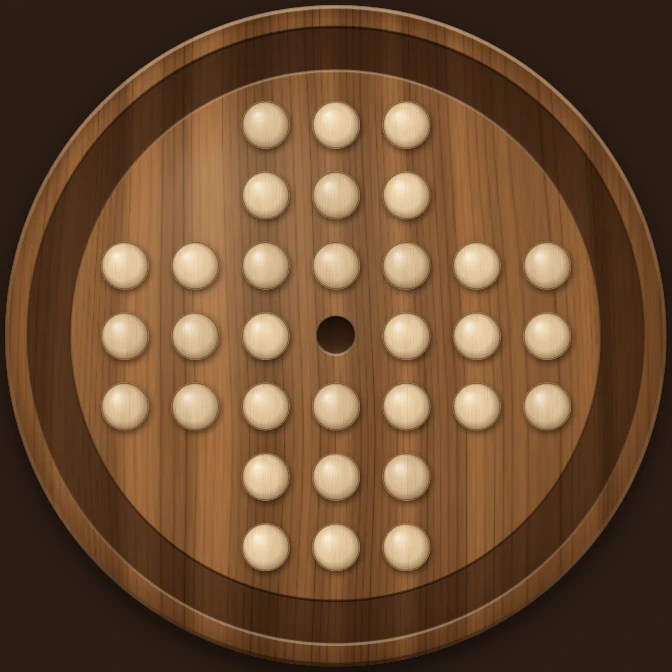
Peg Solitaire
Play peg solitaire free online on the English 33-hole or European 37-hole board. Jump pegs until one is left, with undo, hints and a full solver.
About Peg Solitaire - history, boards and strategy
How do you win at peg solitaire? A puzzle from the French court, the English and European boards, and strategy tips for finishing with one peg in the centre.
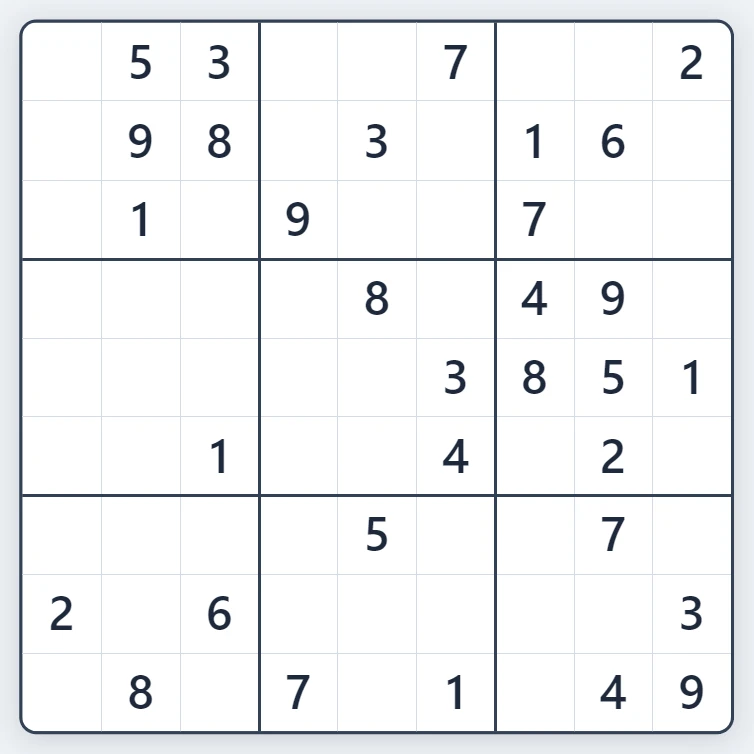
Sudoku
Play Sudoku free in your browser. Fresh puzzles with exactly one solution, four levels from Easy to Expert, pencil notes, hints, mistake highlighting and undo.
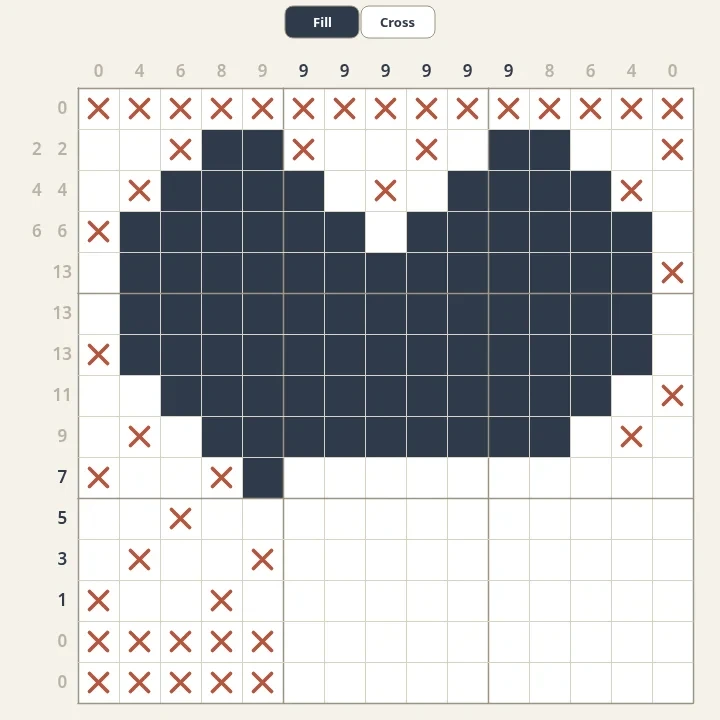
Nonograms
Solve free nonograms in your browser. Every puzzle is generated, has one logical solution and reveals a pixel picture. Choose sizes from 5x5 to 20x20 and mark empty cells with crosses.
Eight Queens
Place eight queens on a chessboard so that none attacks another. Try it yourself, watch the backtracking search find a solution step by step, and go through all 92 solutions.
Ready to try it?
Open PictorX in your browser — no install, no credit card required to start.
Play Lights Out