
Bohr diagrams explained
A Bohr diagram is the flat drawing of an atom you find in every chemistry book: a circle for the nucleus, rings around it for the shells, and dots on the rings for the electrons. It leaves out almost everything quantum mechanics knows about electrons, and yet it shows at a glance the three things that matter most in chemistry: how many electrons an atom has, how they are grouped, and how many sit on the outside.
What the drawing shows
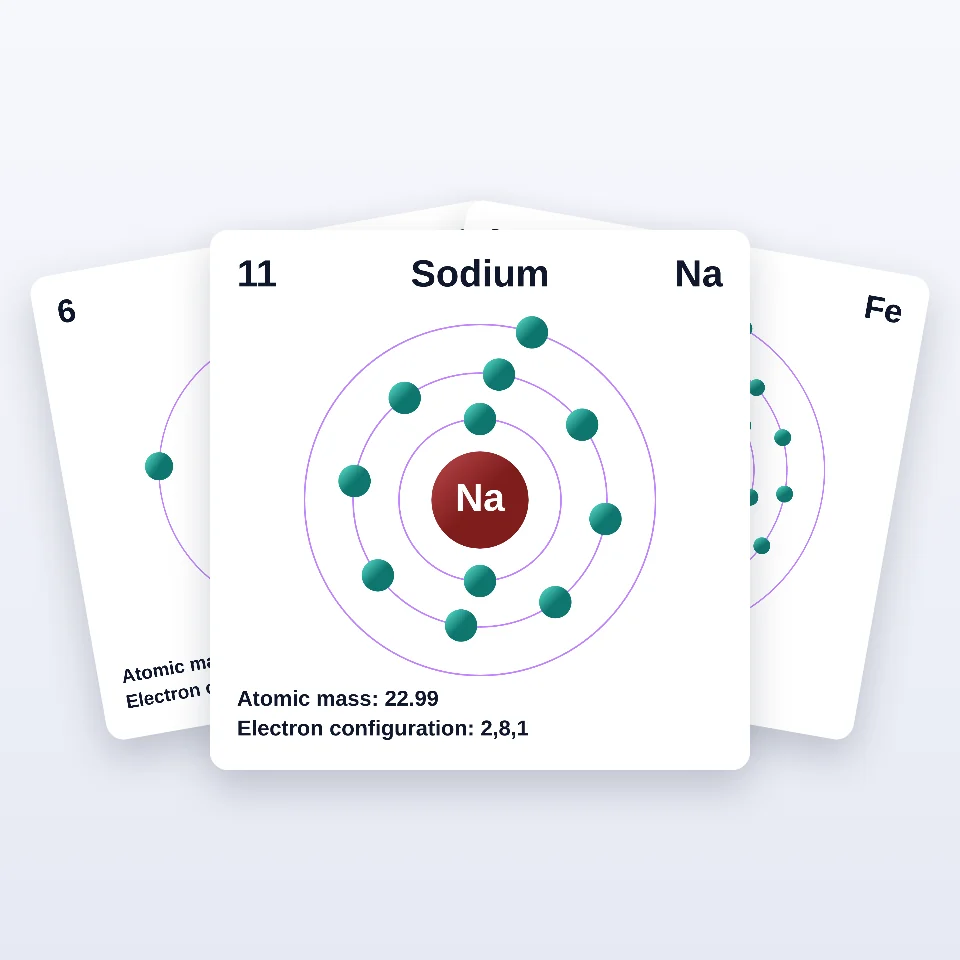
In the middle is the nucleus, usually labelled with the element's symbol, sometimes with the number of protons and neutrons. Around it are concentric rings, one for each occupied shell, named K, L, M, N, O, P and Q from the inside out. The electrons are dots on the rings. A neutral atom has as many electrons as protons, so the dots add up to the atomic number: one for hydrogen, six for carbon, eleven for sodium.
How many electrons per shell
Shell n can hold at most 2n² electrons: 2 in K, 8 in L, 18 in M and 32 in N. For the first twenty elements the rule of thumb 2, 8, 8 is enough: fill K with 2, L with 8, M with 8 and put the rest in N, which gives potassium 2, 8, 8, 1 and calcium 2, 8, 8, 2. From scandium on, the third shell goes on filling up to 18 while the fourth already holds one or two electrons. The Atom Builder uses the real ground state of every element, including the exceptions such as chromium and copper.
The outer shell
The electrons on the outermost ring are the valence electrons, and they decide how an element behaves. Atoms with a full outer shell, the noble gases, hardly react at all. Sodium, with a single electron outside a full shell, gives it away easily; chlorine, one electron short of eight, takes one eagerly. That is why the two make table salt, and why elements in the same column of the periodic table, with the same number of valence electrons, behave alike.
Ions
An ion is an atom that has gained or lost electrons. The nucleus stays the same, so the symbol stays the same, but the number of dots changes and the charge is written beside the symbol. Na⁺ has lost its outer electron and keeps 2, 8; Cl⁻ has gained one and has 2, 8, 8. Both now have the same arrangement as a noble gas. Set the charge in the Atom Builder and the card shows the ion's shells and its charged symbol.
Shells and the electron configuration
The shell numbers 2, 8, 1 are a short form of the electron configuration. The full form splits each shell into subshells s, p, d and f: sodium is 1s² 2s² 2p⁶ 3s¹, written compactly as [Ne] 3s¹, the configuration of neon plus one more electron. The diagram groups electrons by shell only, which is why it stays readable even for heavy atoms, and the Atom Builder can print either form under the drawing.
What the diagram leaves out
Electrons do not move on circles. Quantum mechanics describes them as orbitals, clouds of probability with shapes of their own, and the s, p, d and f subshells of one shell are not at the same distance from the nucleus. The scale is wrong too: a real nucleus is about 100,000 times smaller than the atom. The diagram is a bookkeeping picture, and a very good one, for counting electrons and predicting bonds.
Make your own
Pick an element, set a charge to draw an ion, choose the colours and what the card shows, and save it as an image for a worksheet, a slide or a poster. The pencil opens the card in the photo editor with the background, every shell, the nucleus and each line of text on a layer of its own, so you can recolour a shell or move a label. The same cards are among the templates, one for each element from hydrogen to xenon.
Frequently asked questions
What is the difference between a Bohr diagram and a Lewis structure?
A Bohr diagram shows every electron on its shell. A Lewis structure, or electron dot structure, shows only the valence electrons as dots around the symbol, and is used to draw the bonds between atoms in a molecule. The outer ring of the Bohr diagram holds exactly the dots of the Lewis structure.
How do I know how many shells an atom has?
The number of occupied shells equals the element's period, its row in the periodic table. Hydrogen and helium have one shell, lithium to neon two, sodium to argon three, and so on to seven for the heaviest elements.
Does the Bohr diagram show neutrons?
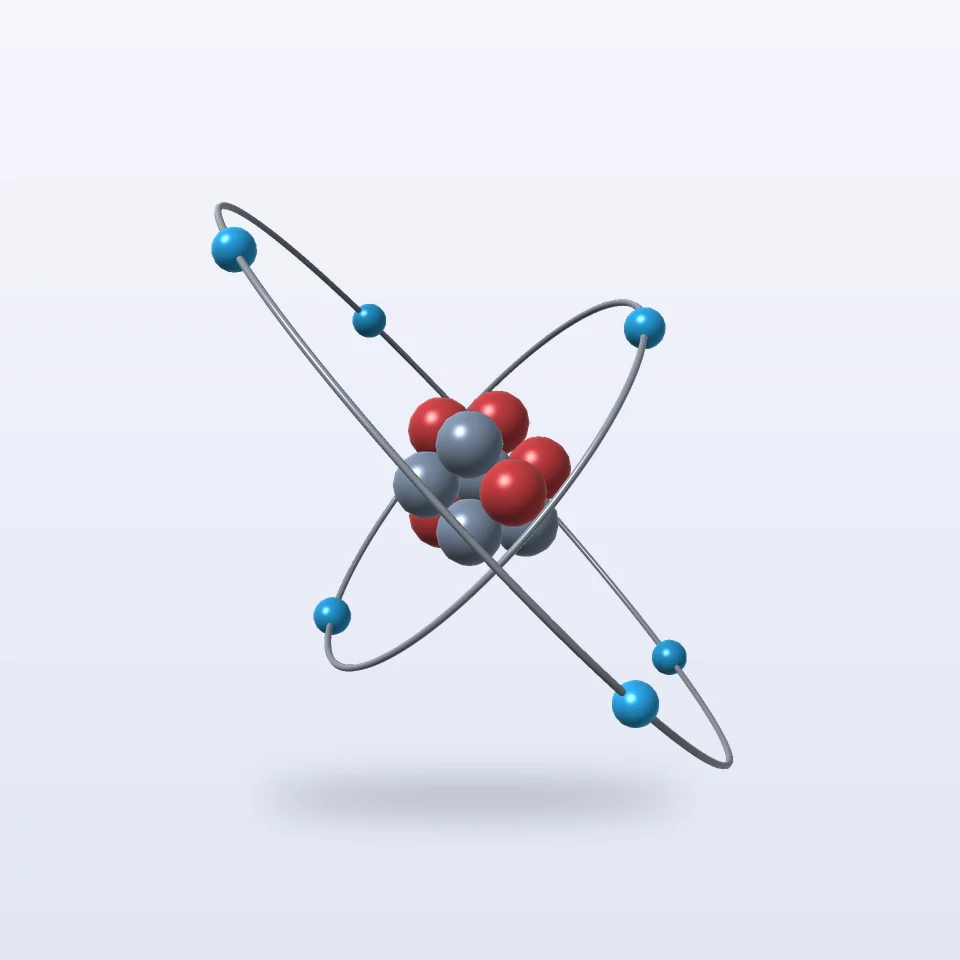
Often not. The neutrons sit in the nucleus and do not change the electrons, so many diagrams only label the nucleus with the symbol. The number of neutrons is the mass number minus the atomic number: 12 for sodium-23. The Bohr Model app shows the protons and neutrons of the nucleus in 3D.
Why does the outer shell never have more than eight electrons?
Because once the s and p subshells of the outer shell are full, with 2 + 6 = 8 electrons, the next electrons go into a new shell or into the d subshell of the shell below. Eight outer electrons is the stable arrangement of the noble gases, the octet that atoms reach by bonding.
Related tools
Atom Builder: Bohr diagrams of every element
Make a Bohr diagram of any of the 118 elements or its ions: the nucleus, every shell with its electrons, the atomic number, name and symbol, the atomic mass and the electron configuration on one card. Pick the colours, save it, or edit it with every part on a layer of its own.
Bohr model of the atom
Build a Bohr model of any of the 118 elements in 3D: a nucleus of protons and neutrons with the electrons circling on their shells. Make ions, compare even spacing with Bohr's n² ratio, and read the electrons per shell and the valence electrons.
Interactive periodic table
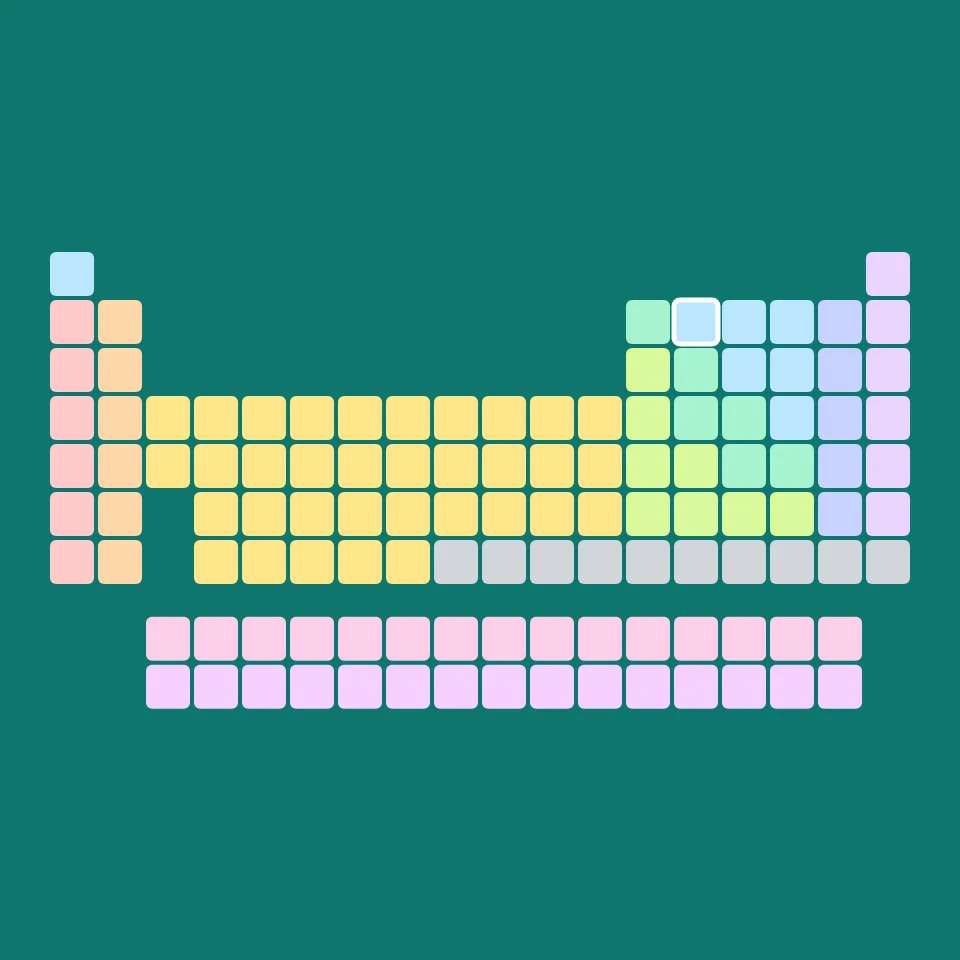
An interactive periodic table of all 118 elements: color it by category, block, state or electronegativity, and click an element for its atomic weight, electron configuration and shells.
Molecule builder
A free online molecule builder: join atoms with single, double and triple bonds, get the formula and molar mass, see the molecule's real shape in 3D, and solve chemistry challenges.
Chemical equation balancer
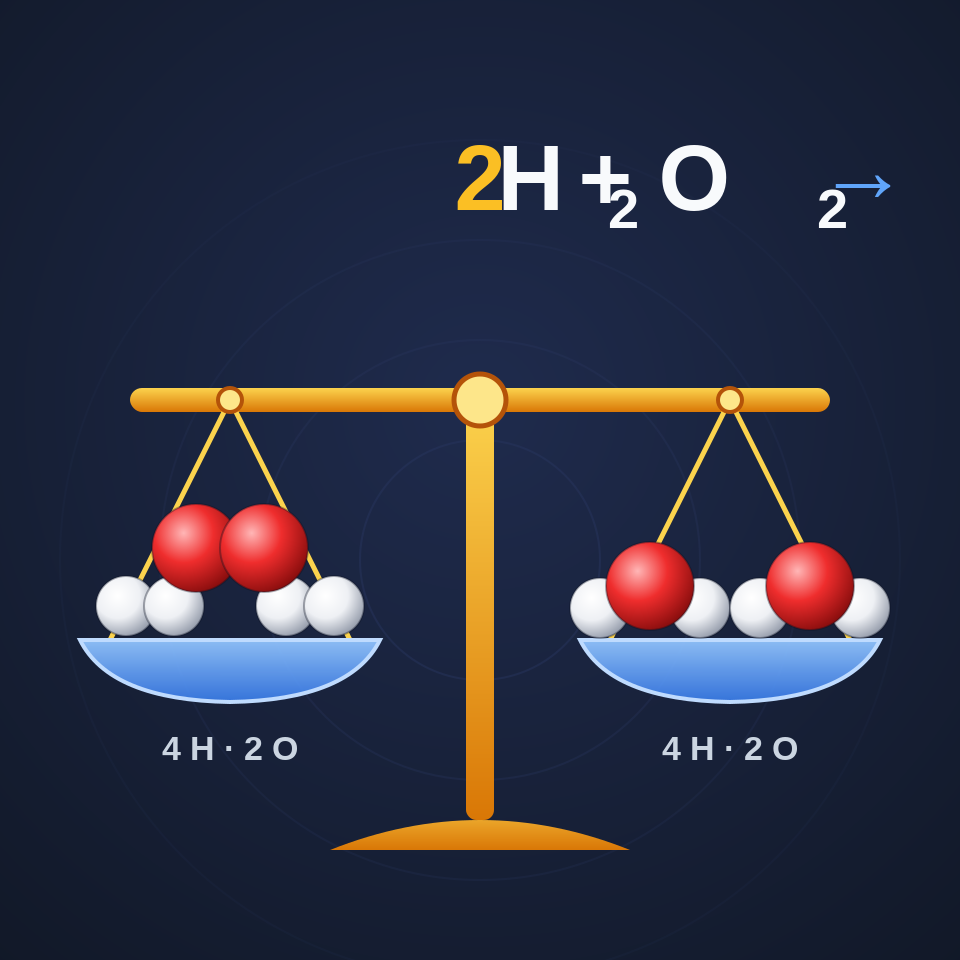
Balance any chemical equation instantly and exactly, ions, hydrates and redox reactions included. Count the atoms on both sides, see the oxidation numbers that change, and work out molar masses, the limiting reactant and the yield.
Ready to try it?
Open PictorX in your browser — no install, no credit card required to start.
Open the Atom Builder