
Interactive periodic table
The periodic table puts all 118 known elements in order of atomic number, in rows and columns that reveal how they behave. Click any element to see its atomic weight, its group and period, its electron configuration and its electrons drawn shell by shell. Color the table by category, block, state or electronegativity to see the patterns that make it periodic. Click an element to see its properties and its electrons shell by shell, or type a name, symbol or atomic number in Find. With an element selected, the arrow keys move through the table. Color by category, block, state at 20 °C or electronegativity, and click a group in the legend to highlight it; click it again to show all. On a narrow screen, swipe the table sideways.
How it works
- Click an element, or type its name, symbol or atomic number in Find.
- Read its properties in the tiles and the card, and see its electrons drawn shell by shell.
- Color the table by category, block, state or electronegativity, and click a legend entry to highlight that group.
Reading the periodic table
Each box shows an element's atomic number, the number of protons in its nucleus, and its symbol. The rows are periods: every period starts filling a new electron shell. The columns are groups: elements in the same group have the same number of outer electrons, so lithium, sodium and potassium, for example, all react violently with water. The two rows at the bottom, the lanthanides and actinides, belong in periods 6 and 7 but are set apart to keep the table narrow.
Trends across the table
Moving right along a period, atoms hold their electrons more tightly: electronegativity rises from the alkali metals to the halogens, and atoms get smaller. Moving down a group, atoms grow and give up their outer electrons more easily, so metals get more reactive. Metals fill the left and middle, nonmetals the top right, and a diagonal band of metalloids such as silicon and germanium sits between them. Color the table by electronegativity to see the first trend at a glance.
Frequently asked questions
How many elements are in the periodic table?
118. The last four, nihonium, moscovium, tennessine and oganesson, were named in 2016, completing the seventh row. Elements beyond 118 have not been made yet.
Why is the periodic table shaped the way it is?
Its shape follows the electron shells. Periods get longer as new kinds of subshells come into play: 2 elements in the first row, 8 in the next two, 18 in the fourth and fifth, and 32 in the sixth and seventh, where the f-block lanthanides and actinides are usually drawn separately.
What is electronegativity?
How strongly an atom pulls on the electrons it shares in a bond. On the Pauling scale fluorine is highest, at 3.98, and the alkali metals at the bottom left are lowest. Noble gases like helium and neon form almost no bonds, so most tables give them no value.
Why are some atomic weights in brackets?
Elements without a stable isotope have no fixed natural mixture of isotopes, so no standard atomic weight. For them the table gives the mass number of the longest-lived known isotope, in brackets.
Is anything I do sent anywhere?
No. The table runs in your browser, and your last choice of element and coloring stays in this browser's local storage.
Related tools
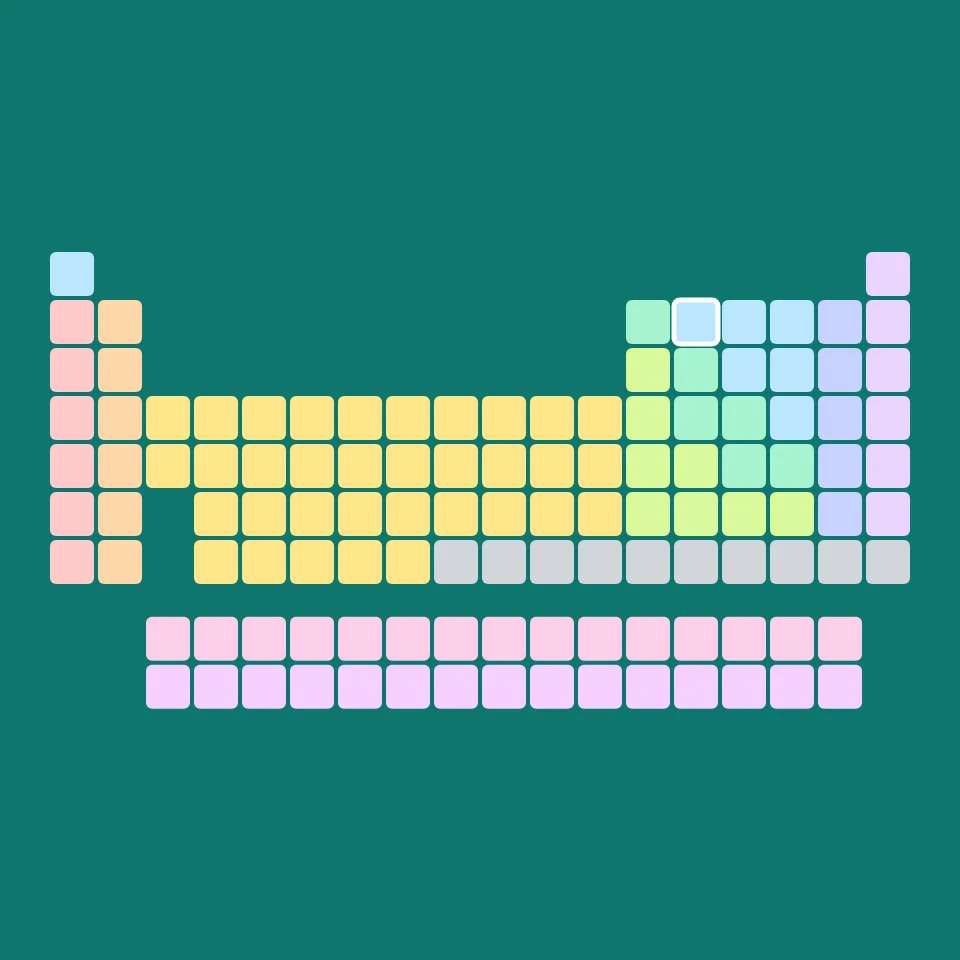
The periodic table explained
How the periodic table works: atomic number, groups and periods, the s, p, d and f blocks, electron configurations, trends such as electronegativity, and how Mendeleev predicted missing elements.
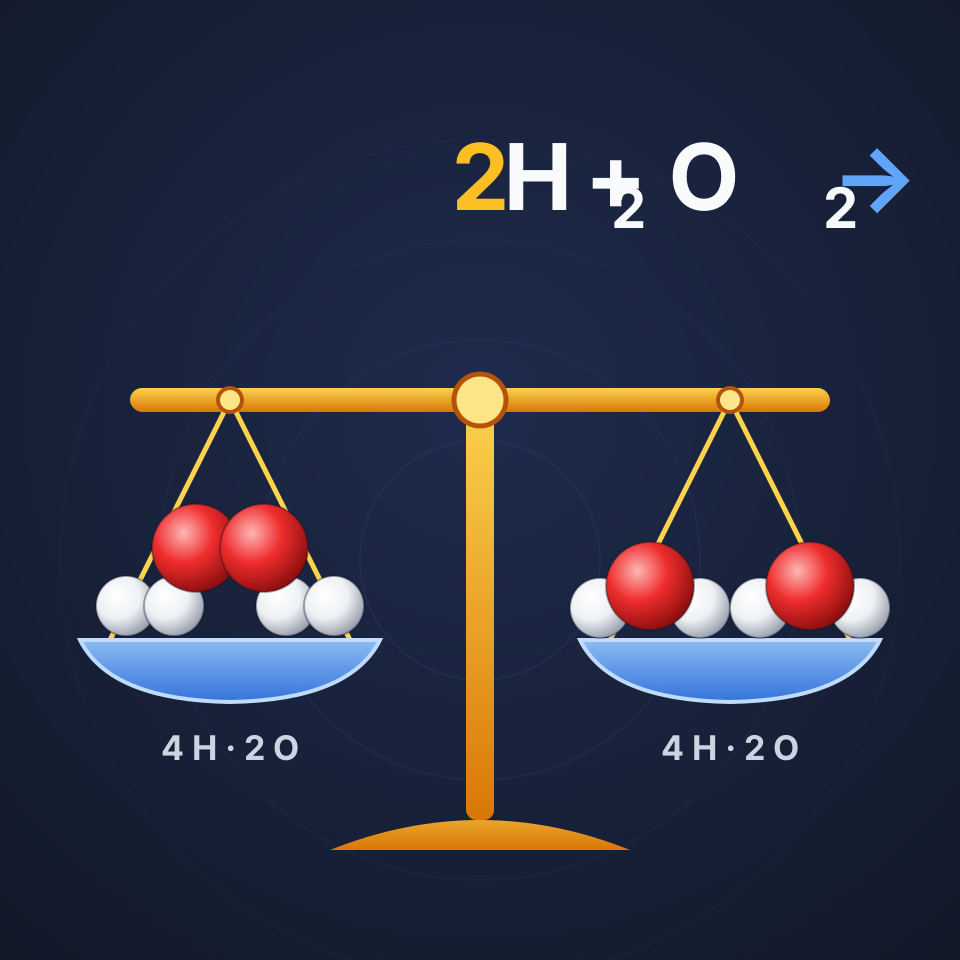
Chemical equation balancer
Balance any chemical equation instantly and exactly, ions, hydrates and redox reactions included. Count the atoms on both sides, see the oxidation numbers that change, and work out molar masses, the limiting reactant and the yield.
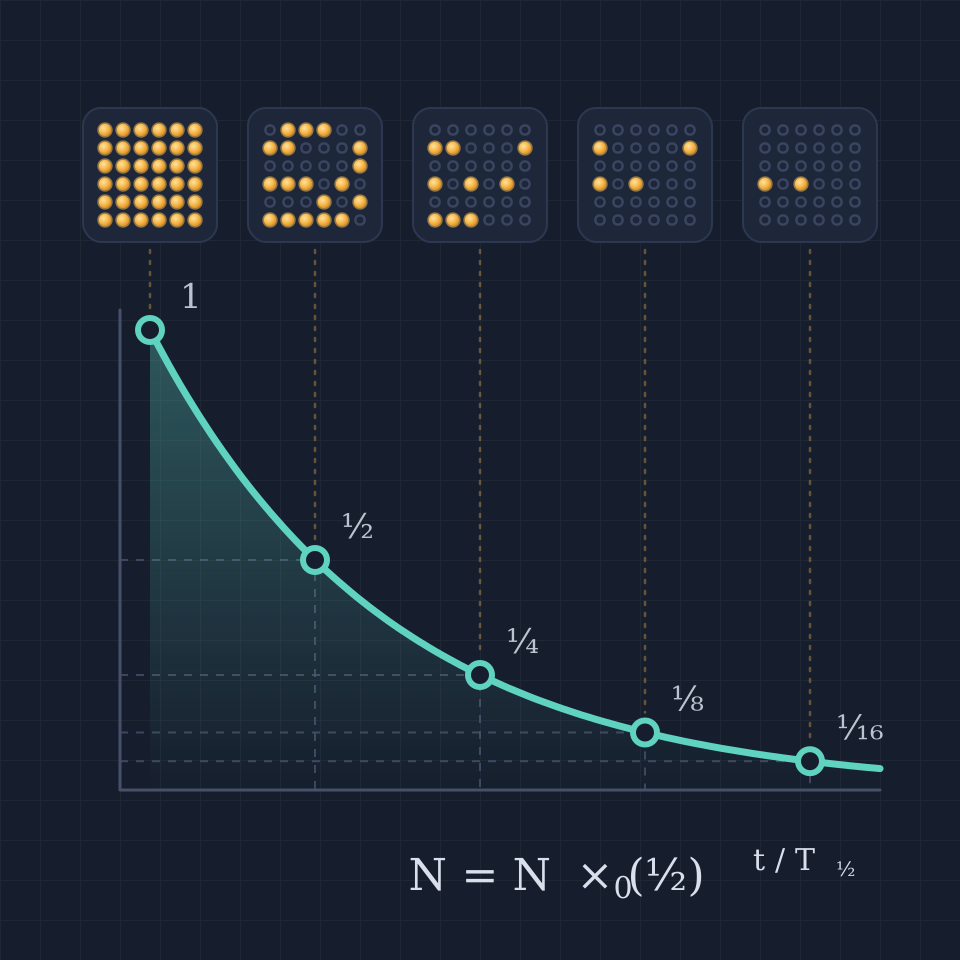
Half-life calculator
A free half-life calculator: work out the amount left, the initial amount, the elapsed time or the half-life of radioactive decay, with isotope presets, a decay curve and the calculation written out.
Unit converter
A free online unit converter for length, weight, temperature, speed, area, volume, time, pressure, energy and computer data - bytes to gigabytes and GB to GiB.
Statistics calculator
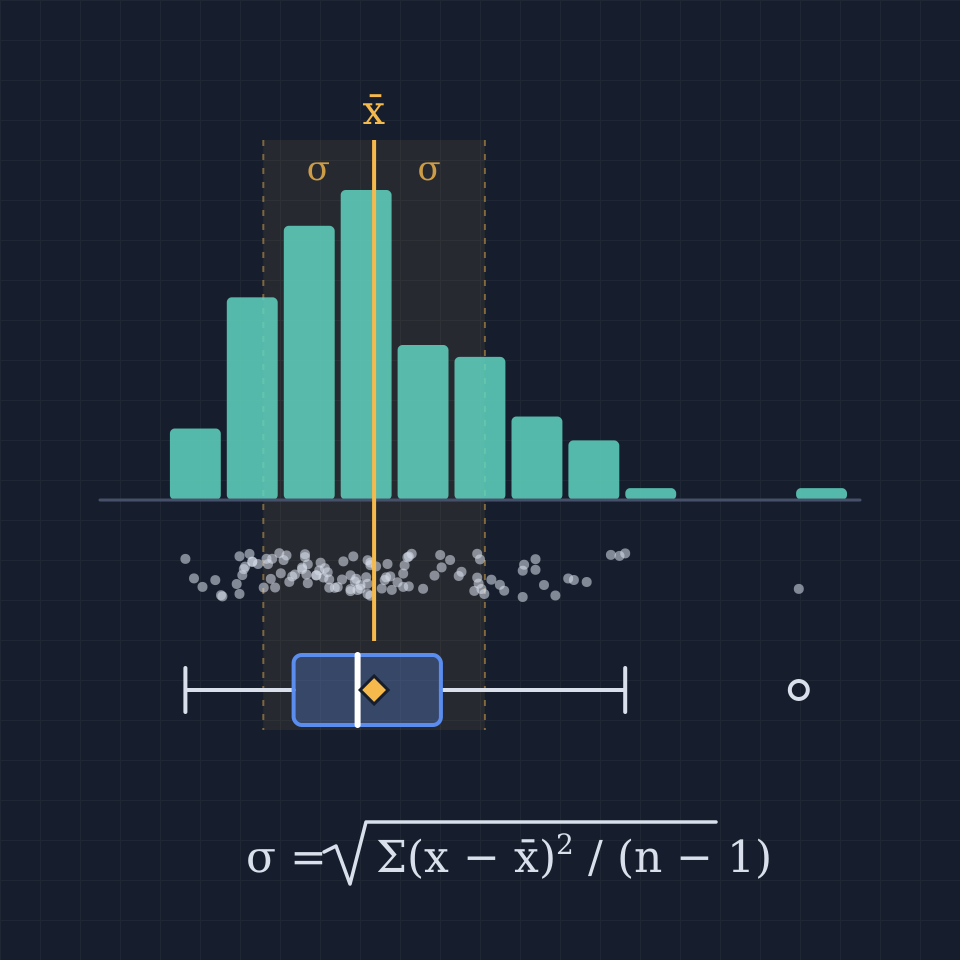
A free online statistics calculator: paste numbers and get the mean, median, mode, variance, standard deviation, quartiles and a histogram instantly.
Ready to try it?
Open PictorX in your browser — no install, no credit card required to start.
Go to Editor