
- First molecule
- Double bond
- Triple bond
- Ring
- Isomers
- 10 molecules
- All challenges
Molecule builder
Build molecules the way chemists draw them: pick an element, place atoms on the workspace and join them with single, double or triple bonds. Every bond is checked against how many bonds the element can form, the formula, molar mass and bonds update as you build, and known molecules are named. Switch to 3D to turn the molecule in your hands and see why water is bent and methane is a tetrahedron, then test yourself with the challenges. Pick an element and click the workspace to place an atom, or drag it from the palette. While an atom is selected, each click on an empty spot adds a new atom bonded to it, so a selected oxygen and two clicks with hydrogen make water. Click two atoms one after the other to bond them with the bond chosen under the workspace; click a selected bond to change it from single to double to triple. Drag atoms to move them, drop an element on an atom to replace it, and use Delete or the Delete key to remove the selection. Add hydrogens fills every open bond. Open 3D to see the real shape: drag to turn it, scroll or pinch to zoom, and Shift-drag or two fingers to move it. Keys: H, C, N, O, F, P, S, L (Cl), B (Br) and I choose an element, 1 to 3 the bond.
How it works
- Pick an element in the palette and click the workspace to place an atom, or drag the element onto it.
- Select an atom and click empty spots to add bonded atoms, or click two atoms to join them with the chosen bond.
- Read the formula, molar mass, atoms and bonds in the tiles, and use Add hydrogens to fill the open bonds.
- Open 3D to turn, zoom and move the molecule as ball and stick or space filling.
- Turn on Challenges to build water, ammonia, carbon dioxide, ethanol and more for points and achievements.
Why atoms form the bonds they do
Atoms bond to fill their outer electron shell. Hydrogen needs one more electron, oxygen two, nitrogen three and carbon four, so they form one, two, three and four bonds, a number called valence. In a covalent bond two atoms share a pair of electrons; in a double bond they share two pairs and in a triple bond three. The builder counts a double bond as two of an atom's bonds and refuses a bond that would give an atom too many, so every molecule you finish obeys the same rules real molecules do.
From a flat drawing to a 3D shape
A structural formula on paper is flat, but molecules are not. The electron pairs around an atom, both the bonds and the lone pairs it keeps, push each other as far apart as they can. Four pairs point to the corners of a tetrahedron, 109.5° apart, which makes methane a tetrahedron, ammonia a low pyramid and water a bent molecule of about 104.5°. The 3D view finds the shape the same way, so you can watch a flat sketch fold into the real molecule and turn it to look from every side.
Same formula, different molecule
A formula only counts atoms. Ethanol, the alcohol in drinks, and dimethyl ether, a gas used in spray cans, are both C₂H₆O, but their atoms are joined in a different order, so they are different substances called isomers. The builder recognizes molecules by how their atoms are connected, not only by their formula, so it tells the two apart, and the Isomers achievement is yours when you build both.
Frequently asked questions
Which elements can I use?
Hydrogen, carbon, nitrogen, oxygen, fluorine, phosphorus, sulfur, chlorine, bromine and iodine, the elements of most molecules in biology and everyday chemistry. Each has its usual color: white hydrogen, black carbon, blue nitrogen, red oxygen, yellow sulfur and green chlorine.
Why can't I add another bond to an atom?
Every element forms a fixed number of bonds: hydrogen and the halogens 1, oxygen 2, nitrogen 3 and carbon 4. A double bond counts as 2 and a triple bond as 3. When an atom has all the bonds it can form, the builder refuses another one and says why. Phosphorus can form 3 or 5 bonds and sulfur 2, 4 or 6.
What are the small circles and dots around the atoms?
Small open circles are open bonds: the atom can still form that many bonds. Pairs of dots are lone pairs, outer electrons the atom keeps for itself; you can hide them in the settings. A molecule is complete when no open circles are left.
How does the app know which molecule I built?
It compares how your atoms are connected, including the bond orders, with known molecules, from water and methane to aspirin and caffeine. That is why it can tell ethanol from dimethyl ether even though both are C₂H₆O. A complete molecule it does not know is still shown with its formula and molar mass.
How accurate is the 3D shape?
The shape follows VSEPR theory, the model taught in school: bonds and lone pairs repel each other, and lone pairs a little more. It gives the right geometry for small molecules, such as about 104.5° in water, 107° in ammonia and 109.5° in methane. It is a teaching model, not a quantum-chemistry calculation, so bond lengths and angles in larger molecules are approximate.
Related tools
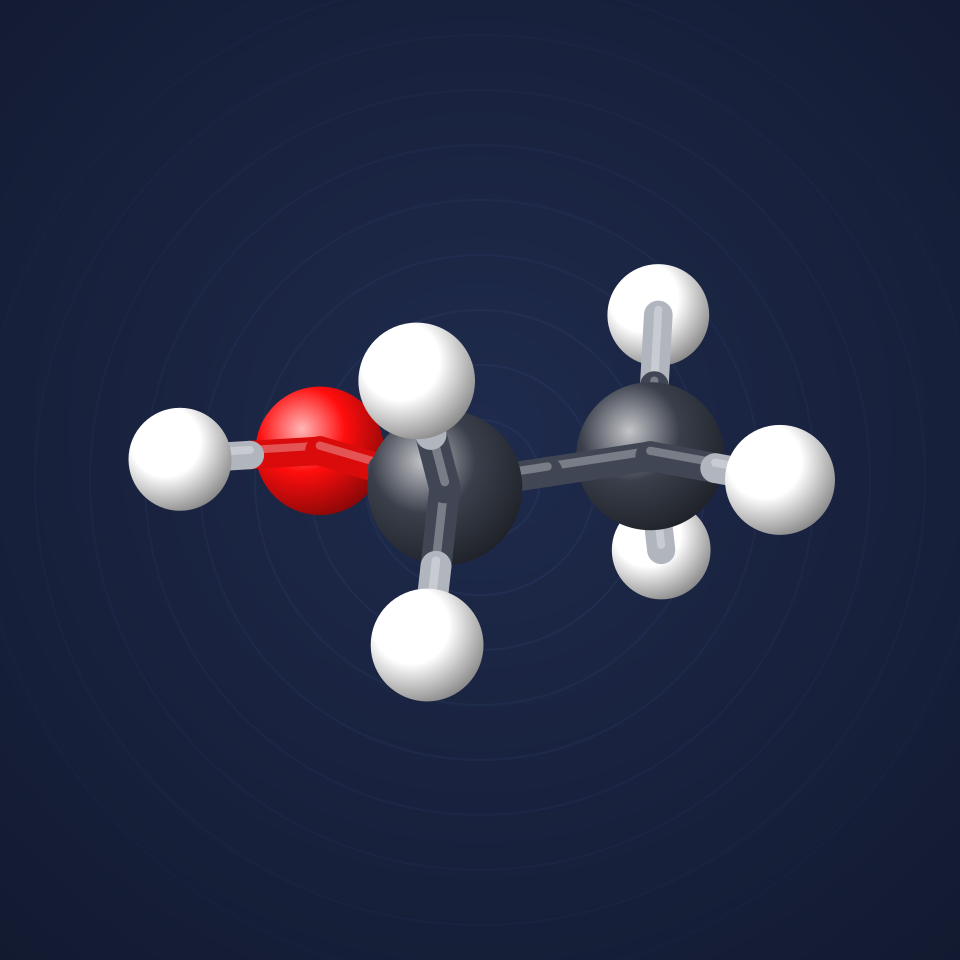
Molecules and chemical bonds explained
How atoms join into molecules: valence and full shells, single, double and triple bonds, lone pairs, molecular formulas and molar mass, VSEPR shapes from linear to tetrahedral, and isomers.
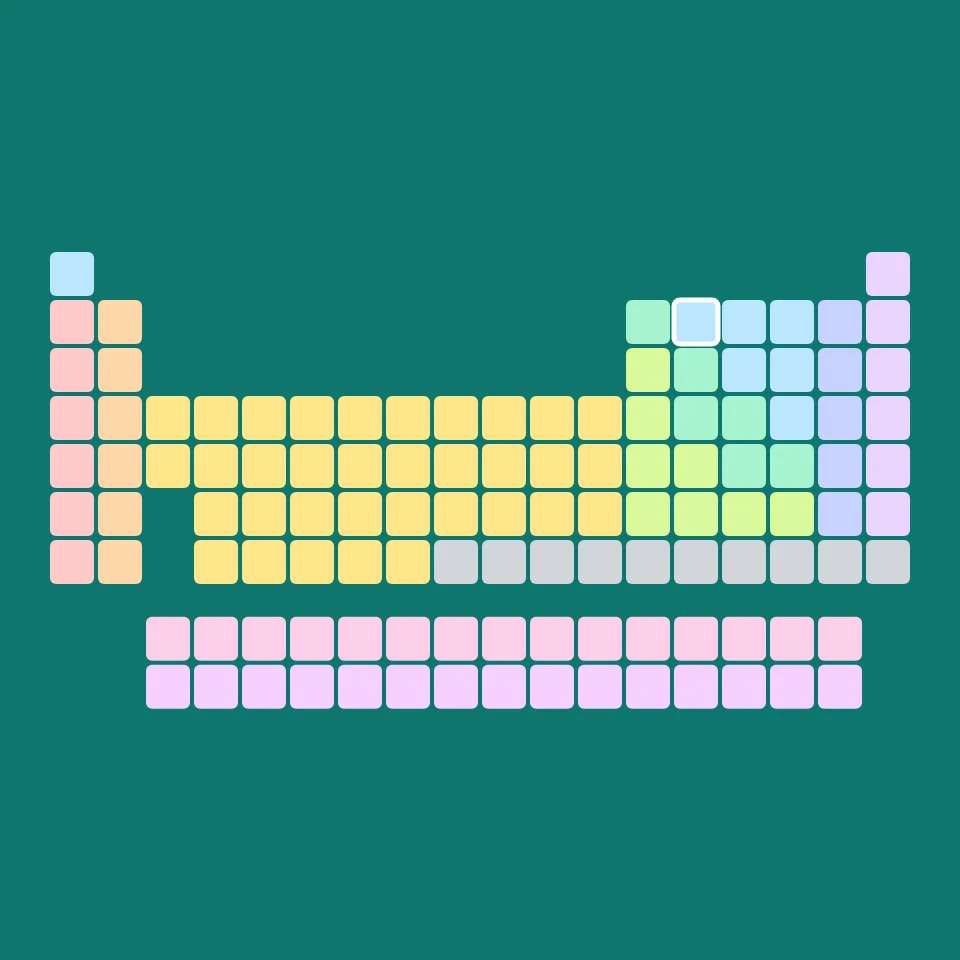
Interactive periodic table
An interactive periodic table of all 118 elements: color it by category, block, state or electronegativity, and click an element for its atomic weight, electron configuration and shells.
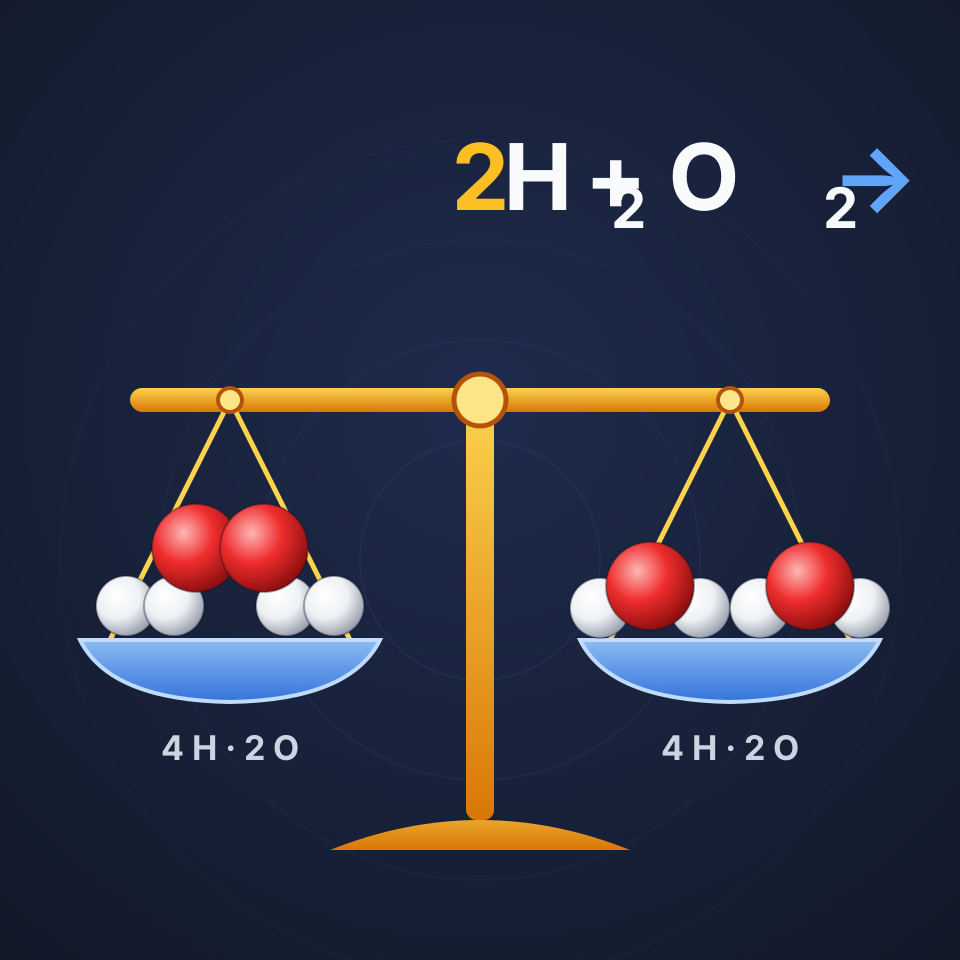
Chemical equation balancer
Balance any chemical equation instantly and exactly, ions, hydrates and redox reactions included. Count the atoms on both sides, see the oxidation numbers that change, and work out molar masses, the limiting reactant and the yield.
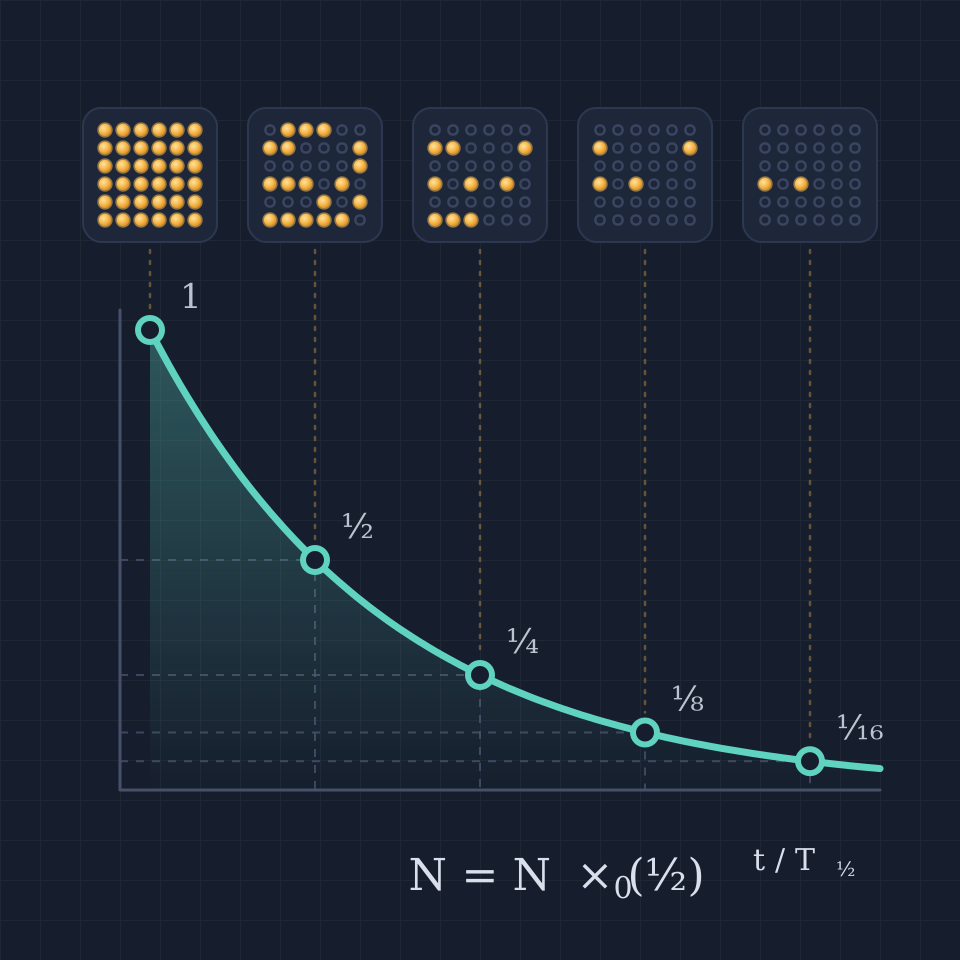
Half-life calculator
A free half-life calculator: work out the amount left, the initial amount, the elapsed time or the half-life of radioactive decay, with isotope presets, a decay curve and the calculation written out.
Graph Theory Playground
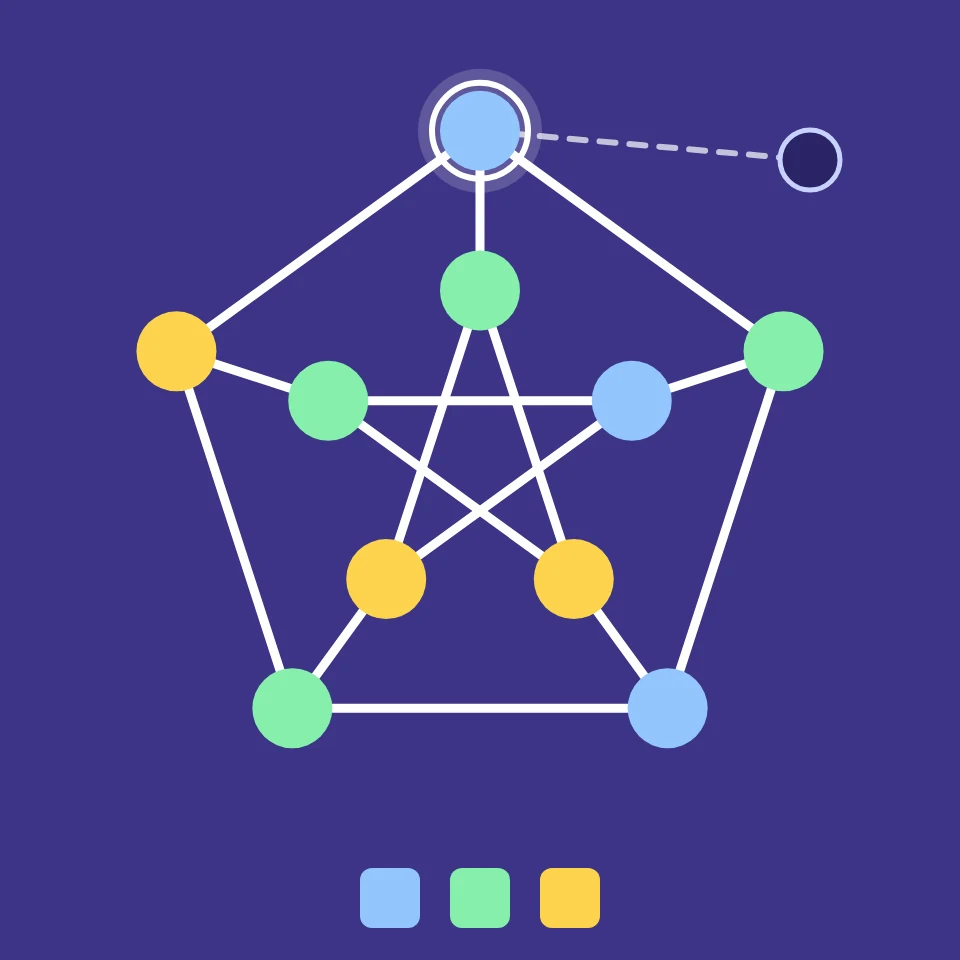
Draw a graph with a few clicks and see its properties at once: degrees, connected, bipartite, chromatic number, shortest cycle, Euler path or circuit, spanning tree and diameter.
Ready to try it?
Open PictorX in your browser — no install, no credit card required to start.
Go to Editor