
The periodic table explained
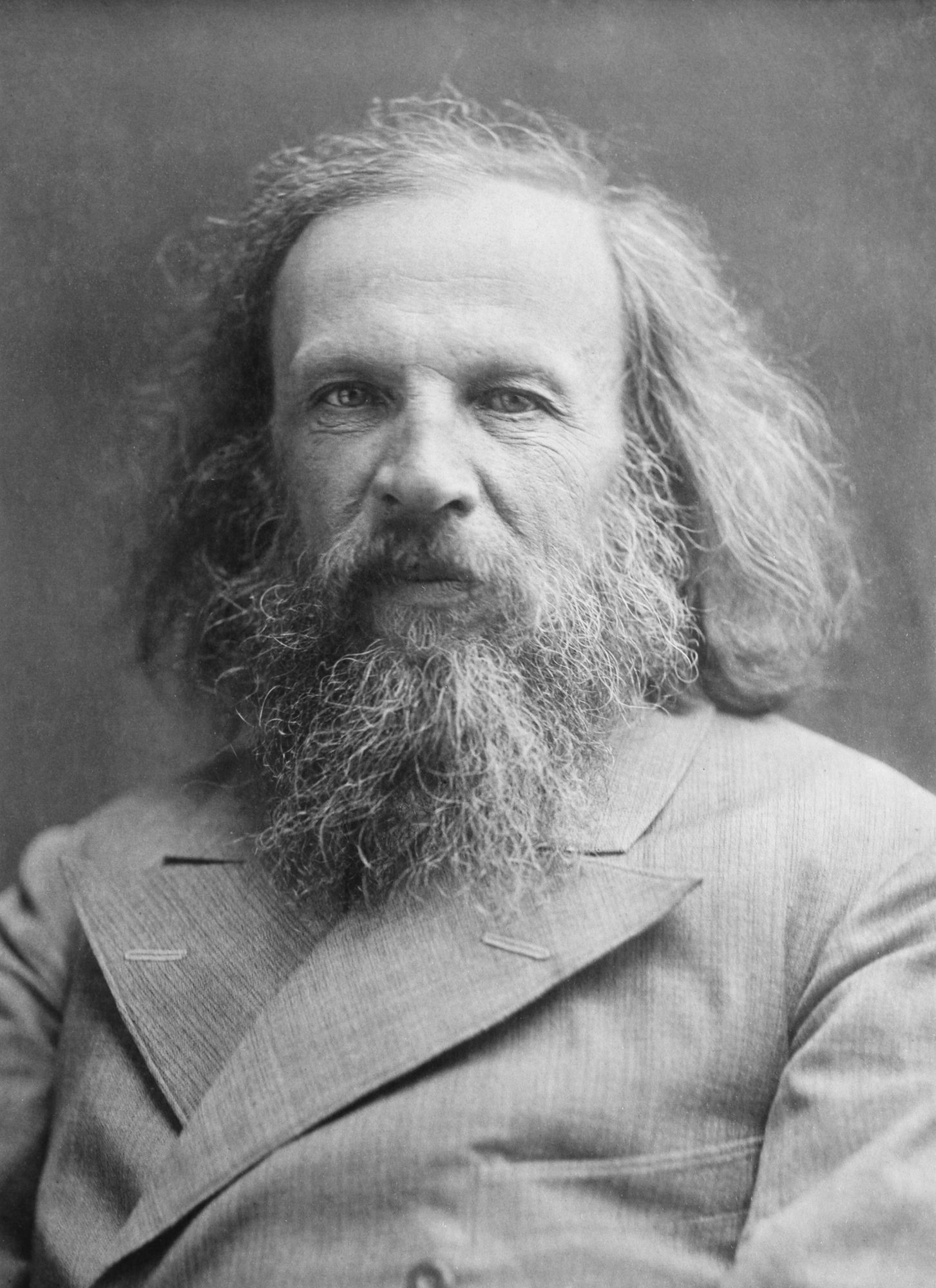
In 1869 Dmitri Mendeleev arranged the 63 elements then known in a grid and left gaps where nothing fitted. He was so sure of his pattern that he described the missing elements before anyone found them. Today the table holds 118 elements, and the same pattern explains why each behaves as it does.
Atomic number
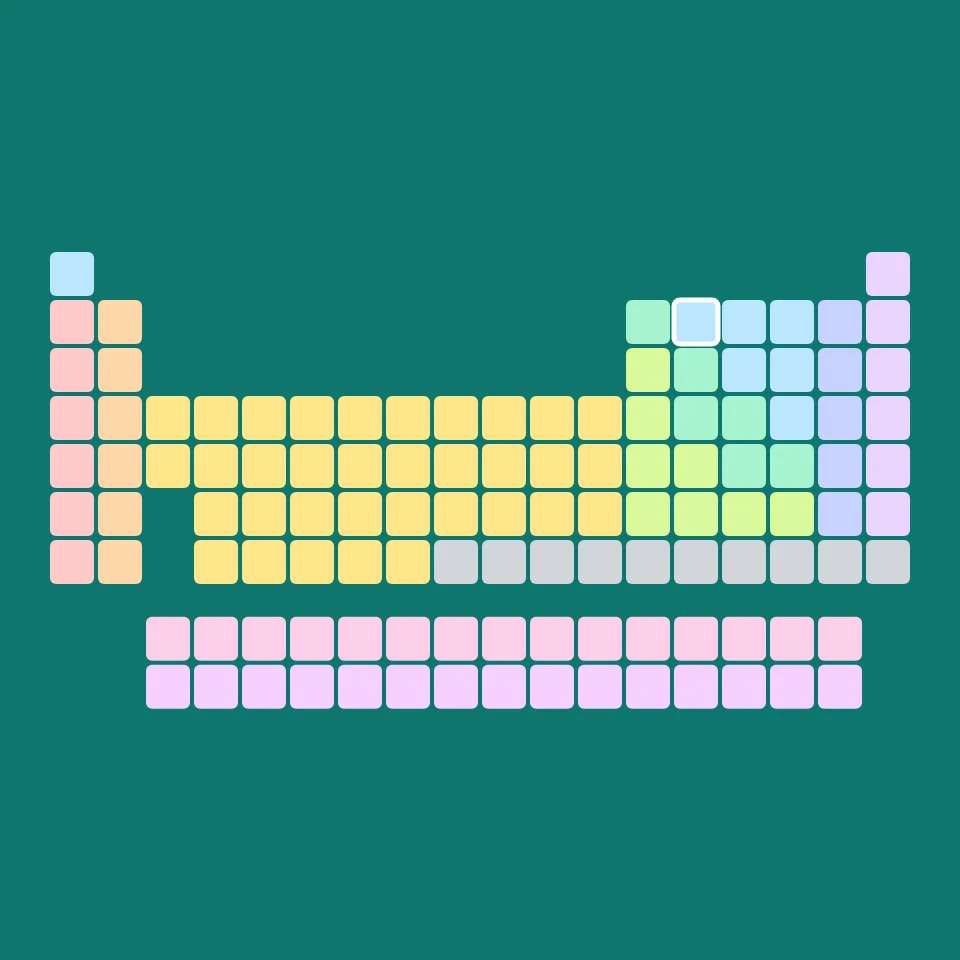
Every element is defined by its atomic number: the number of protons in the nucleus of each of its atoms. Hydrogen has 1, carbon 6, gold 79. The table lists the elements in order of atomic number, and a neutral atom has as many electrons as protons. Those electrons, and how they are arranged, decide almost everything about how an element behaves.
Periods and groups
The rows are called periods. Each period begins with an atom that starts a new electron shell, so the period number tells how many shells an atom uses. The columns are called groups and are numbered 1 to 18. Atoms in the same group have the same number of electrons in their outer shell, which is why the group 1 alkali metals all react with water, the group 17 halogens all form salts, and the group 18 noble gases hardly react at all.
Blocks and electron configurations
Electrons fill subshells called s, p, d and f, which hold 2, 6, 10 and 14 electrons. The table's blocks show which subshell an element is filling: the s-block on the left, the p-block on the right, the d-block of transition metals in the middle, and the f-block of lanthanides and actinides below. An electron configuration lists the filled subshells, often after the nearest noble gas, so iron is [Ar] 3d6 4s2. A few elements break the simple filling order: chromium and copper move an electron from 4s to 3d, because a half-filled or filled d subshell is especially stable.
Trends
Across a period from left to right, the nucleus gains protons while the electrons stay in the same shell, so they are held more tightly: atoms get smaller and electronegativity, the pull on shared electrons, rises, up to fluorine at 3.98. Down a group, each atom adds a shell, so atoms get larger and lose their outer electrons more easily. That is why caesium is far more reactive than lithium, and why metallic character grows towards the bottom left of the table.
History
Johann Döbereiner noticed families of three similar elements in 1829, and John Newlands saw properties repeat every eight elements in 1865. In 1869 Dmitri Mendeleev, and independently Lothar Meyer, built the first true periodic tables. Mendeleev's predictions of eka-aluminium, eka-boron and eka-silicon were confirmed by the discoveries of gallium in 1875, scandium in 1879 and germanium in 1886. In 1913 Henry Moseley showed that the true ordering principle is the atomic number, and in the 1940s Glenn Seaborg moved the actinides into their own row. The seventh period was completed in 2016, when nihonium, moscovium, tennessine and oganesson were named.
Explore it
Open the explorer and click any element to see its atomic weight, group, period, block, electron configuration and electronegativity, with its electrons drawn shell by shell. Color the table by category to see metals, metalloids and nonmetals, by block to see the s, p, d and f regions, by state to find the few liquids and gases, and by electronegativity to watch the values rise towards the top right. Click a legend entry to highlight just that group.
Frequently asked questions
Who invented the periodic table?
Dmitri Mendeleev is usually credited, for his table of 1869 and his successful predictions of undiscovered elements. Lothar Meyer published a similar table at almost the same time, and several chemists before them had noticed parts of the pattern.
Where does hydrogen belong?
It is usually placed above the alkali metals because it has one outer electron, but it is a gas and a nonmetal and in some ways resembles the halogens, which need one more electron. Its position is a matter of convention.
Which elements are liquid at room temperature?
Only bromine and mercury at 20 °C. Gallium and caesium melt just above it, at about 30 °C and 28 °C, so they would melt in a warm hand.
Why are the lanthanides and actinides drawn separately?
They fill the f subshell and belong in periods 6 and 7 between groups 2 and 3. Drawing them in place would make the table 32 columns wide, so they are usually shown as two rows below the main table.
Related tools
Interactive periodic table
An interactive periodic table of all 118 elements: color it by category, block, state or electronegativity, and click an element for its atomic weight, electron configuration and shells.
Chemical equation balancer
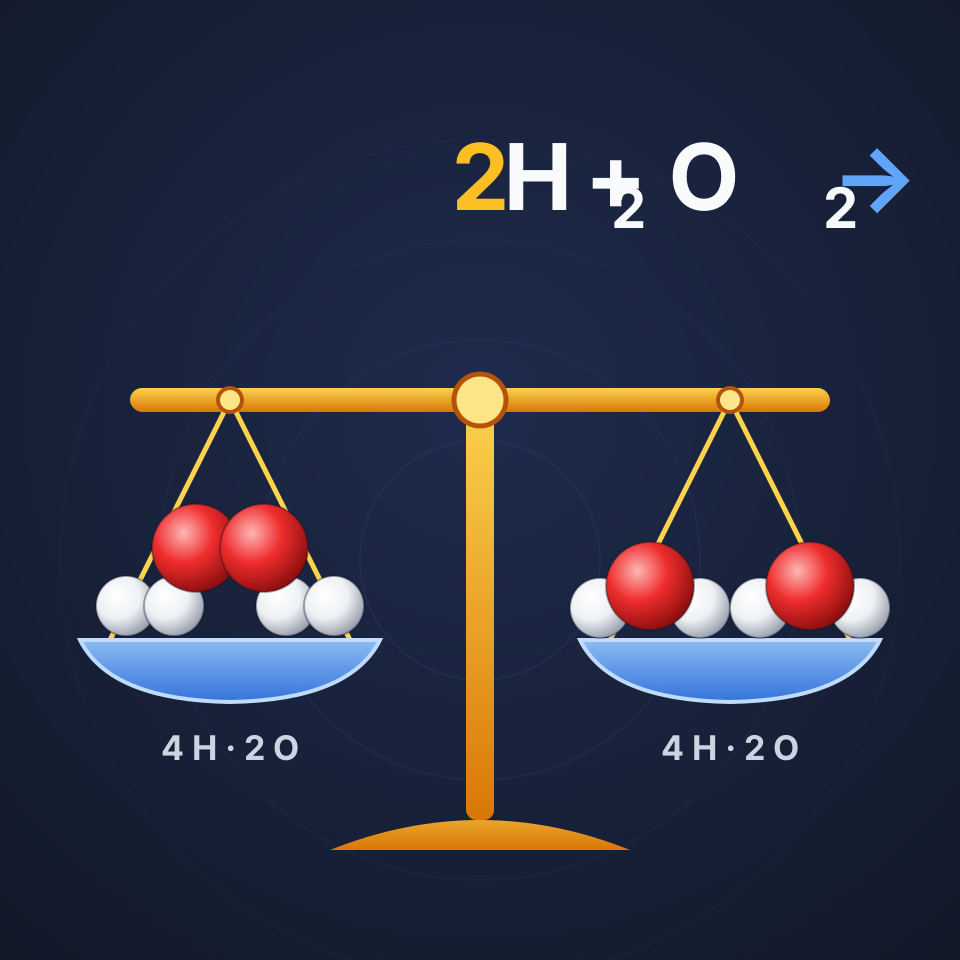
Balance any chemical equation instantly and exactly, ions, hydrates and redox reactions included. Count the atoms on both sides, see the oxidation numbers that change, and work out molar masses, the limiting reactant and the yield.
Half-life calculator
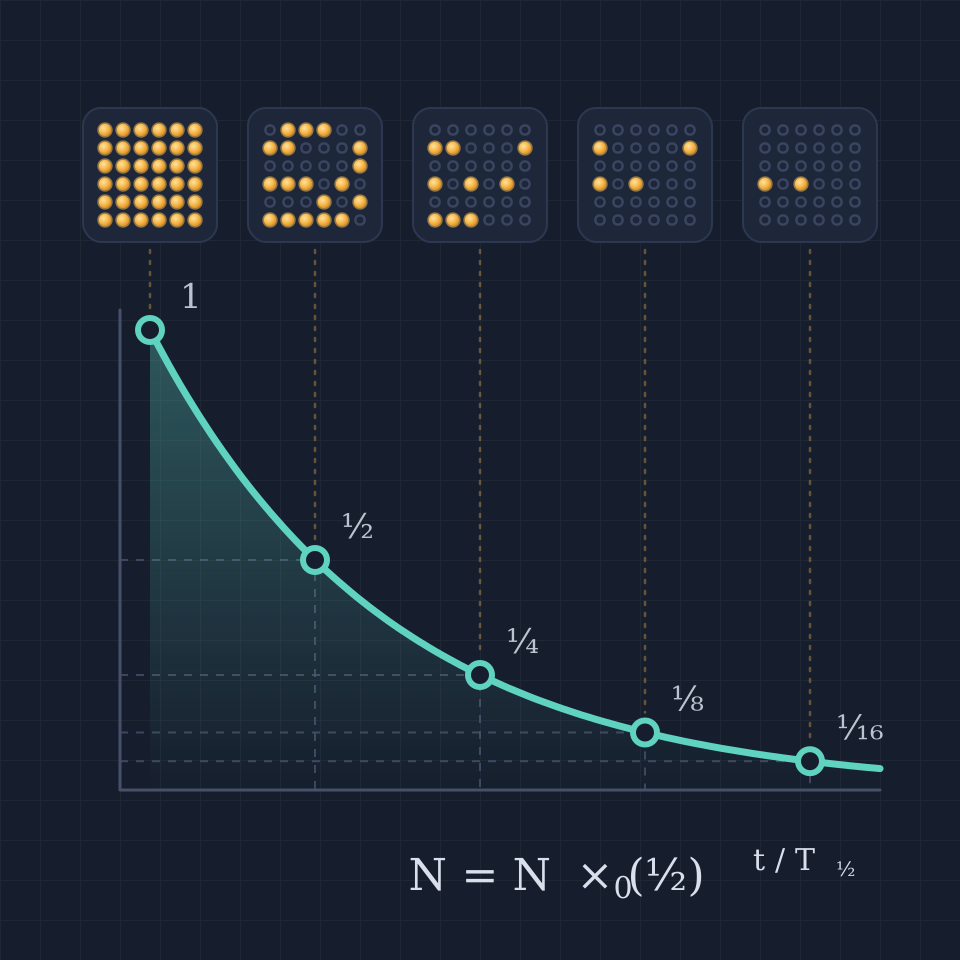
A free half-life calculator: work out the amount left, the initial amount, the elapsed time or the half-life of radioactive decay, with isotope presets, a decay curve and the calculation written out.
Unit converter
A free online unit converter for length, weight, temperature, speed, area, volume, time, pressure, energy and computer data - bytes to gigabytes and GB to GiB.
Ready to try it?
Open PictorX in your browser — no install, no credit card required to start.
Explore the periodic table