
DNA double helix
Every cell of your body holds two metres of DNA, a ladder twisted into a spiral: two backbones of sugar and phosphate on the outside, and on the inside rungs made of pairs of bases, adenine with thymine and guanine with cytosine. Type a sequence of the four letters and see it built as a double helix, with the other strand filled in by the pairing rules, the major and minor grooves winding around it, and the bases coloured so you can follow every pair. Then unzip it from one end, the way a cell does before it copies its DNA. Type a sequence of the letters A, C, G and T, or press Randomize: the other strand is filled in by the pairing rules, A with T and G with C. Drag across the picture to turn the molecule; the wheel or two fingers zoom and a double click puts it back. Turn spins the helix around its axis, Unzip opens it from one end like a replication fork (press it again to close it), and Reset puts the view back. Form switches between B-DNA, the form in living cells, the wider A-DNA and the left-handed Z-DNA. The tiles give the base pairs and turns, the GC content, the length and an estimate of the melting temperature.
How it works
- Type a sequence of A, C, G and T (up to 60 letters), or press Randomize for a random one; the other strand fills in by the pairing rules.
- Drag across the picture to turn the molecule, use the wheel or two fingers to zoom, and press Turn to spin the helix around its axis.
- Choose B-DNA, A-DNA or Z-DNA and tubes, ribbons or ball and stick, show the letters of the bases, and press Unzip to open the helix from one end.
- Read the base pairs and turns, the GC content, the length and the melting point in the tiles, then save the picture or open it in the editor with both strands and each kind of base on layers of their own.
Two strands, four letters
DNA is a chain of nucleotides, each a sugar, a phosphate and one of four bases: adenine (A), thymine (T), guanine (G) and cytosine (C). The sugars and phosphates form the backbone; the bases stick out from it. Two such chains run side by side in opposite directions, one from its 5′ end to its 3′ end, the other the other way round, and their bases meet in the middle: A always with T, held by two hydrogen bonds, and G always with C, held by three. Knowing one strand, you know the other.
The twist and the grooves
The ladder twists to the right, about 10.5 base pairs for every full turn in the B form found in cells, each pair 0.34 nm above the last and the whole helix 2 nm wide. Because the backbones are not exactly opposite each other, the gaps between them are unequal: a wide major groove and a narrow minor groove wind around the molecule. Proteins that read DNA, such as those that switch genes on and off, slip into the major groove and recognise the bases by their edges.
B, A and Z
B-DNA is the usual form in water. When DNA dries out, or in double-stranded RNA, it takes the A form: wider and shorter, 11 pairs a turn with the pairs tilted. Z-DNA, found in 1979, twists the other way, to the left, in a zigzag backbone with 12 pairs a turn; stretches of alternating G and C can flip into it under strain. Switch the form to see how the same sequence changes shape.
Melting and unzipping
Heat a DNA double strand and at some temperature the hydrogen bonds give way and the strands separate. G–C pairs hold more tightly than A–T pairs, so a sequence rich in G and C melts at a higher temperature. The tile estimates the melting point from the sequence. In a cell, enzymes called helicases unzip the DNA without heat, opening a replication fork where each strand serves as the template for a new one.
Frequently asked questions
What are the base pairing rules?
Adenine pairs with thymine and guanine pairs with cytosine. A–T pairs are held by two hydrogen bonds, G–C pairs by three. Because of this, the two strands of DNA are complementary: the sequence of one determines the sequence of the other, which is what lets a cell copy its DNA exactly.
Why is the second strand written backwards?
The two strands run in opposite directions. Strand 1 is written from its 5′ end to its 3′ end; its partner runs 3′ to 5′ under it. Read in its own 5′ → 3′ direction, the partner is the reverse complement. The strands under the picture show them lined up pair by pair, and Save as JSON gives the reverse complement too.
Who discovered the double helix?
James Watson and Francis Crick proposed the double helix in 1953. Their model relied on Rosalind Franklin's X-ray photograph 51, taken with Raymond Gosling in Maurice Wilkins' laboratory, and on Erwin Chargaff's finding that DNA holds as much A as T and as much G as C. Watson, Crick and Wilkins received the Nobel Prize in 1962; Franklin had died in 1958.
What is GC content?
The share of the base pairs that are G–C. Because G–C pairs have three hydrogen bonds, DNA with more of them is more stable and melts at a higher temperature. The human genome is about 41% GC; some bacteria living in hot springs have much more.
How accurate is the melting point?
It is a rule-of-thumb estimate: 2 °C per A–T and 4 °C per G–C pair for fewer than 14 pairs (the Wallace rule), and 64.9 + 41 × (G + C − 16.4) / n °C for longer ones. Real melting temperatures also depend on the salt, the concentration of the DNA and which pairs are neighbours, so laboratories use more detailed nearest-neighbour models.
Can I use the picture in a design?
Yes. Save gives a PNG at the size you choose, and the pencil opens the helix in the PictorX photo editor with the shadow, both strands, the adenines, thymines, guanines and cytosines, and the letters on layers of their own, so you can recolour the bases one kind at a time. In the editor itself it is under Apps ▸ Science ▸ Chemistry ▸ DNA Double Helix. Everything is drawn in your browser.
DNA Double Helix: how do I record a video?
Press the red Record button in the playback bar: it films what the stage shows. Press it again to stop, and the video is saved to your device. Recording is free; you only need to sign in. Without a subscription the video carries a small PictorX logo in a corner. The button beside Record opens the video options: the shape (as shown, square, story 9:16 or wide 16:9), the length (until you stop, or 5, 10, 15 or 30 seconds for social media) and the file: MP4, WebM or an animated GIF. You can add one of three music tracks: calm, bright or beat.
Related tools
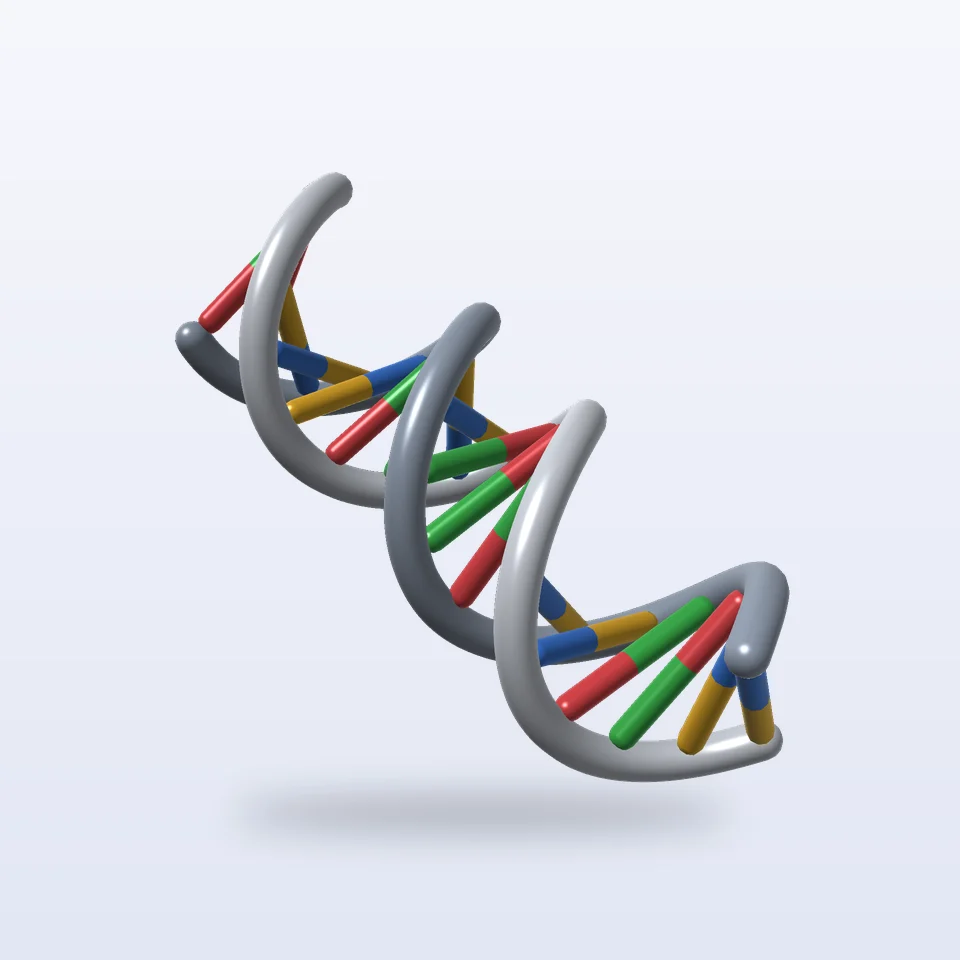
The DNA double helix explained
How DNA is built from two antiparallel strands, why A pairs with T and G with C, what the major and minor grooves are, how B-, A- and Z-DNA differ, how the double helix was discovered and how a cell unzips and copies it.
Molecule builder
A free online molecule builder: join atoms with single, double and triple bonds, get the formula and molar mass, see the molecule's real shape in 3D, and solve chemistry challenges.
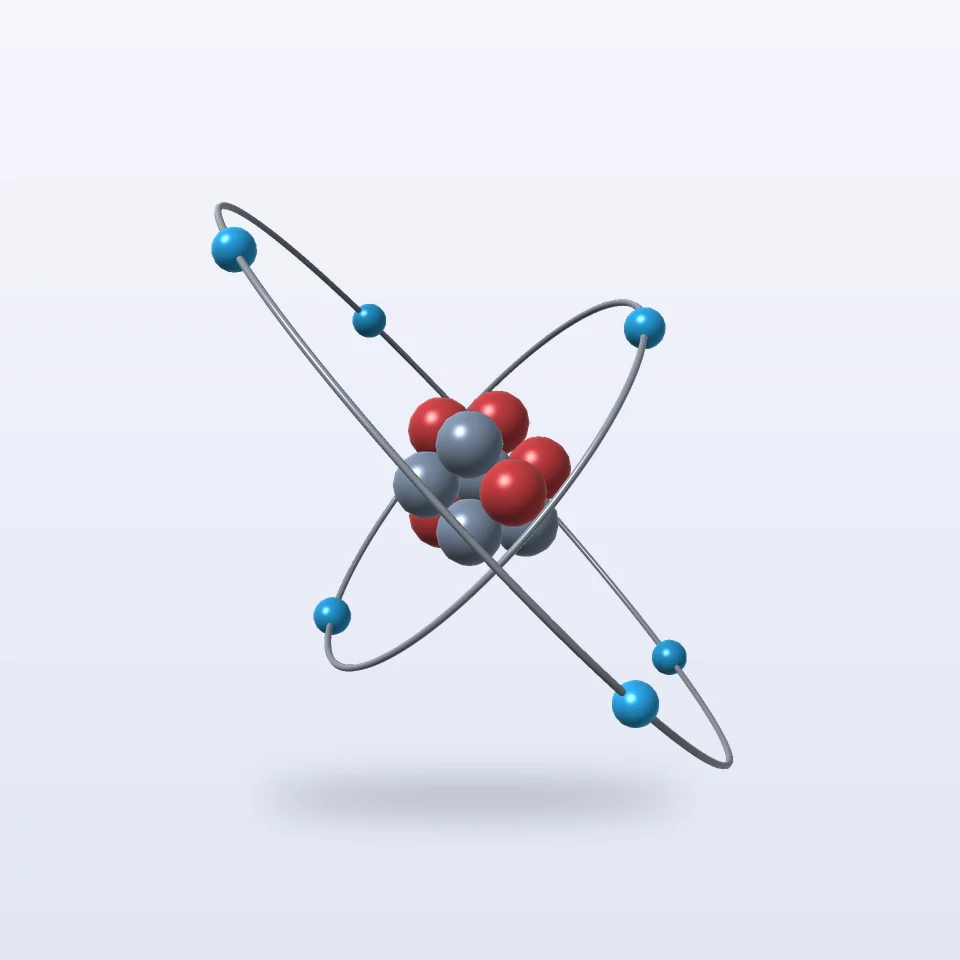
Bohr model of the atom
Build a Bohr model of any of the 118 elements in 3D: a nucleus of protons and neutrons with the electrons circling on their shells. Make ions, compare even spacing with Bohr's n² ratio, and read the electrons per shell and the valence electrons.
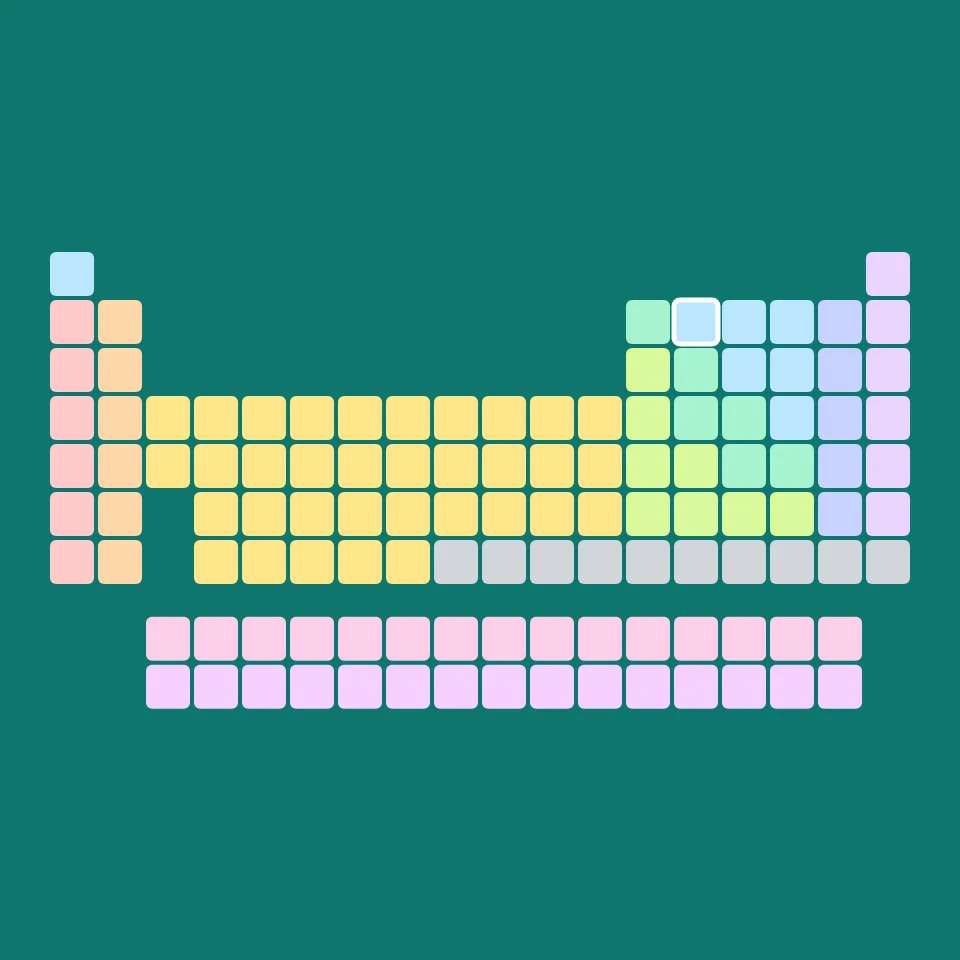
Interactive periodic table
An interactive periodic table of all 118 elements: color it by category, block, state or electronegativity, and click an element for its atomic weight, electron configuration and shells.
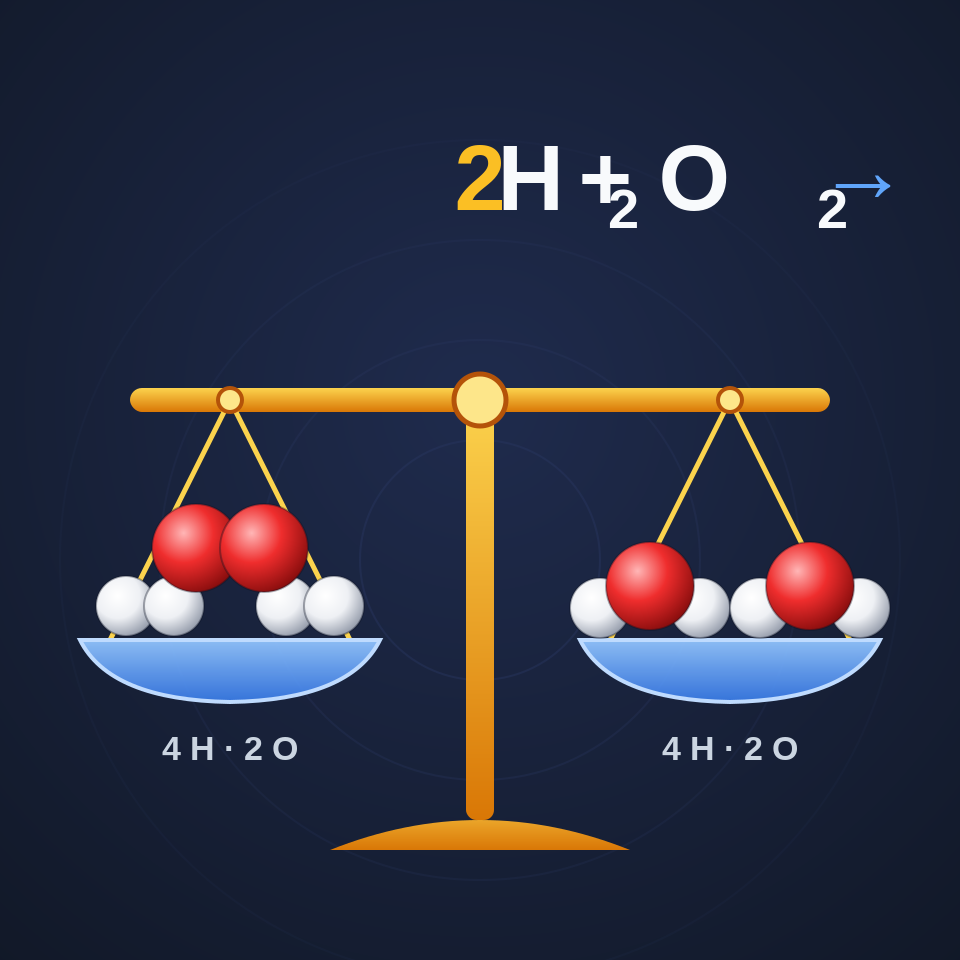
Chemical equation balancer
Balance any chemical equation instantly and exactly, ions, hydrates and redox reactions included. Count the atoms on both sides, see the oxidation numbers that change, and work out molar masses, the limiting reactant and the yield.
Ready to try it?
Open PictorX in your browser — no install, no credit card required to start.
Go to Editor