
Cut a cone, get a conic
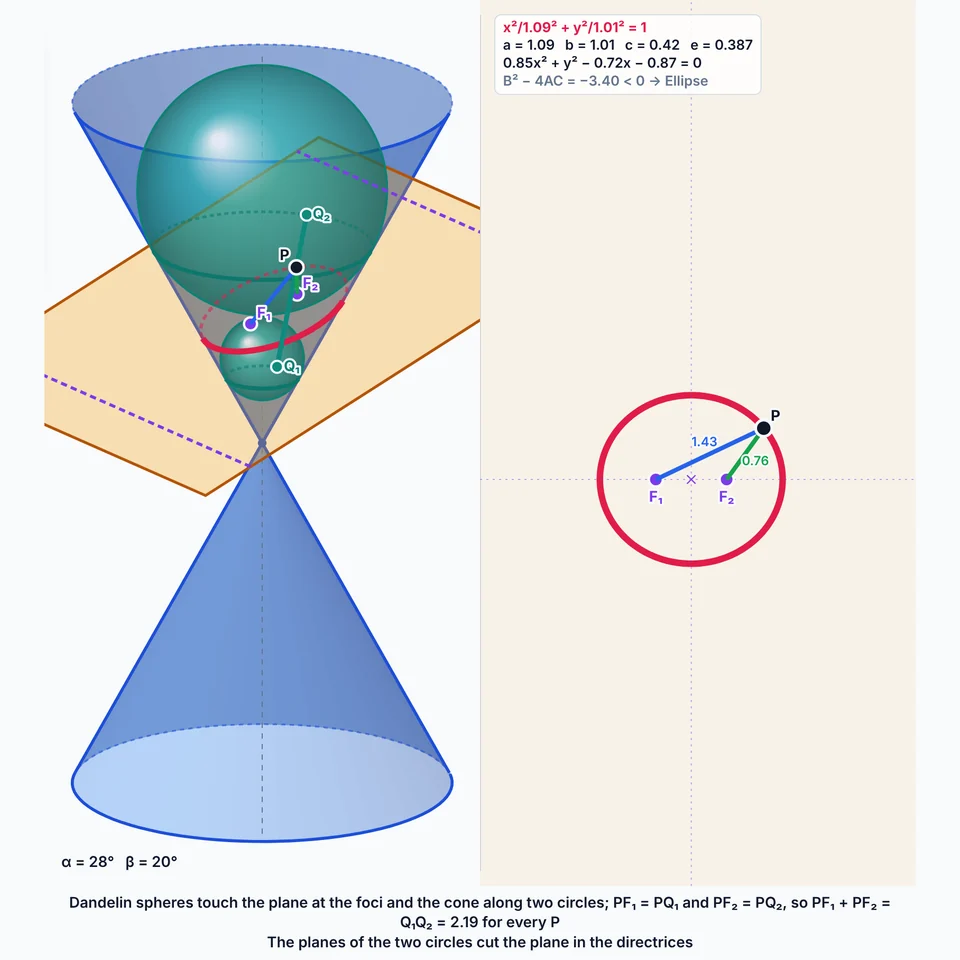
Slice a double cone with a flat plane and the edge of the cut is one of four famous curves. Level, it is a circle; tilted a little, an ellipse; tilted exactly as steeply as the cone's side, a parabola; steeper still, a hyperbola that cuts both halves of the cone. Turn the cone in 3D, tilt the plane and watch the curve redrawn flat beside it with its foci, directrices and equation, then see why the same curves appear as planetary orbits, in whispering galleries and in satellite dishes. Drag the cone on the left to turn it and watch the plane cut it: the red curve on the cone is drawn again on the right, flat in its own plane, with the near focus F₁ at the origin. Tilt the plane with β: level it is a circle, tilted less steeply than the cone's side an ellipse, exactly parallel to the side a parabola, and steeper a hyperbola that cuts both nappes; move it to the apex (offset 0) for a point, a line or two crossing lines. The eccentricity e = sin β ÷ cos α follows the tilt, and moving e tilts the plane (the cone widens when e is too large for it). Play tilts the plane through every type; pick a mode for the Dandelin spheres (the balls that touch the plane at the foci and prove PF₁ + PF₂ is constant), the gardener's string and pins, the focus–directrix definition PF = e·PD, the reflections of a whispering gallery or a satellite dish, or a Kepler orbit with the Sun at a focus. Drag the point P along the curve on the right; Step and Back go stop by stop, Reset starts again. The box shows the equation in standard form, the general form Ax² + Bxy + Cy² + Dx + Ey + F = 0 with the origin at F₁, and the discriminant B² − 4AC that names the type. Save the picture, record a video, or open it in the photo editor with the pencil: the cone, the plane, the spheres, the curve, the foci and directrix, the construction and the labels come as layers of their own.
How it works
- Drag the cone to turn it, then tilt the plane with β and move it with the offset: the red curve on the cone appears flat on the right with its foci and directrices.
- Press Play to tilt the plane through a circle, ellipses, the parabola and hyperbolas, and through the apex for a point, a line and crossing lines; read the type, e, a, b and c in the tiles.
- Pick a mode for the Dandelin spheres, the gardener's string and pins, the focus–directrix definition, the reflections or a Kepler orbit, and drag the point P along the curve.
- Try the examples, from a circle to a comet orbit and a whispering gallery, then save the picture, record a video or edit it in the photo editor.
Four curves from one cut
A double cone is the surface swept by a line turning round an axis through a fixed point, the apex, at a constant angle α. A plane that does not pass through the apex meets it in a closed curve or an open one, depending only on its tilt β compared with the slope of the cone's side. When the plane is perpendicular to the axis the cut is a circle; tilted less steeply than the side it is an ellipse; exactly parallel to a line of the cone (a generator) it is a parabola, which never closes; steeper than the side, it cuts both nappes and gives the two branches of a hyperbola. Through the apex the curve degenerates into a point, a line or two crossing lines.
Eccentricity: one number for the shape
Every conic has an eccentricity e that measures how far it is from a circle: e = 0 for a circle, 0 < e < 1 for an ellipse, e = 1 for a parabola and e > 1 for a hyperbola. For a cut through a cone of half-angle α by a plane tilted by β, e = sin β / cos α, so the parabola appears exactly when β = 90° − α. The size of the curve depends on the distance from the apex, but its shape depends only on e: all parabolas are similar, and so are all ellipses with the same e.
Dandelin spheres prove the focal property
In 1822 Germinal Dandelin found a short proof that the cut is an ellipse in the sense of the gardener's definition. Two spheres fit inside the cone touching the plane, one above it and one below; they touch the plane at the two foci and the cone along two circles. From any point P of the curve, the line of the cone through P meets those circles at Q₁ and Q₂, and tangents from a point to a sphere are equal, so PF₁ = PQ₁ and PF₂ = PQ₂. Hence PF₁ + PF₂ = Q₁Q₂, the same for every P. For a hyperbola the spheres sit in opposite nappes and the difference is constant; the planes of the circles cut the plane in the directrices.
Equations, reflections and orbits
With the axis along x, an ellipse is x²/a² + y²/b² = 1 with c² = a² − b², a hyperbola x²/a² − y²/b² = 1 with c² = a² + b², and a parabola y² = 4px. Any conic is a quadratic Ax² + Bxy + Cy² + Dx + Ey + F = 0 whose discriminant B² − 4AC is negative for an ellipse, zero for a parabola and positive for a hyperbola. Light from one focus of an elliptical mirror reflects to the other, which makes whispering galleries work; a parabolic dish sends rays parallel to its axis into its focus. Newton showed that a body under an inverse-square force moves on a conic with the attracting body at a focus, which is Kepler's first law.
Frequently asked questions
What are the four conic sections?
They are the circle, the ellipse, the parabola and the hyperbola, the curves in which a plane cuts a double cone. Which one you get depends only on the plane's tilt compared with the cone's side: perpendicular to the axis gives a circle, less steep than the side an ellipse, parallel to the side a parabola and steeper a hyperbola. A plane through the apex gives a degenerate conic: a point, a single line or two crossing lines.
How is the eccentricity of a conic calculated?
From the cone, e = sin β / cos α, where α is the cone's half-angle and β the plane's tilt from the horizontal. From the curve, e = c/a, where a is the semi-major (or semi-transverse) axis and c the distance from the centre to a focus; for an ellipse c² = a² − b² and for a hyperbola c² = a² + b². Equivalently, e is the constant ratio PF/PD of a point's distance to the focus and to the directrix.
What are Dandelin spheres?
They are the spheres inscribed in the cone that also touch the cutting plane. They touch the plane exactly at the foci and the cone along circles. Since all tangents from a point to a sphere have the same length, each point P of the curve is as far from F₁ as from the first circle along the cone's line, and as far from F₂ as from the second, so PF₁ + PF₂ is the fixed distance between the circles. The app draws both spheres, the line through P and the two equal pairs.
Why is a parabola the dividing line between ellipses and hyperbolas?
As the plane tilts towards the slope of the cone's side, the ellipse grows longer and its far focus moves away. When the plane becomes parallel to a generator, the far end never closes: the far focus has gone to infinity and e = 1 exactly. Tilt a hair further and the plane reaches the other nappe, so the curve splits into the two branches of a hyperbola. The app's tour pauses on the parabola to show the moment.
What is the reflective property of conics?
The normal to an ellipse at any point bisects the angle between the lines to the two foci, so a ray from one focus reflects to the other, and all rays arrive together because every path has length 2a: that is how whispering galleries and lithotripters work. A parabola reflects rays parallel to its axis into the focus (dishes, solar cookers, headlamps in reverse), and a hyperbola reflects rays from one focus as if they came from the other, as in Cassegrain telescopes.
Can I use the picture?
Yes. Save gives a PNG at the size you choose, Record films the tilting plane, the moving point, the string drawing the curve, the rays or the orbit, and the pencil opens the picture in the PictorX photo editor with the background, the cone, the plane, the Dandelin spheres, the curve, the foci and directrix, the construction and the labels on layers of their own and the caption as editable text. In the editor itself it is under Apps ▸ Science ▸ Mathematics ▸ Conic Sections. Everything runs in your browser.
Conic Sections: how do I record a video?
Press the red Record button in the playback bar: it films what the stage shows. Press it again to stop, and the video is saved to your device. Recording is free; you only need to sign in. Without a subscription the video carries a small PictorX logo in a corner. The button beside Record opens the video options: the shape (as shown, square, story 9:16 or wide 16:9), the length (until you stop, or 5, 10, 15 or 30 seconds for social media) and the file: MP4, WebM or an animated GIF. You can add one of three music tracks: calm, bright or beat.
Related tools
Conic sections explained
How a plane cutting a double cone gives a circle, ellipse, parabola or hyperbola, why e = sin β / cos α, the focus–directrix definition, the Dandelin sphere proof, standard and general equations with the discriminant, the reflective properties and why planets and comets move on conics.
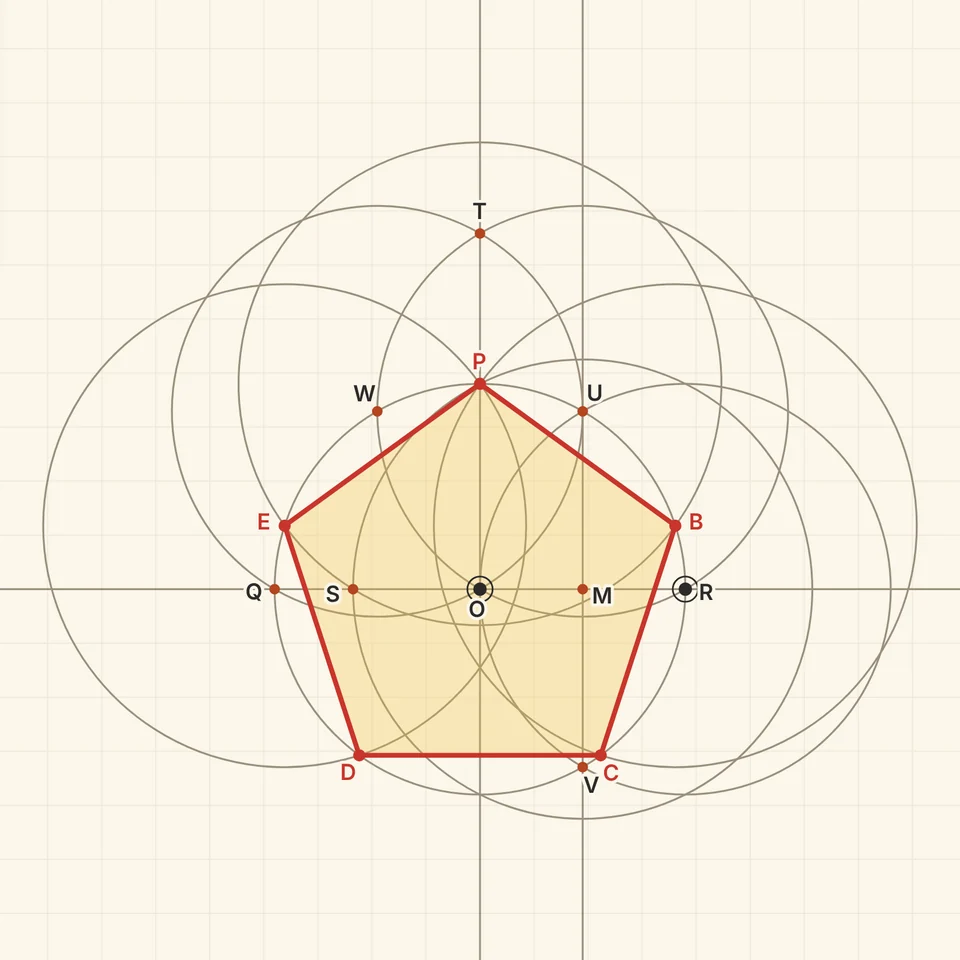
Compass and straightedge constructions: Euclid's geometry step by step
Construct with only a compass and a straightedge, as Euclid did: watch the perpendicular bisector, angle bisector, equilateral triangle, square, regular hexagon and pentagon, √2, the golden ratio, tangents and the circumcircle drawn step by step, draw your own with exact intersections, and solve construction puzzles in as few moves as you can.
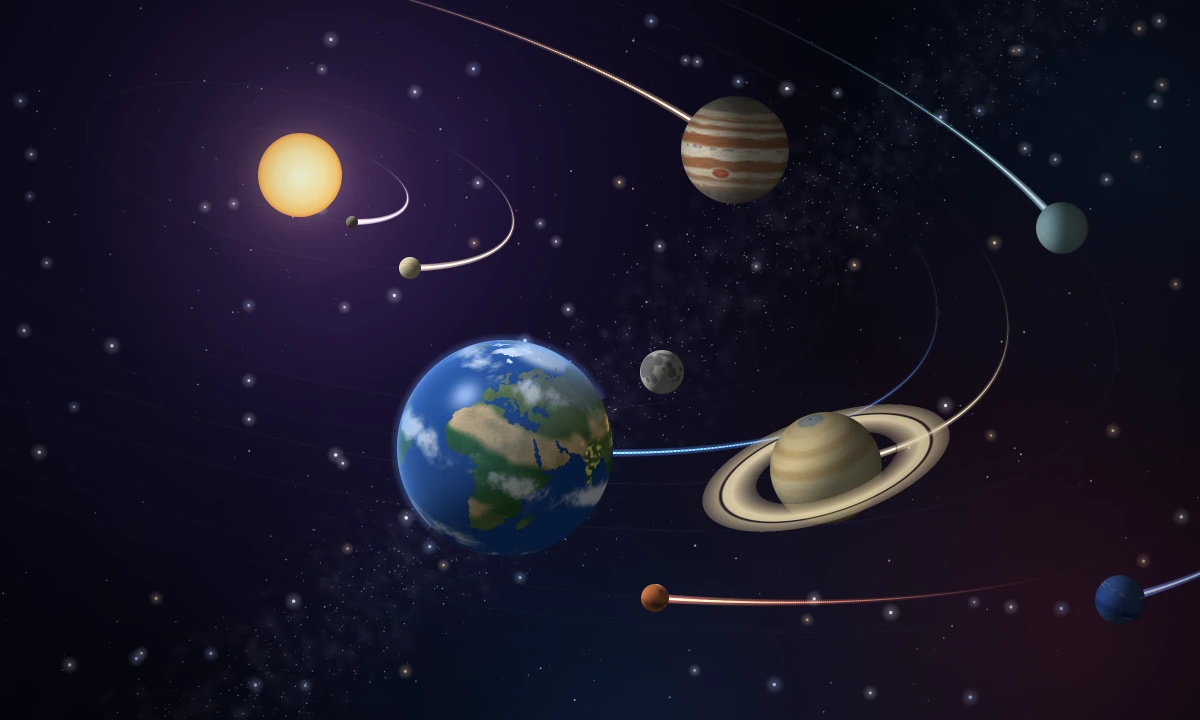
Solar System
Fly through the solar system in 3D in your browser. The sun, eight planets, their largest moons, the dwarf planets, and the Kuiper belt move on their real, tilted orbits under Newton's gravity.
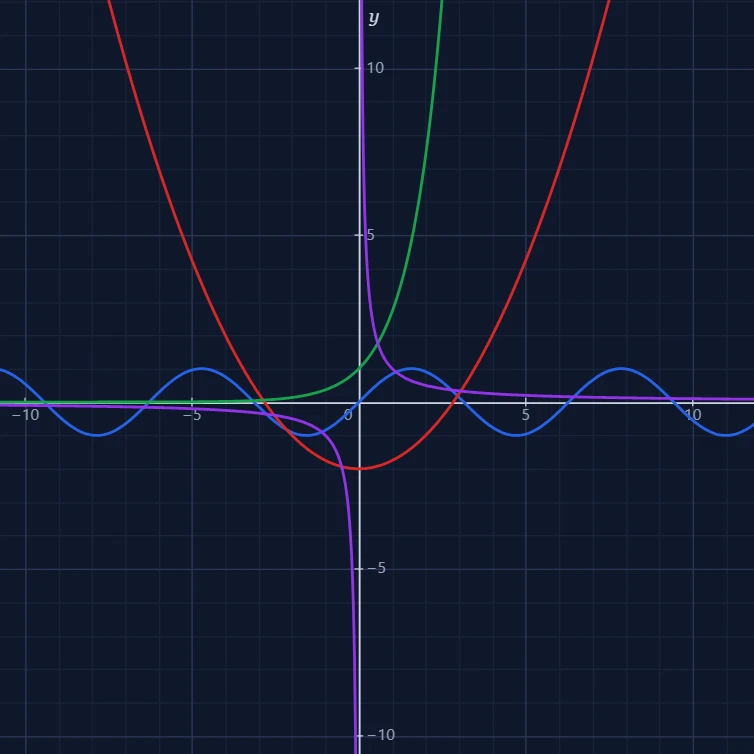
Function plotter
A free online function plotter: draw x², sin x, ln x, 1/x and your own formulas on an interactive grid. Pan, zoom, trace x and y, and save the graph as a PNG.
Ready to try it?
Open PictorX in your browser — no install, no credit card required to start.
Go to Editor