
About slot machines - history, reels and odds
The slot machine is the simplest casino game to play and one of the hardest to see through: press a button, watch the reels and hope they line up. Behind the spinning symbols there is a random number generator and a pay table that decide, together, how much the machine keeps. This page tells where the game comes from, how it works inside and what the numbers mean.
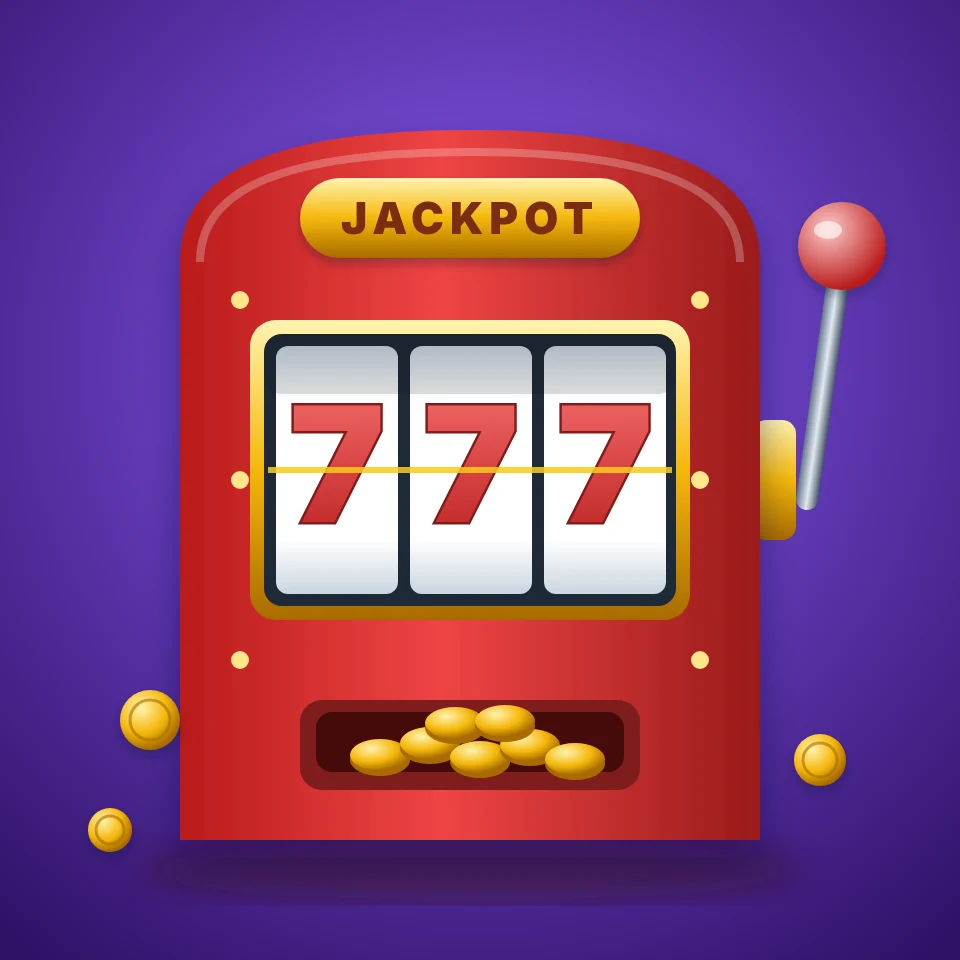
From the Liberty Bell to the video slot
Coin-operated gambling machines appeared in the 1880s and 1890s, many of them based on poker hands shown on drums of cards. In the 1890s Charles Fey, a mechanic in San Francisco, built a simpler machine with three reels of horseshoes, diamonds, spades, hearts and a cracked Liberty Bell. Three bells paid the top prize, and because there were only a few symbols, the machine could pay out automatically. The Liberty Bell was copied everywhere, and the lever on its side gave slot machines the nickname one-armed bandit.
In 1963 Bally built Money Honey, an electromechanical machine with a motor-driven hopper that could pay out hundreds of coins on its own. The first video slot, which showed the reels on a screen, appeared in Las Vegas in 1976. Today most slot machines, in casinos and online, are computers with a screen, and the lever, where there is still one, is only for show.
Why cherries, lemons and bars?
In the early 1900s many American cities and states banned gambling machines. Some makers got around the ban by turning them into vending machines that sold chewing gum: every coin bought a stick of gum, and the reels showed the flavour you got, cherry, lemon, orange or plum. The prizes were extra gum or tokens. The BAR symbol is said to come from the logo of the Bell-Fruit Gum Company, and the bell kept its place from Fey's machine. That is why a slot machine is still called a fruit machine in Britain, and why fruit, bells, bars and sevens are the classic set of symbols.
Reels, stops and the random number generator
A mechanical reel has a fixed number of positions, called stops, where it can come to rest, often 20 or 22. With three reels of 20 stops there are only 8000 combinations, which limits how big the top prize can be. Modern machines draw a random number for each reel many times a second and map it to a stop when you press Spin; the reels on the screen are only an animation of a result that has already been decided.
In the 1980s virtual reels came in: the random number picks one of many virtual stops, and several virtual stops can lead to the same symbol on the visible reel. That lets a machine make a jackpot symbol rare without showing it rarely, and it is the reason the symbols you see on a reel do not tell you the odds.
Paylines, wilds and scatters
On a classic machine only the middle row paid. Video slots have several rows and many paylines: fixed paths across the reels, such as the three rows, V shapes and zigzags. Three or more of the same symbol along an active line, usually starting on the leftmost reel, pay that symbol's prize times the bet on the line. Playing more lines costs more per spin and gives more small wins, but on most machines it does not change the share of the stake that comes back.
A wild symbol stands in for other symbols to complete a line. A scatter symbol pays wherever it lands, not only on a line, and three or more scatters often start a bonus such as free spins, in which wins may be multiplied. Some games have no lines at all and pay any matching symbols on adjacent reels, which gives hundreds or thousands of ways to win.
Return to player and volatility
The return to player, or RTP, is the share of all money staked that a machine pays back in the long run. A slot with an RTP of 96% keeps 4% of everything played through it on average; it follows from the reel strips and the pay table, and is set when the game is designed. Land-based slots often return between about 85% and 95%, and online slots usually between about 94% and 97%, depending on the rules where they run.
RTP says nothing about a single session. Volatility describes how the return is spread: a low-volatility slot pays small wins often, a high-volatility slot pays rarely but more when it does. Two machines with the same RTP can feel completely different, and over a few hundred spins almost anything can happen.
Near misses and the myth of the due machine
A machine is never due to pay. Every spin is drawn independently, so a long run of losses does not make the next spin any more likely to win, and a big win does not make the machine cold. Believing otherwise is the gambler's fallacy. Moving to the machine where someone just won, or playing at a certain time of day, makes no difference either.
Near misses, two jackpot symbols and the third just above or below the line, feel like almost winning, but they are no closer to a win than any other loss. Because the reels are an animation of a result already drawn, a near miss is only a picture, and many places have rules against designing games to show them more often than chance would.
Playing on PictorX
The Slot Machine on PictorX has five reels, three rows and 20 paylines, with cherries, lemons, oranges, plums, bells, bars, sevens, a wild and a scatter star. Choose the lines and the bet per line, spin, and watch each winning line light up in turn with what it pays. Three stars start ten free spins with double wins. The reel strips are fixed and the stops are drawn with your browser's cryptographic random number generator, which gives a return to player of about 95.7%. You play with free credits only, kept in your browser.
Frequently asked questions
Who invented the slot machine?
Charles Fey, a mechanic in San Francisco, is credited with the first three-reel slot machine that paid out automatically, the Liberty Bell, built in the 1890s. Earlier coin-operated machines were based on poker hands and had no automatic payout for most wins.
What does RTP mean on a slot machine?
Return to player: the share of all money staked that the machine pays back over a very long run. An RTP of 96% means the house keeps 4% on average. It describes millions of spins, not what will happen in one evening.
Do more paylines give better odds?
More lines give more chances to win on each spin, but they also cost more, and on most machines the share that comes back stays the same. On the PictorX Slot Machine every line has the same odds, so the return is about 95.7% whether you play 1 line or 20.
Can you tell when a slot machine is about to hit?
No. Each spin is drawn independently by a random number generator, so past spins say nothing about the next one. A machine is never hot, cold or due.
Related tools
Slot Machine - spin the reels and line them up
Play a slot machine in your browser: five reels, up to 20 paylines, wilds, scatter stars and free spins with double wins. Choose your lines and bet, spin or let Auto play. Play credits only, kept between visits.
About Roulette - history, bets and odds
Where roulette comes from, how the European, French and American wheels differ, what every bet pays, where the house edge comes from, and why no betting system beats it.
About Blackjack - history, rules and strategy
Where blackjack comes from, how a round works, what soft hands and the dealer's rules mean, why 6:5 and insurance are poor deals, and how basic strategy cuts the house edge.
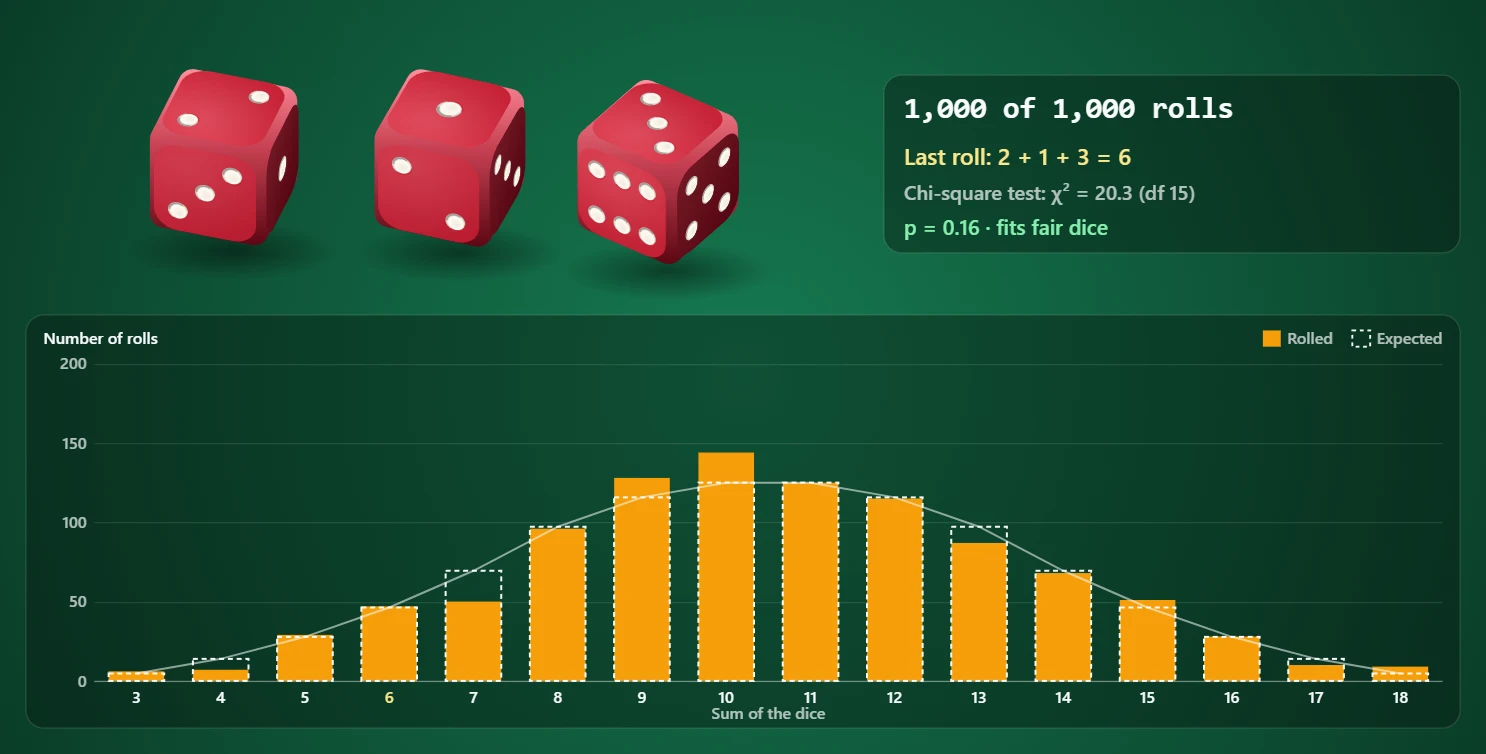
Dice probability
What are the odds when rolling dice? Each face's 1/6 chance, the ways to roll each sum, expected vs observed results, the bell curve and a chi-square test.
How Higher or Lower works
How the card game Higher or Lower works: the rules, its place in TV game shows, the chance behind every guess, how counting the cards left changes the odds, and the best simple strategy.
Ready to try it?
Open PictorX in your browser — no install, no credit card required to start.
Play the Slot Machine