
How Higher or Lower works
Higher or Lower, also called Hi-Lo, is one of the simplest card games there is: one card is face up, and you say whether the next one will be higher or lower. It looks like pure luck, but every guess has odds you can work out, and they change with every card that leaves the deck.
The rules
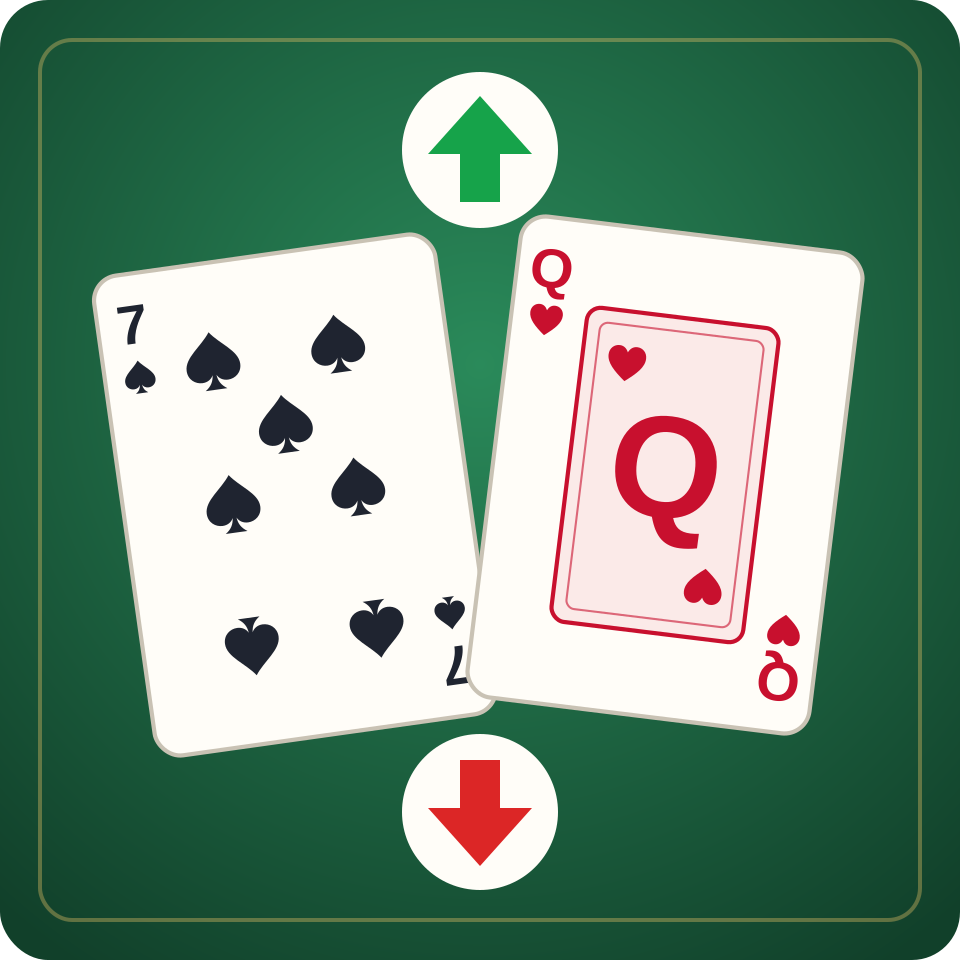
A deck of 52 cards is shuffled and the top card is turned face up. You guess whether the next card will be higher or lower, then it is turned over and becomes the card to beat. Only the rank counts, not the suit: from two up to ten, then jack, queen and king, with the ace at the top or at the bottom, as agreed before the game. When the next card has the same rank, the house rule decides: in some games that counts as wrong, in others it is a push that costs nothing. One wrong guess ends the run; the number of right guesses in a row is your streak.
On television
Guessing higher or lower is old enough that nobody knows who played it first, as a pub game or a children's game with an ordinary deck. From the late 1970s TV game shows in the United States and Britain built whole rounds around it, with a row of giant cards that contestants had to call one by one. The appeal is the same as at home: everyone watching can guess along, and everyone can feel which calls are safe and which are a gamble.
The odds of a guess
With aces high and a seven face up, 28 of the 51 other cards are higher (eight up to ace, four of each) and 20 are lower (two up to six); the other three sevens are equal. So higher wins 28 times out of 51, about 55 percent. The further a card is from the middle, the easier the call: on a two, higher wins 48 times out of 51, about 94 percent. The hardest cards are the ones in the middle of the range, where both answers are almost equally likely.
Counting the cards
The deck is not refilled, so every card you have seen is one that can no longer come. If most of the high cards have already gone, a nine can become a card to call lower, although it would be a clear higher with a full deck. Keeping track of what has gone is called card counting. Show odds in this game does the counting for you: it counts the cards still in the deck and shows the chance of higher, lower and equal.
The best simple strategy
Always guess the side with more cards left in the deck. That is the best you can do for one guess, and because a guess changes nothing about the cards that follow, it is also the best way to build a long streak. It does not make you safe: even a call with 90 percent odds goes wrong one time in ten, and clearing the whole deck takes a long run of good calls and some luck.
Frequently asked questions
Is Higher or Lower pure luck?
No. You cannot know the next card, but you can always choose the more likely answer. A player who counts the cards left wins more guesses than one who guesses at random or follows a hunch.
Are aces high or low?
Either, as long as everyone agrees before the game. With aces high an ace beats a king; with aces low it is the lowest card, below the two. You can choose either in this game.
What happens when the next card is equal?
That depends on the house rule. Some games count it as a wrong guess, which makes the game harder; others call it a push, so you neither win nor lose and simply go on with the new card.
Related tools
Higher or Lower
Play Higher or Lower online: guess whether the next playing card is higher or lower, build the longest streak, and see the odds from the cards left in the deck. Aces high or low.
Solitaire
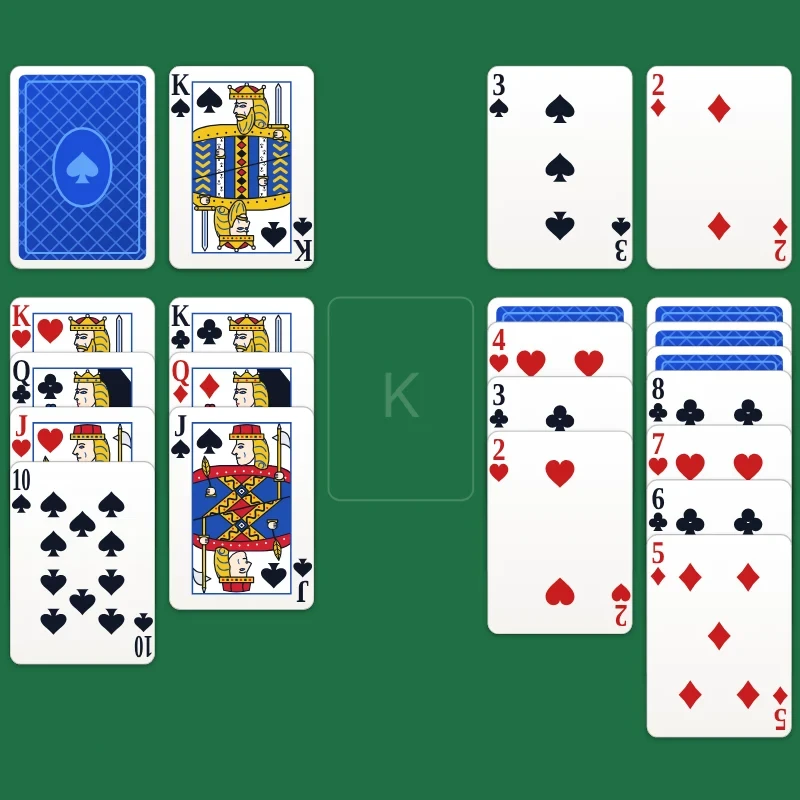
Play Klondike solitaire free in your browser. Drag cards or click to move them automatically, choose draw 1 or draw 3, undo any move and let auto-complete finish the game.
Bingo
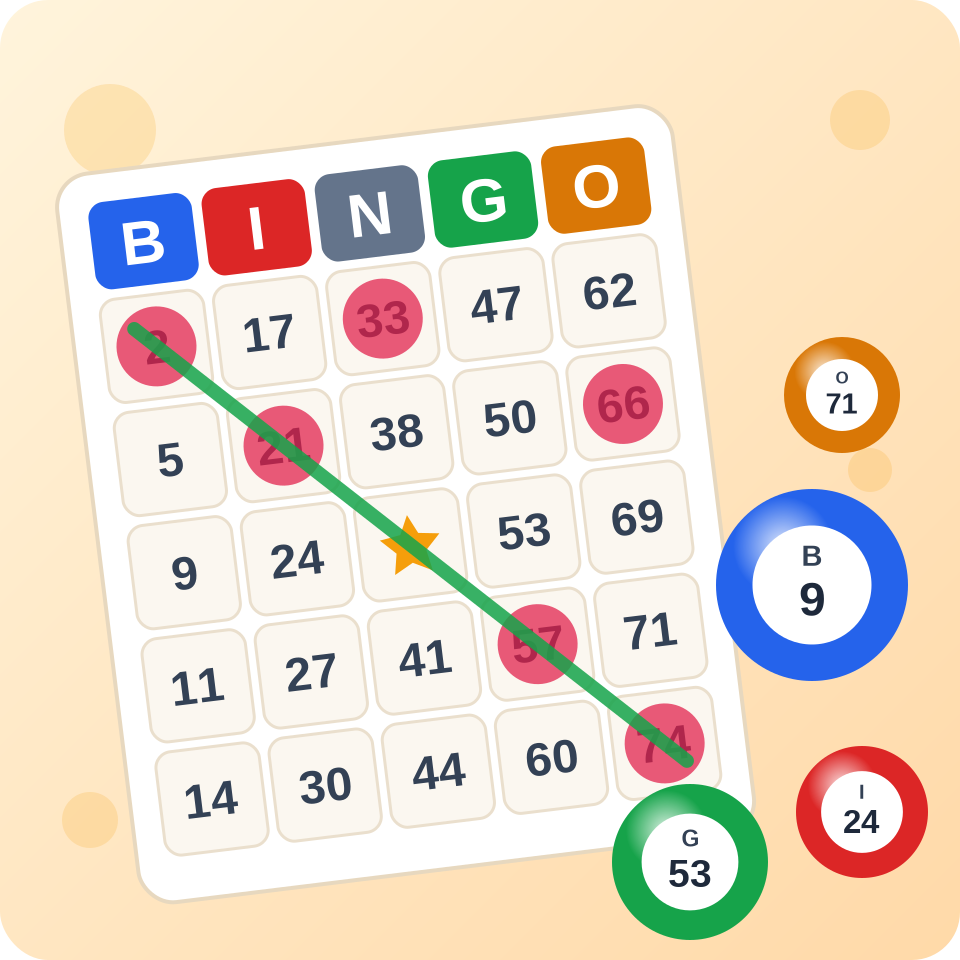
Play 75-ball bingo online against the computer: one or two cards, a line, four corners or a full house, a caller at your speed and computers that call Bingo too.

Rock paper scissors
Play rock paper scissors online against the computer: free play or a best of 3, 5 or 7, against a fair random opponent or a smart one that learns your habits.
Random generator
Draw a random number from 1 to 10, 1 to 100 or any range, roll dice, draw playing cards, flip a coin or draw lots for a raffle or Secret Santa. Fair, free and with a history of your results.

Gambler's fallacy
Flip a fair coin 100 times a second and see what comes after every streak of 5 or 8 heads in a row. It is still 50/50: the coin has no memory.
Ready to try it?
Open PictorX in your browser — no install, no credit card required to start.
Play Higher or Lower