
Rose windows explained
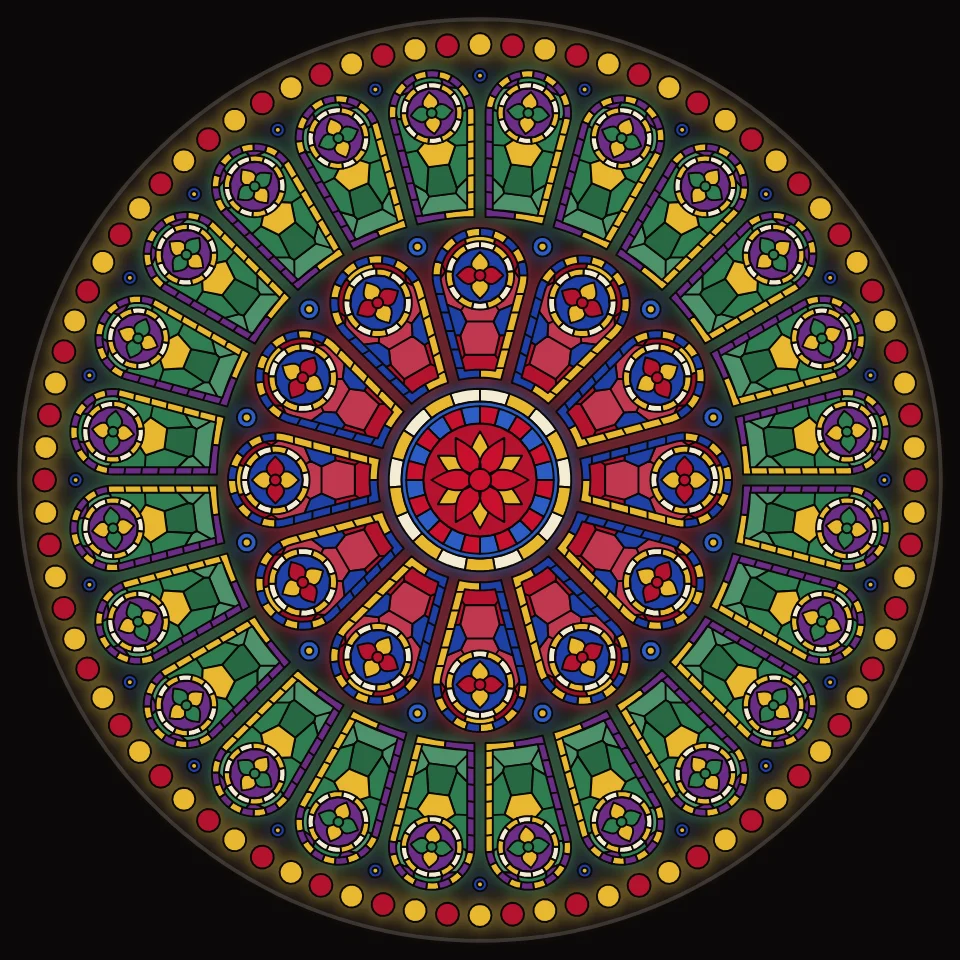
A rose window is a wheel of stone and colored light: a round window divided by tracery into a center, rings of petals and small roundels, every opening filled with stained glass. Read how they are built and how their geometry works, then design one of your own in the Rose Window Maker.
What is a rose window?
A rose window is a large round window in a church, divided by stone into a pattern that radiates from the middle like the petals of a rose or the spokes of a wheel. The name rose window is younger than the windows themselves; in the Middle Ages they were also called wheel windows or simply the round window, oculus in Latin, the eye. They are found above the main doors in the west front and at the ends of the transepts, where the low sun shines through them.
From oculus to Gothic rose
Round windows go back to the oculus of Roman buildings such as the Pantheon. In Romanesque churches a round window was a simple ring or a wheel of small columns. Gothic builders of the 12th and 13th centuries made them ever larger and lighter. At Chartres, around 1215, the west rose is still plate tracery: round and petal-shaped holes cut through a wall of stone. From the 1230s bar tracery took over, thin ribs of stone that carry the glass, and the windows of the Rayonnant style, named after the rays of their spokes, became almost all glass, as in the transept roses of Notre-Dame in Paris, over 12 meters across.
Tracery: petals, foils and roundels
The tracery is the stone frame. Its shapes have names of their own: a lancet is a tall, narrow opening with a pointed head; a foil is a rounded lobe, so a trefoil has three, a quatrefoil four and a cinquefoil five, with sharp cusps between them; a roundel or oculus is a small round opening. A typical rose has a medallion in the middle, a ring of petals or lancets around it, often a second ring with twice as many, and roundels in the triangles left between the heads of the petals. However wide the stone is, it keeps the same width between every two openings, which is what makes the pattern read as one piece of carving.
Stained glass and lead
Medieval glass was colored in the melt with metal oxides: cobalt for blue, copper for red and green, manganese for violet, and later silver stain for yellow. The glazier cut it into small pieces along a full-size drawing, painted the faces and folds with dark grisaille fired into the glass, and set the pieces in strips of lead with an H-shaped section, soldered at every joint. The panels were fixed into the tracery with iron bars. The famous blue of Chartres is a cobalt glass; its uneven thickness and small bubbles scatter the light, so the color seems to glow.
The geometry of a rose
A rose window is designed with compass and straightedge. The circle is divided into equal parts, most often 12 for the twelve apostles or months, sometimes 8, 16 or 24, and every part is the same shape turned about the middle: rotational symmetry, and usually mirror symmetry within each petal too. Each petal fits between two radii; the circle that touches both sides of the petal gives a round head, two larger arcs meeting on the axis give a pointed Gothic arch, and three or five smaller circles inside that circle, overlapping, give the cusped trefoil and cinquefoil heads. Doubling the number of petals from one ring to the next, 12 inside and 24 outside, keeps the petals of the outer ring about as wide as those inside.
Famous rose windows
Chartres Cathedral has three great roses, the west rose of the Last Judgement and the north and south roses of about 1230, dedicated to the Virgin and to Christ in Majesty. Notre-Dame de Paris has a west rose and two transept roses of the 1250s and 1260s, which survived the fire of 2019. Strasbourg, Reims, Amiens, Lausanne and the Sainte-Chapelle in Paris have celebrated roses too, and later centuries kept making them, from the Flamboyant roses of the 15th century with their flame-shaped tracery to Victorian and modern windows of simple geometric glass.
Design your own
The Rose Window Maker builds a window the same way. Choose the number of petals and one to three rings, the shape of the heads and the medallion in the middle, roundels between the petals and a border of beads or a band at the rim. It cuts every opening into glass pieces held by lead, as a mosaic, a lattice of diamonds or rays from the middle, and stacks medallions in the petals. Pick a palette after Chartres, Notre-Dame or a Victorian window, or a coloring page to print, and open the result in the photo editor with every ring of petals on a layer of its own.
Frequently asked questions
Why is it called a rose window?
Because its petals radiating from the middle look like a stylised rose. The name came into use long after the first windows were built; medieval writers more often spoke of a wheel or an oculus. The rose was also a symbol of the Virgin Mary, to whom many cathedrals and many rose windows are dedicated.
How big are rose windows?
The great Gothic roses are among the largest windows ever made: the transept roses of Notre-Dame de Paris are about 13 meters across, the west rose of Strasbourg about 13.6 meters, and the north and south roses of Chartres about 10.5 meters. Small roses of a meter or two are common in parish churches.
What is the difference between plate and bar tracery?
Plate tracery is a wall of stone with holes cut through it, so the stone between the openings is wide and the glass looks like separate jewels, as in the west rose of Chartres. Bar tracery is built from thin ribs of stone, so the window is mostly glass, as in the Rayonnant roses of Notre-Dame. The Tracery slider of the Rose Window Maker goes from one to the other.
Why are rose windows usually divided into twelve?
Twelve divides evenly into halves, thirds, quarters and sixths, so it is easy to lay out with a compass, and it carries meaning: the twelve apostles, the twelve tribes of Israel, the months and the signs of the zodiac. Windows of 8, 16 and 24 parts are common too.
Related tools
Rose Window Maker
Design a Gothic rose window online: stone tracery round a medallion, rings of round, pointed or trefoil petals, roundels and a border, filled with leaded stained glass. Save a PNG or SVG.
Stained glass maker
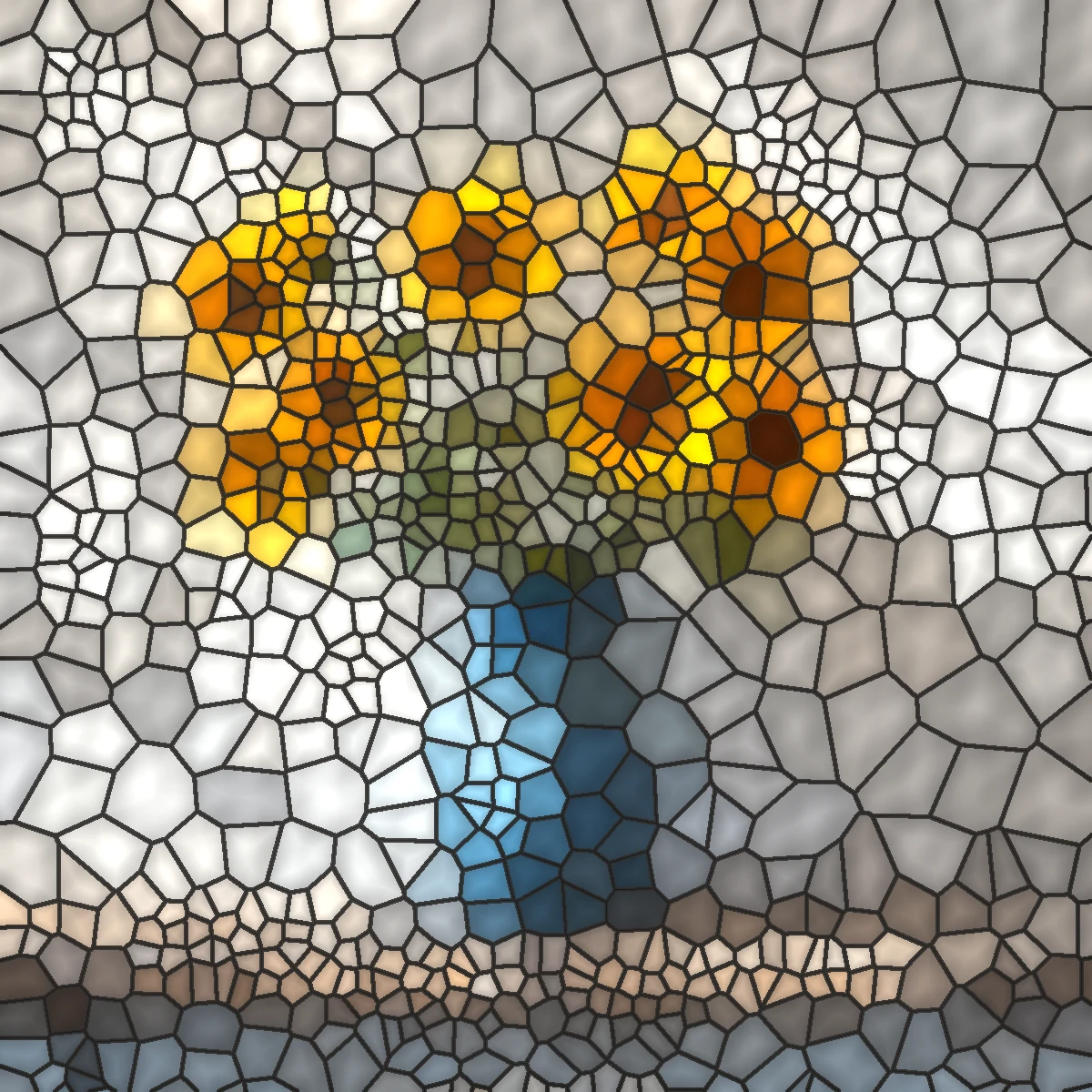
Turn your photo into a stained glass window online: Voronoi glass pieces, lead lines and light glowing through. Free to try, nothing uploaded.
About the Stained glass maker - from photo to window
How does the stained glass maker work? It cuts your photo into Voronoi glass pieces and adds lead and light, with tips for a beautiful window and ideas.
Mandala Maker
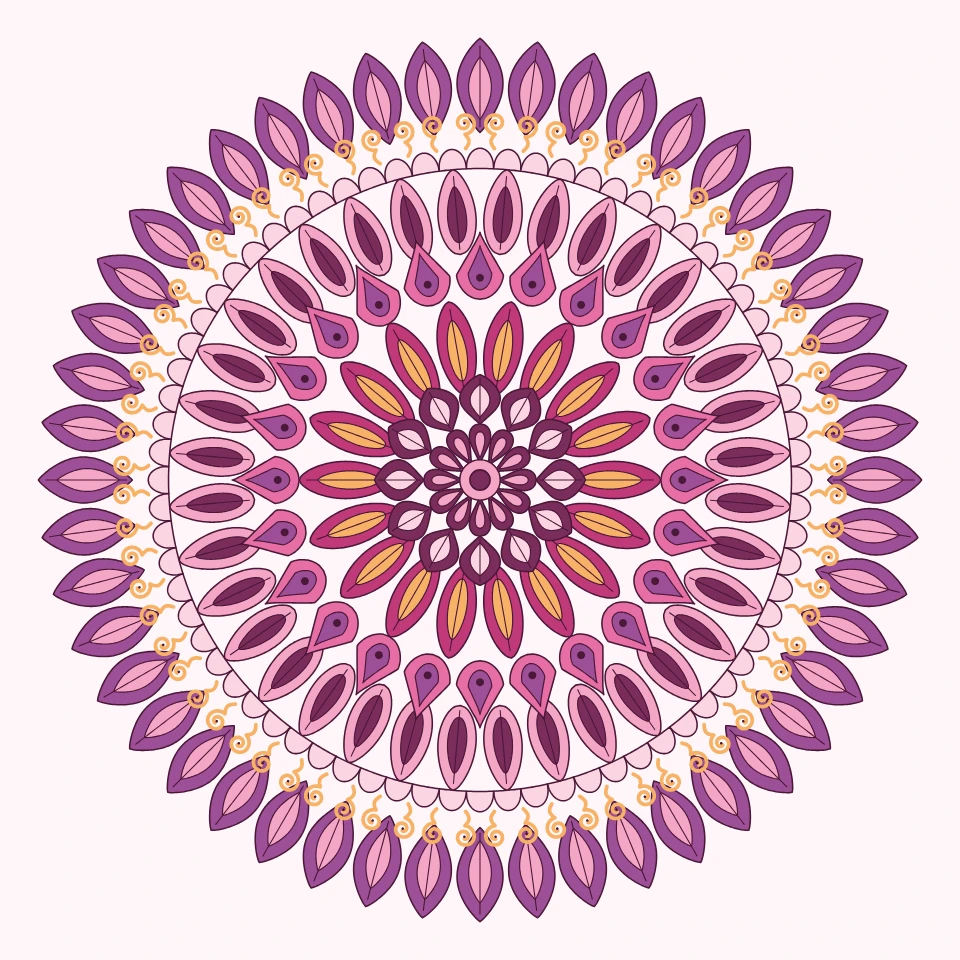
Make a mandala online for free: rings of petals, leaves, hearts, dots and stars around a center, in colors, soft shading, gold lines, neon or as a coloring page. Edit every ring, draw with symmetry, save a PNG or SVG.
Islamic Pattern Maker
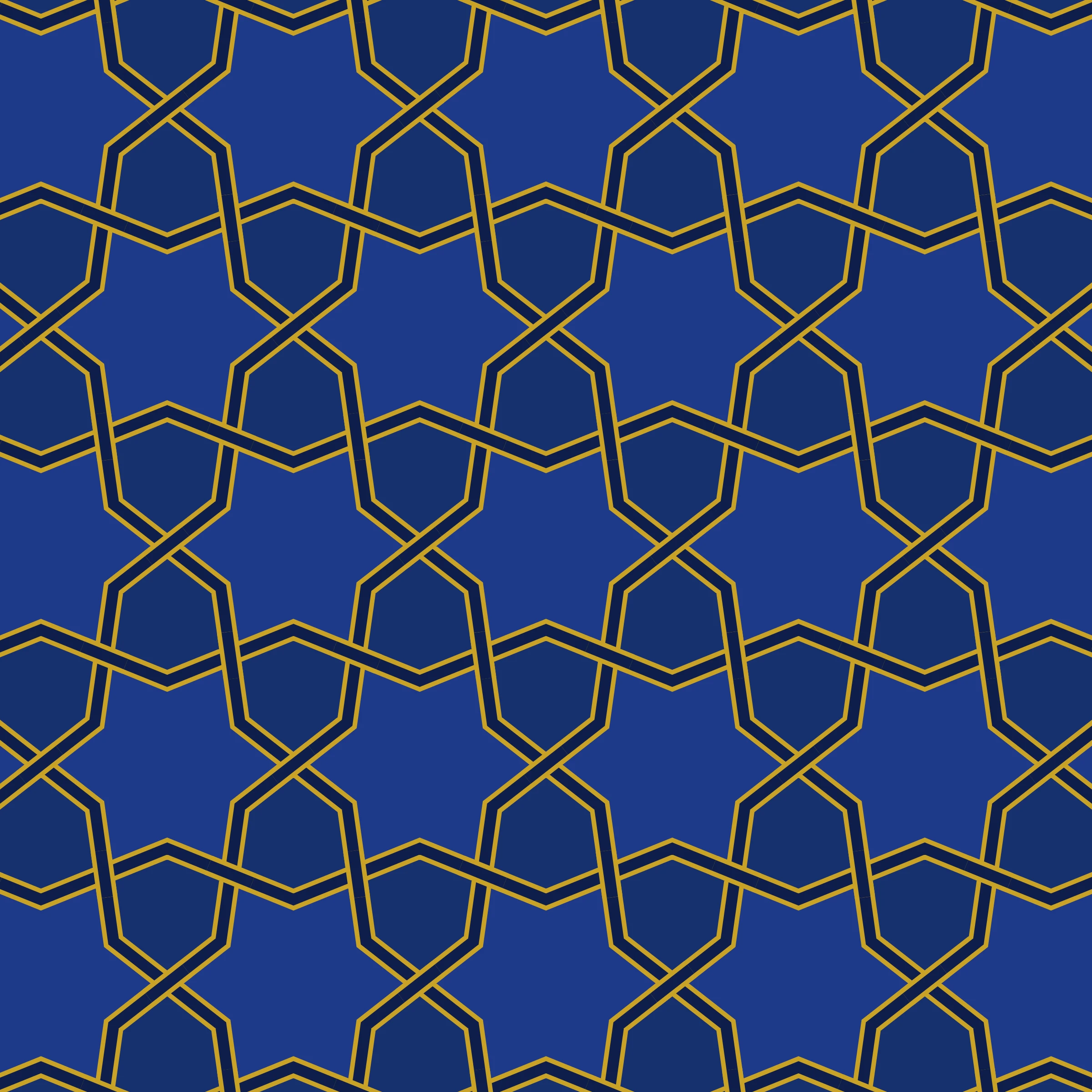
Make Islamic geometric patterns online: Alhambra stars, rosettes, girih, muqarnas and zellige, or star patterns of interlaced bands in six-, eight- and twelve-fold symmetry. Save a PNG or SVG.
Kaleidoscopes
How does a kaleidoscope work? Brewster's invention and its Greek name, how the mirrors make patterns, cells and teleidoscopes, and digital kaleidoscope filters.
Ready to try it?
Open PictorX in your browser — no install, no credit card required to start.
Open the Rose Window Maker